Studio Visit & Interview with Andrea Bergen
Interview and Photographs by Brandon Joseph Baker
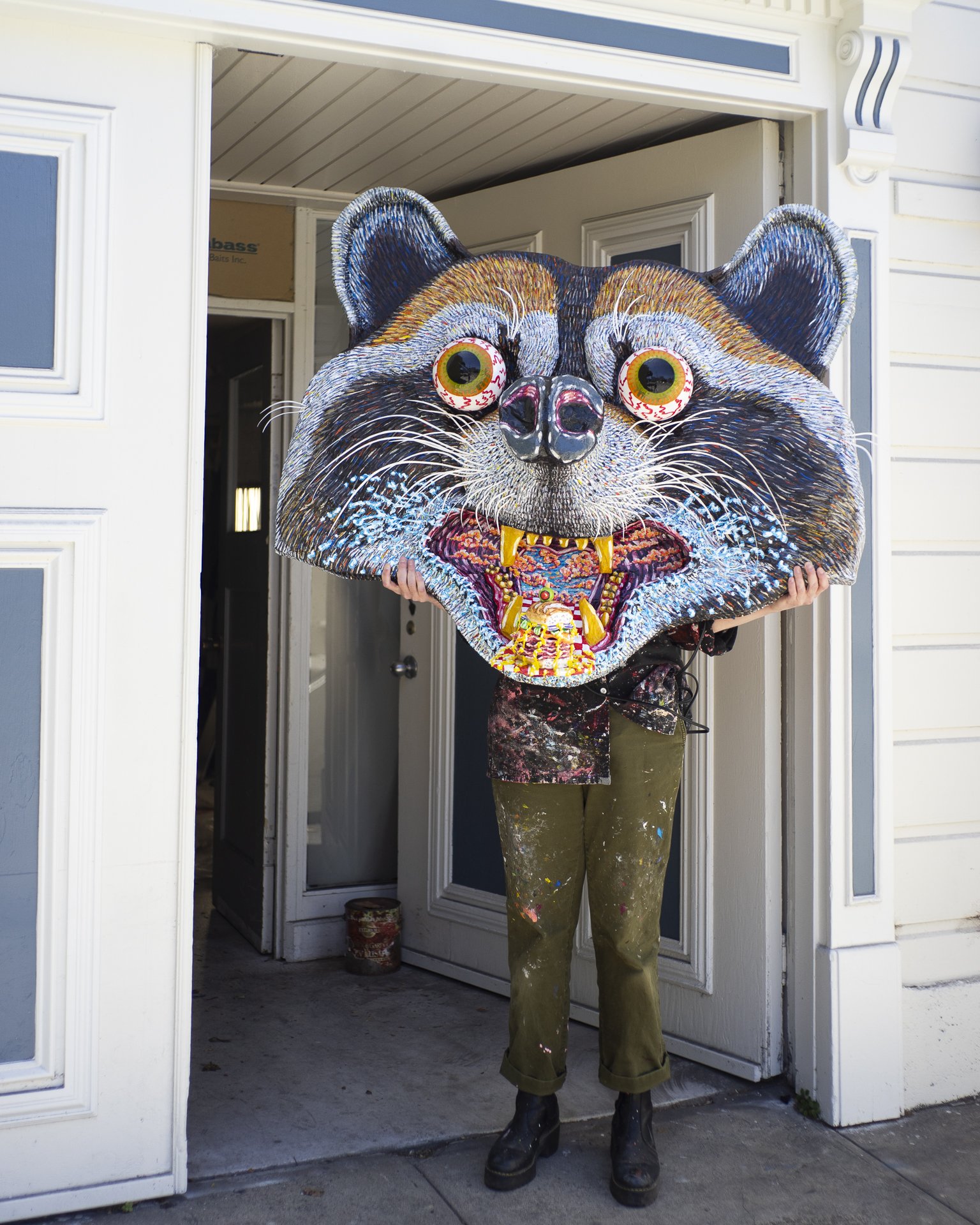
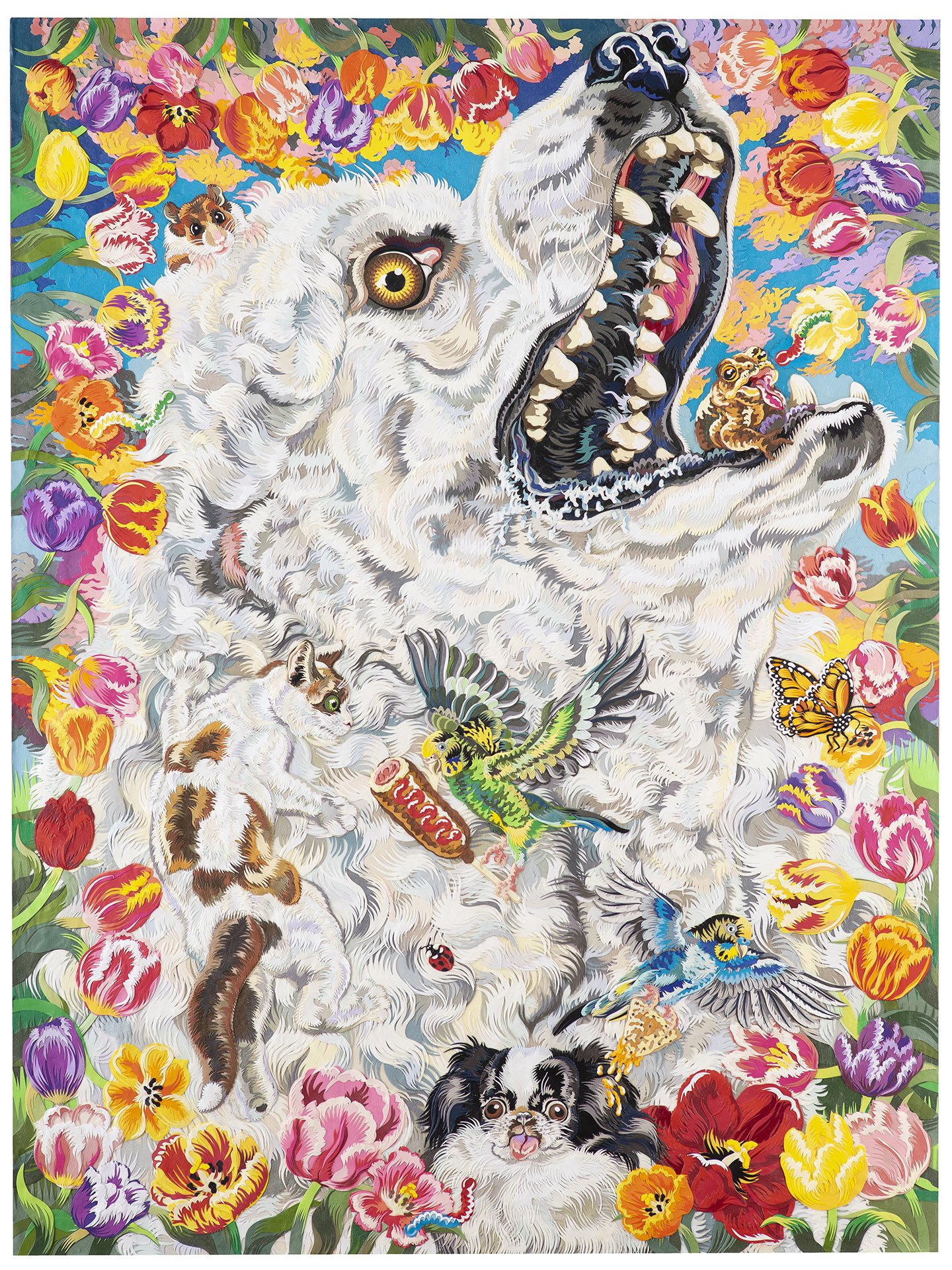
Andrea Bergen is a mixed media artist based in San Francisco whose bold colorful cut paper collages and sculptures depict the Earth without humans where the animals run amok on junk food. Paper and glue are her primary means to construct this world; cut and collaged on wood panels or creating creatures with papier-mâché.
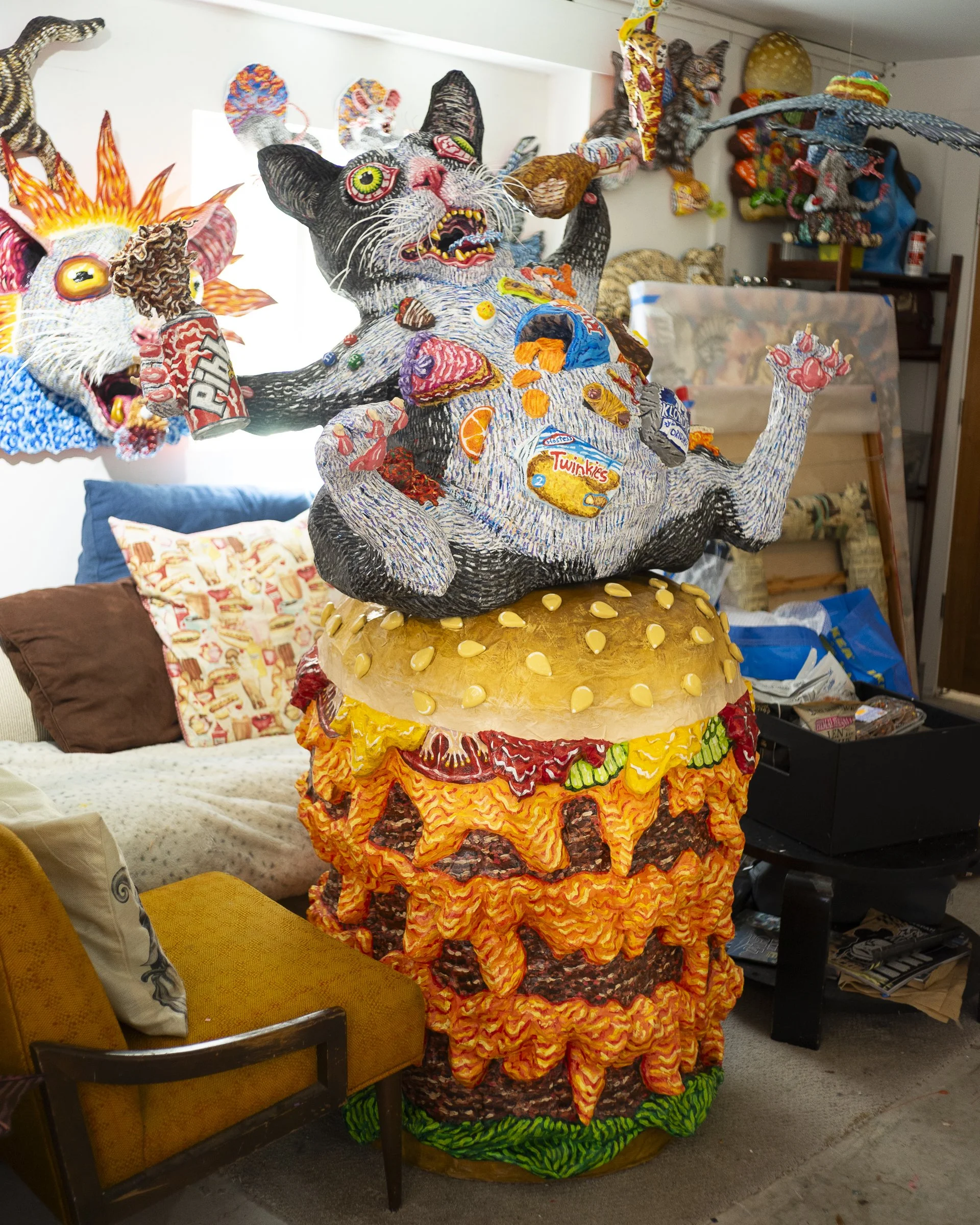
Andrea’s art deserves all the awe and joy people share when they experience her work in person. The well earned wonder about how she creates the art instantly unites strangers in the gallery. It’s easy to enjoy her work and lose focus on the grim subtexts they conceal. The bright colors and cute animals with their zany expressions make the heavy undertones sweet and palatable.
I’ve known Andrea and photographed her work for several years. While in her studio on Harrison Street in The Mission District prior to her solo show “The Big Buffet in the Sky” at Moth Belly Gallery, Andrea tells me over coffee, “The extremeness of the work, the intensity of color and expression, comes from the feeling of being dopamine depleted. The work needs to be over the top to move the needle because my dopamine receptors have been worn down to nubs by the excesses and stressors of modern life. For me the feelings of existential dread and emptiness can be combated by a colorful and outrageous shock to the system. I’m so fortunate that I have the work to keep me from despair and give me a purpose.”
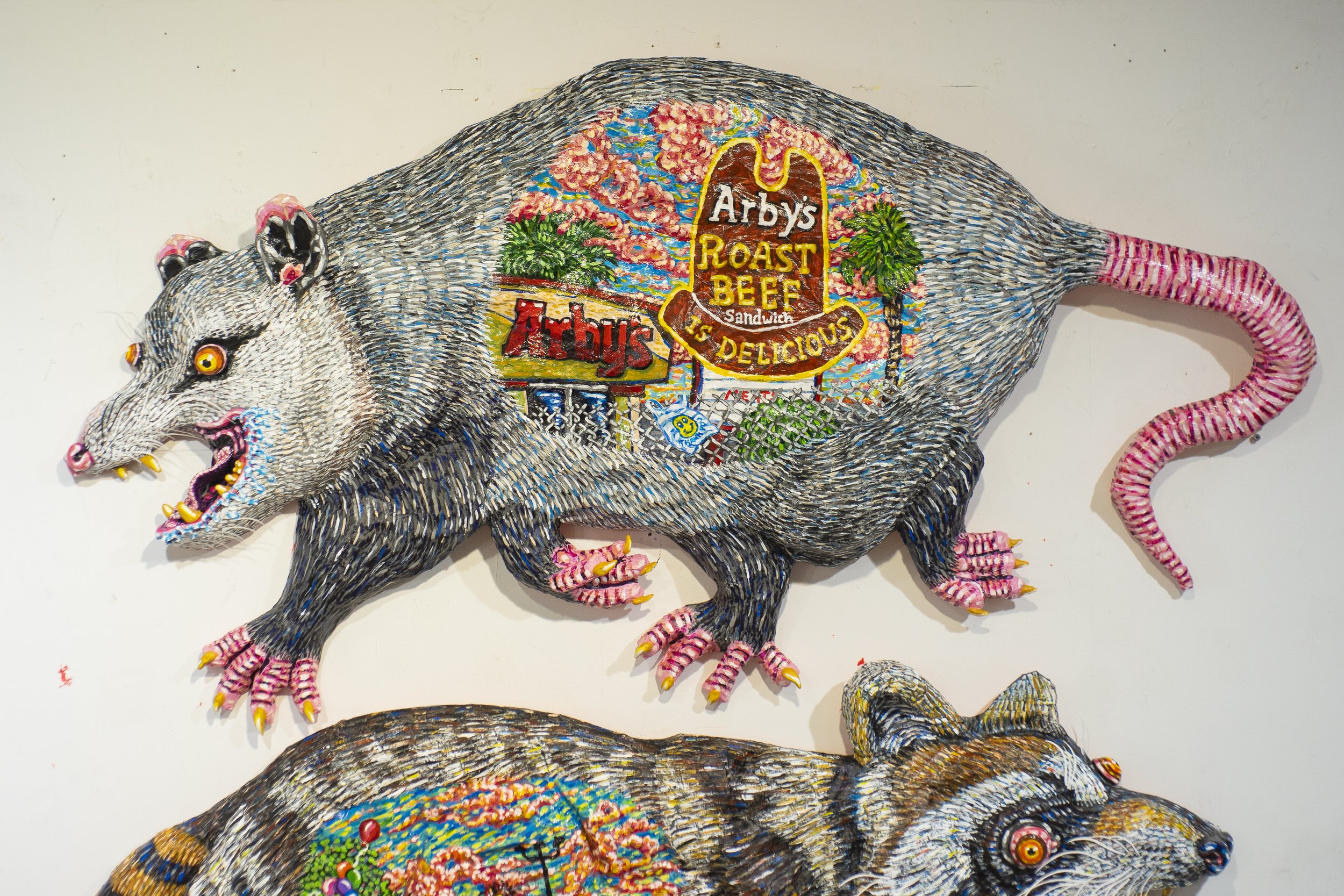
Andrea elaborates, “I am trying to communicate the crazy feeling of being a consumer and contributing to the destruction of the Earth just by existing. It is the recognition that I am complicit in all the waste no matter what choices I make because the system was not designed for longevity. It was designed for maximum profit extraction, no matter the cost to human and animal life.”
Interview
Do you have any routines you follow when you first get to the studio?
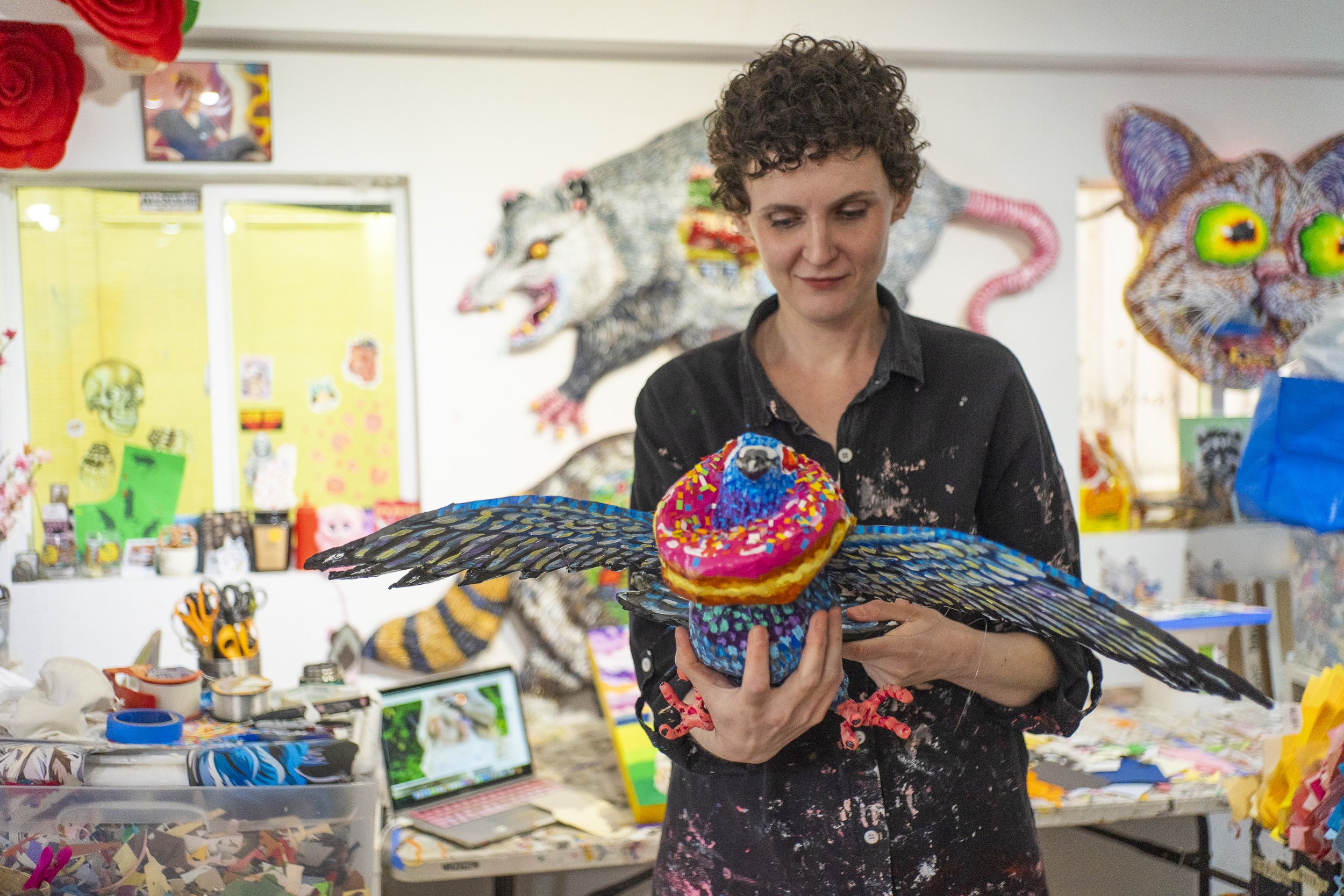
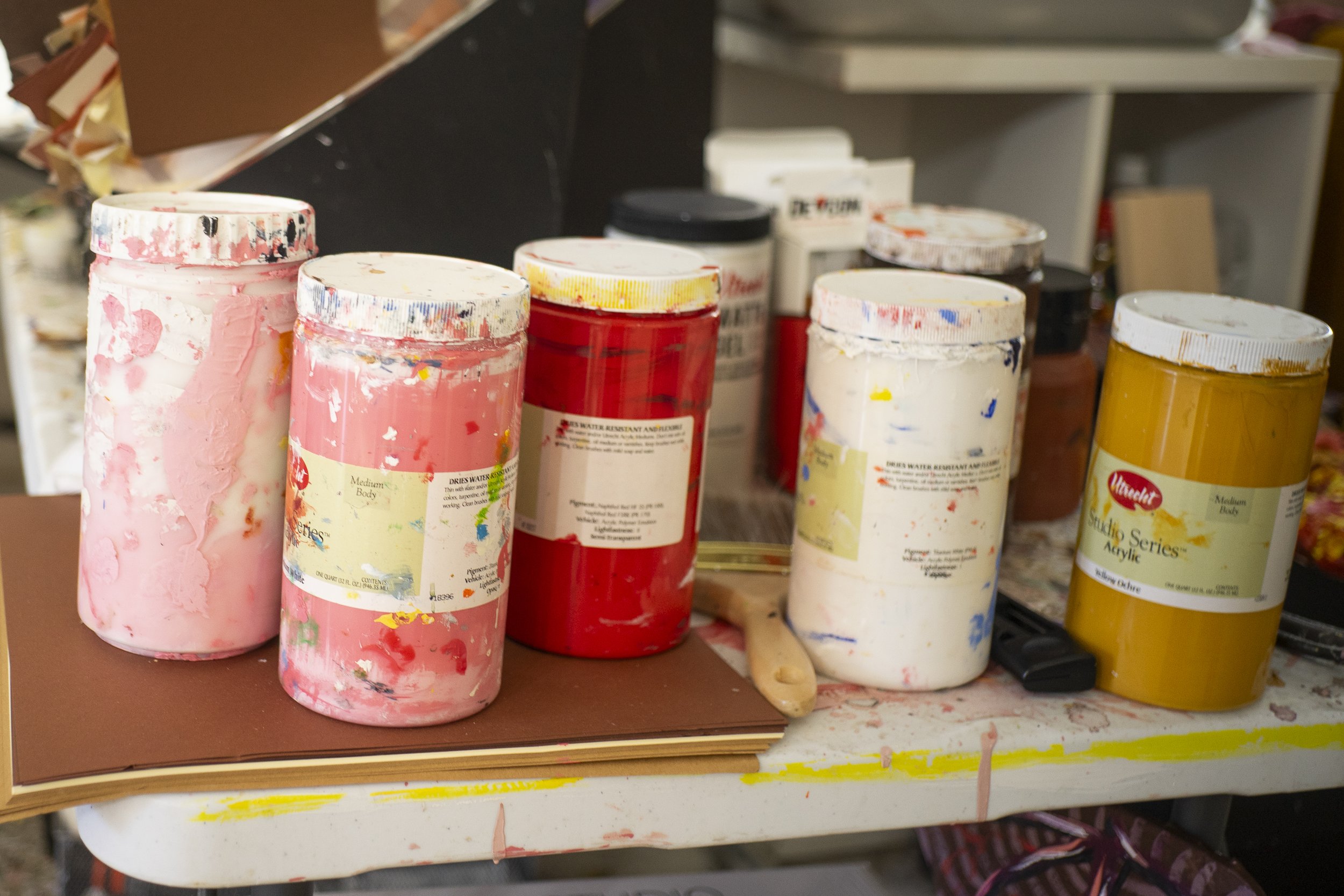
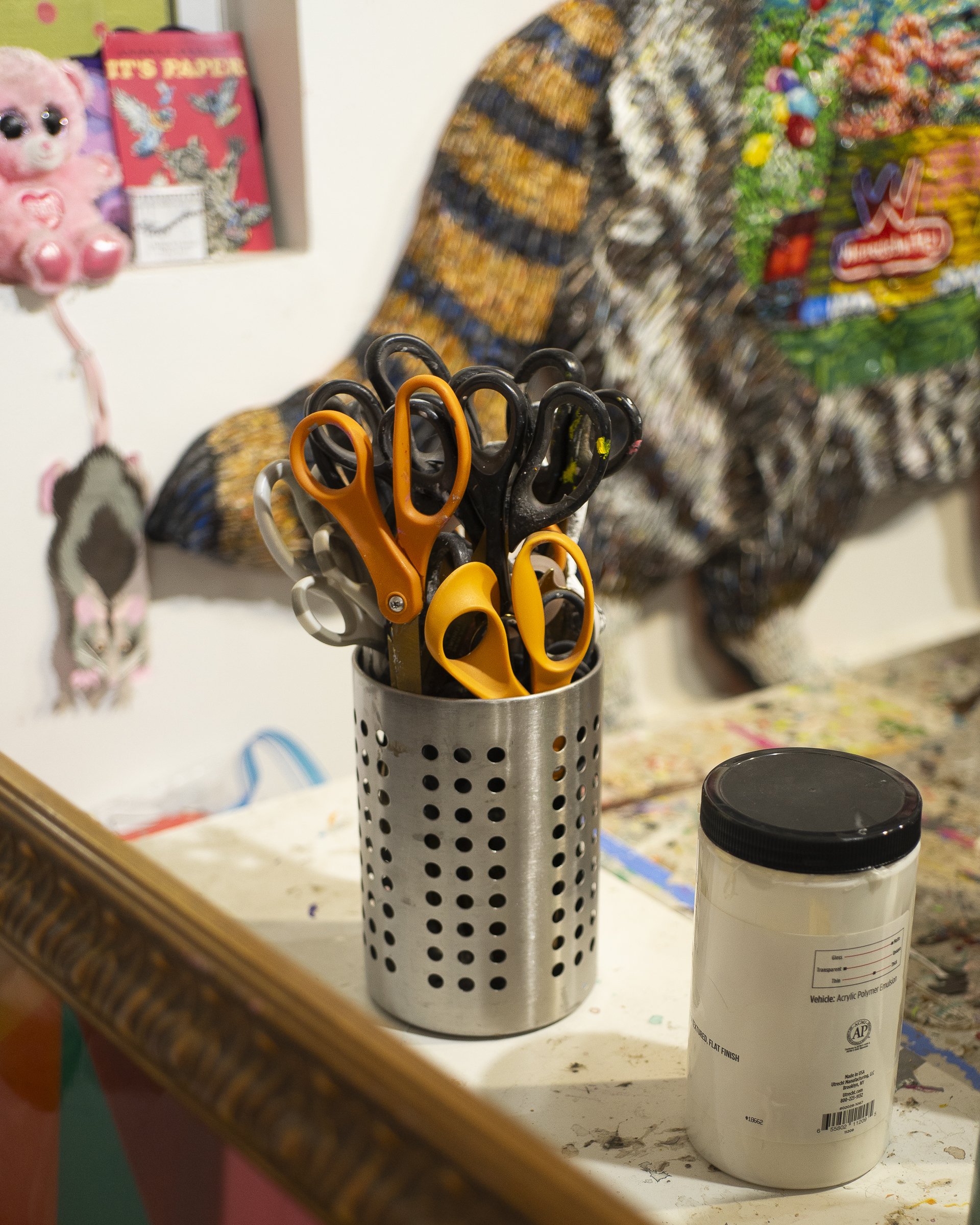
I am a big coffee head so I usually make coffee first then drink too much of it. If I'm working on a collage, I put bandaids around my fingers to protect them from the scissors, then I can work for about 6-7 hours without too much discomfort. I share the studio space with two other artists so if we’re all in at the same time we’ll put on some music and listen together. If I’m alone I’ll listen to podcasts like the Sloppy Boys, Joy Tactics, or POOG. I find that listening to the conversation prevents thoughts from forming in my own head which is a nice respite from my neuroticism and tendency to ruminate.
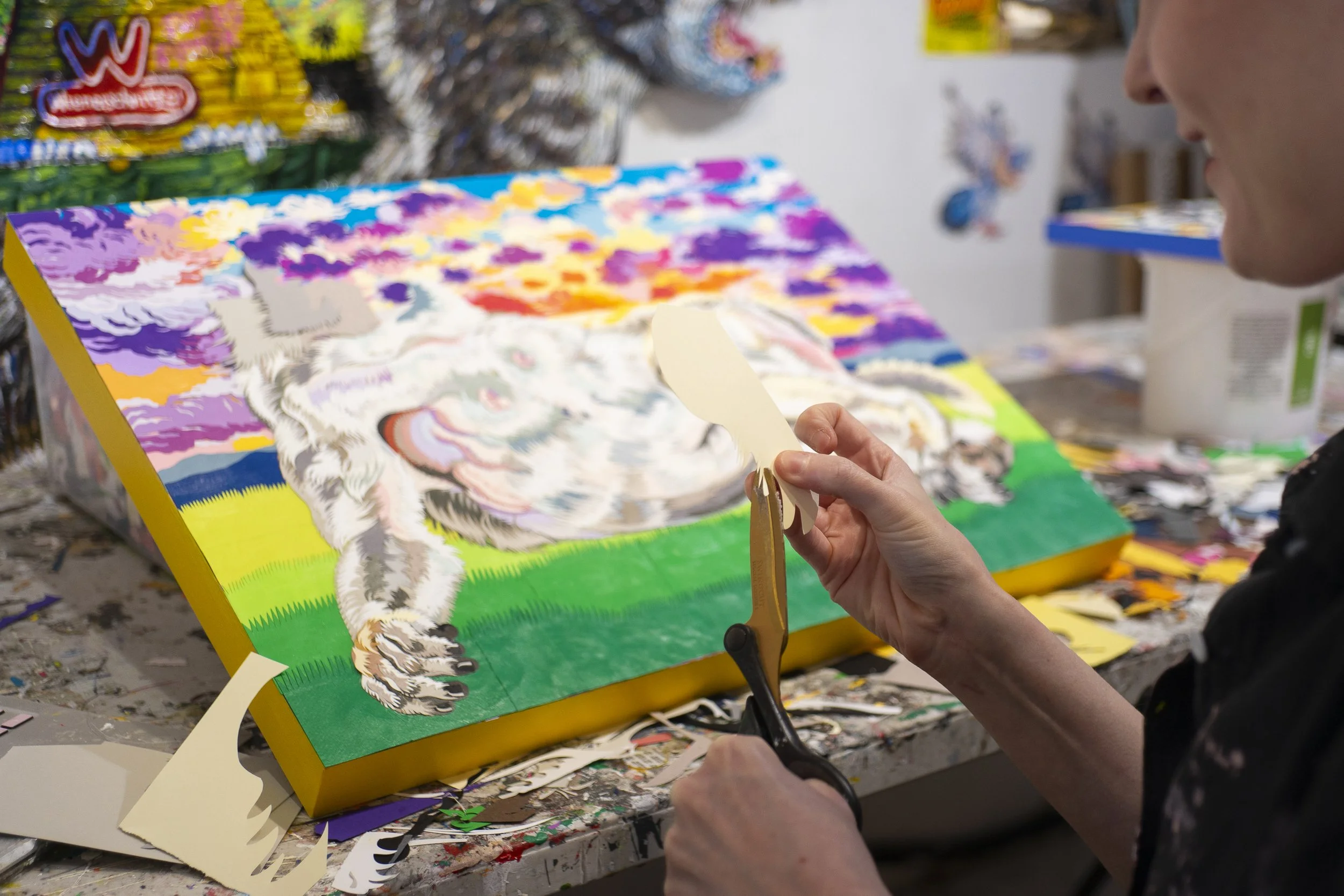
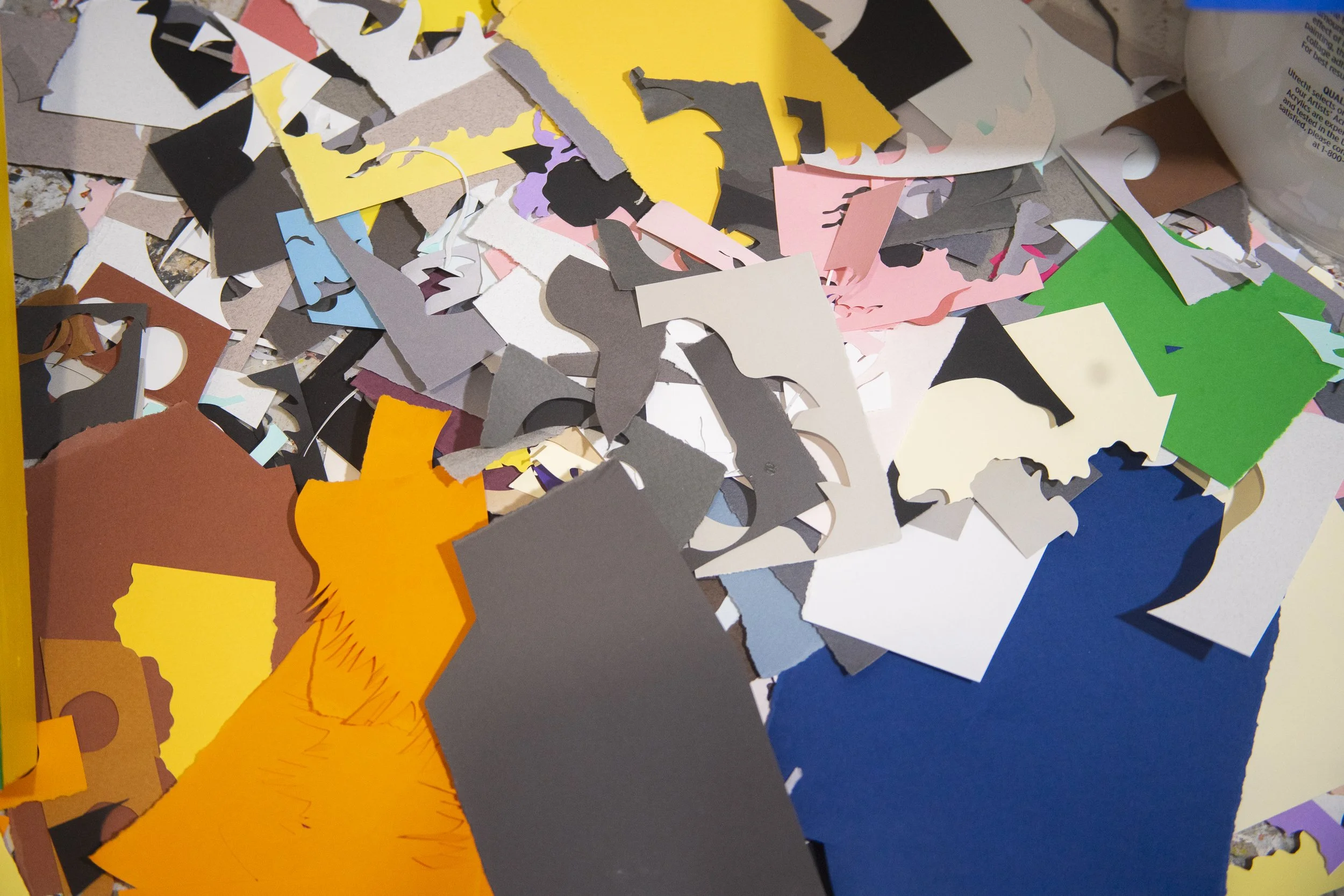
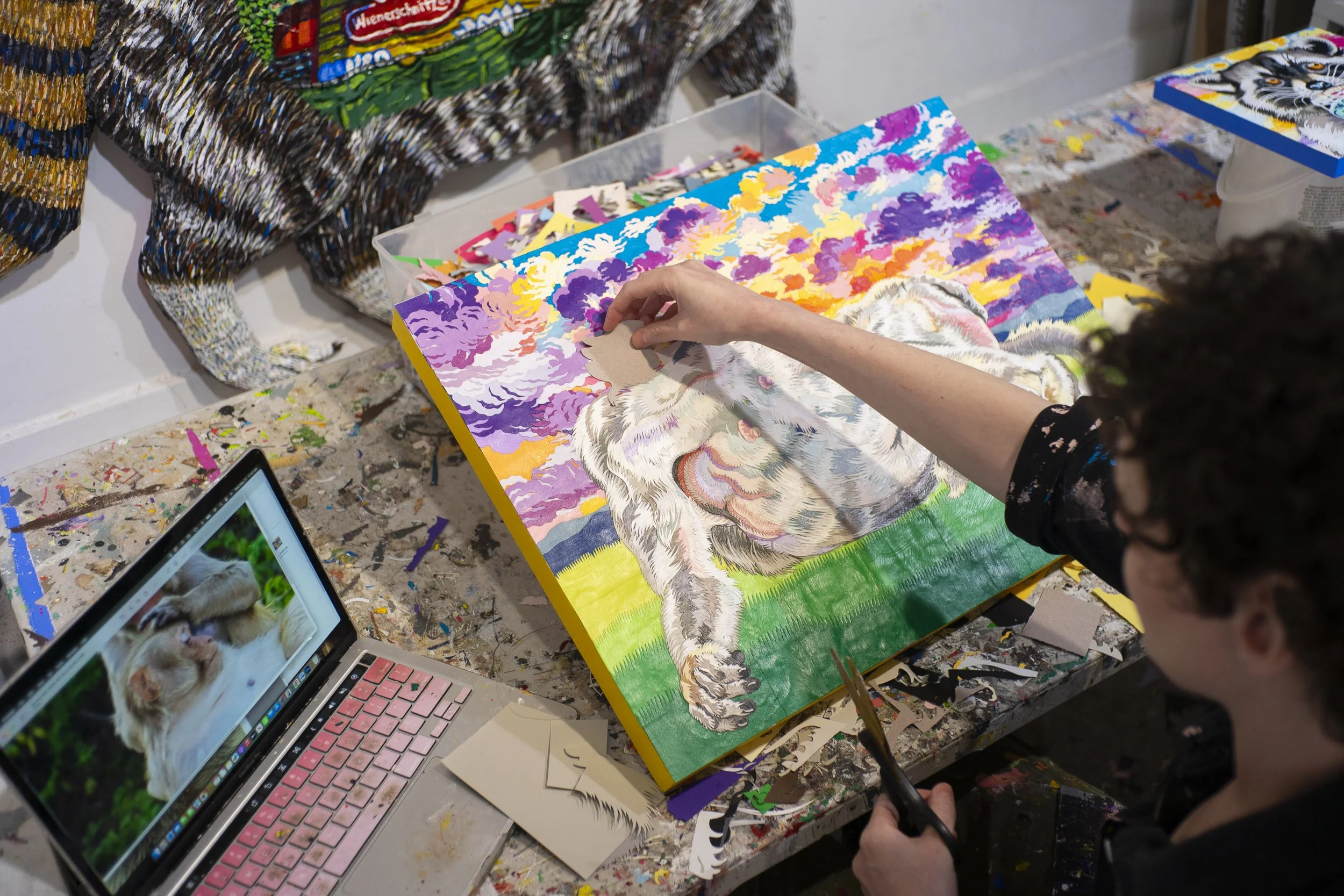
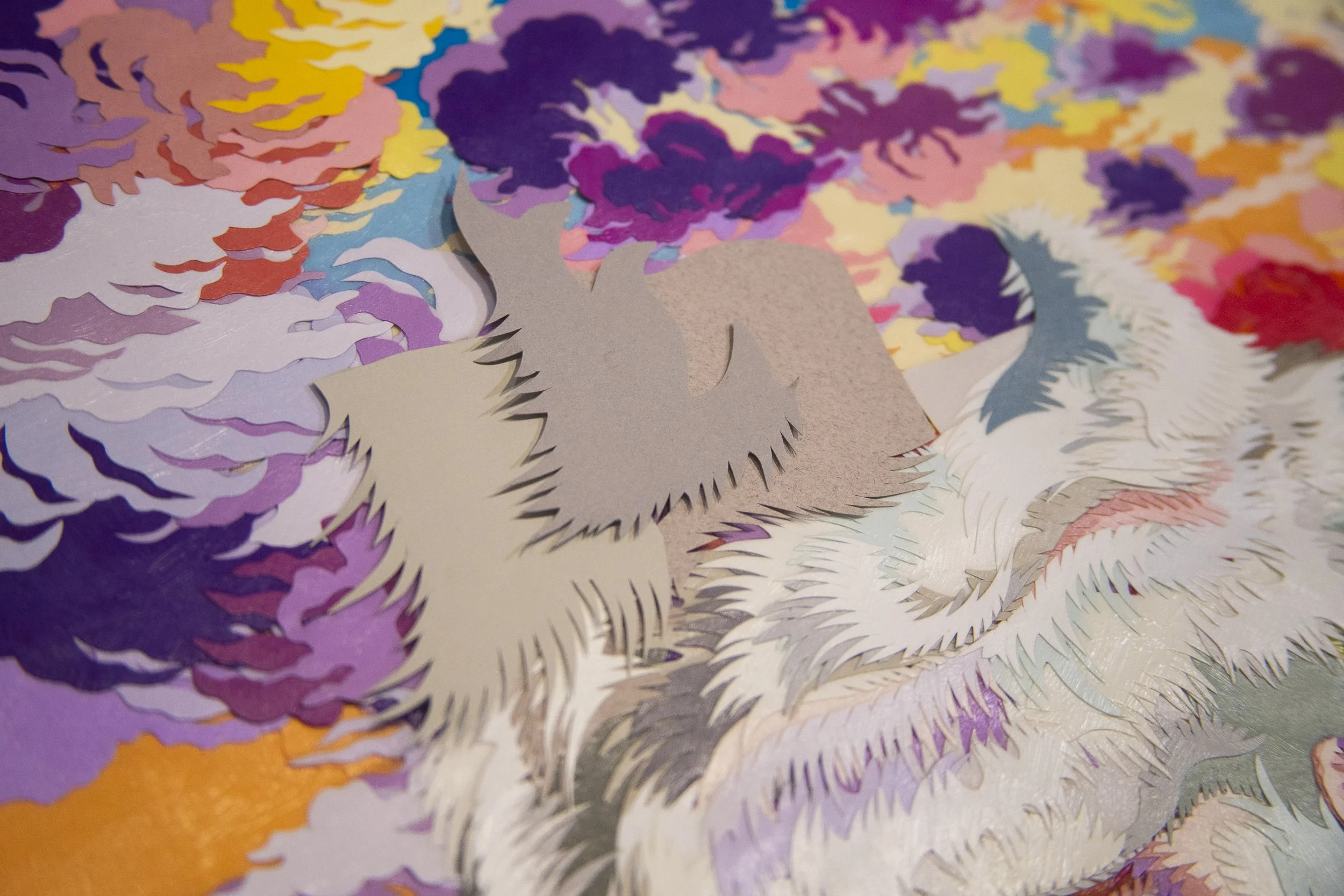
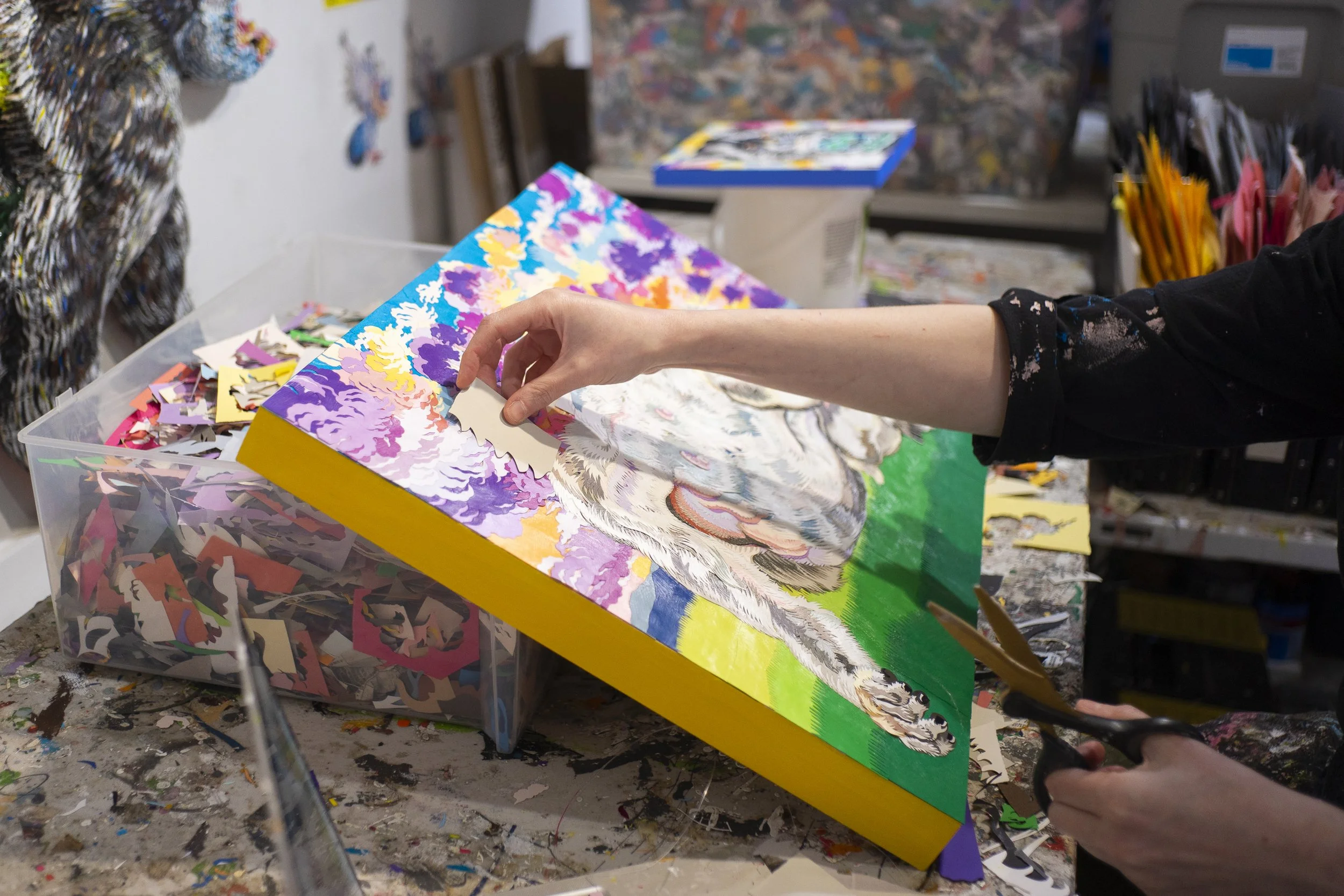
You layer your collages with hundreds if not thousands of cuts of paper to create the creatures and their habitats. How do you keep all these complicated compositions arranged, organized and to scale?
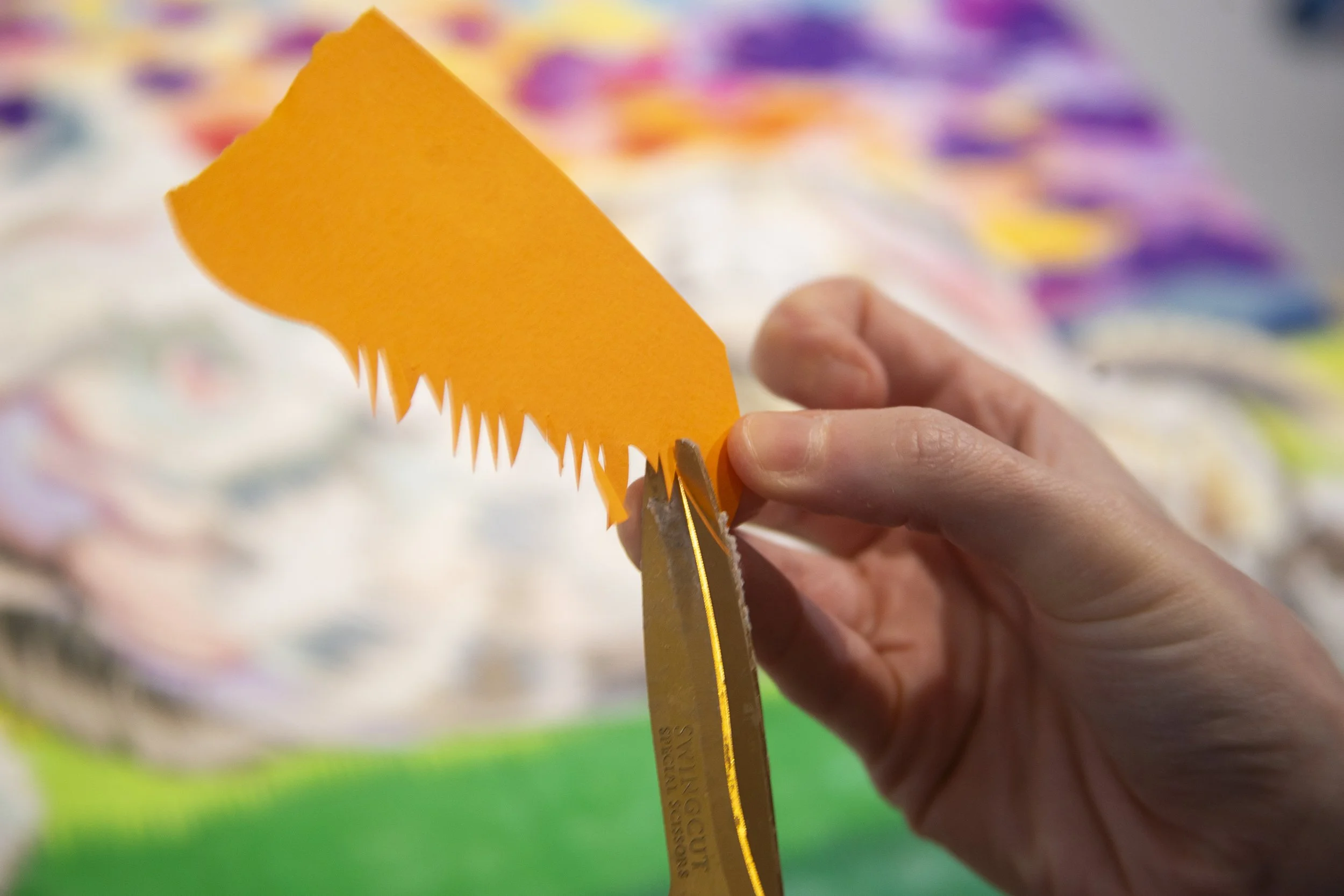
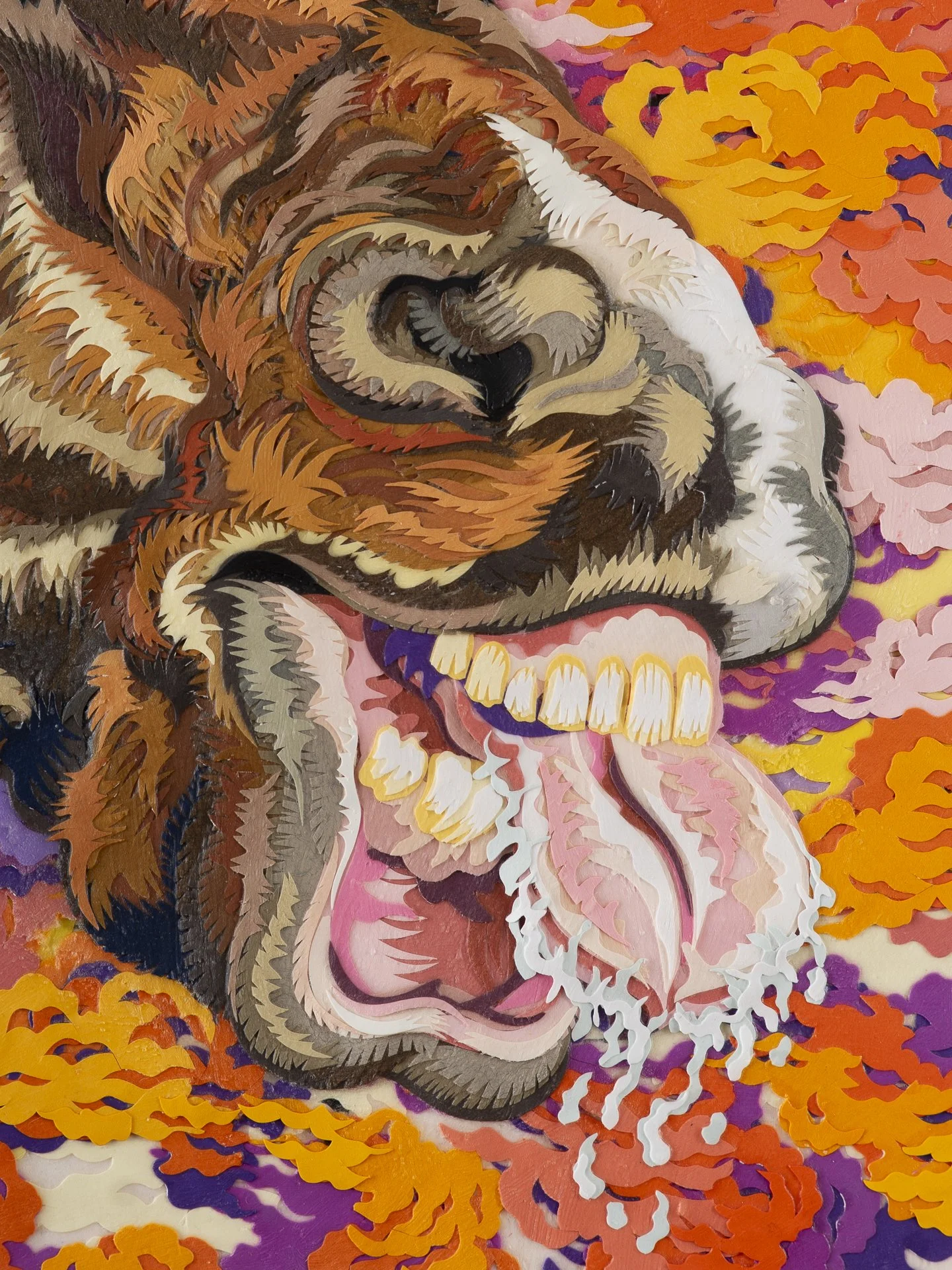
The images are built as I work, I freehand cut the pieces as I need them and paste them down one at a time. I try to get the paper down as quickly as possible so that I don’t get confused or lost in the sauce of what I’m trying to make. For a larger piece I will block out the silhouette with a mid-tone color then add the shadows and the highlights. The layering and stacking of colors comes from years of working with a familiar color palette, I know how all the colors optically mix to build a shape. Once I cut a base shape, I can cut concentric and smaller elements to go on top just by muscle memory.
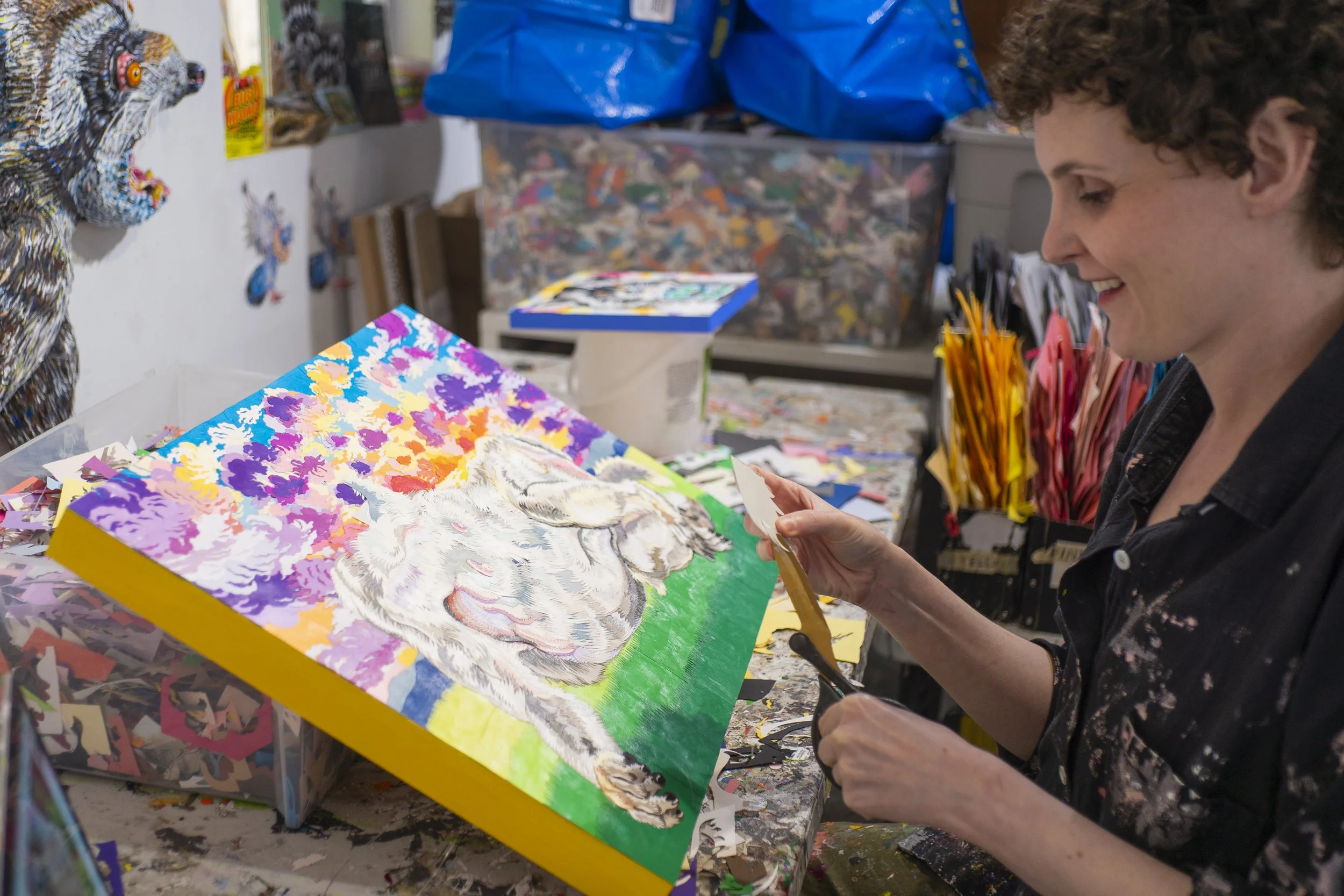
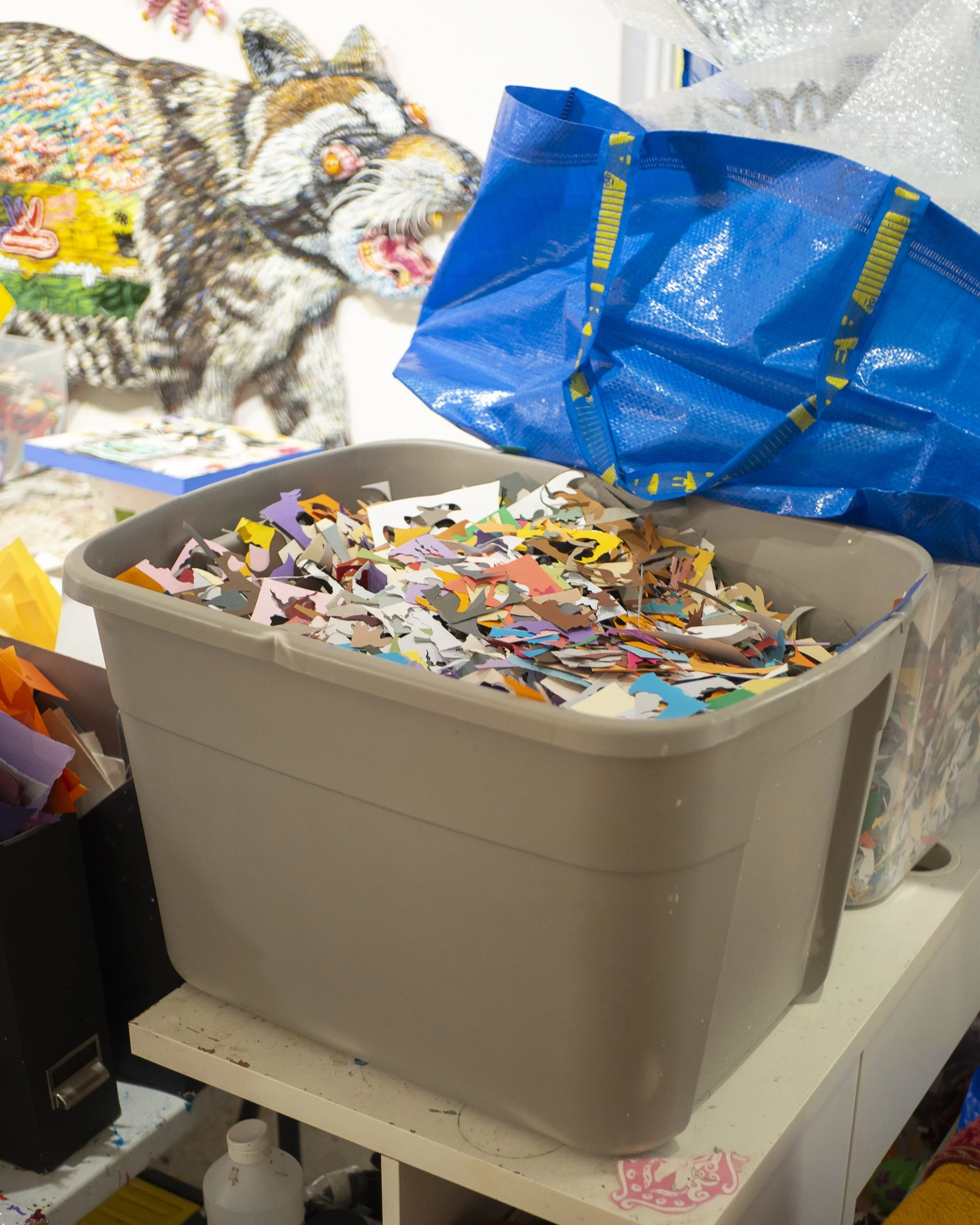
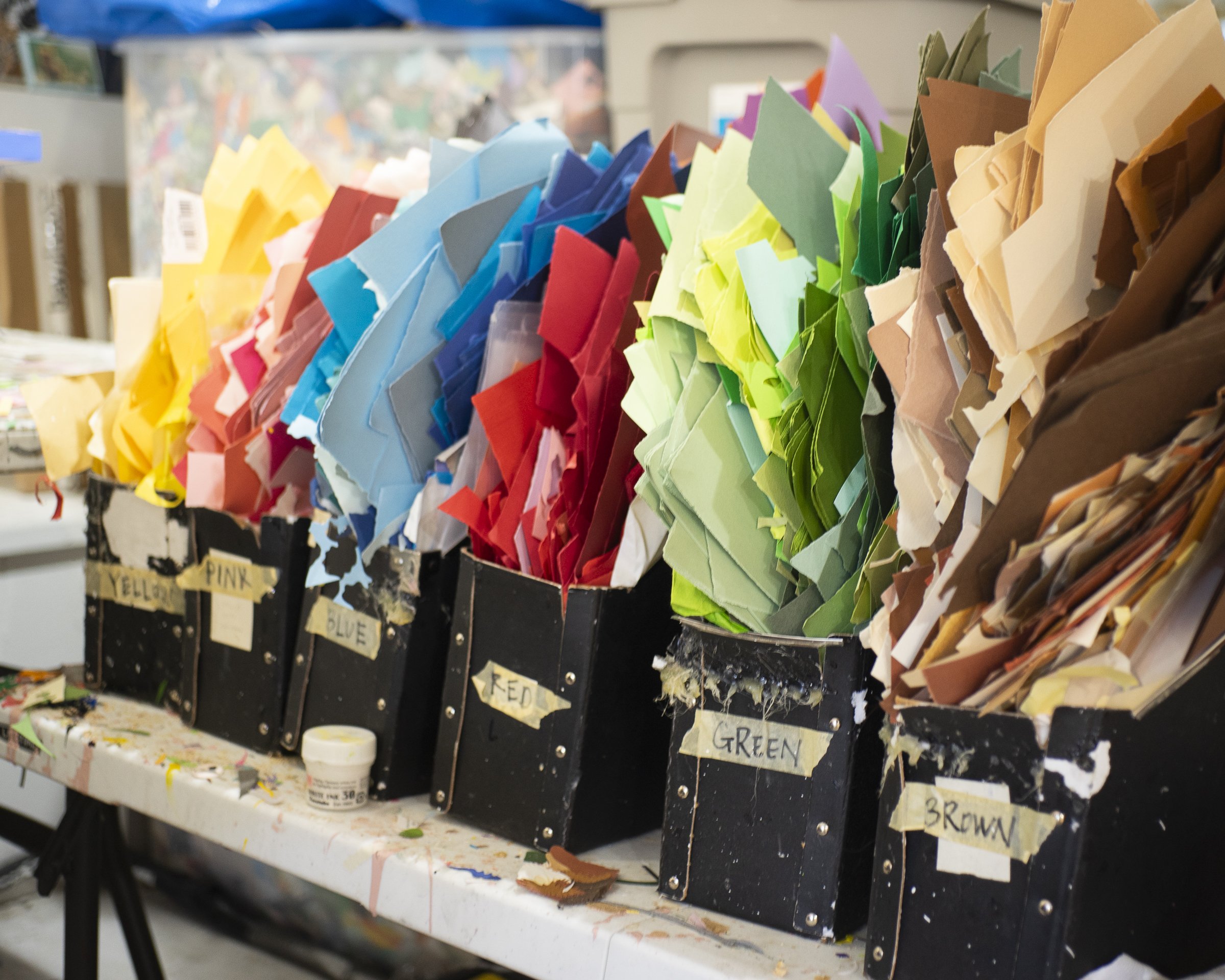
You mentioned you like to get the background quickly so you can get to the fun part, the animals and their activities in the foreground. Do the collages live in your head prior to making them or are they conceived through working on a piece?
I get my ideas in glimpses, only shards of the entire composition come to me at first. I’ll get a very general sense of a concept like “buffalo in a parking lot” and then I figure out the rest of the elements surrounding it after the main character is in place. It is an improvisational process that is guided by my Baroque “more is more” sensibility and desire to fill all negative space. Most of the composition is finding animals, food, and flowers that can plug in in the gaps. I often make the “wrong” choice like putting something too close to the edge or directly in the middle of the composition which creates a spatial problem that I have to “fix” with another choice. This process can be frustrating and is probably not the best way to work but it is very satisfying when I can solve the puzzle of my own making. The piece feels finished when none of the “blank spots” are glaring out at me. There is a point at which the surface feels closed off to any further intervention.
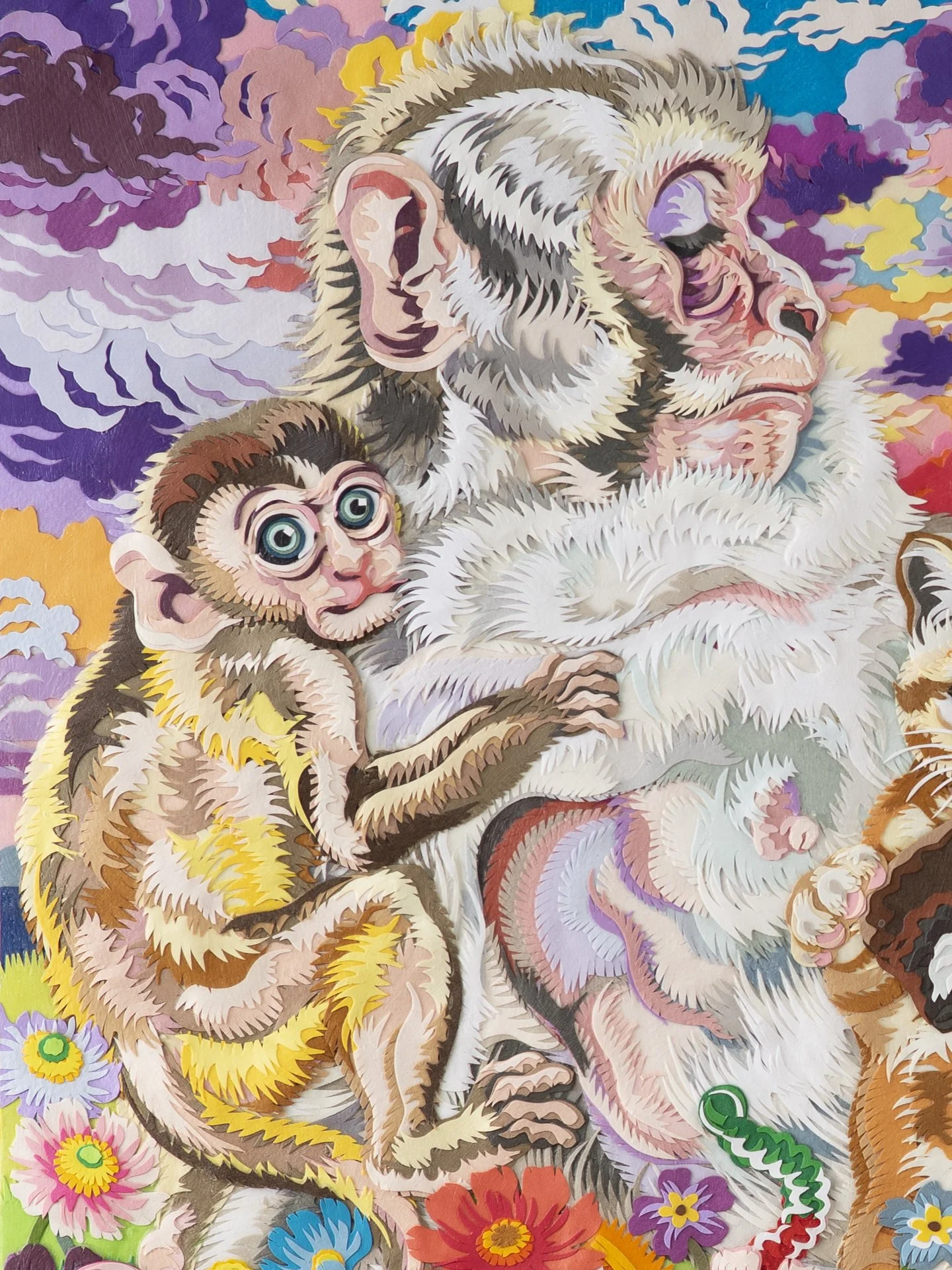
Detail of “Dessert First Forever”
Do you do sketches or studies for your larger works?
The compositions begin with a sketch directly on the panel or sometimes a rough Photoshop mock-up. I will occasionally roughly sketch on a pad beforehand. I’m not a big pre-planner and often consider the first thought the best thought. I try not to think too much, I will get bogged down in my thoughts and become immobilized. The most efficient way for me to work is to get the idea out before it calcifies in my head. For better or for worse I’m very decisive and I’ll pick a direction to go in then commit to it.
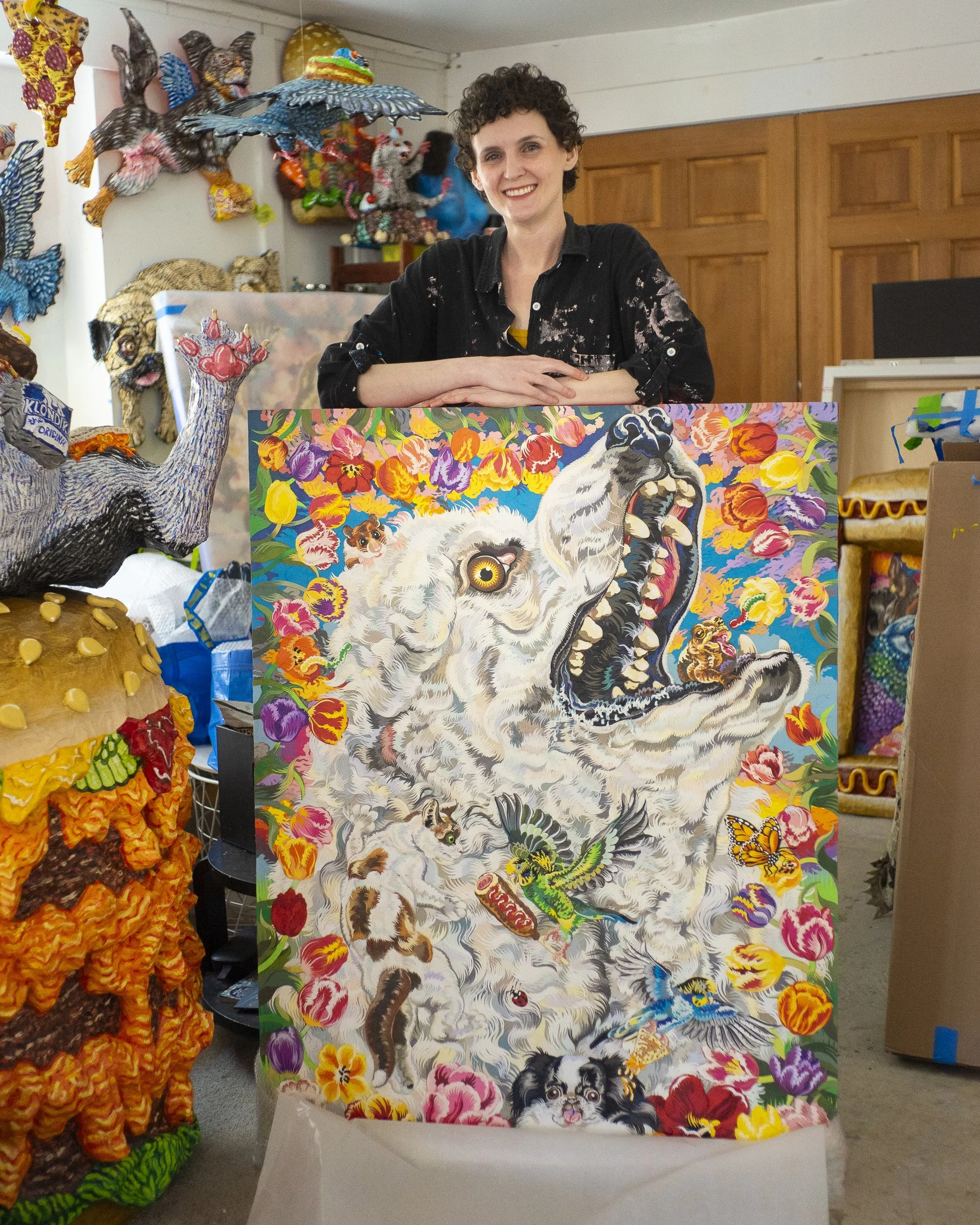
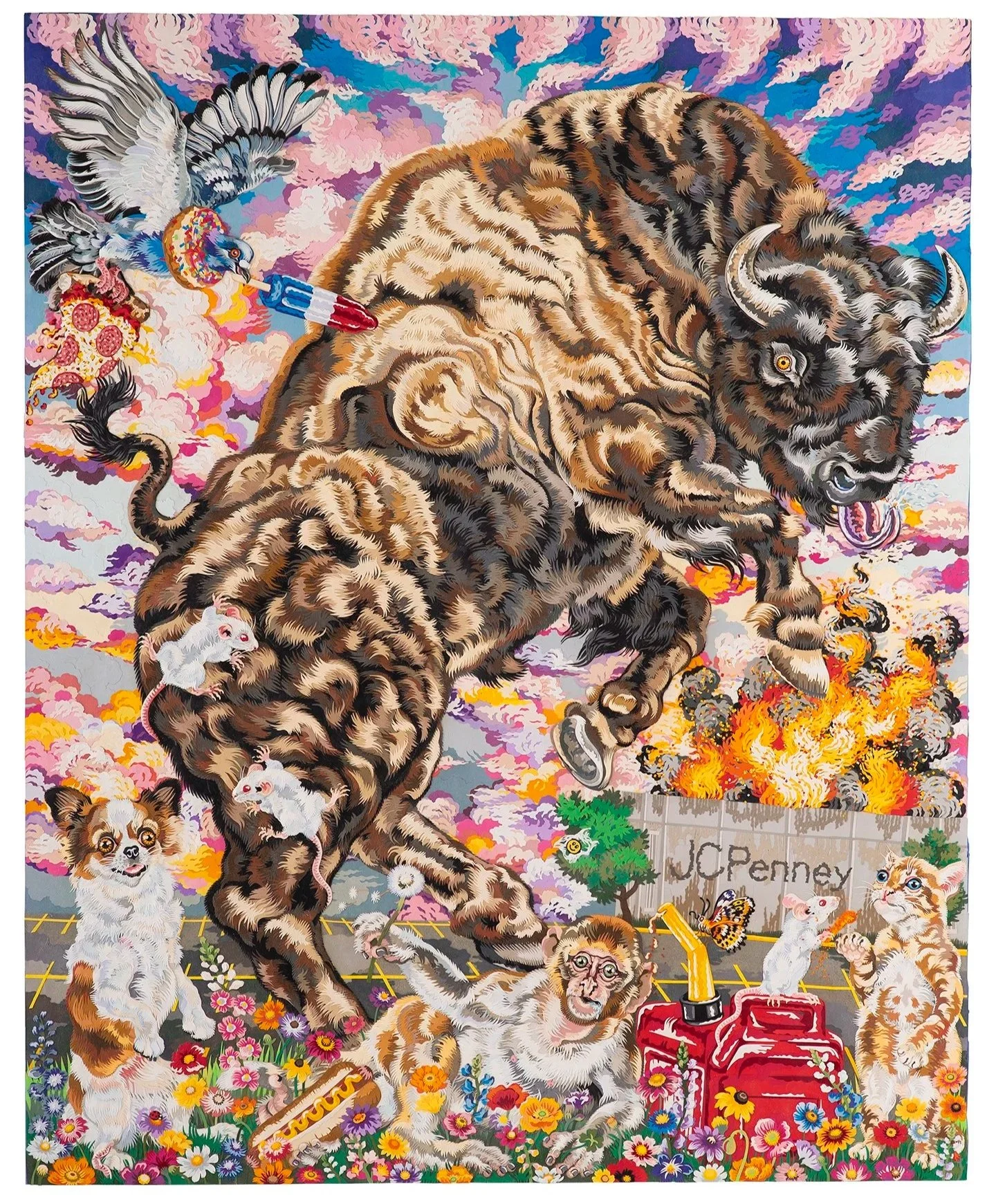
With over 40 pieces in this show, what was the first piece you created for the series?
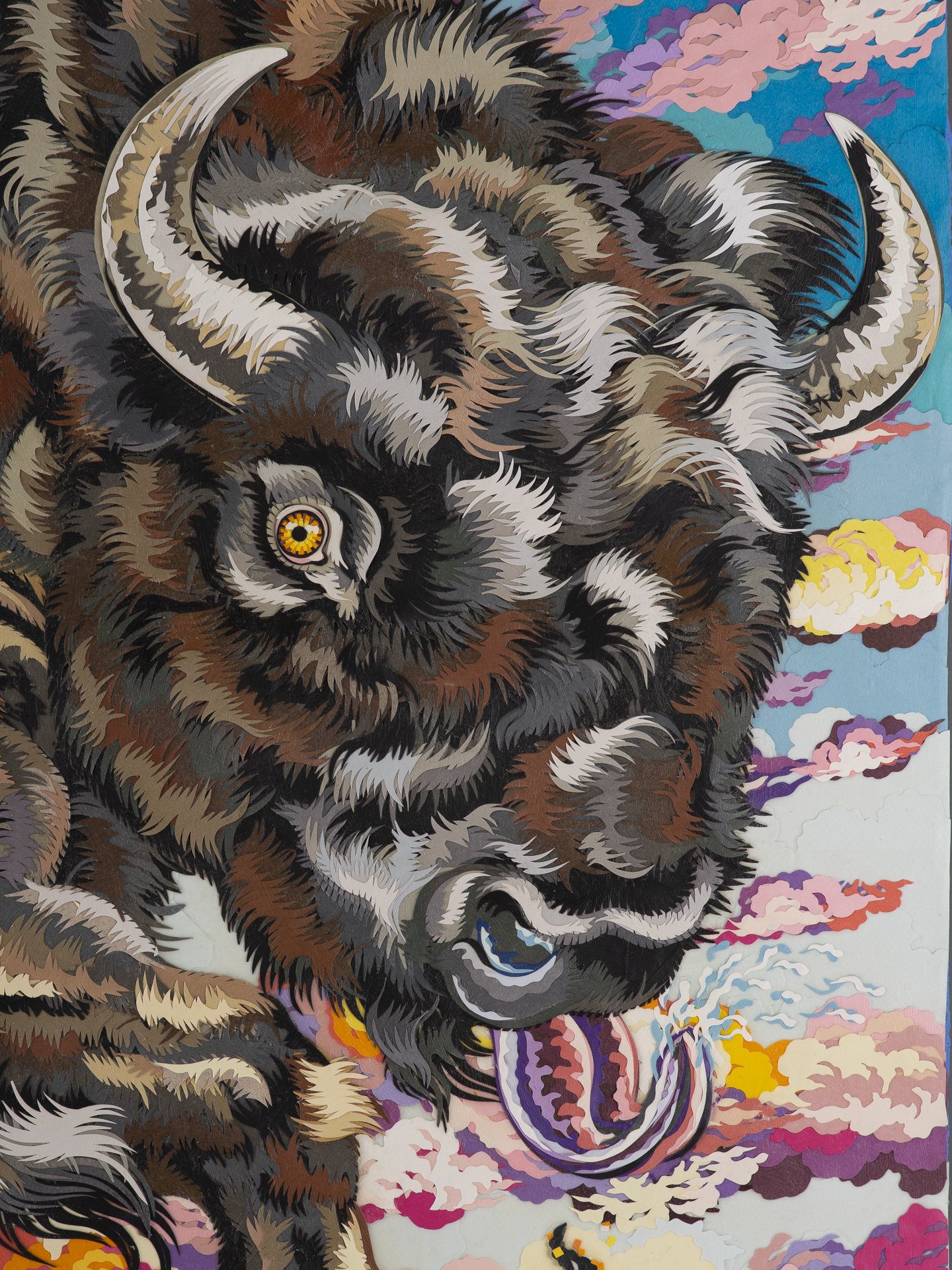
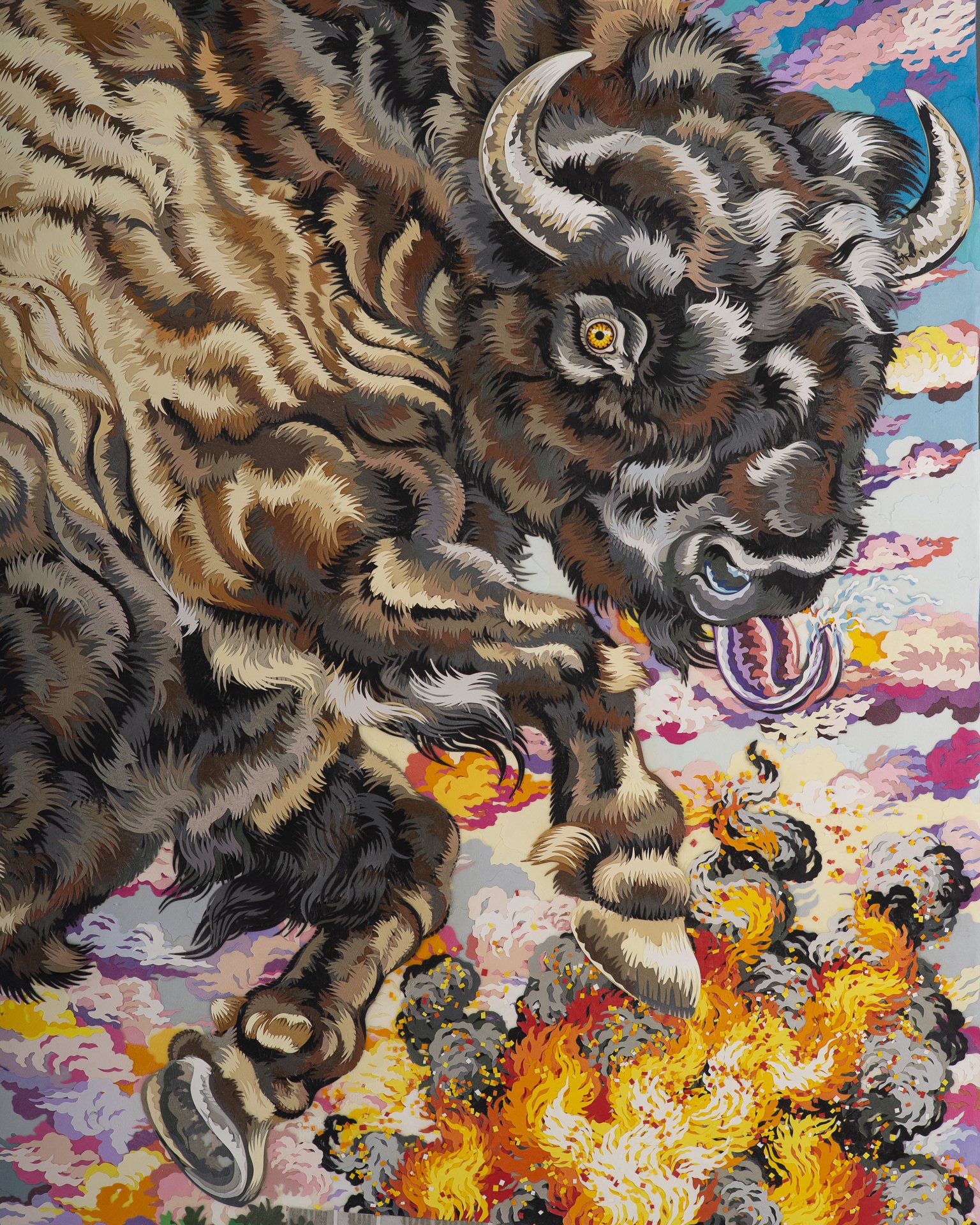
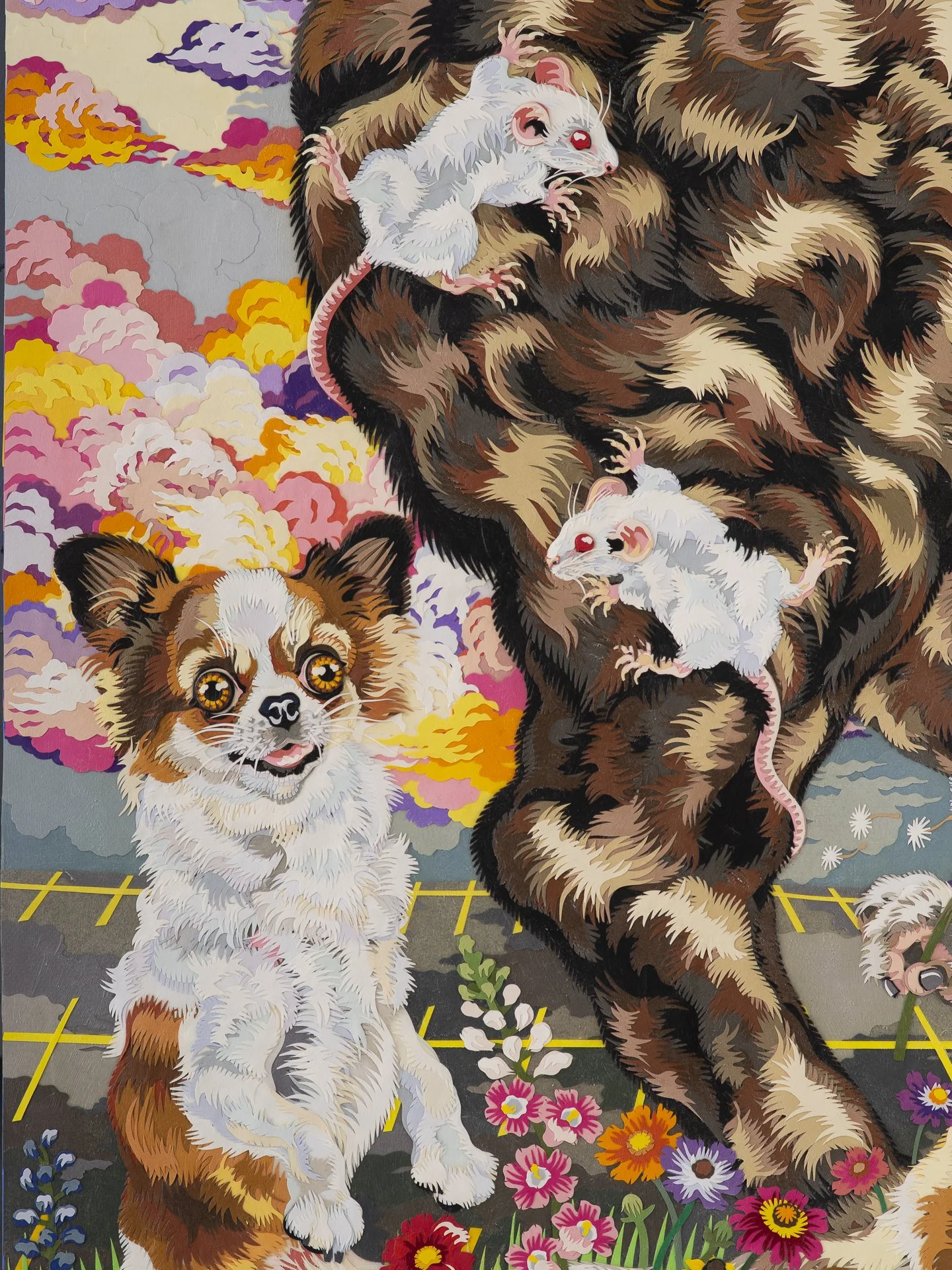
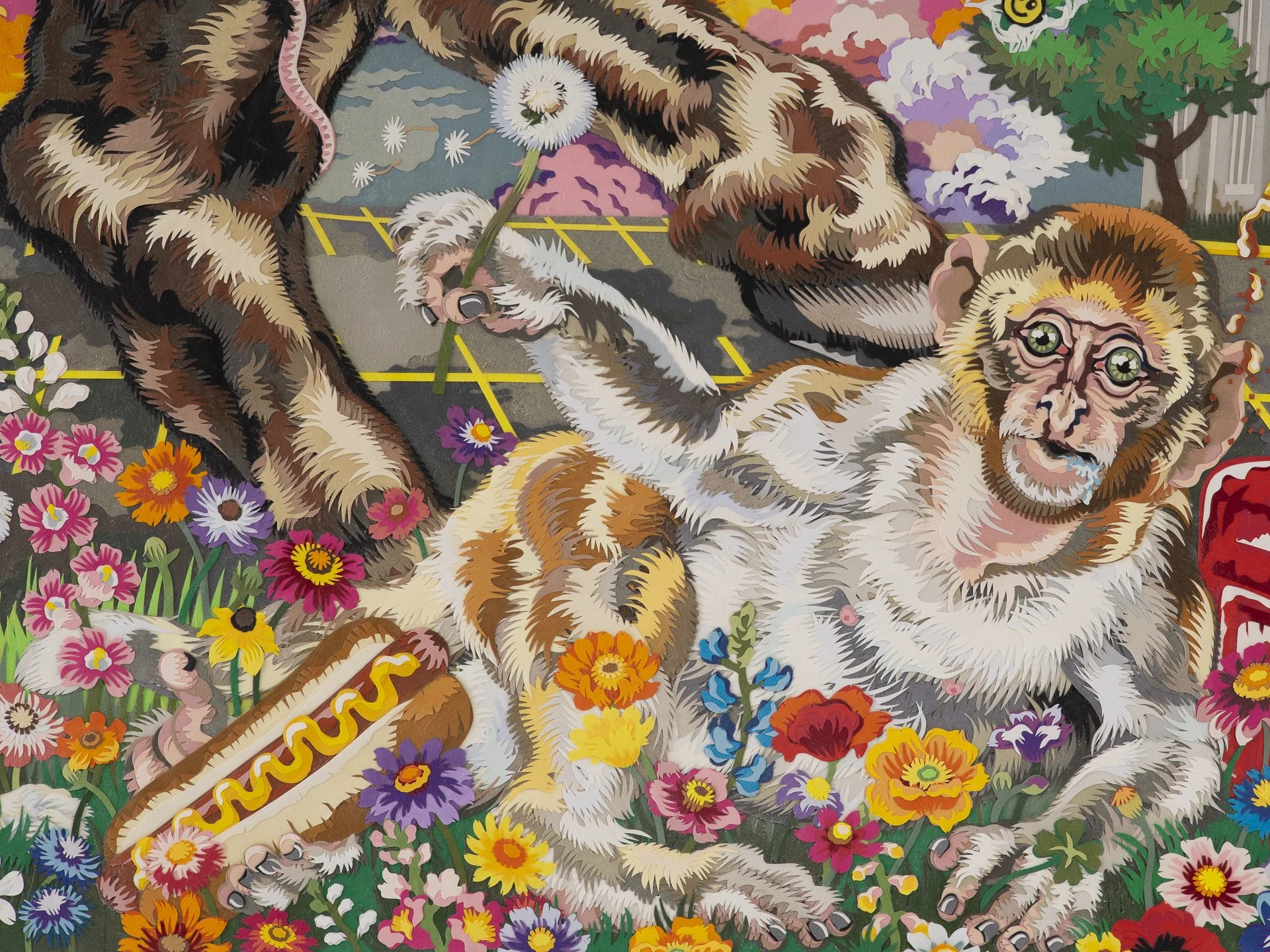
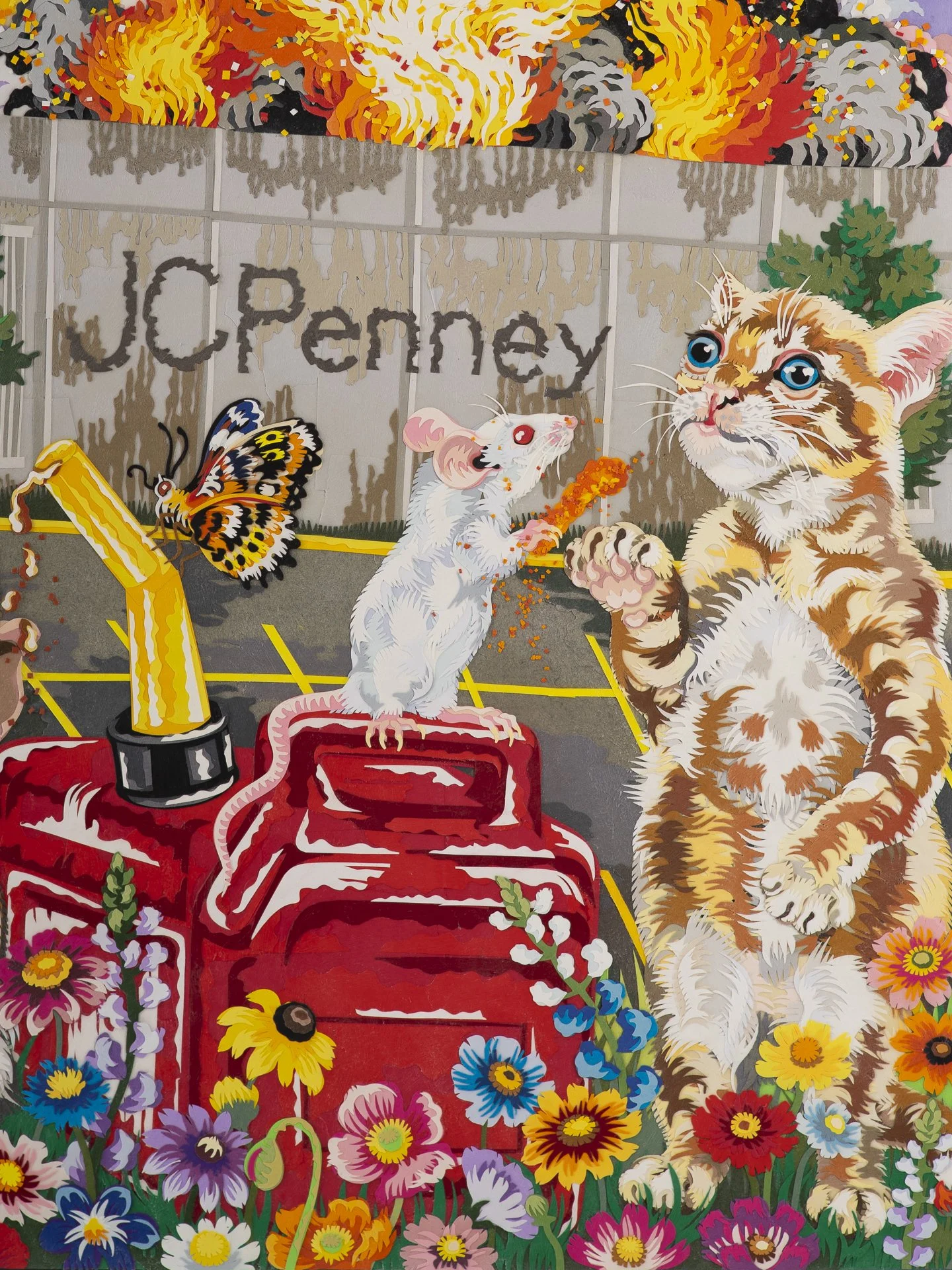
“We’ll Get It Right This Time,” was the first piece I created for the show. At 5x4ft, it’s the largest single panel collage I’ve made, I’ve made larger multiple panel works with smaller panels. I think it exemplifies the transitional period I described between the human and animal worlds. A lot of my collages have burning buildings or cars without explicit indication of how they ignited but the gas can in this piece shows that the animals actively destroyed the JC Penney in the strip mall to make way for what is to come next.
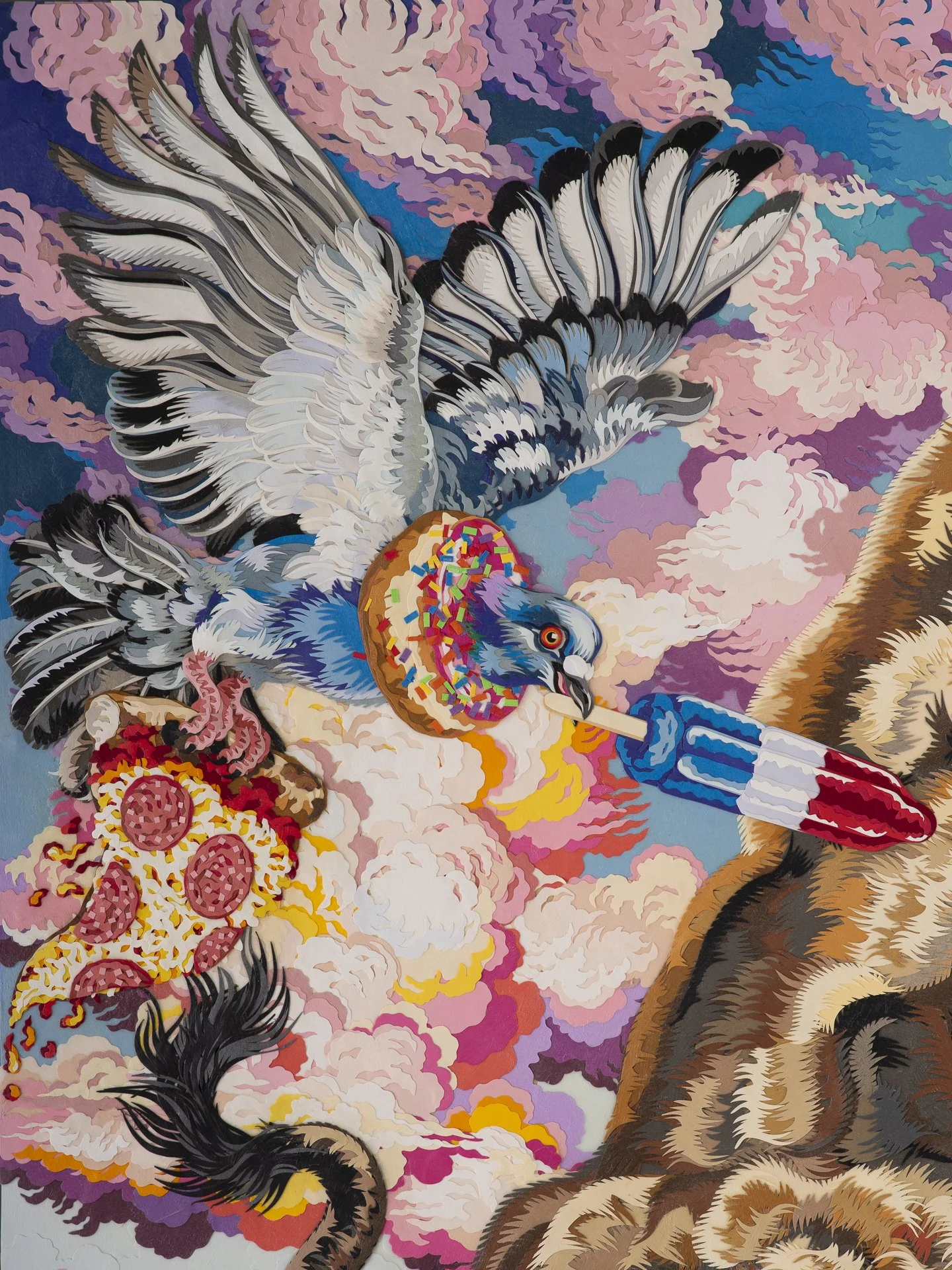
If you had to choose a favorite animal in your work, what would it be and why?
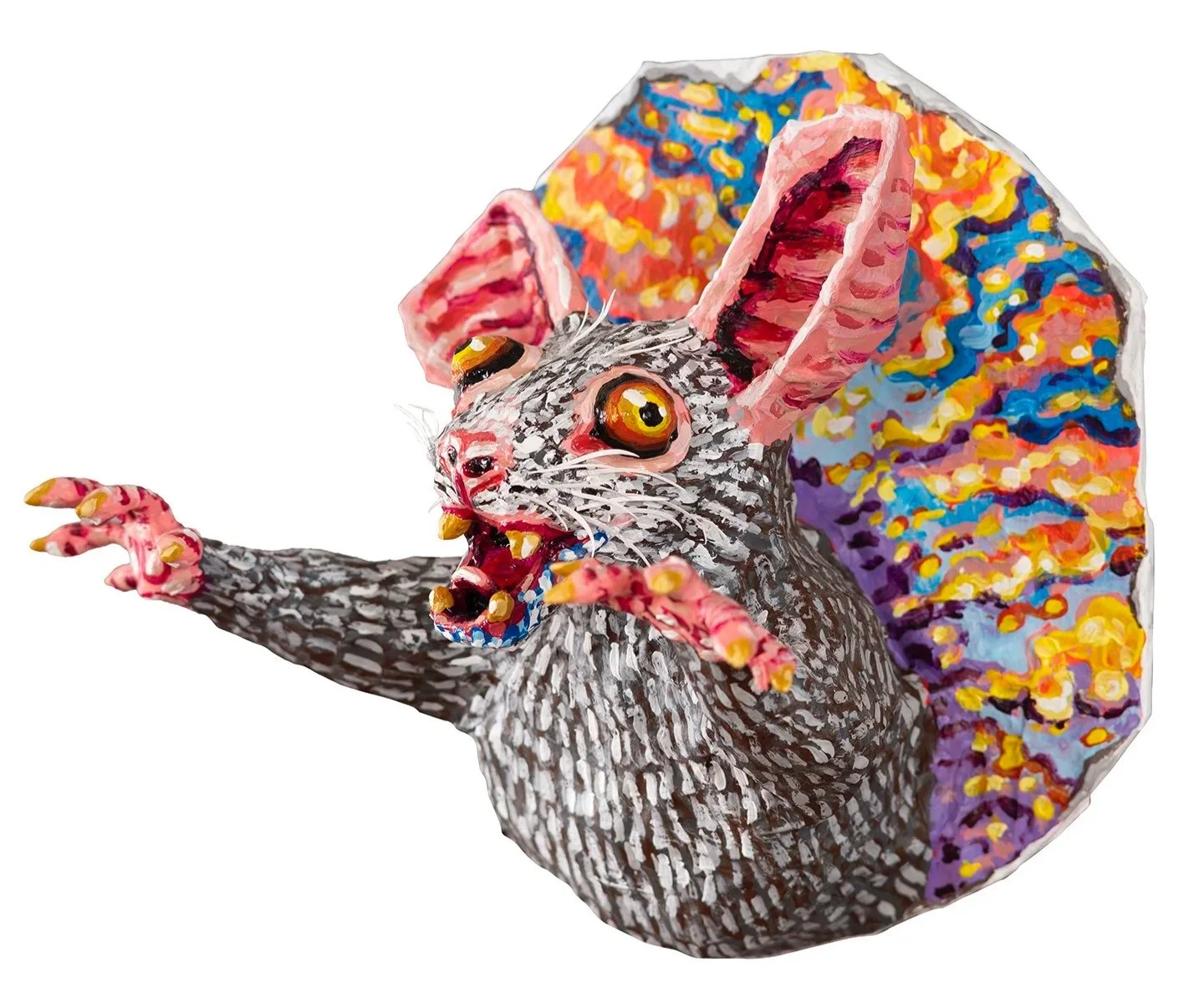
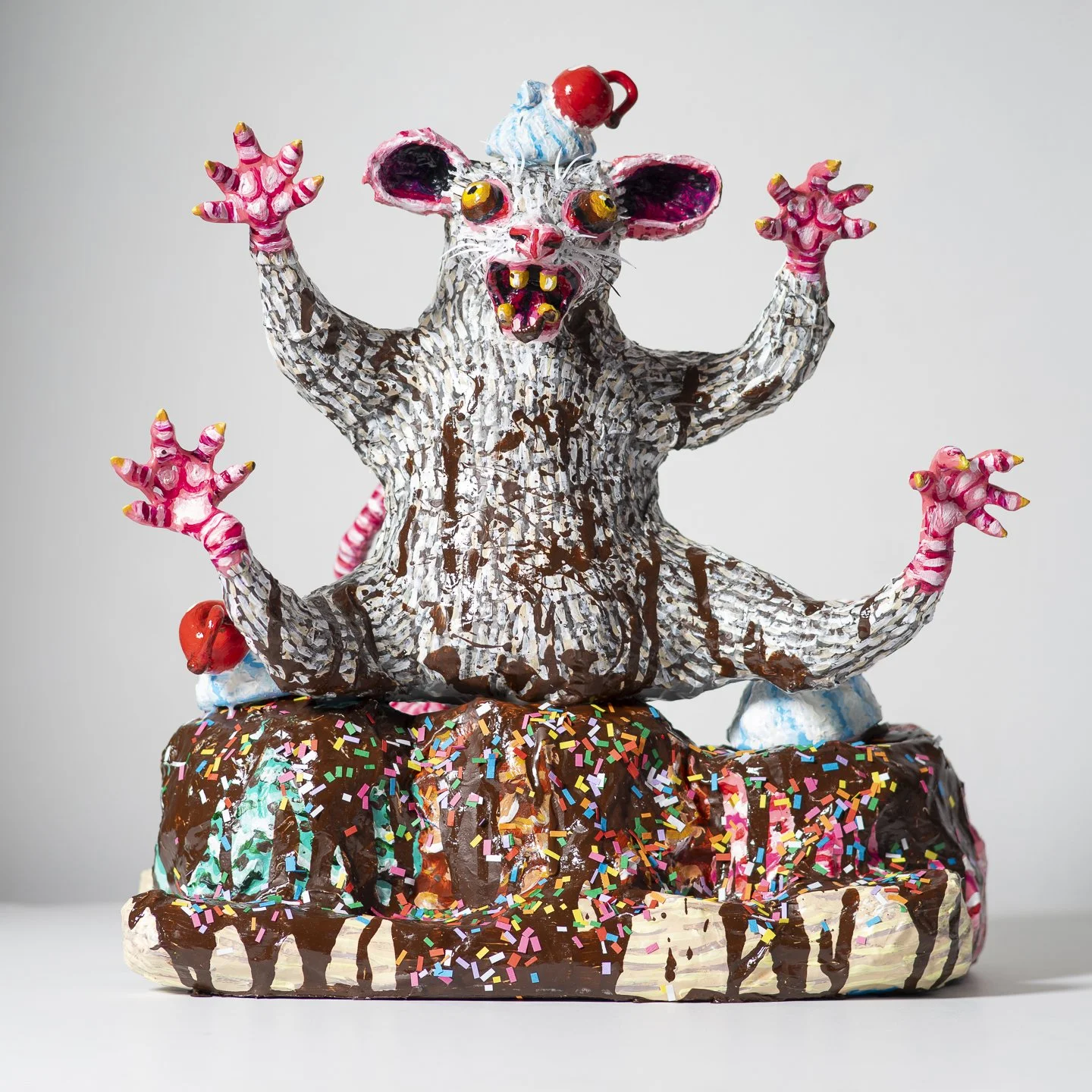
I have a strong affinity for rats and mice. I sympathize with their vulnerability and feel for the suffering they endure at the hands of people. Realistically we can’t co-exist closely because they can destroy things and carry diseases with them but I don’t like that they evoke the response of deserving to be mistreated. In Russia there is a monument to the laboratory mouse, it is a bronze sculpture of a cute mouse with glasses knitting a DNA strand that recognizes their sacrifice for scientific advancement. I find this tribute very touching and hope to create a kinder and more humane response to the rodents through the idealized versions of them in my work.
Similar question to the previous, if you had to pick one item of food in your work as a favorite, what would it be and why?
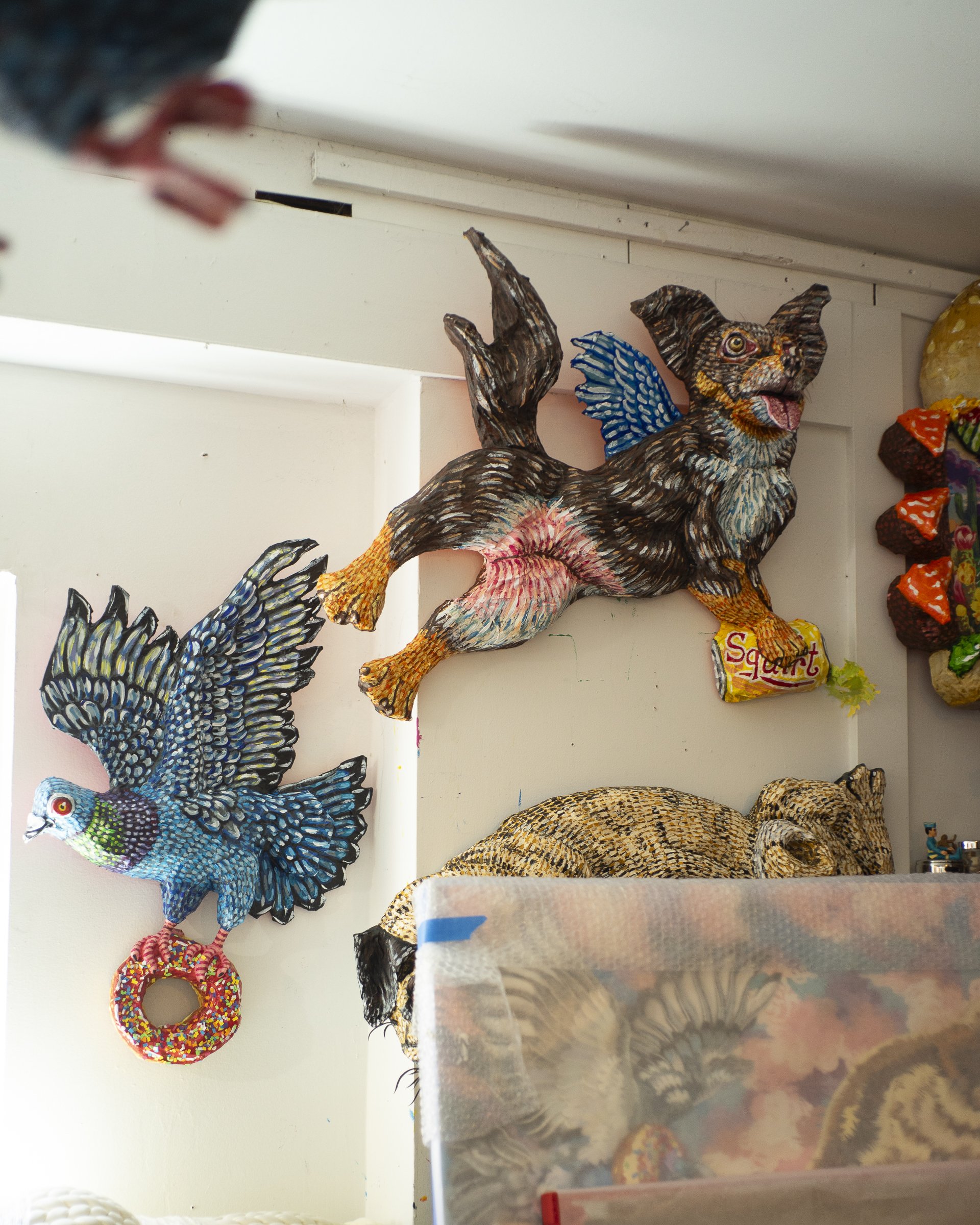
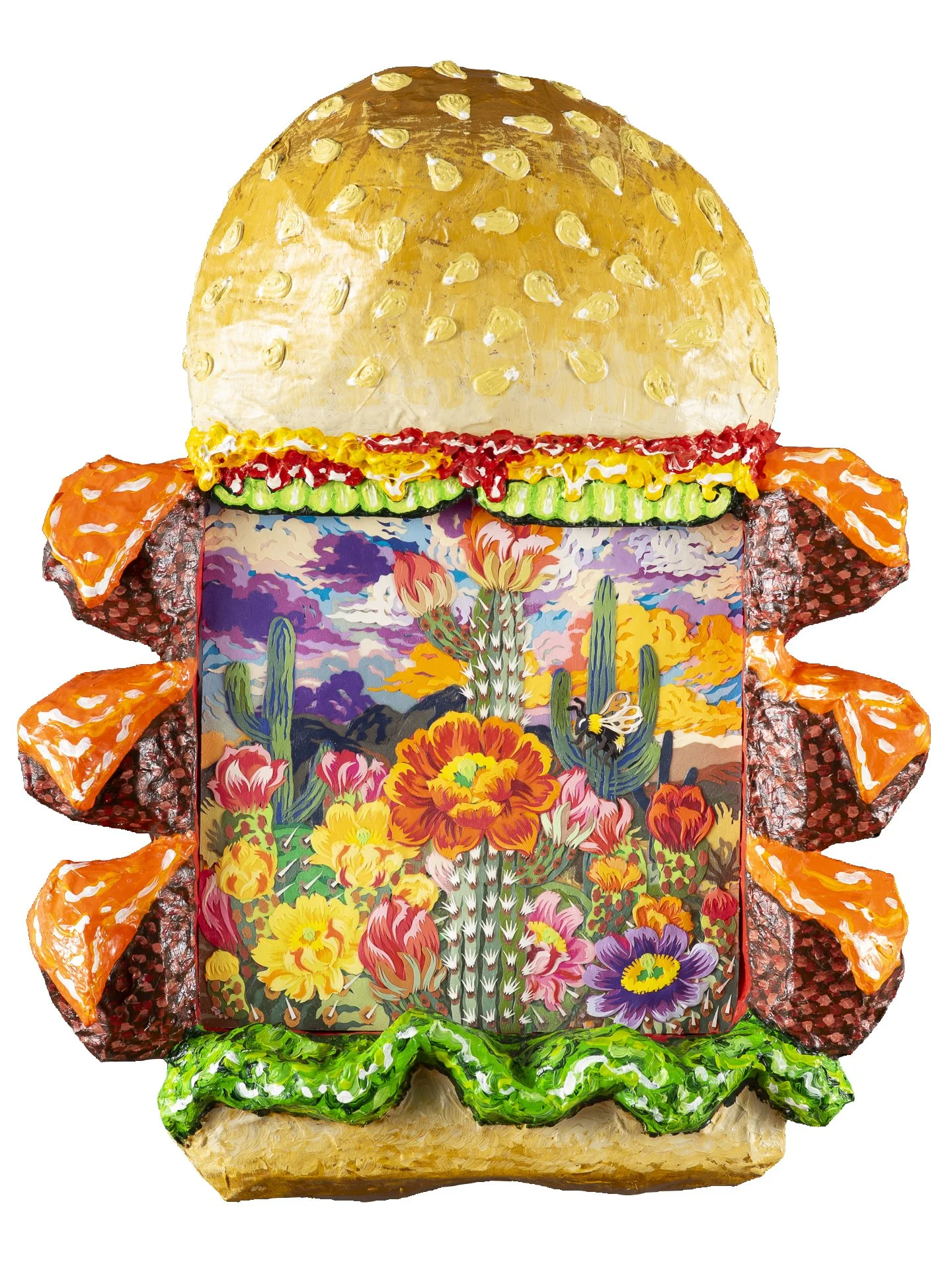
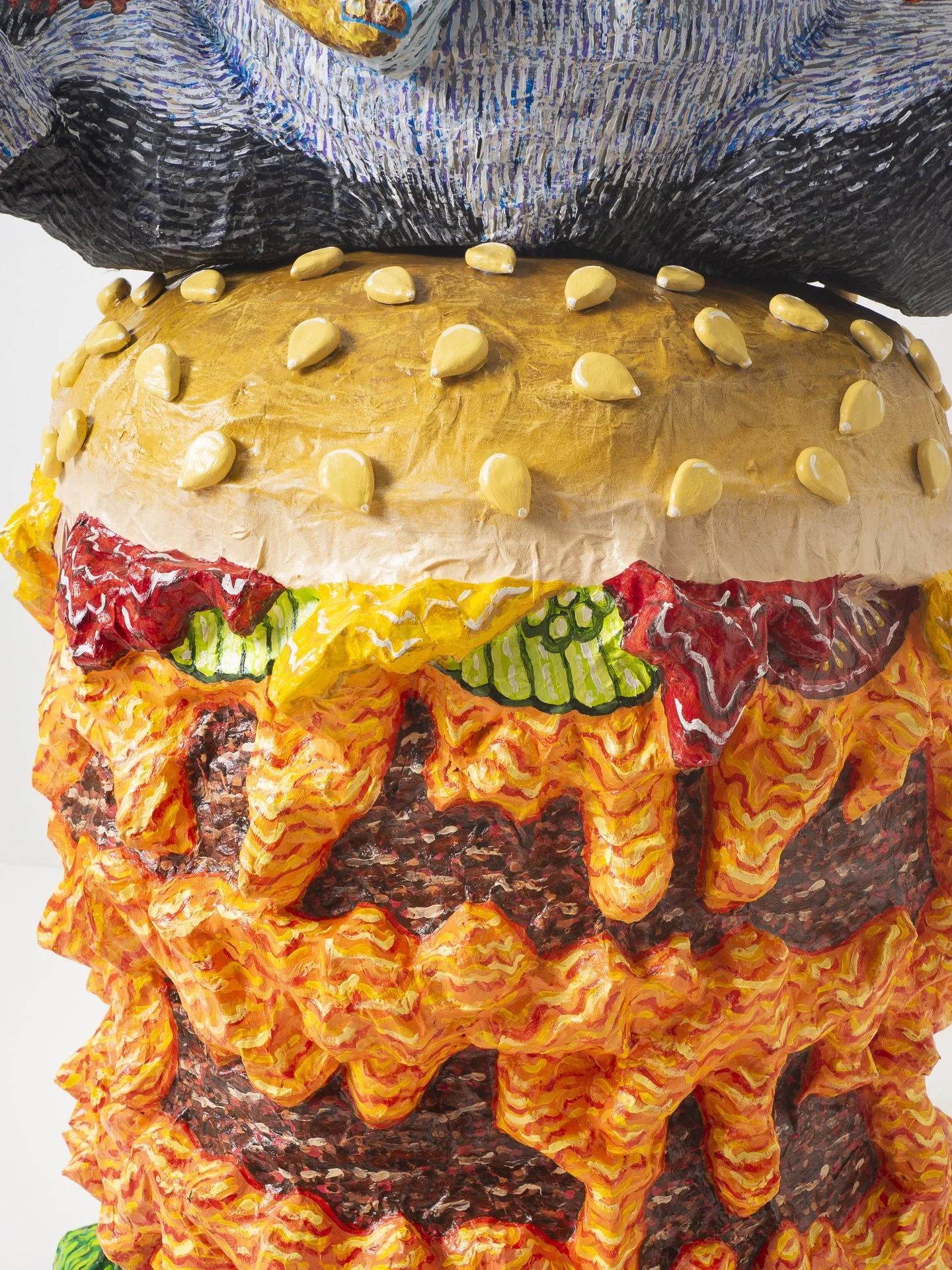
Burgers and donuts have a strong presence in this show. I think they are aesthetically very pleasing, they’re very colorful and fun to make. Going to Colonial Donuts before school was heaven to me as a little chubby kid and I’d get apple fritters because they had the most mass. And there’s nothing so beautiful as a greasy dripping cheesy burger.
Your work takes place after the humans have all left the planet. What was the doomsday event that eradicated the humans and left behind our junk food, PT Cruisers and fast food chain restaurants?
I consider it some kind of rapture event where we all just get sucked off the planet just before the point of complete and total planetary collapse and everything else is left behind. I just like to imagine the animals all waking up to the human-less planet and the party they would have after realizing we’re gone. Then without their oppressors they can create their own society and live peacefully with each other.
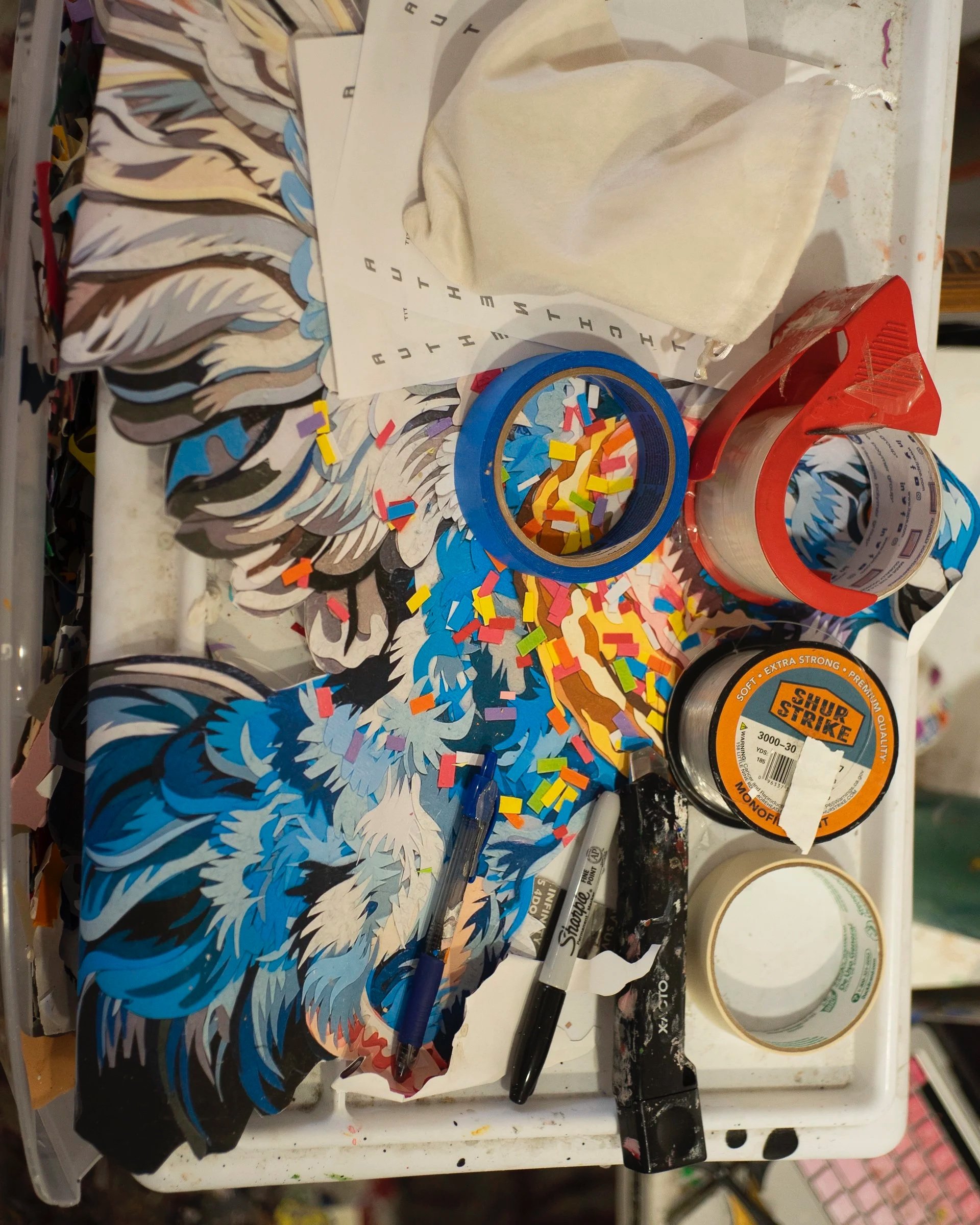
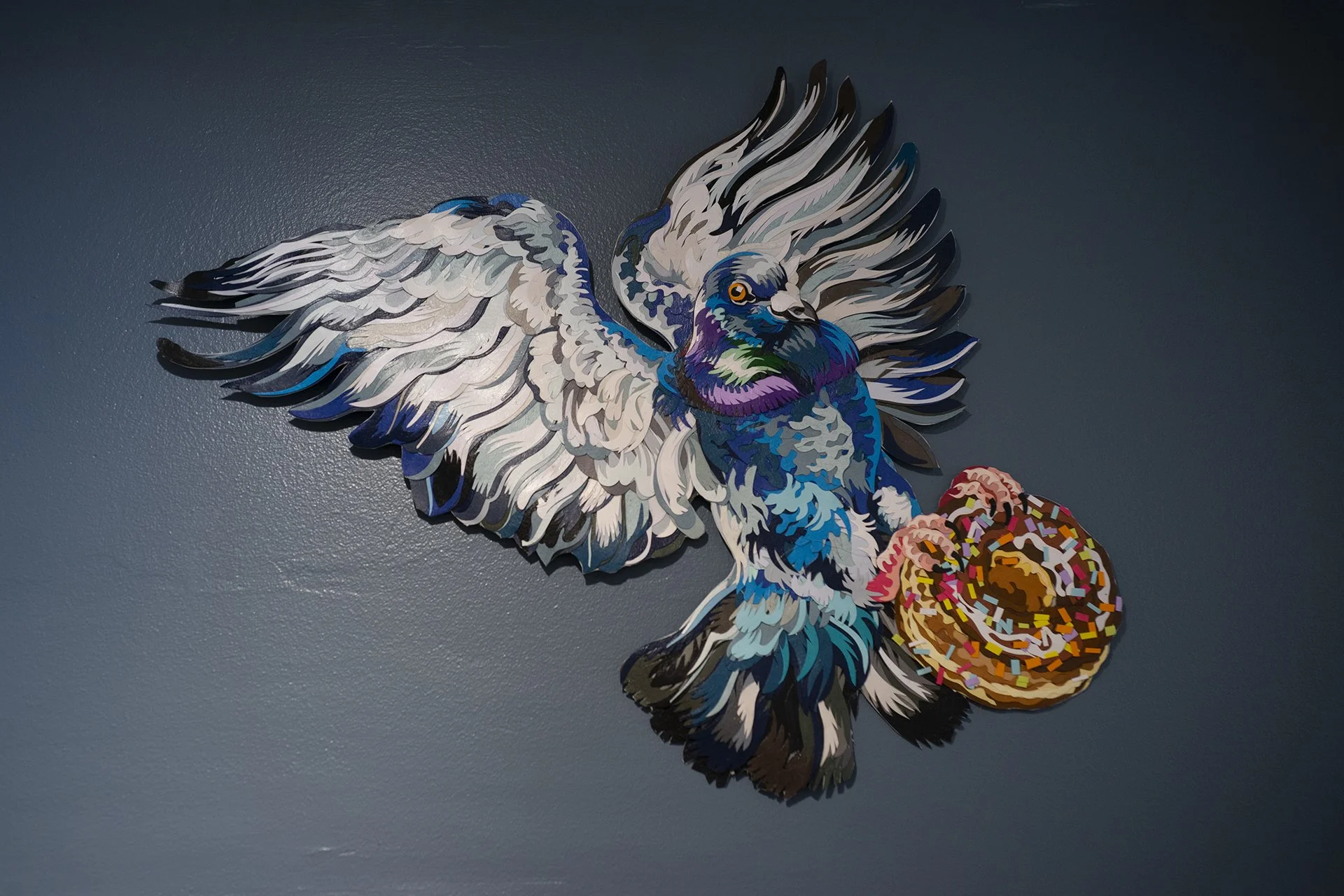
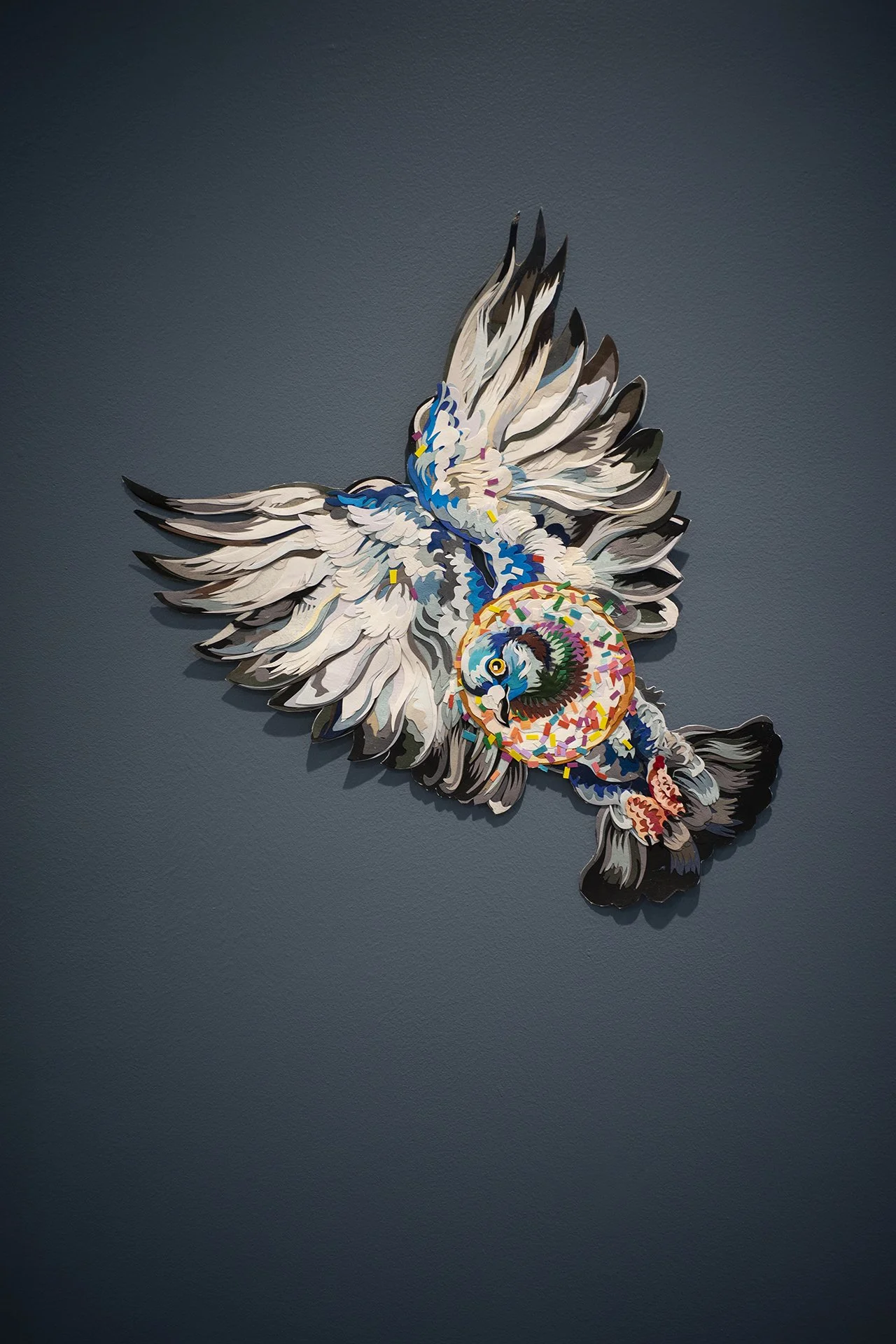
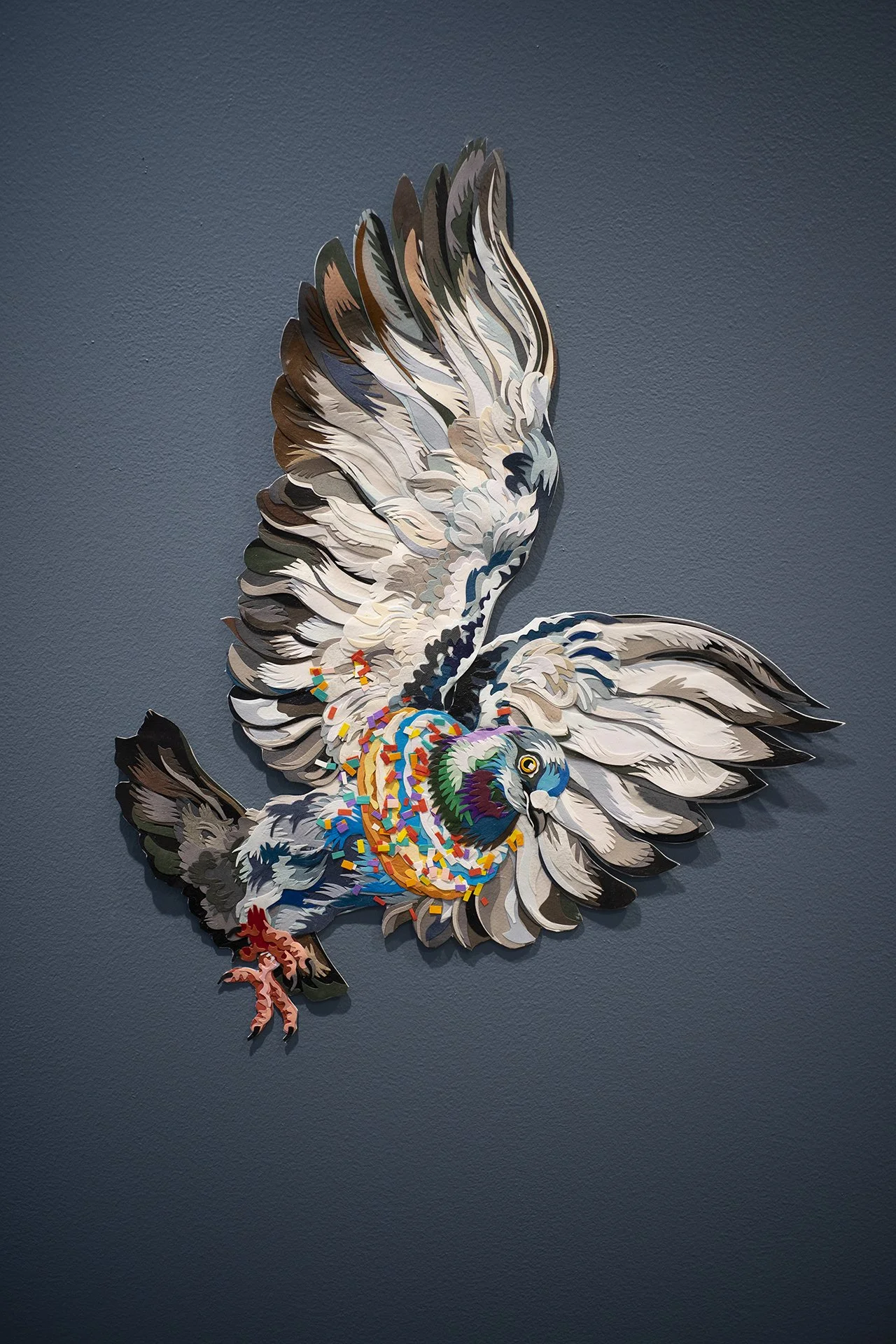
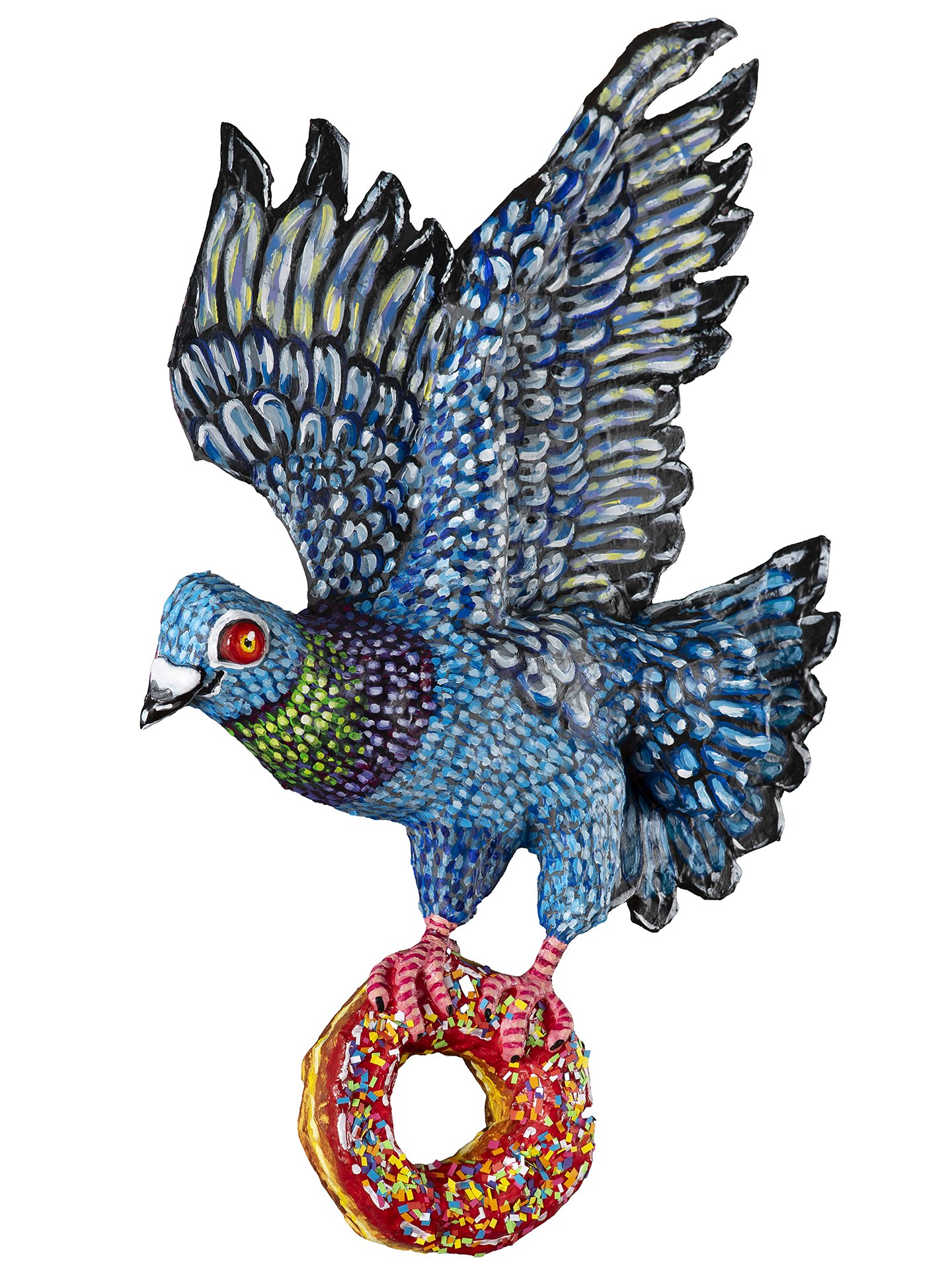
Since I first saw your work in 2023 at "It's Paper” at MAG Galleries , your work has expanded in complexity and dimension. Barring the obvious abundance of texture engrained in your process, the works from that show were primarily flat; large scale collages or sculptures of pigeons that looked like they cut themselves out of your collages and took flight. Now these sculptures have taken even fuller shape and dimensionality and are living among us at Moth Belly Gallery. What is it like, is it even possible to describe how it feels to create so many creatures at such a prolific scale?
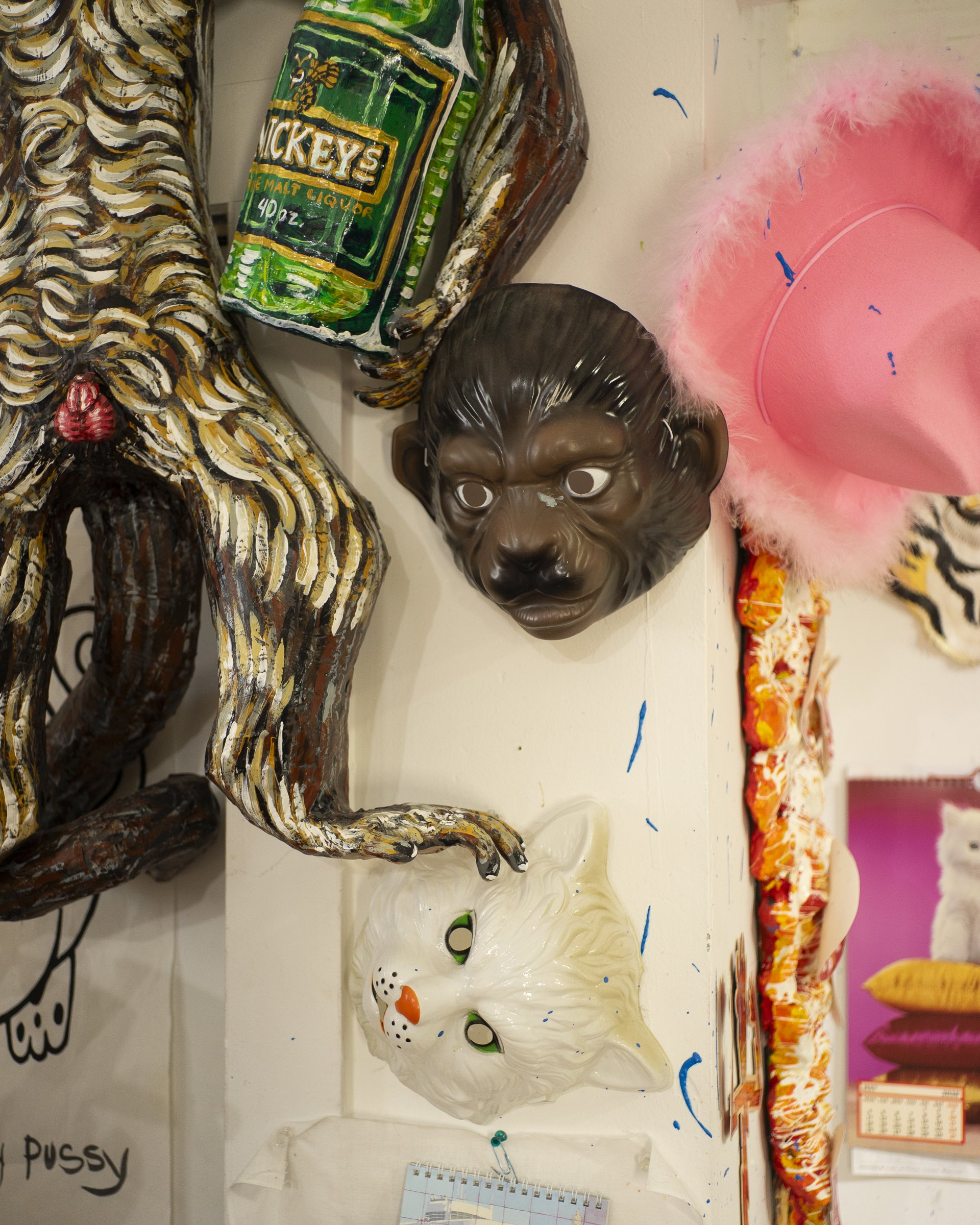
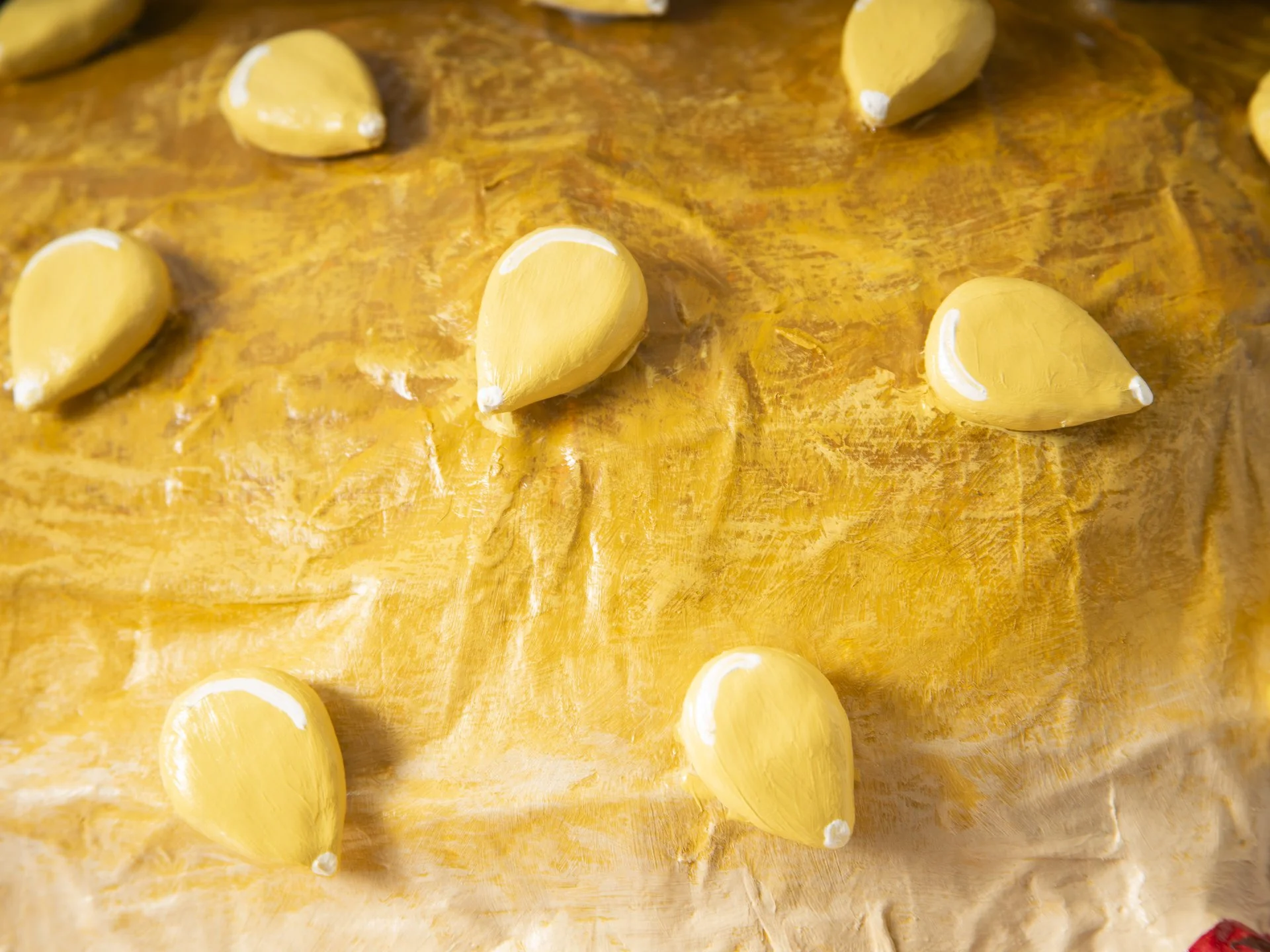
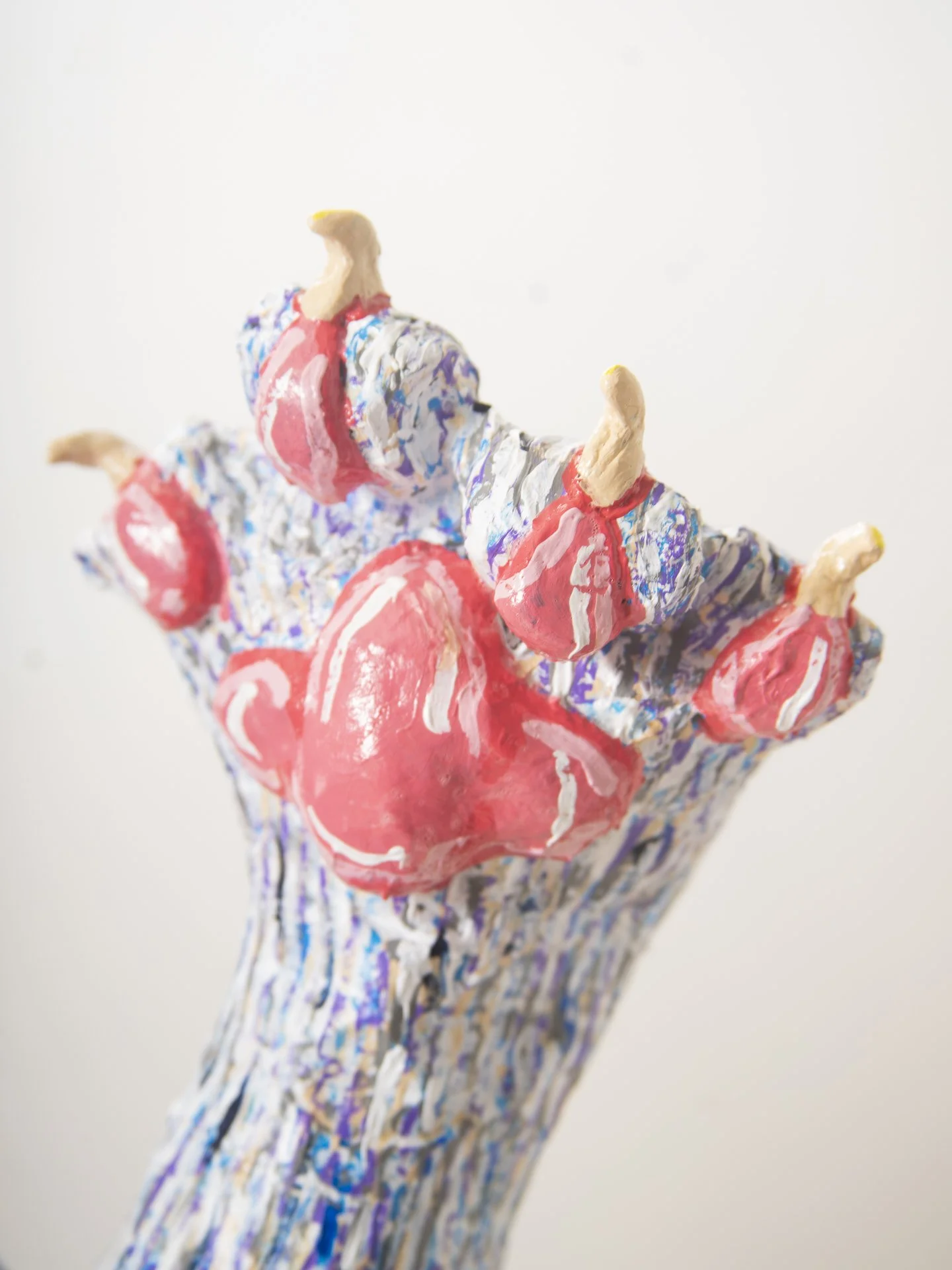
My favorite shows and experiences with art are ones that are completely immersive. I really admire artists that can completely transform a space and create a portal into another world. Red Grooms achieved this with his colorful large scale papier-mâché installations of things like bookstores, carousels, and buses that could fully envelop the audience. I am still working towards this kind of exhibit but my goal with this show was to create different kinds of sculptures that would bring the viewer into my world of the animals. Working with papier-mâché is great for its low barrier to entry, it doesn’t require specialized tools or equipment, and its versatility. I love that a day can start with a stack of boxes and end with a big but easy to throw around sculpture.
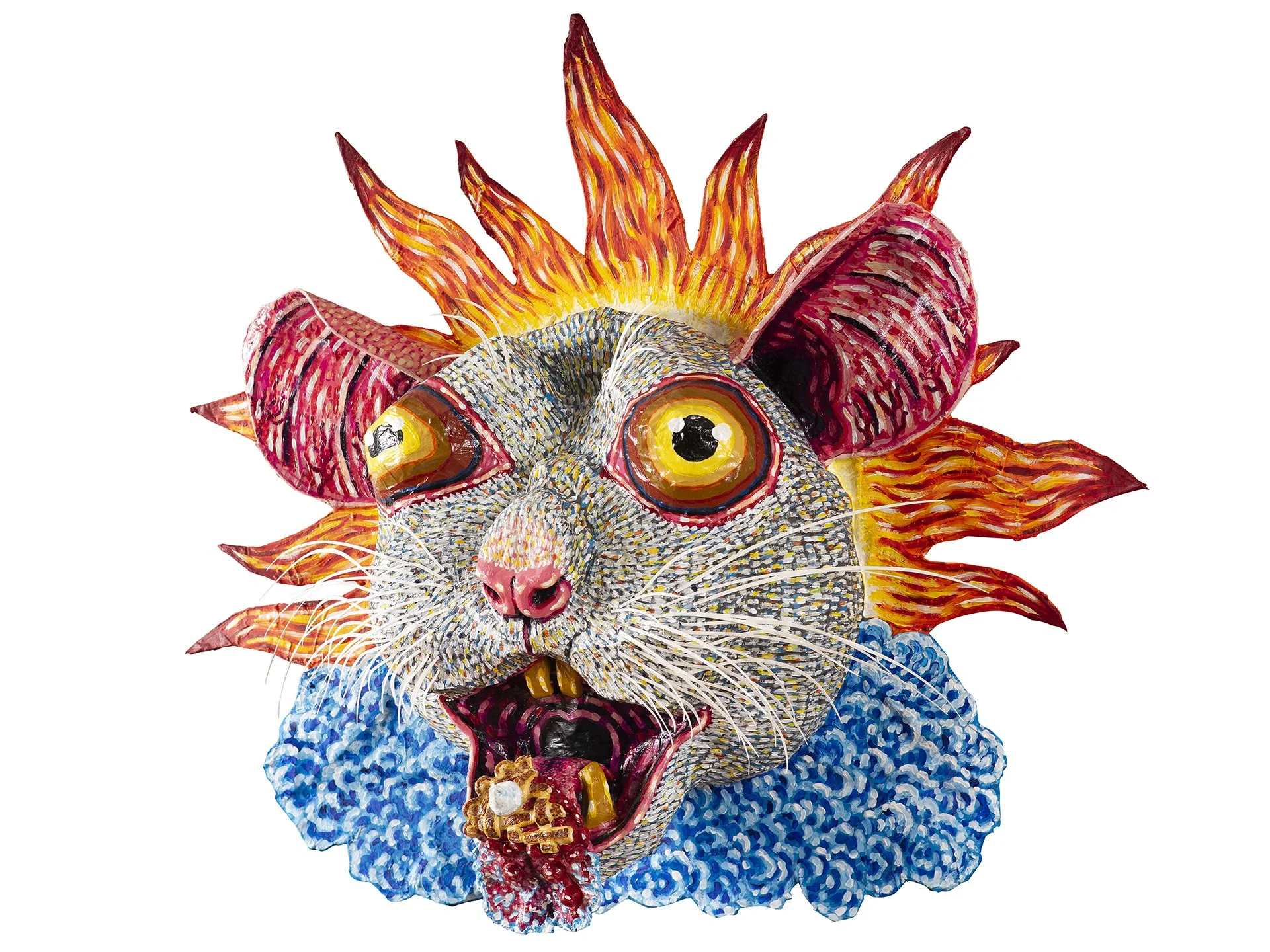
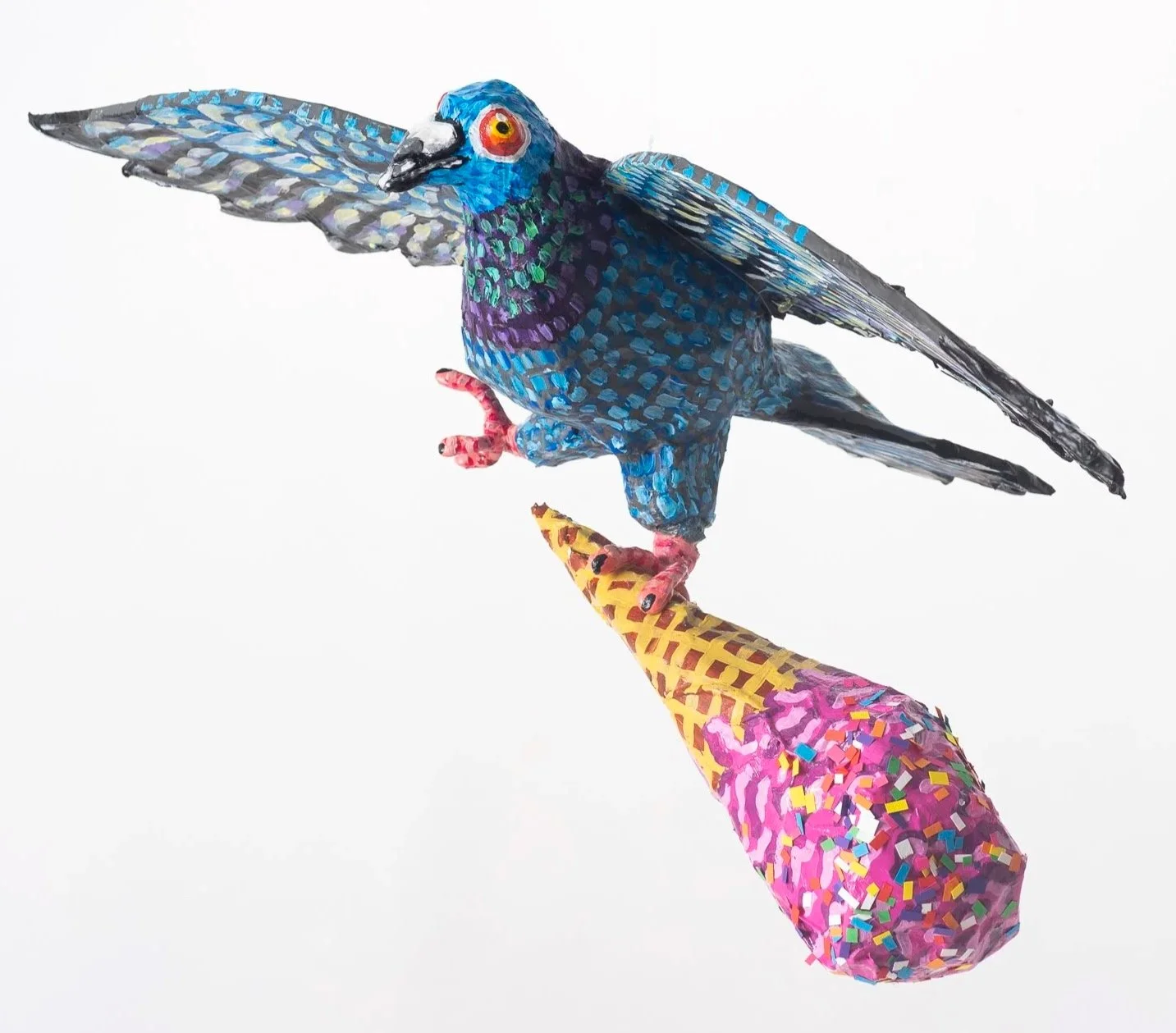
You use images sourced from the internet of docile or domesticated animals as references for your collages then pose them in quirky fantastical new ways. Has AI generated imagery created any challenges or advantages for your craft and do you have any thoughts on how AI may shape your art in the future?
I use Google and Pinterest for reference images and there has been a proliferation of AI images in the search results and I don’t like it. The works are getting gummed up with slop. My process, aside from using the laptop to look up images, is very analog and simple. I like the fact that it is created with just scissors, paper, and glue that anyone could get. I put stock in the hope that as AI continues to be shoved down our throats people will seek out the handmade and appreciate the imperfections in the work indicating that it was made by a person.
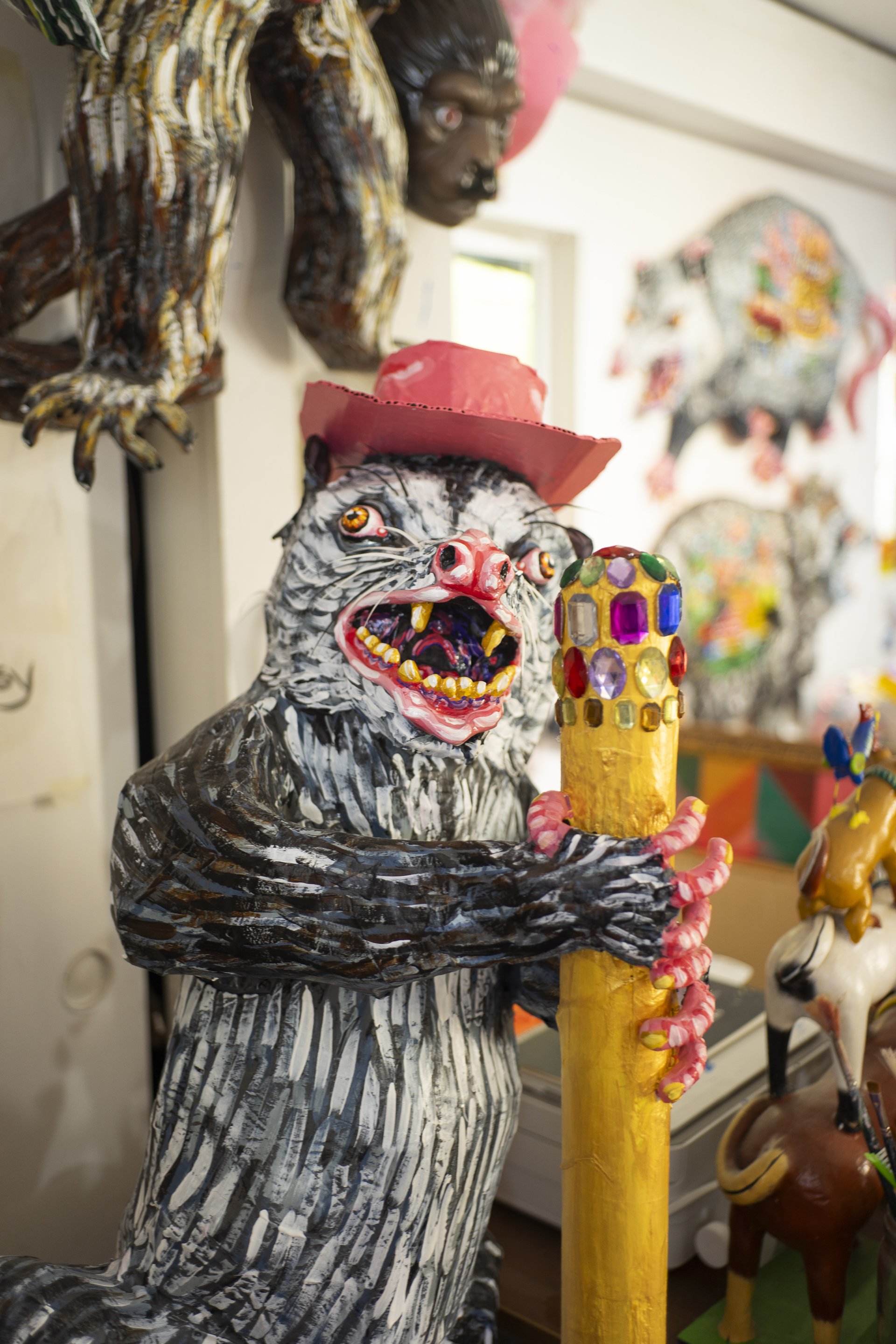
I’m really curious what it’s like to experience making these works. They are crazy intense with detail, color, layers and activity. I imagine it could have a polarizing effect in your mind. Does it make you feel calm and free of anxiety when you make them or does working on them amplify your anxiety until the work is finished?
The genesis of this body of work came from a feeling of hopelessness and fear about the future of the planet. As we blow past climate change benchmarks and see biomes unraveling faster than predicted it's becoming more terrifying and overwhelming to think about. The collages and sculptures are a fantasy for the mind to retreat into. It is a positive outlet for my compulsiveness. The repetitive process of doing the same cuts and brushstrokes over and over is my version of meditation. When they’re finished I look at them more as a viewer than creator. It doesn’t feel like they came from me, like they just popped into existence and have always been there.
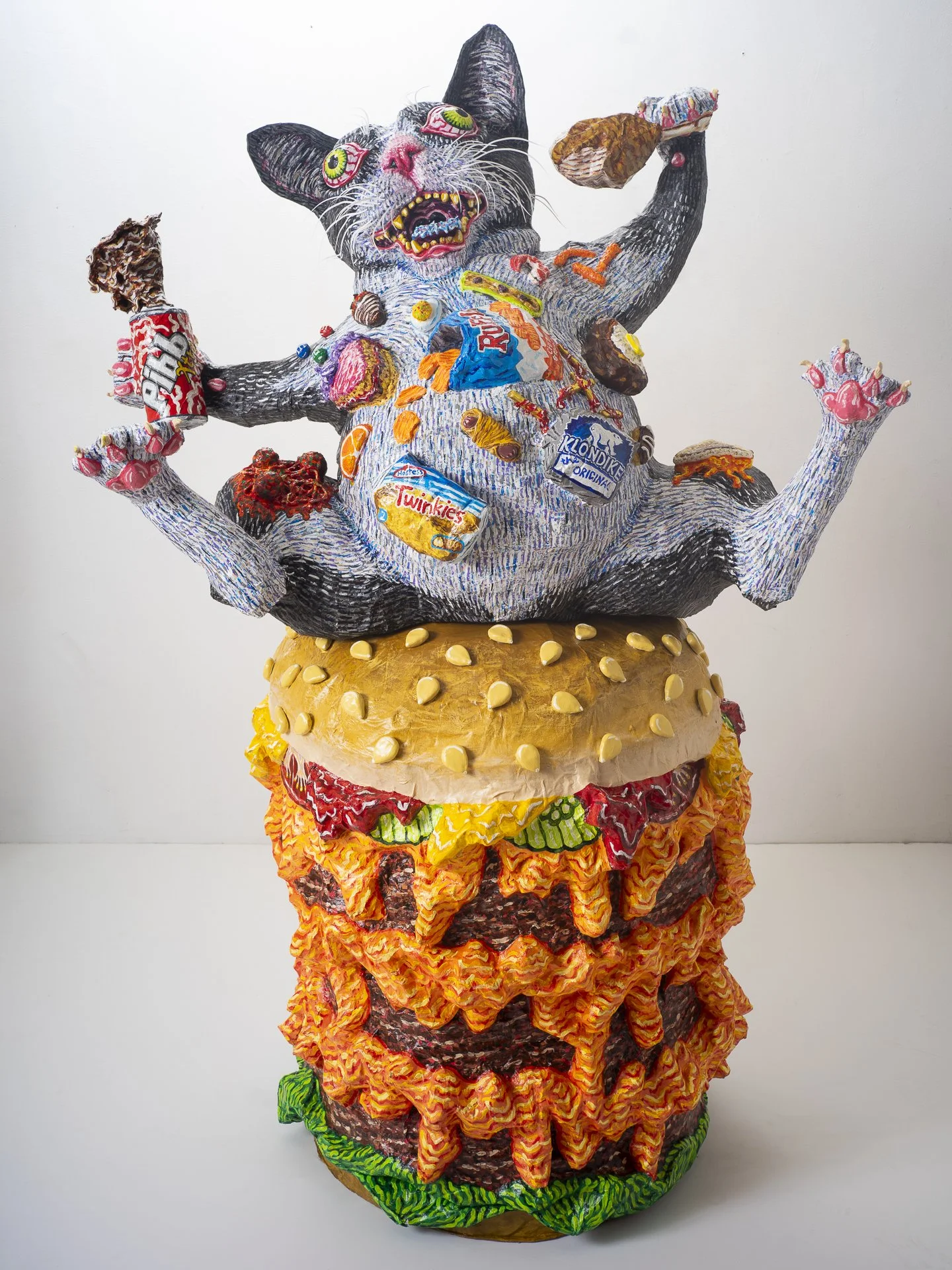
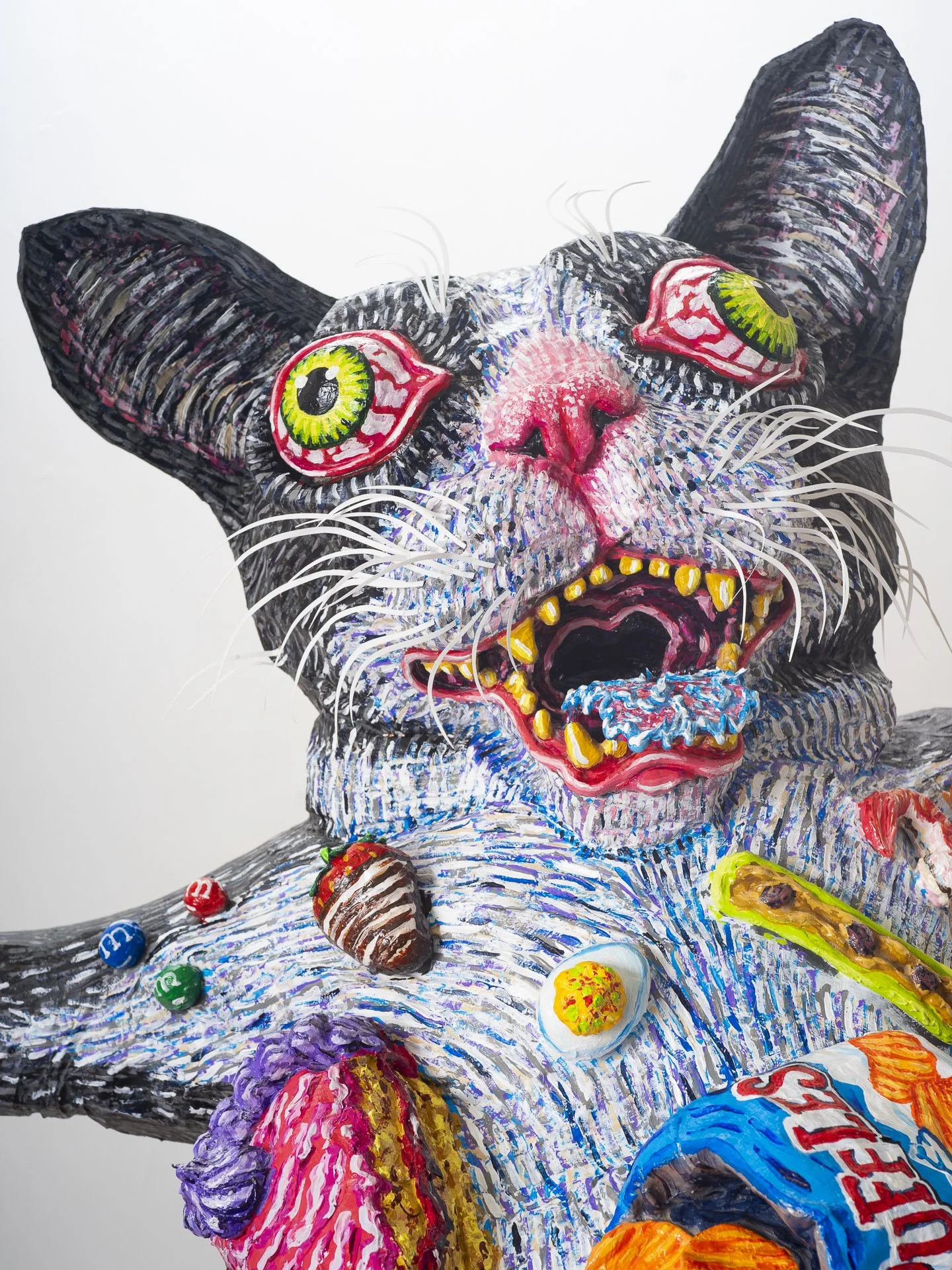
“Whiskers Deep In The Chow Chow” is a 70 inch tall sculpture of a cat on a multi-pattied stack of burgers. Since the humans are gone, have the animals have taught themselves how to cook? Is there a deeper significance or symbolic message layered into the tiers of patties and a cat gone wild while riding a burger?
This vision I have for the world exists in the transition from human society back to fully re-wilded nature. In this transition there is a magical element where there are just hot tasty burgers lying around like in the book “Cloudy With A Chance of Meatballs” where food falls from the sky. During this period the animals take on some of our characteristics as a result of subsisting off what we leave behind and they like all the easy access to junk food and its delicious additives. But as time goes on they revert back to their true form as the planet heals and regains equilibrium. The buildings will crumble and get covered over, plant life will flourish, all the pollution will go away, and the animals can live as they want to free from human influence.
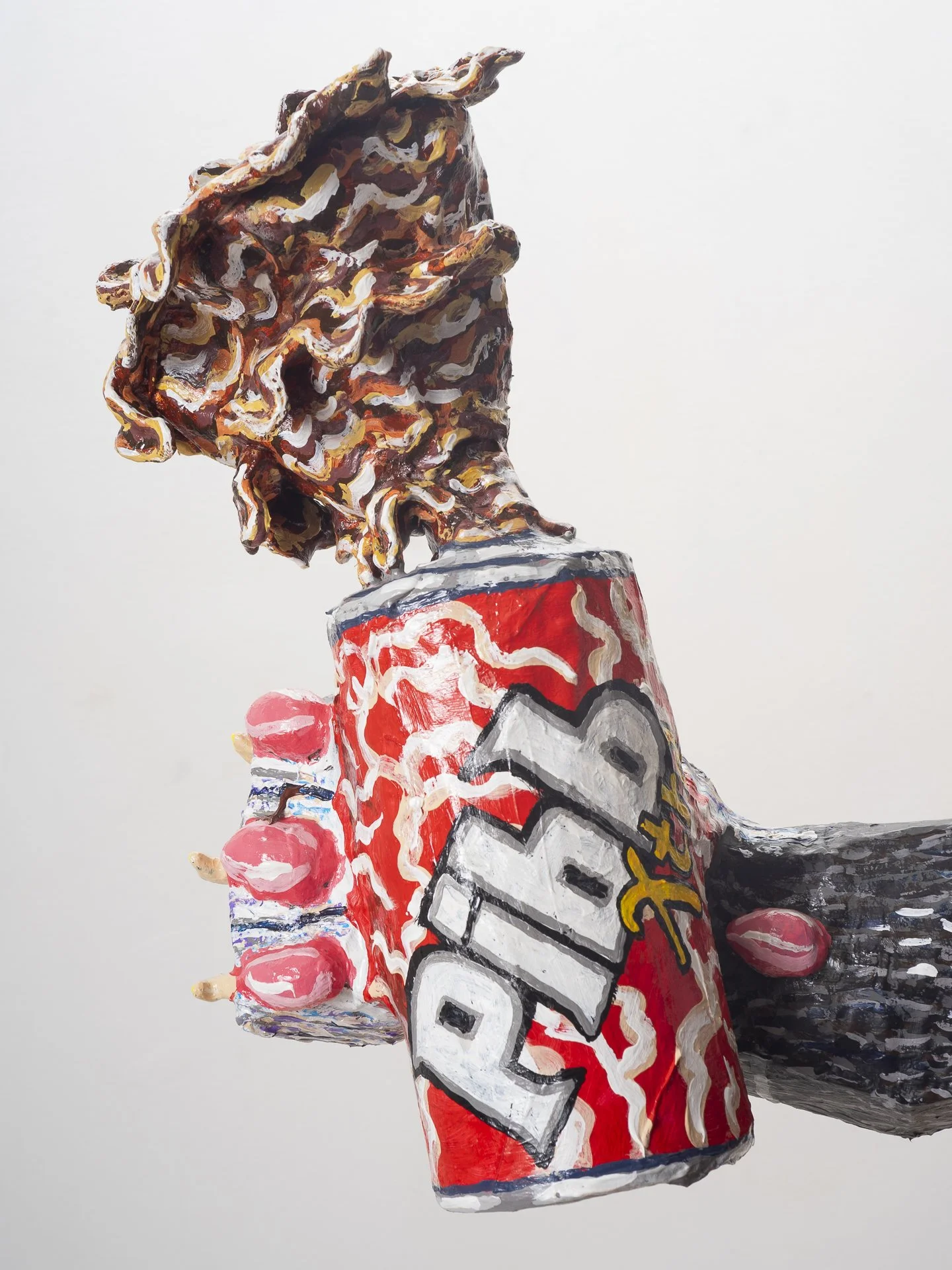
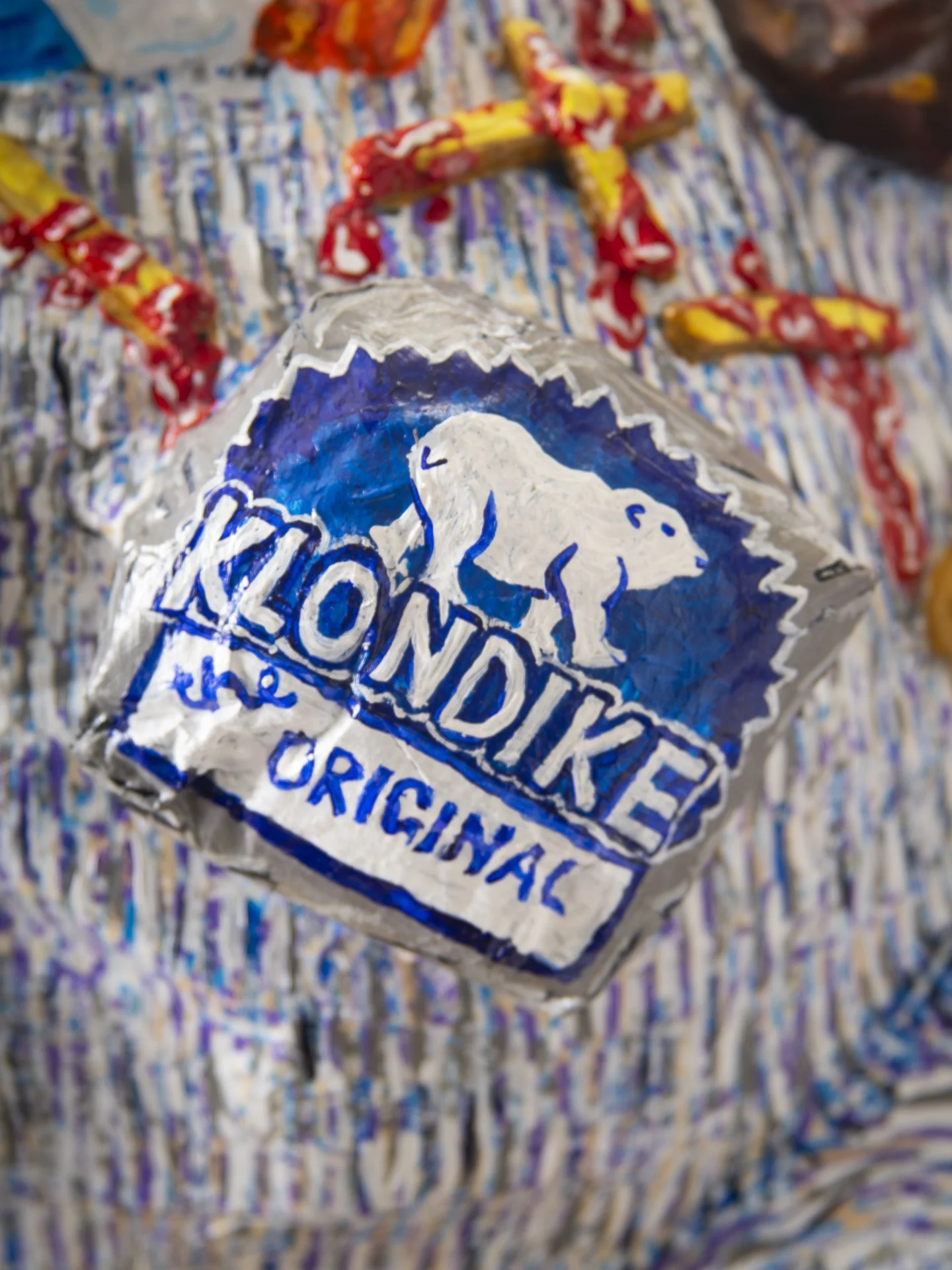
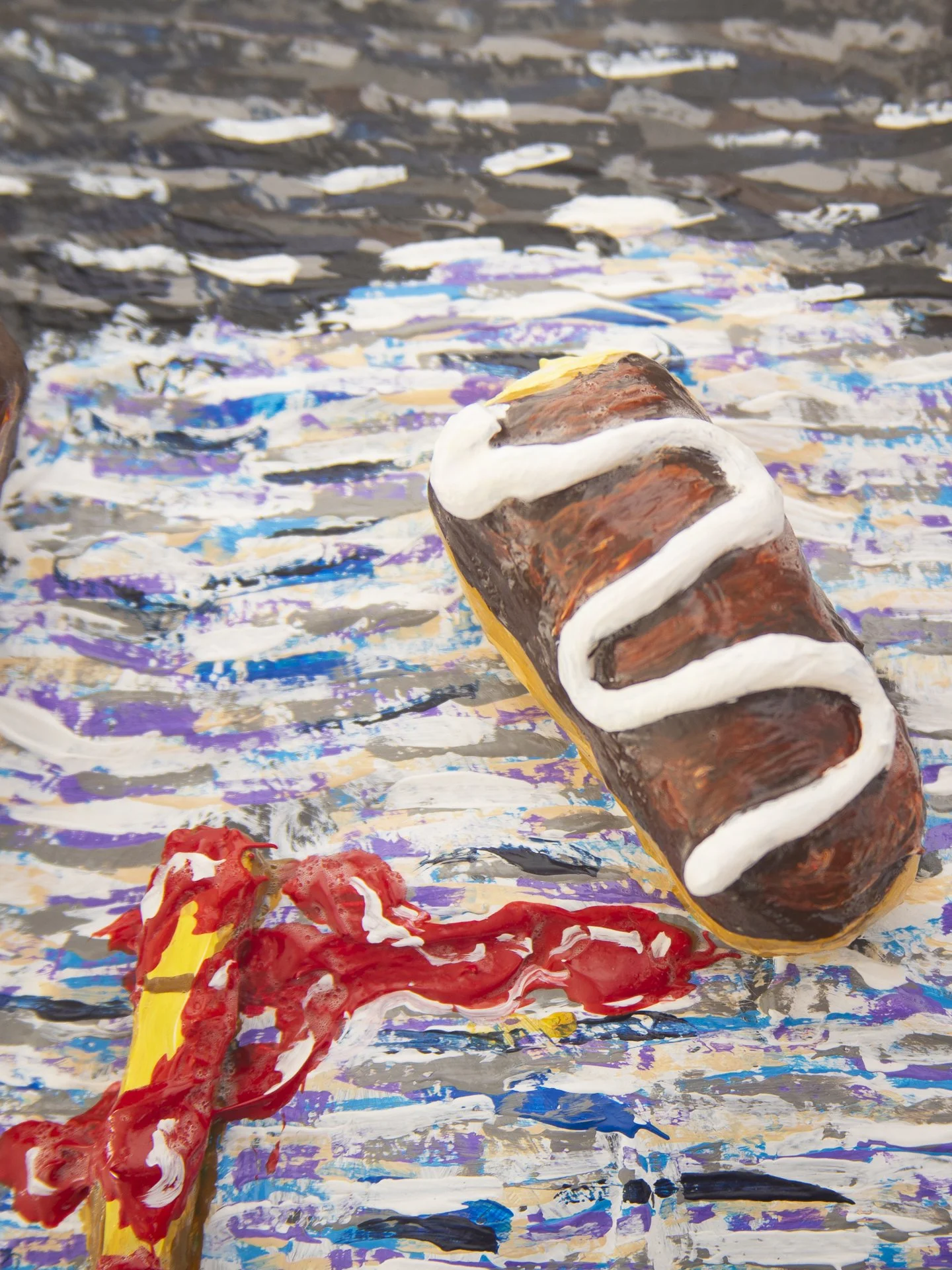
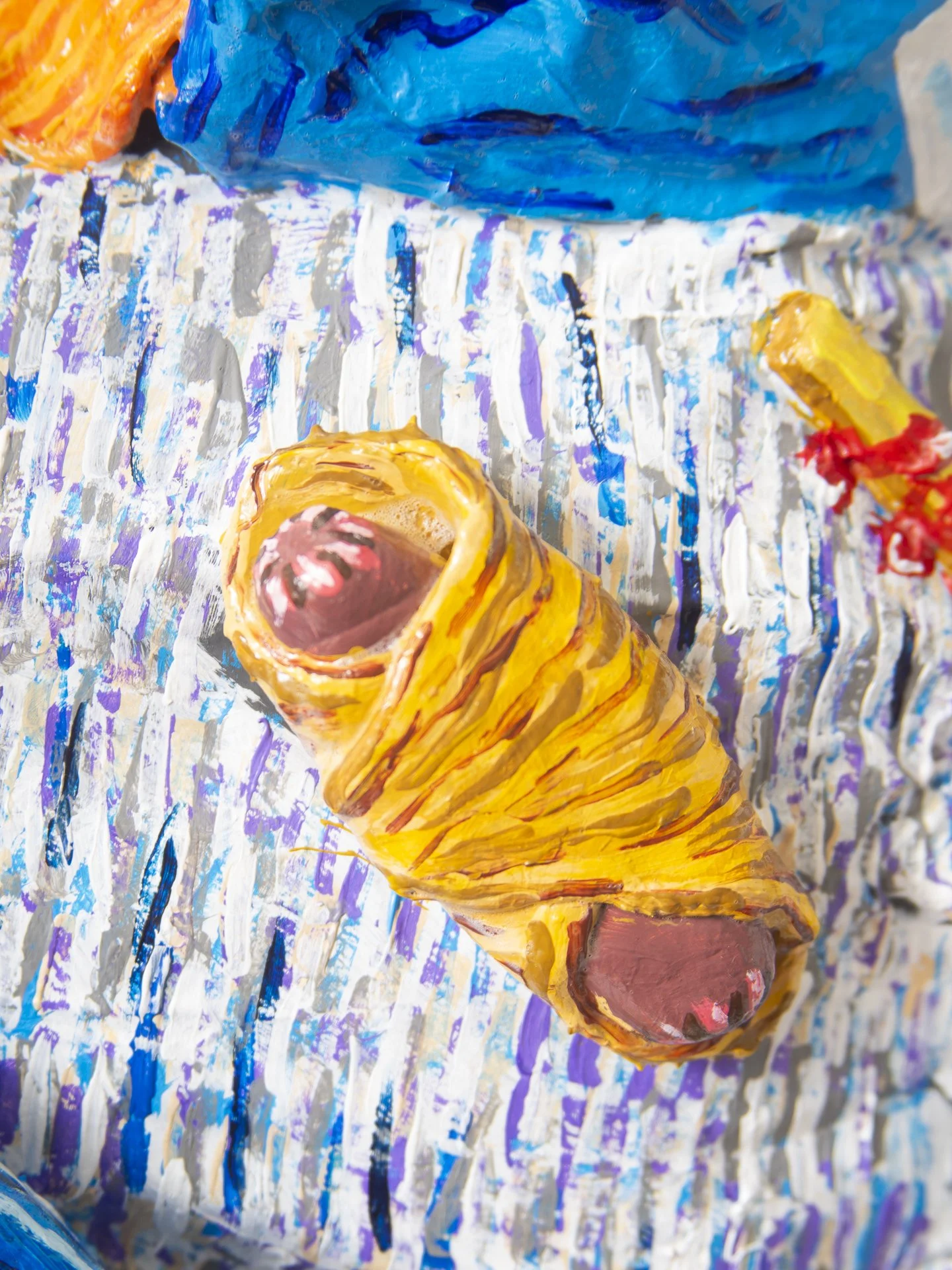
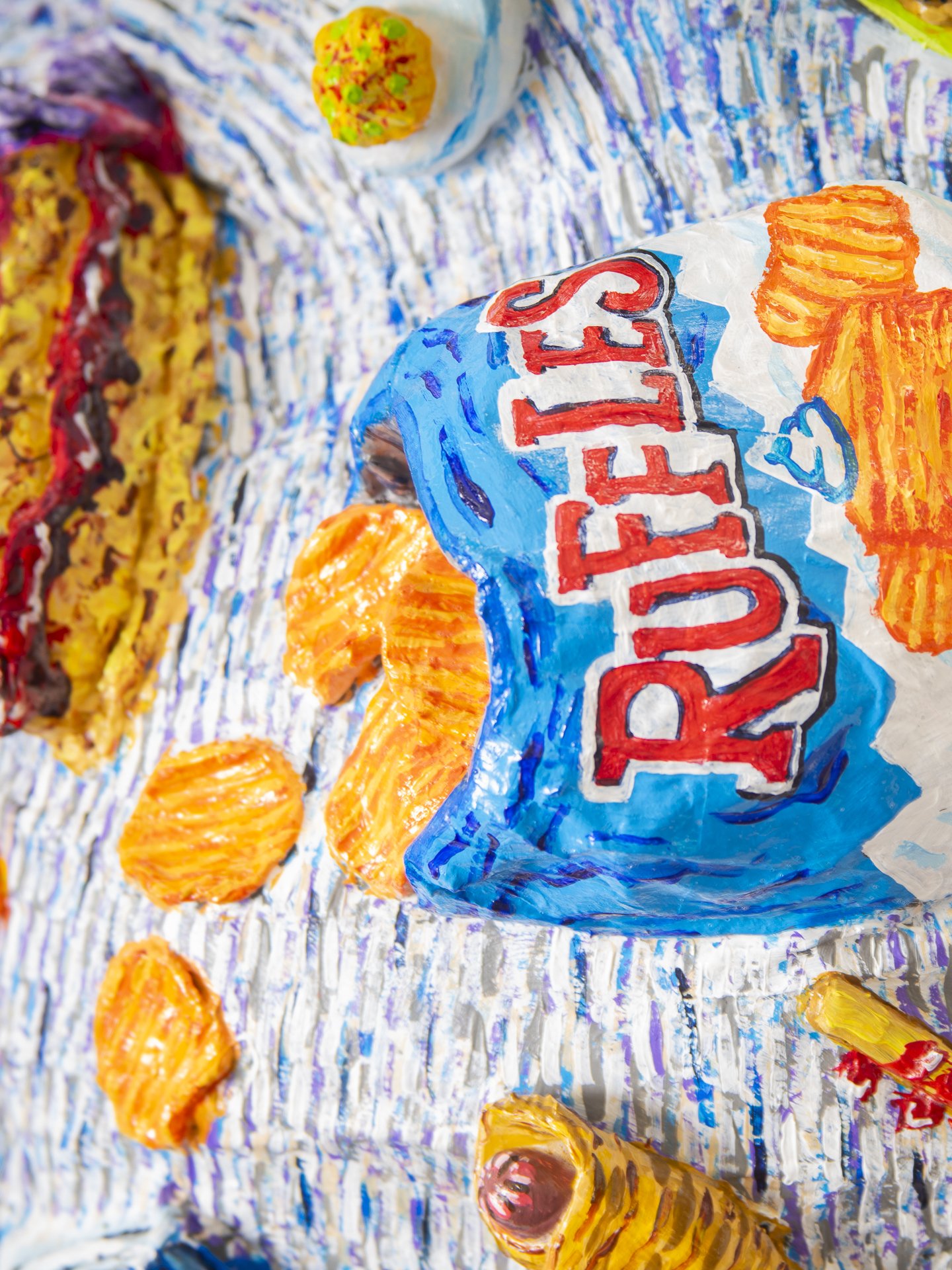
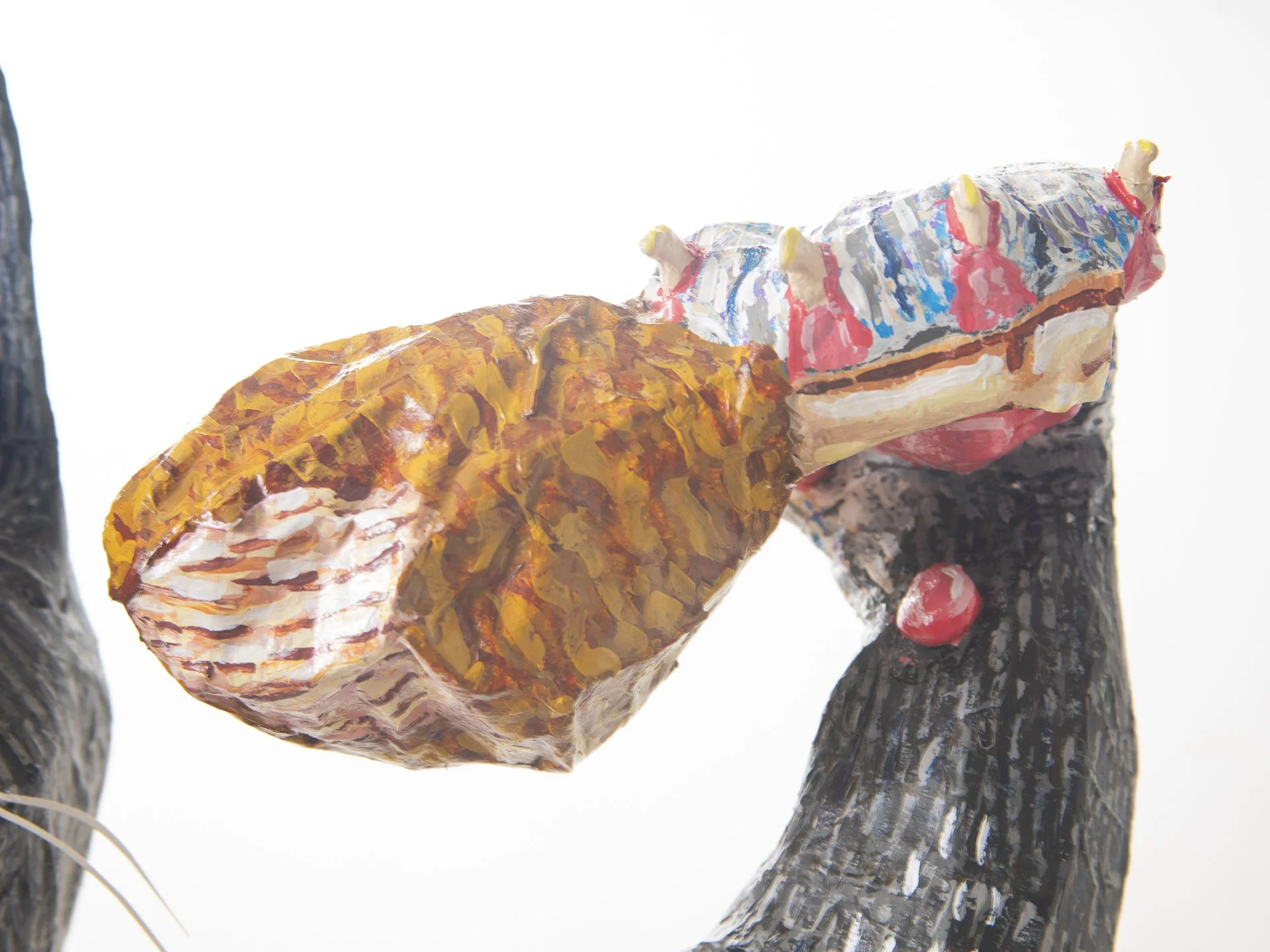
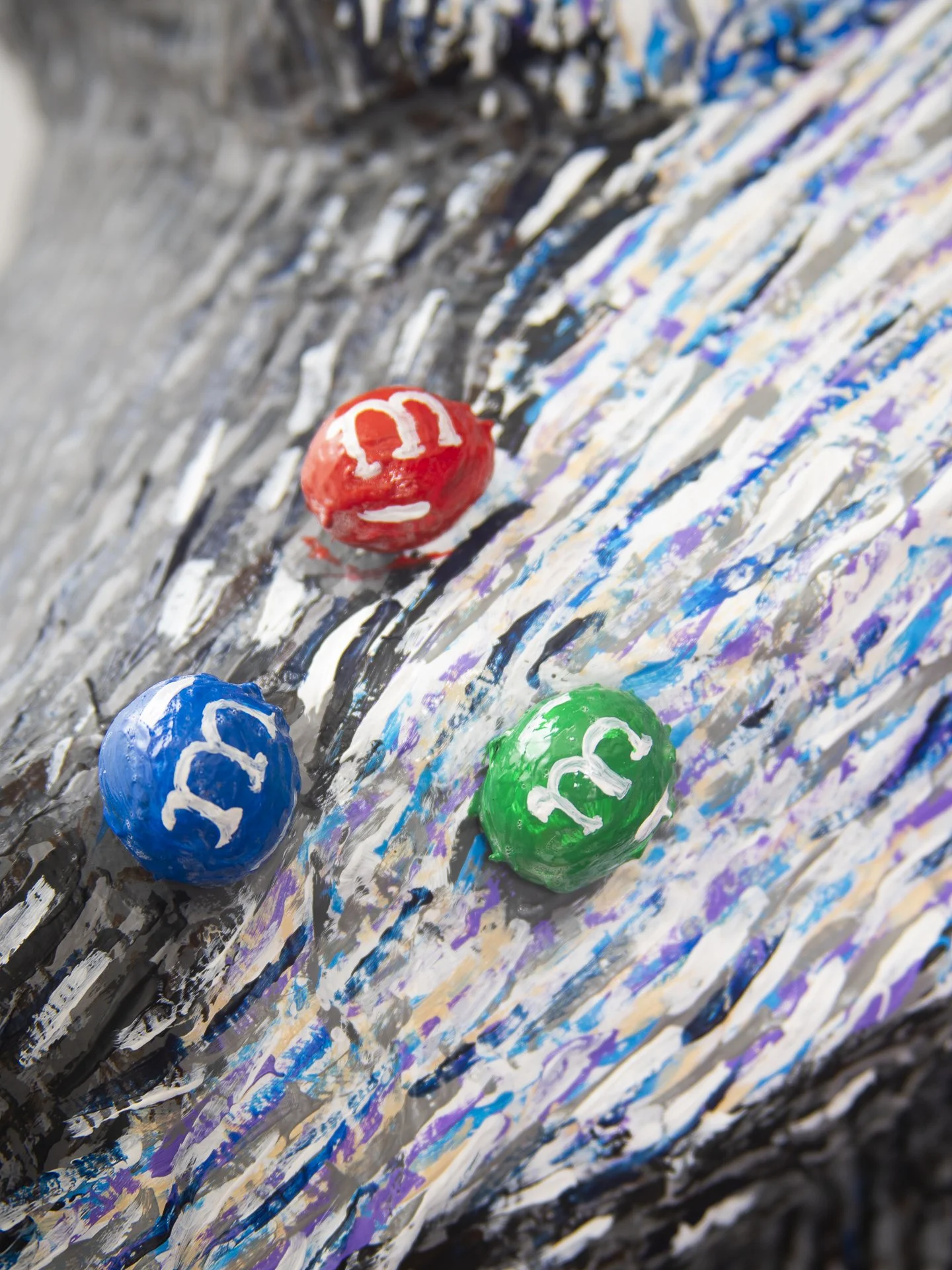
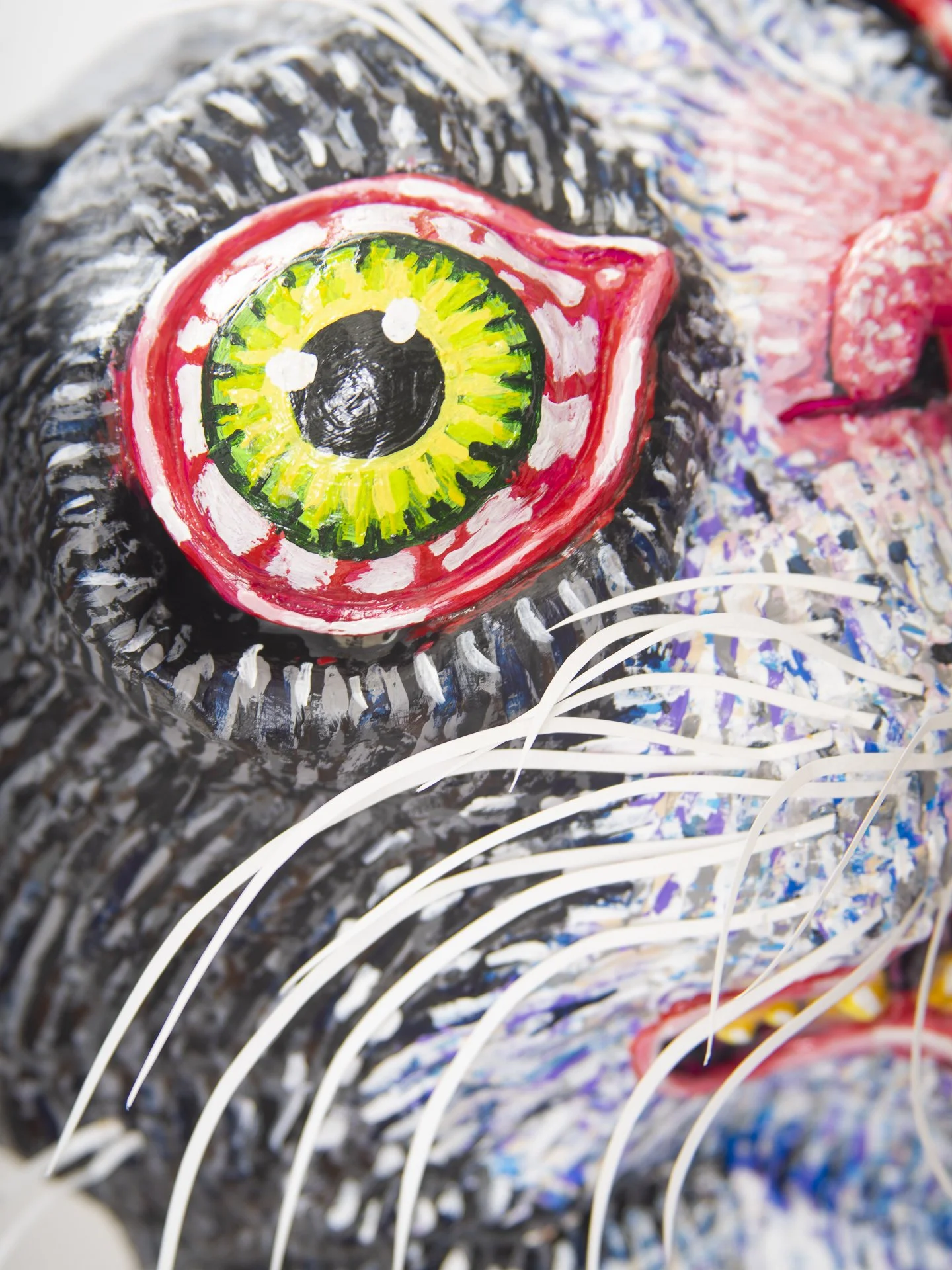
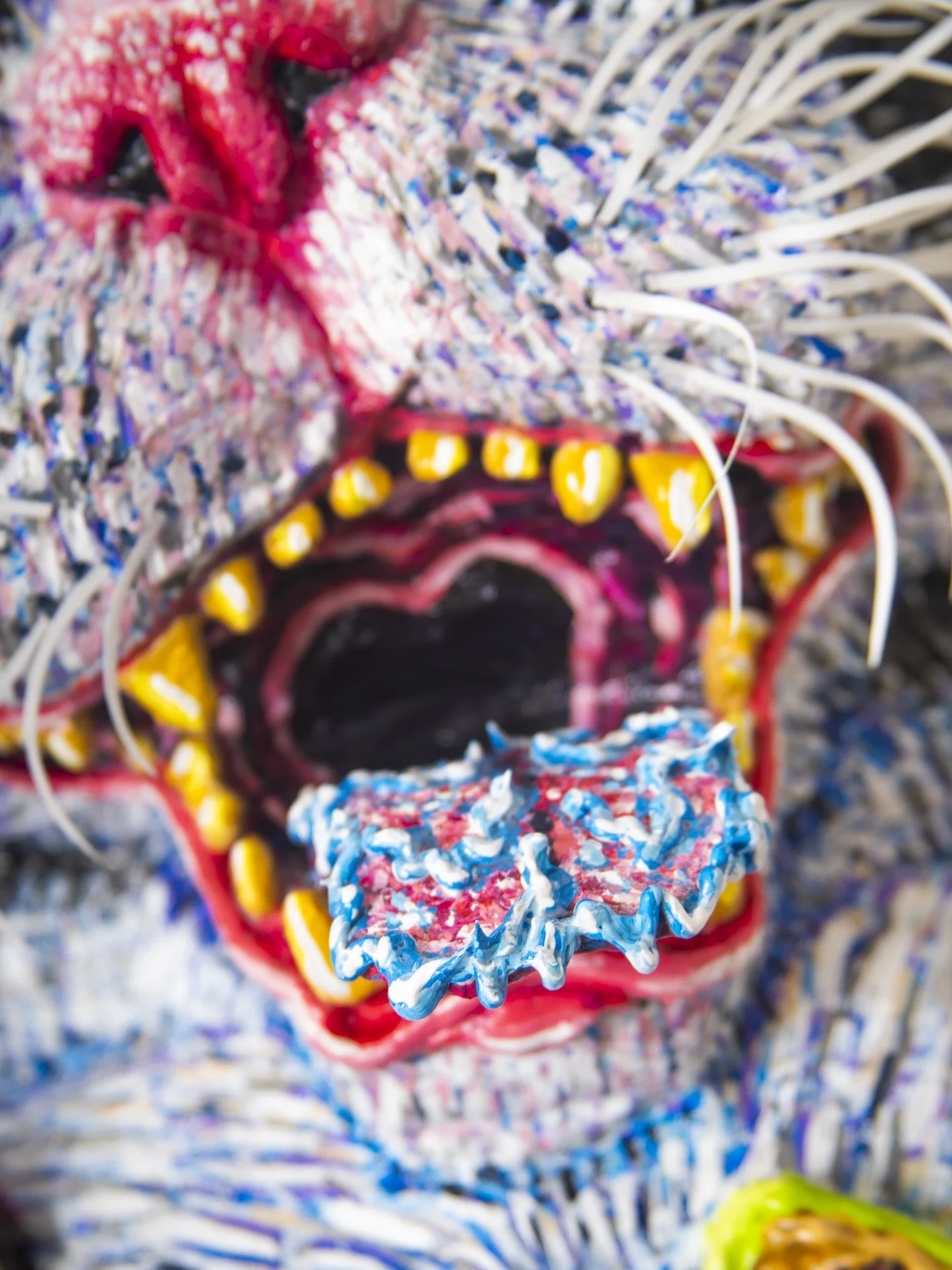
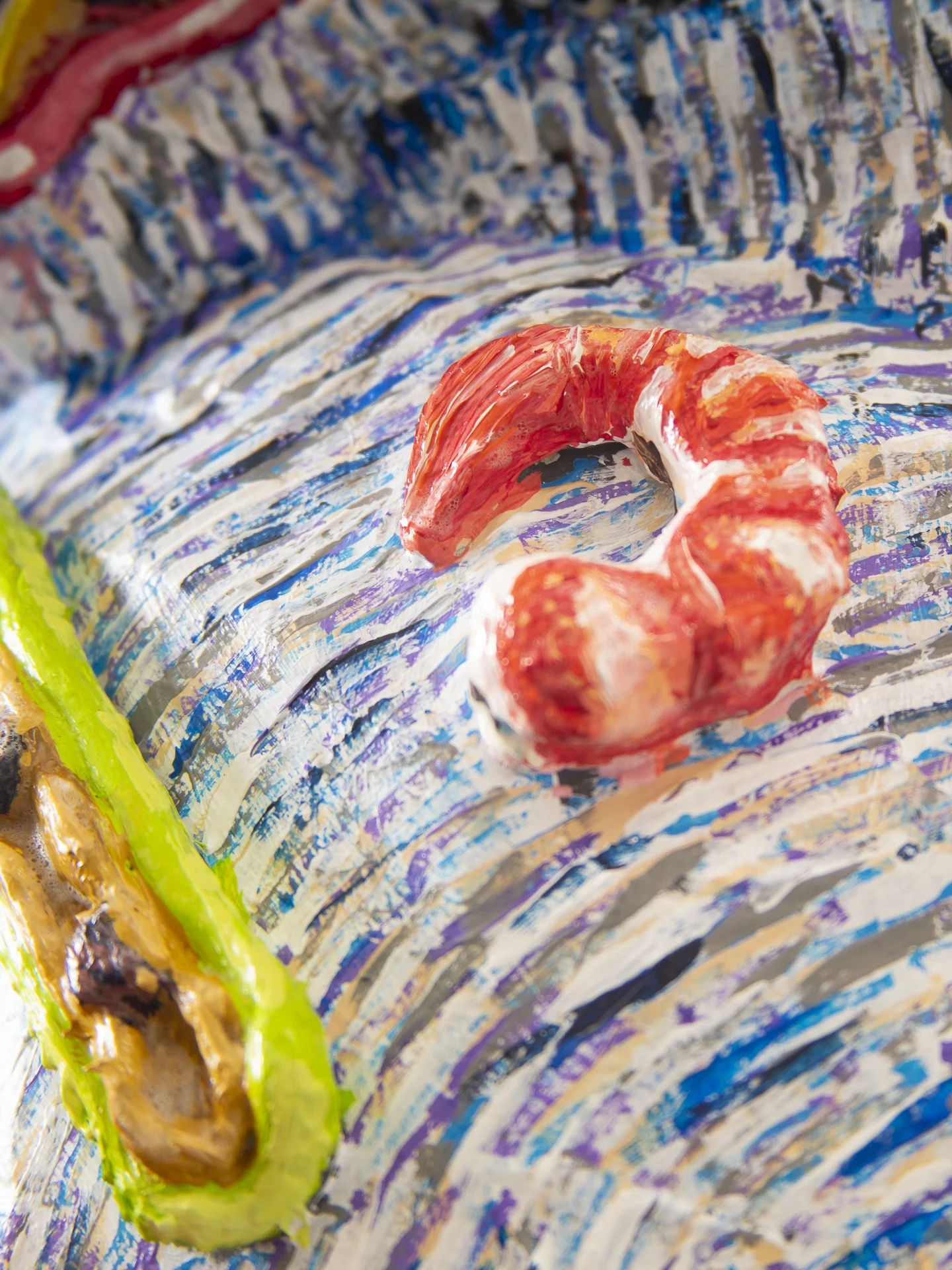
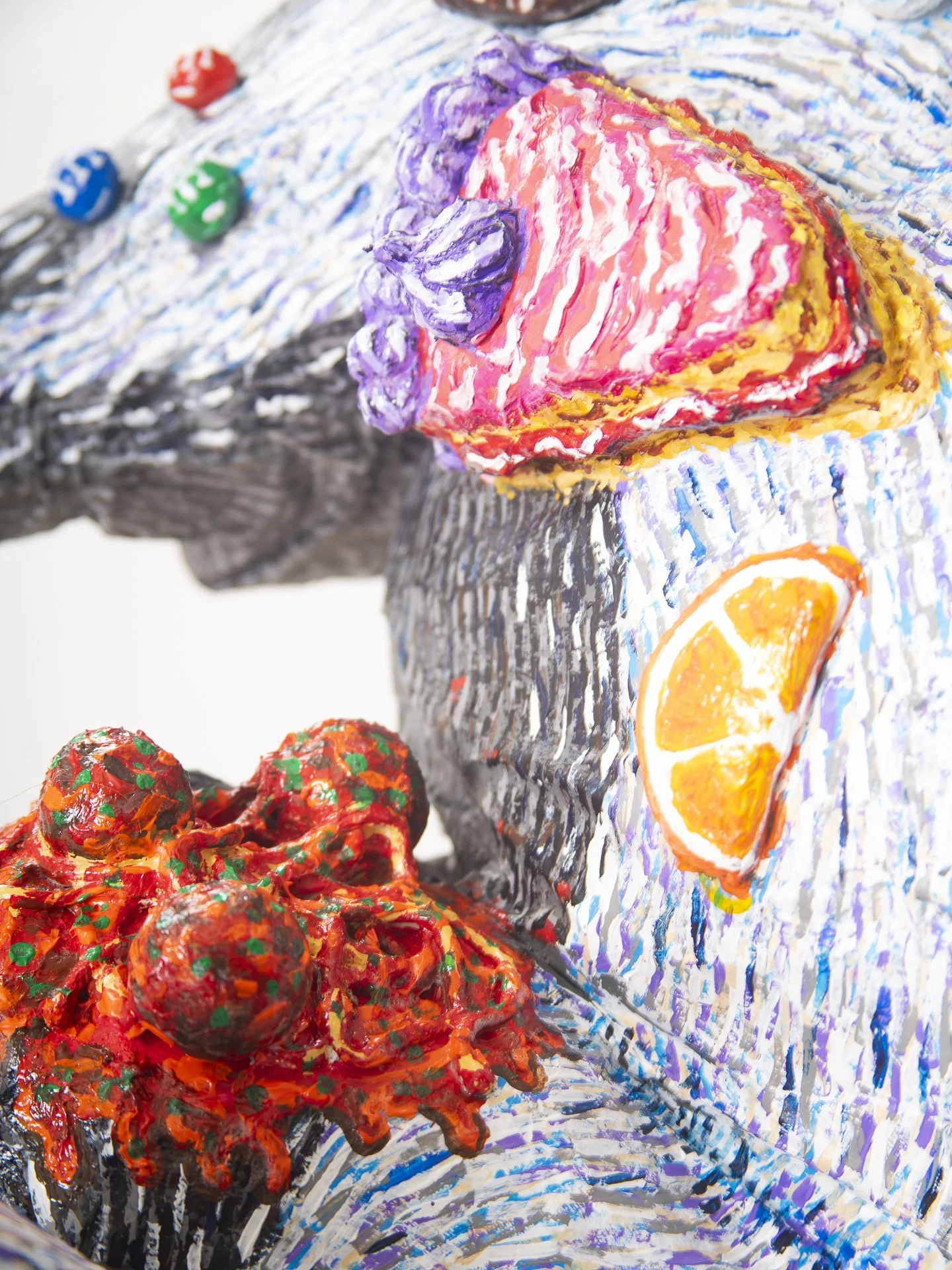
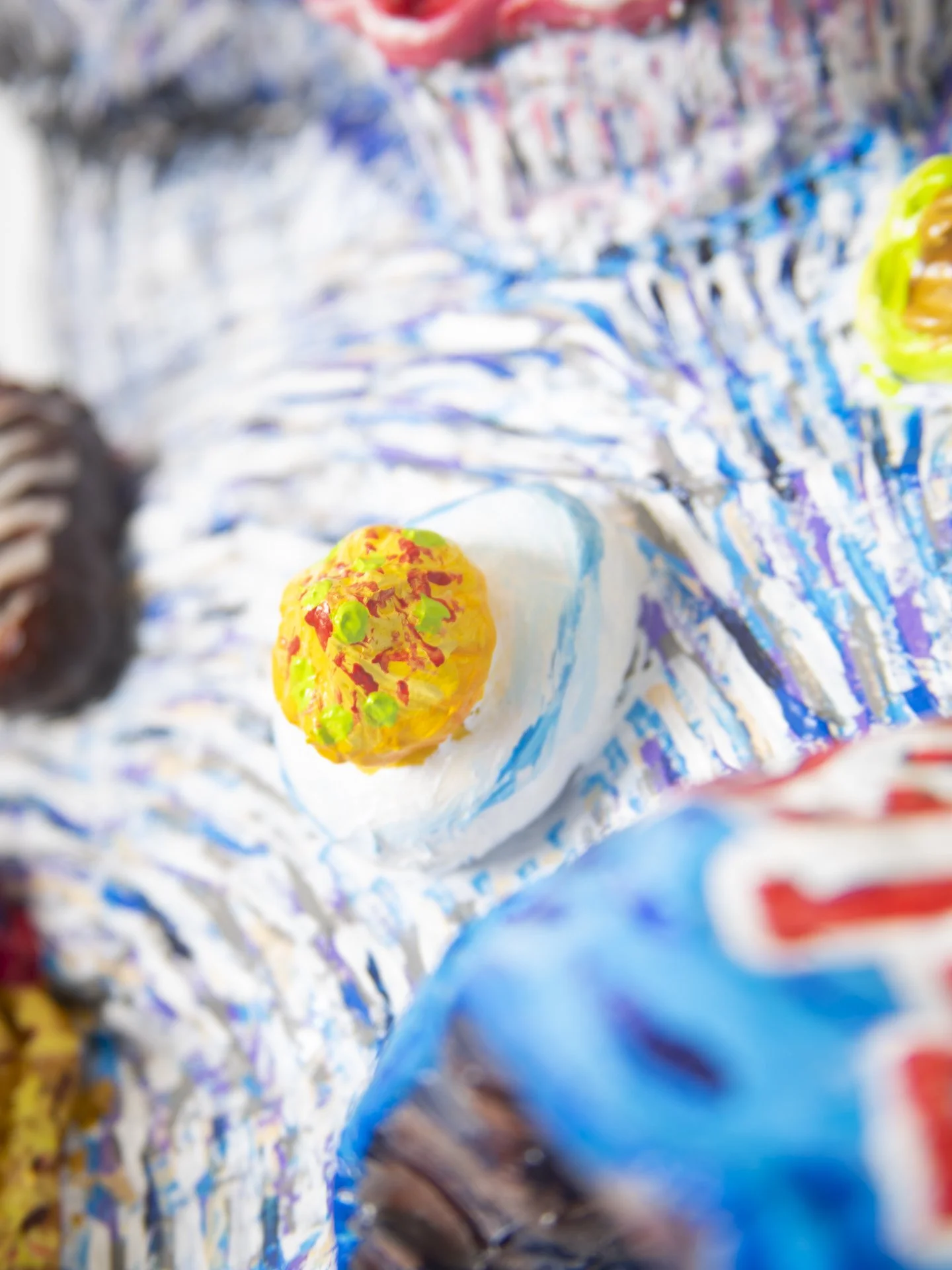
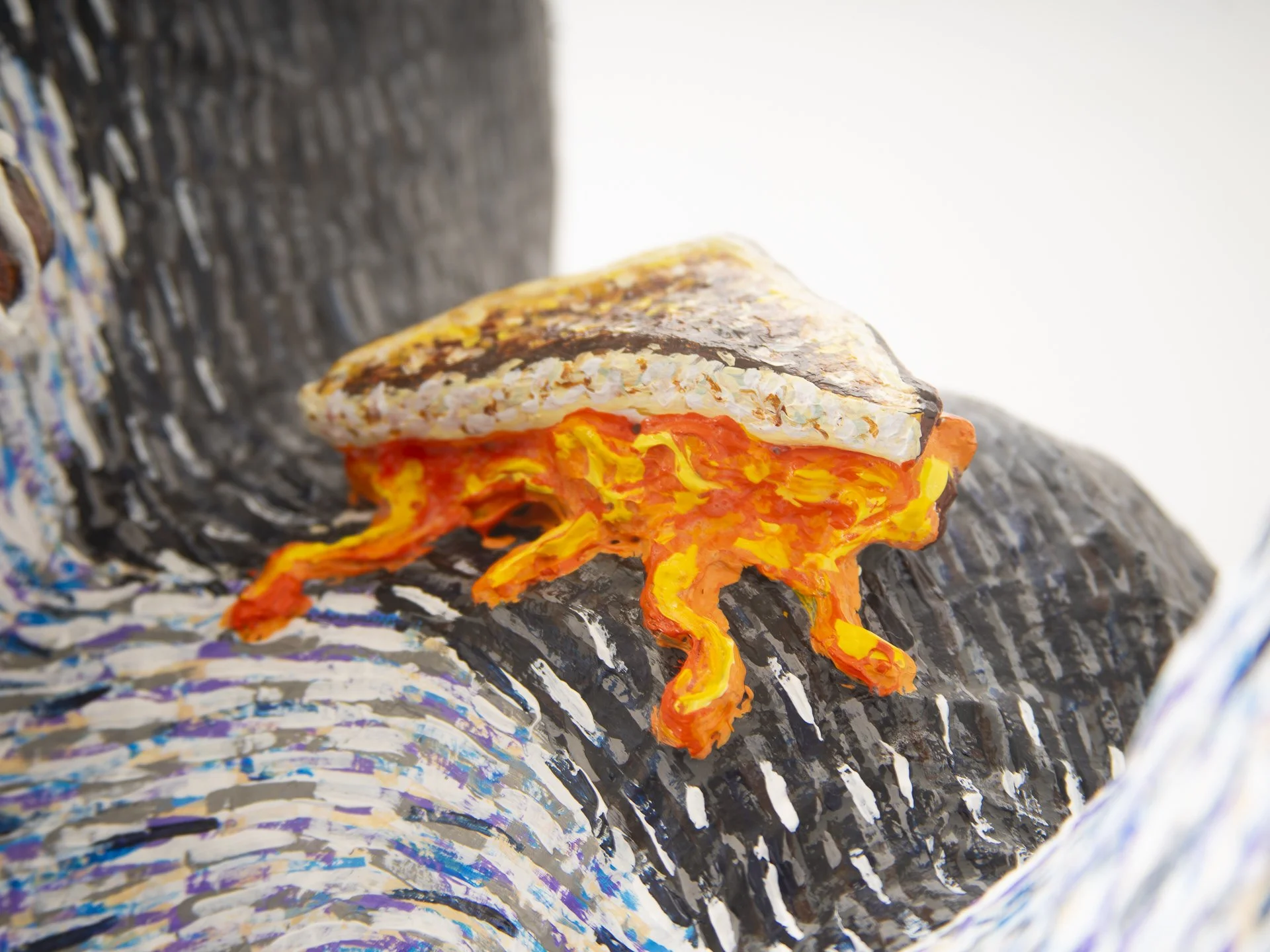
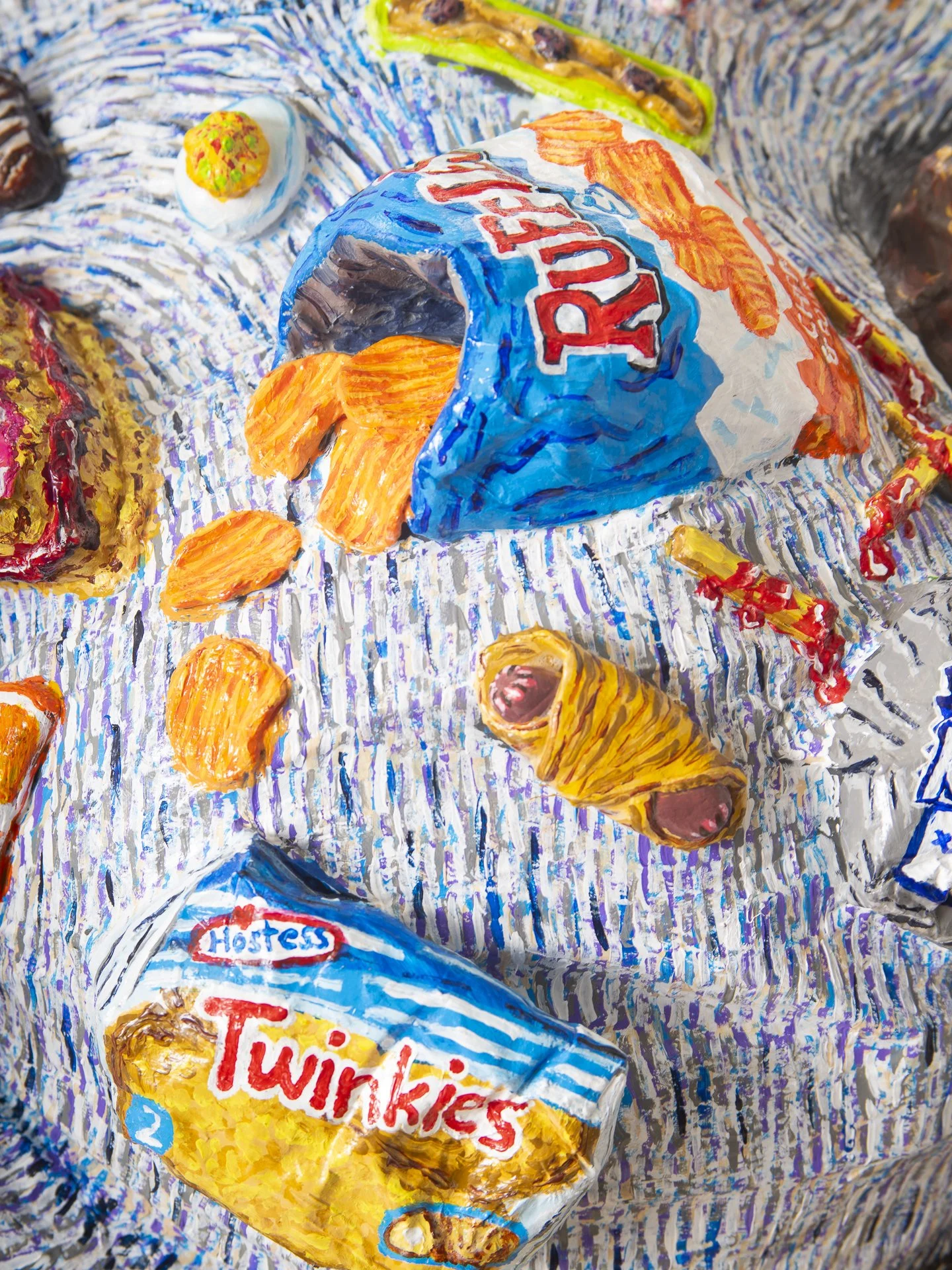
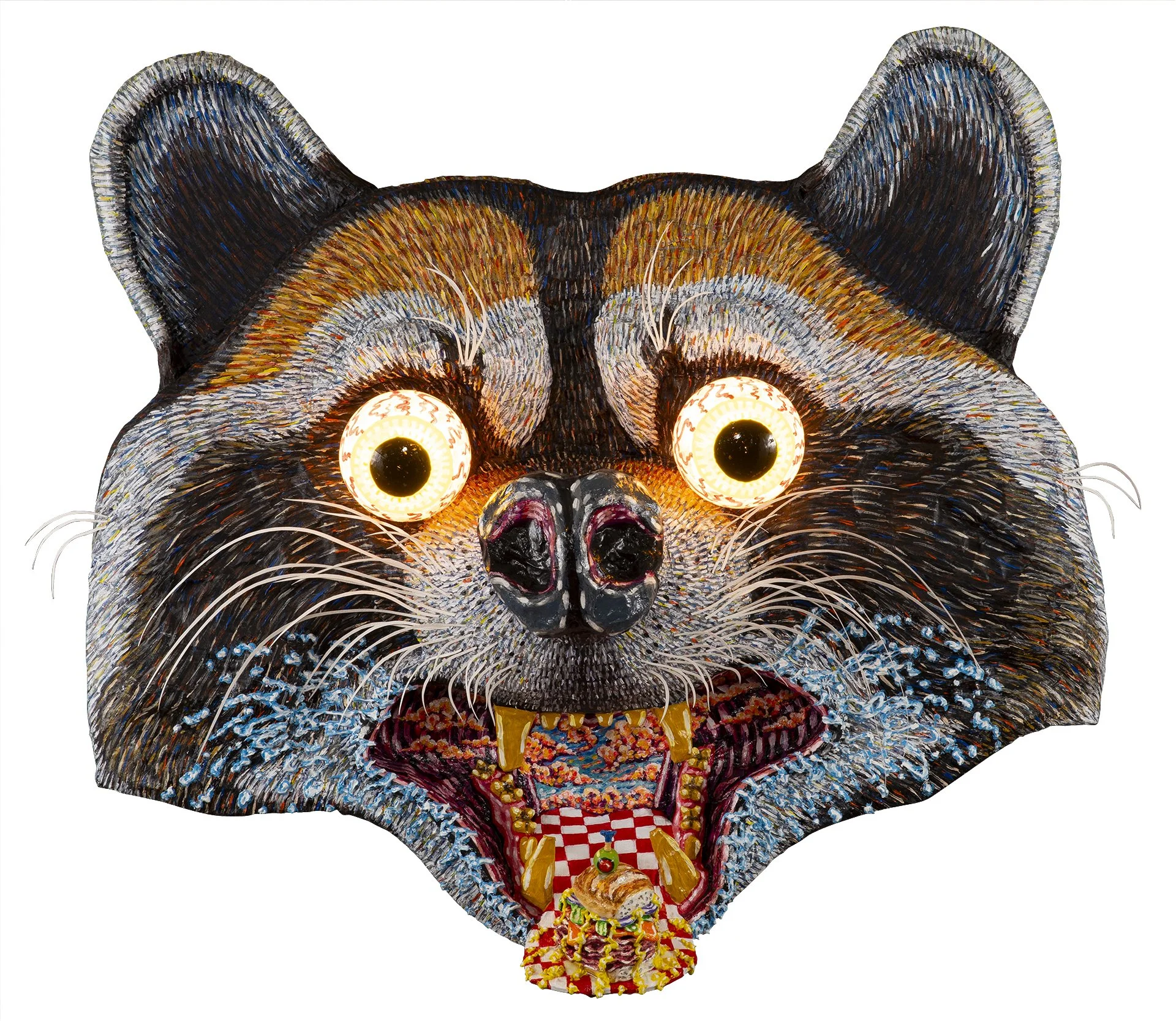
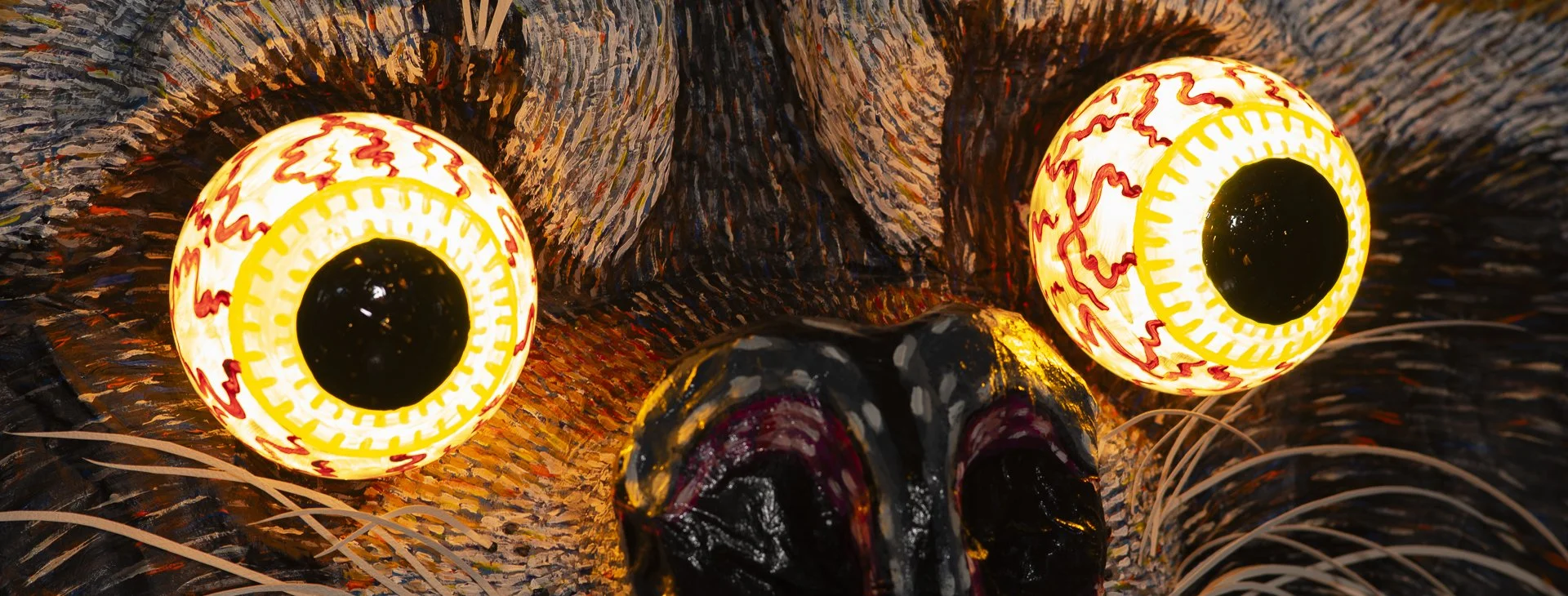
“Let There Be Lunch” is quite an accomplishment in complexity and scale. You’ve introduced lights in your previous works but this one takes it to the next level with the eyes and its scale. With a piece this complicated and involved, is there a bigger idea incorporated into this, literally, bigger piece?
A large work is so much more fun to make than a small work for me. Working small can get fussy and frustrating. Having big sculptures helps to achieve my goal of transforming the gallery space by breaking up the visual monotony of square and rectangular work. I’ve been figuring out how to increase the scale of the sculptures as I go and I want to get more advanced with my building techniques. My technical skills are pretty limited but with each piece I create I get a little more advanced. I cut the back of the piece out of plywood with a jigsaw, my most heavy duty tool that I can use but I’m scared of cutting my fingers off with, to keep it sturdy. Some of the wall sculptures I’ve made in the past look like they should have had lights in the eyes. So this time I used acrylic globes for the eyeballs with bulbs inside that feed out the wires through holes in the back. I’d like to keep adding elements like sound and even smell to further realize my vision of this world.
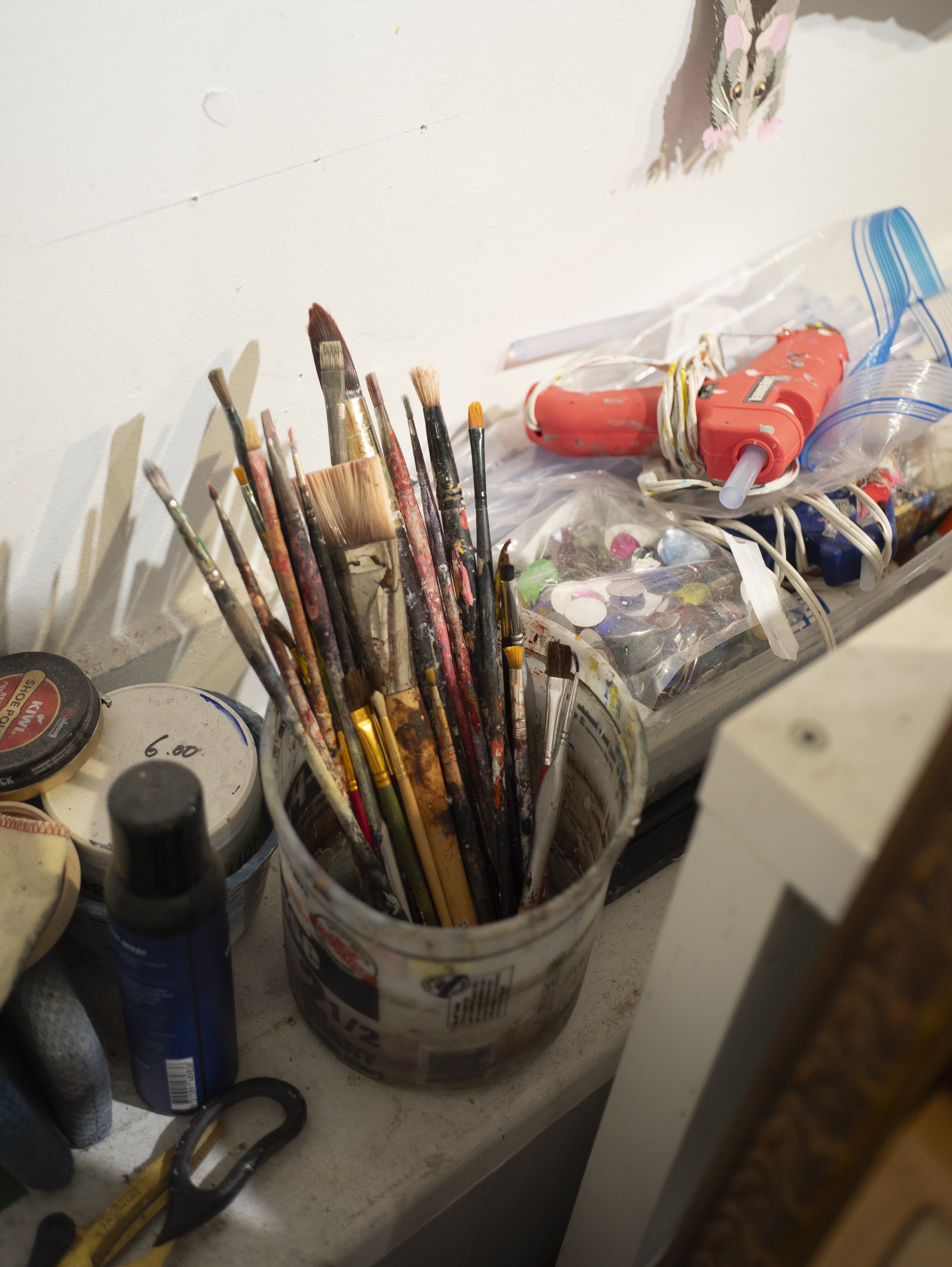
I did some creeping into your Instagram account for more background on your work. I found apost from 2018. The caption reads ‘Covering up my sub par paint job with paper’. Was this a pivotal moment for you shifting from painting into collages?
I’ve always painted since I was very small and I graduated from the painting and drawing program at CCA in 2013. At that time I was doing large, like 8x8ft, acrylic and oil paintings of animals, junk food, celebrities, and other pop culture references collaged together. When I graduated I started investigating the paper and it became my primary medium. In 2018 at the ArtSpan Journal Building Studios we could do whatever we wanted with our spaces. I painted my studio pink, painted murals of dinosaurs and centaurs in the hallways, and created colorful sculpture installations in my space and in the stairwells for open studios. I called it “Happy Place” and it was part of the inspiration of wanting to create a totally altered environment. After that I had more collage projects and they became the focus again. Now I use the sculpture making as a break for my hand, it gets sore from the repetitive cutting and I don’t want to permanently injure it too soon.
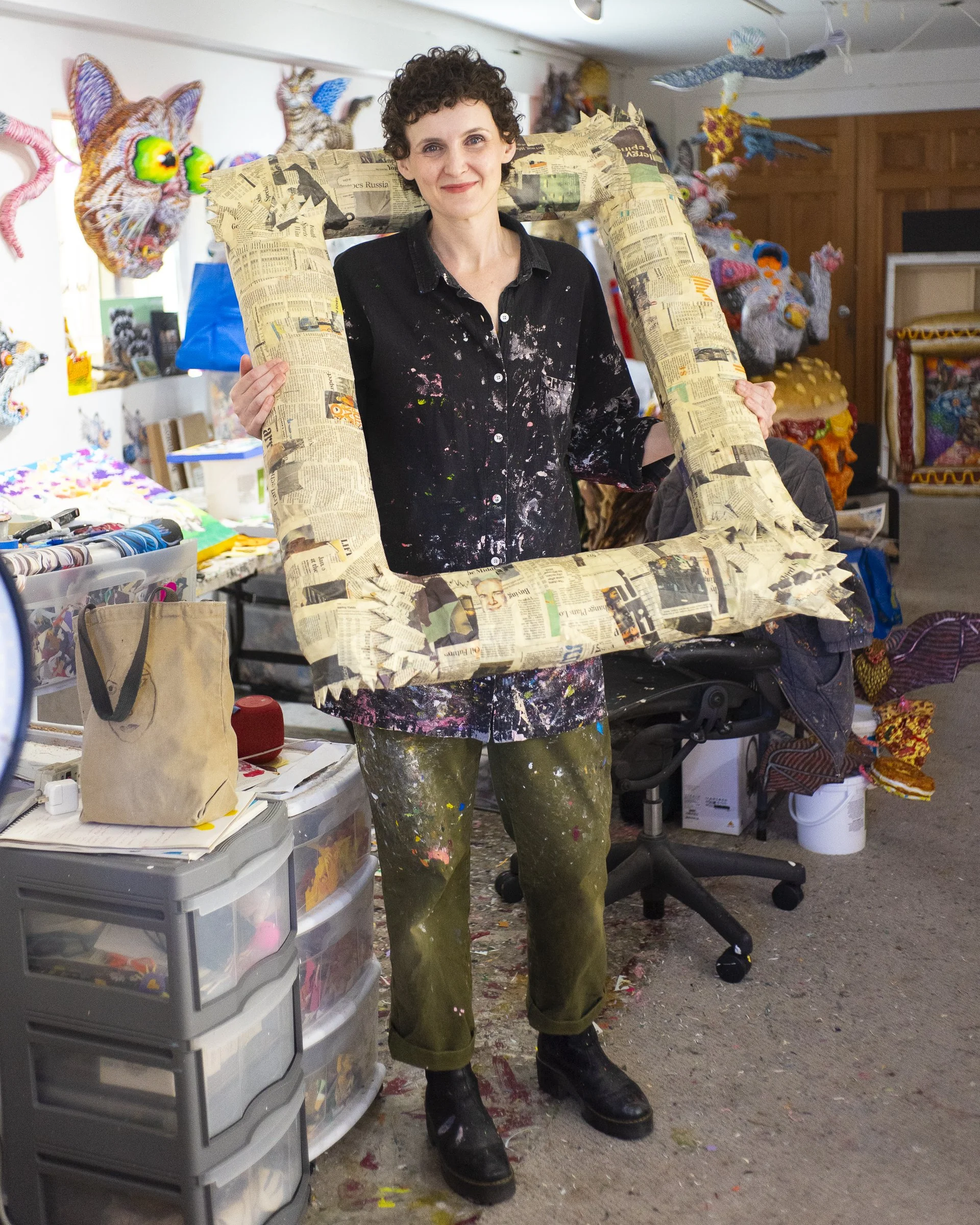
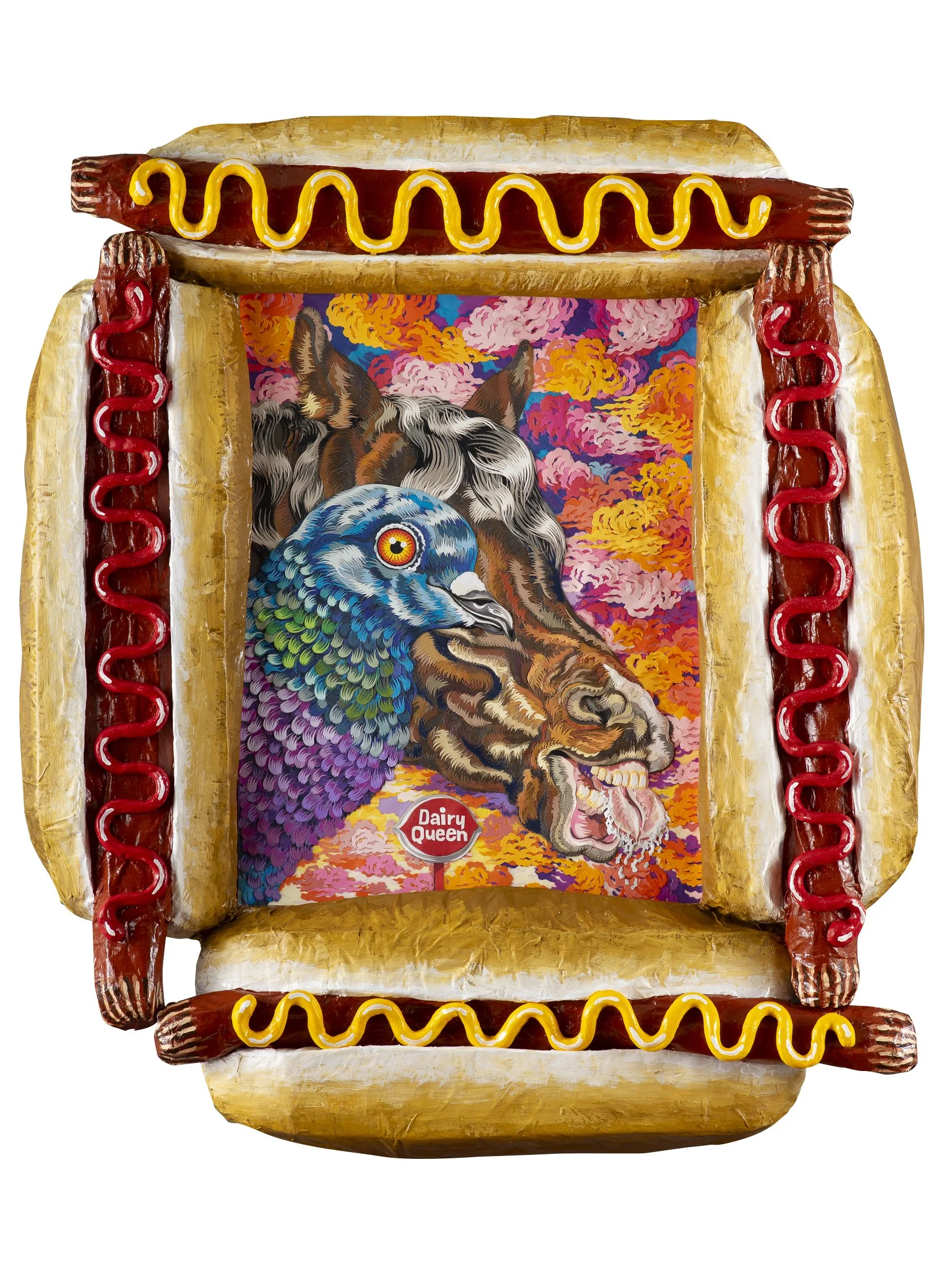
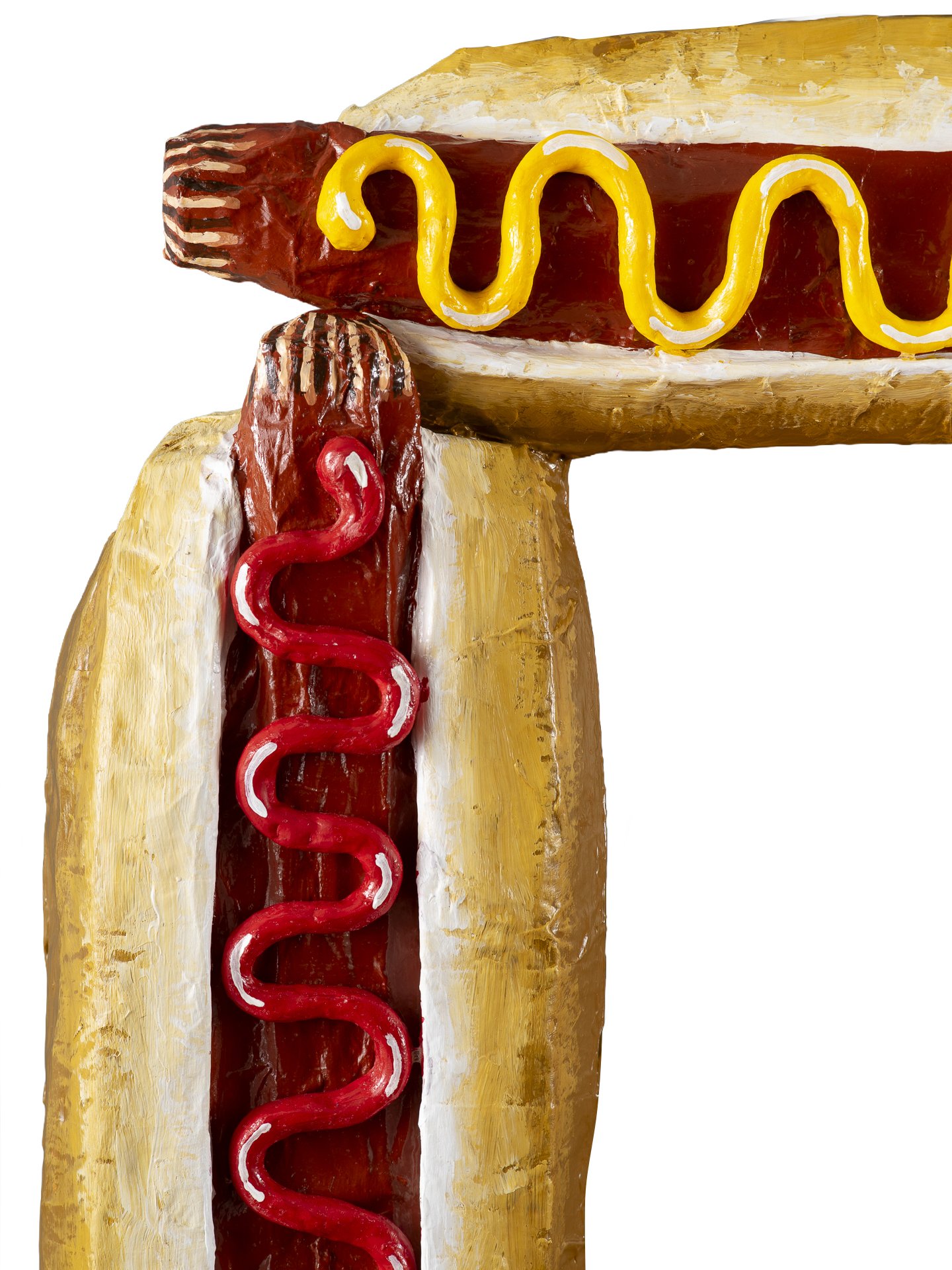
On the topic of collages framed by sculptures, this is a new development in your work. I am partial to the “Hot Dog Frame,” what inspired you to create sculptures as frames for your work?
The collage and papier-mâché mediums have felt separate in my practice, I switch between one and the other, and I wanted a way to marry them together. Even though they explore the same themes and are a part of the same world I consider them two distinct forms. The sculptures utilize some cut paper but I’ve never combined the two fully. Dealing with framing is something that I’ve tried to avoid by working on panels but having another art piece as the frame seemed like fun. By creating an irregular shape with the frame it also breaks the rectangle of the collage which I am frankly sick of. There is a lot to explore when anything can become a frame and I am excited to pursue different directions with this idea.
We talked about how childhood and memories from that phase of development can subconsciously, or intentionally, slip into the themes we explore as adult artists. Are there any recurring themes, symbols or tropes in your work that you can link to your childhood experiences? If not childhood, are there specific events in your past that you're processing with these works?
I get my love of animals from my mom, she would always try to help stray dogs and cats and baby birds that fell out of their nests that we came across. These attempts at rescue were sometimes successful and sometimes ended in heartbreak. But I still stop for an animal in distress and try to do something. I can’t help all the animals in the real world but in my work I can create an abundant sanctuary to save them all. Even though the pieces are a fantasy they still soothe the heartache of all the losses and suffering.
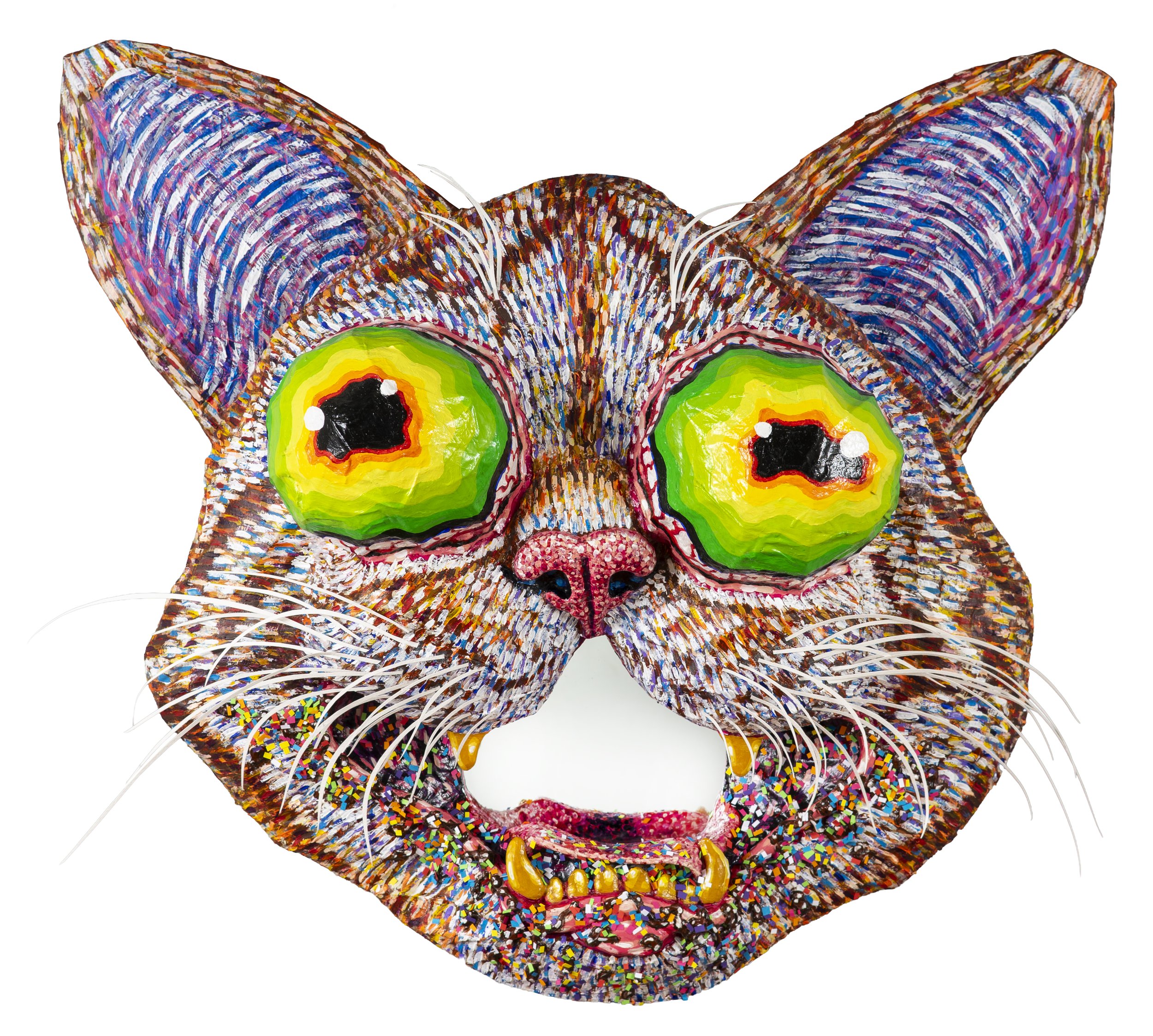
“Do I Have Something On My Face” 26×27×10
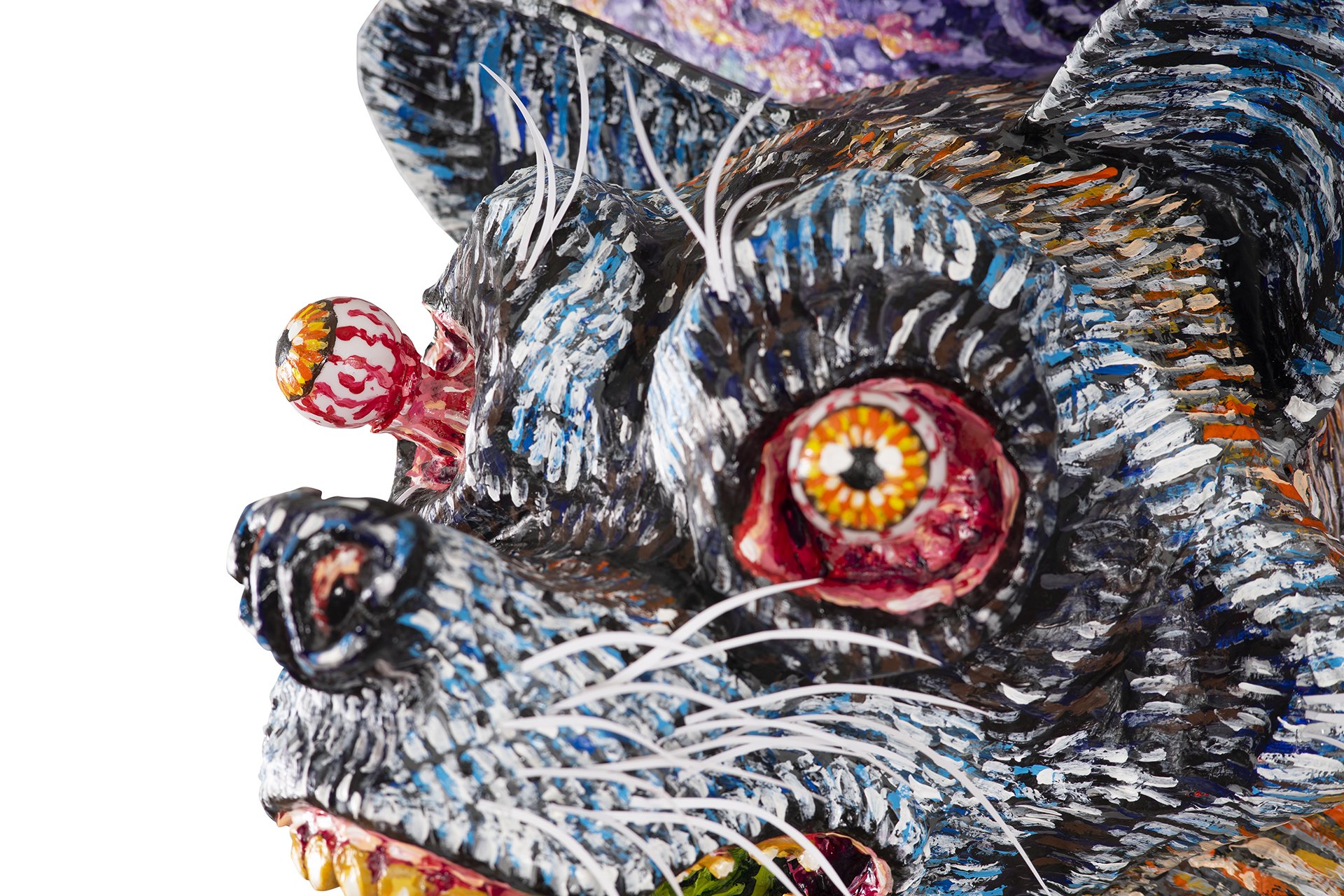
The title “The Big Buffet in The Sky” feels like a requiem to the madness. The damage humans have done has finally pushed the animals beyond their limits. Their eyes have begun to transform past blood shot into dilated waving pupils in “Do I Have Something On My Face” and “Live, Laugh, Yarf”. Have the lasting effects of humans sent the animals onto the “next” space?
The expressions of the animals are somewhere between shell shocked and euphoric. They are processing the trauma of having survived the Anthropocene age. The animals are also feeling the excitement of the new wild era fueled by too much sugar, salt, and energy drinks. Their human-like eyes are the remaining vestiges from their experience in the previous world. I am trying to communicate the crazy feeling of being a consumer and contributing to the destruction of the Earth just by existing. It is the recognition that I am complicit in all the waste no matter what choices I make because the system was not designed for longevity. It was designed for maximum profit extraction, no matter the cost to human and animal life.
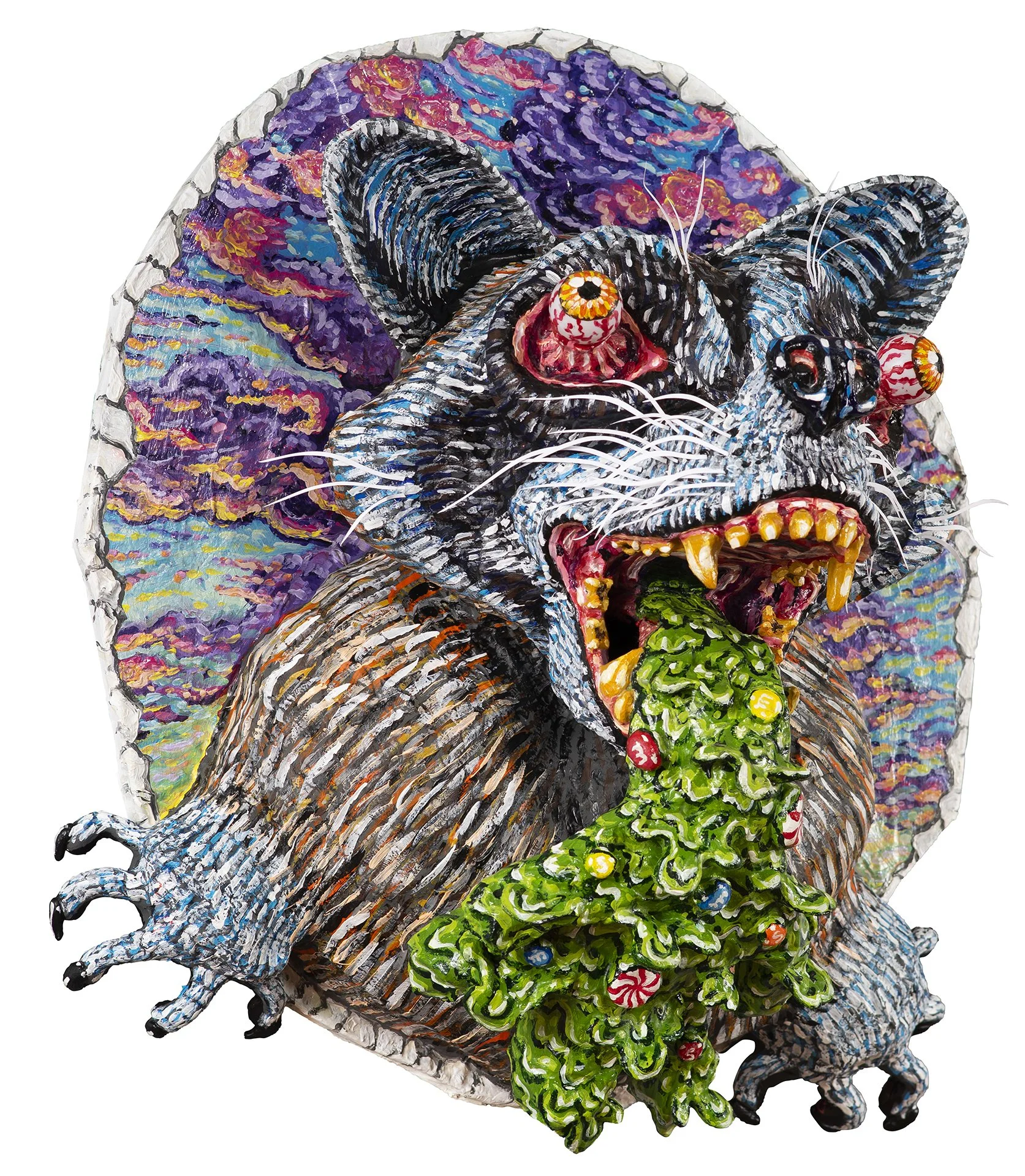
“Live, Laugh, Yard” 23×27×15
In this throwback post about a work from 2015, you credit as the originator of the current genre, the collages are much simpler in layers and cuts. There’s a distance in the work, the viewer is removed significantly compared to the very intimate expressive portrait detail of the animal’s experience in works like “We’ll Get It Right This Time” or “And They Lived On The Poodle Forever”. Is the intimate nature of the current collage work a product of honing your craft or is this signaling a significant development in your plot?
My favorite part of the collaging process is getting to make the small details on the animals like the highlights on the face. To get to that part more quickly the background/foreground process has gotten condensed. I still spend a lot of time on the sky but I used to put more focus on creating depth with structures and details in the background. Currently I’ve been blocking in the foreground with grass and invested more into the animals and objects in the foreground which brings all the action right to the surface. This pushes the energy of the collage out into the space rather than drawing it inside. I think it adds to the immediacy and intensity of the pieces, their chaotic nature is more communicative of my emotional landscape as the environment collapses.
Detail of “We’ll Get It Right This Time”
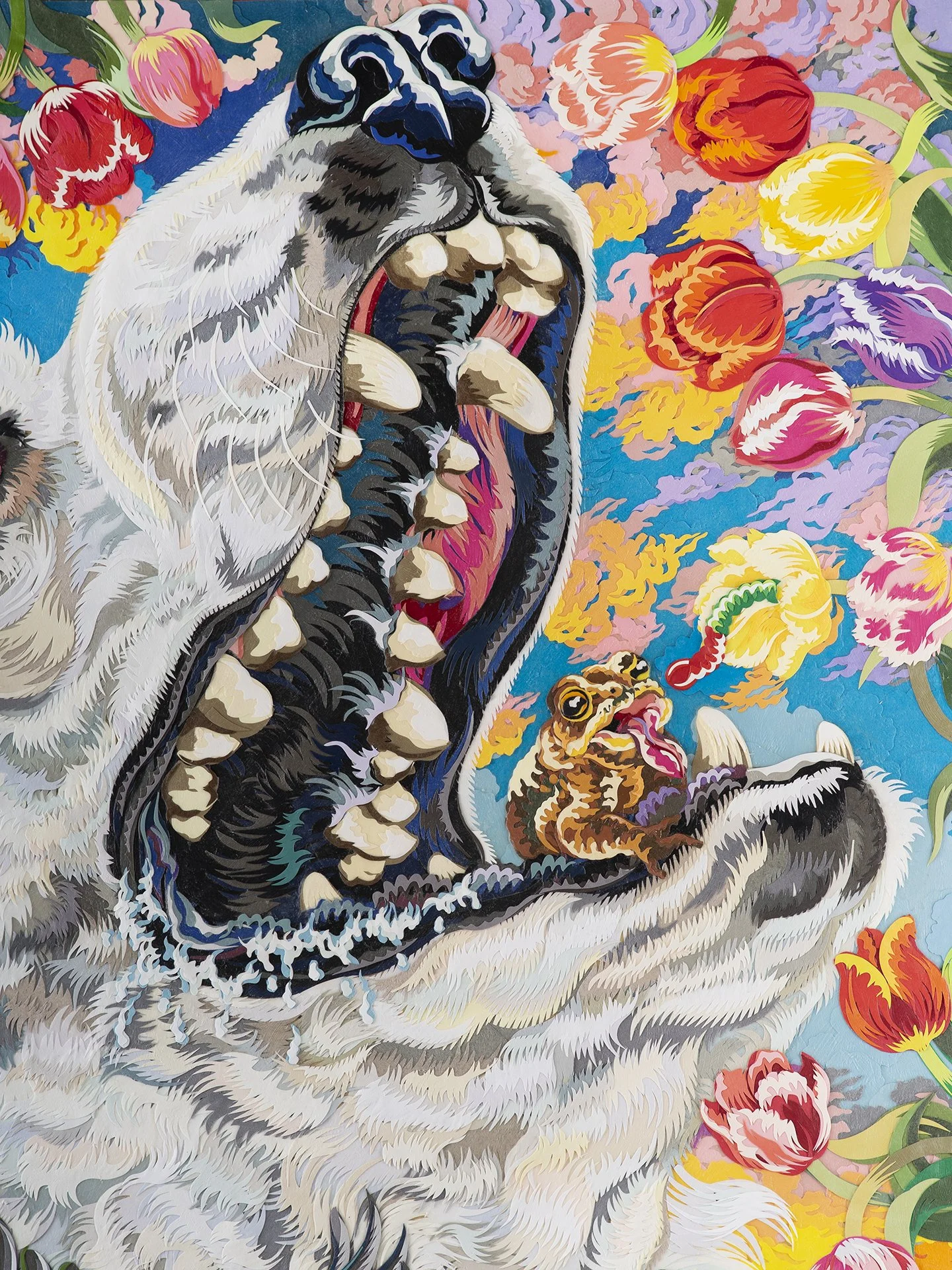
Detail of “And They Lived On The Poodle Forever”
What do you see as next for your work? Are there any avenues you’d like to explore that you haven’t had the opportunity to yet?
I am most excited to explore the melding of the collage and sculpture process, as I mentioned with the frames. There is great potential for the cross over between the two such as collaging with the paper on the sculptures or including painted sculptural elements in the collage. I would still like to work towards creating immersive installations and developing the papier-mâché technique so I can continue to increase the size of the sculptures.
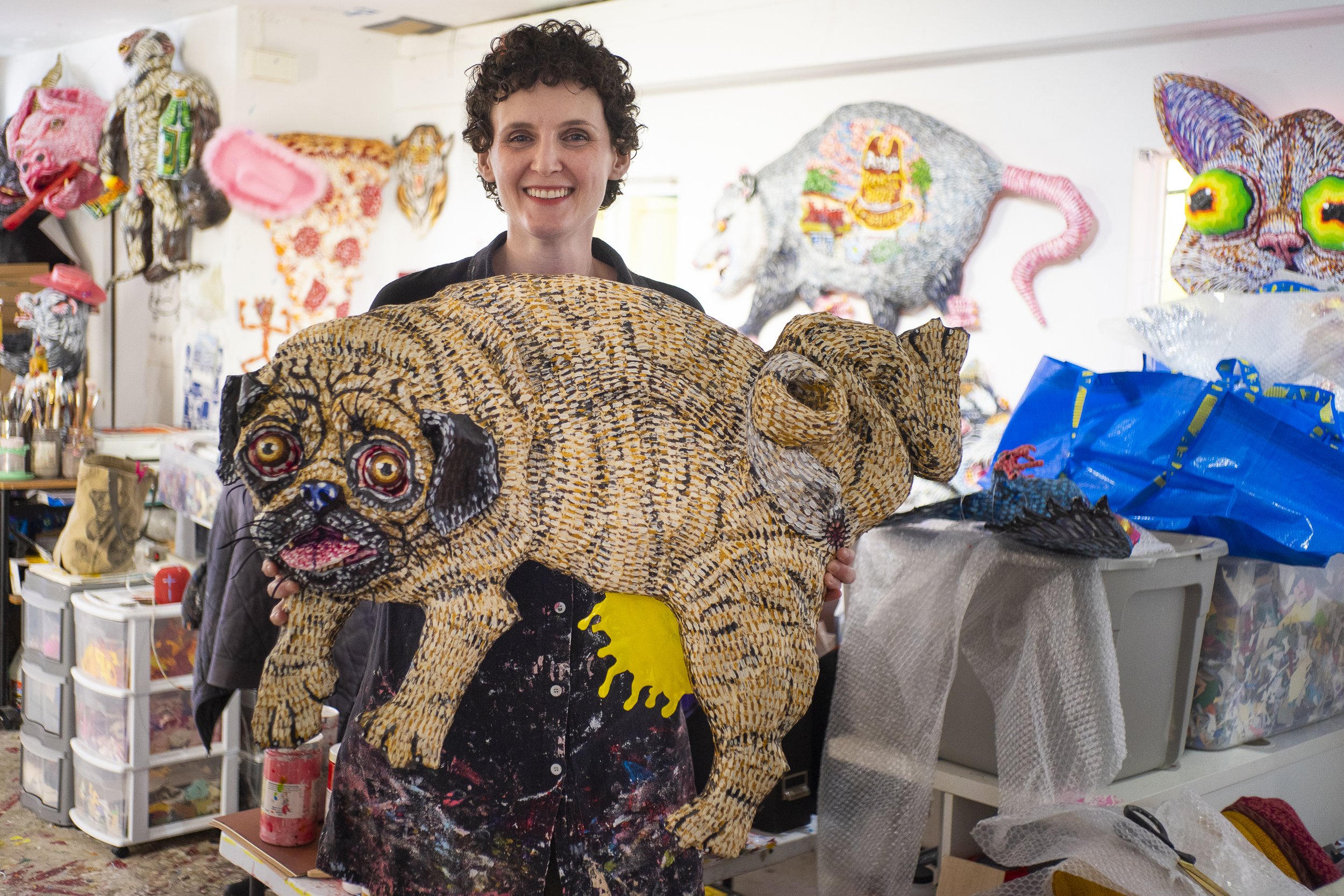
Andrea Bergen’s solo show “The Big Buffet in the Sky” opens Saturday, August 1st from 6-9 pm at Moth Belly Gallery, 912 Larkin Street, San Francisco, CA. The show will be open for 2 months and conclude at the end of September 2026. Gallery hours are Friday and Saturday from 1-6 pm or via appointment.