Studio Visit & Interview with Joel Hernandez
Interview and Photographs by Brandon Joseph Baker
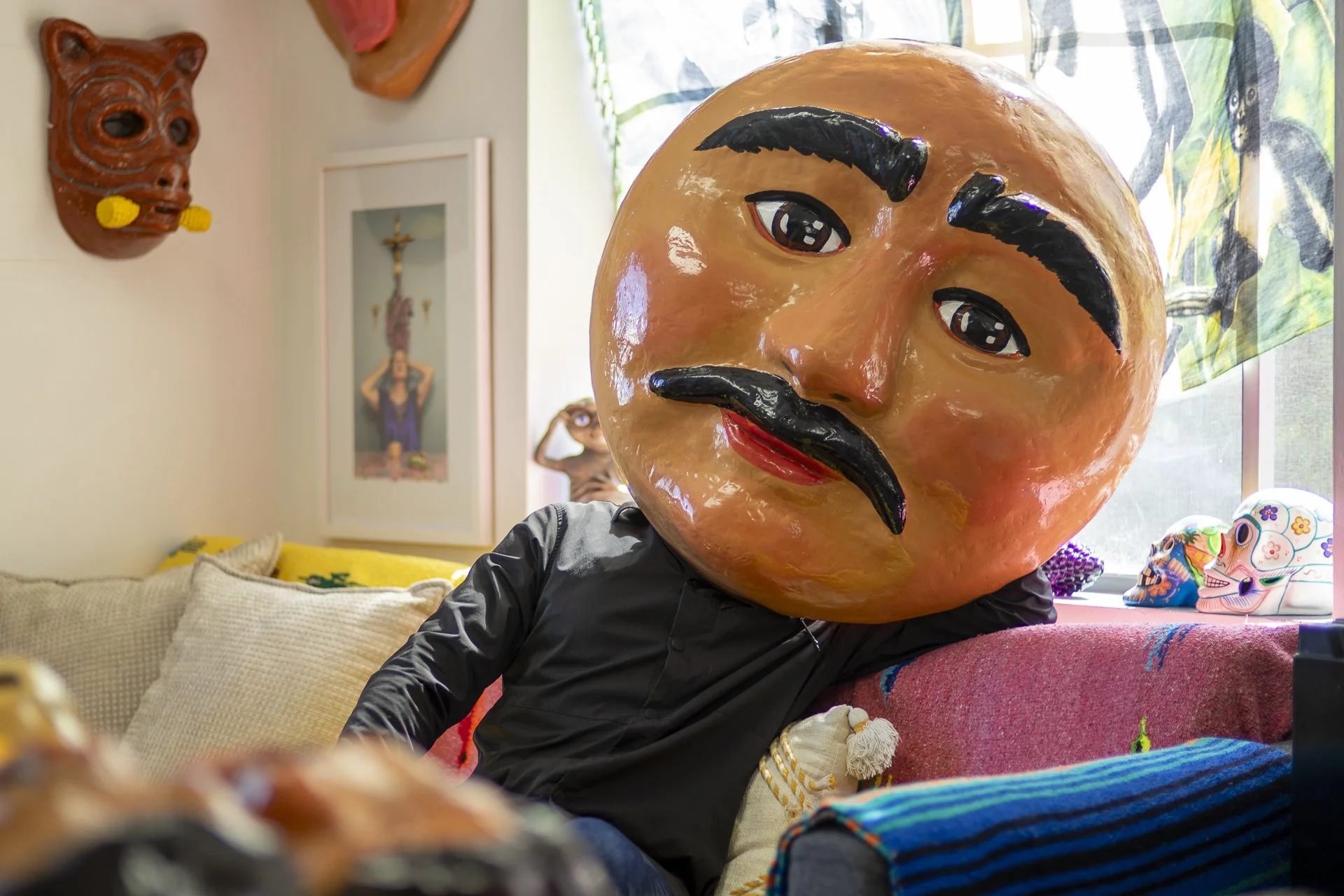
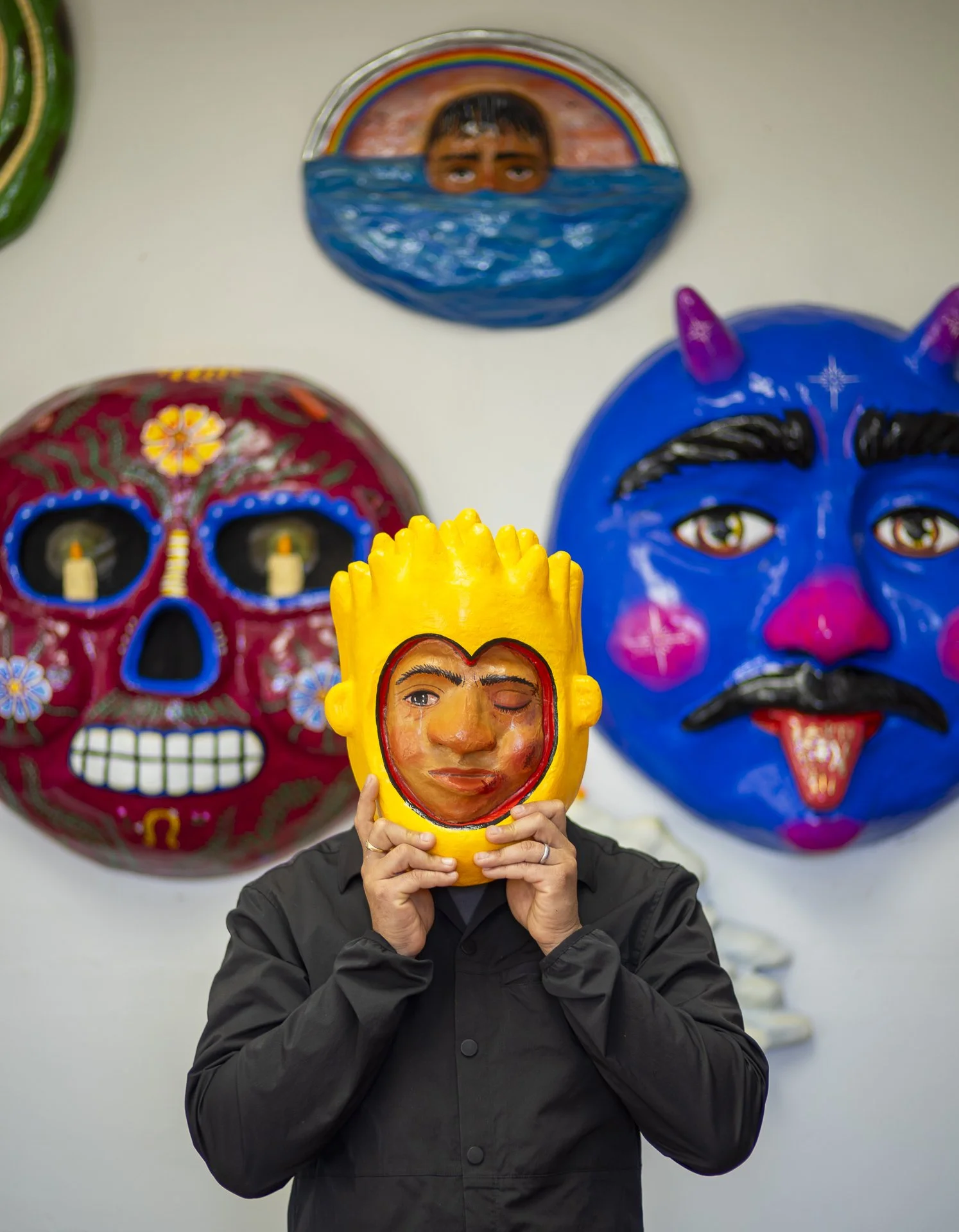
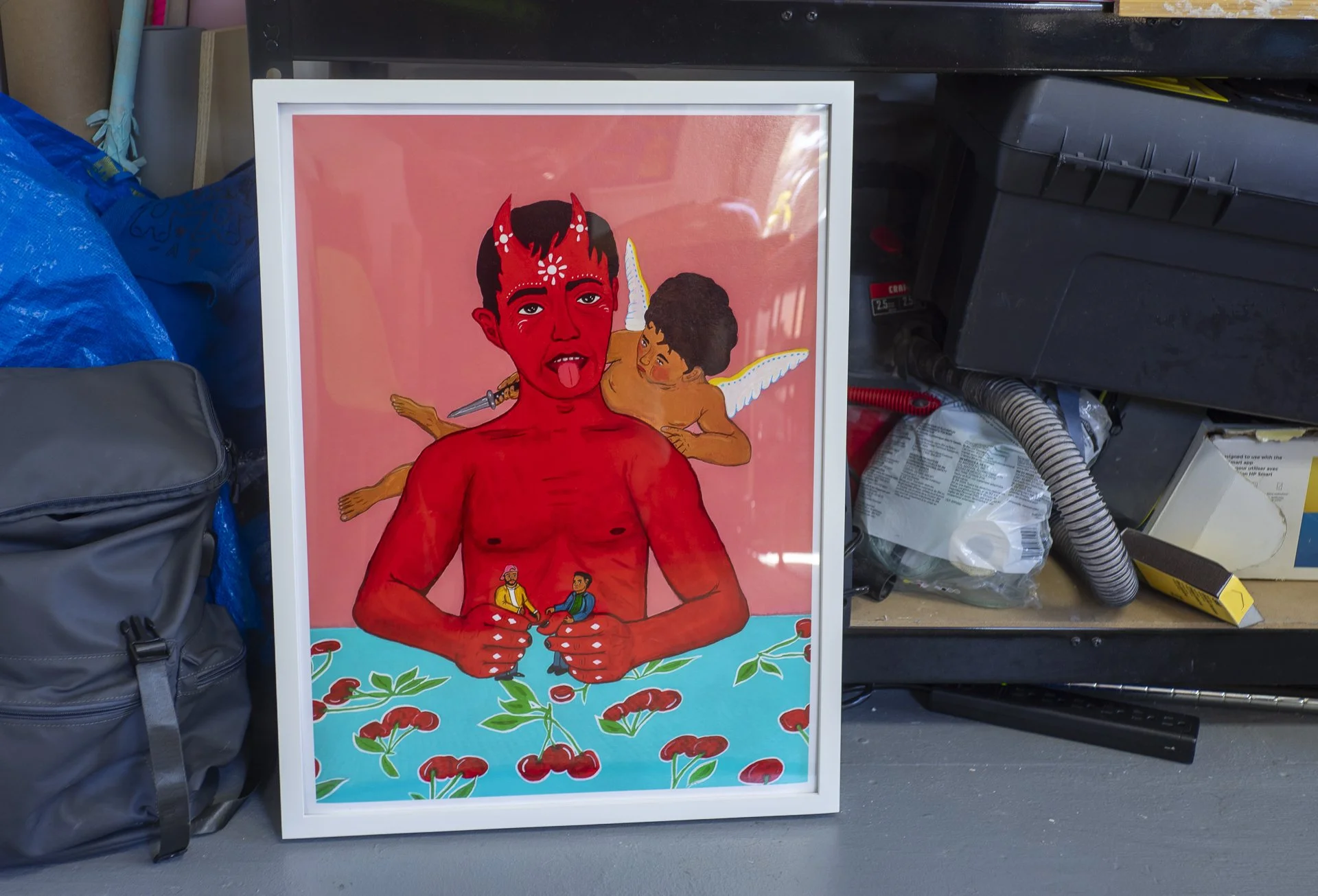
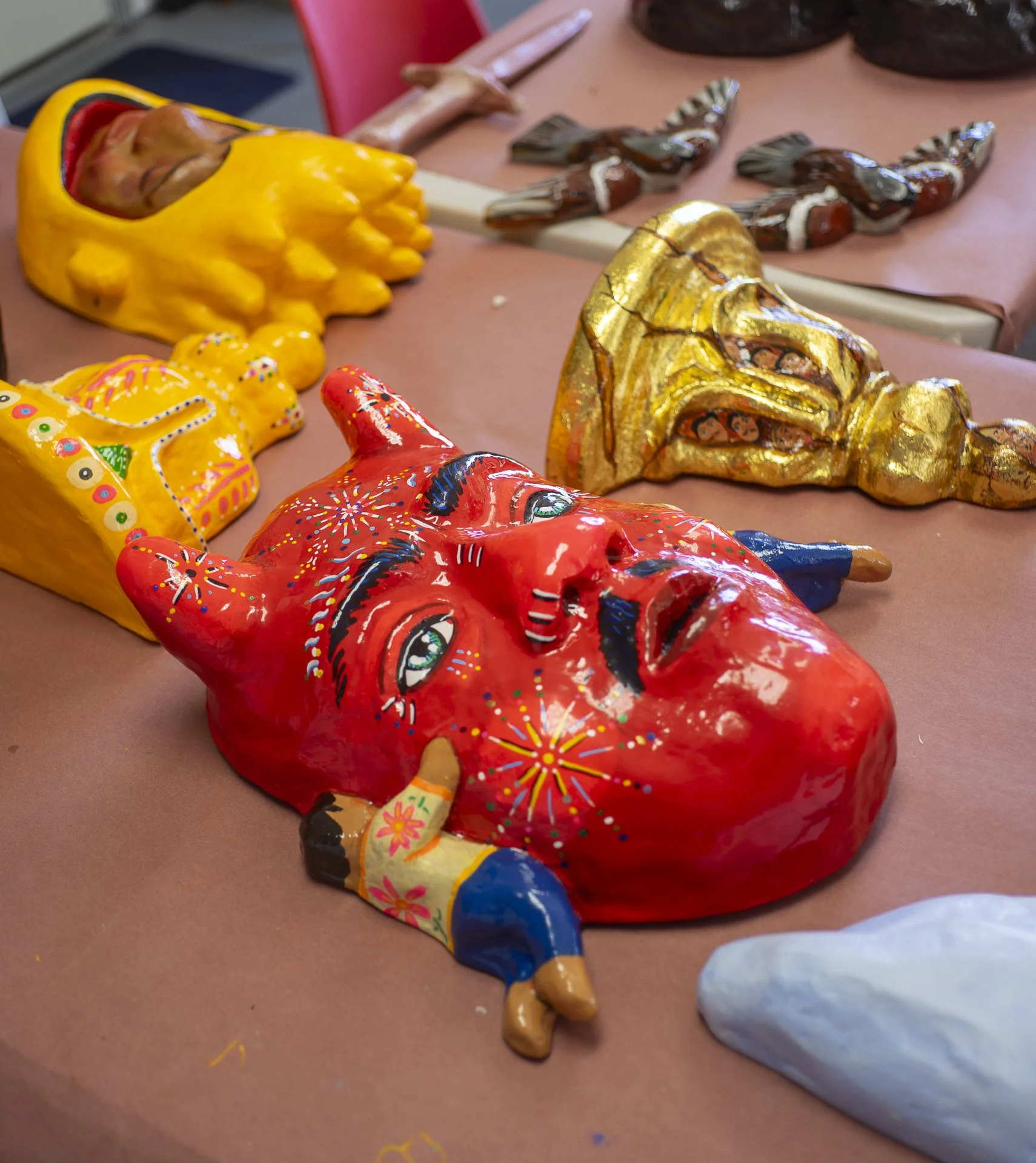
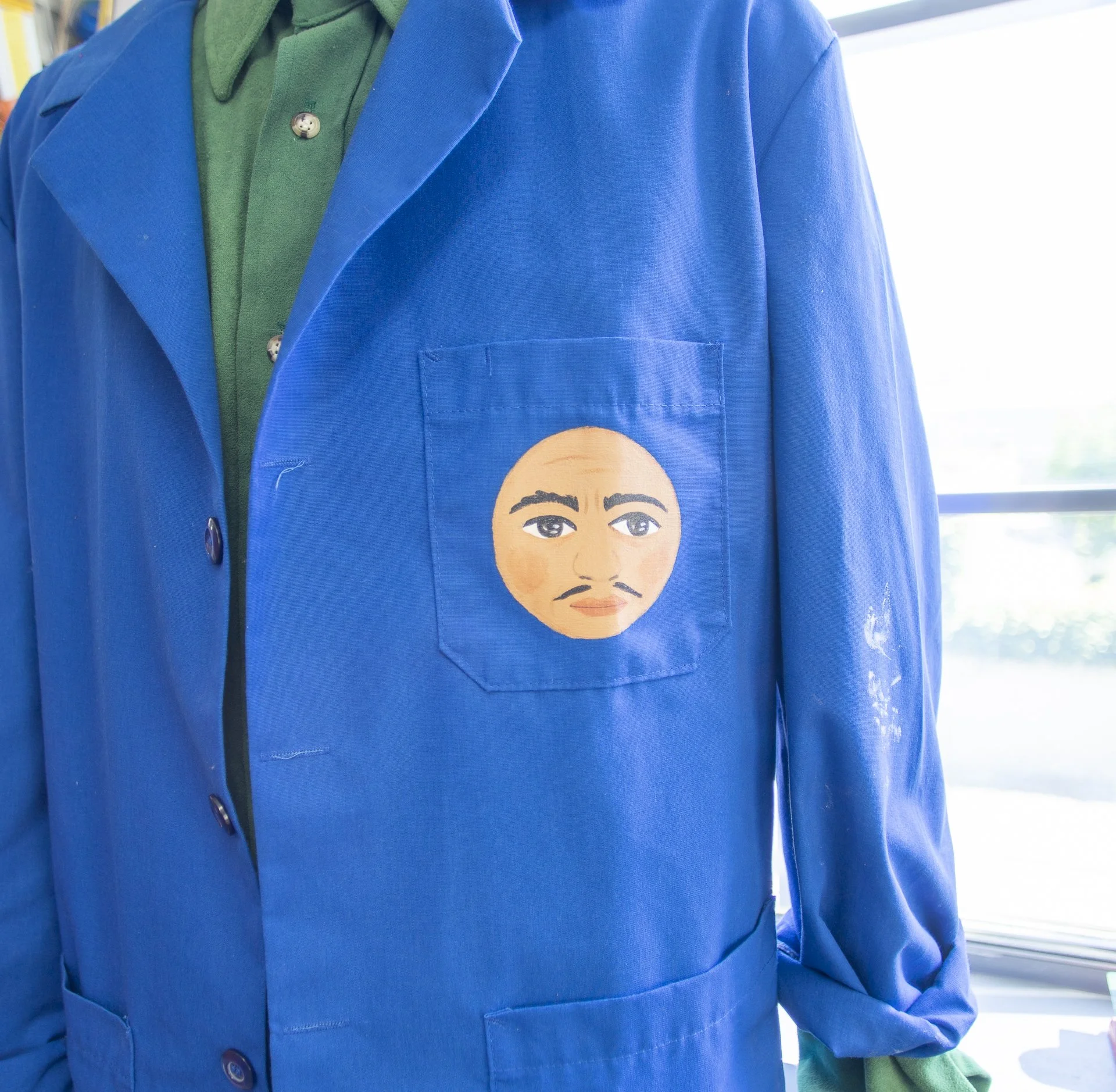
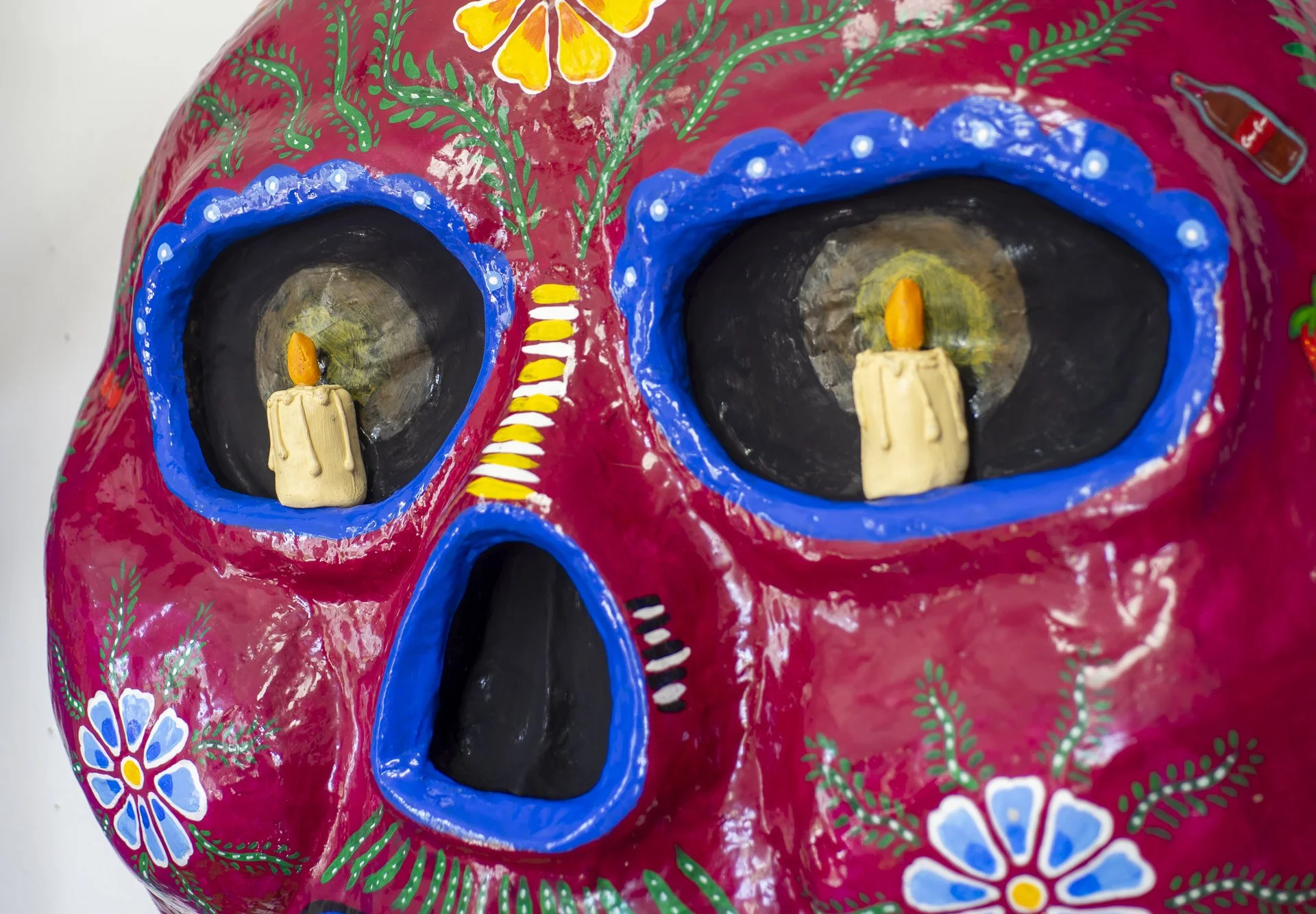
Joel Hernandez is a sculptor and painter creating symbolic and allegorical papier-mâché masks and acrylic paintings. Aesthetically Joel’s work leans into realms of folk art, his masks are inspired by antique masks he’s collected. Yet his work remains expressive and personal, tapping into shared universal life experiences in our present. Themes of happiness, joy and love collide with sadness, death and sorrow but he encourages the viewer to interpret the masks with their own experiences. Many of his works share recurring symbols and iconography, Joel tells me he creates his work to share a conversation with each other. The body of work Joel completed over the last year for his solo show, "At Least We're Damned Together" at Moth Belly Gallery feels reflective of an observant man who takes time to understand how he feels in the world around him.
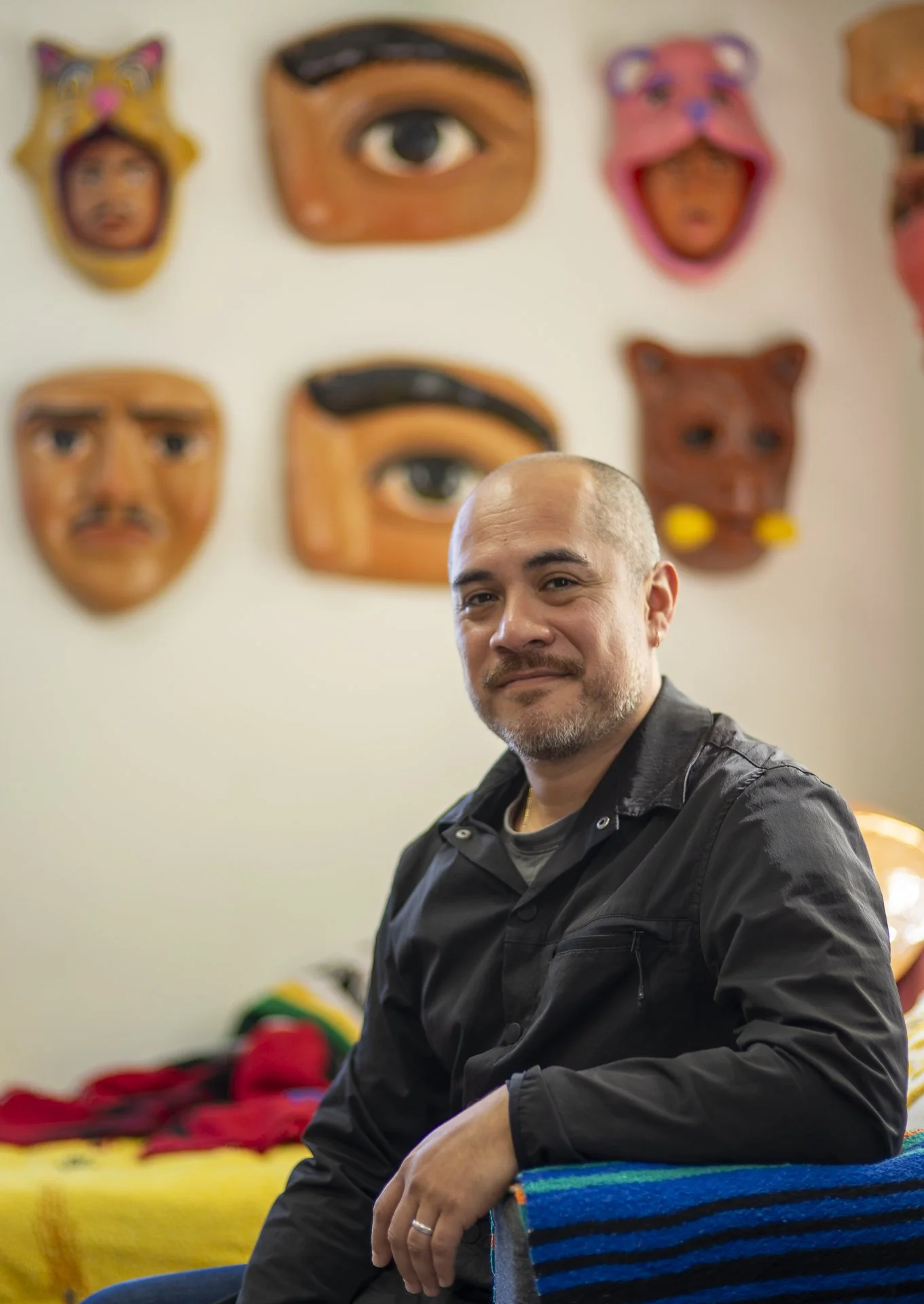
“I have been in San Francisco for seven years now. I fell in love with the murals, with the colors, with the flowers and with the people. I draw a lot of inspiration from my new home town. I love the scrappy side of San Francisco," Joel says of his experience landing in The Bay after growing up in a border town in Mexico, attending college in Indiana and beginning his artistic career in Texas.
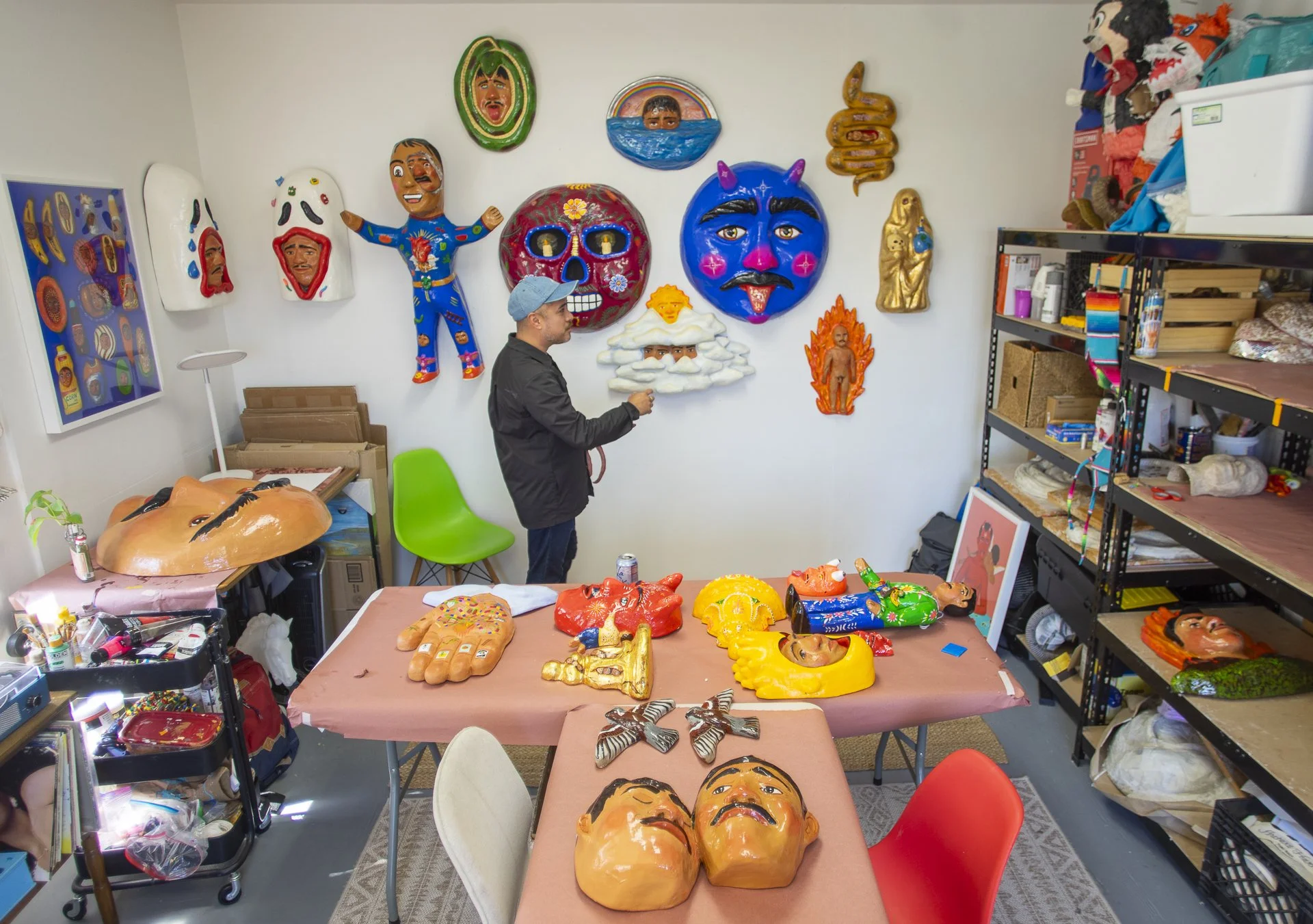
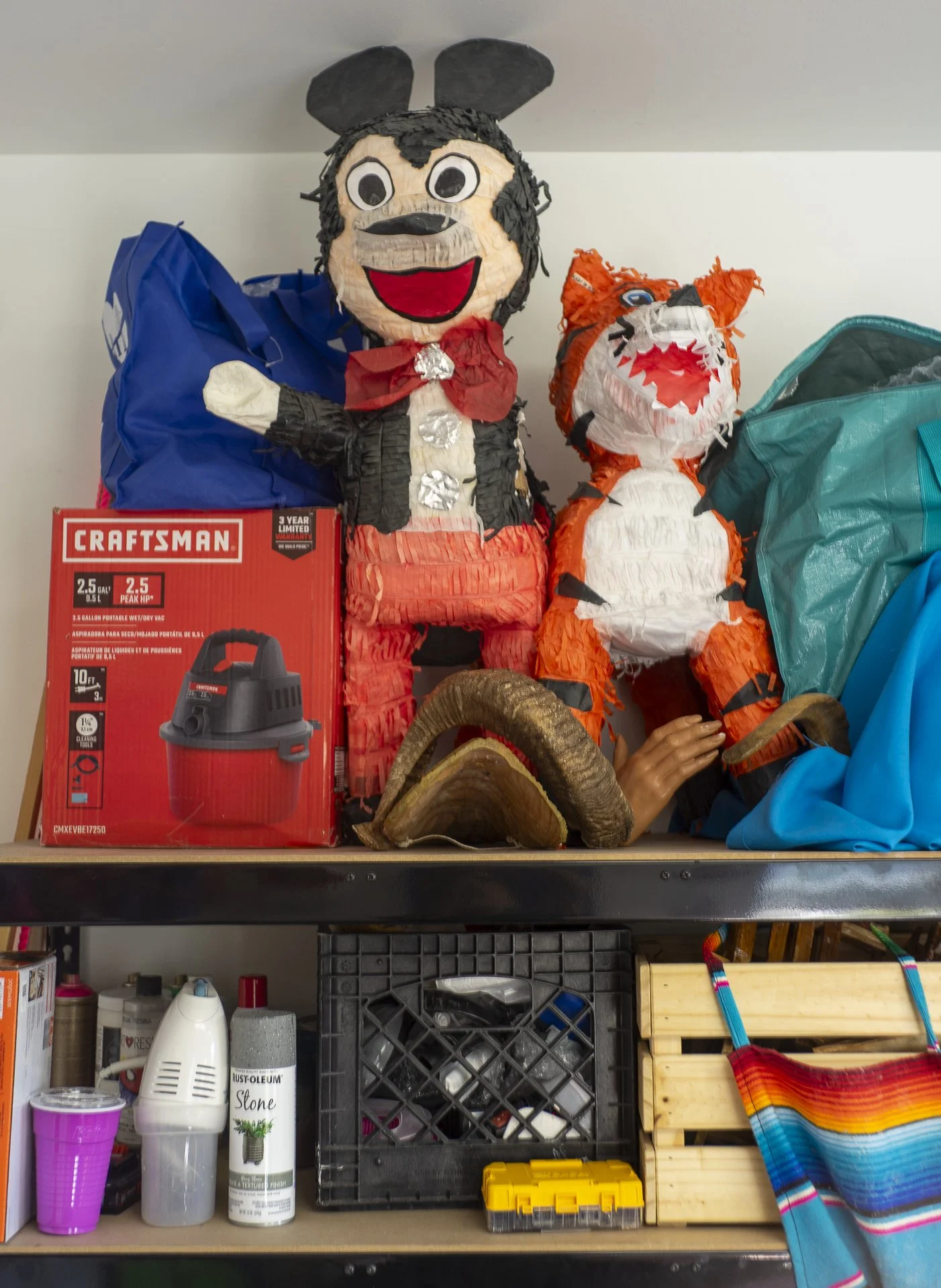
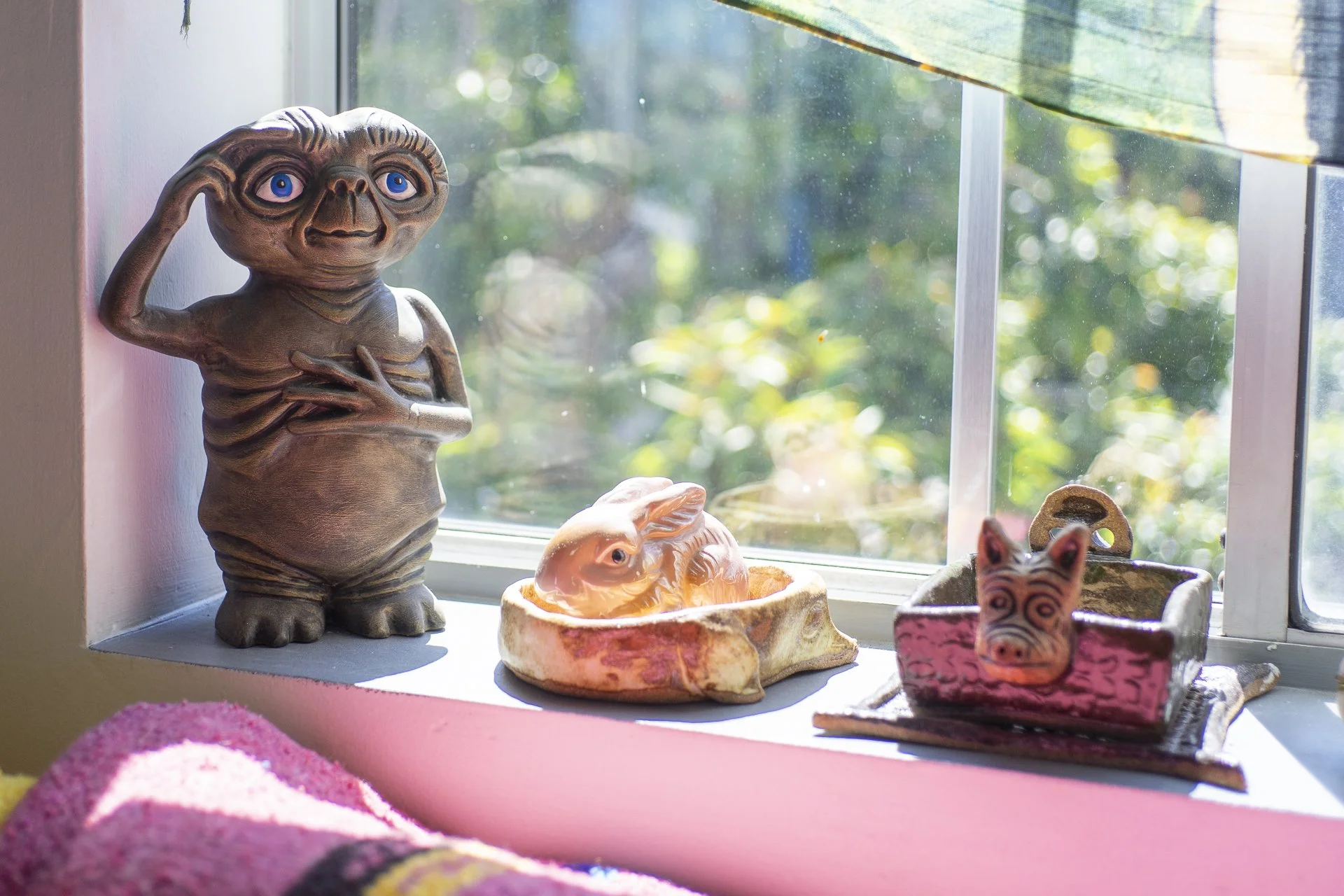
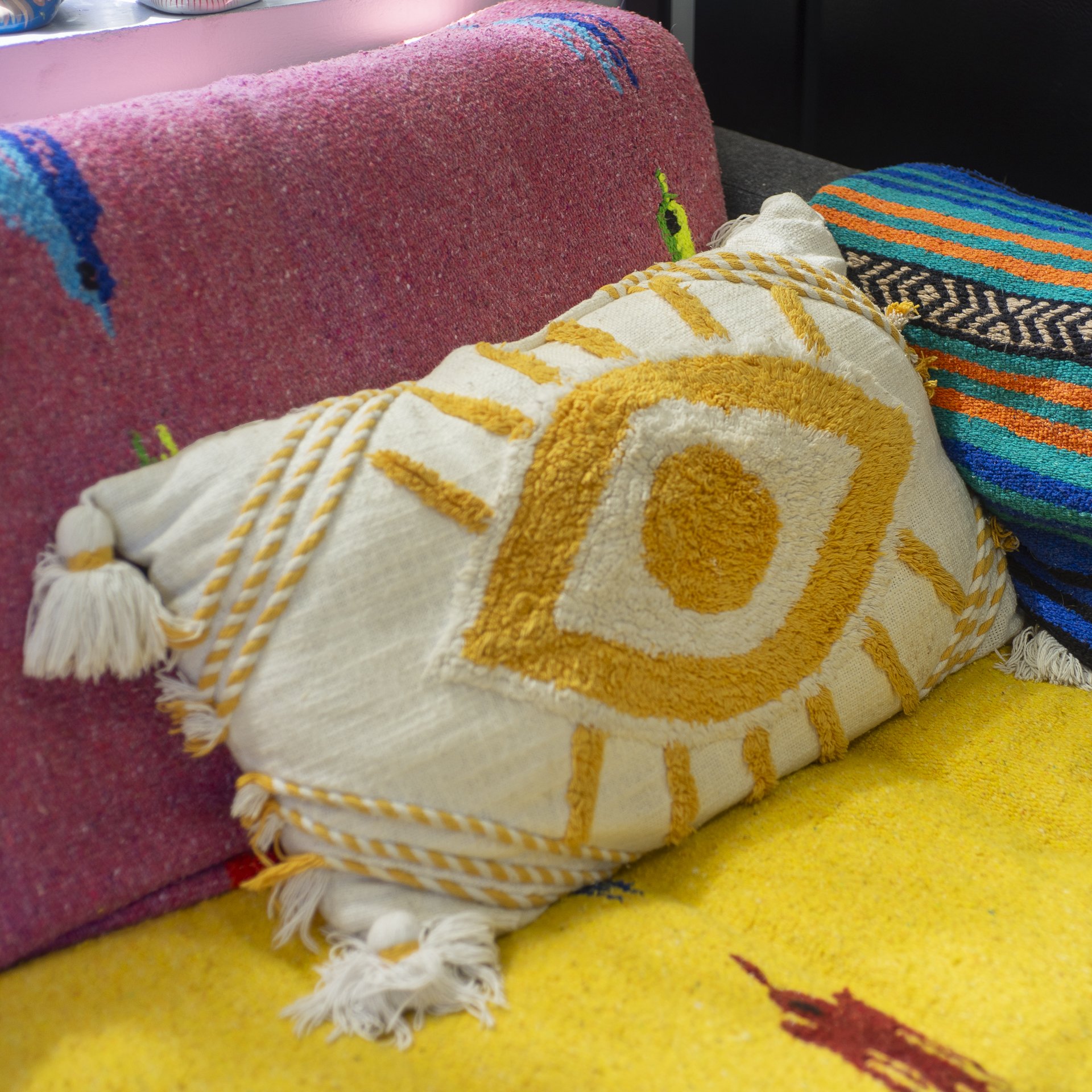
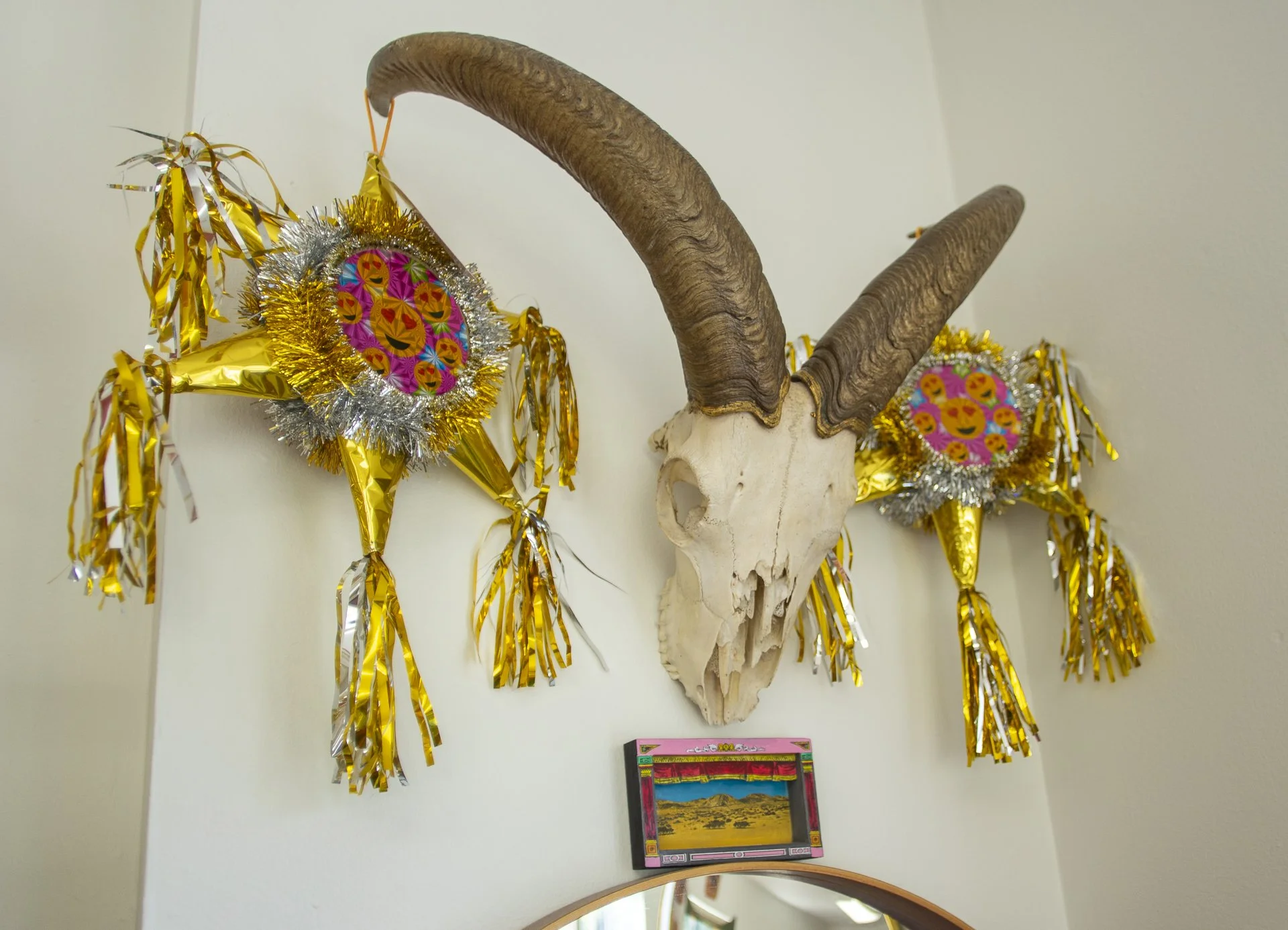
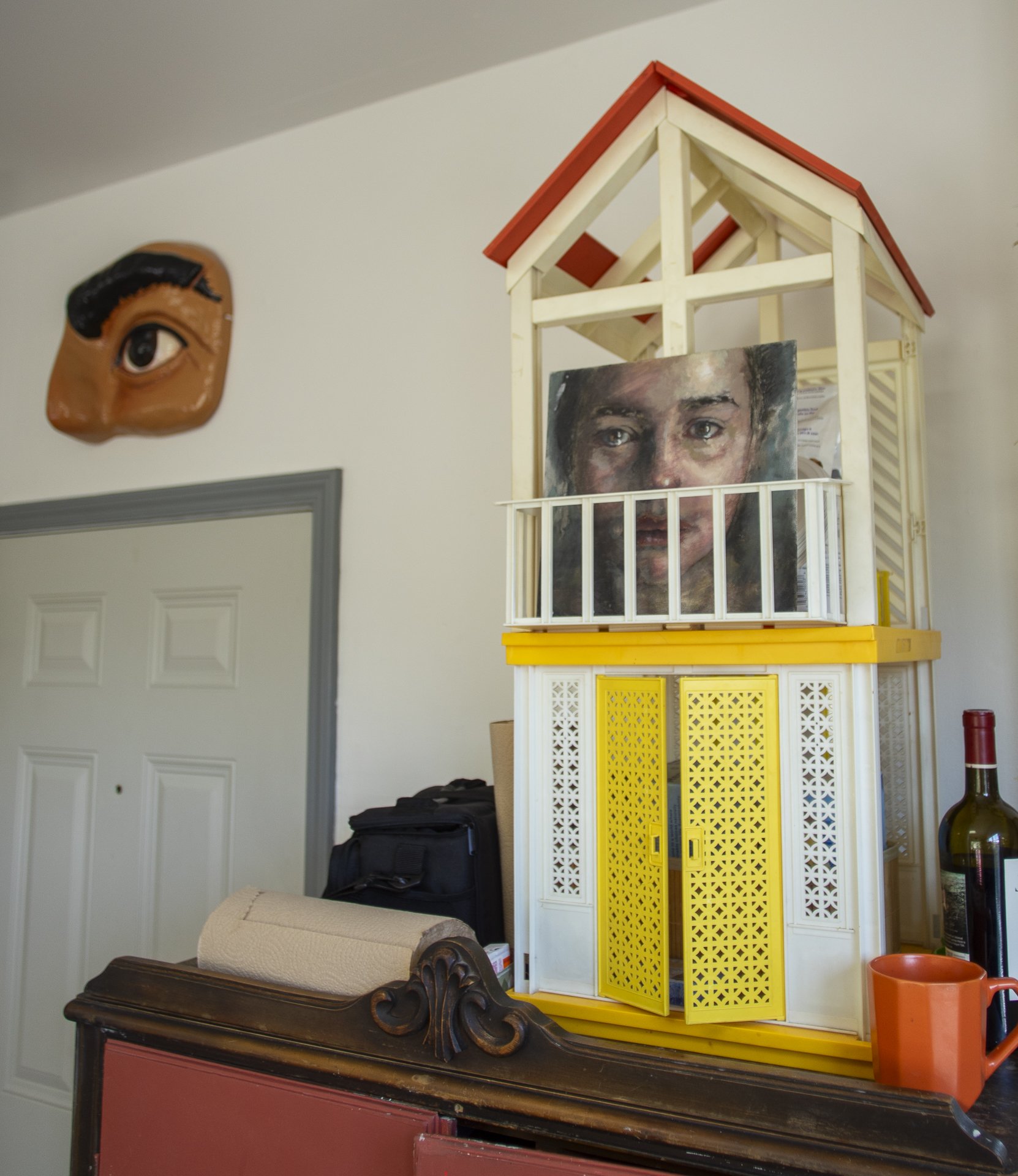
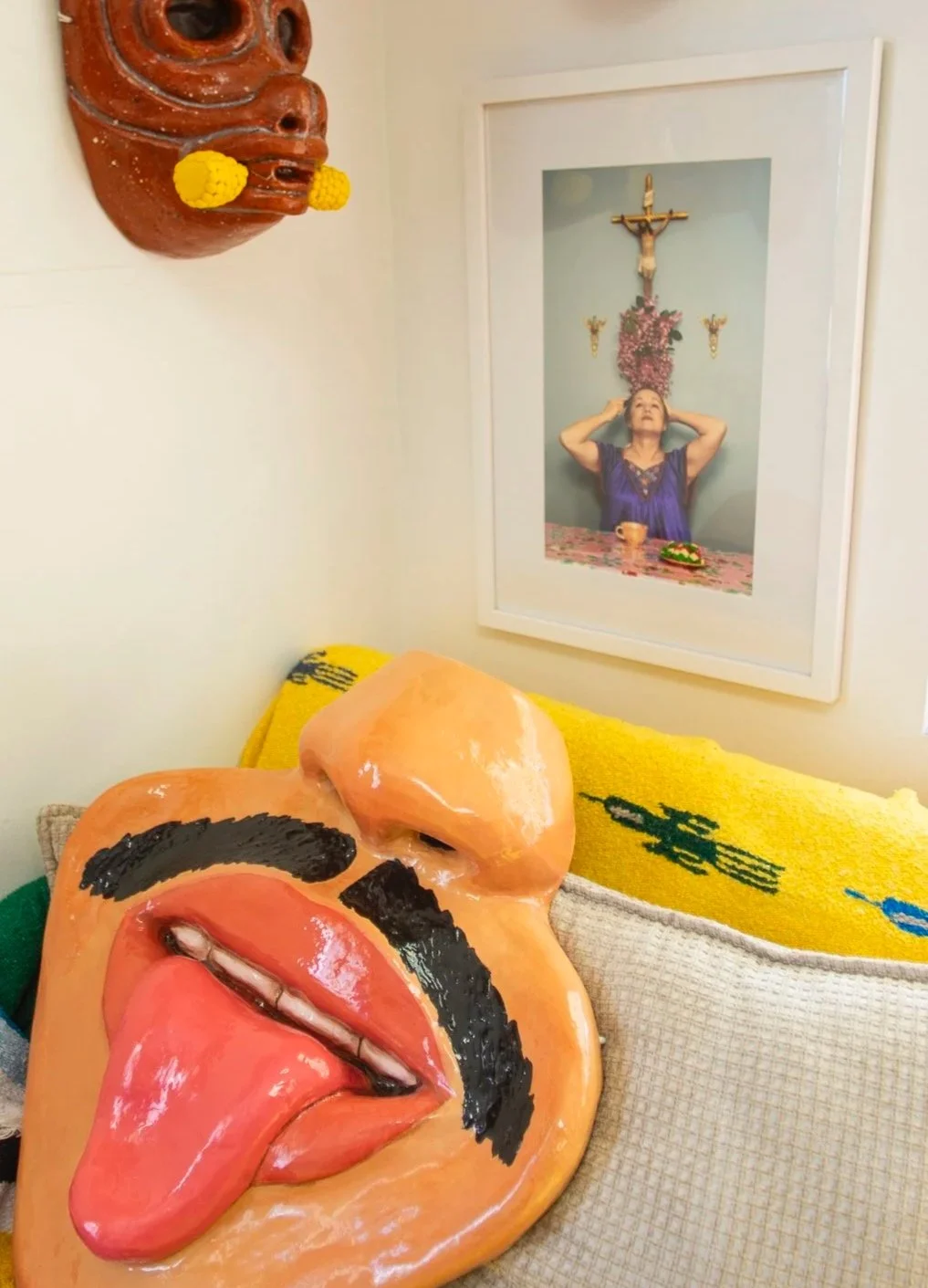
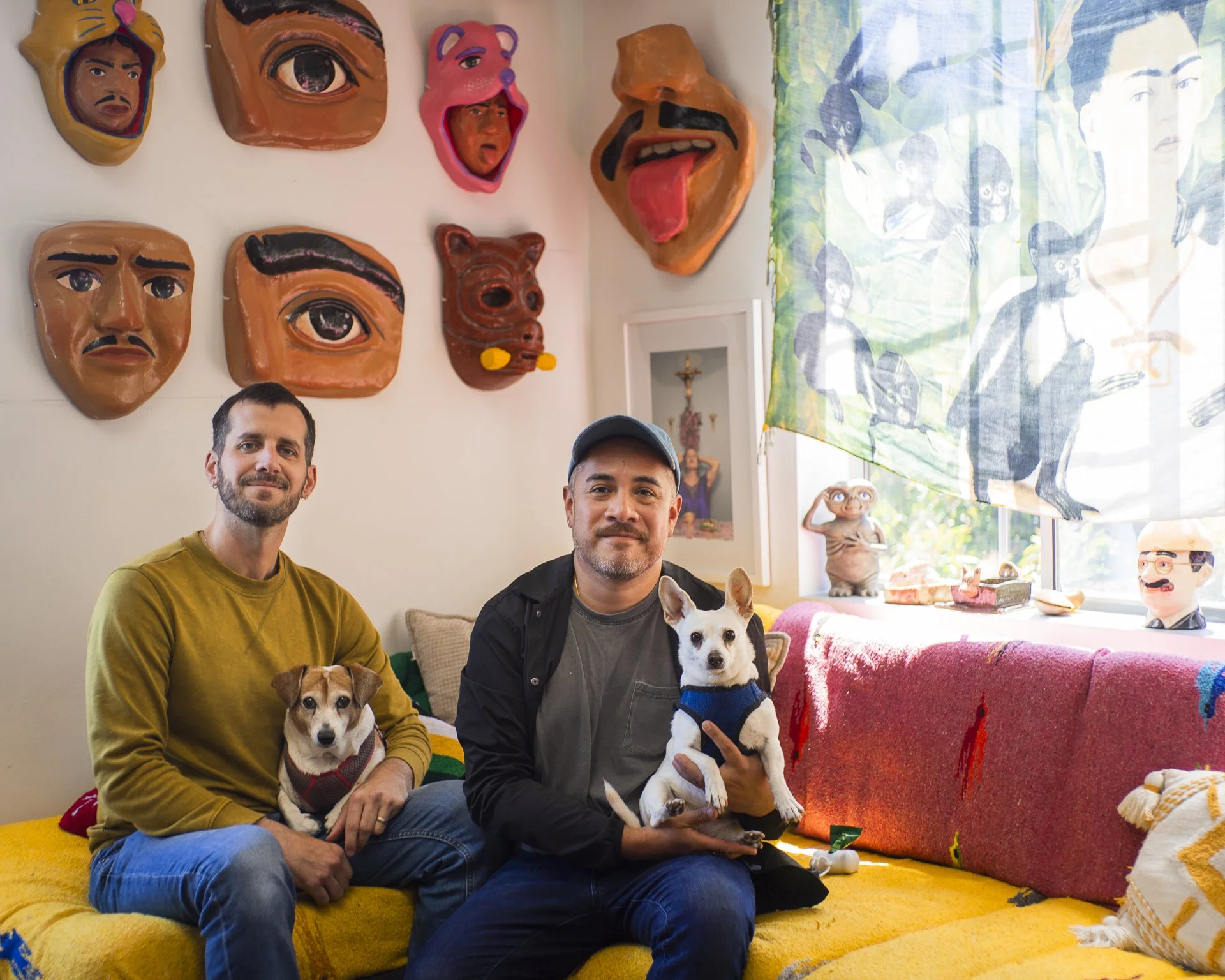
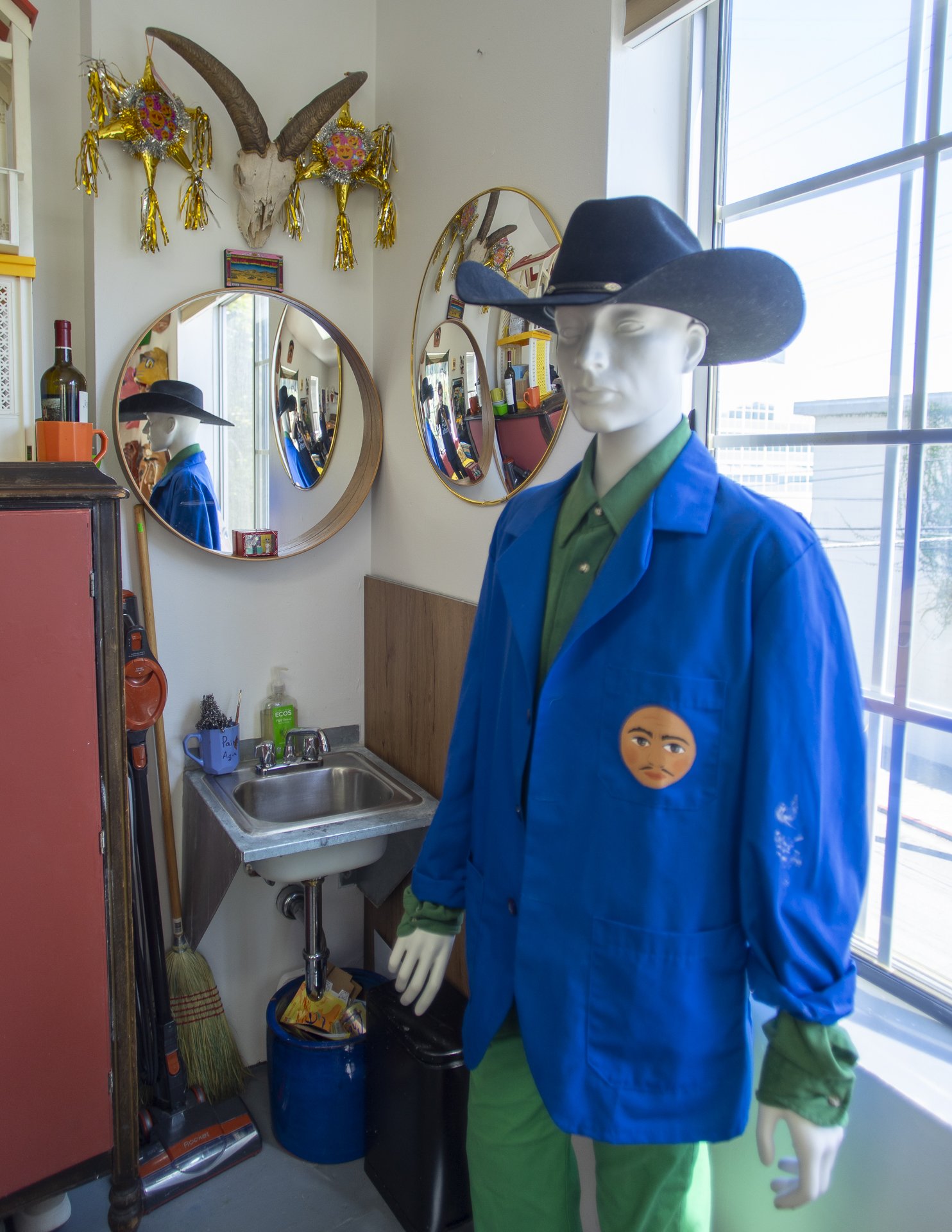
Joel’s studio in the Mission District of San Francisco is one of the larger corner units in ActivSpace. He keeps the space focused on comfort and craft. Beneath a wall adorned with masks an L-shaped couch is covered in pillows and Mexican blankets, the adjacent window is cracked for fresh air. Joel relishes the available light and the ability to convert the space for creative functionality. He creates his sculptures and paintings there and works with his partner, Royal, to create the photography and video work which support and promote his artistic endeavors. When I met Joel and Royal at the studio for this interview, I felt their shared positive energy for each other and the space. The work Joel creates holds space to reflect their love and experiences together.
Interview
What is the first thing you do when you get into the studio?
The first thing I usually do when I walk into my studio is to do nothing for 30 minutes. I usually just sit there and contemplate what I want to do for that day. I have found that when I walk in and immediately start working on something, that’s when I make mistakes or errors. I just find it better to sit and think before doing anything.
How did you land on the title of your “At Least We’re Damned Together” and what significance does it have to this body of work?
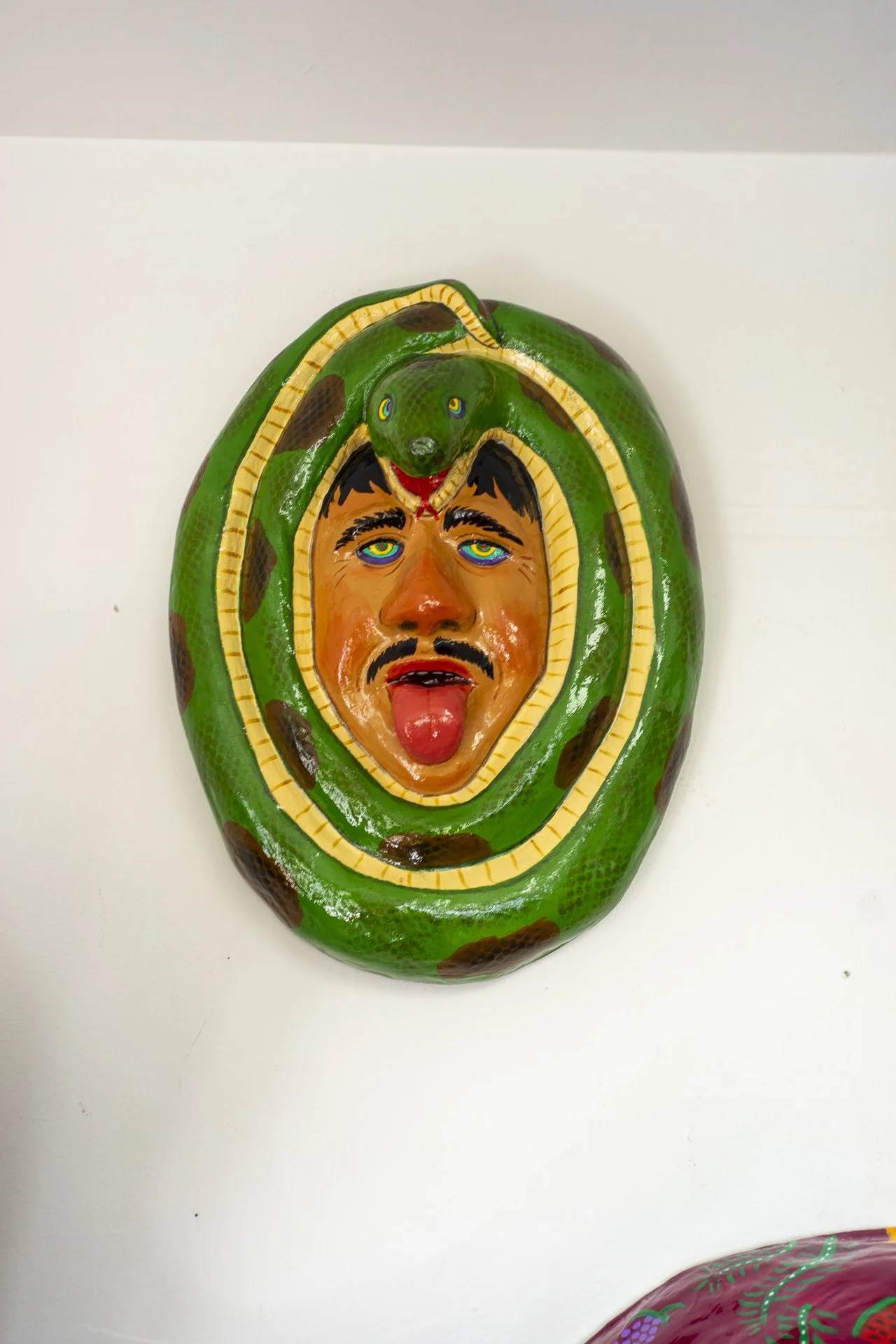
The title was inspired by a piece that I made a long time ago where a snake swallowed two men, but the men inside the snake are relaxed and smoking a joint. It’s about the idea that we can find silver linings in difficult moments. I think that’s the mantra that we’re all in right now, trying to find the upside and the positives in a dark moment in society.
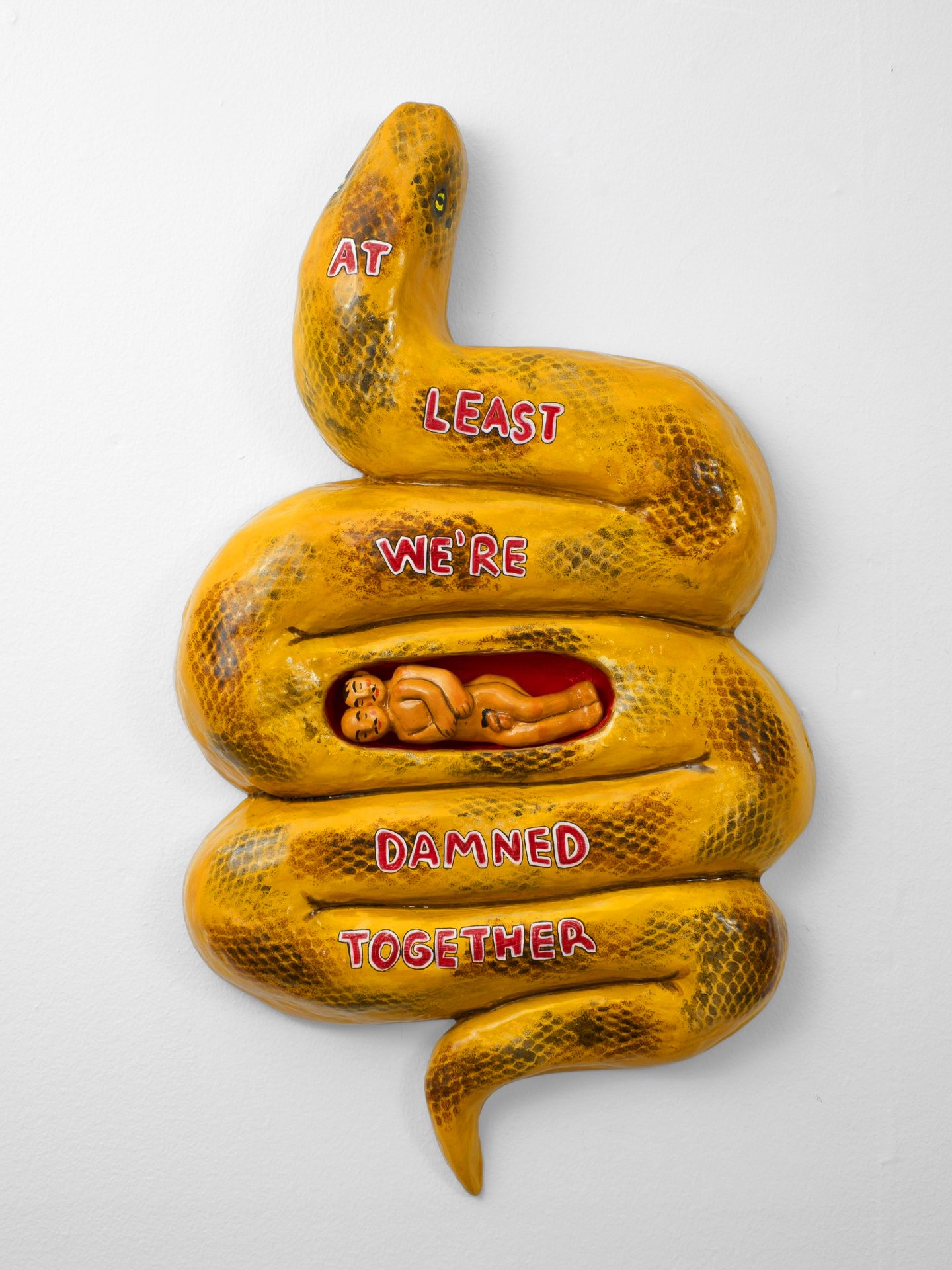
Photo courtesy of Joel Hernandez.
Why did you start making masks? What was your first mask?
I first started making masks because I was collecting wooden masks from around the world and noticed when looking at my collection that there was nothing from the present. So I went into the process of creating a mask that reflected my present moment. One of the first I made was one of two men with mustaches cheek to cheek staring into each other's eyes. Two men in love, a mask I had never seen before while collecting. It sparked my curiosity into using masks as a medium.
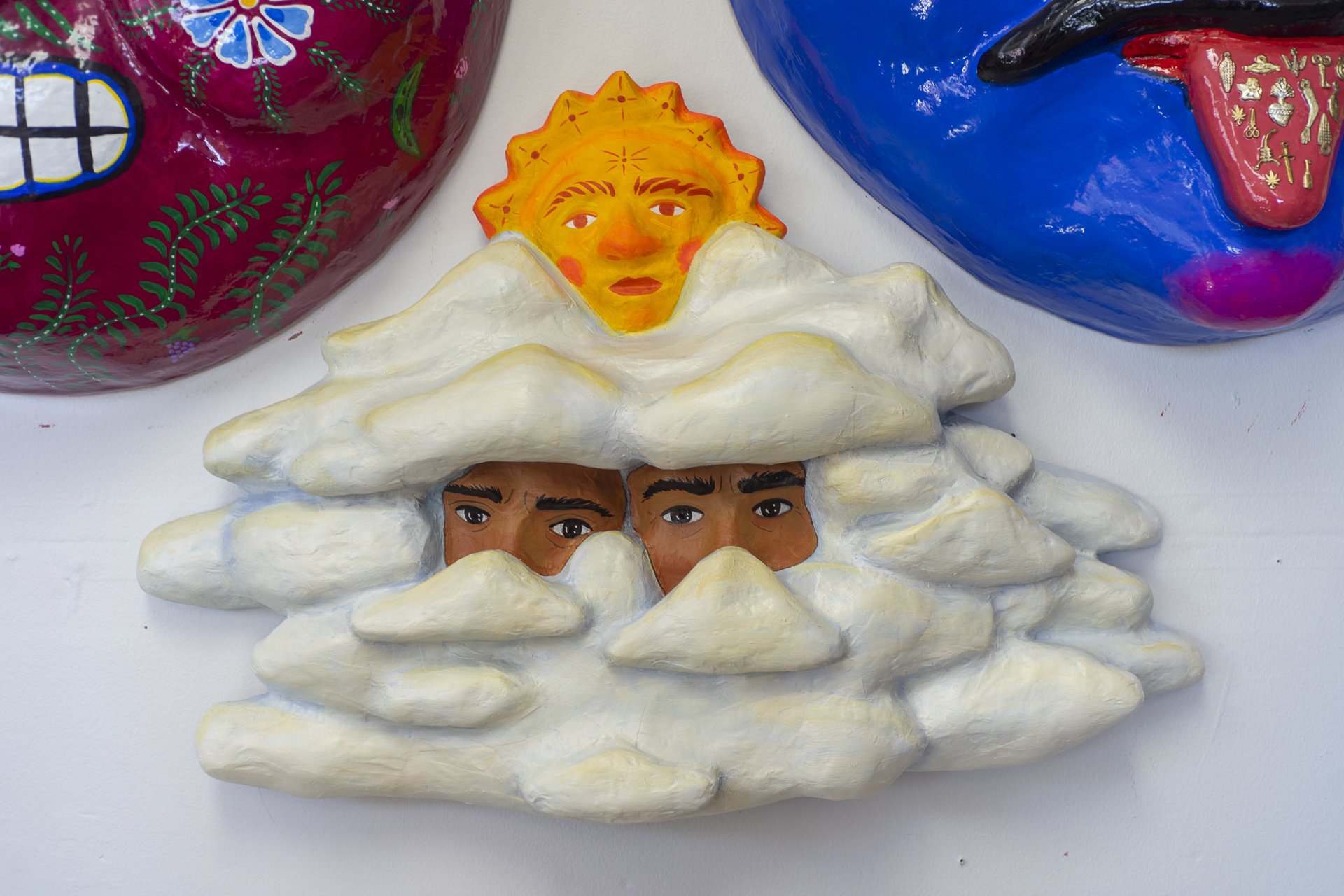
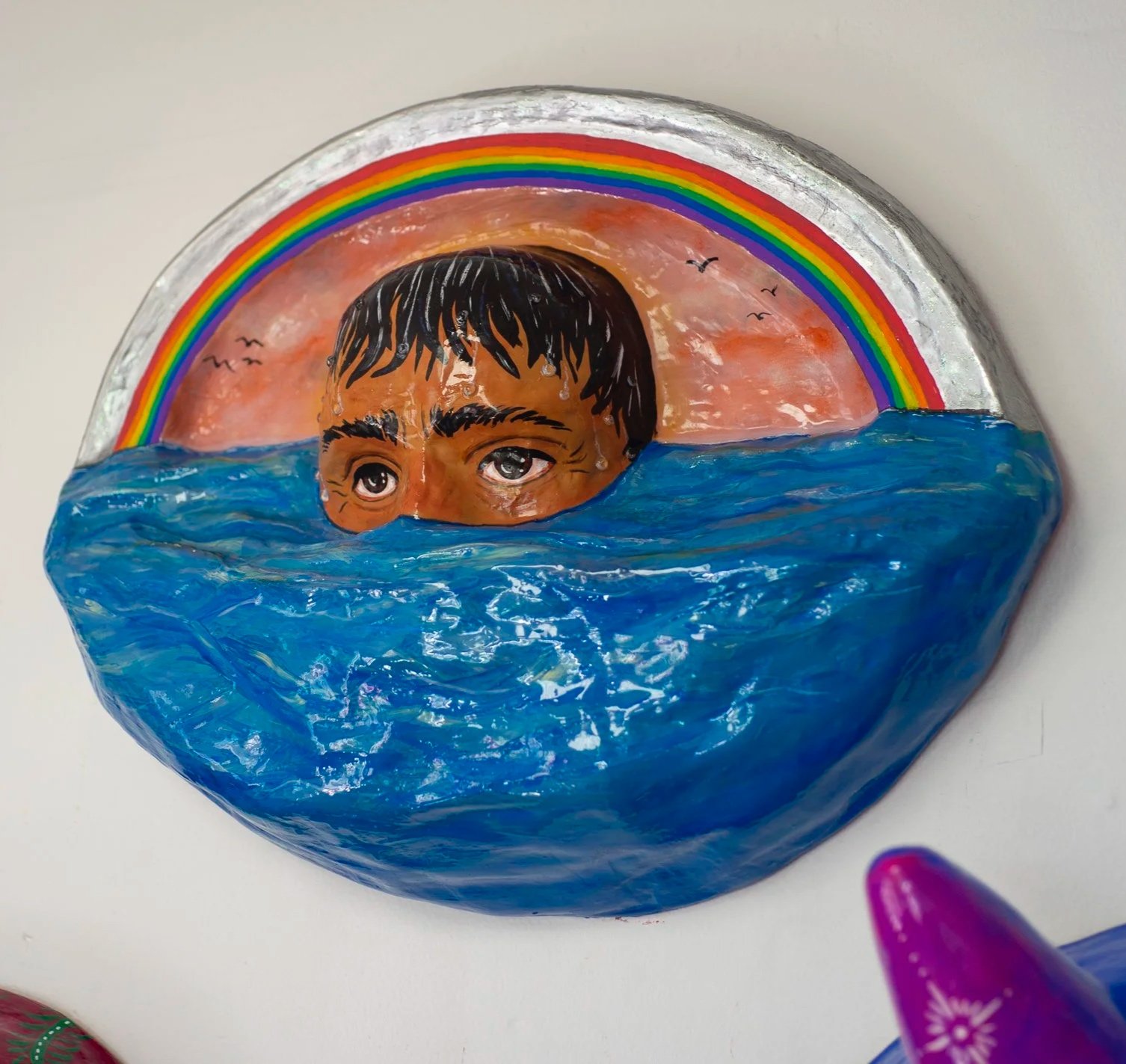
“Silver Lining” is one of my favorite pieces on your studio wall. The idiom it summons about being present for beauty despite seas of surrounding turmoil harkens back to your show title. Can you explain the piece a bit to the readers and what inspired it?
This piece was inspired by a moment I experienced during the pandemic. It was during a day when we were experiencing wildfires all over California and the skies were orange. There was one particular day where it rained a little bit and the orange skies turned into this beautiful pink sky. When I was looking out the window there was one of the most beautiful rainbows I had ever seen. It was wild for me to fall in love with a moment like that while also knowing that the reason for that beauty was raging wildfires and suffering. I was already stressed about the pandemic and the wildfires and this pink sky and rainbow brought me momentary joy. It was a wild ride of confusing emotions.
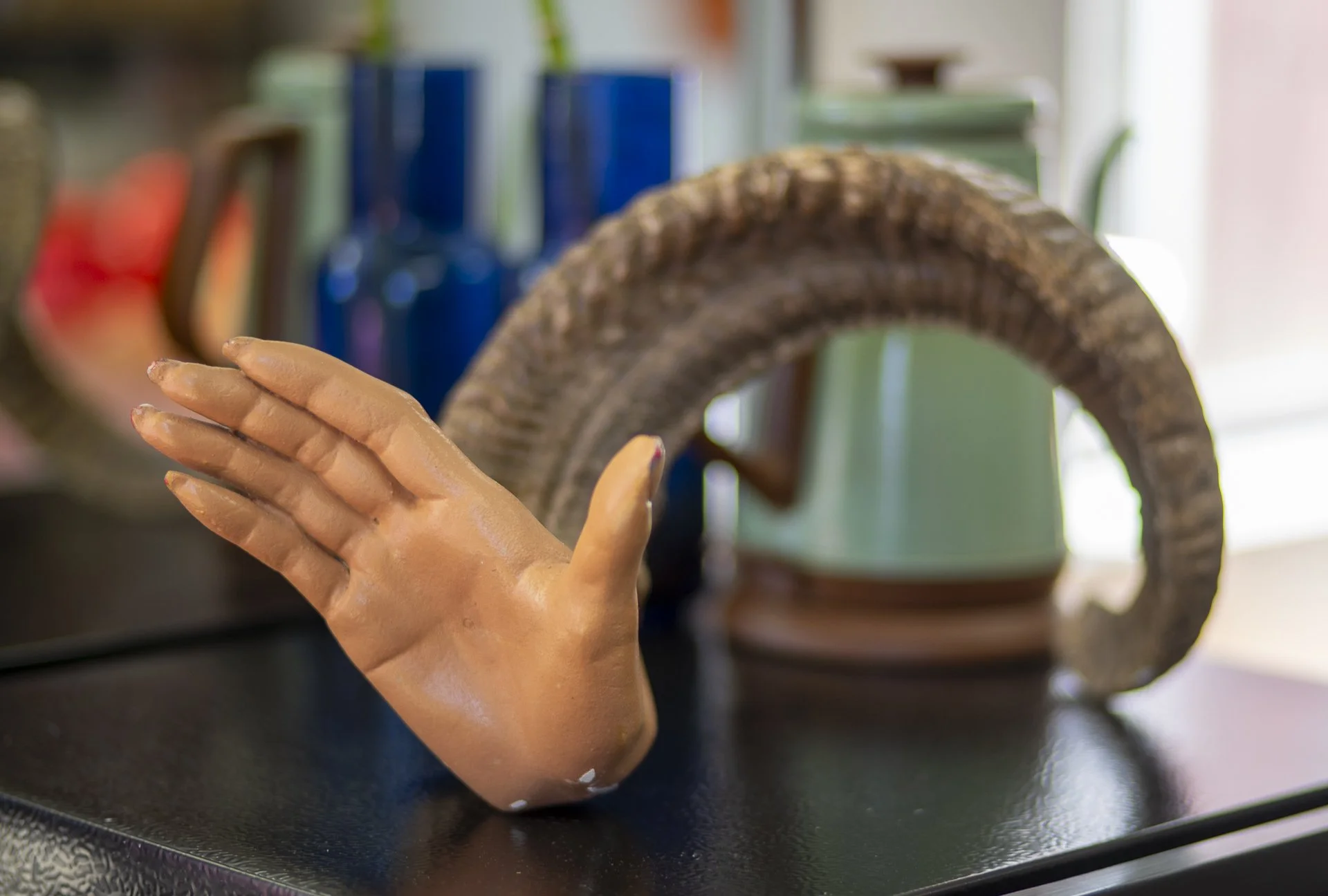
Your work frequently holds symbols, for example hands painted with the game Serpents and Ladders on the palms. How important is it for you to share your narrative with the viewer or give context to the symbolism?
There was a time where I worked as an exhibition tour guide for young students where we would do an exercise of cold photo reading. We would ask the students to describe what they believe the artist's intention was in the artwork they were viewing. I had the artist's statements with me so I had more context into the meaning of the artwork, but it was very interesting. Seeing what all the students were coming up with and how they were making a personal connection to their own stories made me realize the same thing applied to my art. I cannot control the way people internalize. My art is meant to be a mirror for emotions. I can speak about my emotions and I do enjoy the process of explaining and talking about the work, but most people will pick up their own meaning of the art through their own lived experiences. That’s the beautiful thing about art. Everyone will always find that one piece that speaks back to them.
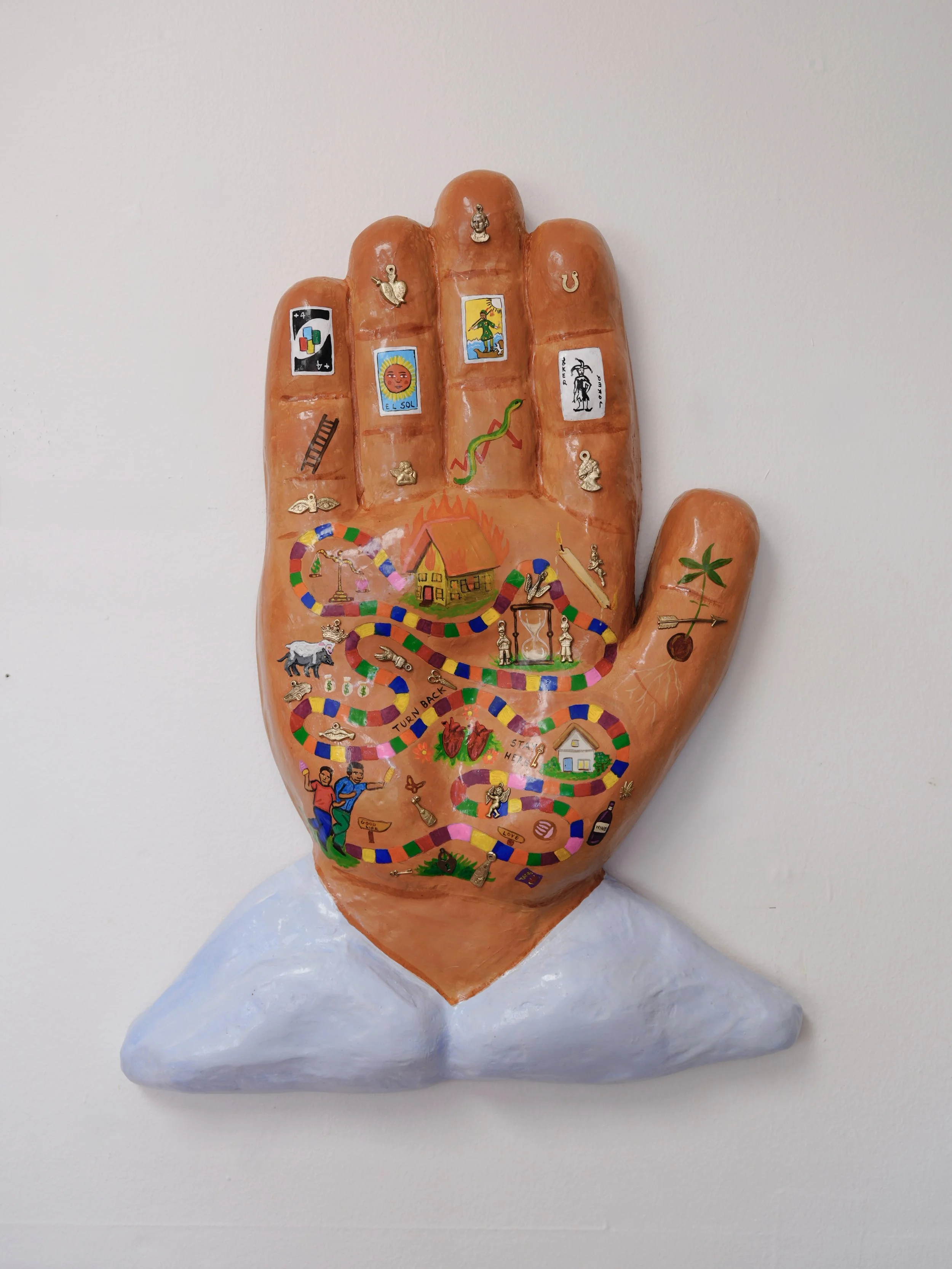
Photo courtesy of Joel Hernandez.
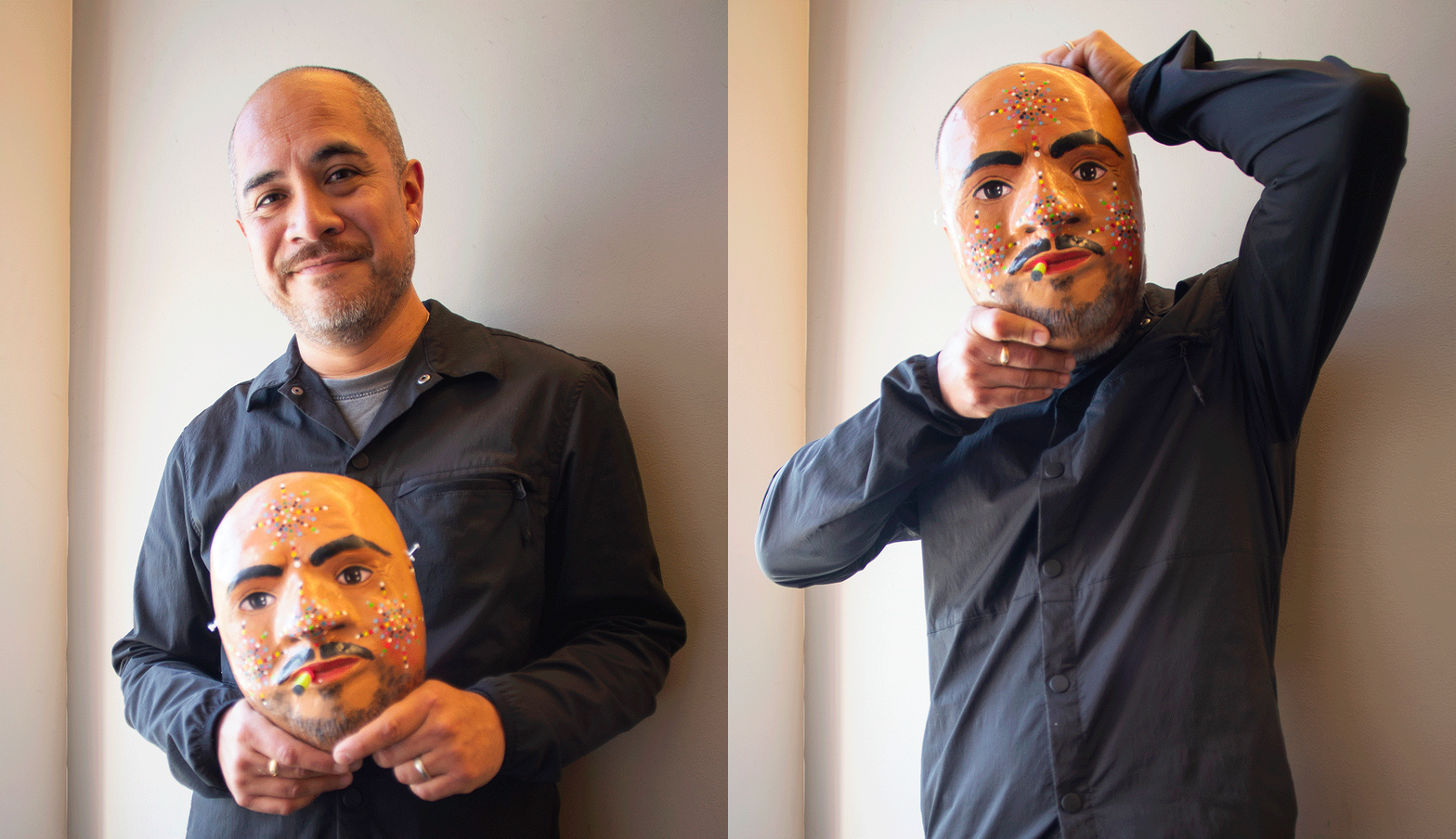
You studied photography, earning a BFA from Indiana University, how did you make the transition from 2D to 3D art?
I think it was a very easy transition because the portrait photography I was doing was very focused on storytelling. I would dress the people, I would build sets and it almost feels like I’m doing the same thing with the way that I try to capture my sculpture work now. I really try to tell a full story in every piece.
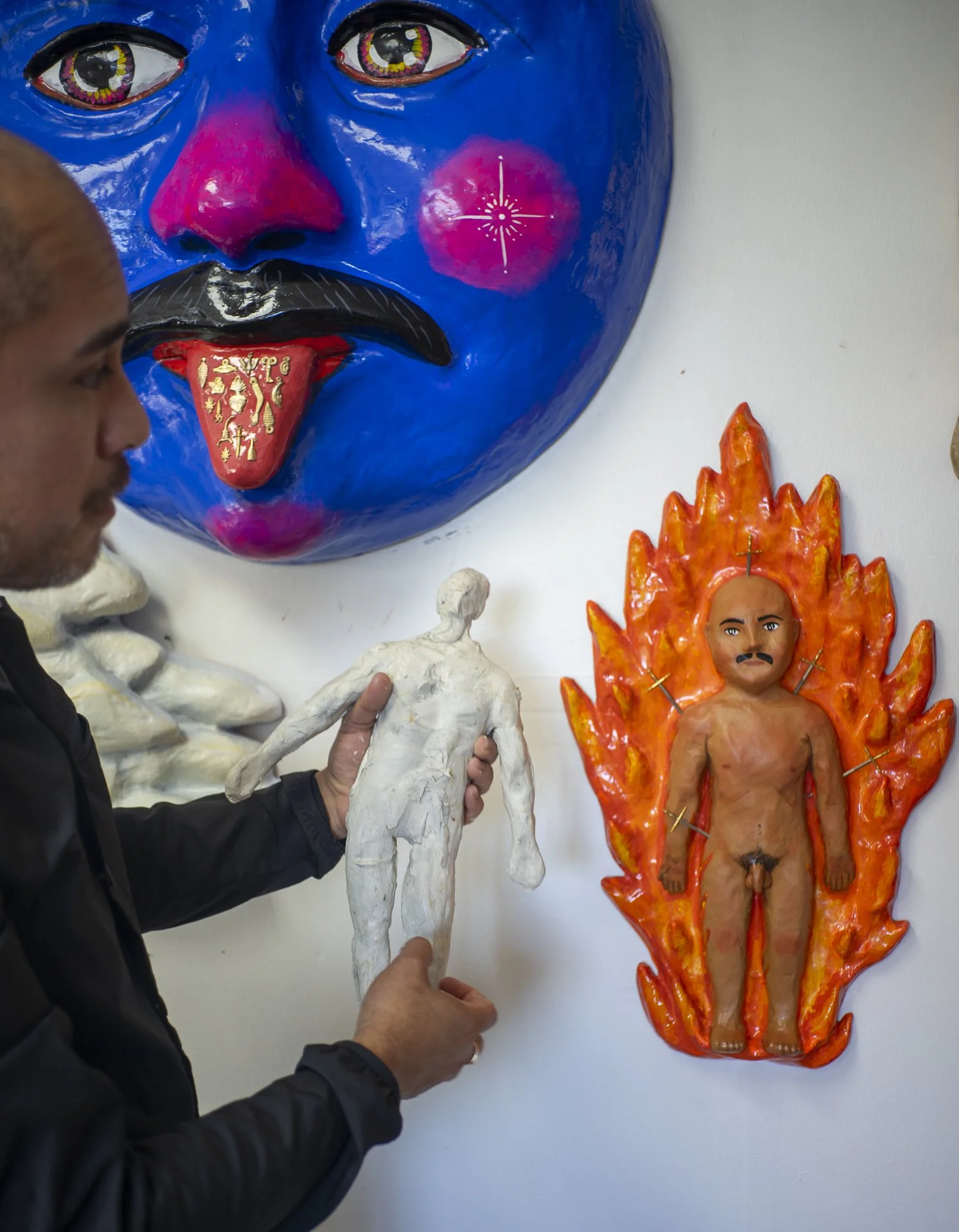
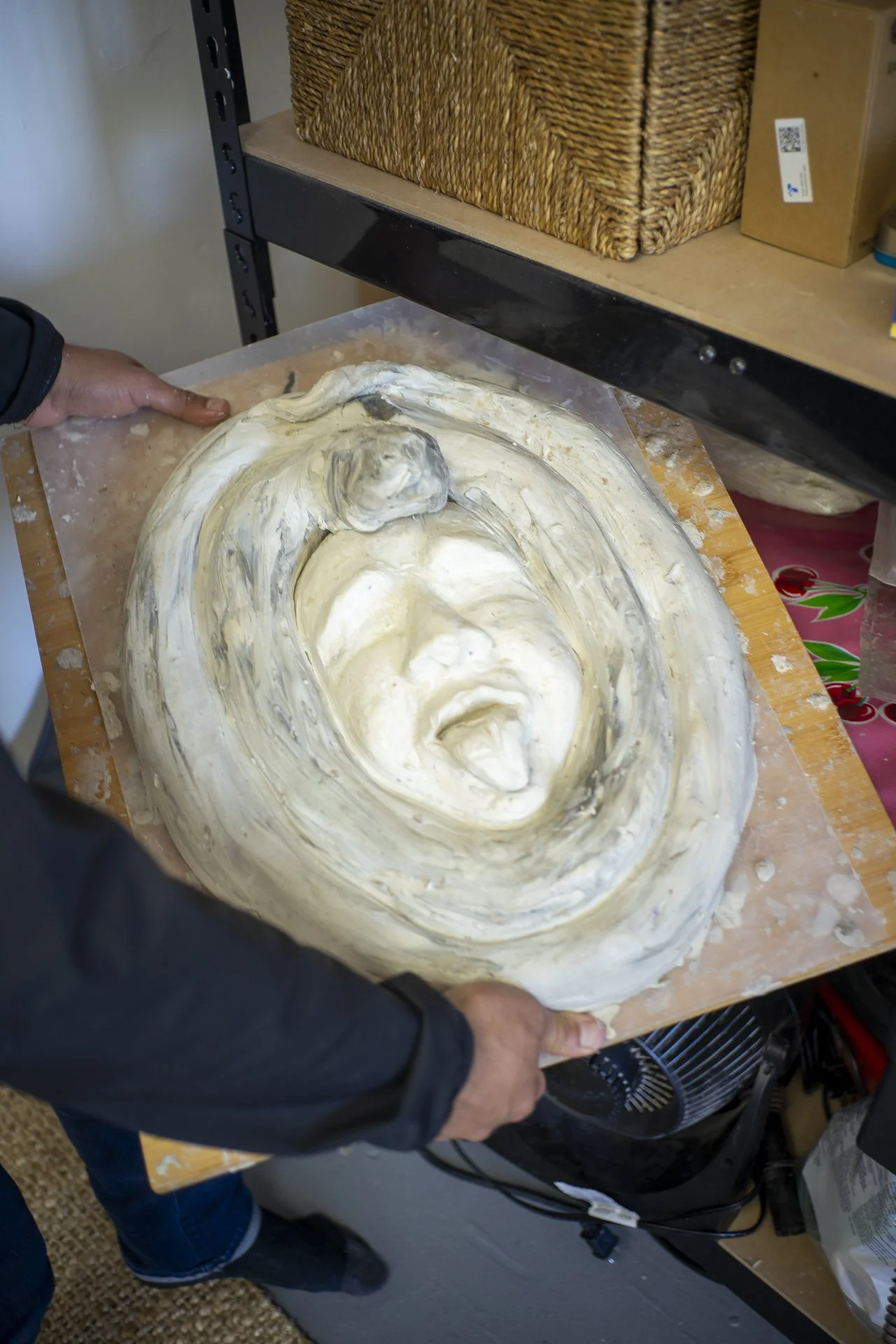
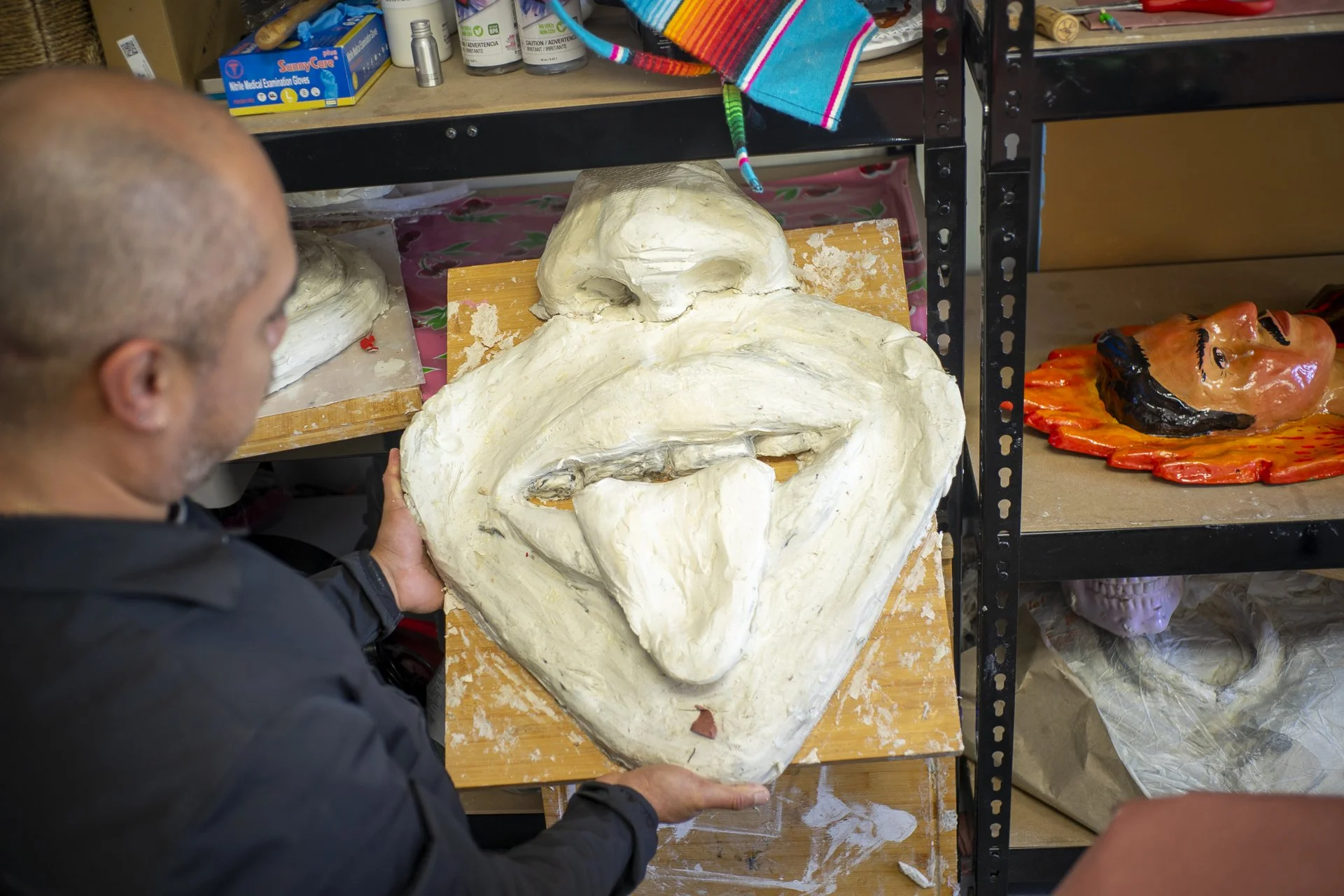
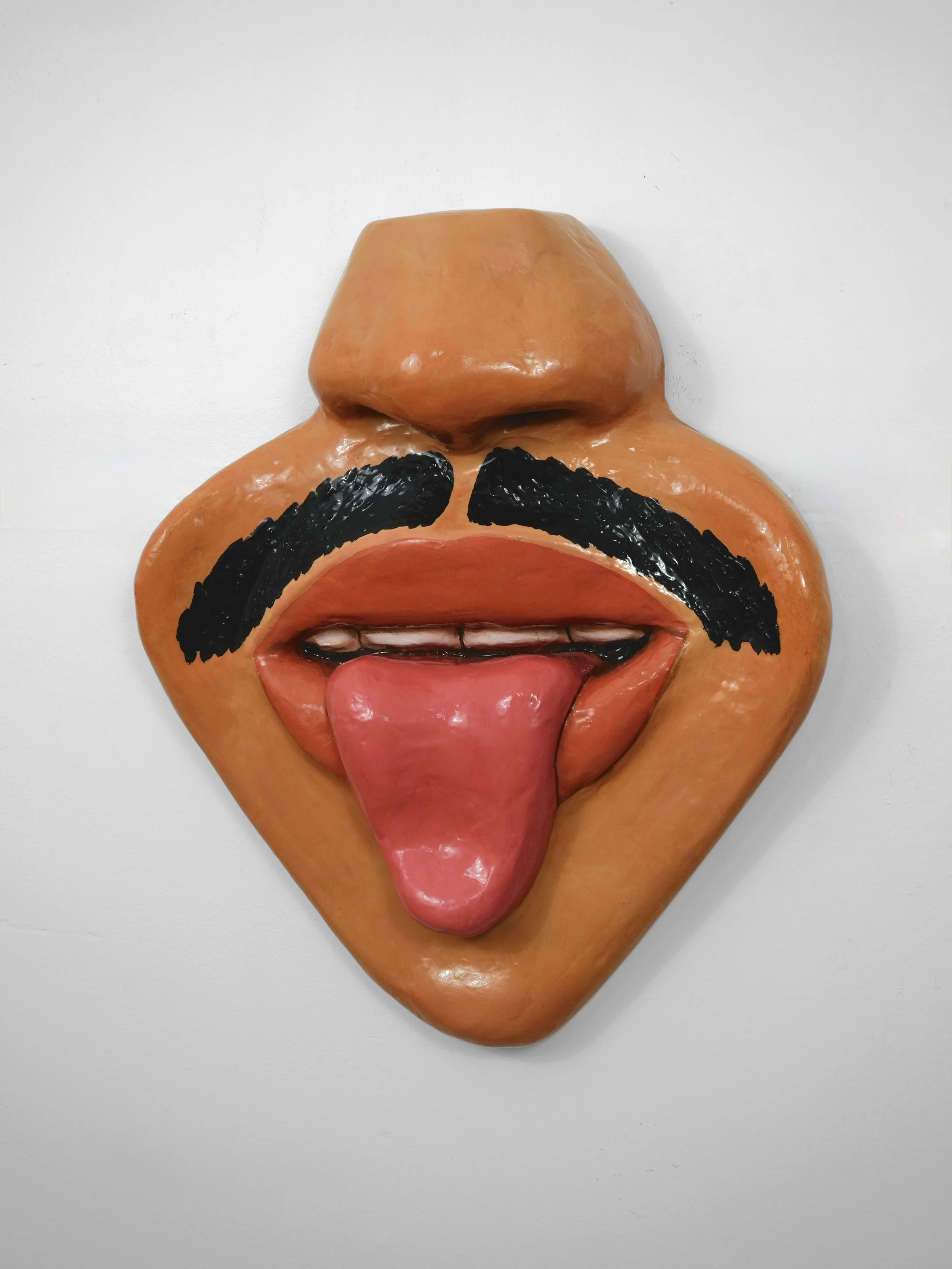
You use plasticine as a base to build your masks. What about this material keeps you coming back to it instead of building a frame inside your paper mache with cardboard or wires?
I have tried multiple processes and this is the one that felt most versatile to me with my work. When I first started doing my sculpture work, I was traveling a lot with my husband for his travel nurse job and space was limited. Every time we traveled, being able to reuse plasticine over and over again allowed me to keep working on the road. It’s such an expressive tool that can be used to create all sorts of big and small details and then be able to reuse that same plasticine into another piece. I have had some plasticine for more than 10 years. I put it back into a big pile and create new work from it.
Your partner, Royal, is a partner to you in life and in your art. Can you give the readers any insight to what it’s like to work so closely with your life partner on your art?
Royal as a child, and now, is a very creative person. He is always working on video making, impvov comedy, or building worlds in video games. We bonded over creativity, everything we do is considered play. We do art together to have fun. We feel a great sense of accomplishment fulfilling our vision and sending it out into the world, and starting again from scratch.
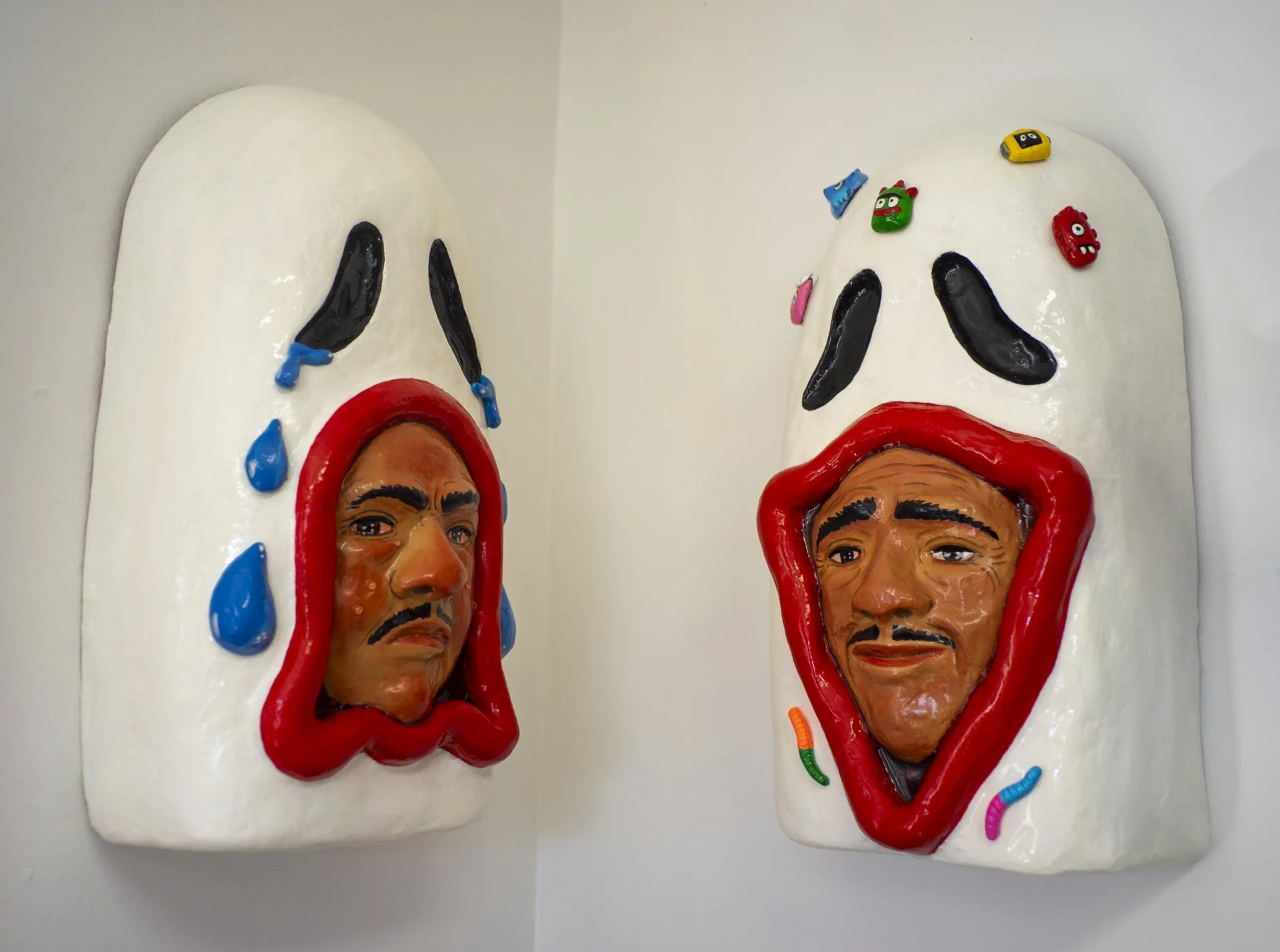
In this show there is a recurring mask theme of two faces side by side, “Afterglows” and “You and Me”. The composition occurs in previous bodies of your work as well. What are you exploring with iterations of this composition and why is this a recurring motif for you?
Growing up there weren’t many examples of gay couples growing older. If there were gay representations on TV, it was always in a tragic light. I want to focus on the idea of love. Being in love in the present, being in love till death and being in love in the afterlife as we fly away into the sky. I have become obsessed with retelling that story over and over. I like to give the gay-couple-story a happy ending where we are sent together forever into the sky.
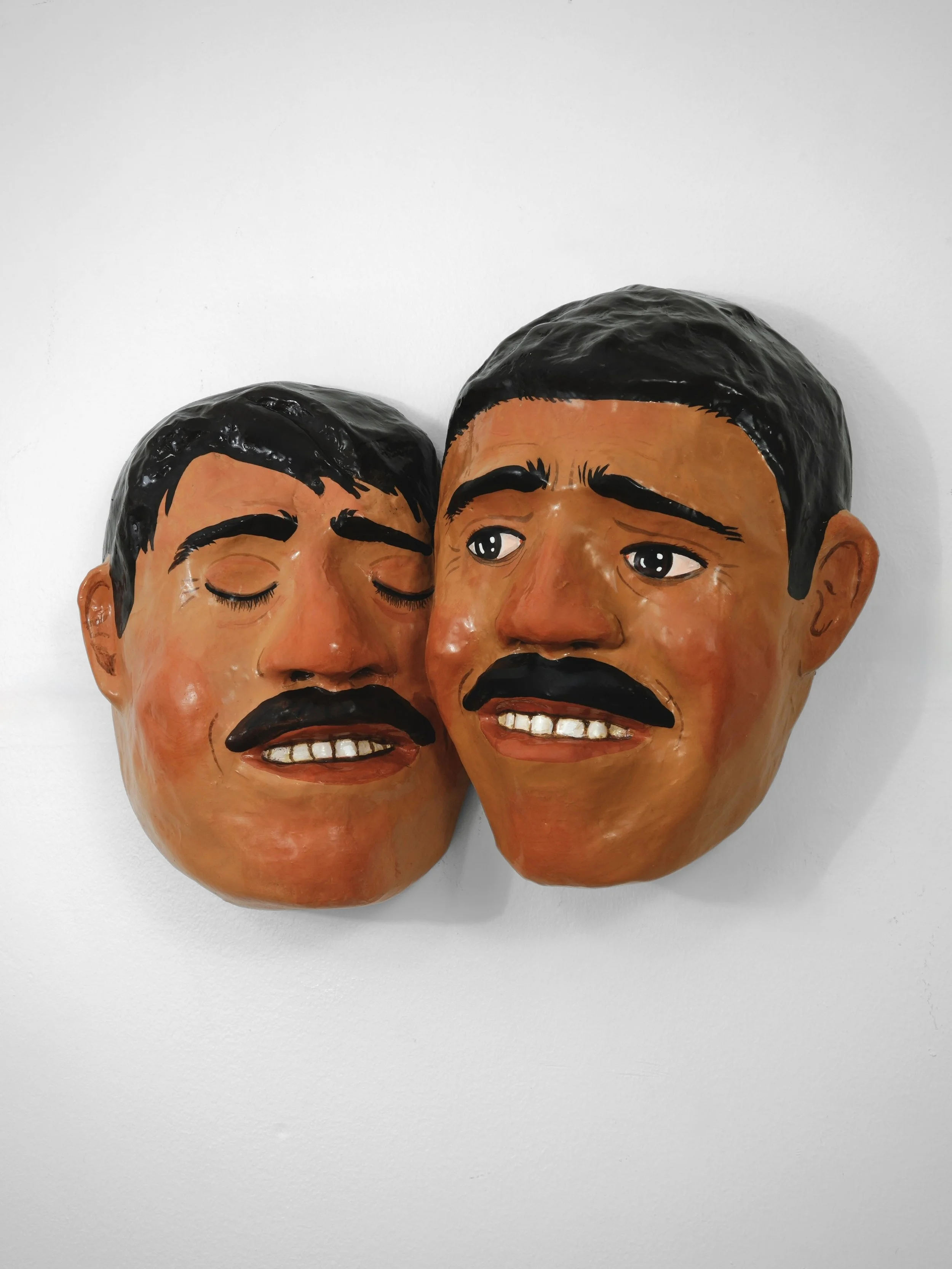
“Afterglows” by Joel Hernandez, Photo courtesy of Joel Hernandez.
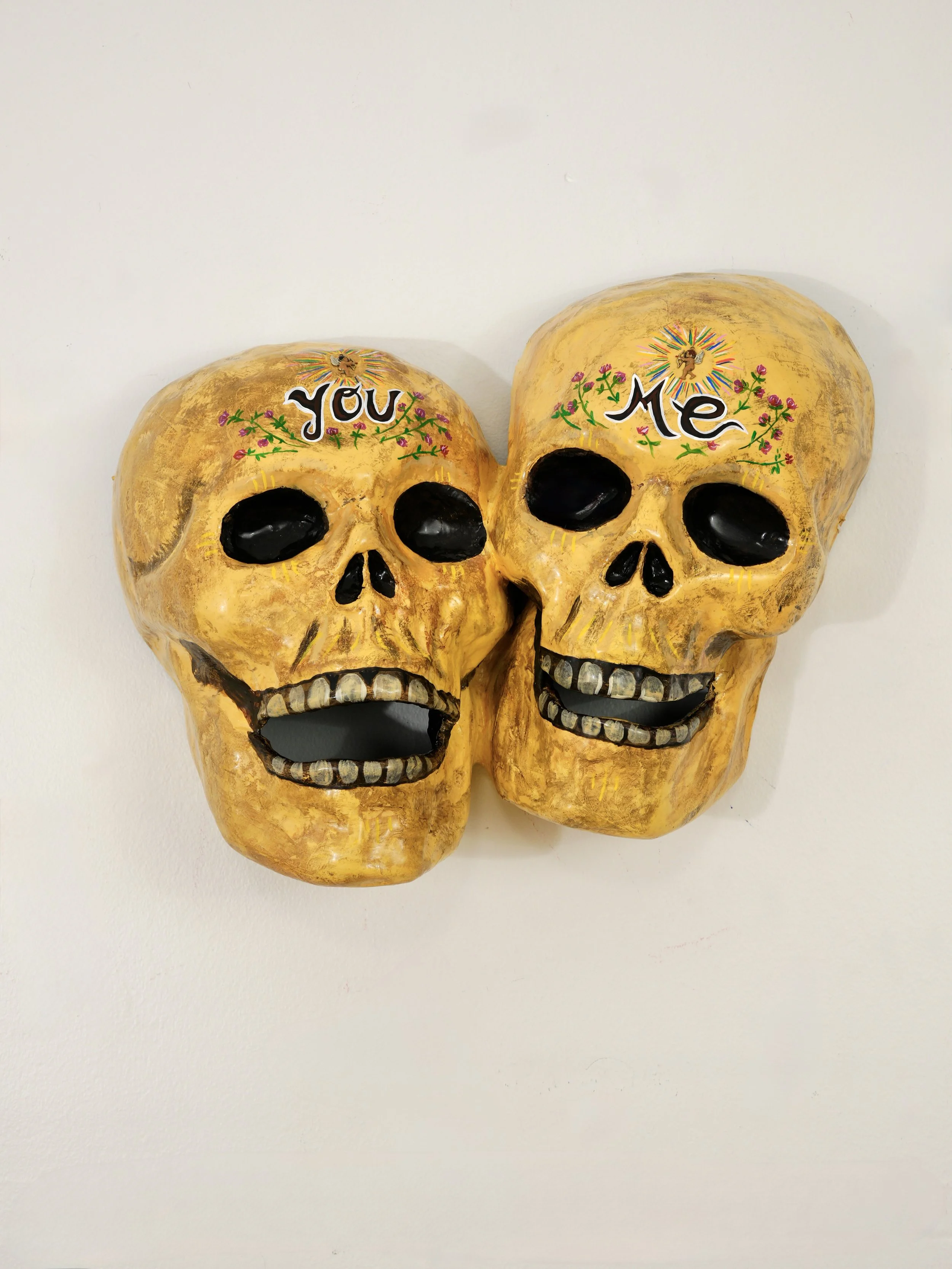
“You and Me” by Joel Hernandez, Photo courtesy of Joel Hernandez.
I picked up on a sense of connectivity you have to being present in the moment. Whether a conscious decision or not, do you feel that accurately describes you? As an artist, what does being present in the moment bring to your practice?
I do appreciate being in the headspace of being truly present, and I would like to think that I follow my own advice. But I am human and I am just as distracted by life as everyone else. My artwork practice allows me time to easily tap into that feeling and my art becomes a more meditative focus. It’s a reminder to myself to be present in the moment and how important it is to stop and take a break. I want my artwork to allow people to stop and take a breath and examine the feelings that they might be feeling, instead of always feeling like they need to push through and move past them.
When you’re not making art, what do you do to unwind?
I like to go on really long walks and people watch. I like to ride public transportation with no headphones and listen to the stories being told and the commotion happening. The joys and fears radiating through our city. I find it very inspirational and I run home and make art about it.
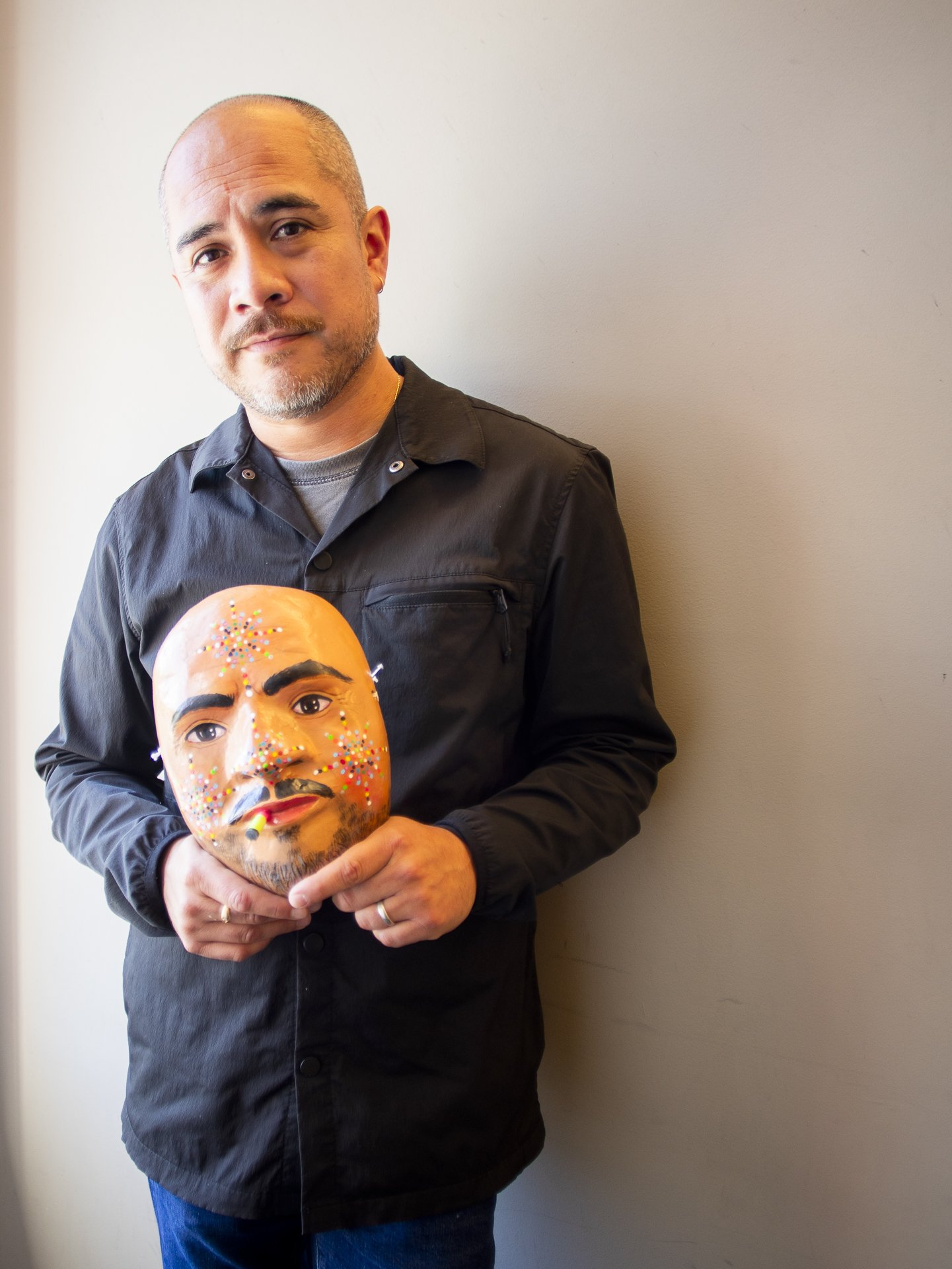
Joel Hernandez’s solo show “At Least We’re Damned Together” is showing from June 6th - July 25th, 2026 at Moth Belly Gallery, 912 Larkin Street, San Francisco, California.