Studio Visit & Interview With Chonto
Interview and Photographs by Brandon Joseph Baker
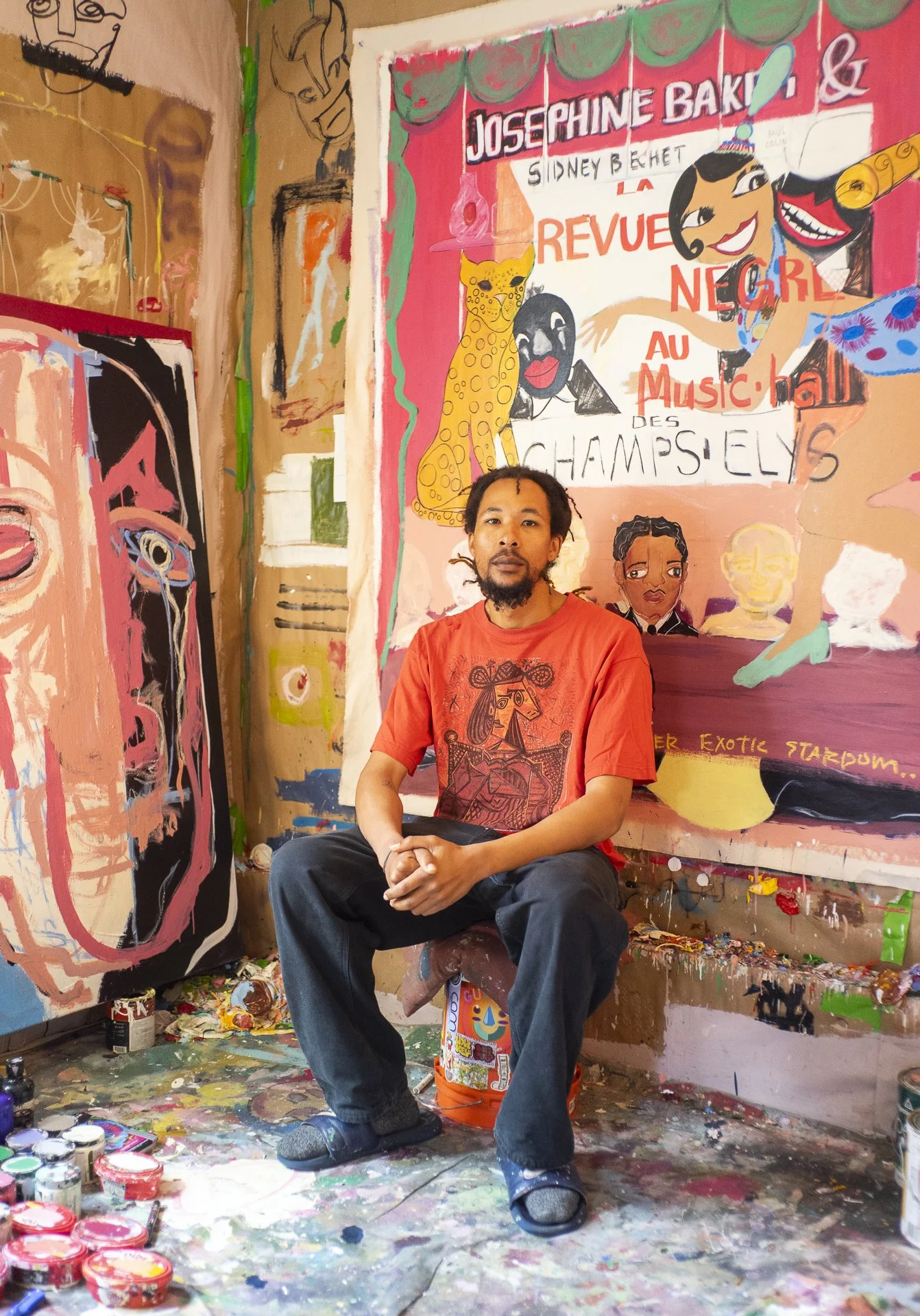
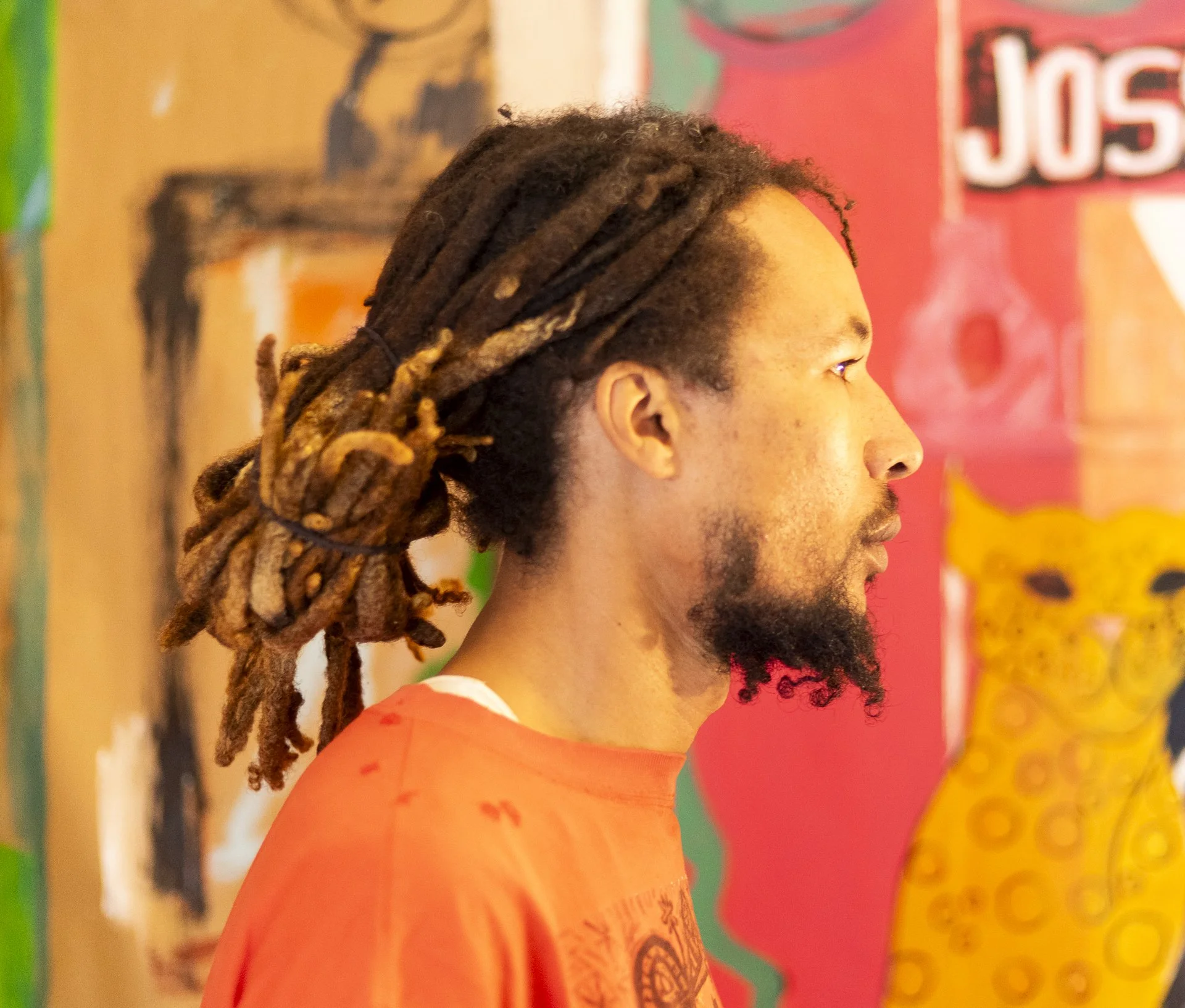
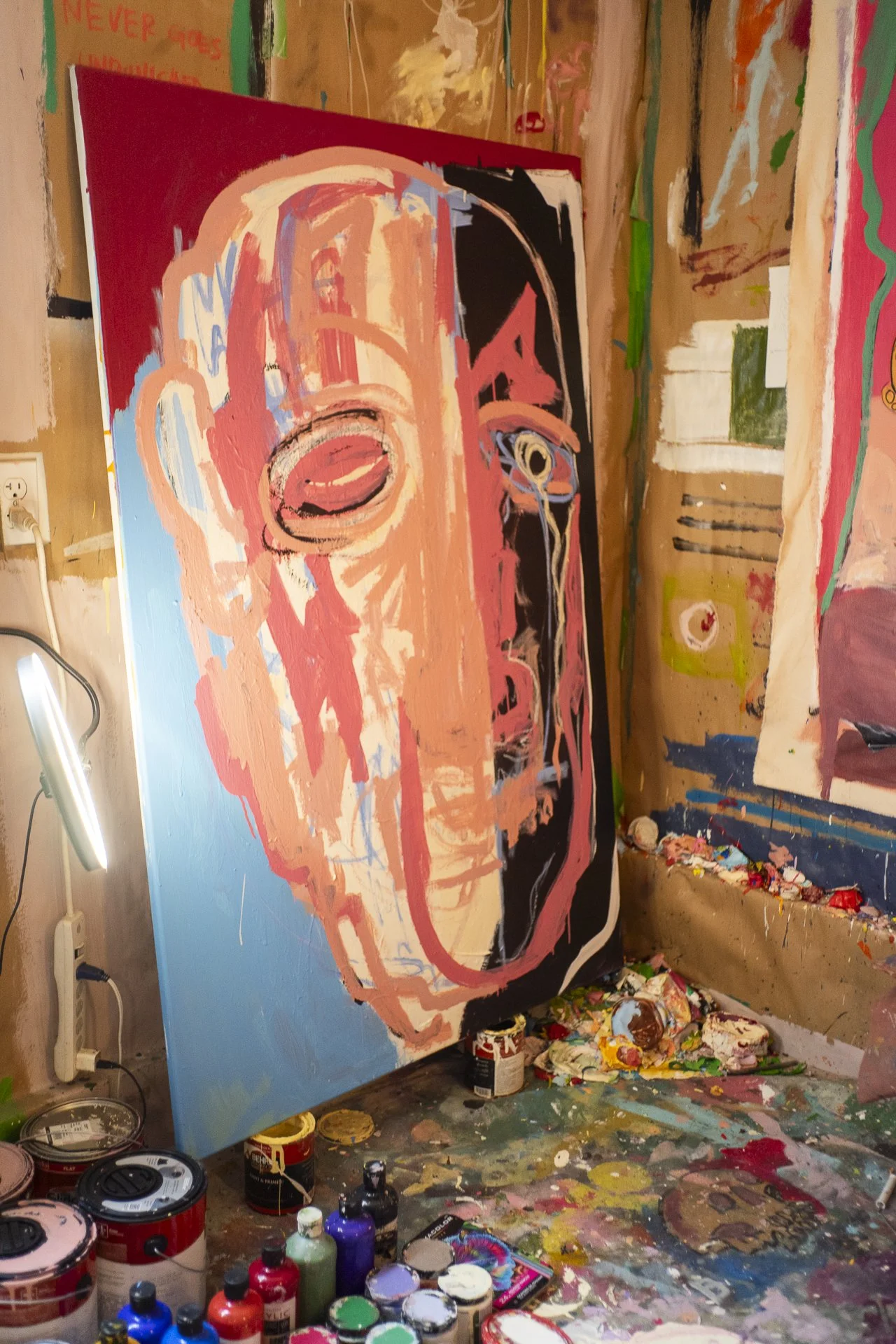
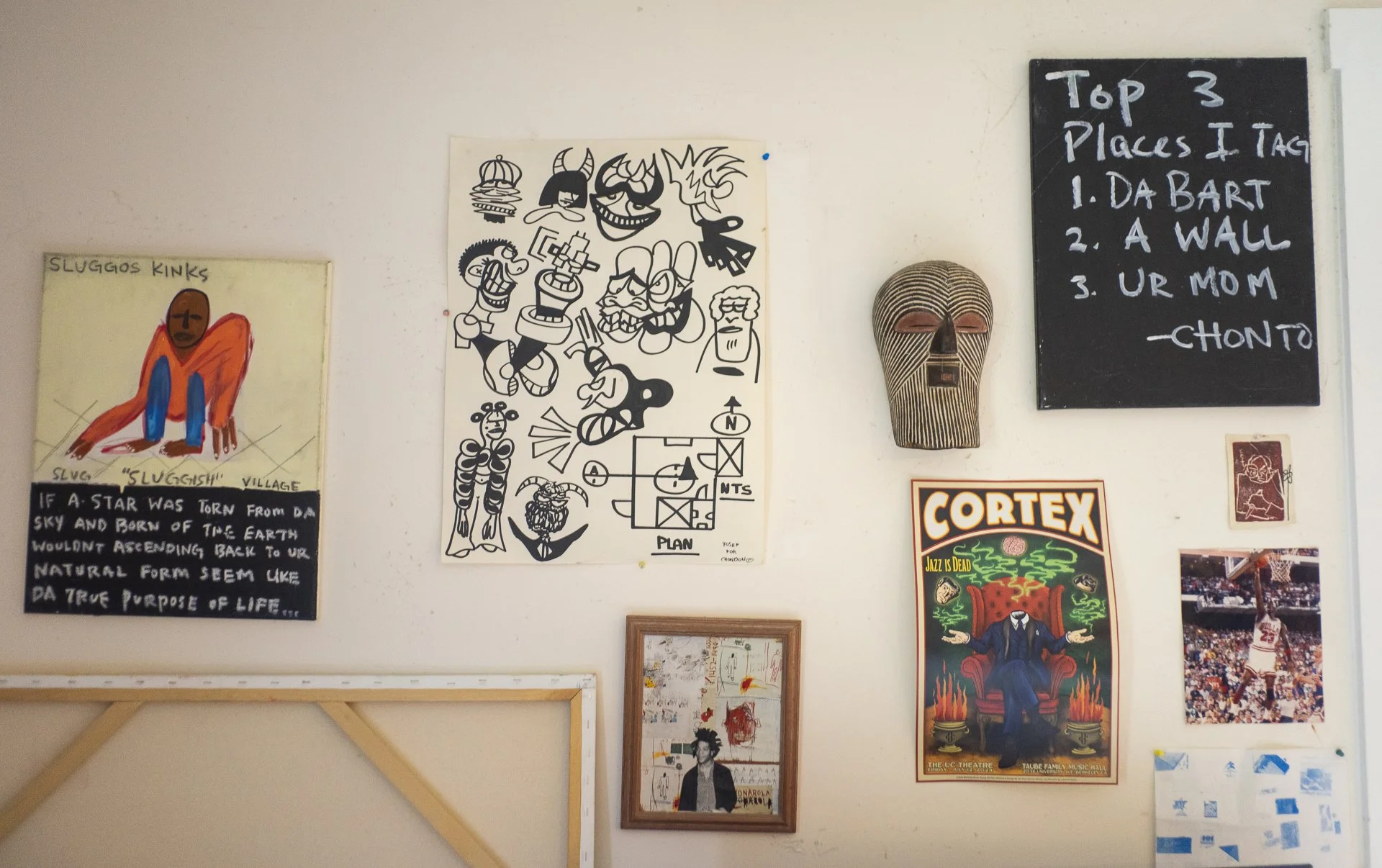
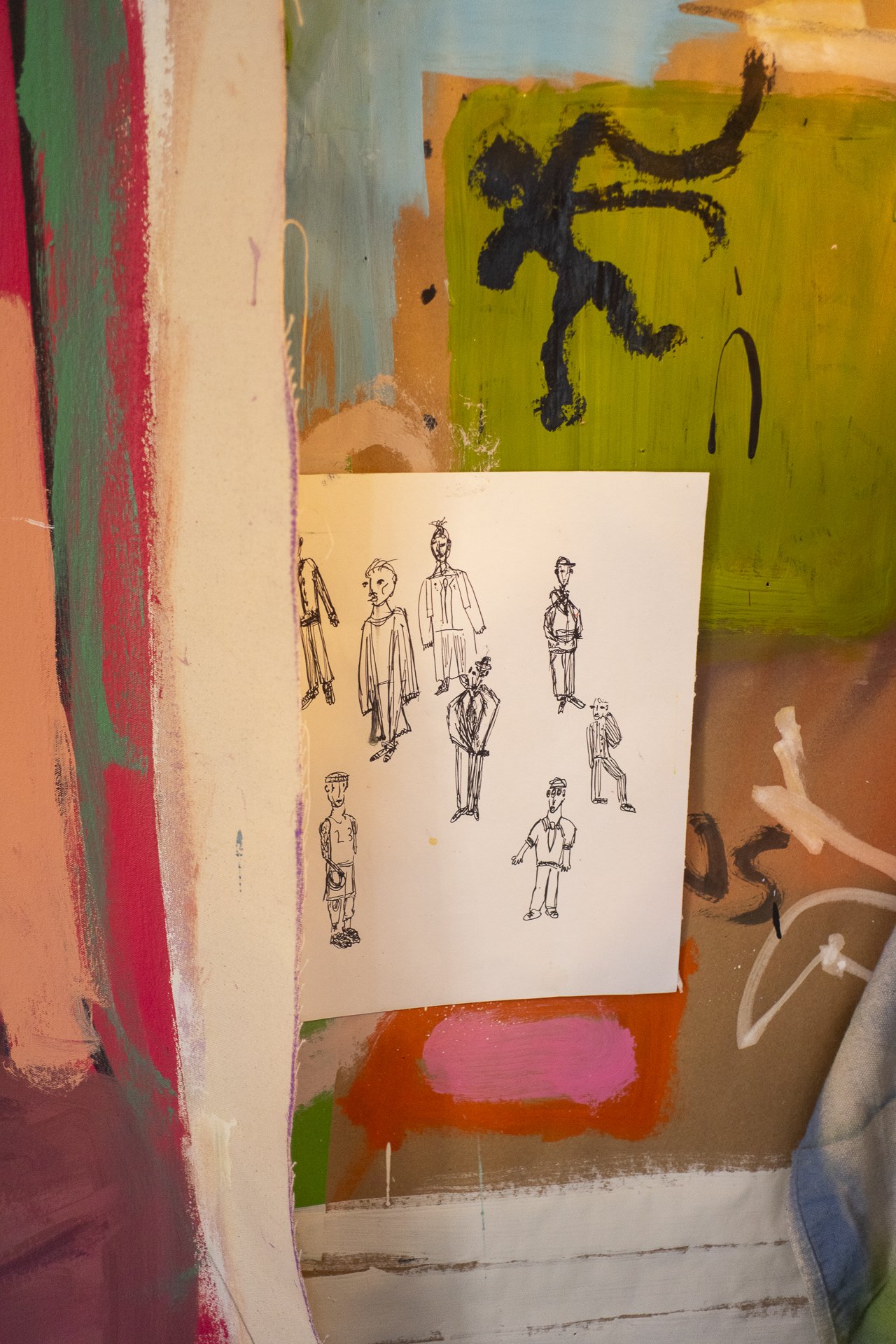
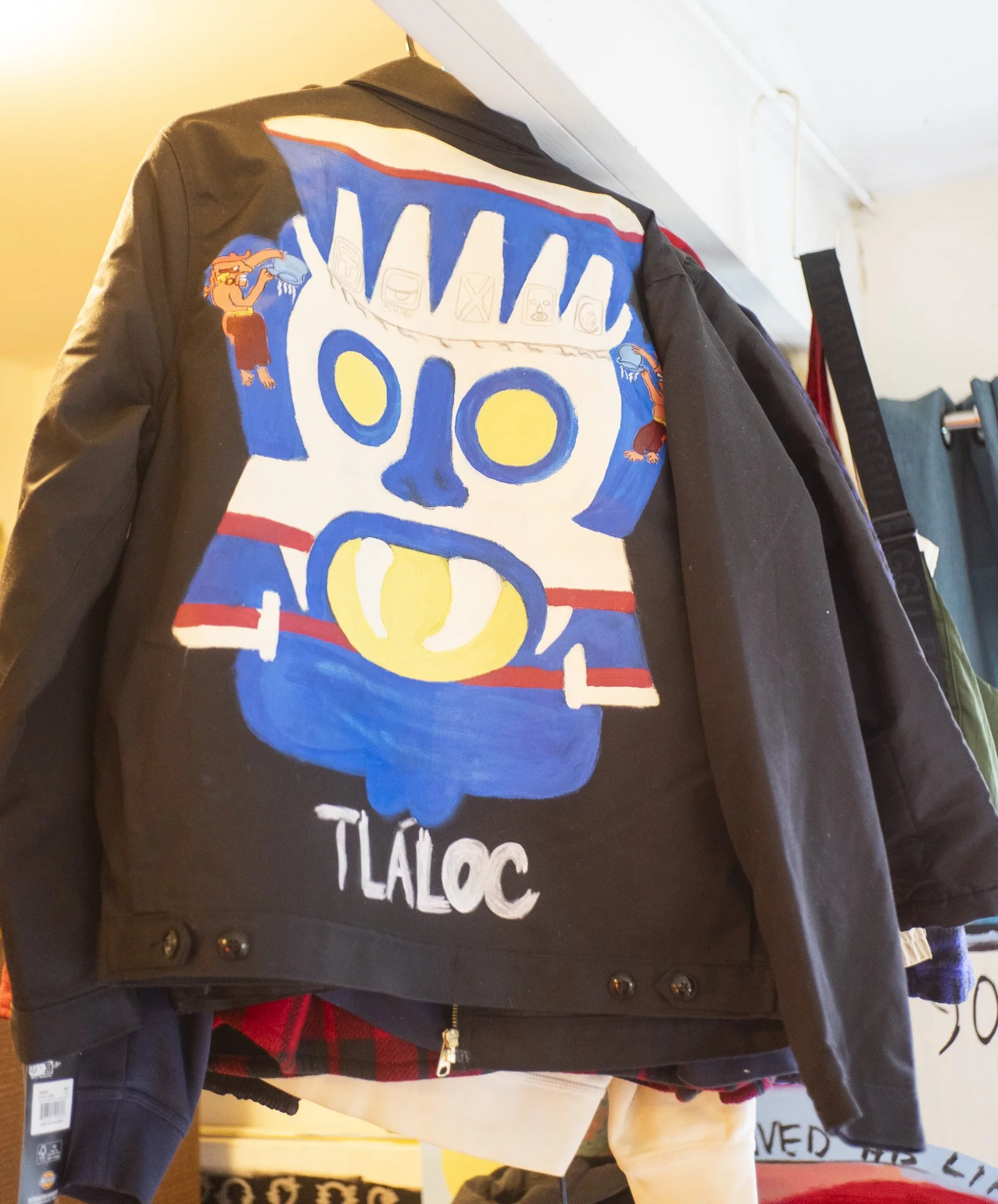
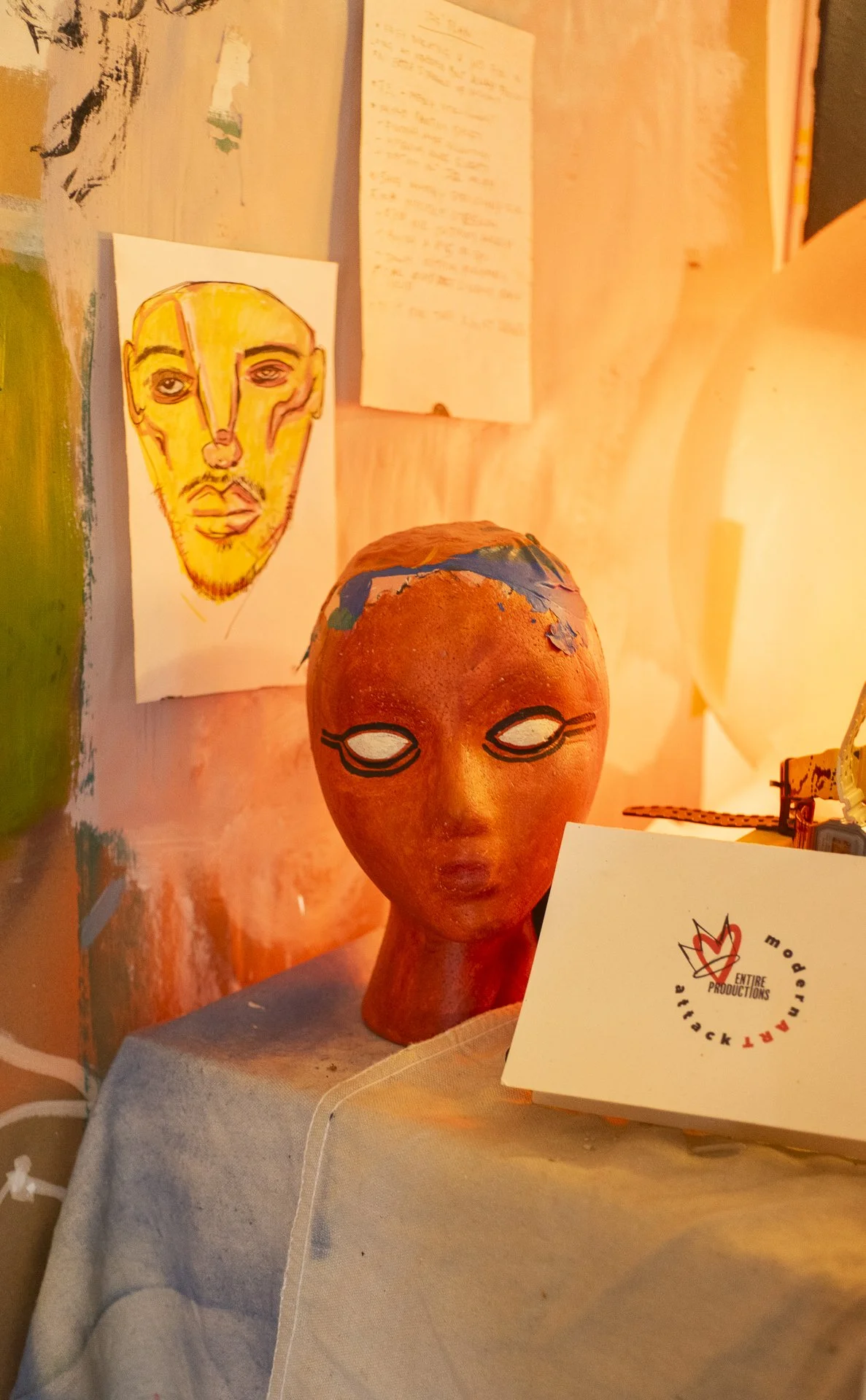
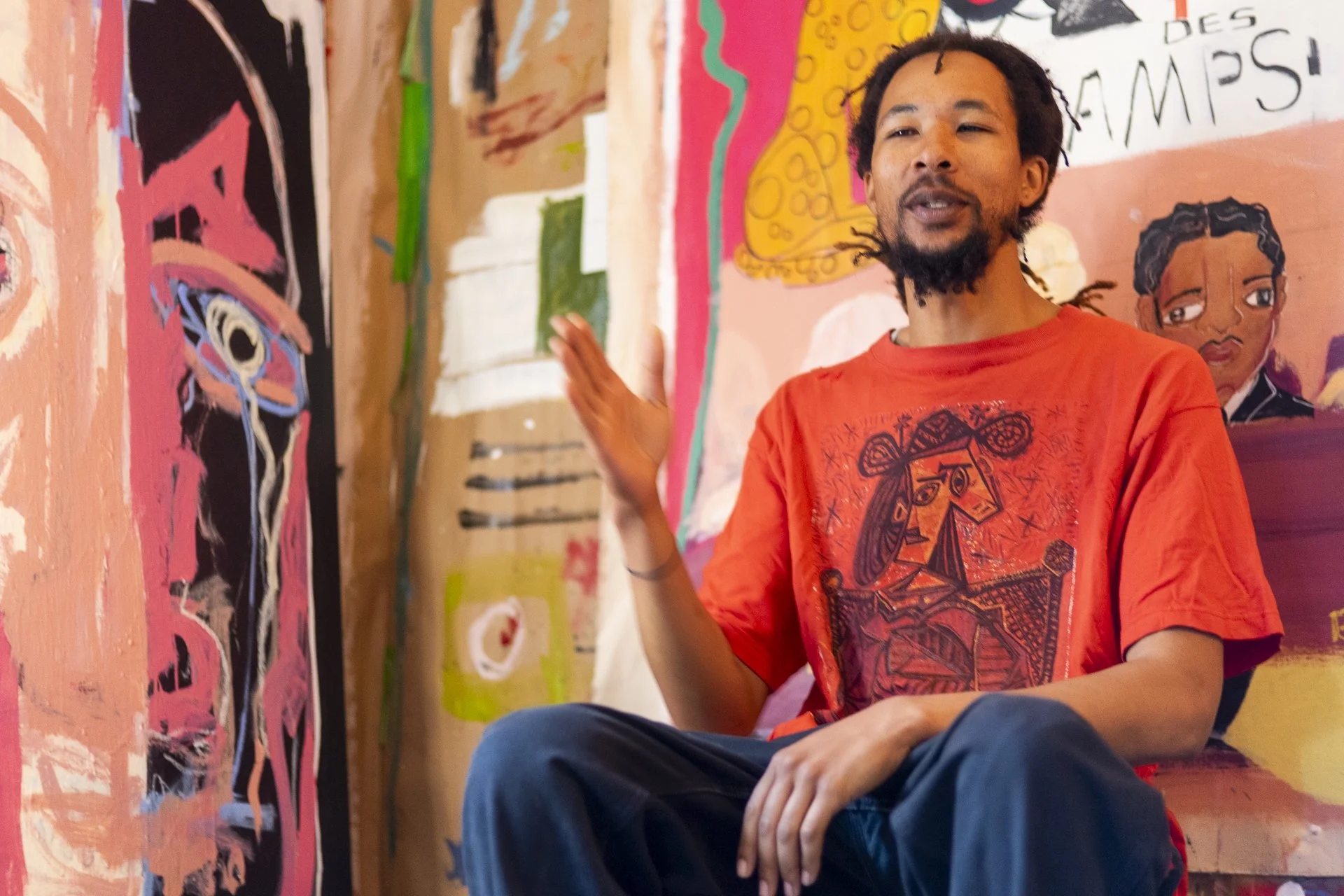
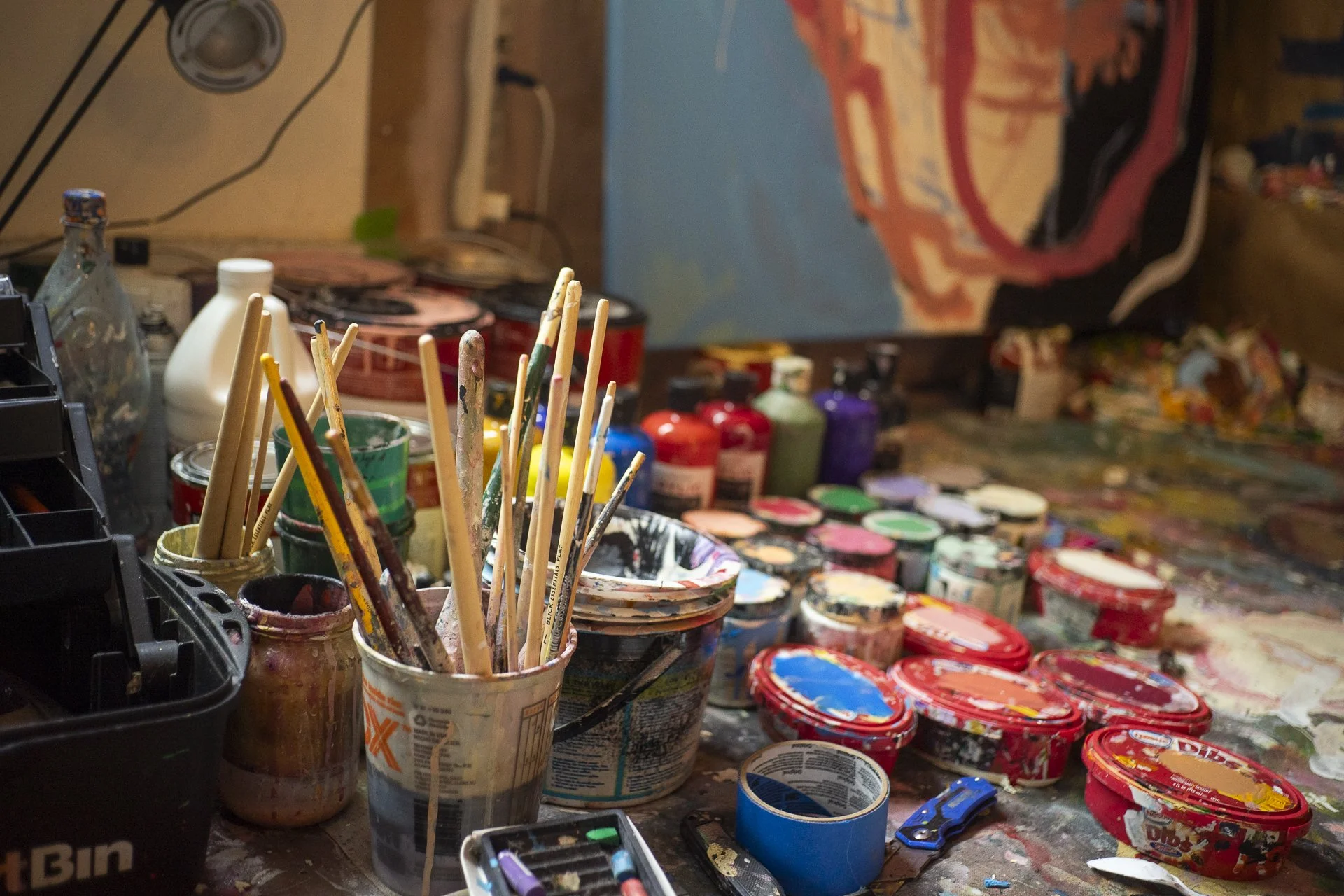
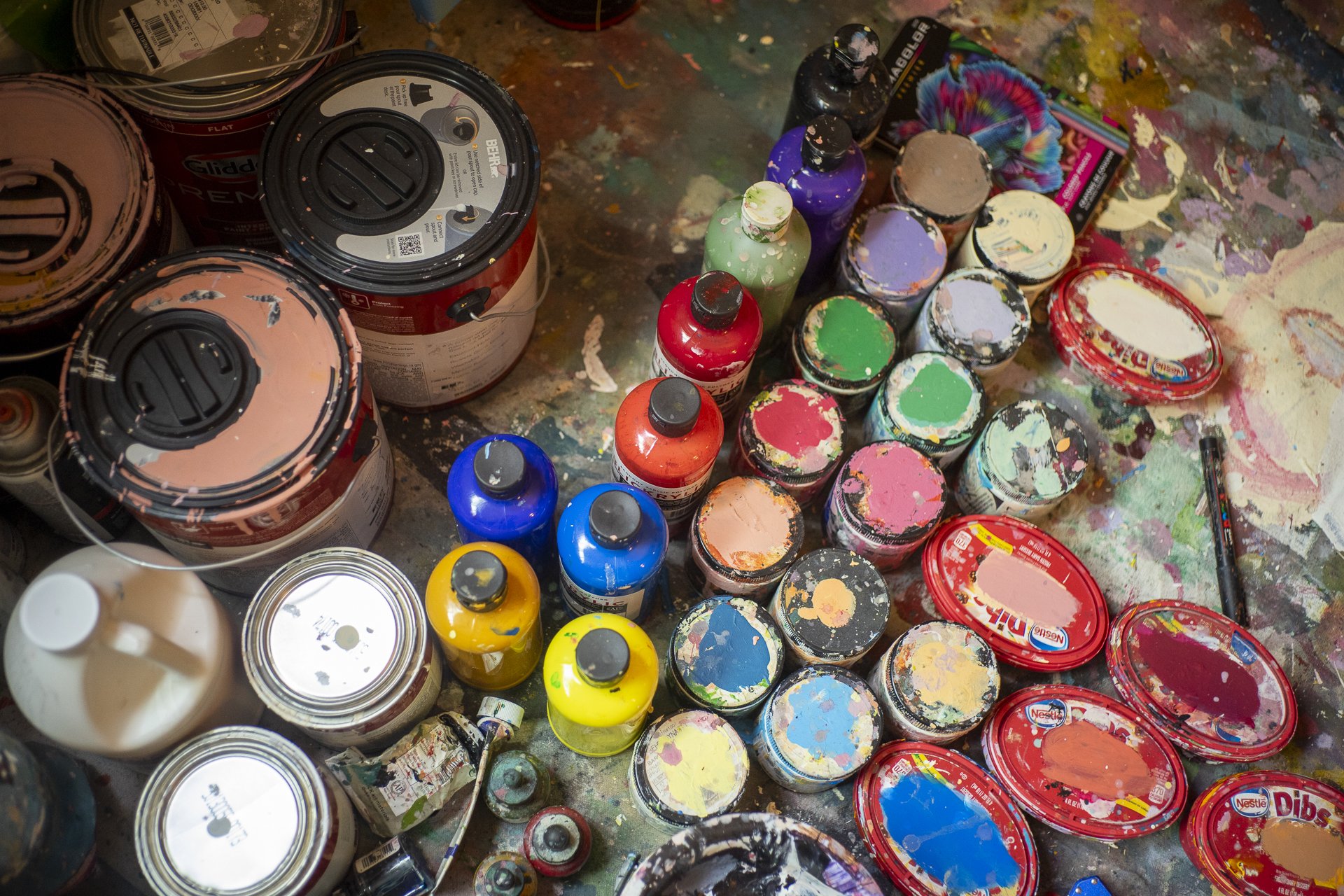
I entered the gate to Chonto’s Oakland garden apartment and a gentle but formidable pit bull named Cyrus greeted me. We walk together to the sliding door where Chonto welcomes me into his studio. His small garden apartment is filled with paint cans, brushes and canvases. He has dedicated the limited walls and built-ins to painting, covering the surfaces with drop cloths. Next to the only point of entry, Chonto has hung jackets he painted on sturdy hangers. The kitchen is filled with canvases; on the wall, resting against the walls by the fridge and rolled up waiting for frames.
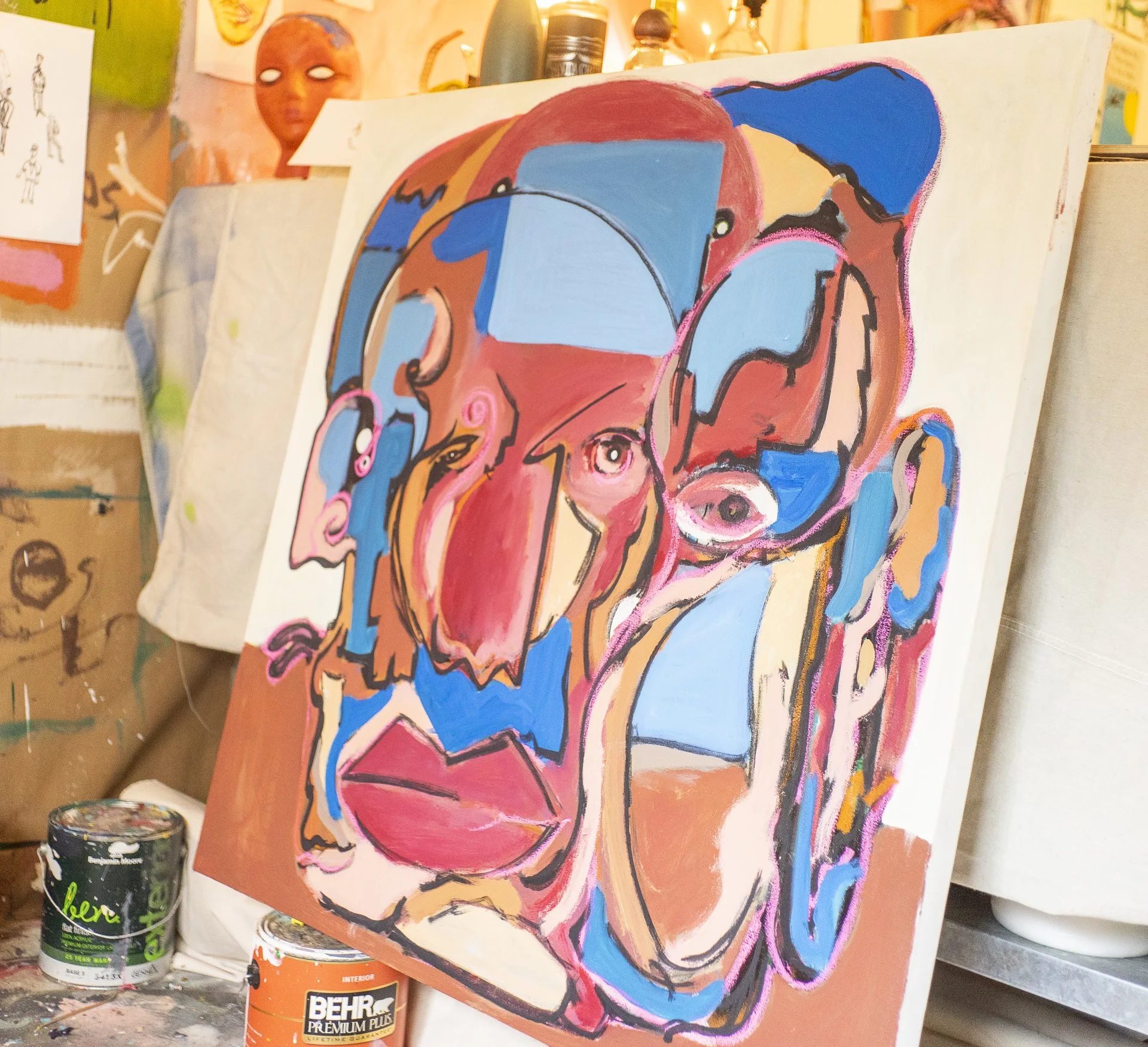
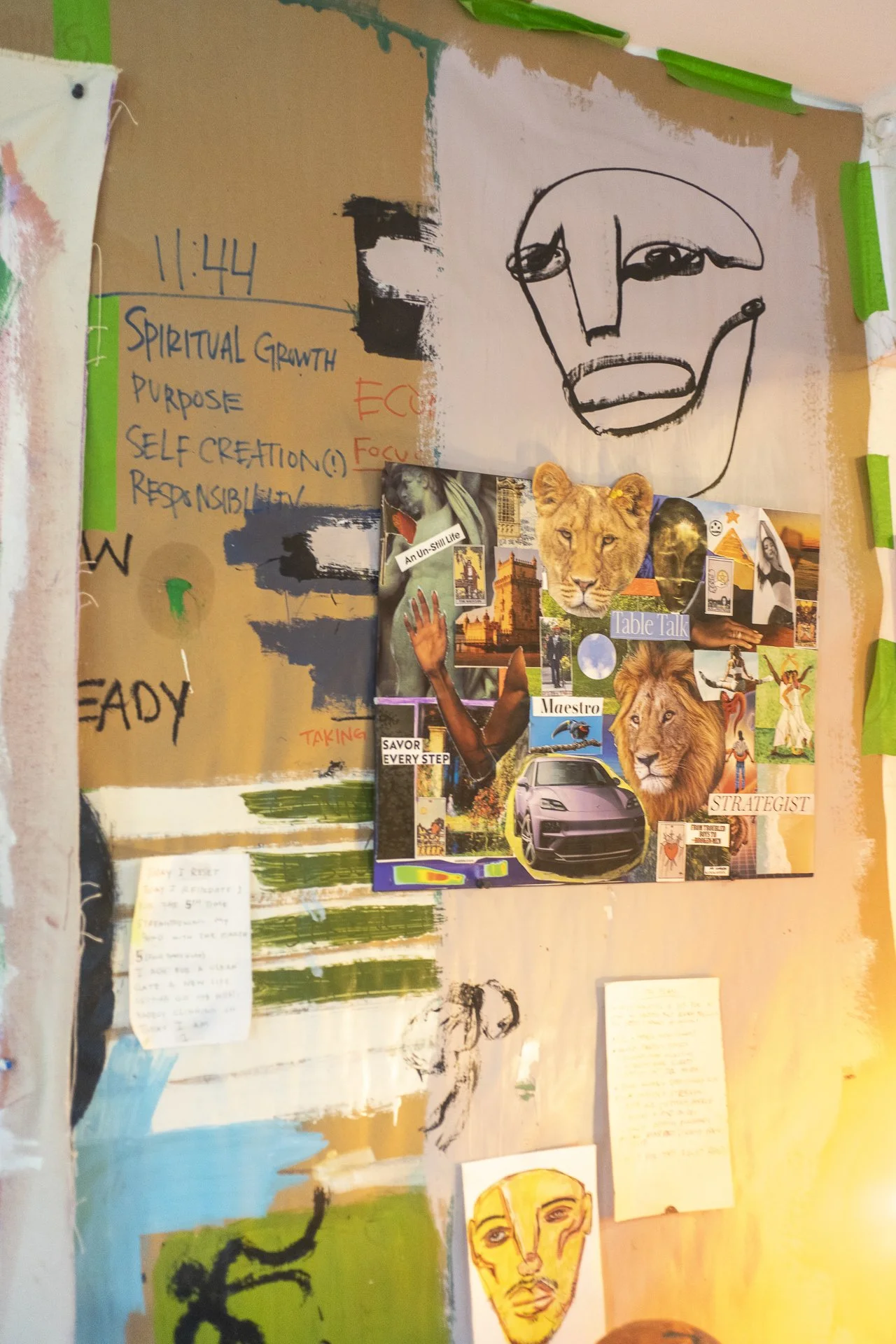
Chonto is dedicated, with almost singular focus, to his pursuit of art. I perceived the “purpose” Chonto references in our conversation as a calculated choice to be an artist. There is no back up plan, this is his path. He tells me in 2017 he experienced a Saturn Return and thus began his focus on art. He didn’t go to art school, he is self taught.
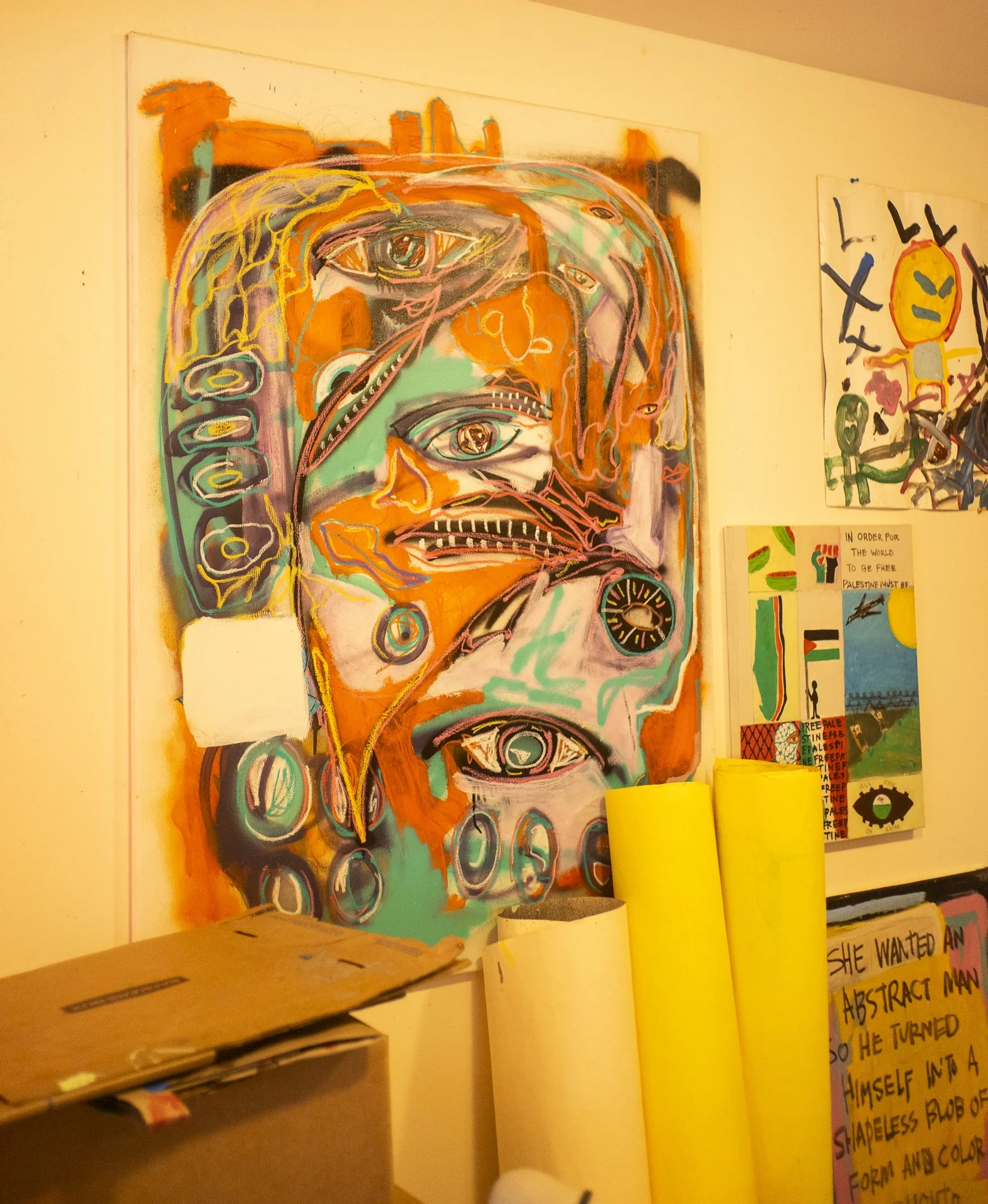
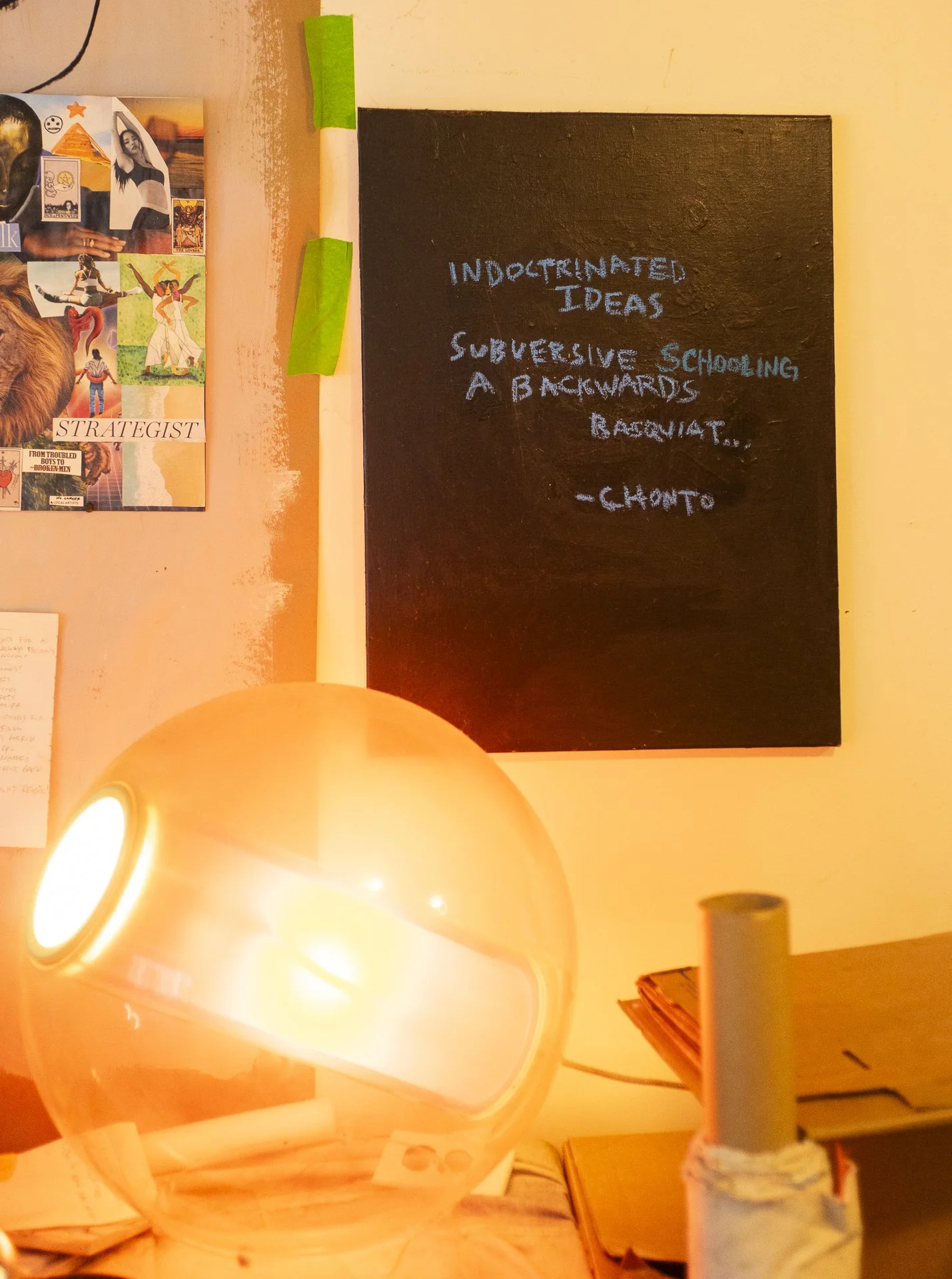
Chonto’s work blossoms with prolific practice and is rooted in expressive raw immediacy, likely gained from lessons learned as a street artist. Chonoto’s art speaks in its own unique voice while using a familiar vernacular thanks to the lessons he’s taught himself from artists he touts as influences: Jean-Michel Basquiat, Pablo Picasso, Willem de Kooning, and Jackson Pollock.
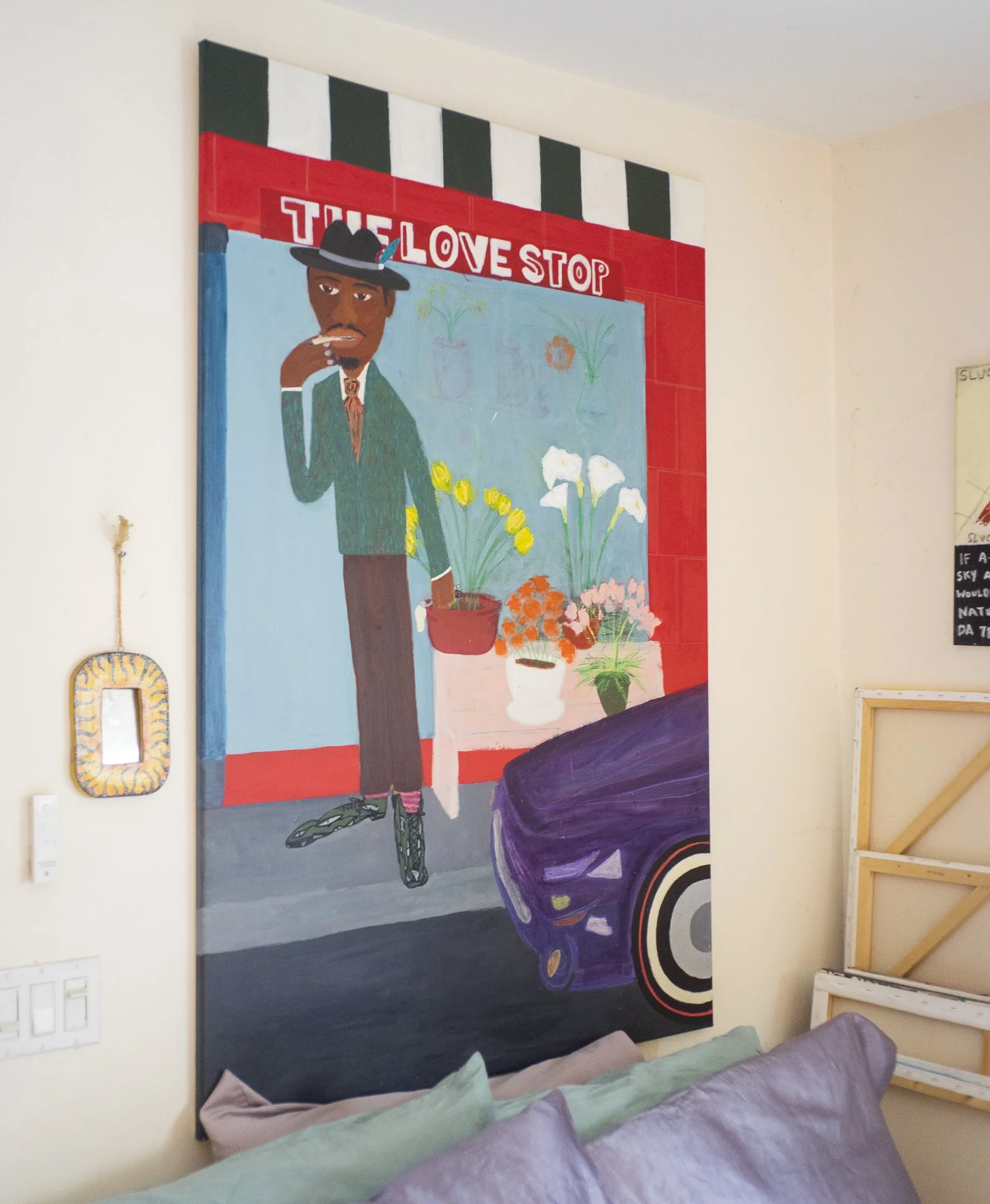
“Art is an External release of an Internal something” Chonto quips from the kitchen when I ask about the themes and ideas he chooses to pursue in his art. He told me he wants his art to grab people and make them feel something. I understand Chonto as a conduit for expression, not a conductor. He chooses to paint daily allowing the ideas to flow through him with purpose.
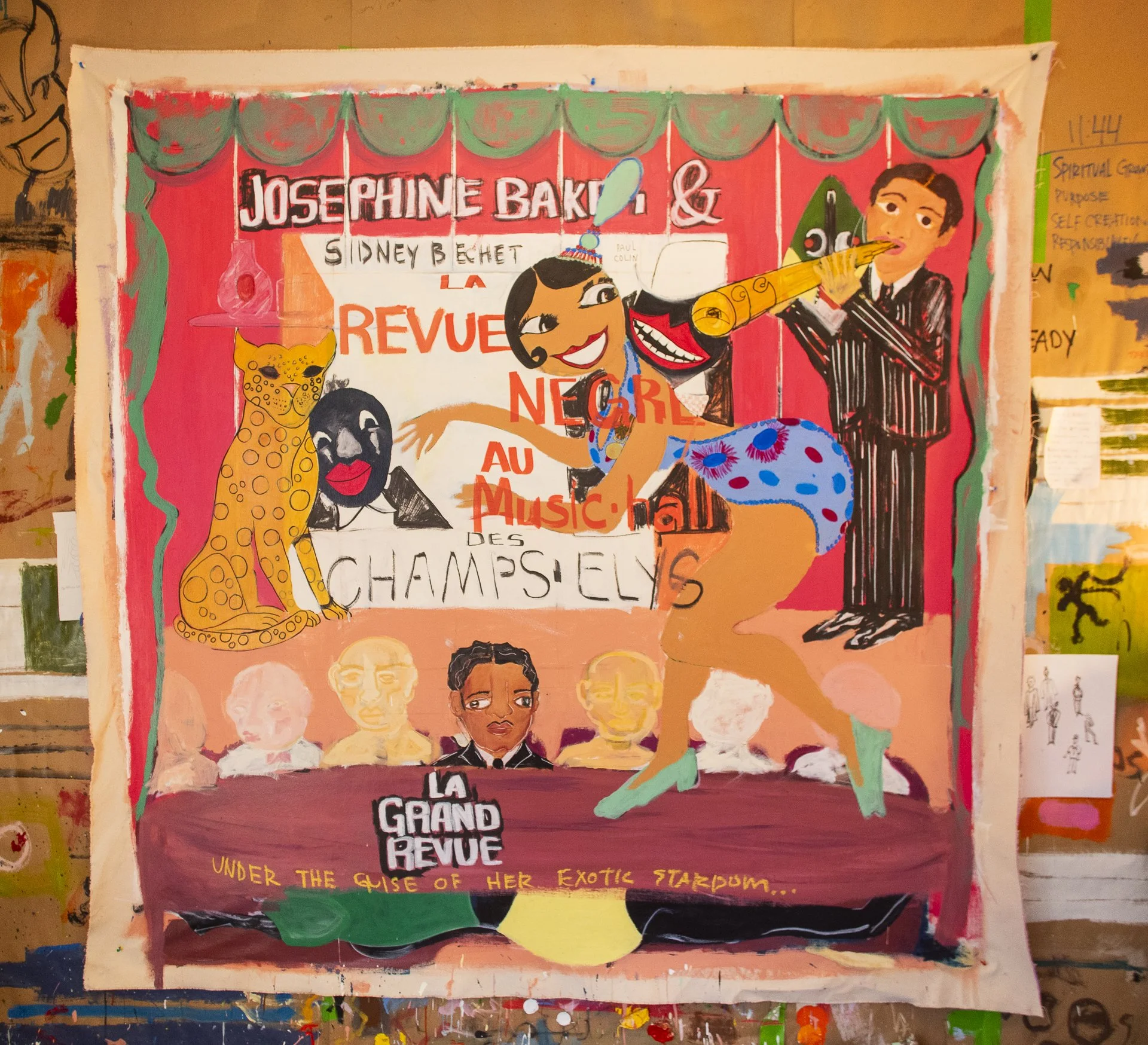
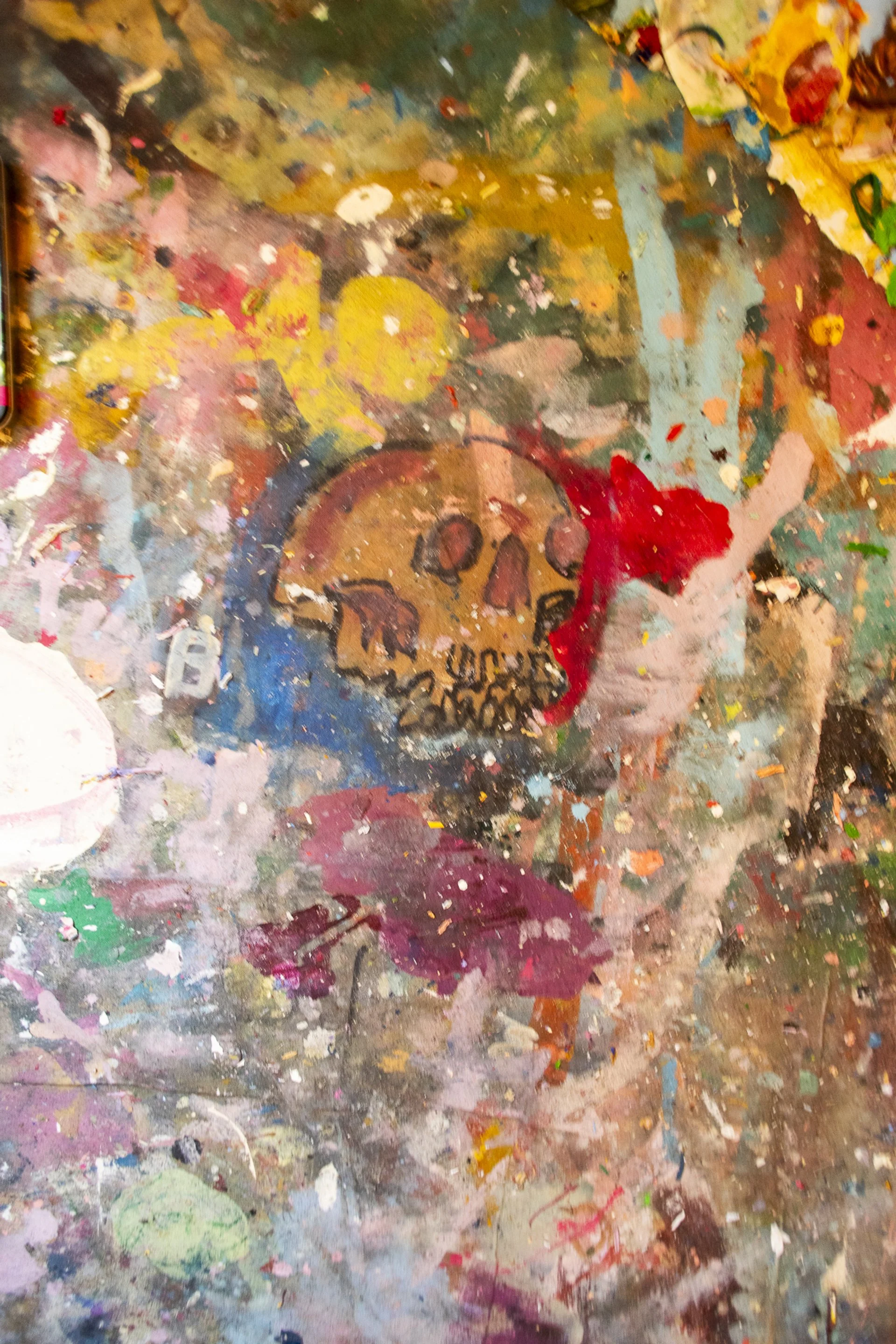
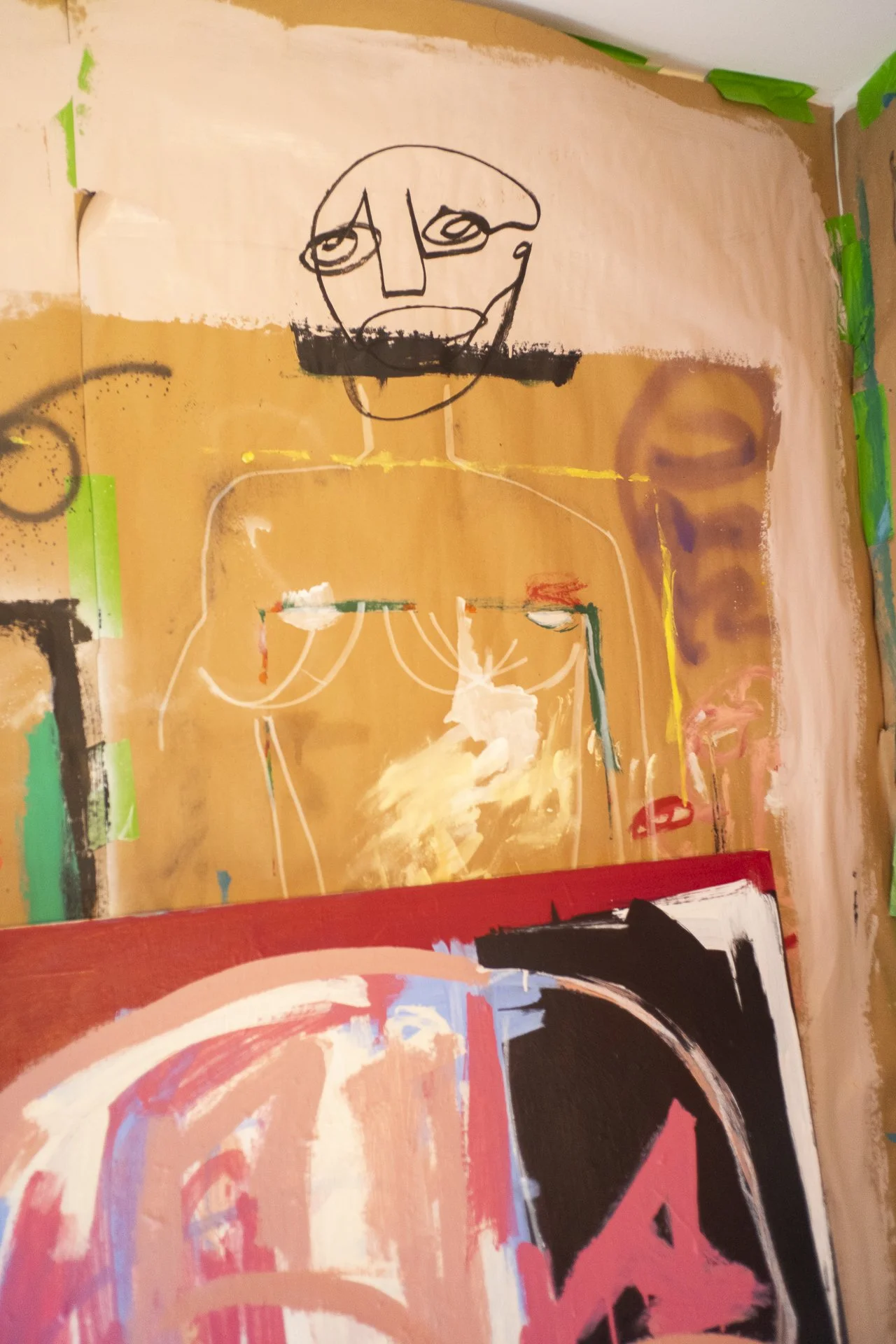
I was struck by Chonto’s lack of preciousness for amassing a stockpile of completed works. He frequently paints over a painting and continues to work on a piece, despite showing it. For example, the large work on his wall of Josephine Baker was composed on a previous painting of a skull that was now nearly completely covered to explore a new idea. The work about Josephine Baker began with Chonto’s self reflection that he lacked work which represented women and his desire to be more expressive about women. Chonto’s intent is to capture the impact Josephine Baker had on him as a child and to the “exotic wild” ways she was described in his schooling.
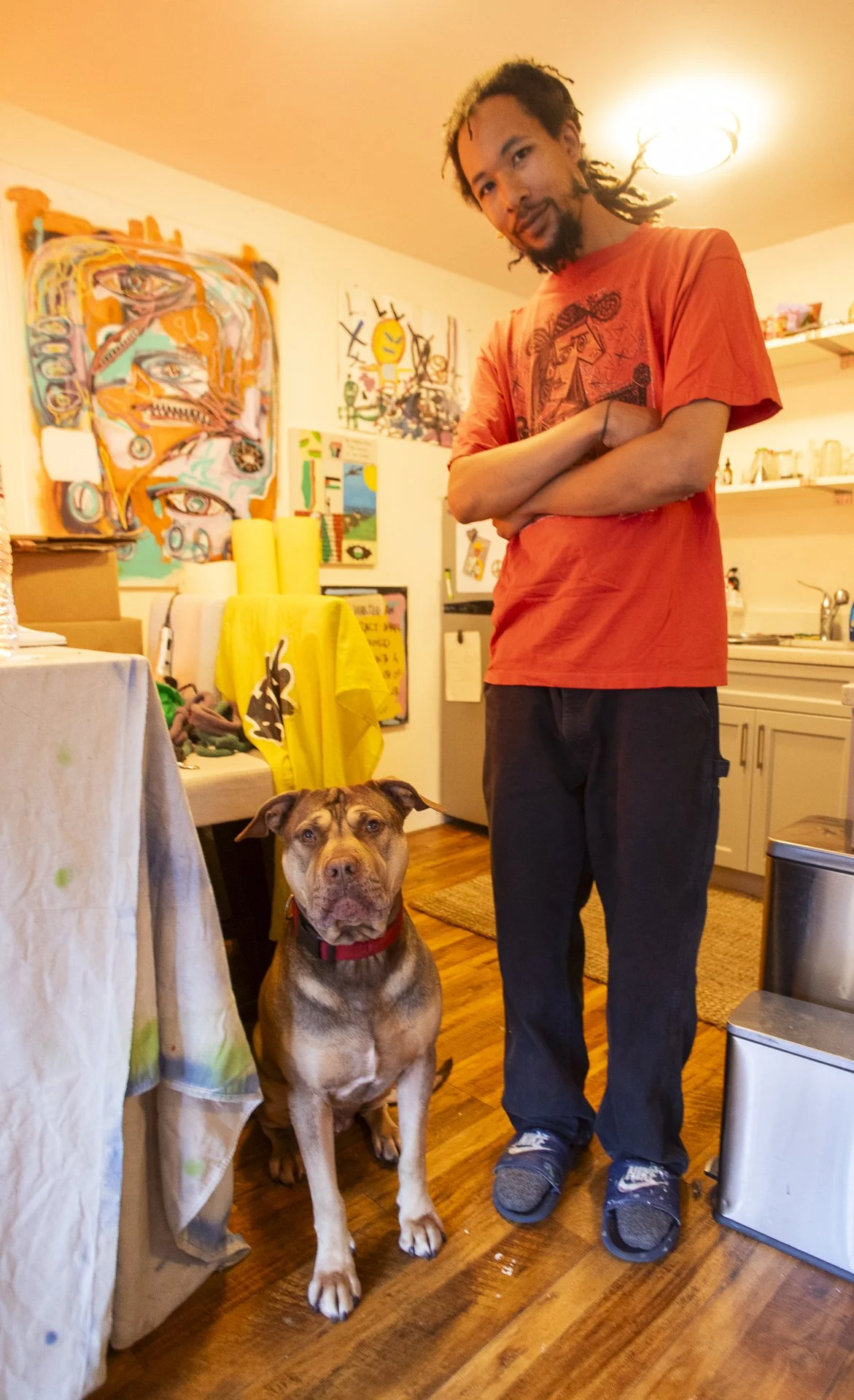
Cyrus and Chonto in the kitchen of Chonto’s Oakland studio. They share a small garden apartment and a calm, collected demeanor.
Interview
Since your studio is attached to your living space, can you describe how you get started with work and how you stay motivated to make art and balance your personal life with your art practice?
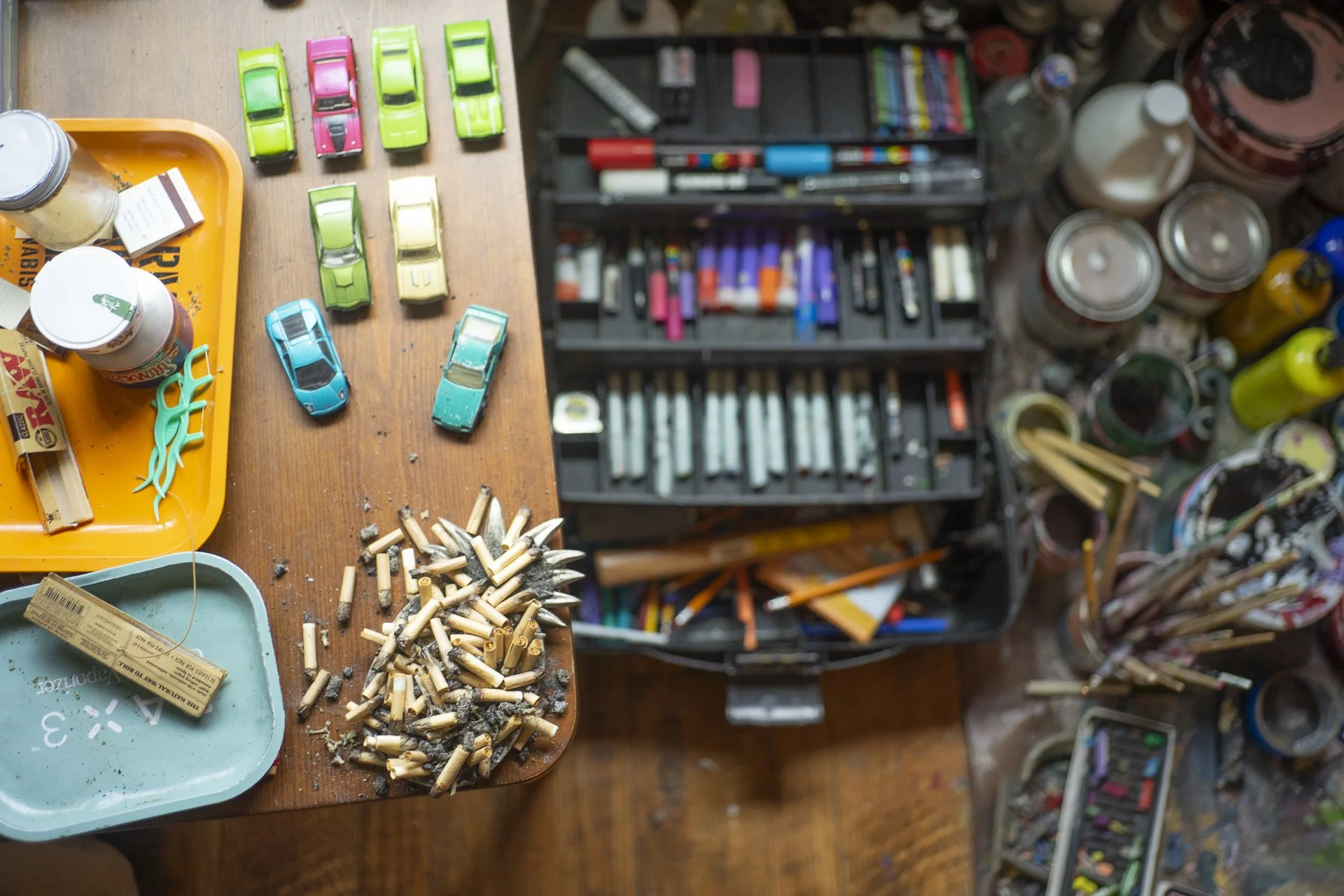
I wouldn’t say motivation is a factor. I wake up everyday with a singular goal in mind. The painting space being in my living area just makes it that much more accessible to focus in consistently.
How would you describe your style of art?
I’m an expressionist.
What motivates you to create or where do the ideas formulate that come to life in your studio work?
All my work is some kind of reference to my life, either personal or something I observed in someone else’s.
As an artist who paints every day, how do you get into the process of flow state?
Purpose. When I started the process of what I’m doing today, I didn’t ask to be a painter or artist. I was seeking purpose. I prayed for it and these are the things that naturally came to me.
You did street art using a specific tag featuring a face and the phrase, “At once everything became irrelevant”. Can you explain the significance of this phrase in your art and your mindset?
I knew about graffiti but had no knowledge of its history. I started using phrases because it came naturally, I’ve been writing raps since high school. Plus hearing Gil Scott-Heron’s poetry and spoken word really built up my vocabulary knowledge. Hitting the streets with it was definitely influenced by Basquiat.
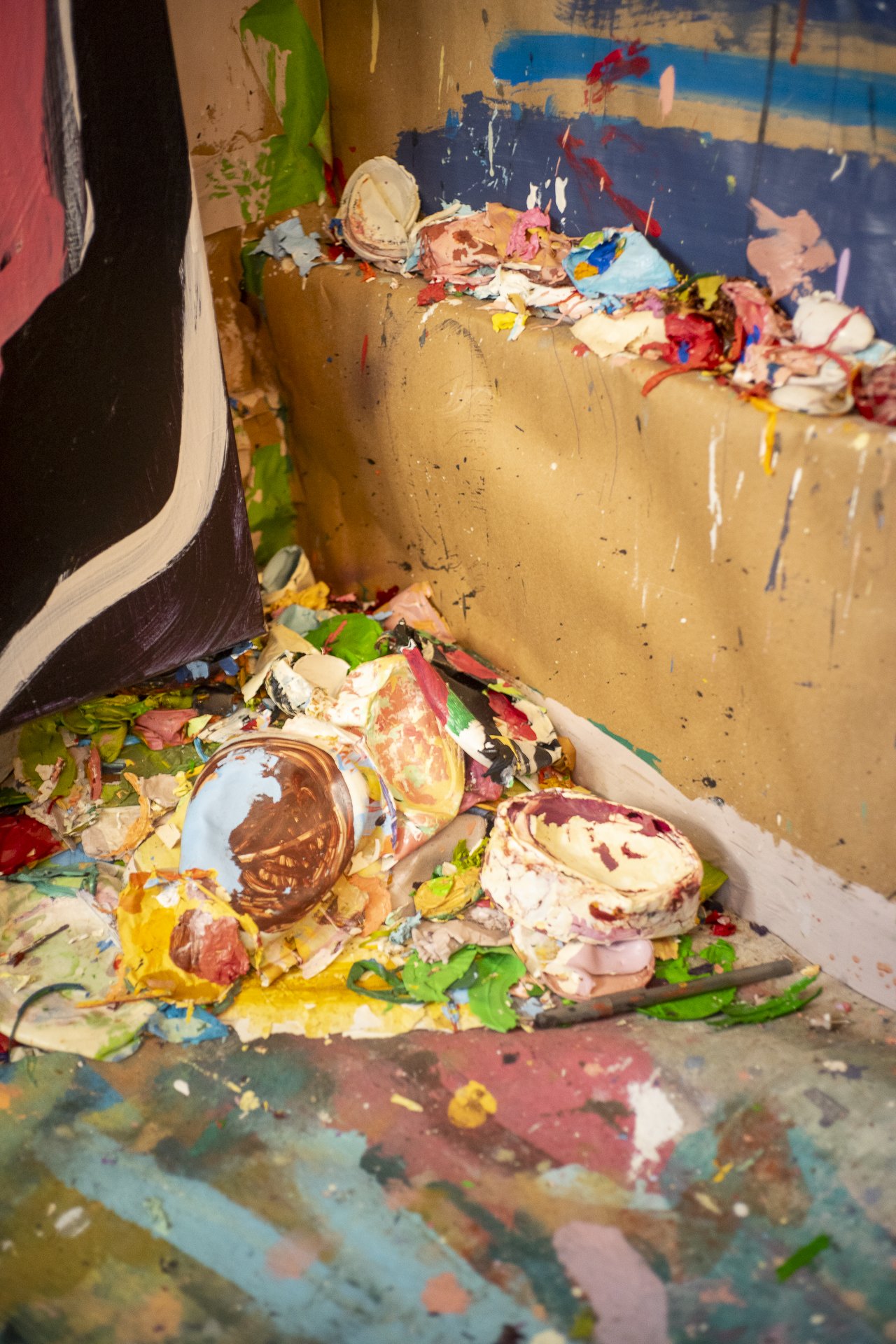
You have a practice of working on paintings after showing them. How do you determine when a painting is finished for a show or an exhibition? Why do you continue working on a painting after it’s shown?
I paint with continuity, I don’t ever look at it as a starting point or finishing point. When the piece isn't purchased, if I feel it says enough for me to move to something else, that’s what I do.
Do you have any concerns about how reworking a painting after showing it may influence a purchase or the ability to show the work again?
No. If you missed it there will be more to come. I really look at all the things I’m creating as practice. It's like missing a shot in the gym. You know the new trajectory for the shot, so when the game comes you're better prepared to hit that shot again.
You’ve travelled to and around Mexico City for several residencies. How did you get involved with the gallery that brought you down there, Chic By Accident? What was your residency like?
In 2021 I had a friend visit me after a residency with the Museo del Jugete Antiguo Mexico and it looked like a really great opportunity. After receiving the info and contacting them about residencies, I got accepted and planned a trip for 2022. Upon arrival things didn’t go quite so smoothly. I had a friend contact me about reaching out to a gallery in Mexico City. I met the owner, showed them some works and they offered me an opportunity to stay in CDMX and make some paintings for a show they had coming up during Zona Maco. The paintings that made the show were a success and I’ve gotten 3 more opportunities to travel back throughout Mexico.
How did your art change or grow after traveling for residencies in Mexico City?
I saw a bit more which confirmed the things I had already been making art about. So it was an affirming trip to keep going back. I’d say mostly it was a confidence builder.
You refocused your life in 2017 to be centered around making art. What was the impetus for this shift and what did you leave behind from your past experience?
I was going through a shift in my life. I felt I lacked purpose. I sought to live through purpose rather than an ideology.
You were born and raised in Oakland and told me you’re proud to call this your hometown. If you were given the opportunity to choose a place to base your studio, would it be Oakland?
Ideally I’d have the ability to live a multi-coastal life. With having the connections I do in Mexico, I’d say that’s the next place I’d build a hub.
When you’re not making art, what do you do to unwind?
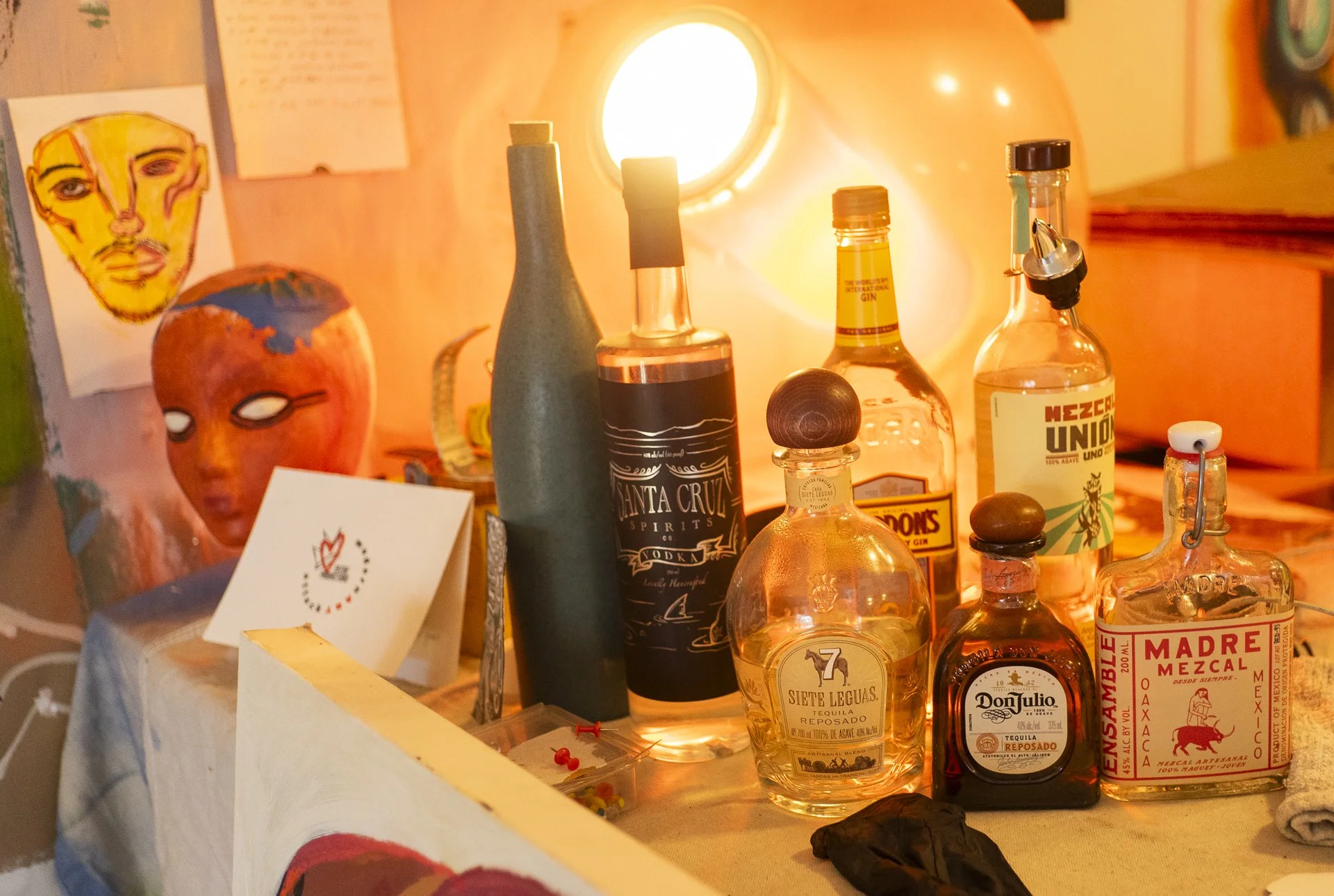
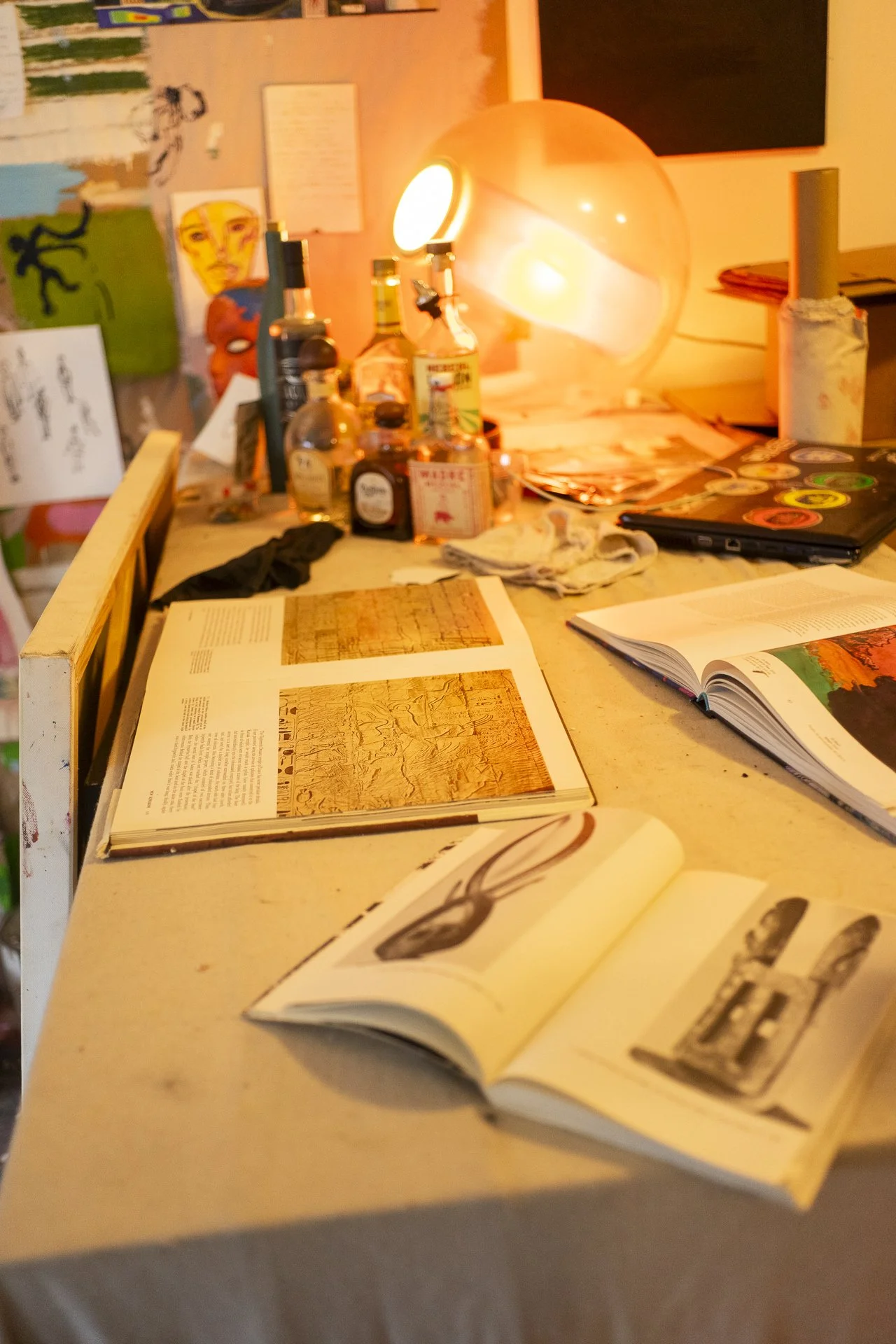
I like to be outdoors when the weather permits. I’ve picked pool as my daily winddown activity, see me at Samwon Billiards. Other than that I’m deep into history and learning, anything that revolves around growing the mind.
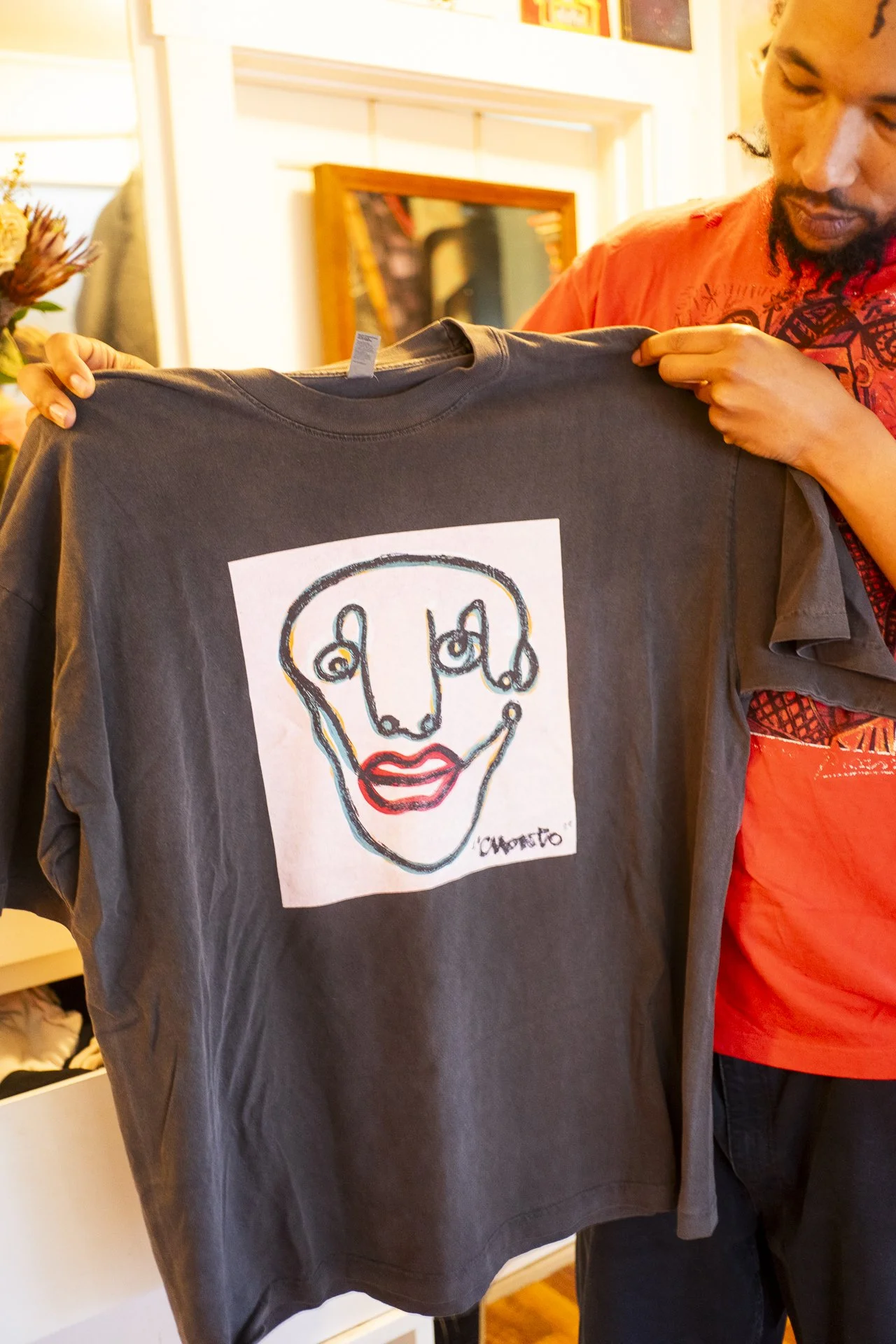
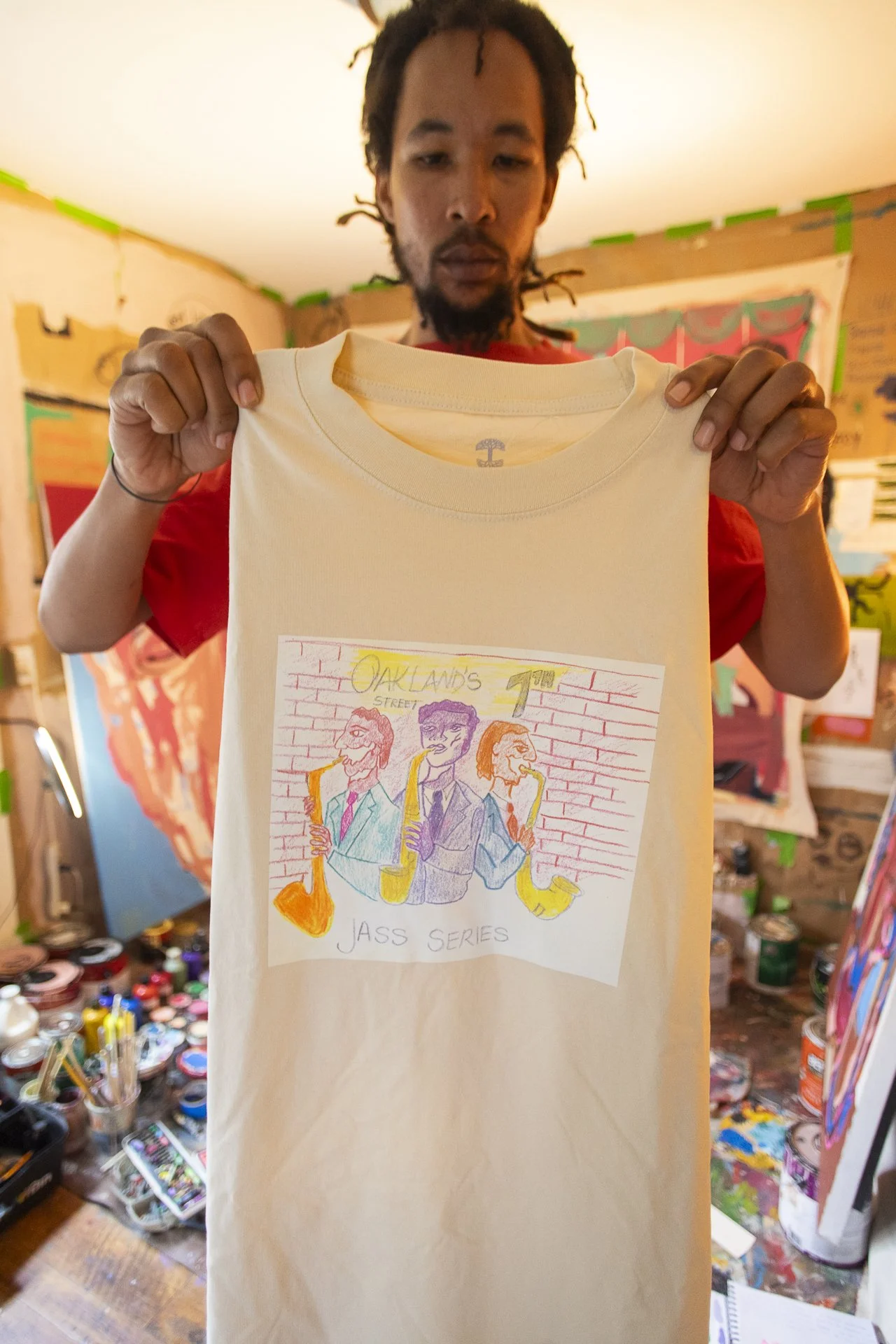
You’ve collaborated with Oaklandish on a line of shirts featuring your art. How did you get connected with them and how did that collaboration go?
Oaklandish does a collaborative series with local artists. After my first trip in CDMX they reached out to me and we did the first of our T-shirt drops.
What is your take on the DIY art community in San Francisco and Oakland?
As a Bay Native the DIY idea has been transformative. This is the home of some of the first people musically to do it on their own. It’s definitely pushed individuality but at the same time segregated people from wanting to connect outside the people they know. It’s a balance we are still working on as a whole in The Bay, intersectionality it is present but melding thinking can be difficult.
What is next for you?
NYC.