Studio Visit & Interview With Fernanda Martinez
Interview and Photographs by Brandon Joseph Baker
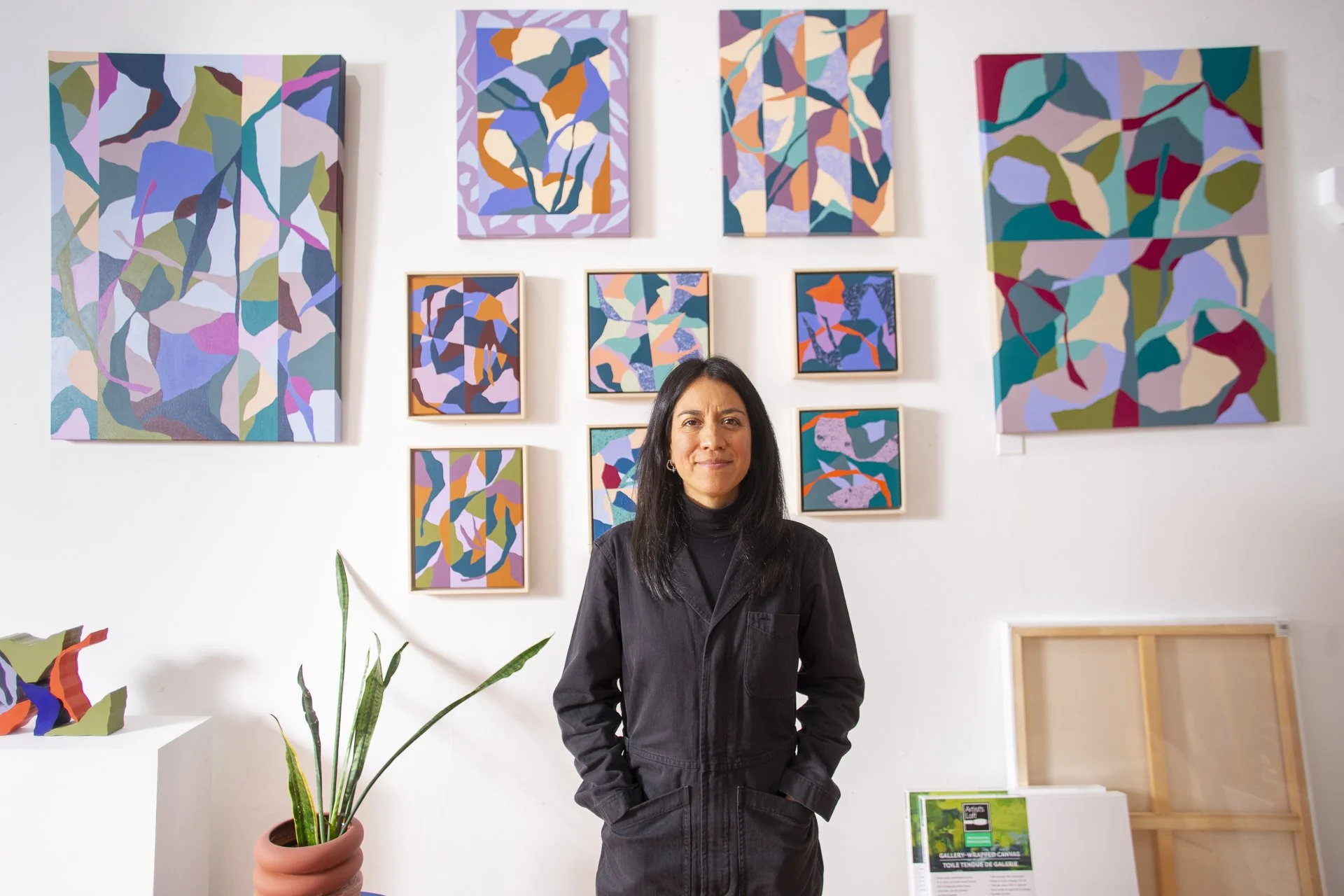
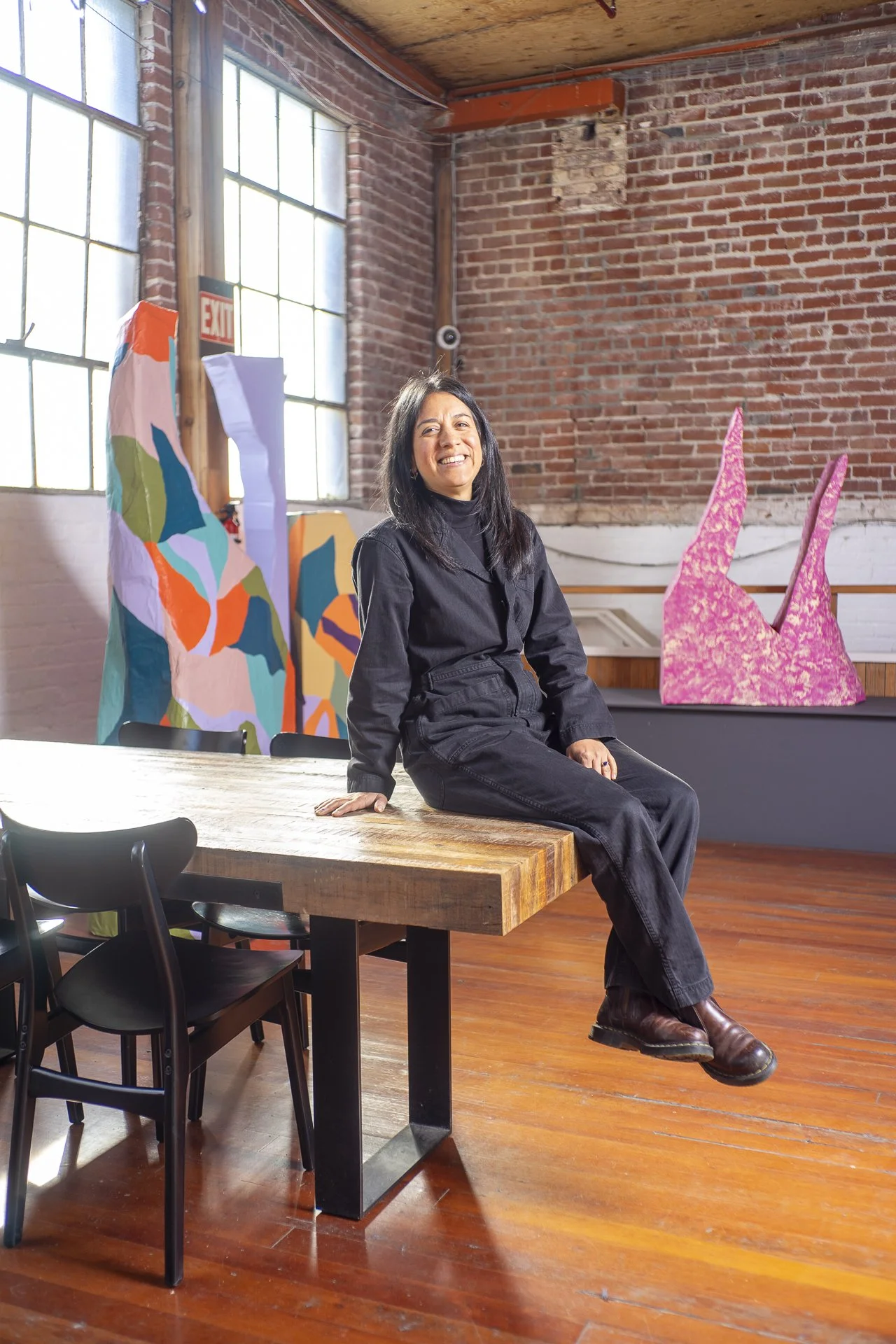
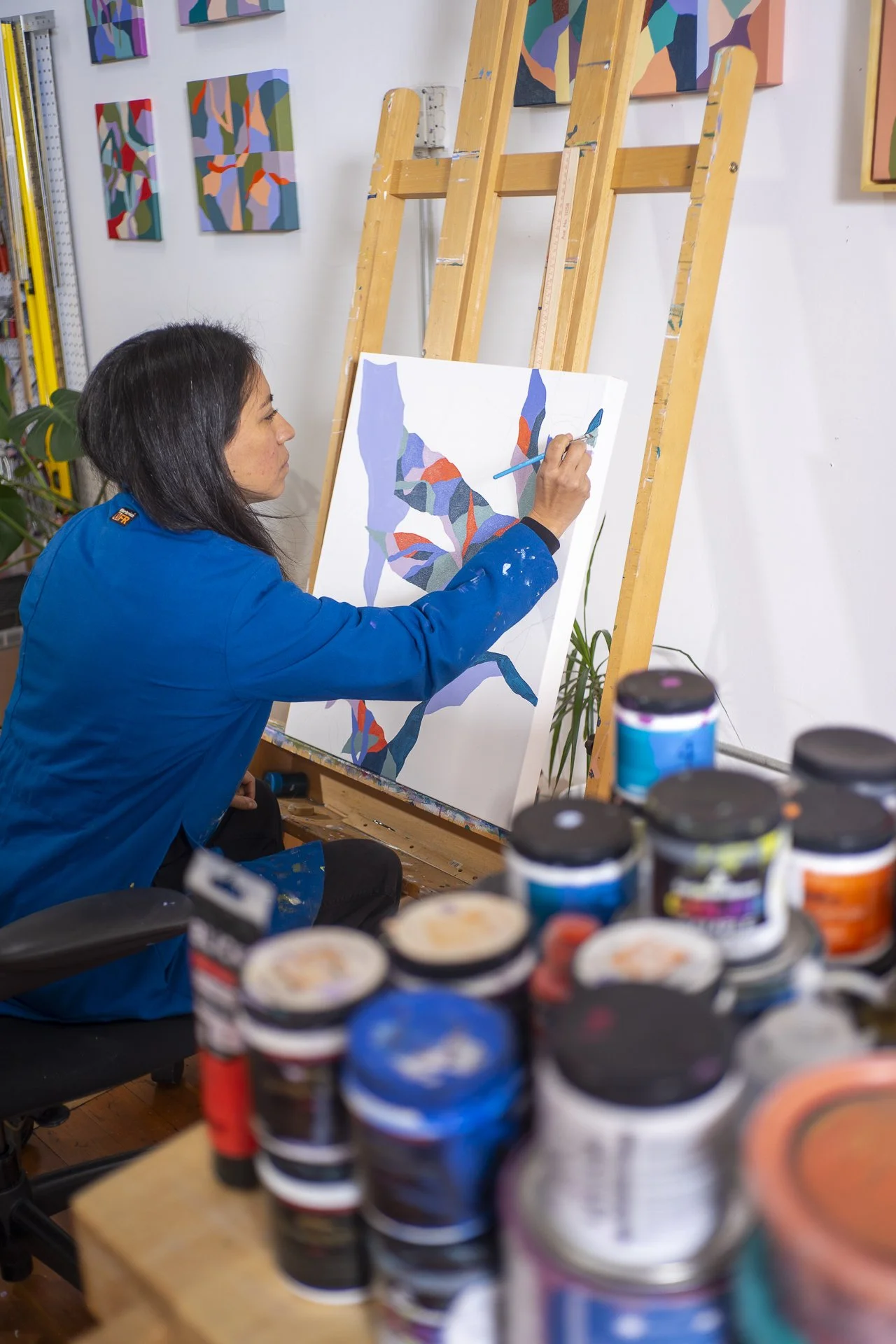
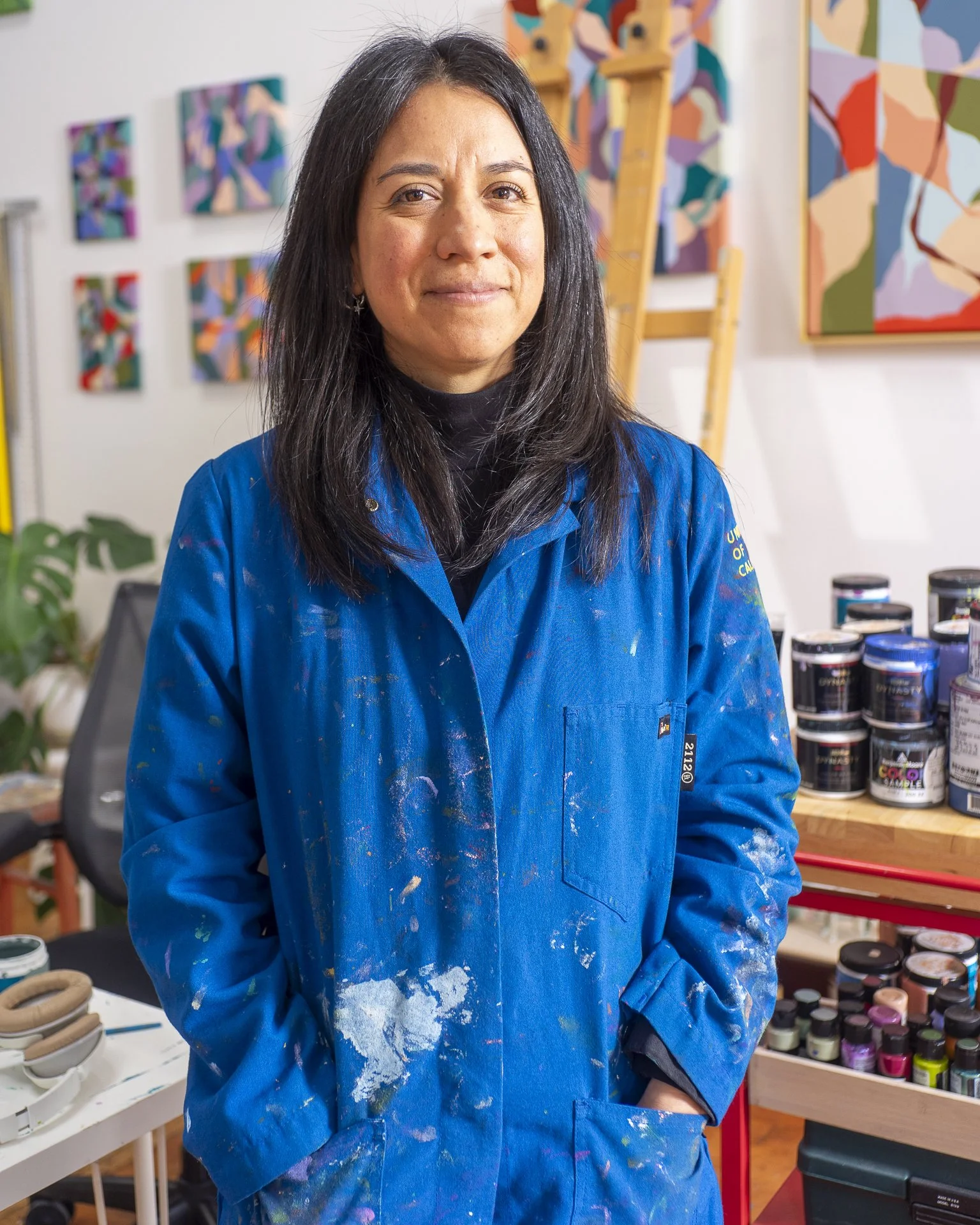
Fernanda Martinez in her studio in Oakland, California in December 2025.
I met Fernanda Martinez at her studio before the holidays in 2025. We have been friends for a few years now and I’ve had the pleasure of not only photographing and printing her artwork but also showing alongside her at the 6th Annual Moth Belly Auction. I was thrilled to ask questions and to gain a better understanding of her process and mindset when she’s making.
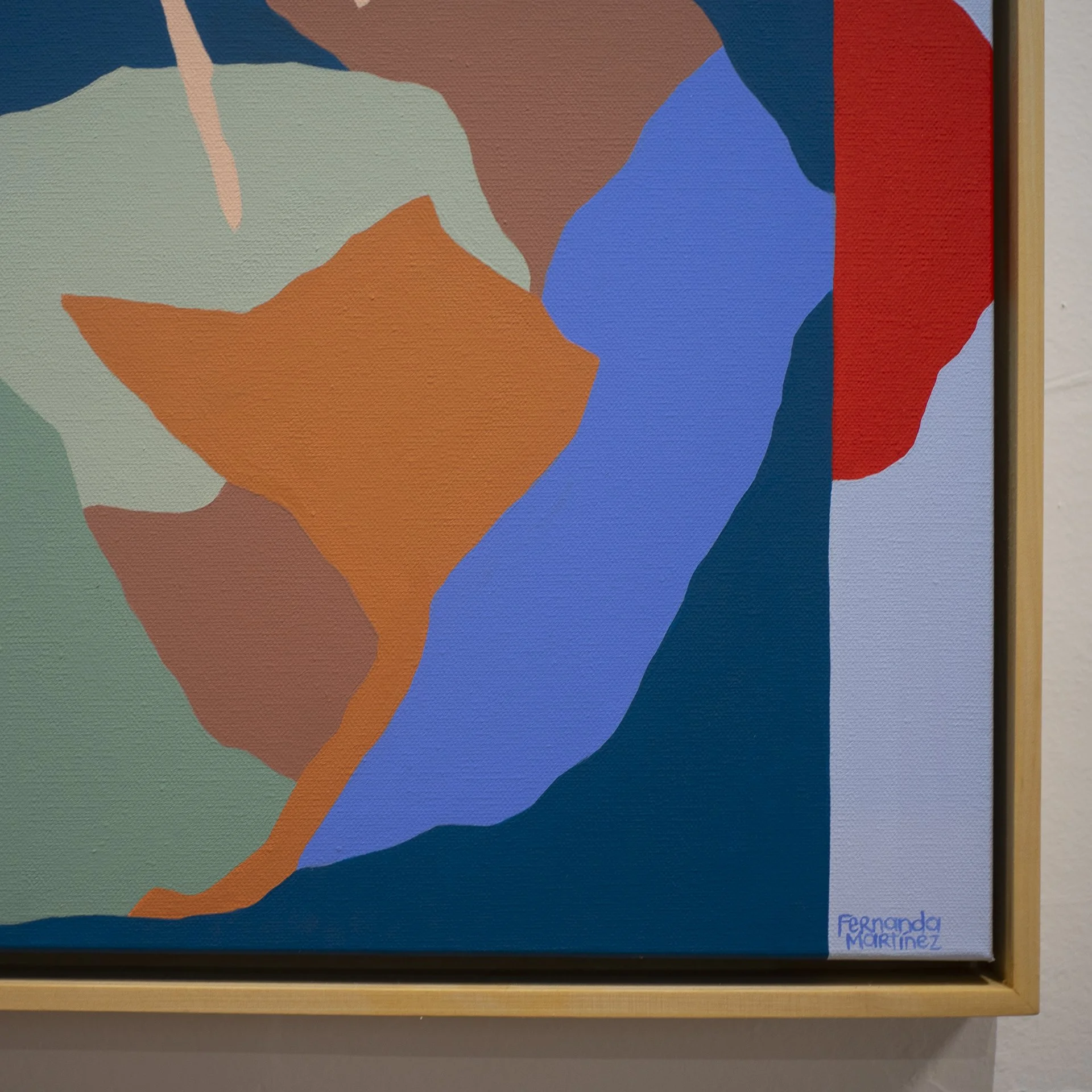
Even the signature in Fernanda Martinez art reflects her acute sense of balance, color and order.
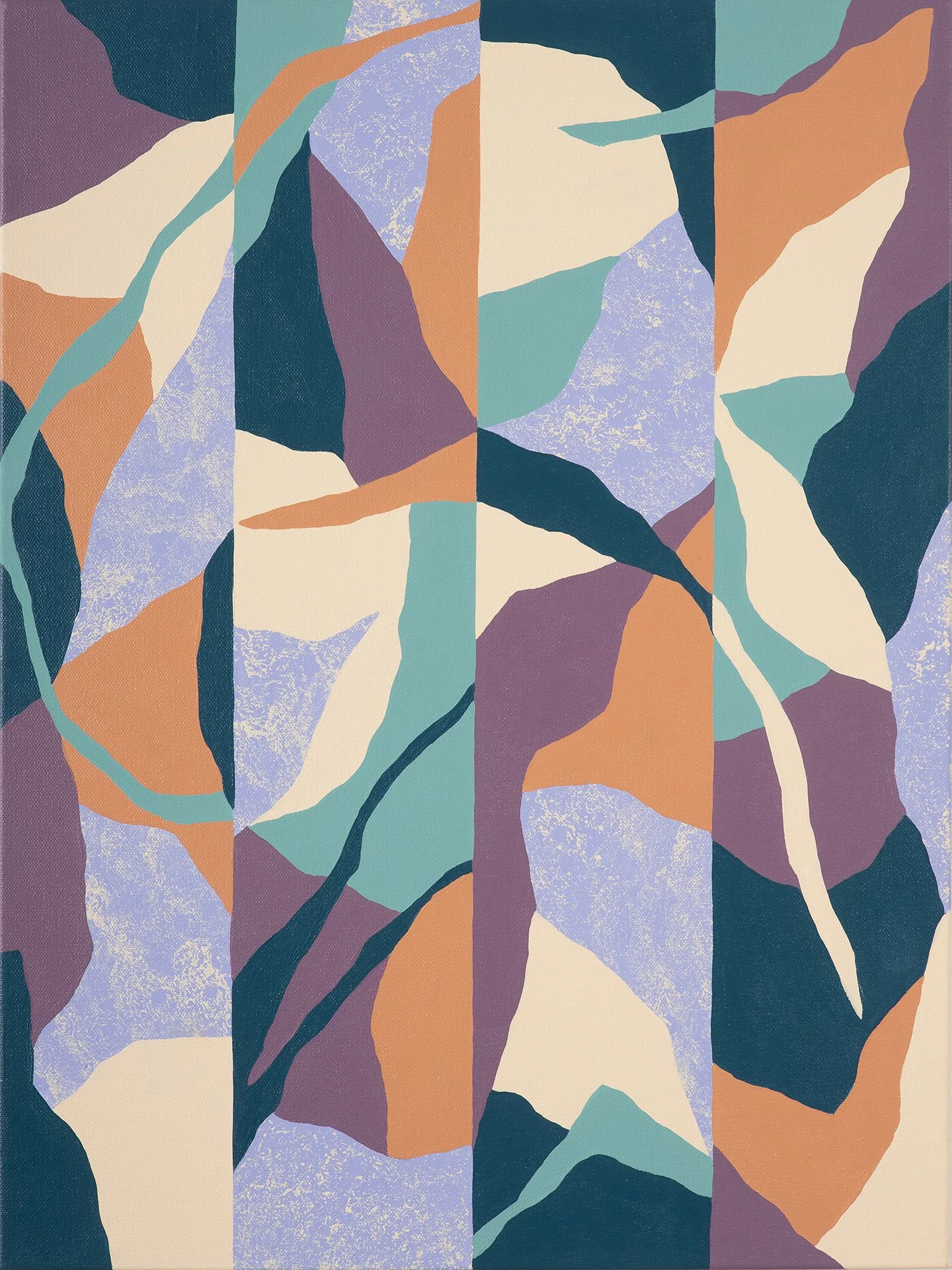
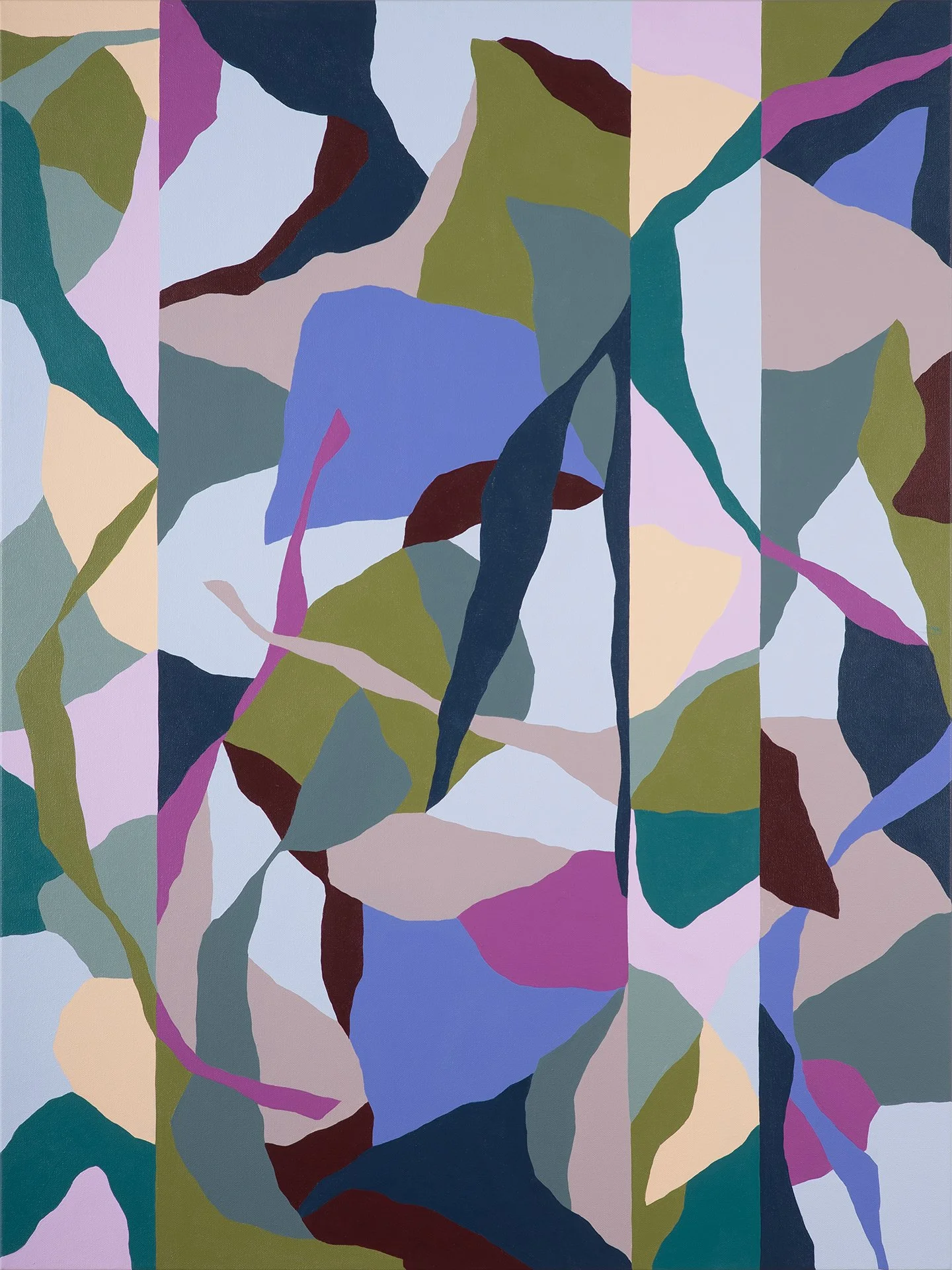
Fernanda’s abstract work carries a unique pattern of recurring organic shapes. Her paintings and mural works are easily recognizable once you’ve ever seen her almost biotic paintings. Her visual style scales superbly to murals and she’s recently found ways to translate her style outside painting and into sculpture. Branching out of a two dimensional medium into three dimensions, is no small feat, especially when the work effectively carries a consistent style across the different mediums.
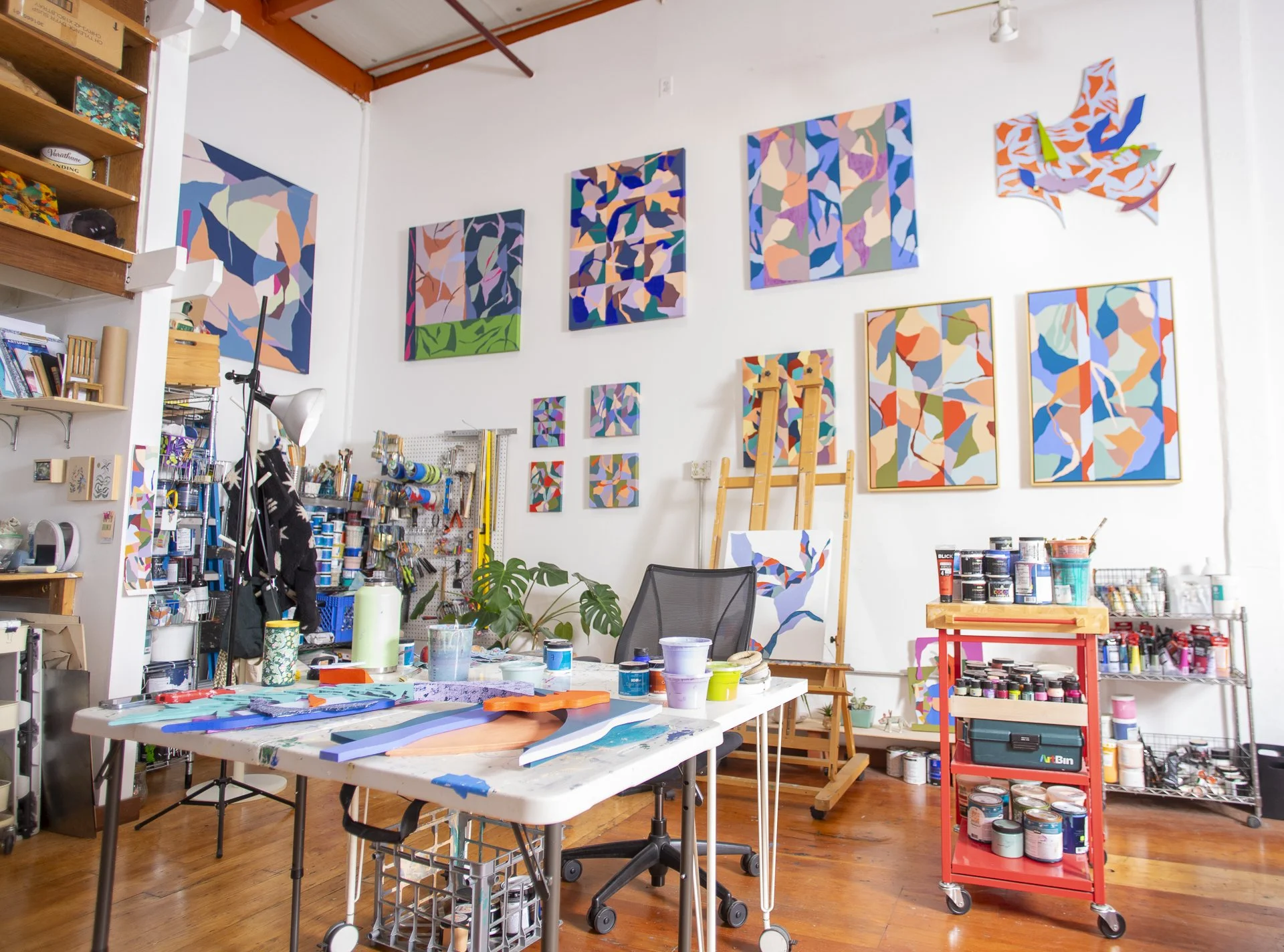
Fernanda Martinez studio in December of 2025.
Fernanda told me how exciting she finds experimenting with a new medium or material. “This era offers unprecedented access to materials, techniques, and global artistic influences, allowing artists to experiment across disciplines, blending traditional and contemporary methods in ways never possible before,” she said.
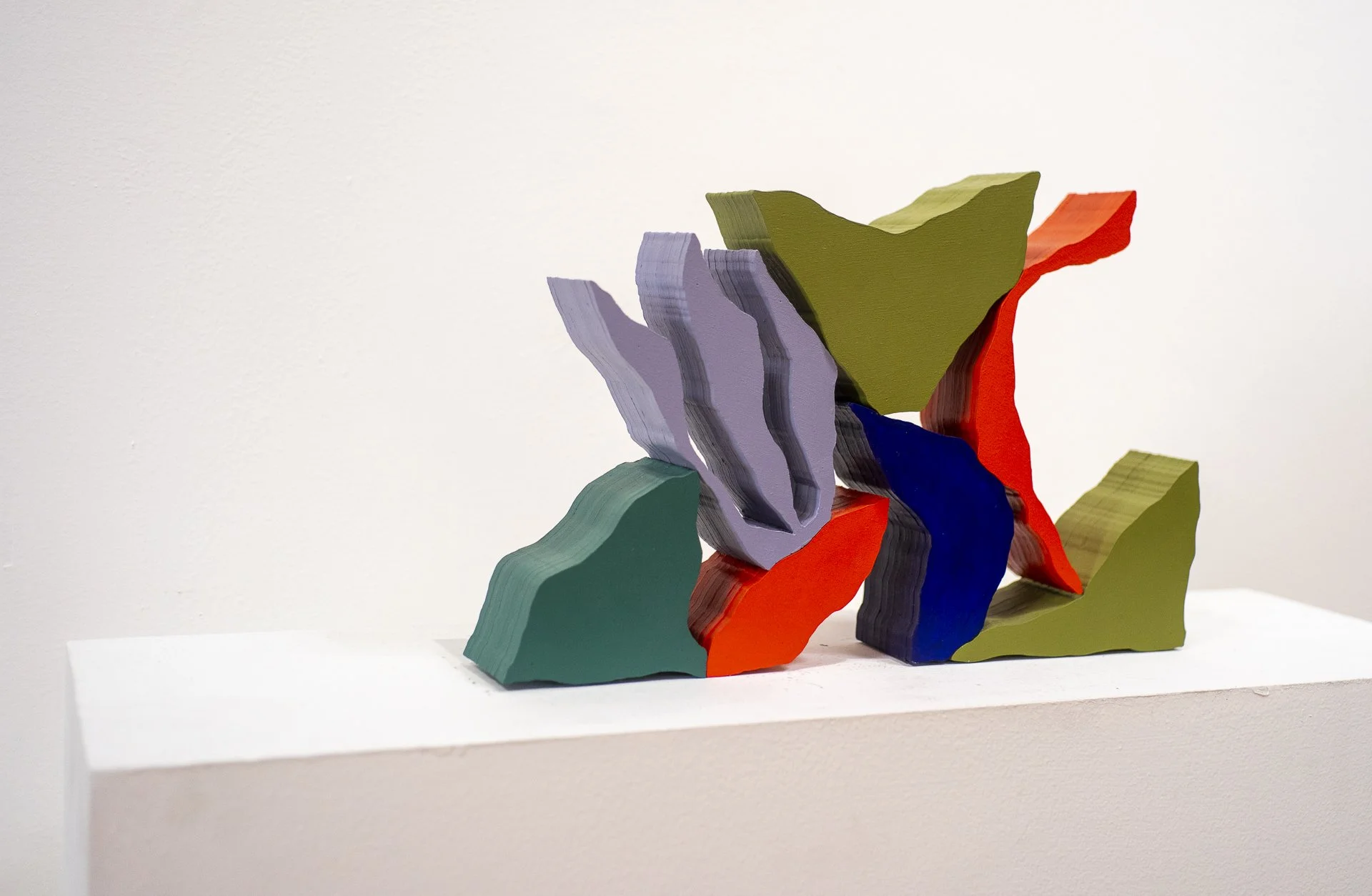
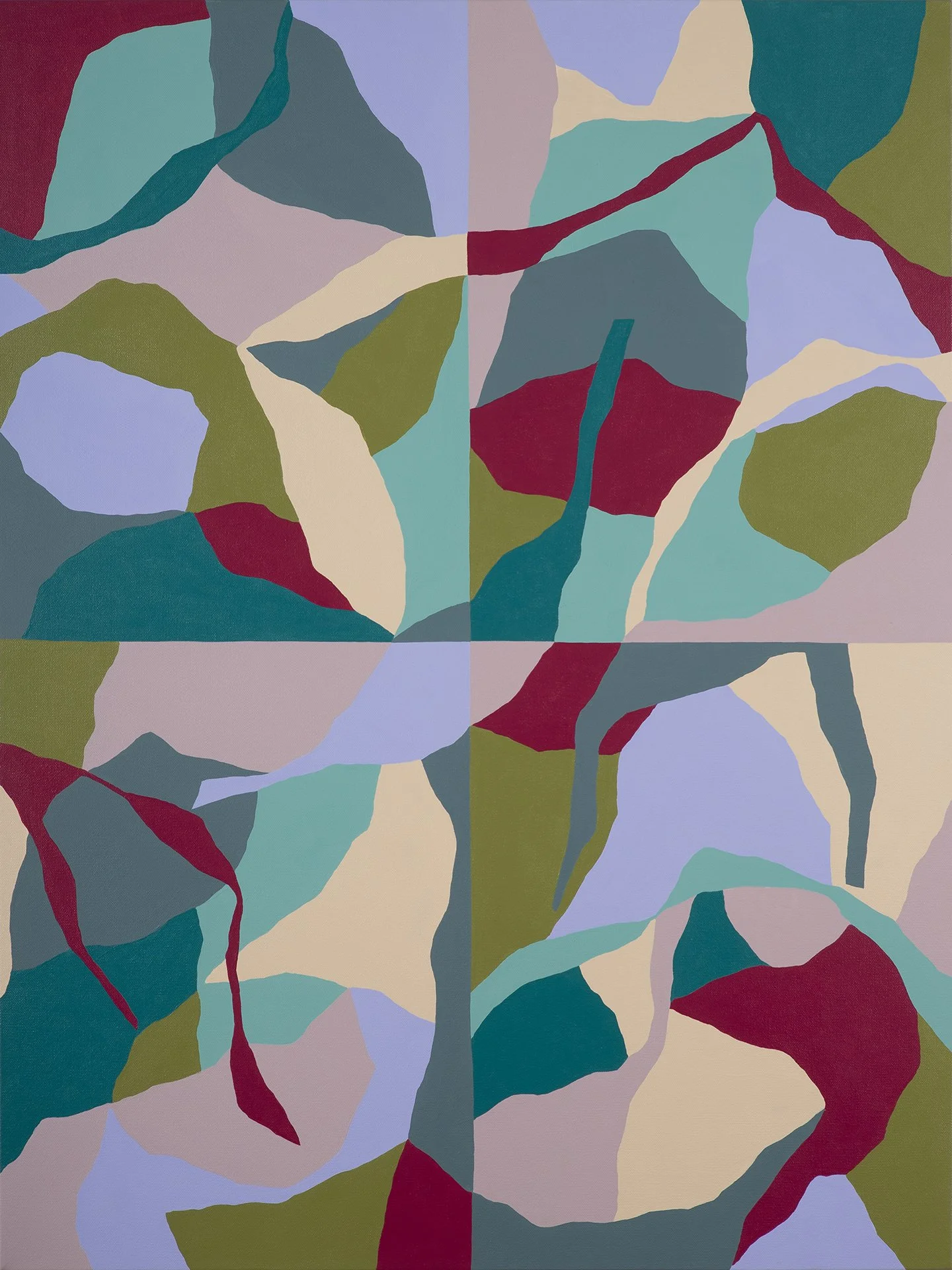
The color palettes Fernanda implores remain consistent across her body of work without feeling recycled, repeated or redundant. I always find a new pop of color contrast or color combination in each painting that makes me eager to see what she does next or how she will integrate and re-invent similar colors in a new fashion. This last week I was photographing her work in my studio and I stepped in close to ‘It’s Been A While’ to investigate a curious blue or green hue and it literally gave me chills at how beautiful I found it.
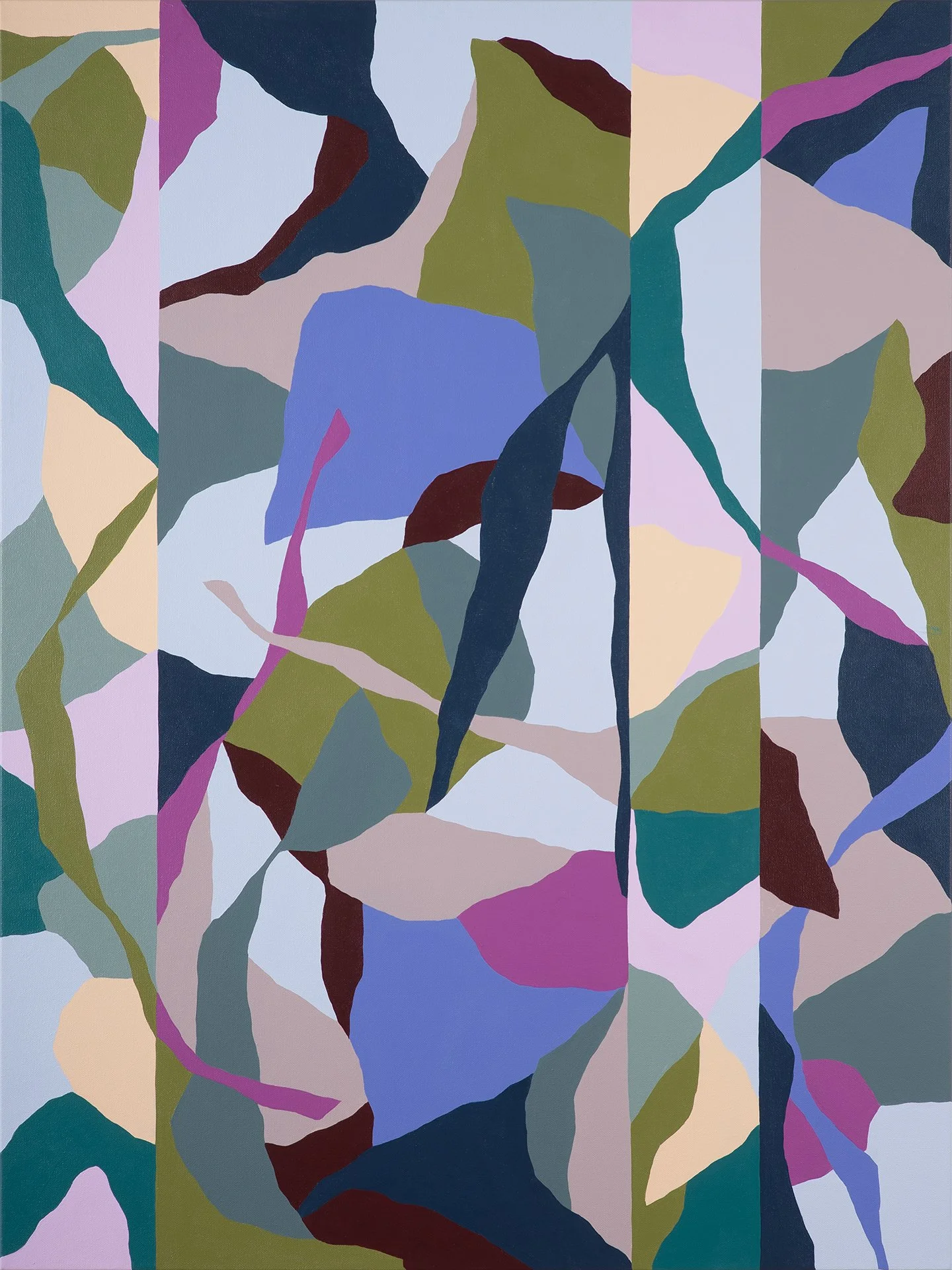
“It’s Been A While’ by Fernanda Martinez. 30” x 40” 2026
Interview
What is the first thing you do when you get into the studio?
The first thing I do when I get to the studio is turn on the lights, put on my painting clothes and choose my audio selections for the day, this includes one or two episodes of any podcast or a music playlist.
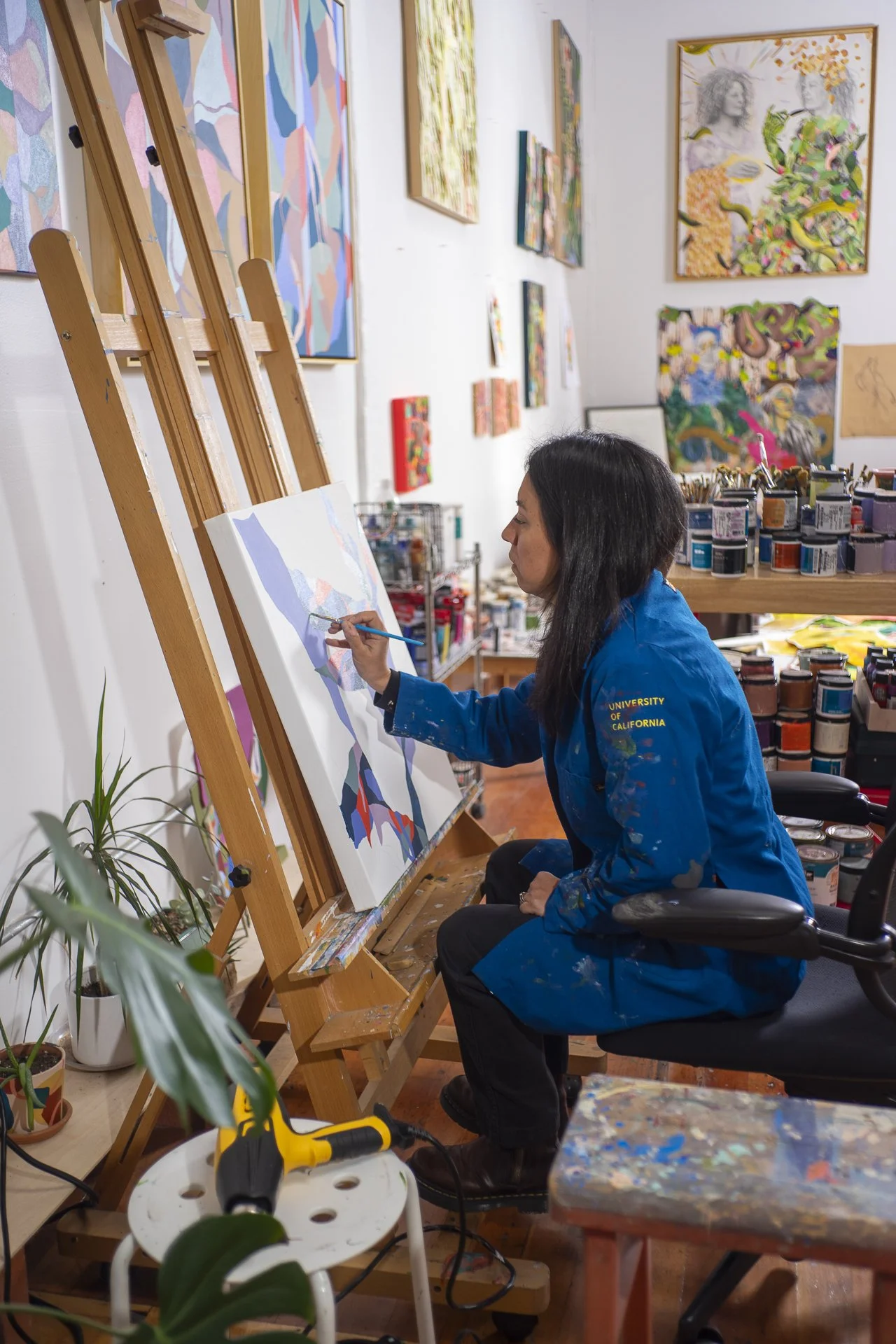
Fernanda works primarily in acrylic and usually on this specific easel or flat on a table. She prefers to work on multiple series simultaneously so the work and style remains consistent across different mediums or works.
What influence did growing up in Mexico City have on your art?
I see the influence of my Mexican heritage throughout my work, and it’s becoming more evident as my practice evolves. When I first began painting, I focused on recreating cherished memories of lush spaces and flora, rendering them with great detail, particularly in the foliage and greenery that dominated my early illustrations. As my practice develops; repetition, pattern, and vibrant color have emerged as recurring elements, echoing the textiles and fabrics I grew up admiring in my surroundings.
Today, I am certain that the folk themes and traditional aspects of Mexican culture continue to inform my work as I experiment with new techniques and mediums.
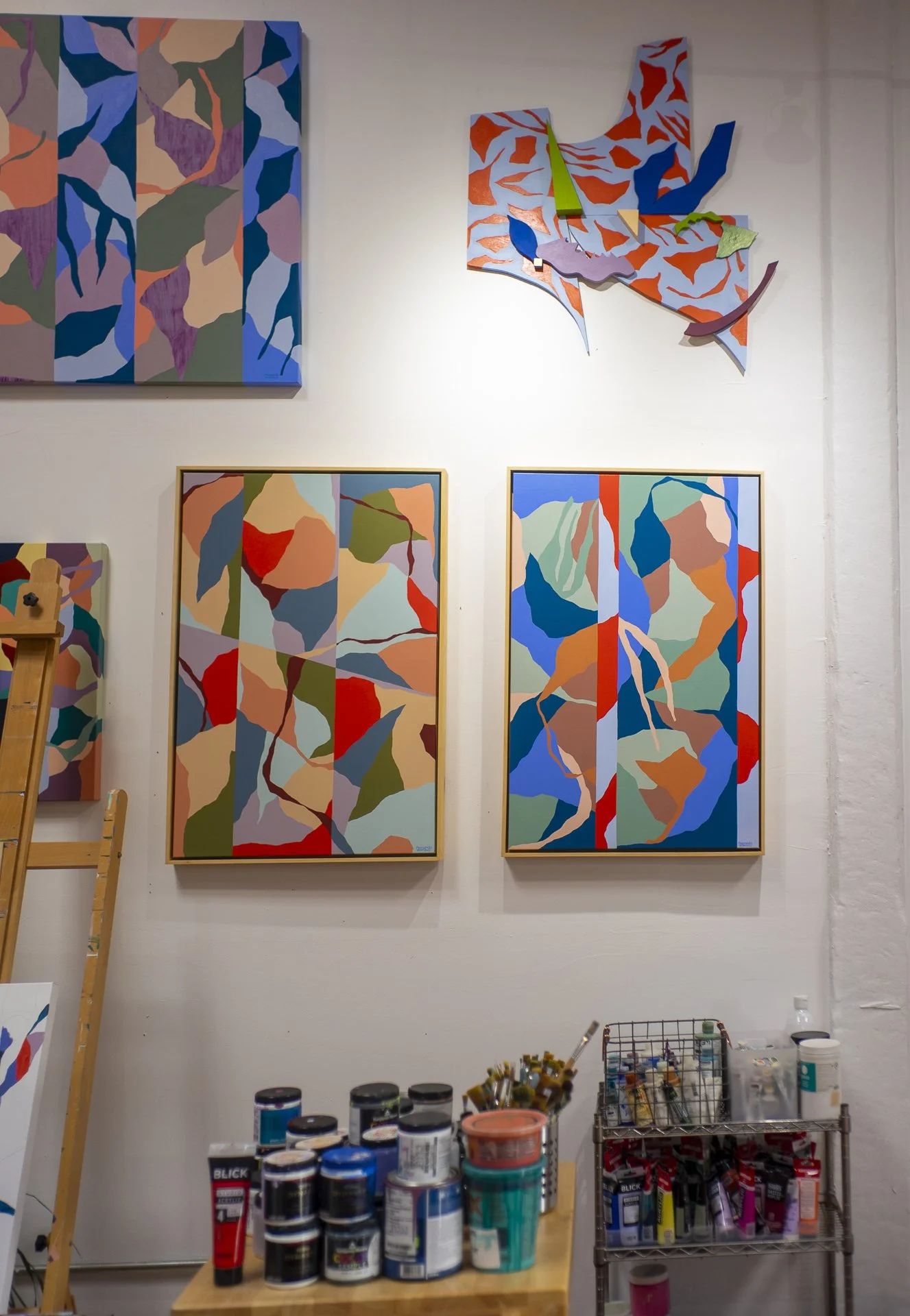
There are some interesting and recurring organic shapes and patterns in your art. Where do those come from and do they hold any personal significance for you?
These plant-like, organic shapes have become something of a signature in my work. They are largely inspired by real plants and other natural elements, though some forms appear familiar while others are intentionally unfamiliar.
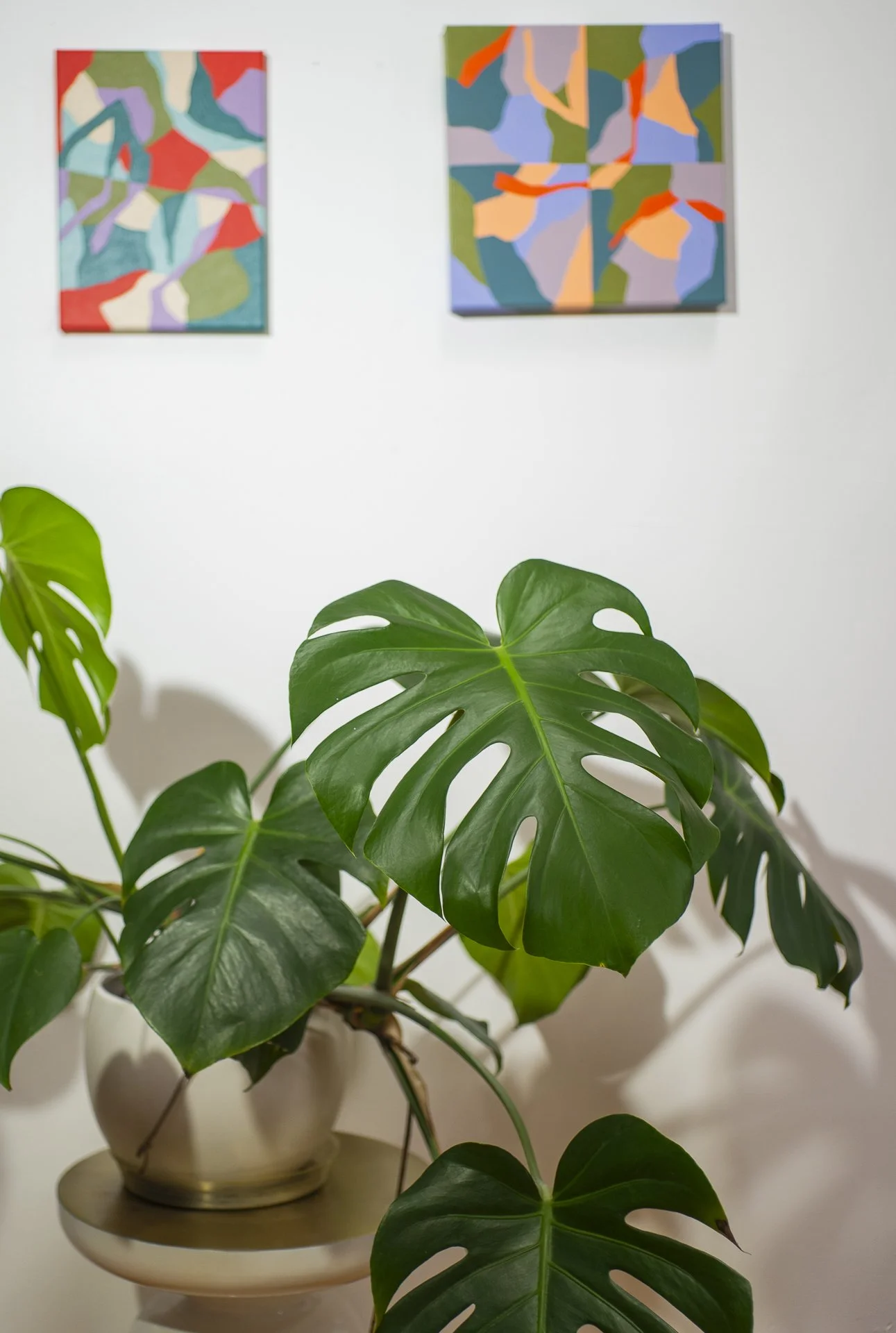
All of these shapes emerge from drawings and sketches developed through my daily practice. My aim is to encourage viewers to look beyond recognizable forms, paying close attention to detail and observing the relationships within the composition. These spaces are inspired by my everyday observations, yet they are also shaped by invented elements that offer a new way of representing reality.
You mentioned photography, a rather representational medium, as an inspiration for your abstract paintings. As a painter how does photography influence your work?
I was first introduced to photography in college, and since then it has become a subject of interest. Photography has trained my eye to observe with greater curiosity and attention to detail, fostering an almost obsessive focus on visual composition. While I do not work in a realistic painting style, I am highly attuned to color, and I use photography as a significant influence, both as a source of creative inspiration and as a way to generate subjects and narratives within my paintings.
As an artist working in abstraction, are there themes, subjects or motifs you’re exploring in your paintings or while you’re creating them?
There are some recurring themes in my paintings, such as nature and elements from nature, landscapes, invented spaces; but also, urban spaces interacting within these spaces. My main sources of inspiration come from daily life, changing seasons, the urban landscapes and the architectural surroundings.
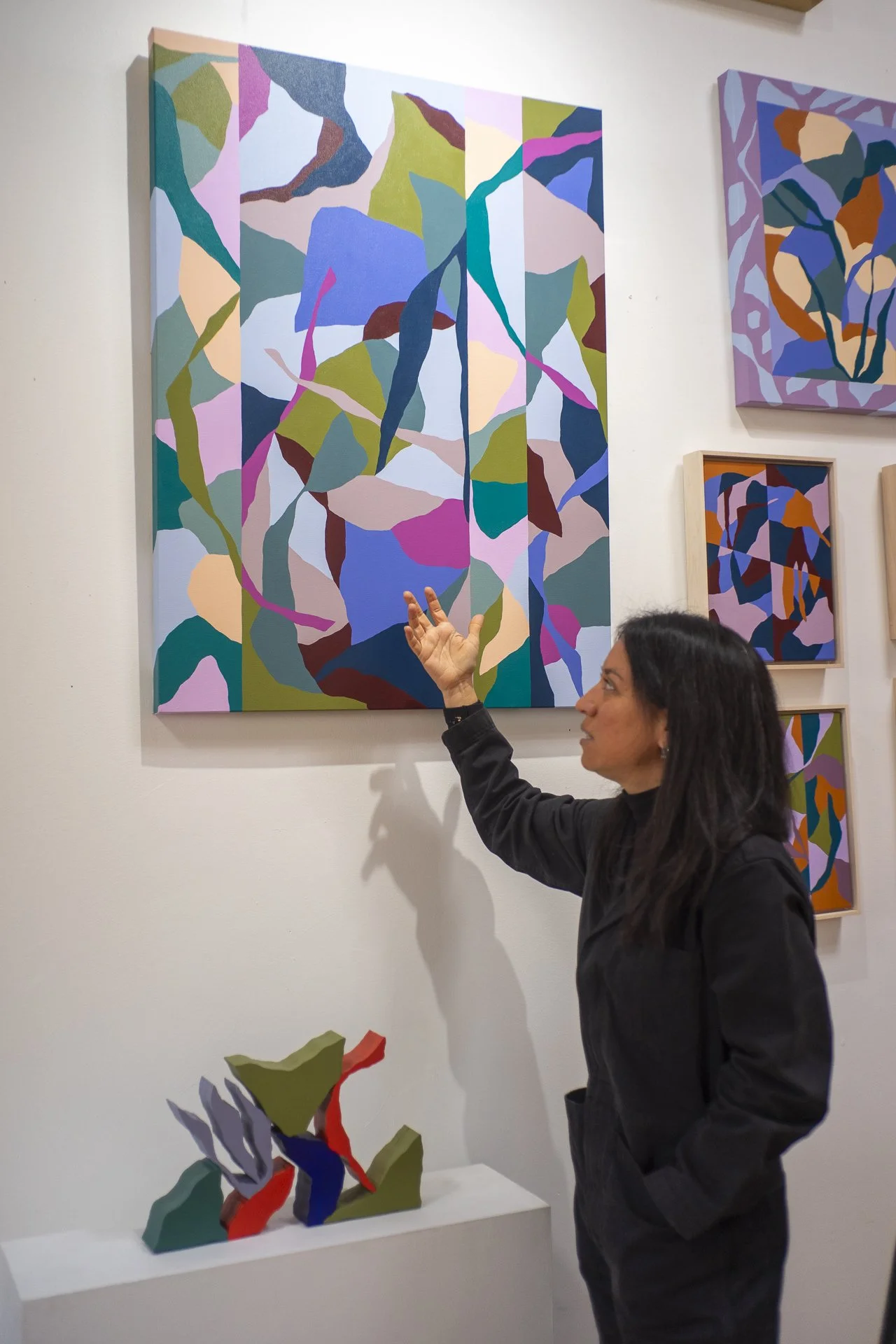
I love the contrast and colorblocking in your paintings. How do you choose the color palettes for your paintings?
Color is one of the most important elements in my work, often guiding a painting even before I begin drafting it. Over time, I have developed a fascination with pairing rare or less commonly used colors alongside bright, vibrant hues that are widely appealing to viewers. There is no hidden formula behind this approach, only a curiosity to explore unconventional color combinations and palettes that support the creation of new narratives.
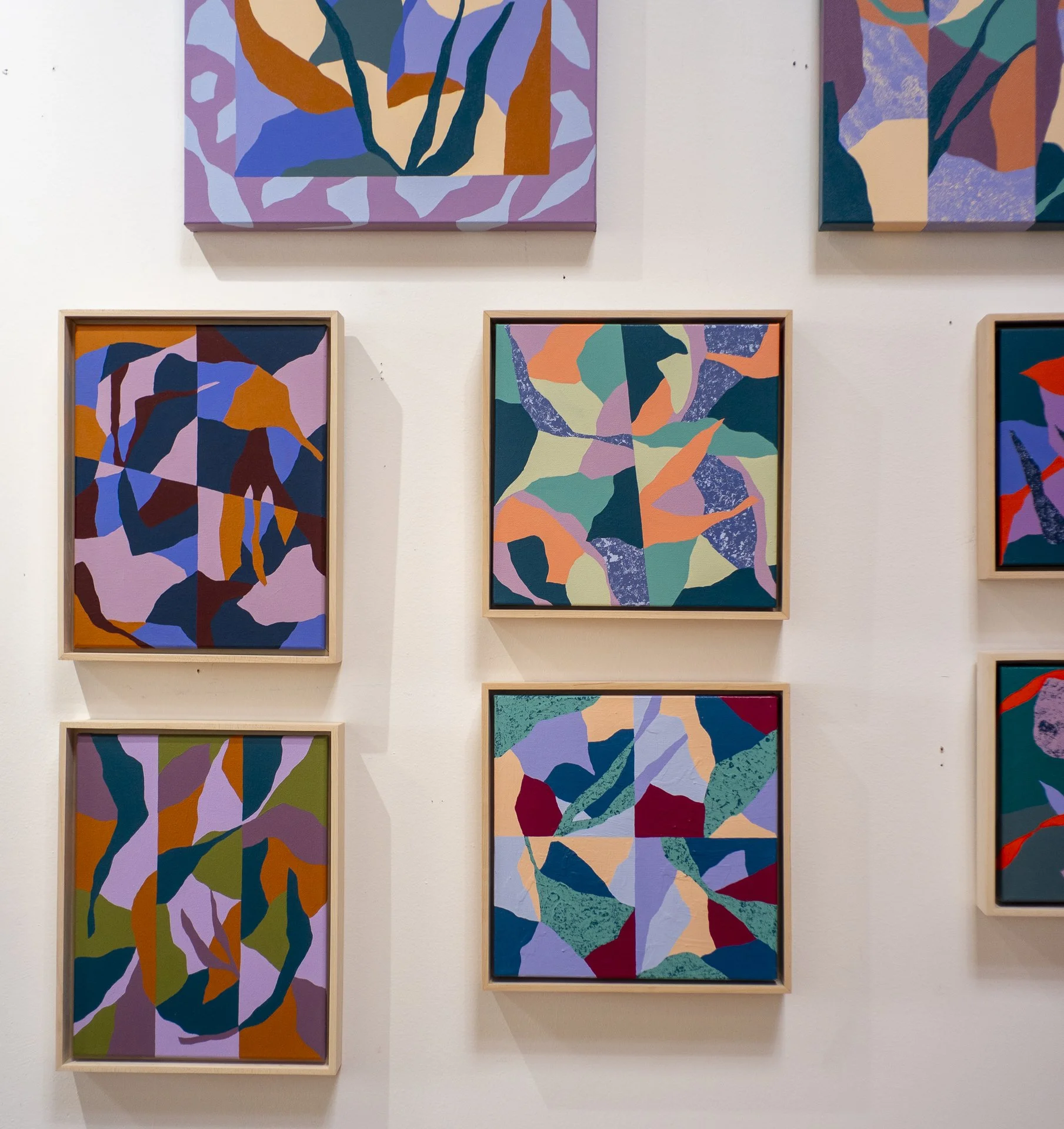
I’ve seen quite a few businesses around Oakland with your recognizable mural style adorning their facades. How did you make the transition from canvases to walls and what challenges do you look forward to when your work goes big
The transition from canvases to walls happened quickly after I began painting, perhaps inspired by the many remarkable murals in our city. I was driven by curiosity to translate my work to a larger scale, not just to adorn commercial facades, but to inspire the communities around them.
Working at this scale brings many challenges: managing large budgets, sourcing materials, leading a team of assistants, navigating equipment failures, coping with weather, and securing permits. The biggest lesson I’ve learned is that the act of painting itself is often the smallest challenge in large-scale projects.
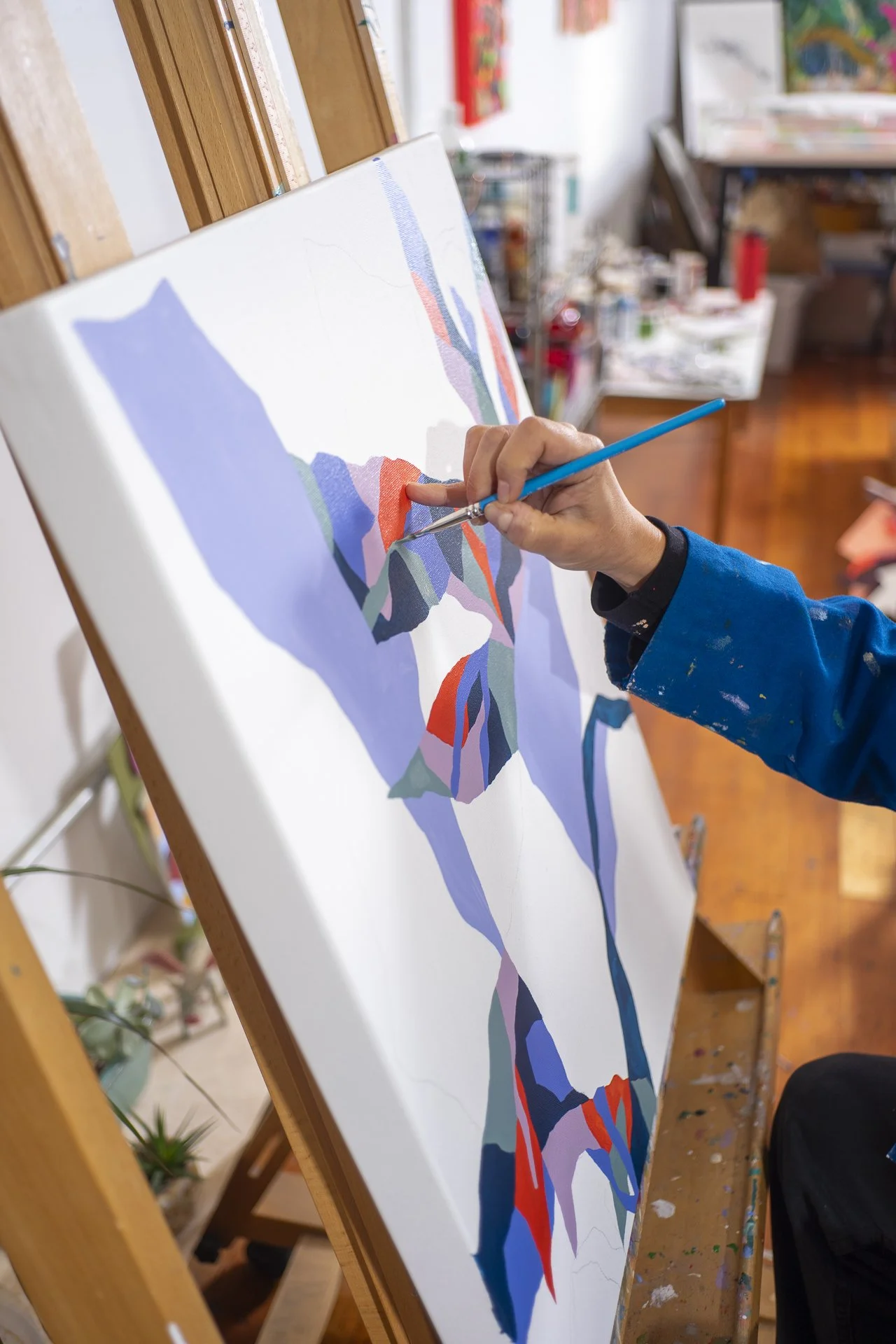
There is a sense of balance in your compositions, both on canvas and in your murals. Do you have a technique you use consistently to establish clean visual order in your works?
The balance and order in my work likely reflect both my environment and my mental state. I cannot say this is something that permeates every aspect of my life, but it does represent a constant pursuit of comfort and stability that I, as a human, seek.
When it comes to translating this sense of order into my practice, several techniques are vital. Sketching keeps ideas flowing, and working on multiple projects simultaneously allows them to inform one another. For example, designing for a commercial project lets me experiment with scale and materials, which later inspires my studio work, and vice versa.
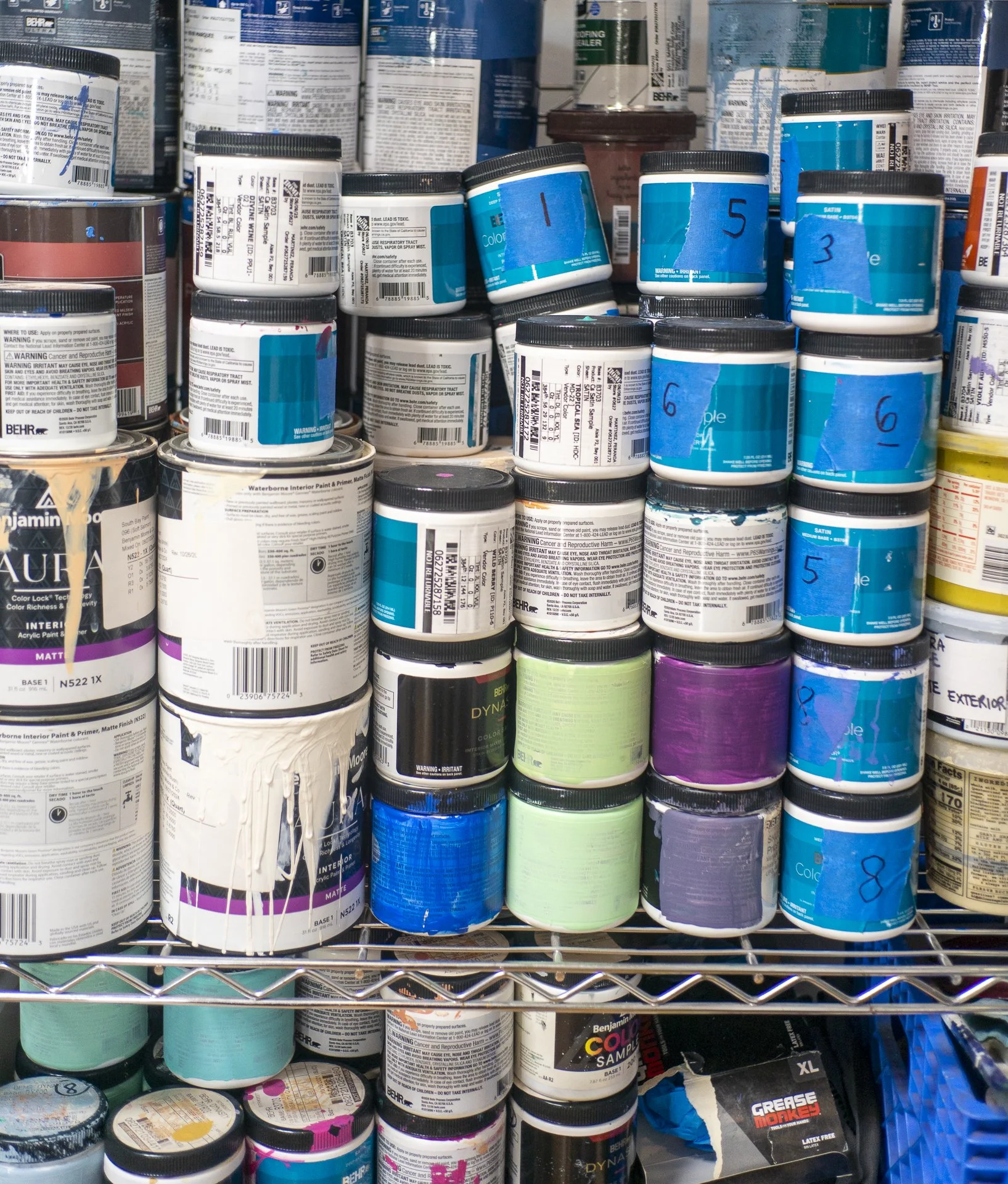
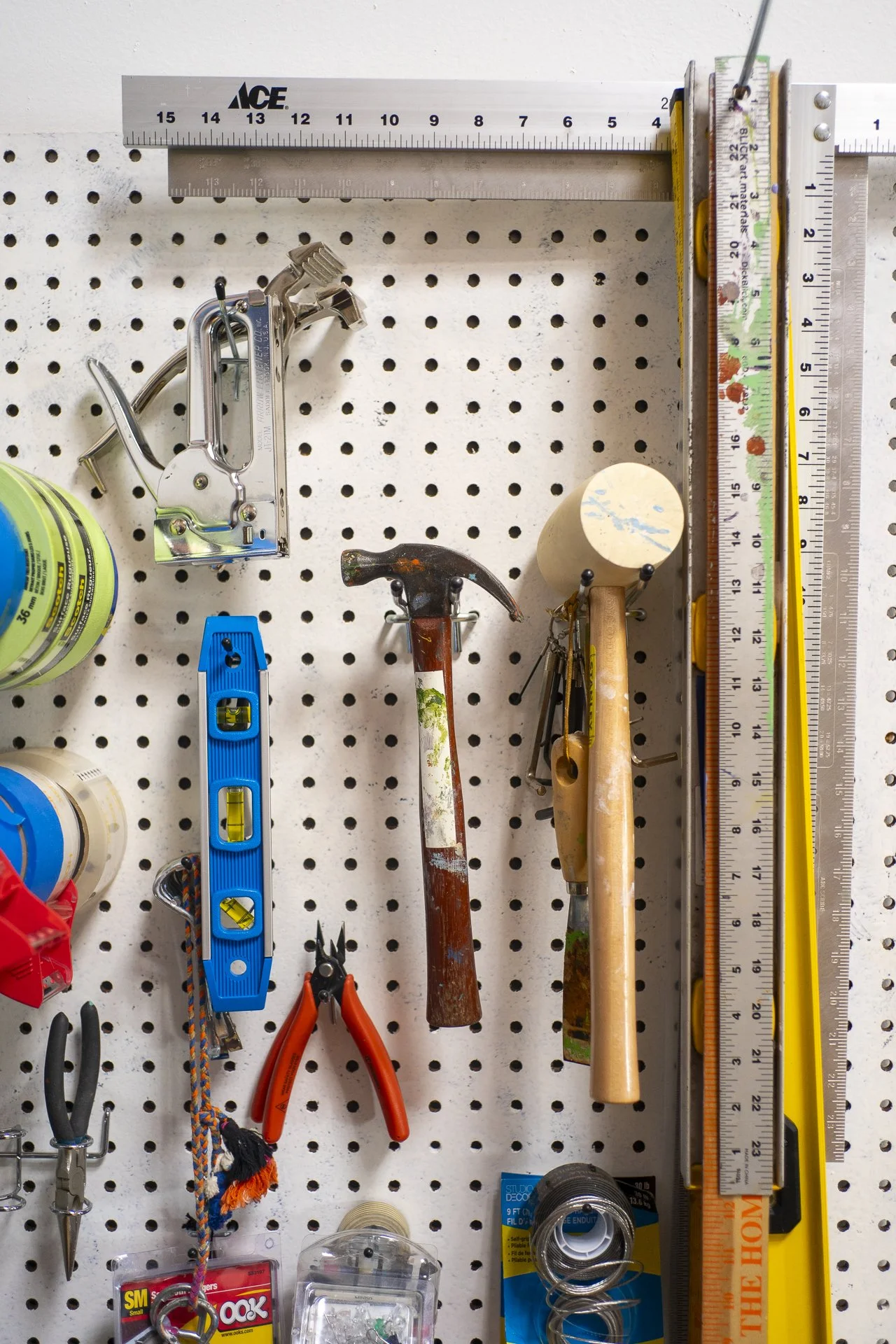
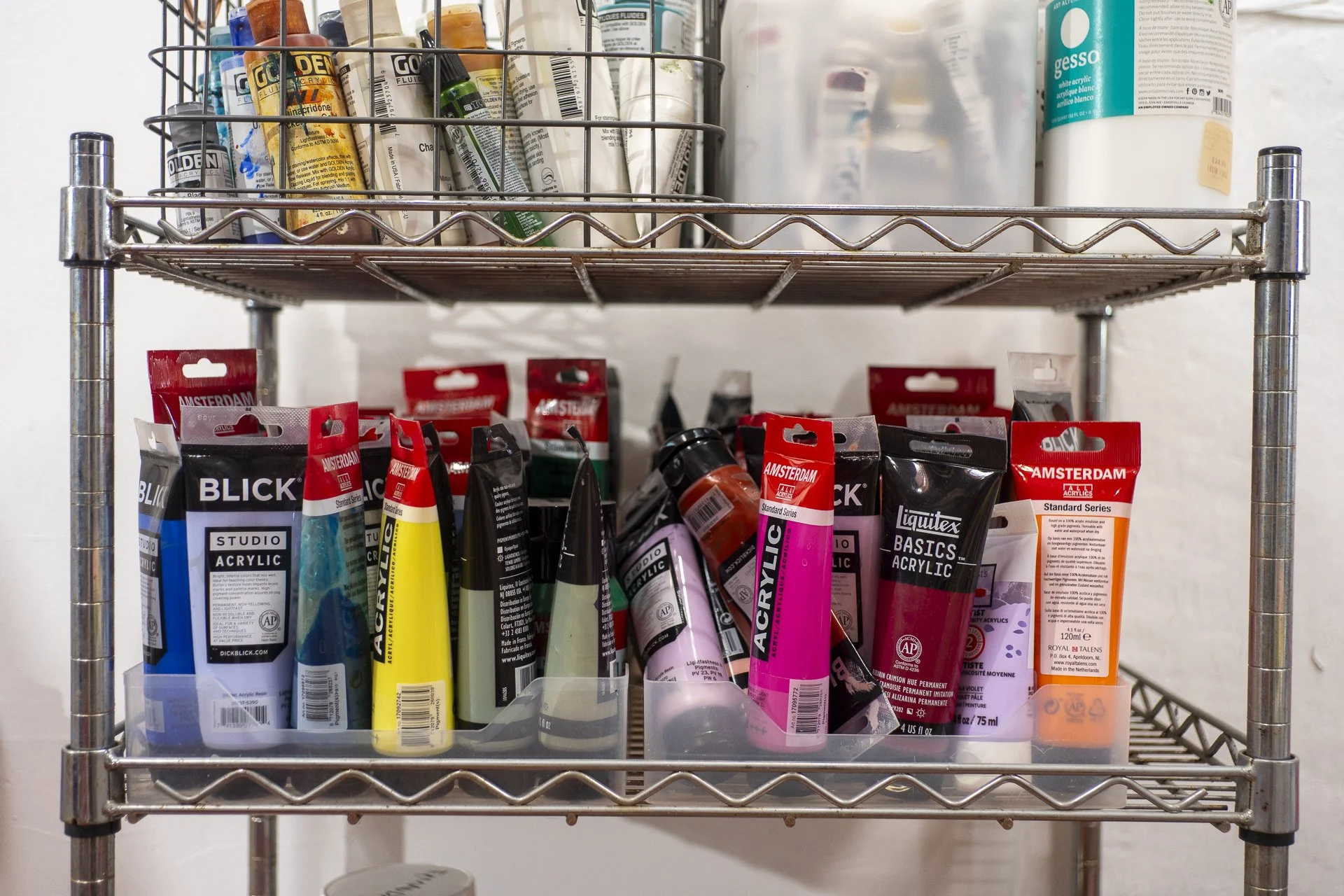
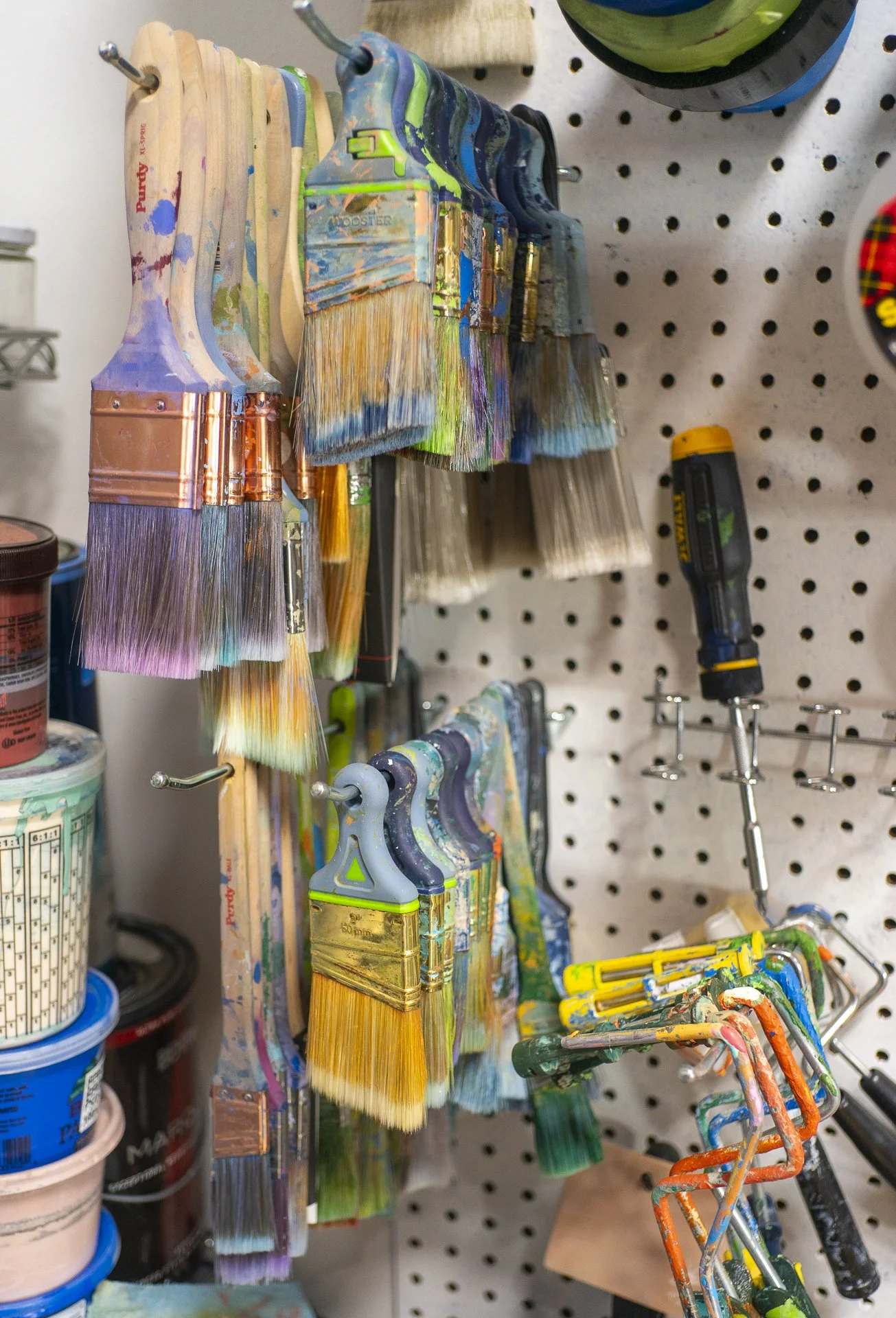
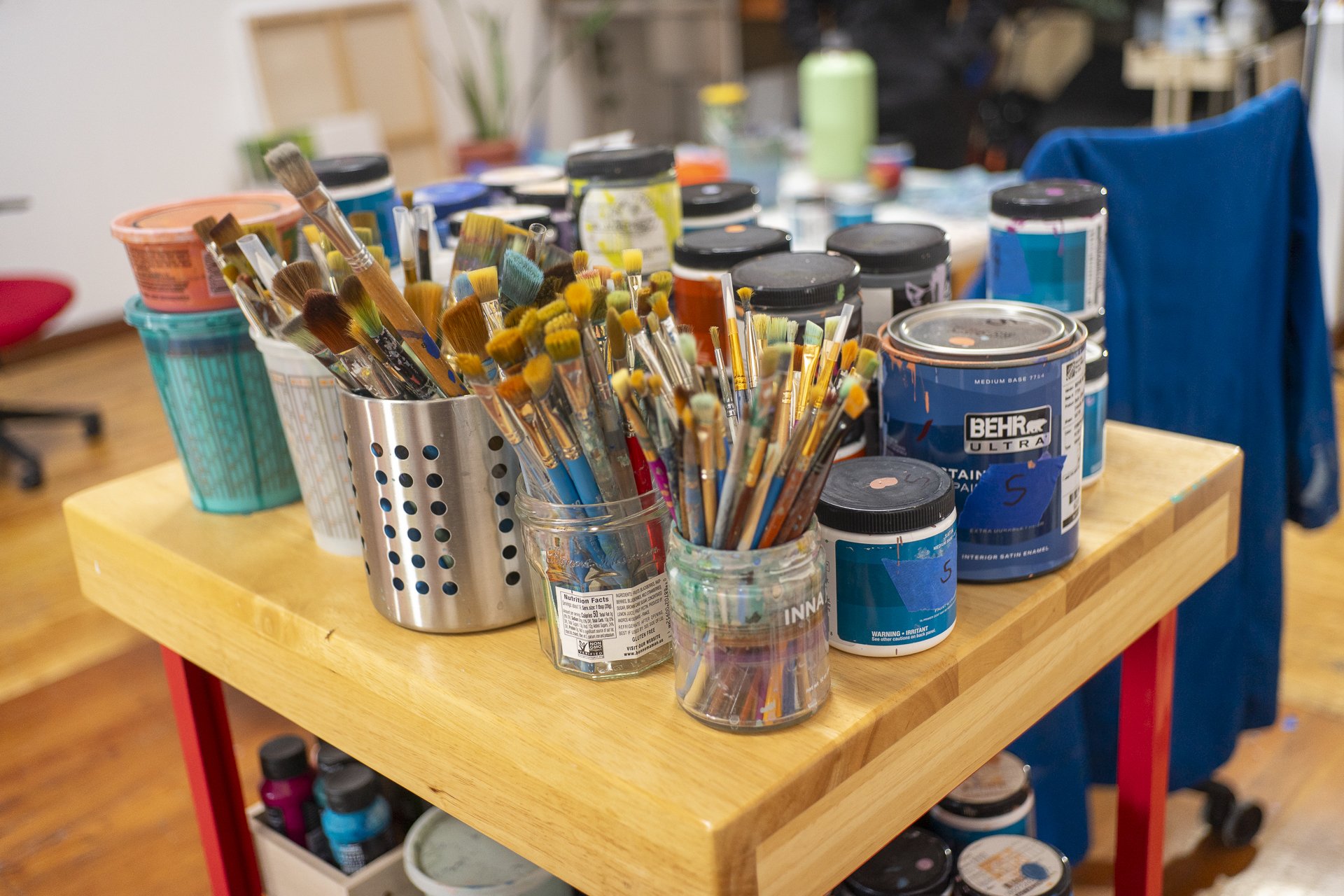
I often work in series or collections, which helps me focus on larger concepts and explore ideas across multiple pieces at once. This approach doesn’t limit my creativity; instead, it allows me to create a cohesive whole from individual paintings. I also maintain a certain organization with the paints and materials I use on ongoing projects, so I can return to them easily whenever needed.
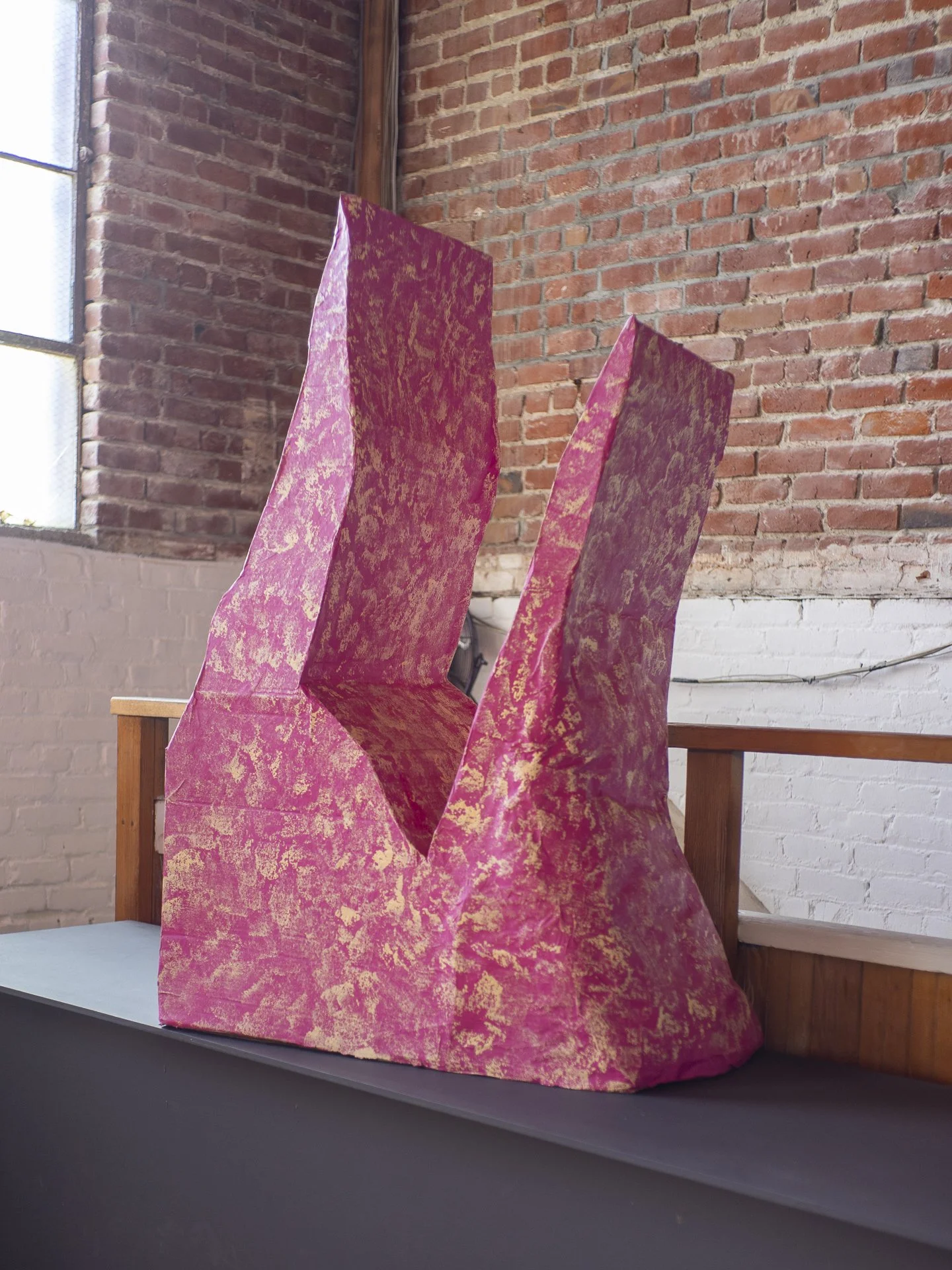
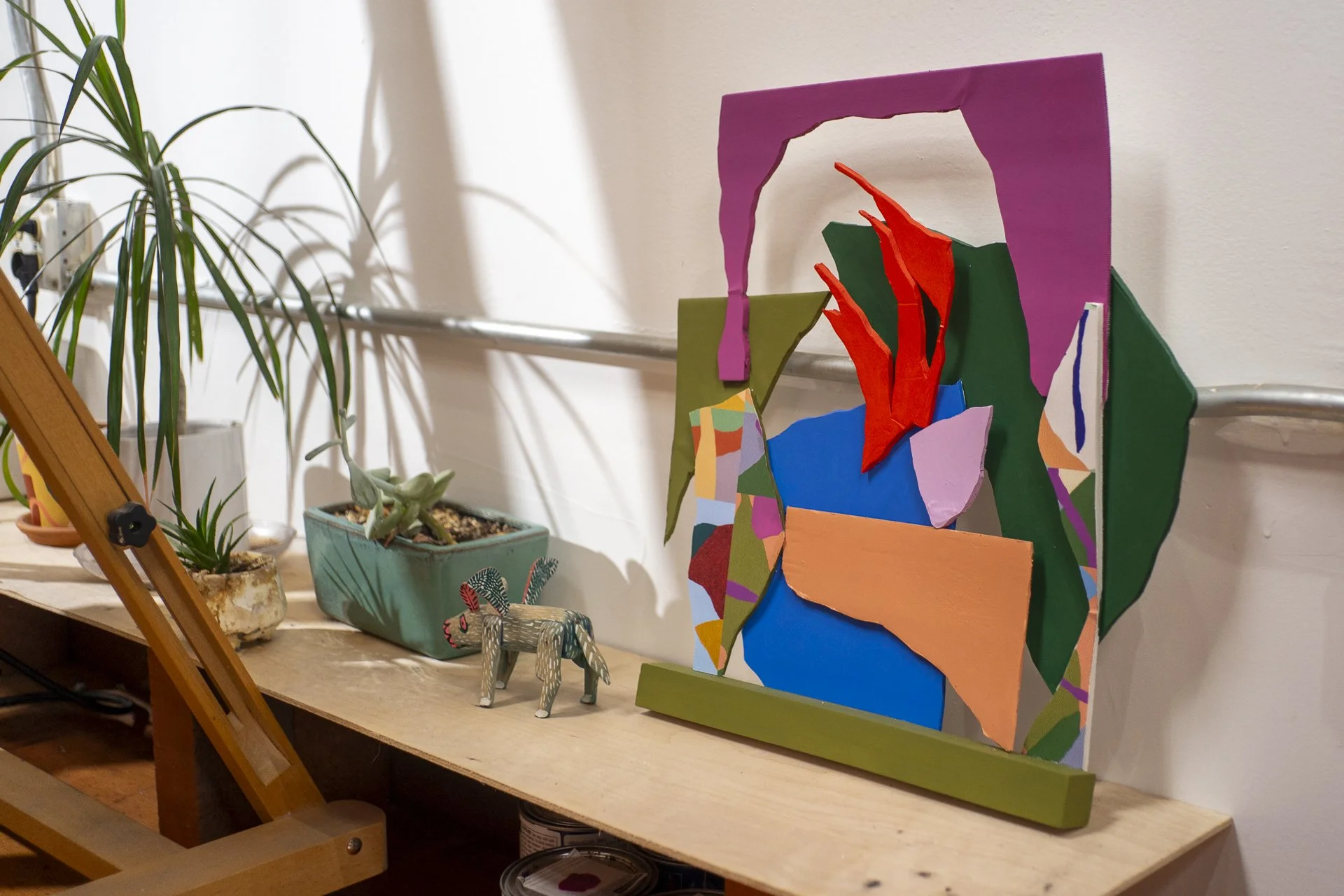
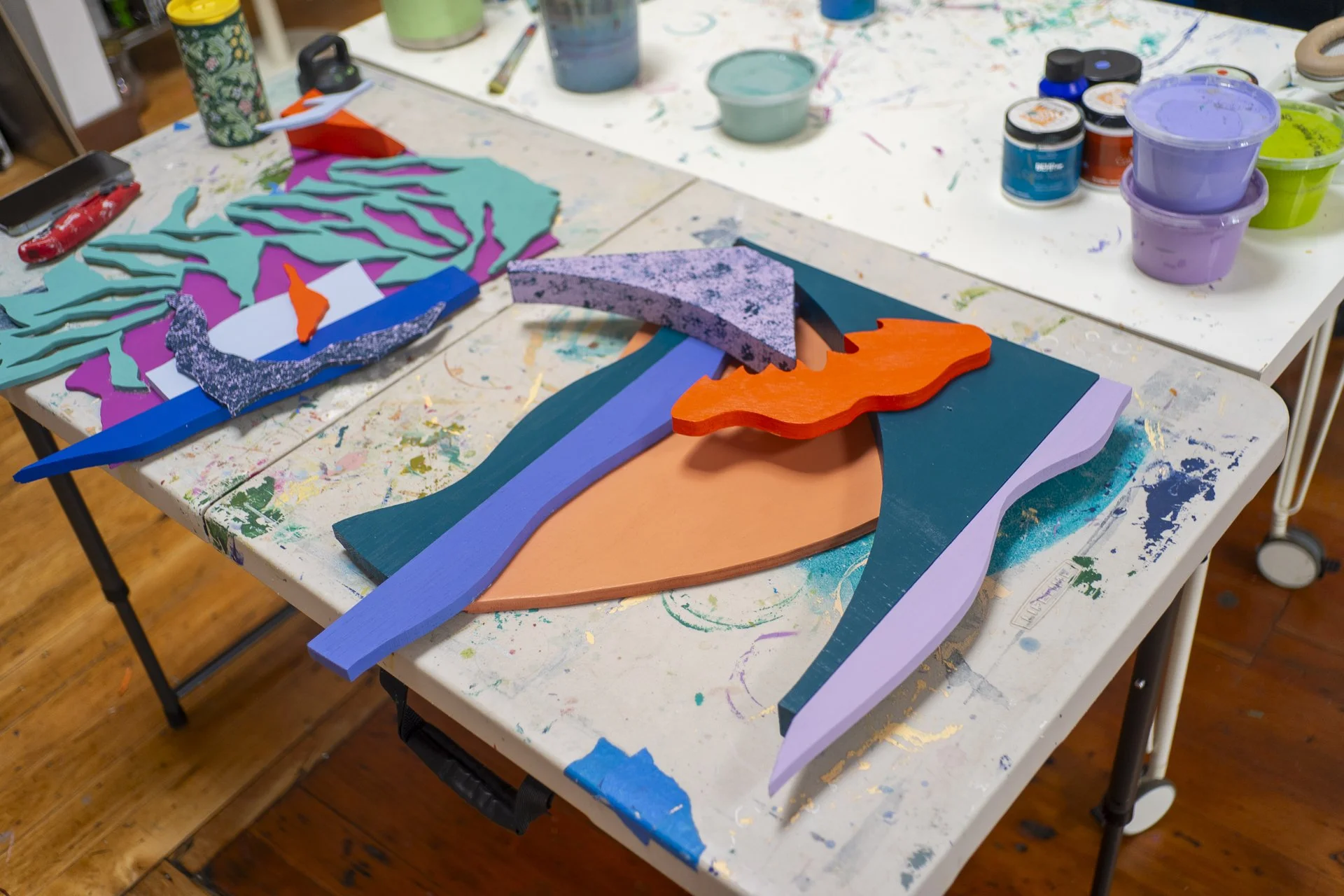
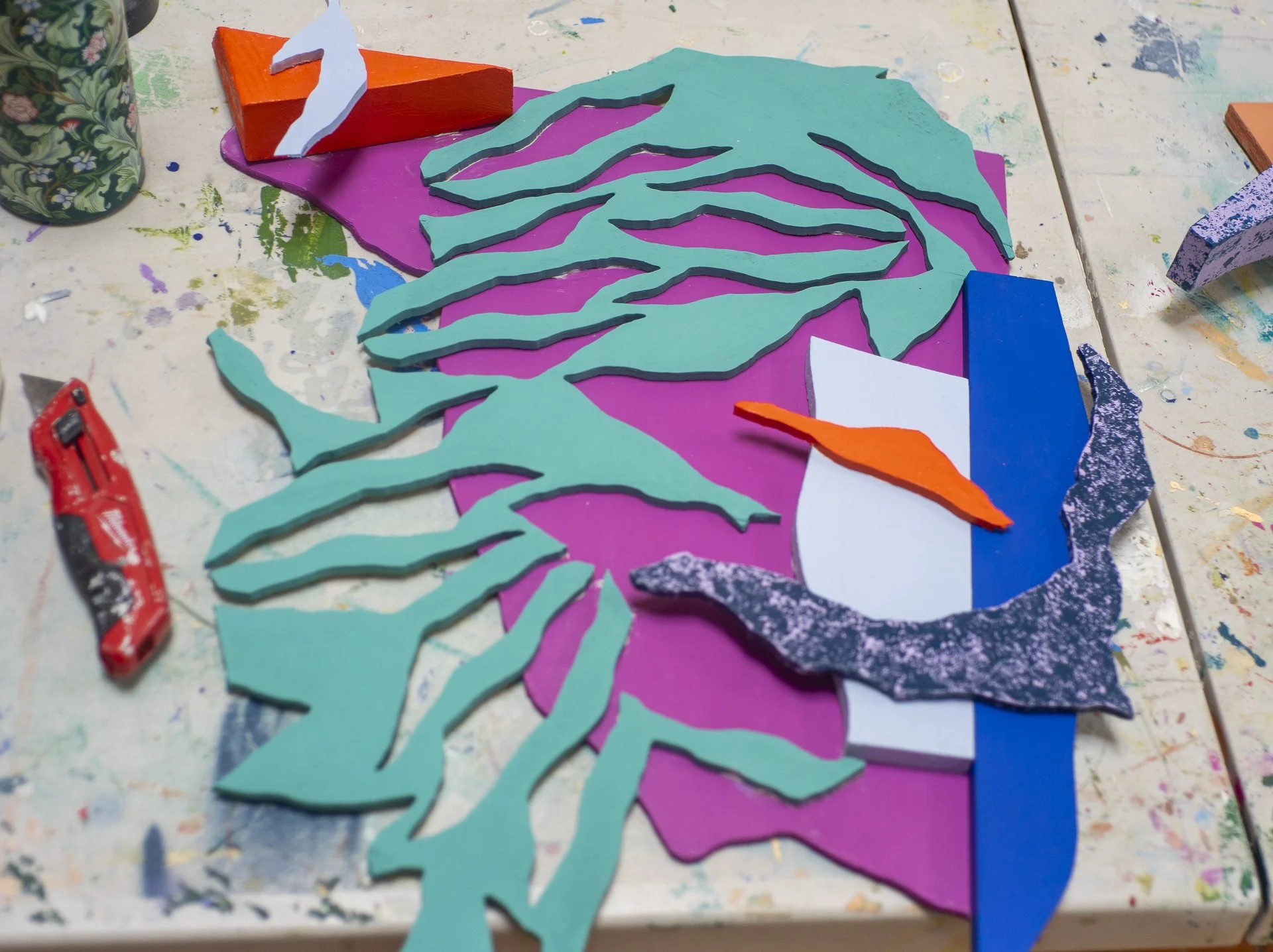
You’ve been branching out of painting and creating sculptures in your recognizable style of work, translating the shapes and colors into assemblages and large sculptures. How did you get interested in this medium and what does it bring to your art process?
I began making sculptures about three years ago, with the simple goal of translating my distinctive shapes into three-dimensional forms and creating prototypes that could serve as models for future public art projects.
After producing a few pieces and experimenting with different materials, I realized that sculpture pushes my creativity and challenges me to refine my compositions. Working with a variety of materials allows me to explore concepts that are new to my painting practice, while continuous inspiration from other disciplines such as architecture and design, feeds back into both my studio work and my murals.
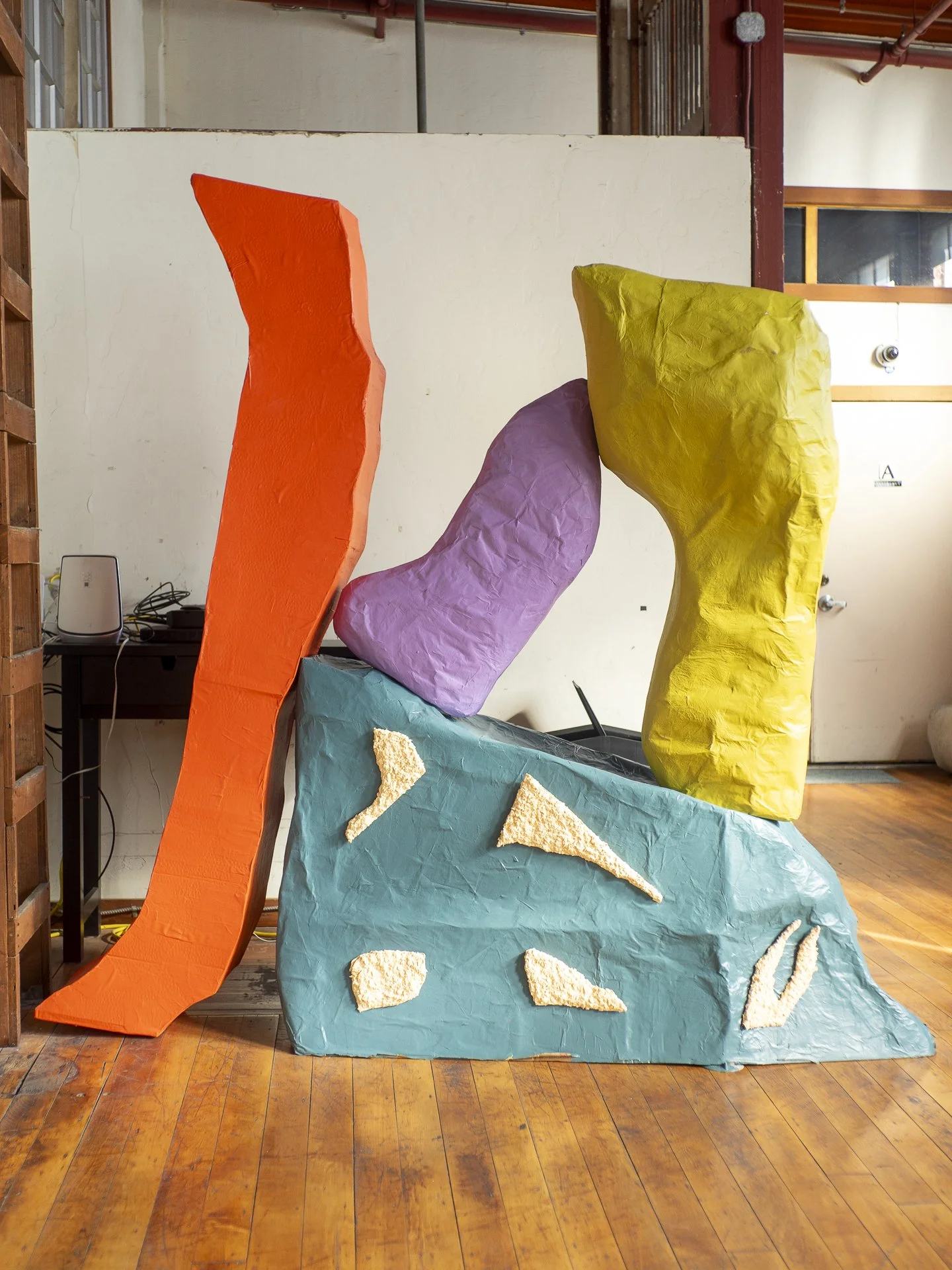
Can you tell the readers a bit about your recent experience with the residency at Rotten City Cultural District in Emeryville and what you plan to do with the large scale sculptures you made there?
The residency with the Rotten City Cultural District in Emeryville, in partnership with ABG Projects, was an incredibly valuable experience for me. It provided a month-long studio and exhibition space that I could use freely. I chose to display some of my existing works while dedicating half of the space as a working studio to create large-scale sculptures from recycled materials.
I worked with recycled materials not only because they were readily available in the commercial space, but also due to the limitations of working indoors, the one-month timeframe of the residency, and the practical considerations of moving the pieces afterward.
The residency culminated in a closing reception where I exhibited this new body of work. The experience allowed me to expand my experimental practice beyond my studio, learn new techniques and materials, and challenge myself to create on a large scale using materials I was largely unfamiliar with.
You share a studio with Carolynn Haydu and I can’t help seeing a visual connection between your two styles of work. How long have you been sharing a studio and can you describe how you two have influenced each other’s work and process?
Carolynn and I have shared studio space for almost three years. Before moving to The Loom, we knew each other briefly, but we also shared a studio in another warehouse in Oakland. I see Carolynn not only as a friend but also as an artist I deeply admire. I’m very fond of her work.
Sharing a studio with her has had a profound influence on the evolution of my own practice. Carolynn is an incredibly dedicated artist, and I’ve learned from her patience, commitment, and sustained focus on developing her art. It’s no wonder that visitors and friends often describe our studio as “cohesive” and a “great fit,” because there is a clear visual dialogue between our paintings in color, theme, and artistic exploration.
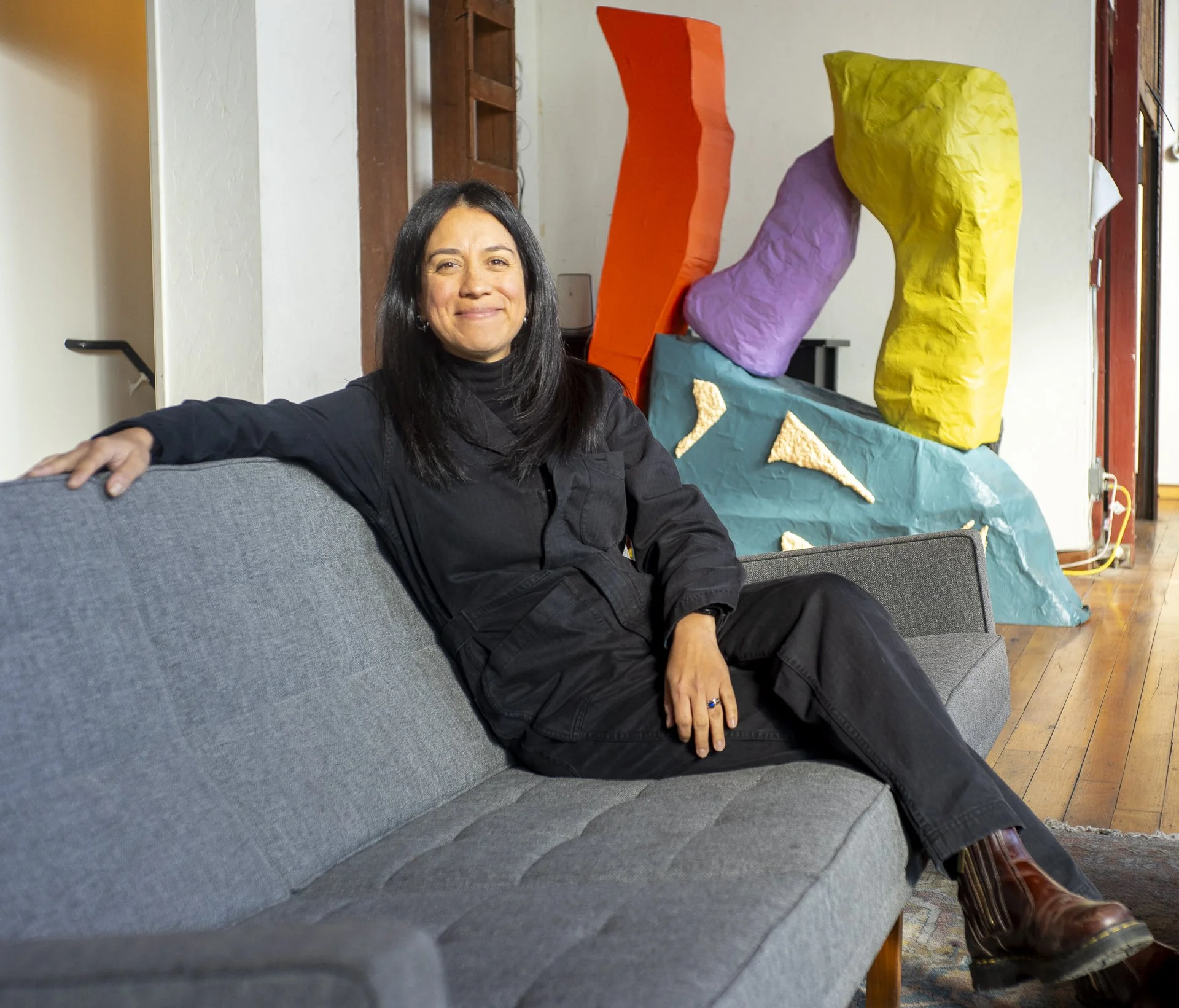
When you’re not making art, what do you do to unwind?
When I’m not making art, I enjoy spending time at home with my husband and our cat. Lately, I’ve been cooking more and experimenting with a high-protein diet. I also like walking around my neighborhood, which helps me organize my thoughts, and when the weather allows, I enjoy outdoor activities like tennis or running.
Visiting galleries and museums is another passion of mine. While it can sometimes feel like homework, I genuinely enjoy experiencing art in my free time. This year, I’m focusing on using my phone less at night and reading more books.
If you could choose to make art during any moment of art history or culture what would you choose?
I would choose the present time to make art. Making art in this era is crucial because the world is experiencing rapid and unprecedented changes. As artists, we have a unique ability to reflect, critique, and interpret these shifts in ways that provoke thought and inspire action. Art can certainly change our perspective of life, inspire and foster dialogue and creativity.
What is your take on the DIY art community in San Francisco and Oakland?
DIY should be taken more seriously. Our world is dominated by speed, efficiency, and mass production. Art reminds us to slow down, reflect, and value human experience and emotion. I strongly resonate with the idea of creating your own opportunities and connecting with your fellow artists to create a more sustainable art ecosystem outside of traditional institutions, making art more accessible and personal. I’m often moved by using unconventional methods, materials, and formats in my work that pushes boundaries of what art can be.
What is next for you?
I’m currently developing new work for my solo exhibition in March at Look West Gallery in San Rafael, CA. I also plan to kick off the mural season with a couple of large-scale projects, including commissions with the City of Mountain View and a private company constructing affordable housing units in South San Francisco.
In addition, I’m excited to continue exploring and expanding my sculpture practice, fabricating new pieces to propose for public art opportunities both nationally and internationally.
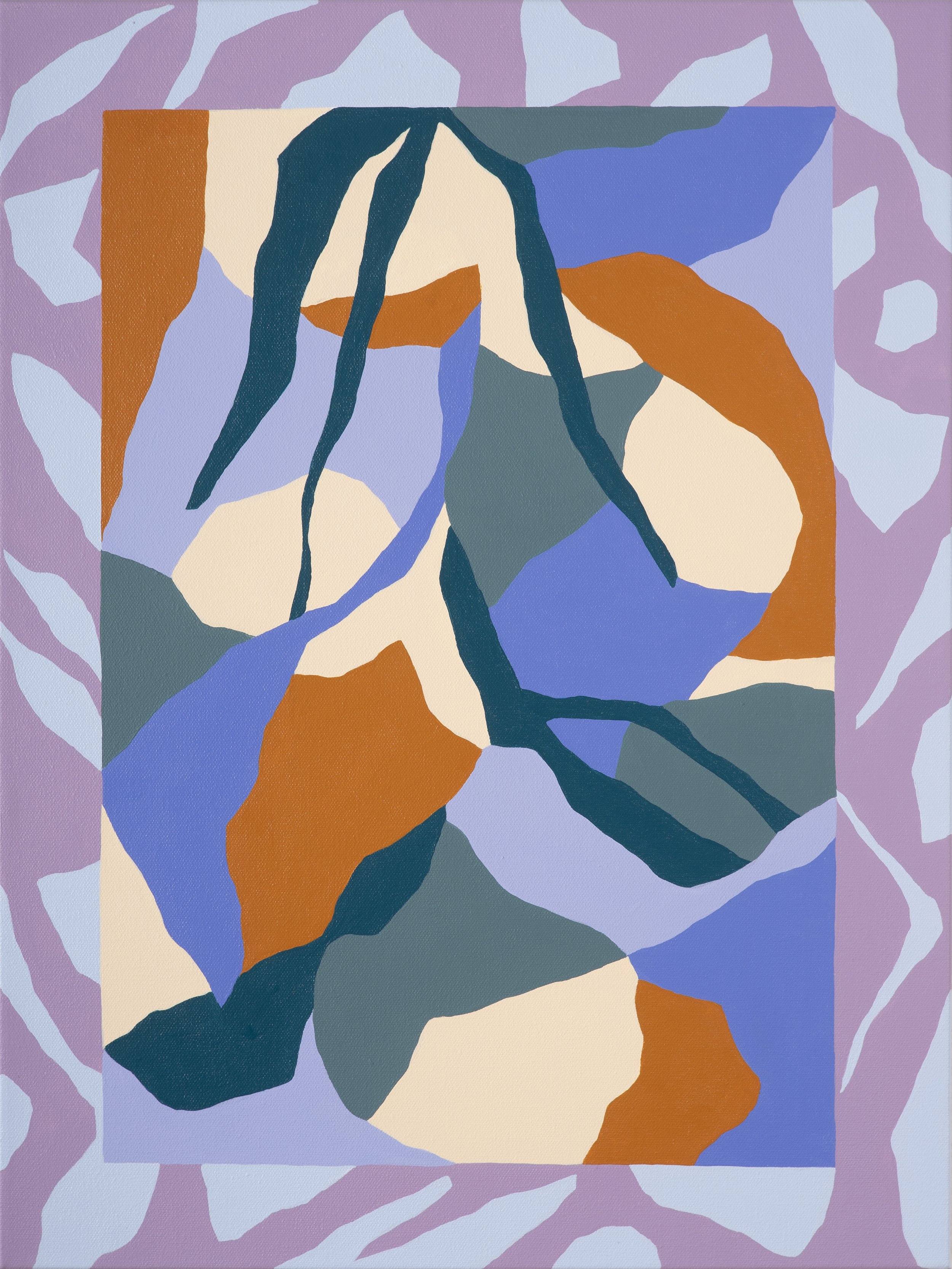
Fernanda Martinez’s work will be viewable as part of ‘Material Memory’ at Swig Bar and Art Gallery’s, January 16th from 5 - 9 PM.