Studio Visit & Interview With John Casey
Interview and Photographs by Brandon Joseph Baker
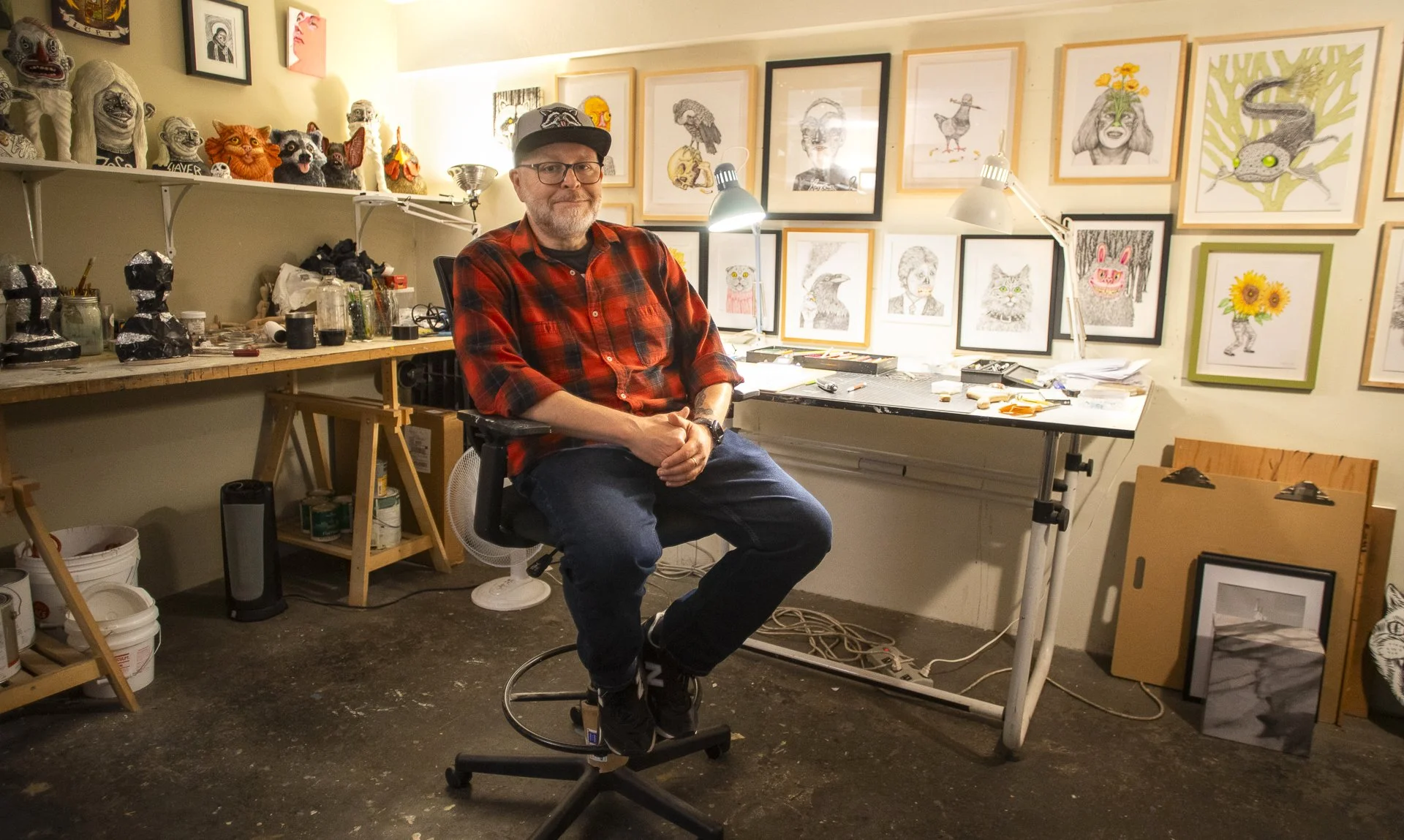
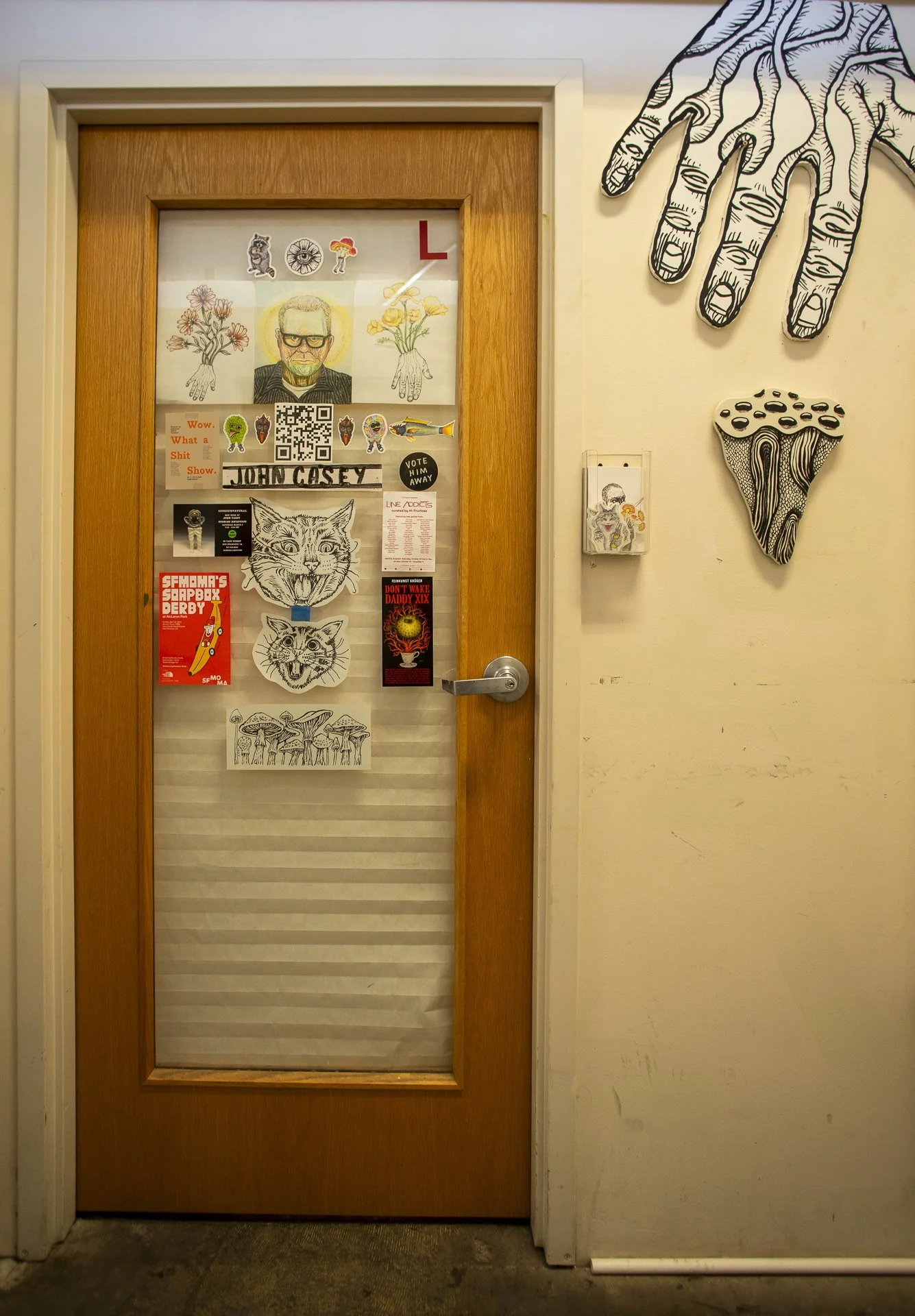
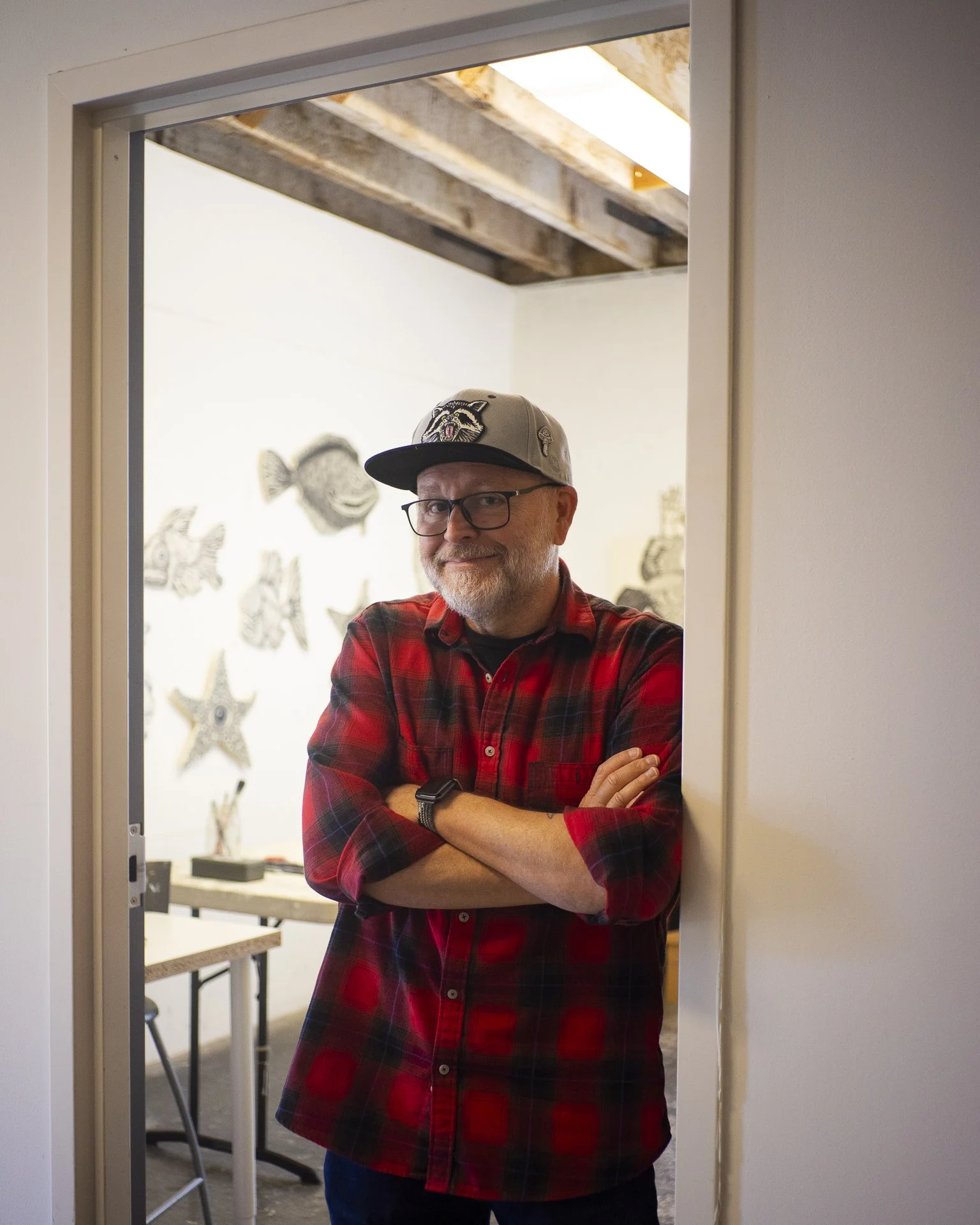
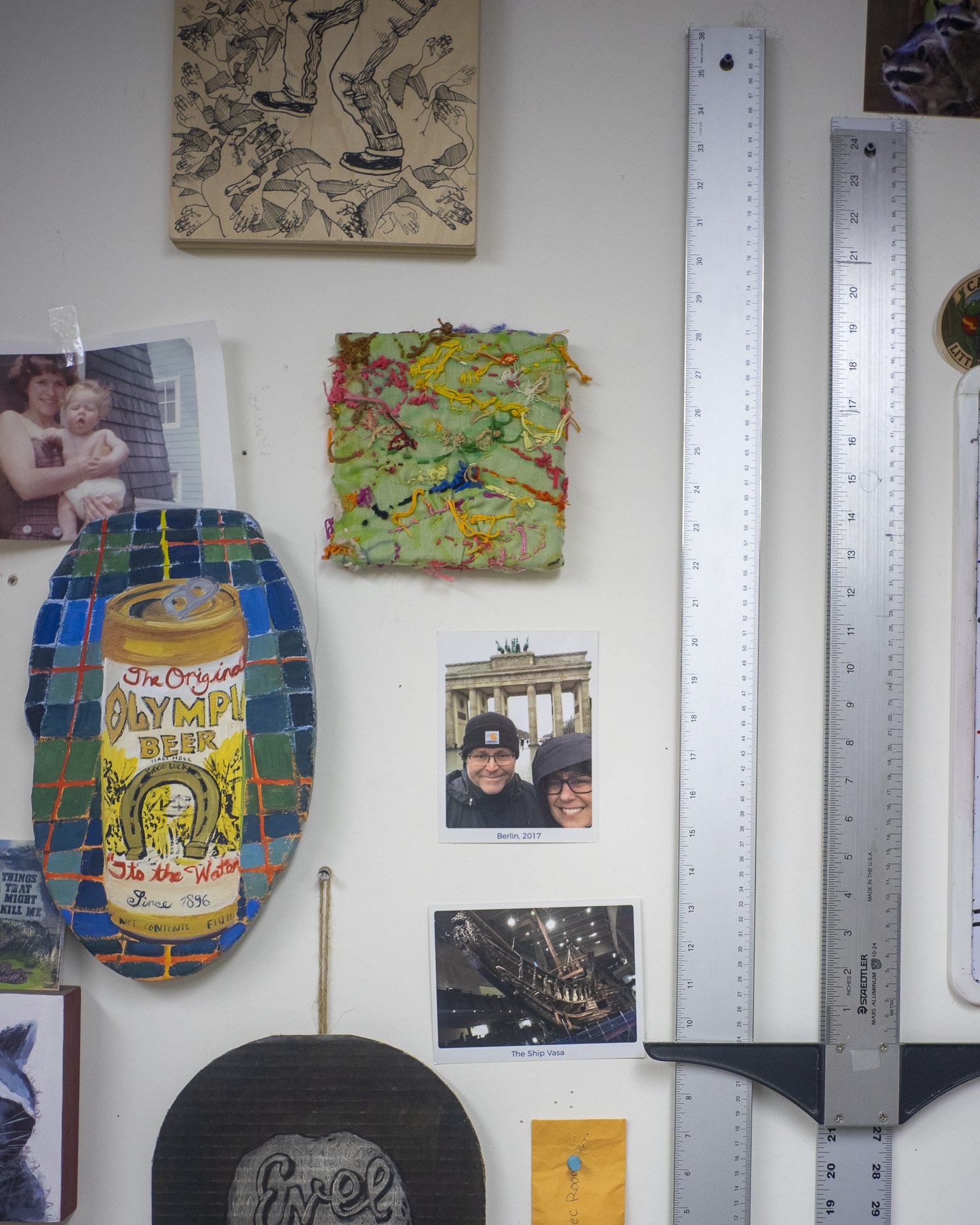
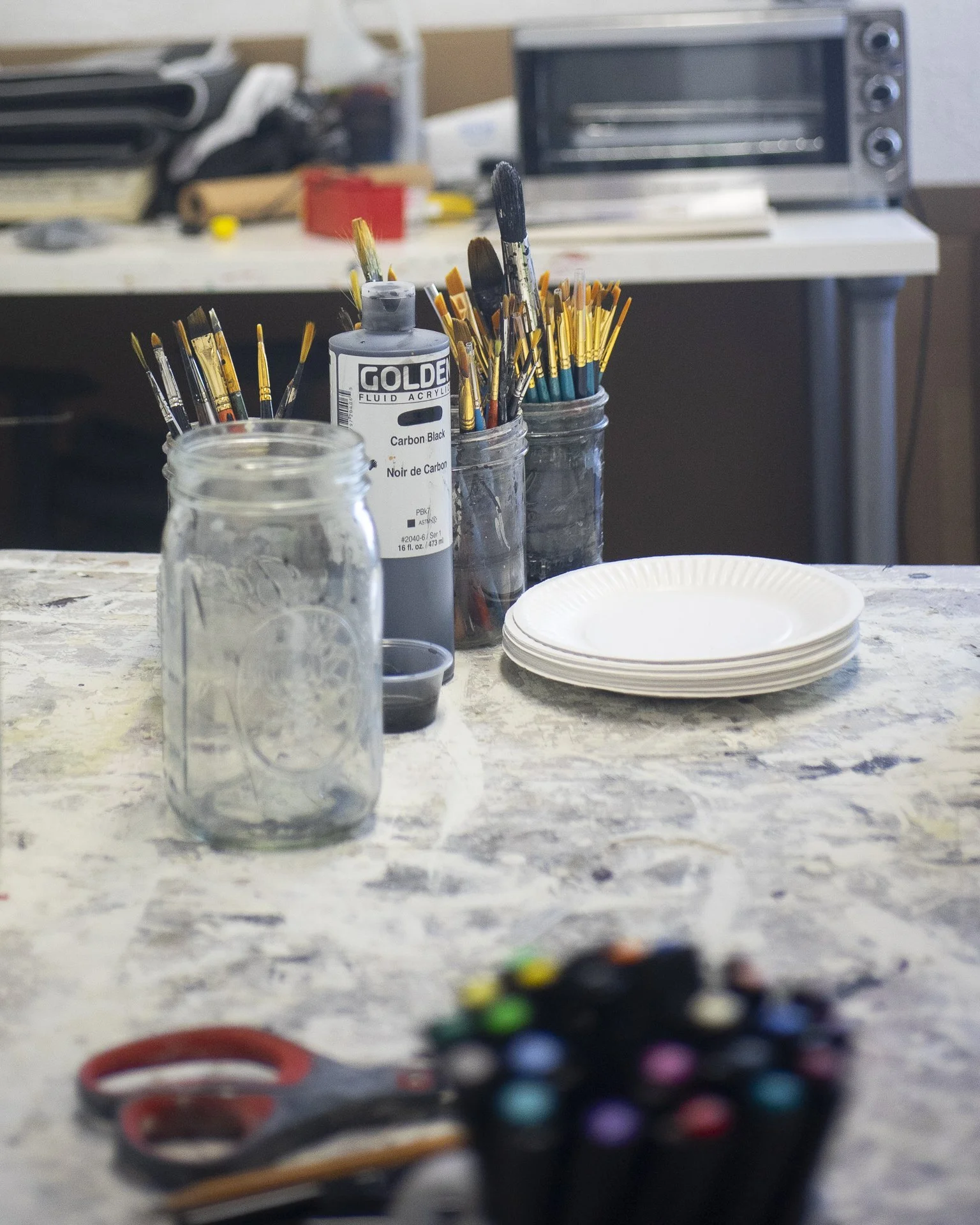
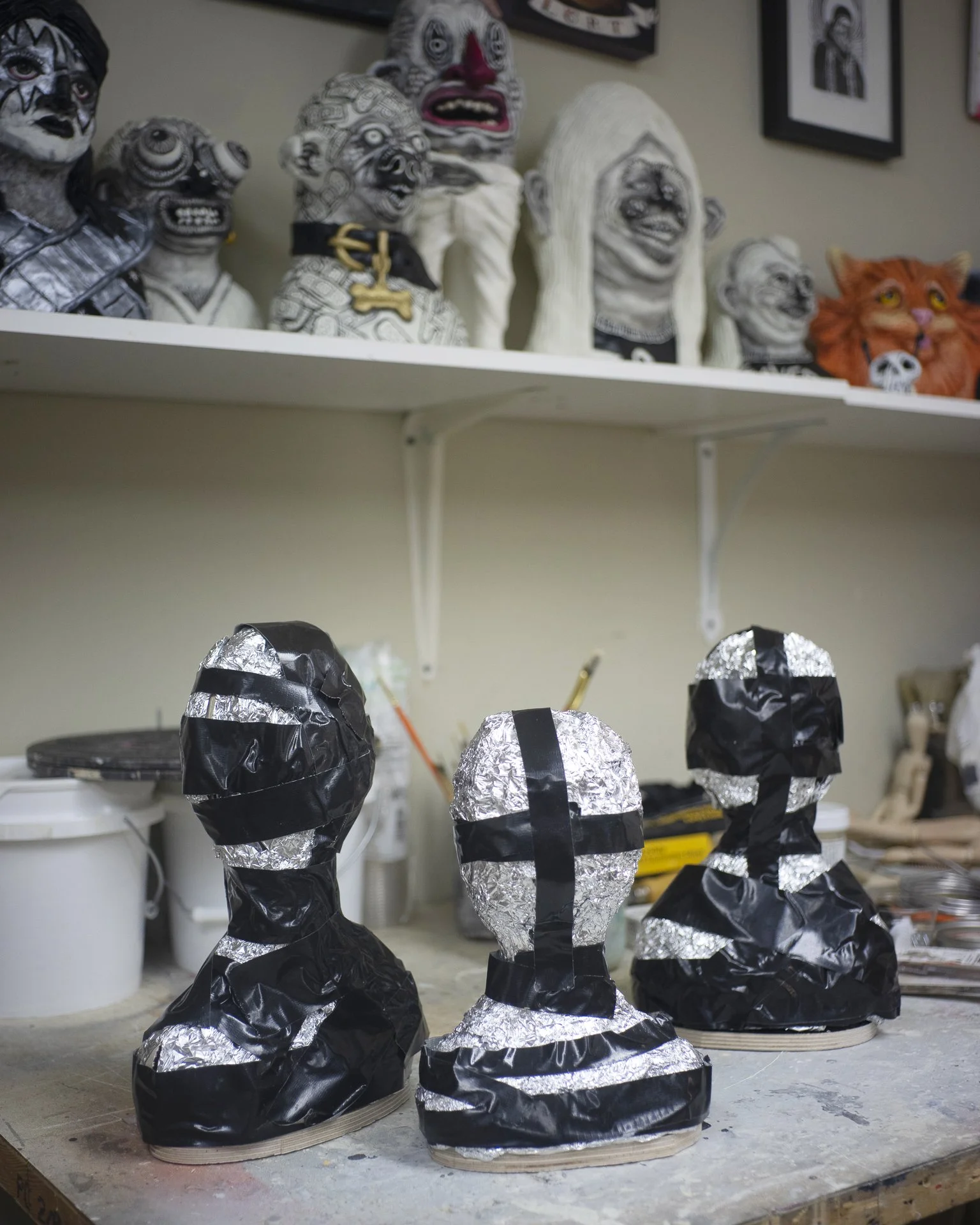
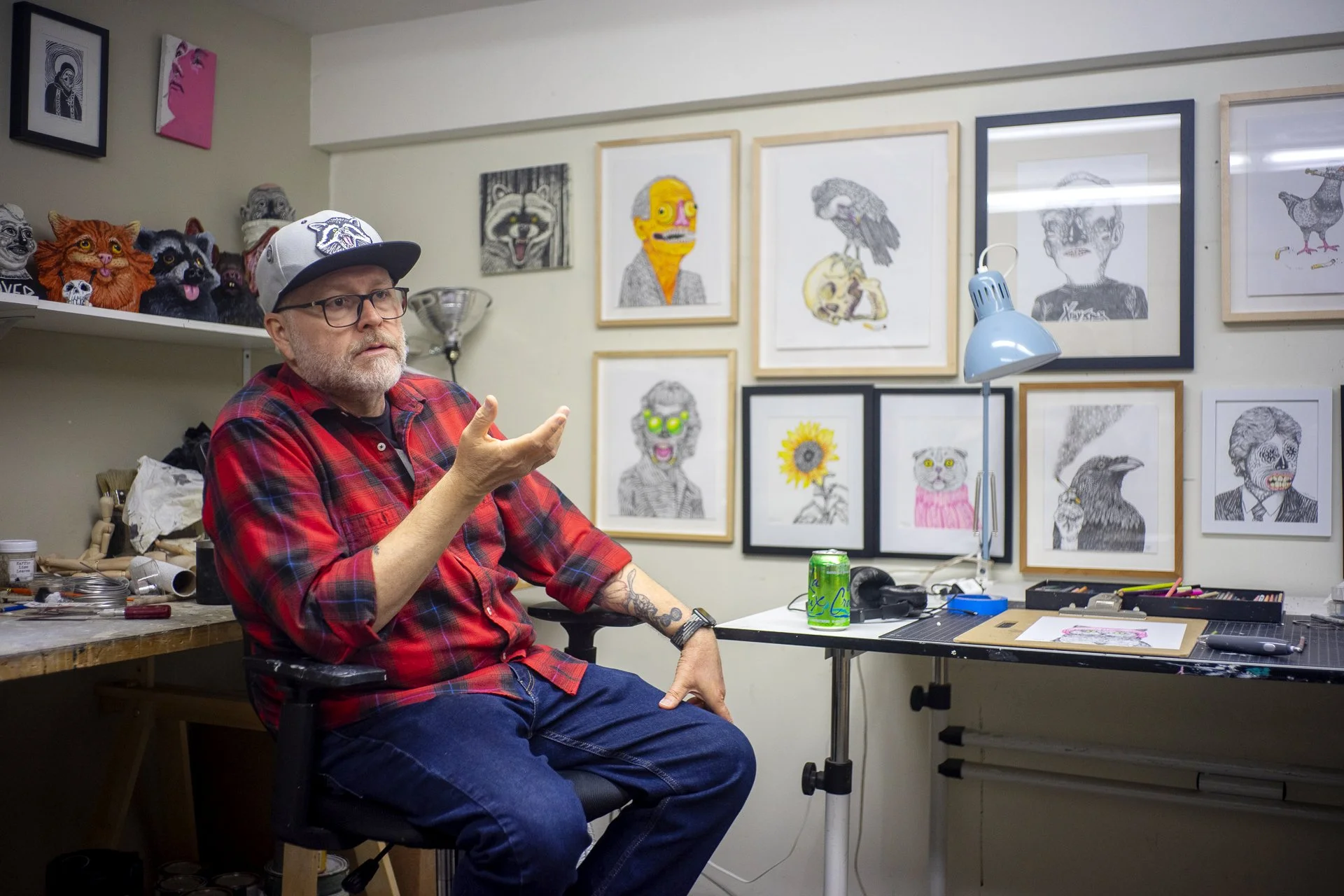
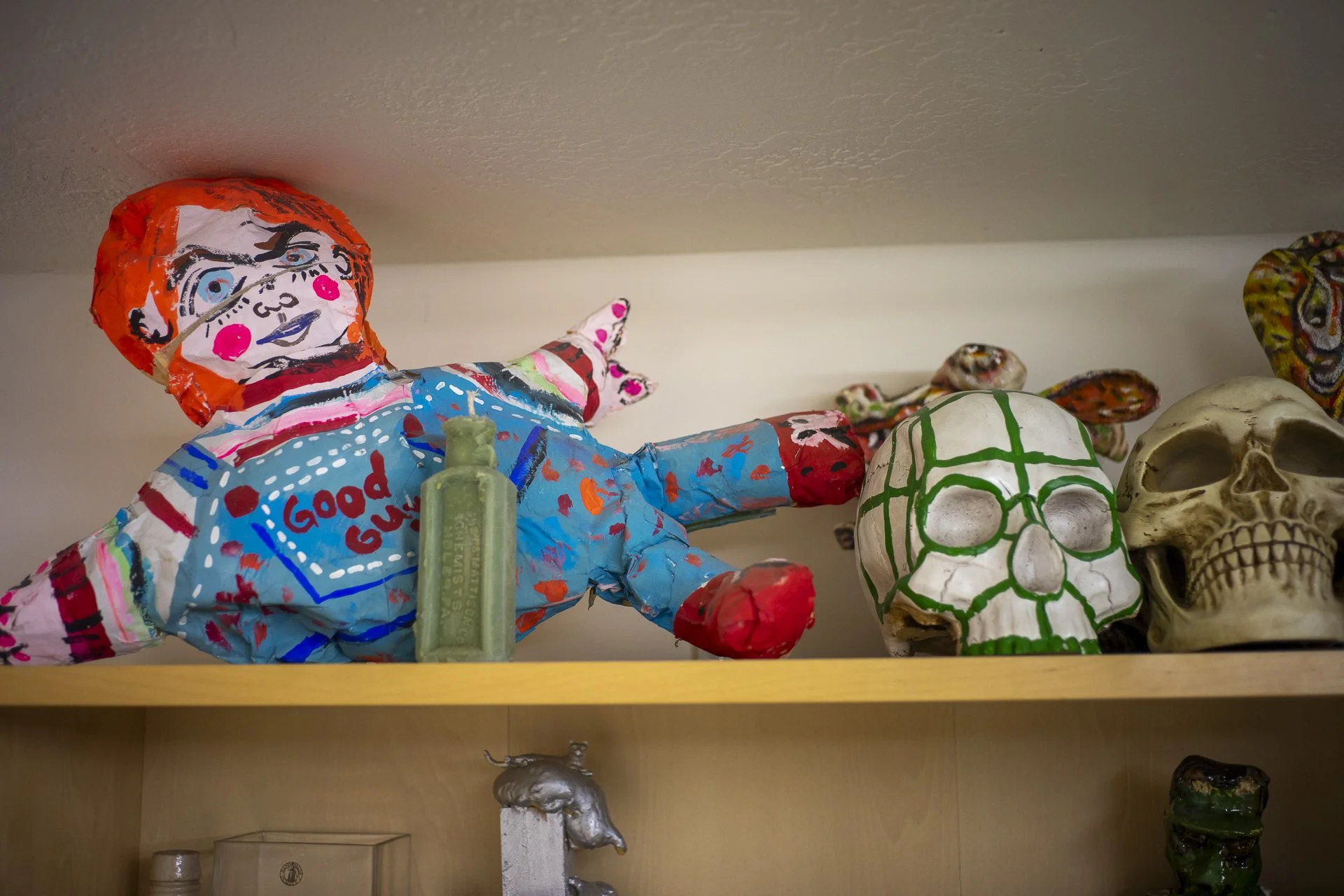
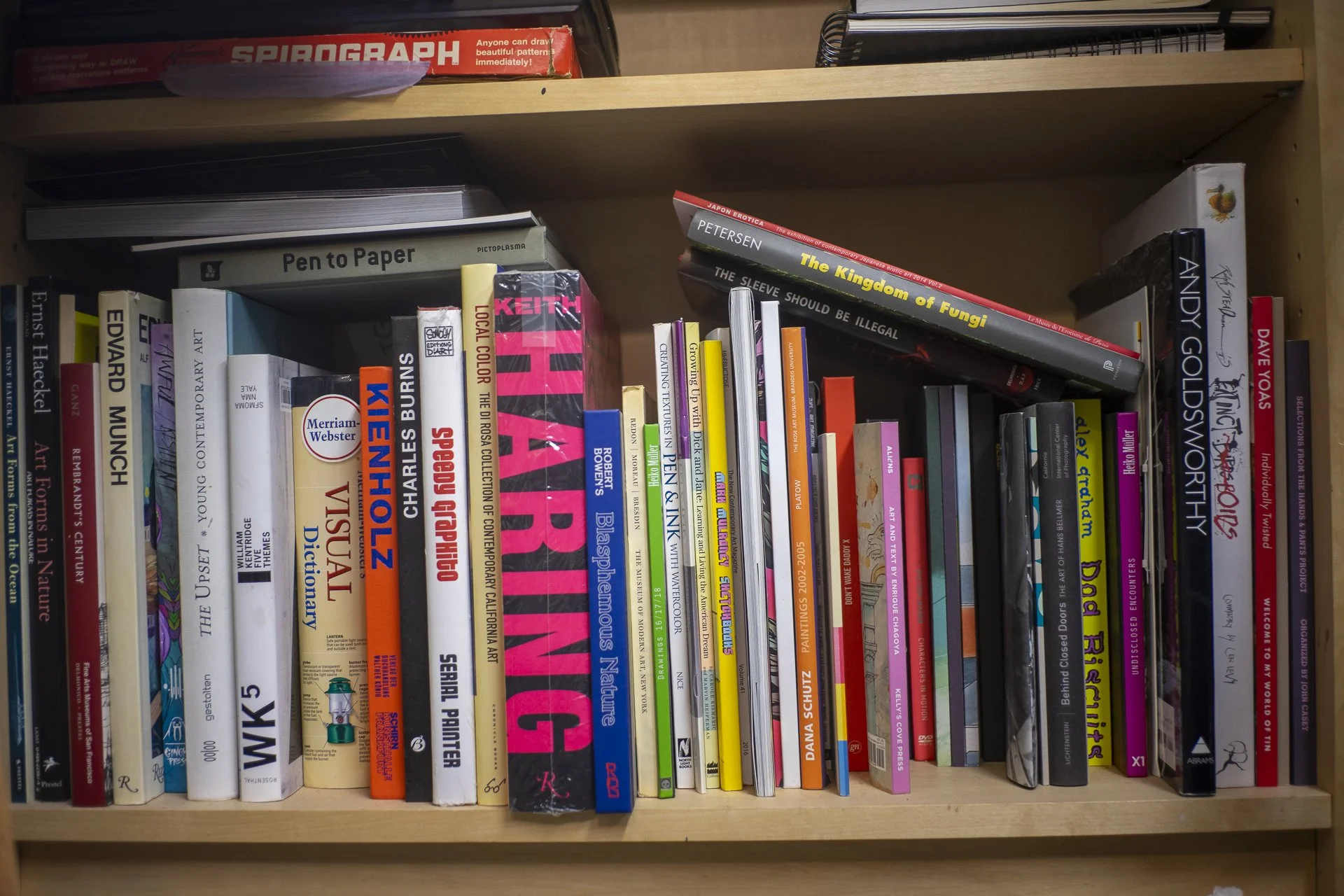
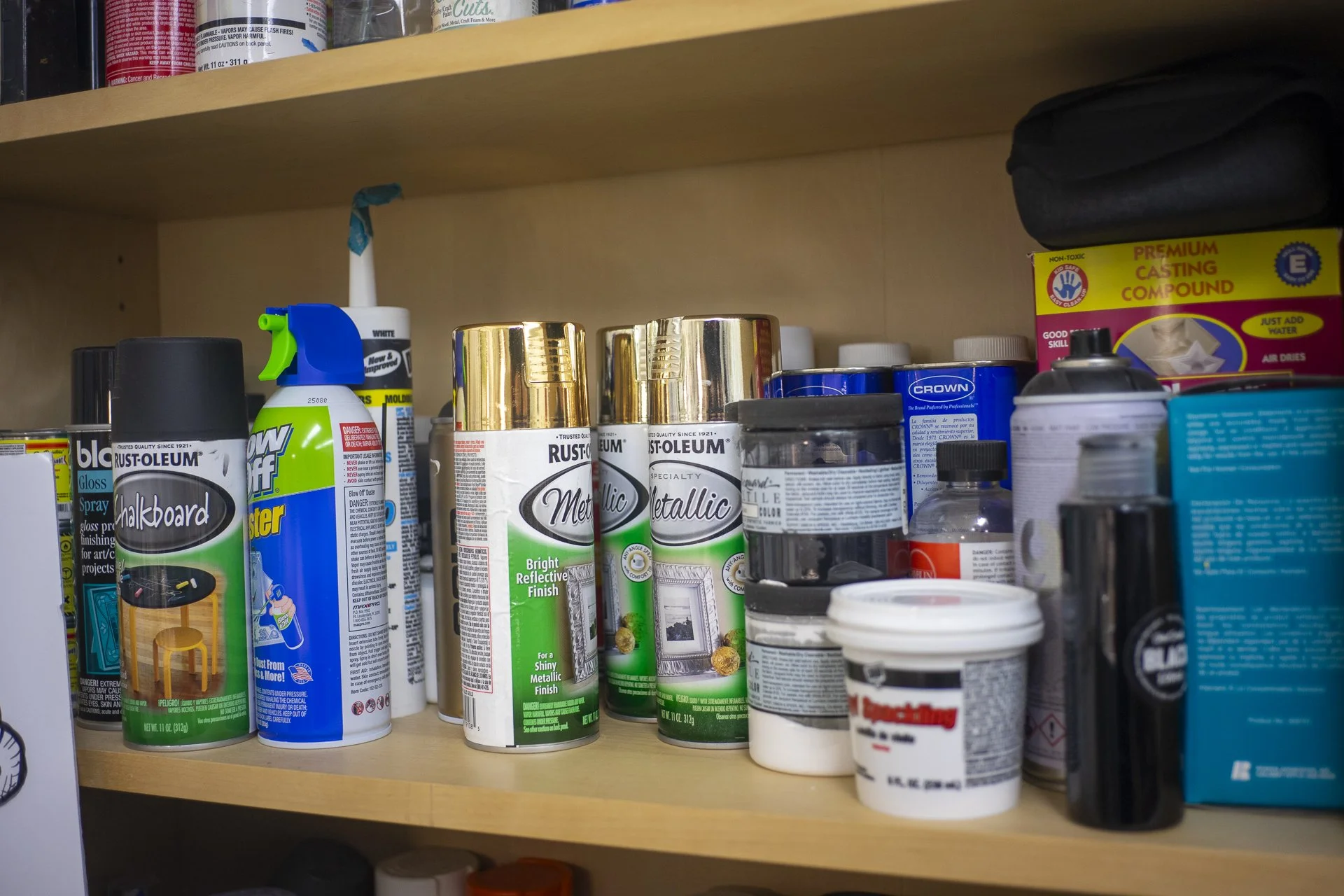
John Casey’s studio is tucked into Jack Knife Studios, a faded green building in Jack London Square with 40 artist spaces. John has been working in Jack Knife Studios since 2009, and has two separate spaces with plans to unite them into one. The first working space where we begin the interview is cozy. He has lined the walls with art he’s collected and created over 17 years. His second space is more functional with a few ink and paint stained folding tables, tall ceilings and one comfy chair. John confesses he has a 3rd space, a storage unit, with even more art. I didn’t ask during the interview but I’d like to invite myself back over to see that in a follow up visit once his studio updates are complete.
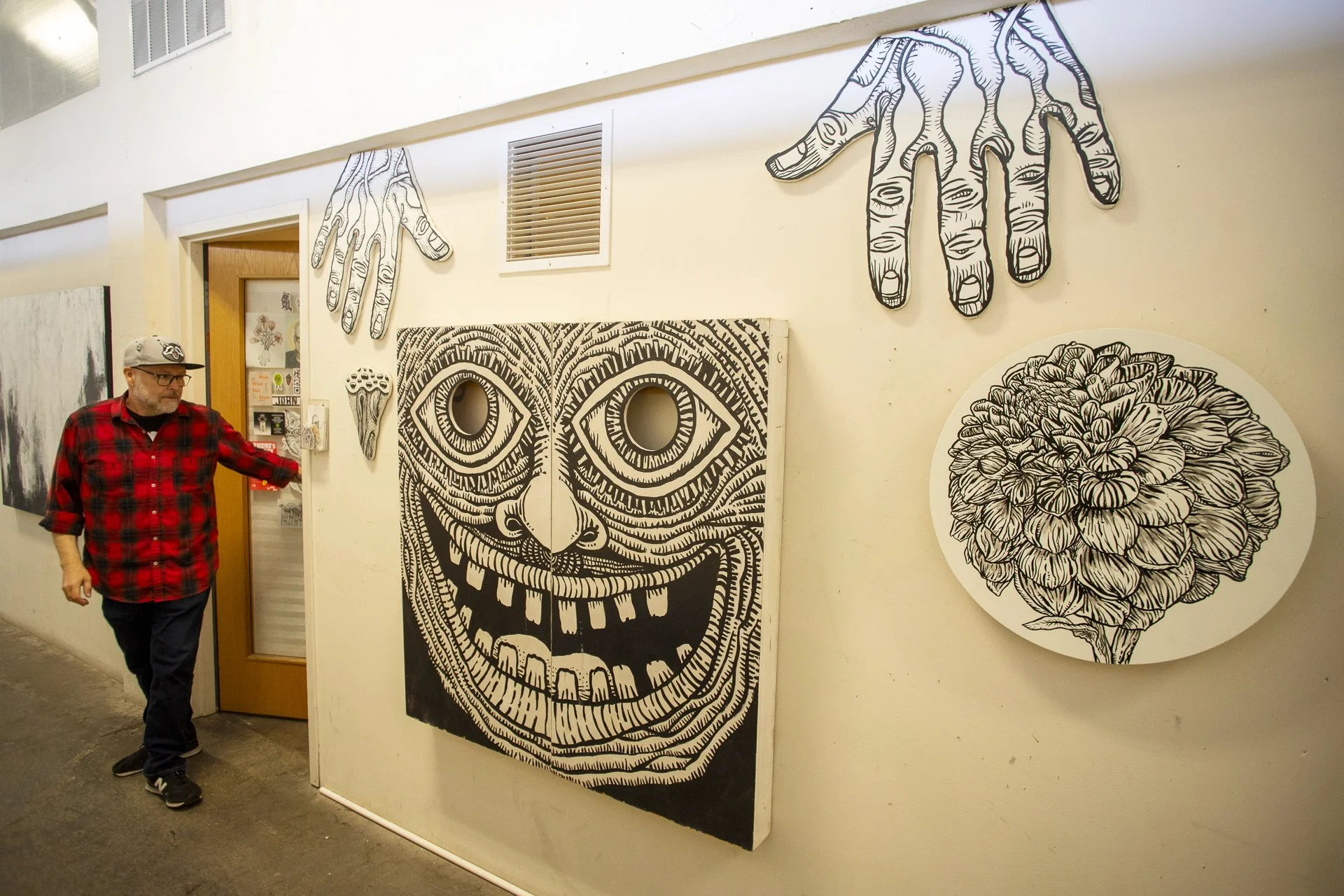
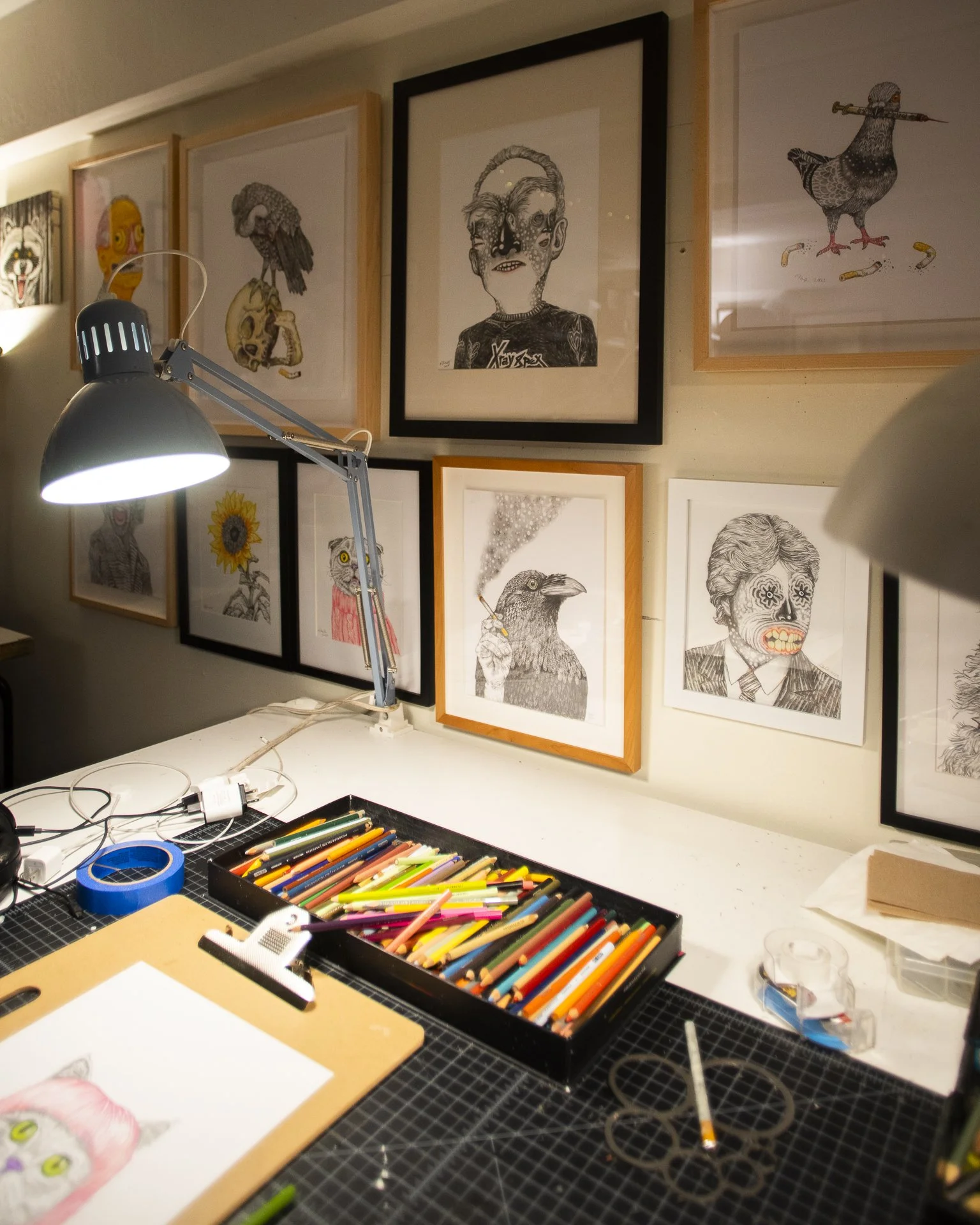
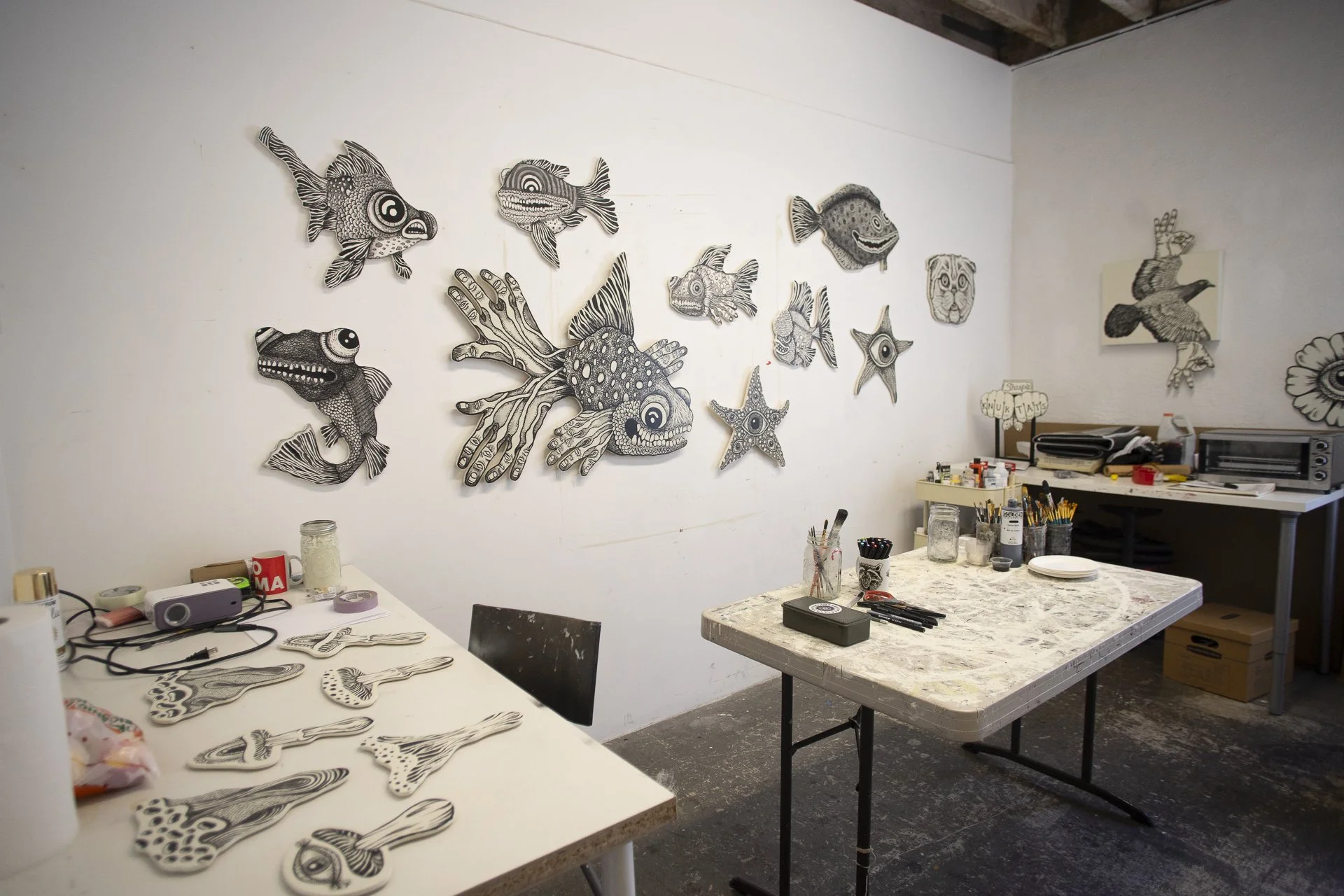
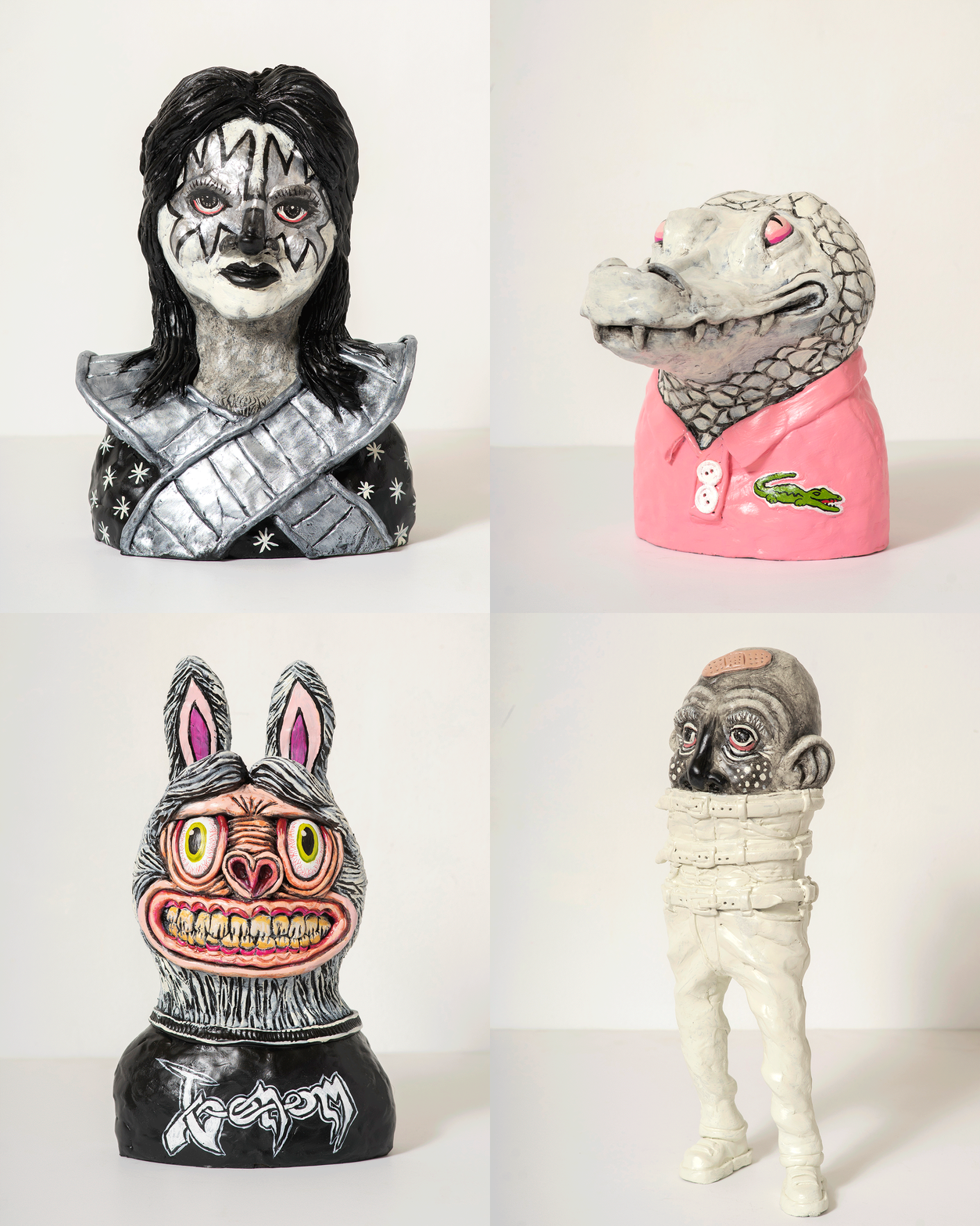
John and I have known each other for a several years. I photographed his art for his solo show “superUNnatural” at Bane Gallery in San Francisco. He is a prolific artist with a penchant for absurdity and dark(ish) humor.
“Life is hard and absurd, and humor gets us through a lot of it. My Gen X sensibility leans heavily into sarcasm for sure, and I try to work that in without being too smart-assed and obvious.” John said.
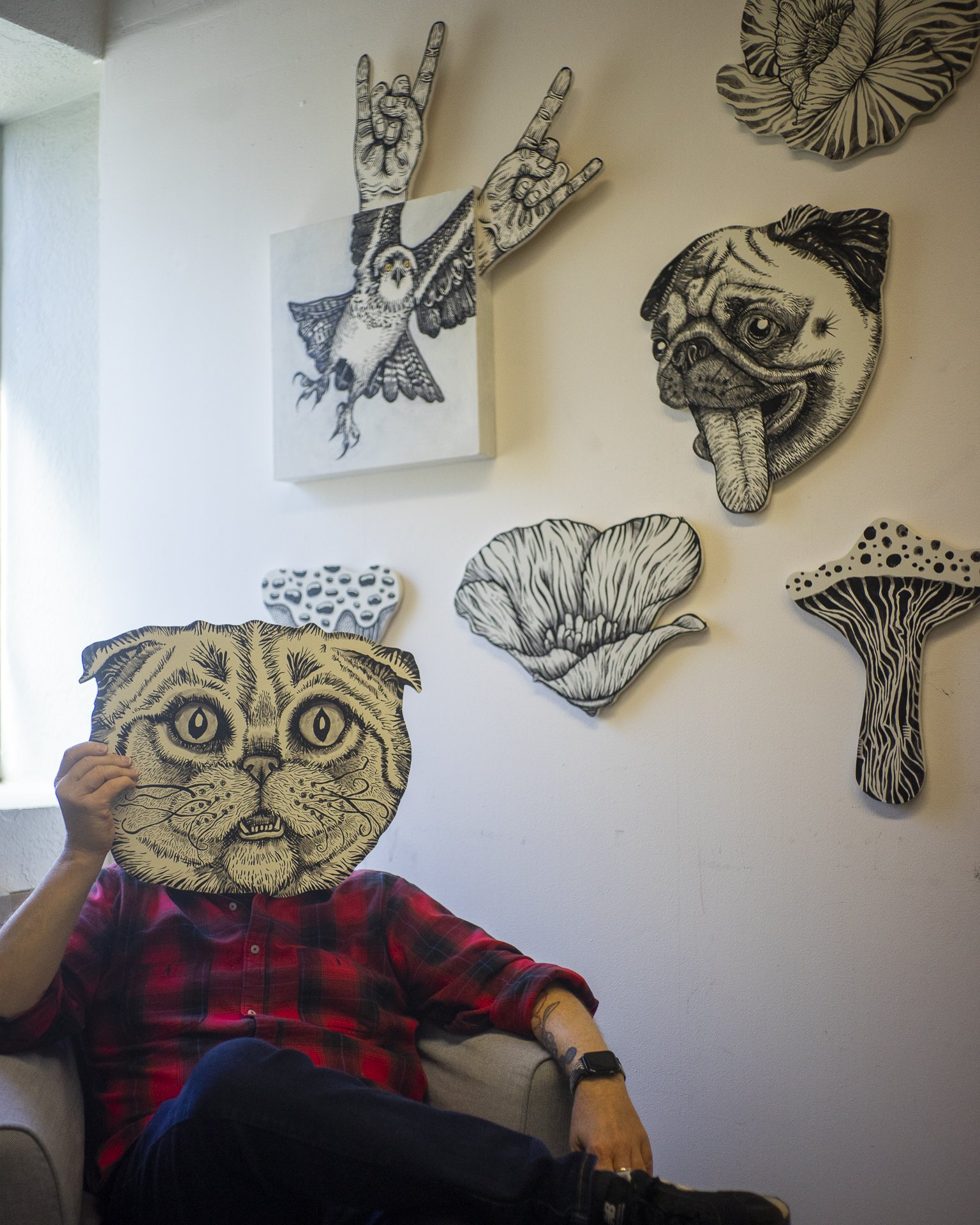
His style is instantly recognizable and ubiquitous around The Bay Area. John is perpetually showing his art, I counted 12 solo or group shows on his CV in the last 16 months. He’s a familiar and friendly face at gallery openings, consistently out supporting the community with his wife and fellow artist, Mary Kalin-Casey.
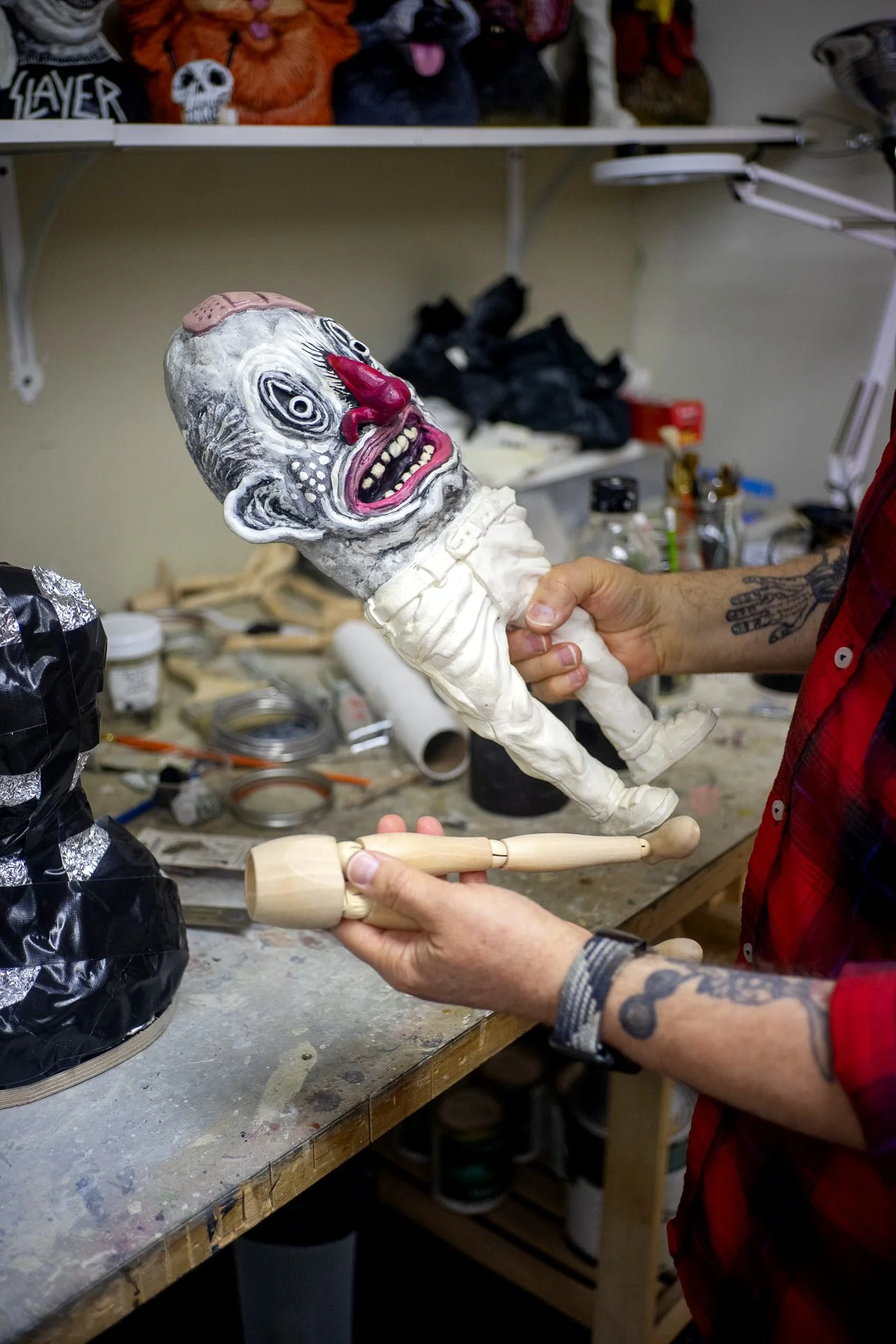
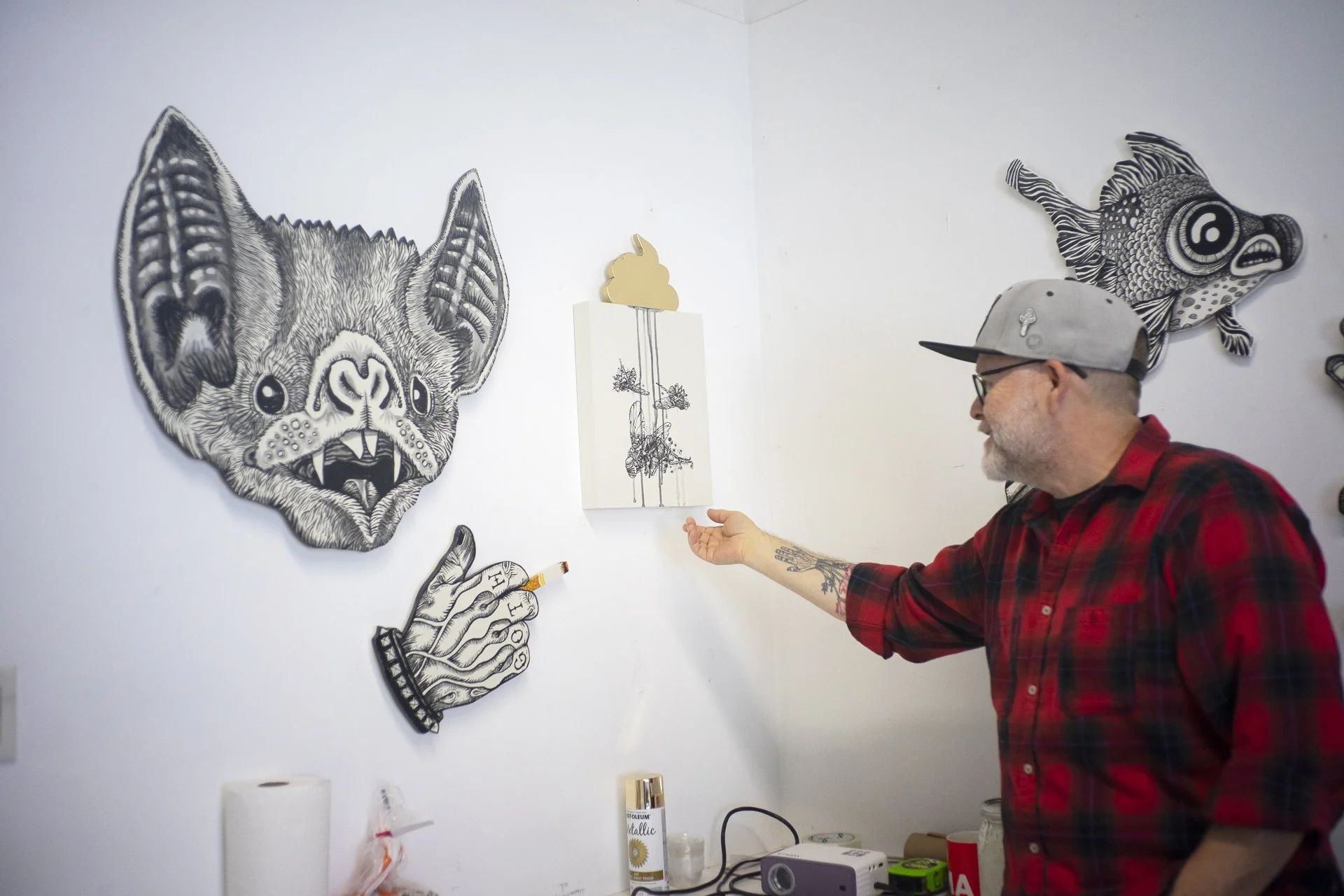
John grew up in Swampscott, Massachusetts, a town so small it didn’t have a hospital. He is the eldest of 3 boys in a working class family. His dad was a cop and his mom was a nurse. They were both supportive of his creativity and when he decided to go to art school, like many parents, they worried about John being able to support himself as an artist.
“My dad had no reference for my weird art. He was at an opening of my work in a show in Boston when he said ‘You’re either a genius or completely nuts.’ Even though he was rolling with the dad jokes, he wasn’t totally wrong.” John said of his father.
I agree with the former and less of the later of John F. Casey Sr.’s observations about his son. John Casey is a consummate creative and a professional at every touch point of his artistic endeavors.
Interview
What is the first thing you do when you get into the studio?
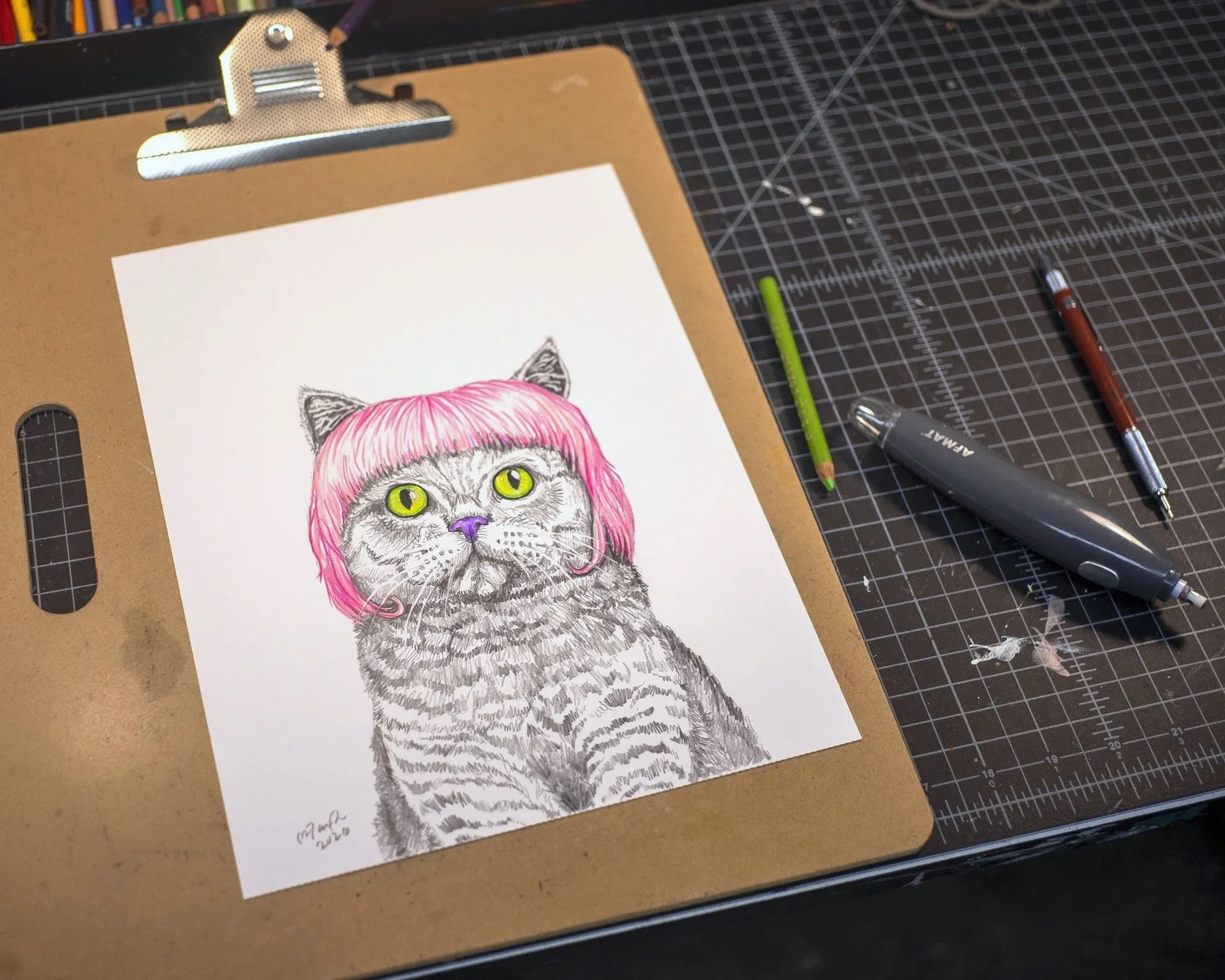
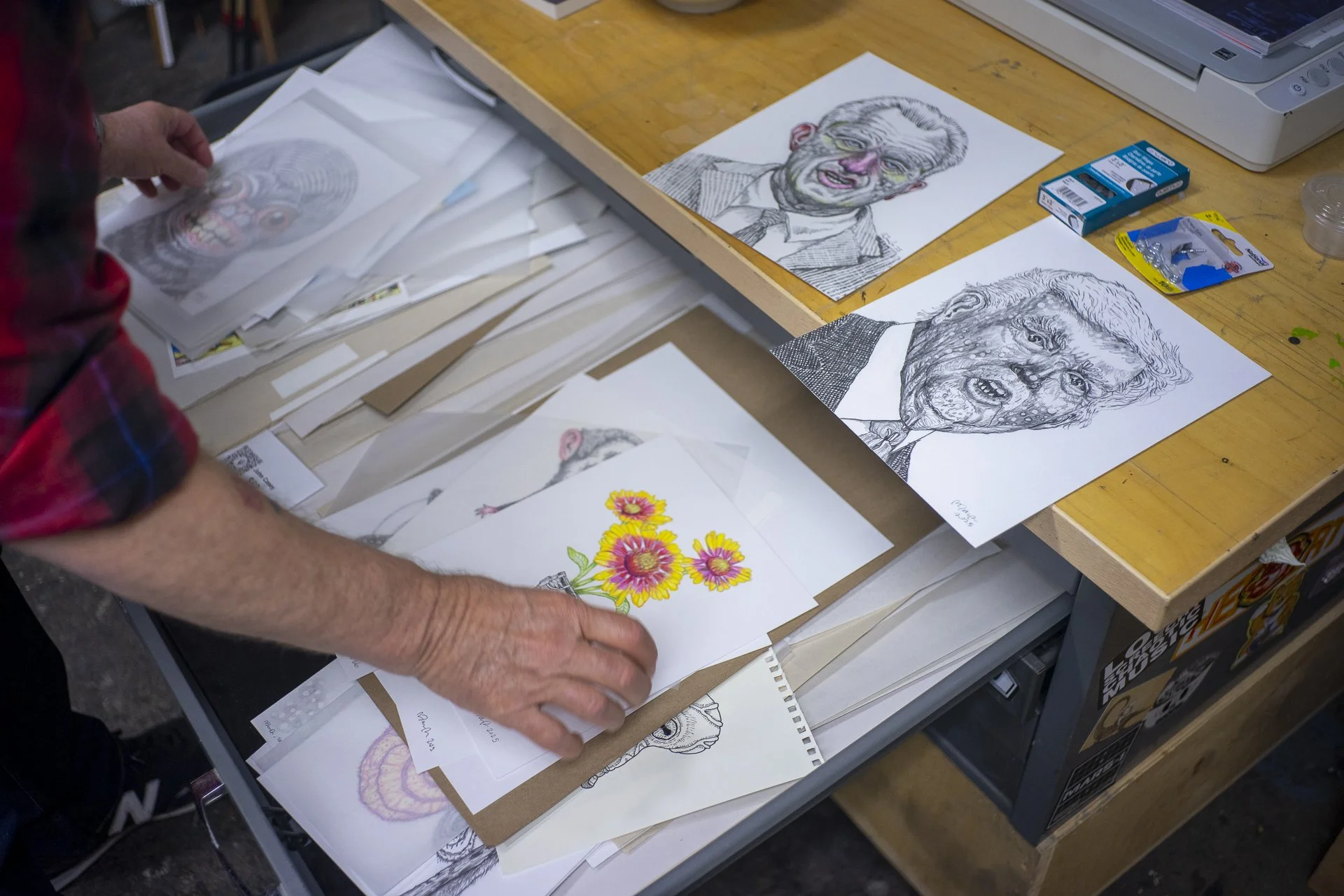
I take some time and look at what I’ve been working on. If I’m starting something new I usually look for reference photos online and print them out. Sometimes I cut them up and loosely collage them together. If I’m in the middle of a piece, I try to absorb and analyze where I’m at in the creative process and I think about what is next. I look at the previous day’s work, and having “slept on it” I see if any revelations have emerged in my mind overnight that I can explore with the work in progress.
What motivates you to create or where do the ideas formulate that come to life in your studio work?
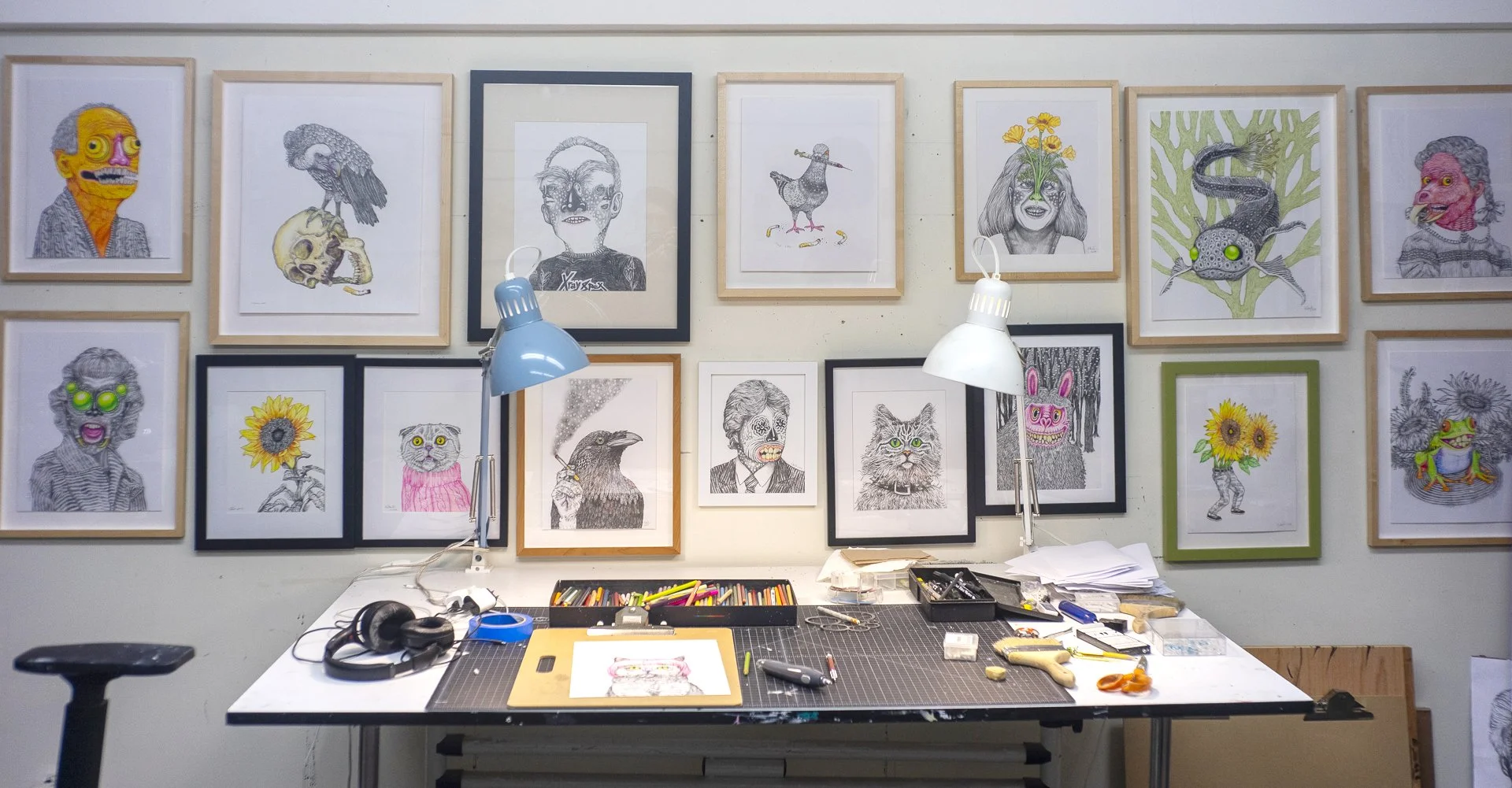
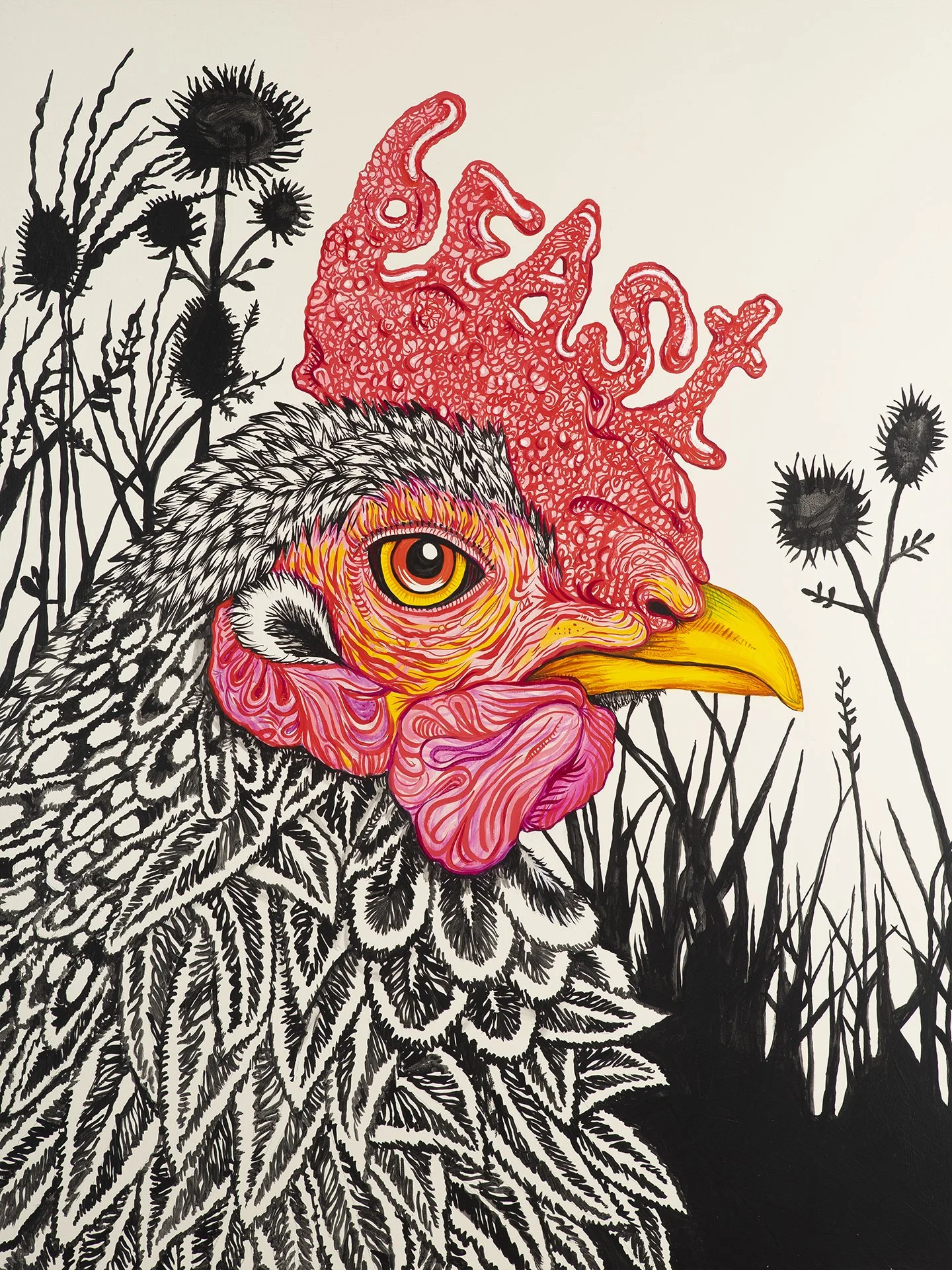
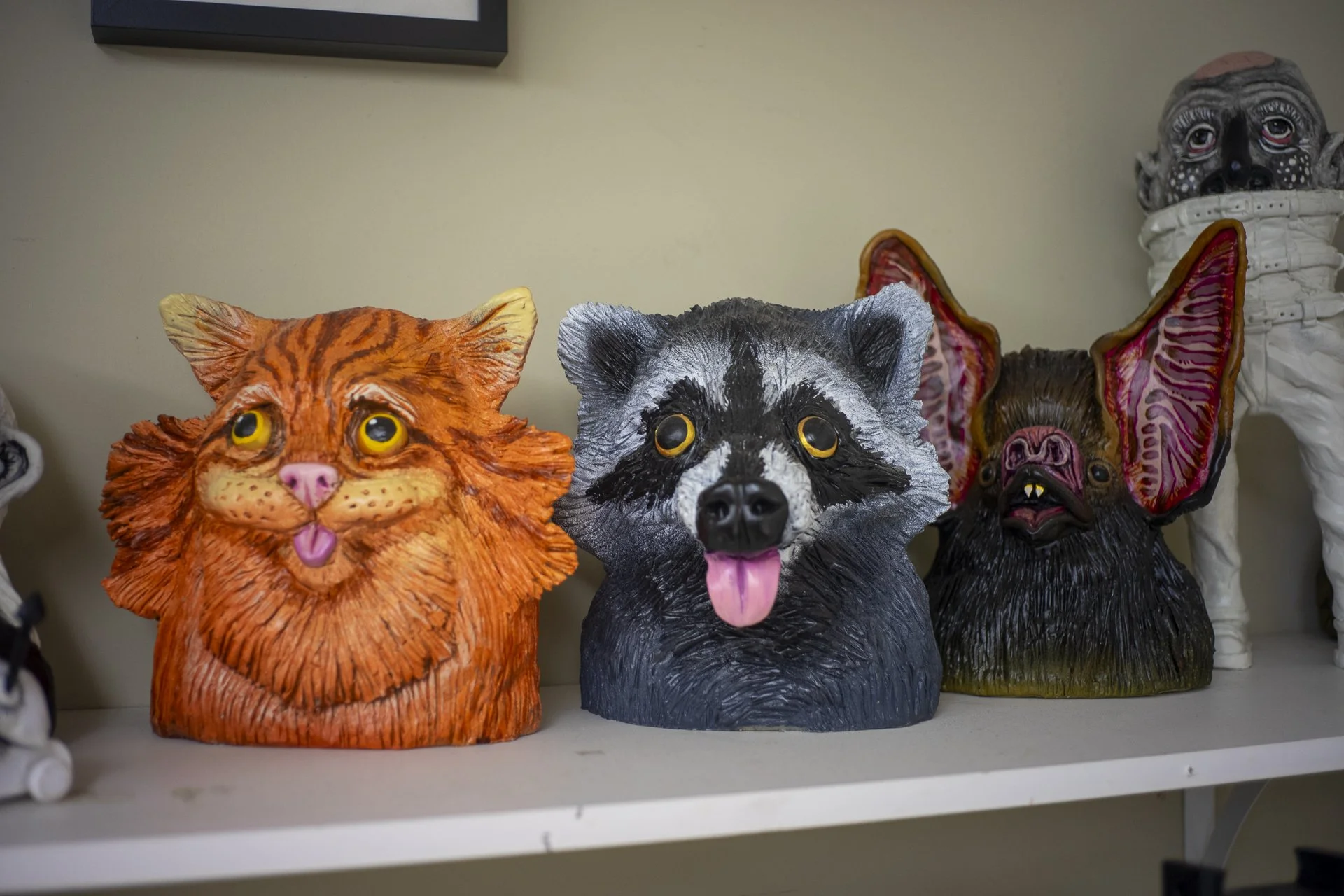
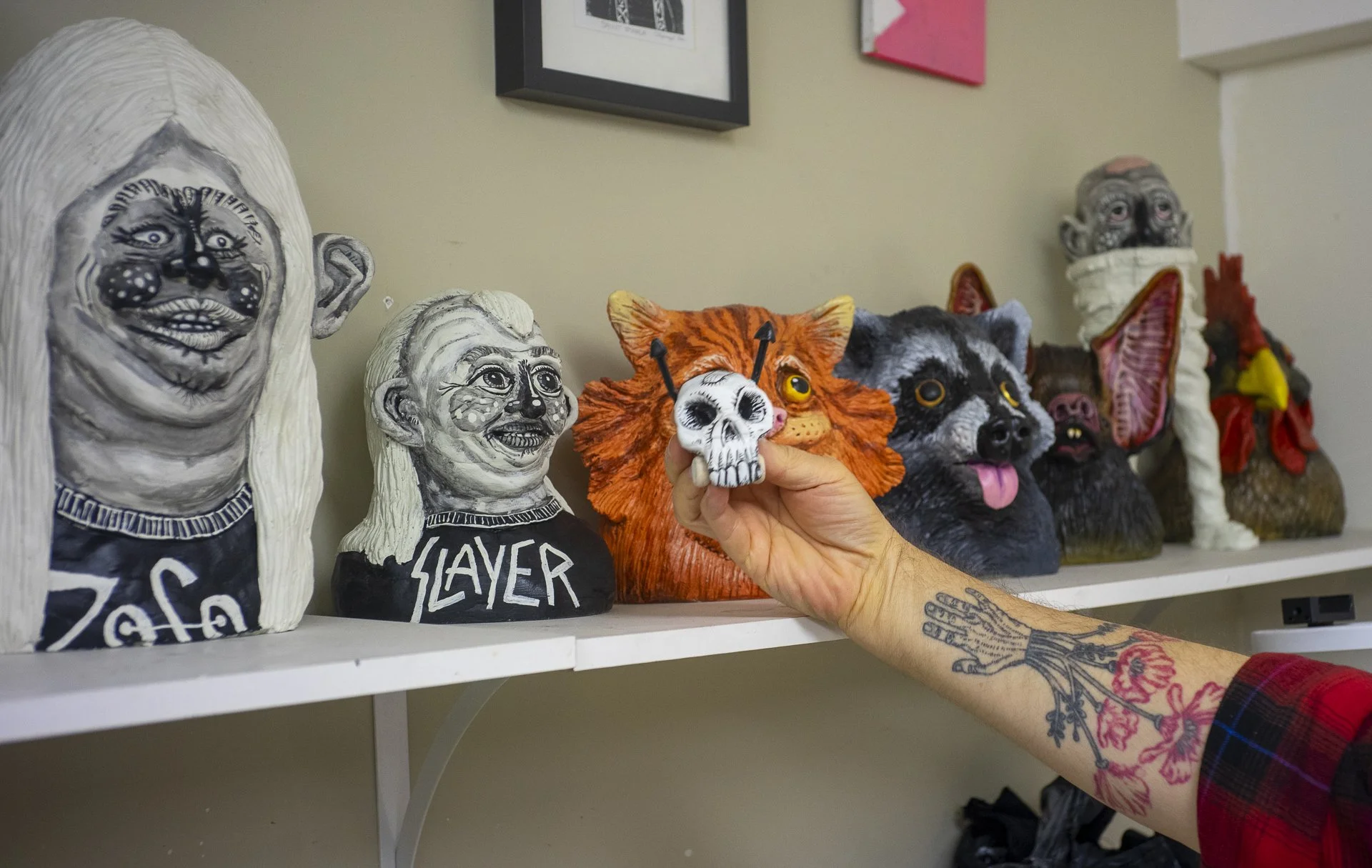
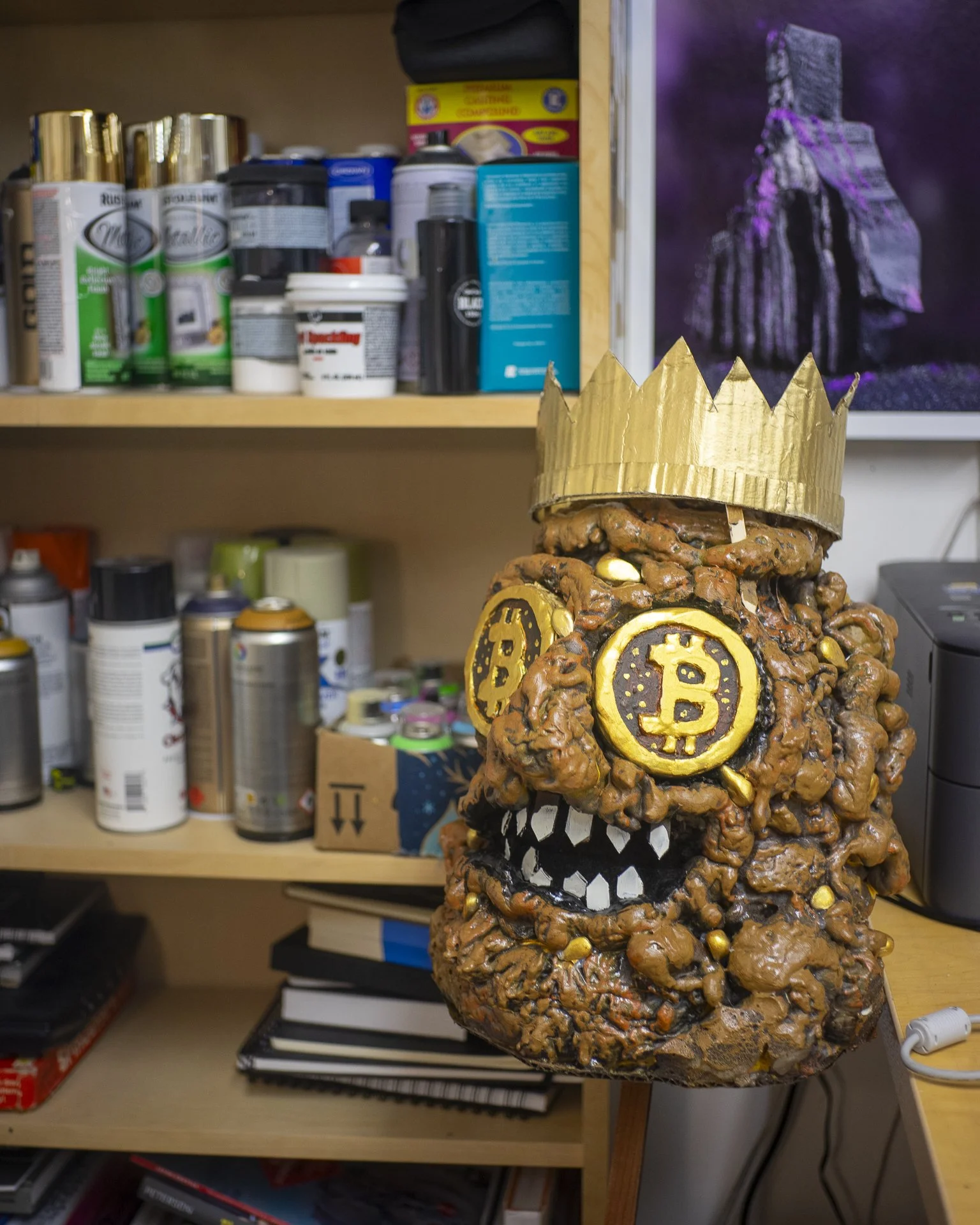
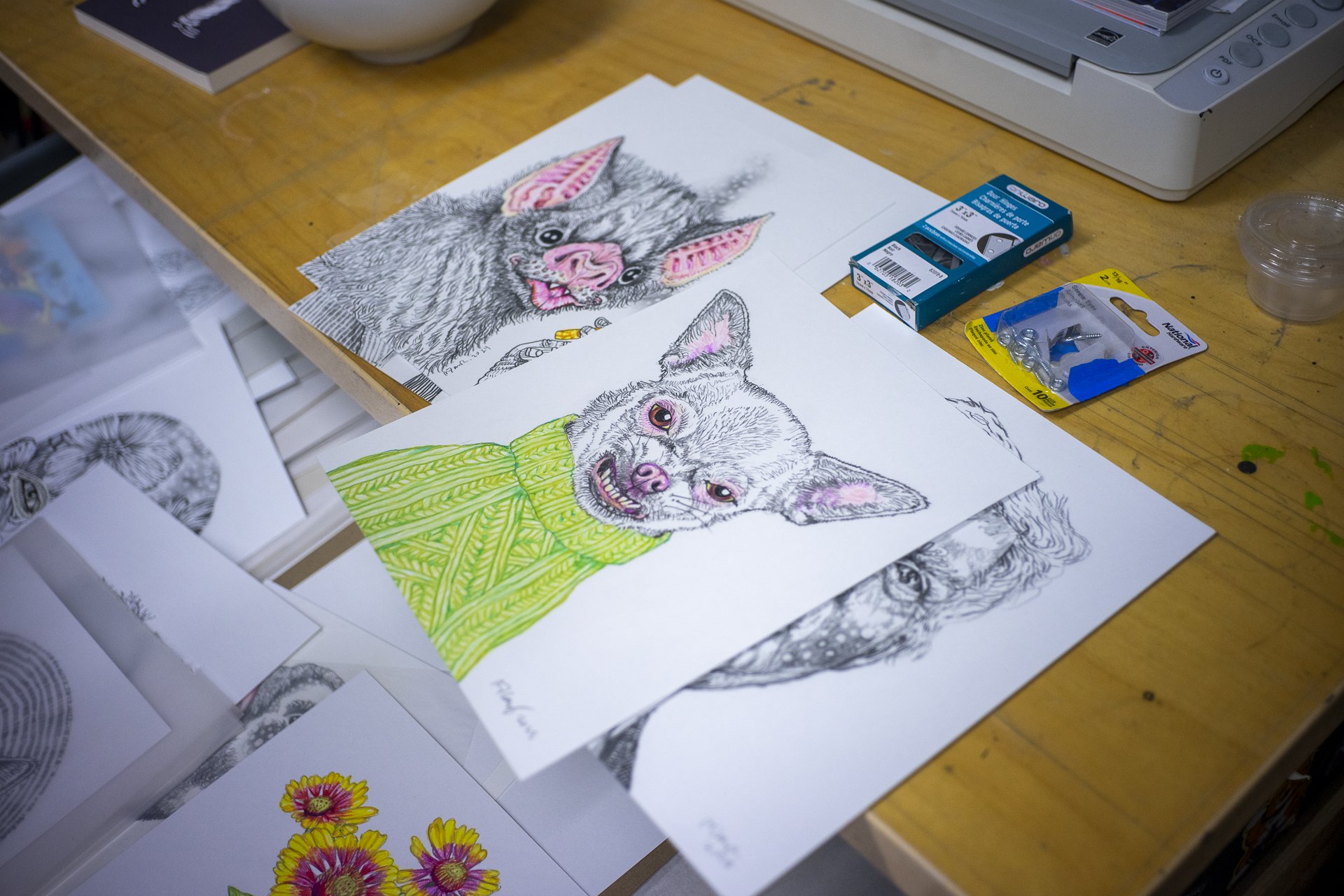
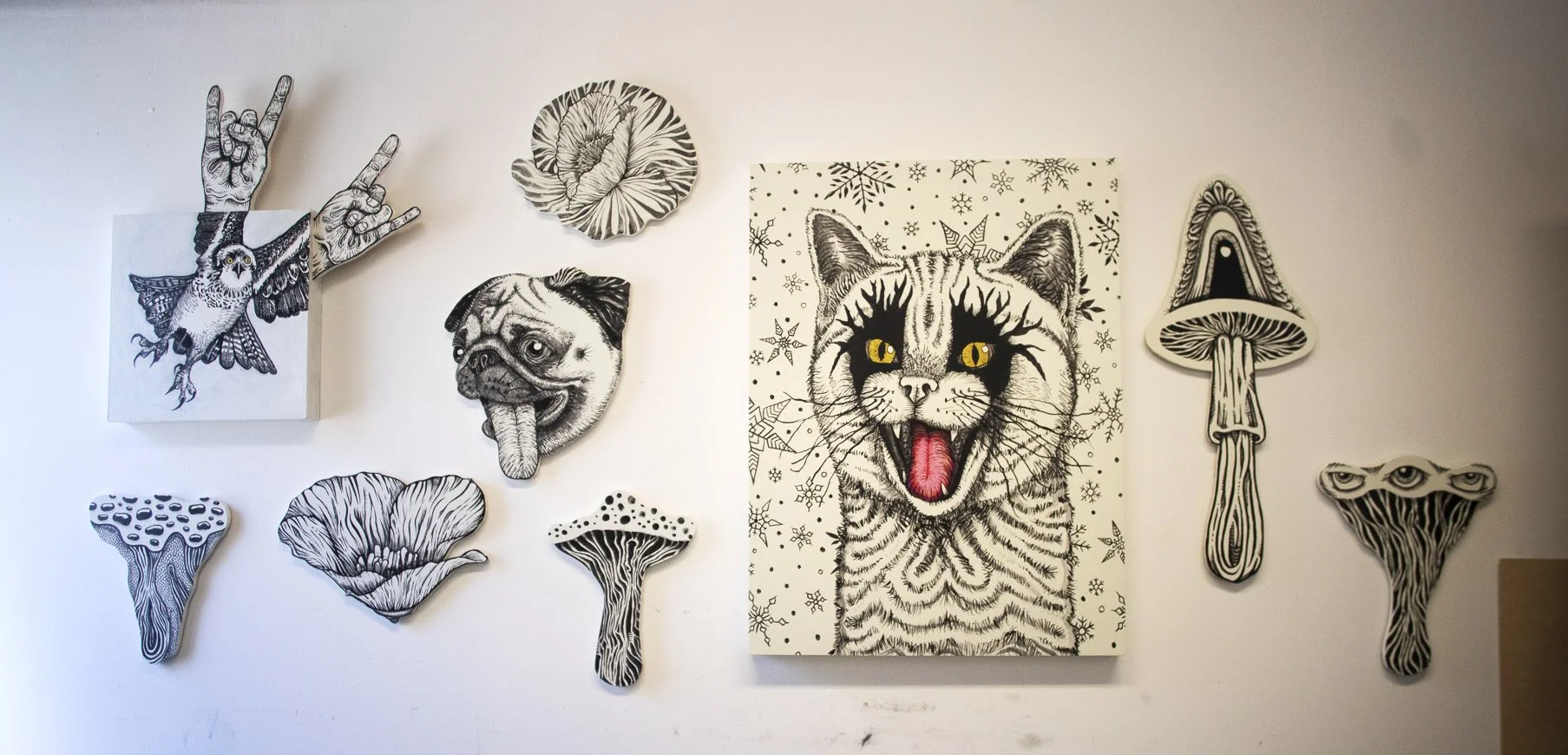
I am a character creator. I make beings who are experiencing modern life and the crazy challenges of how to navigate it. My subjects used to be primarily fictional people, but now I more often draw, paint, or sculpt anthropomorphic animal characters. These critters stand in for my own emotional state of mind. The props or physical alterations the subjects experience are all there to convey the emotional honesty, stress, and tension of the absurd situations they find themselves in.
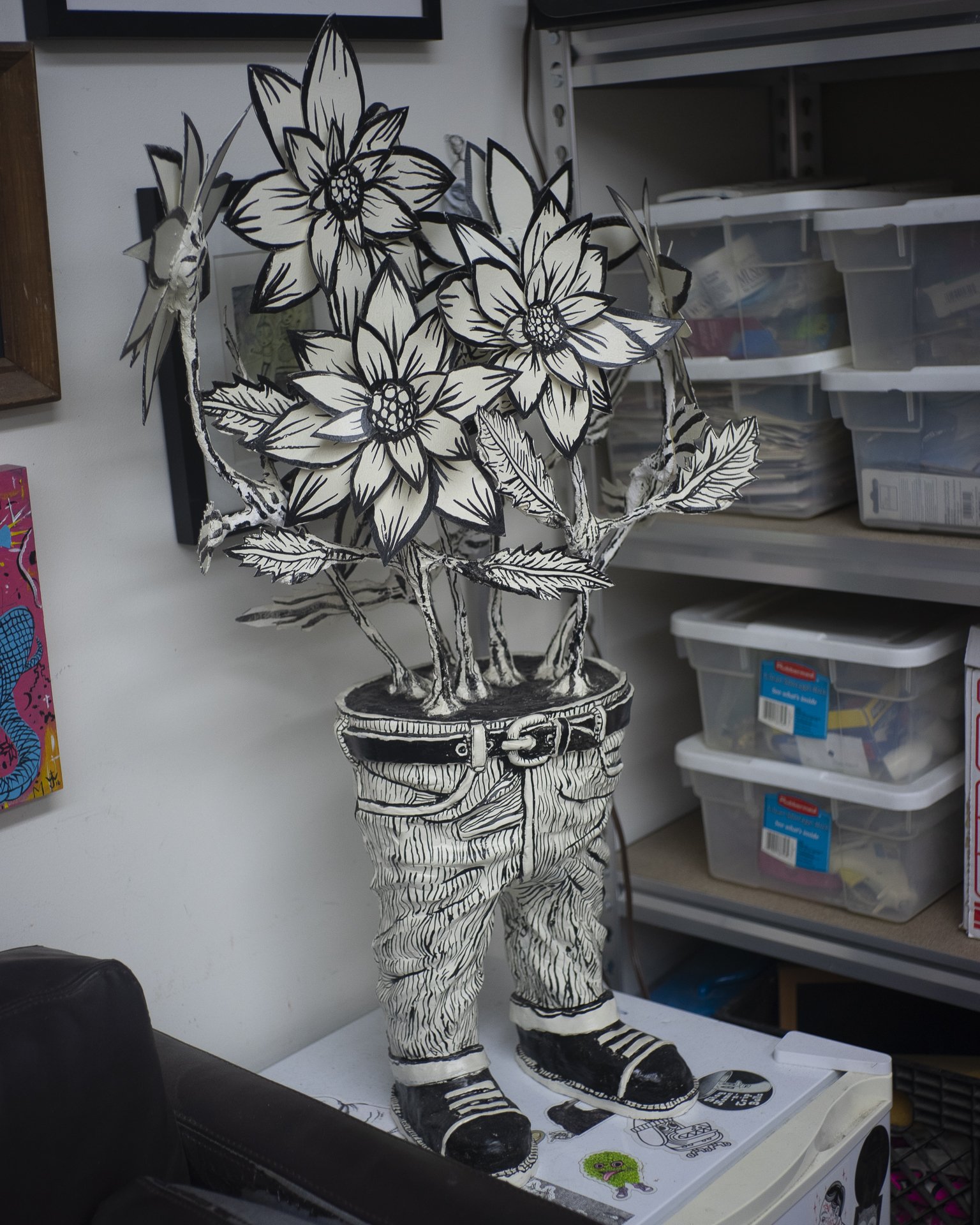
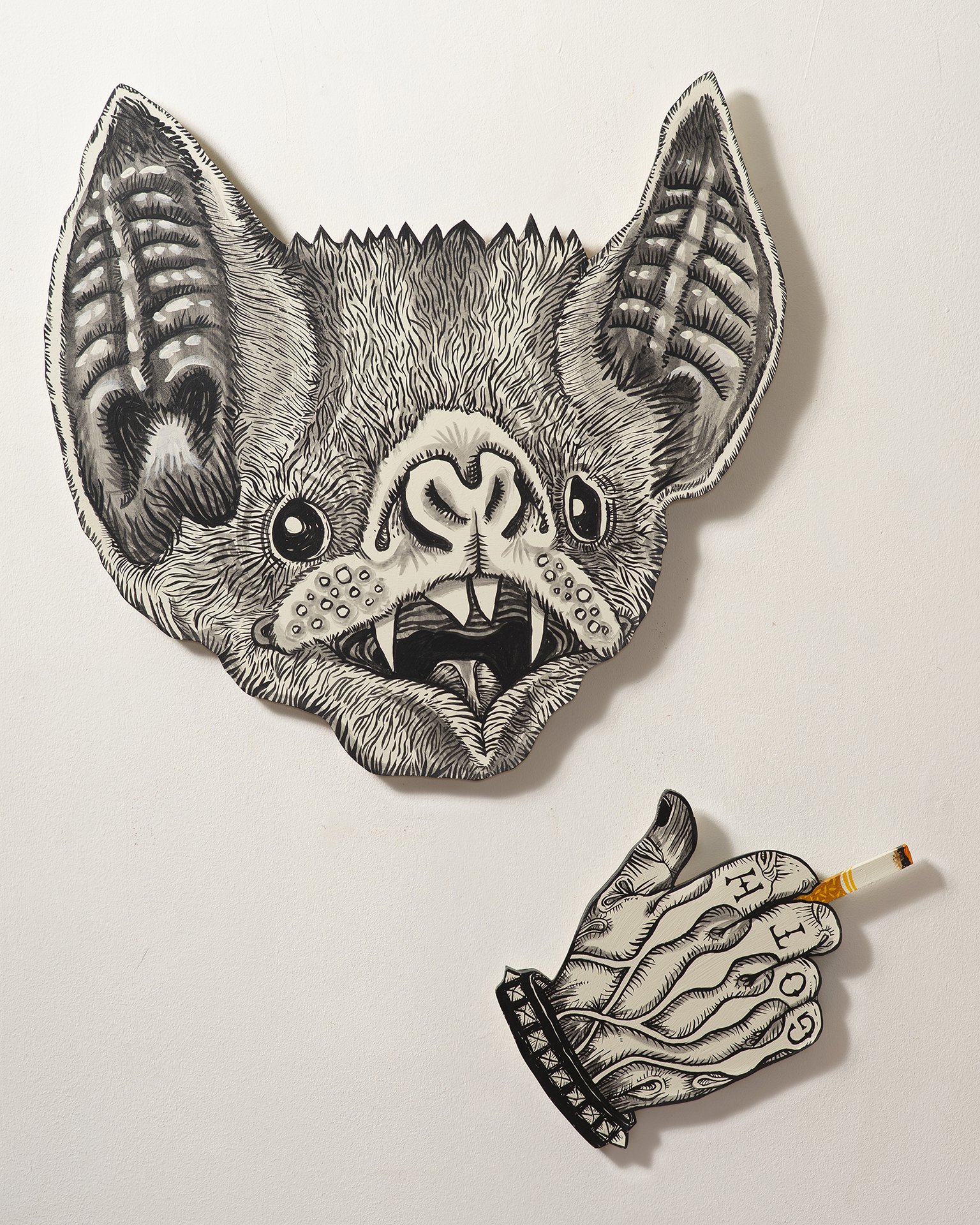
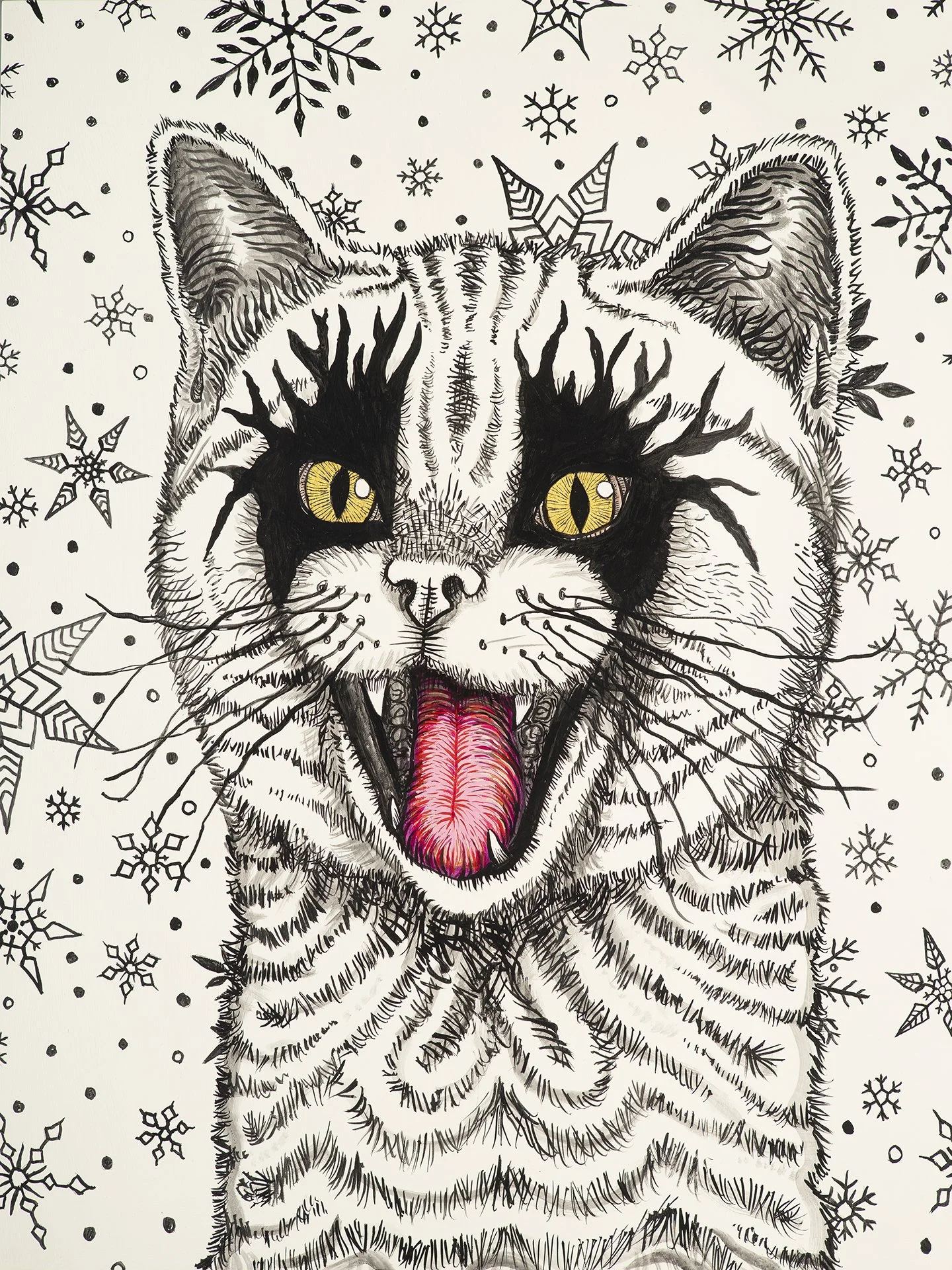
Your work is predominantly black and white. What brought you to this stylistic choice? When you add color to the black and white it’s usually a single accent. What guides that additional element?
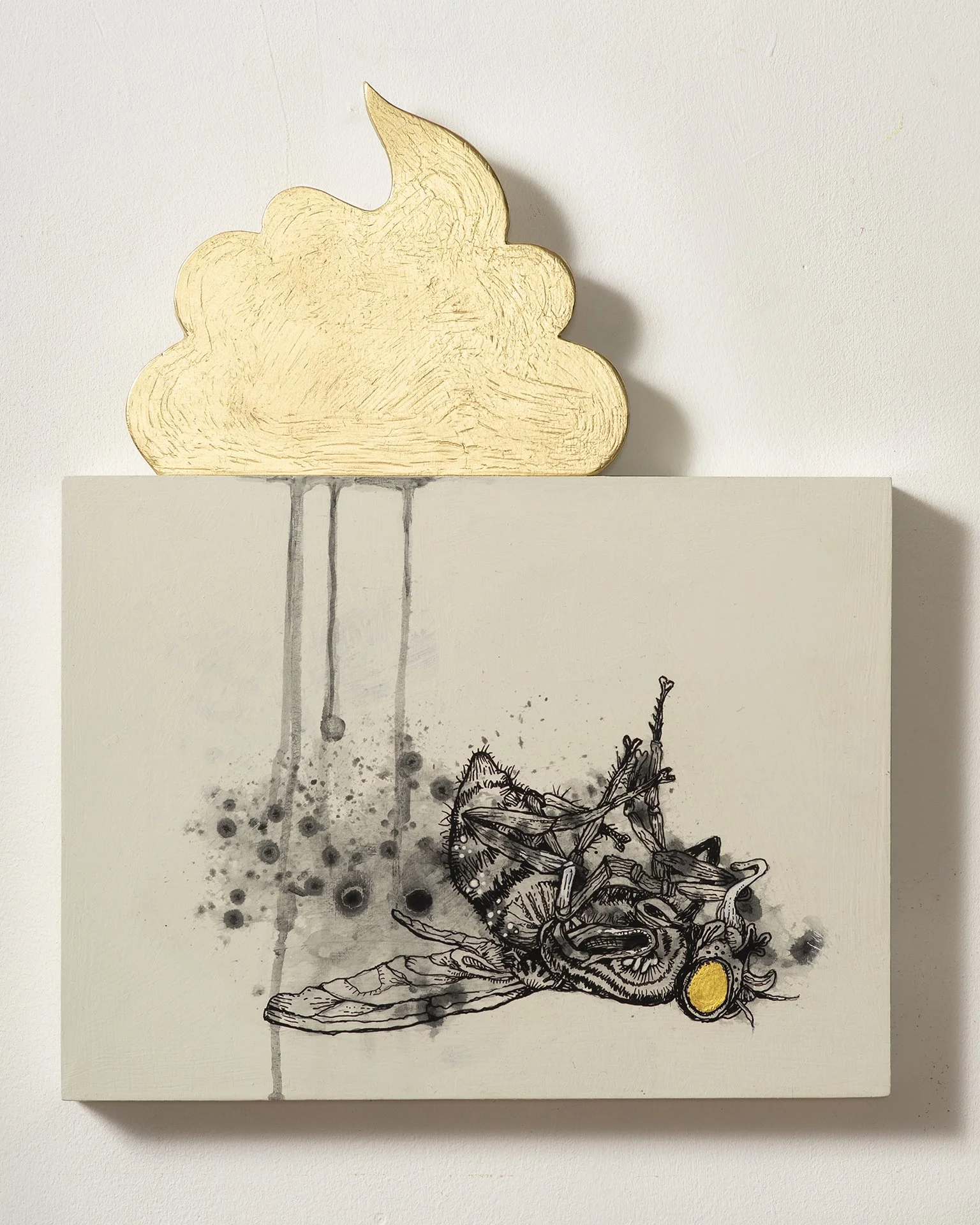
Drawing has always been my main focus using basic lines and markmaking on surfaces. My sculptures and paintings are basically drawings in different forms. Adding occasional color in a specific spot is usually my way to emphasize an emotional element or touchpoint. The graphic nature of black and white is the texture structure and foundation of the work. The color adds an element of drama, the cherry on top.
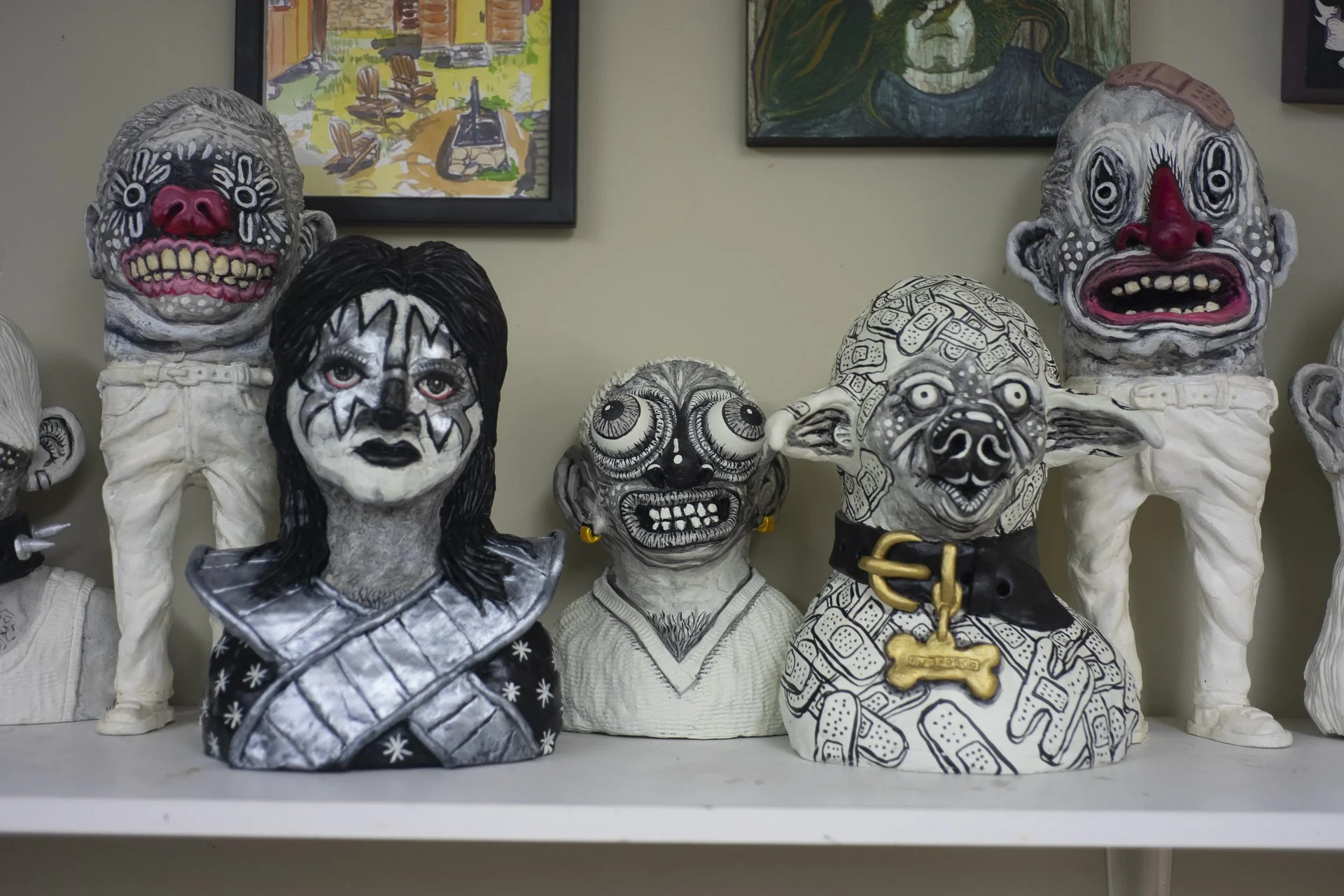
What brought you to The Bay Area from the East Coast?
I grew up on the North Shore of Massachusetts and attended MassArt where I met my wife, artist Mary Kalin-Casey. We lived in Boston for a number of years. We moved to Rhode Island where I started a business with friends which ended up going nowhere. Mary was writing content remotely for a San Francisco-based startup, and they offered her a fulltime job and relocation. We decided to try the Bay Area and moved here in 1998 and never looked back.
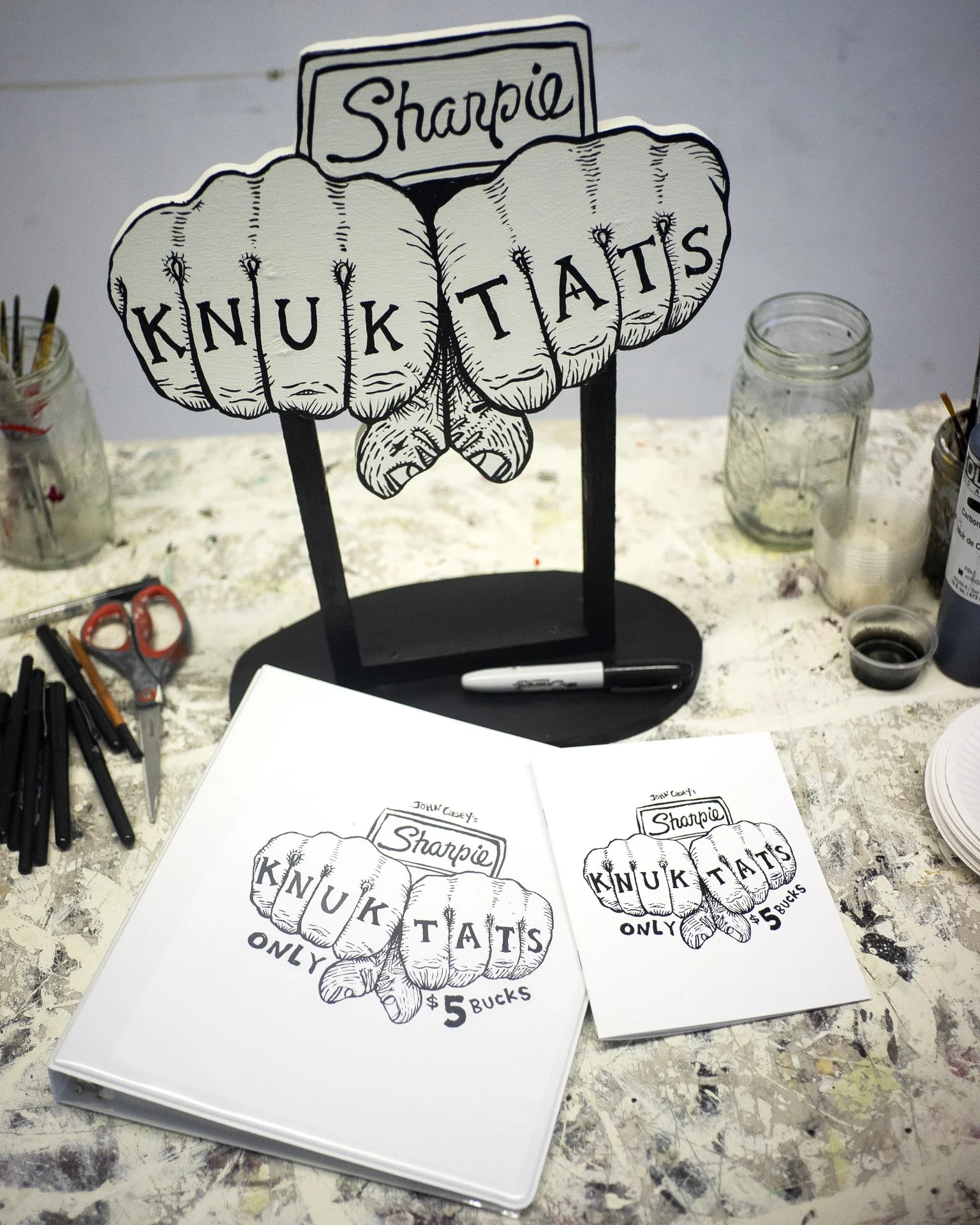
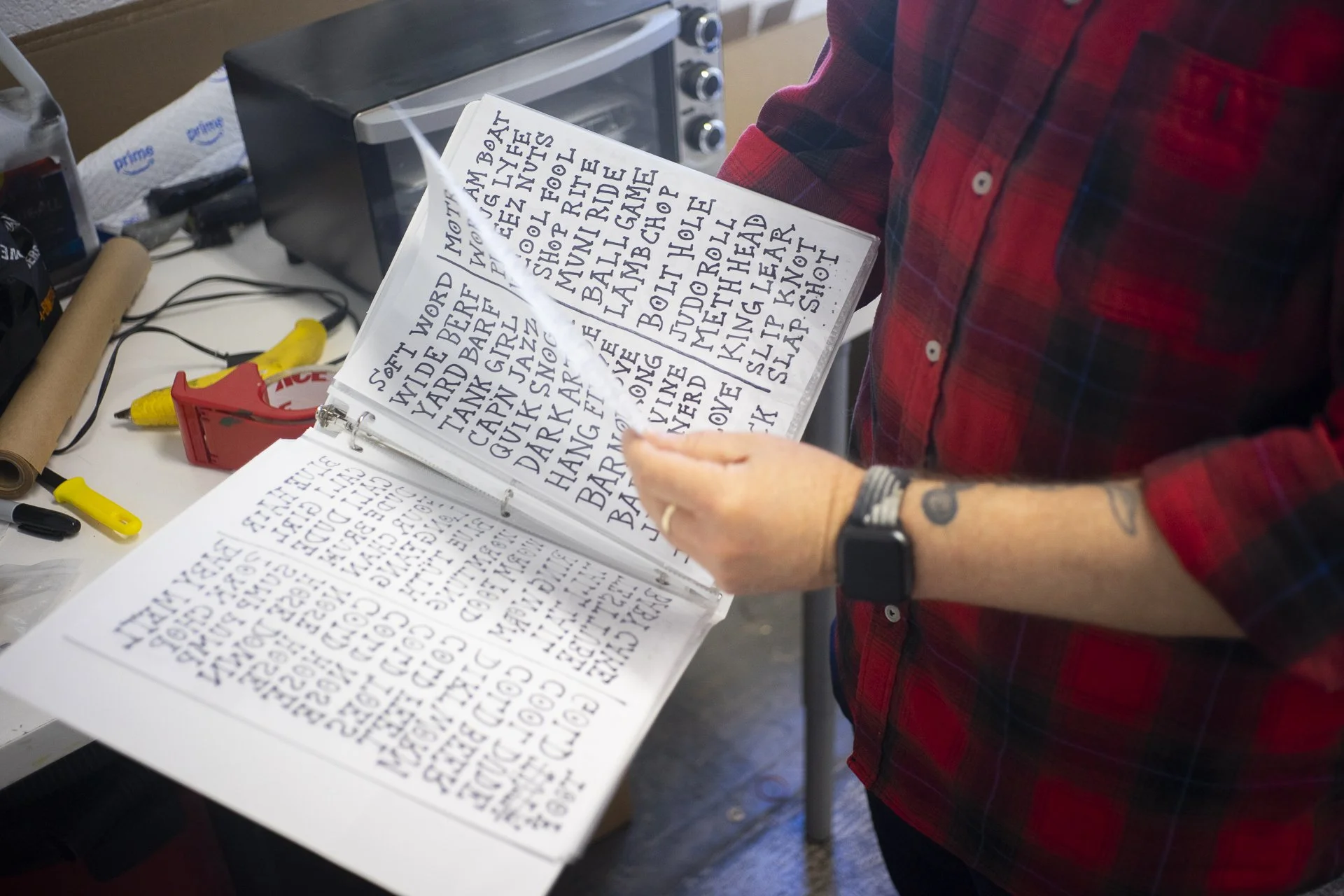
How did you come up with the idea for the Knuk Tats and the zine?
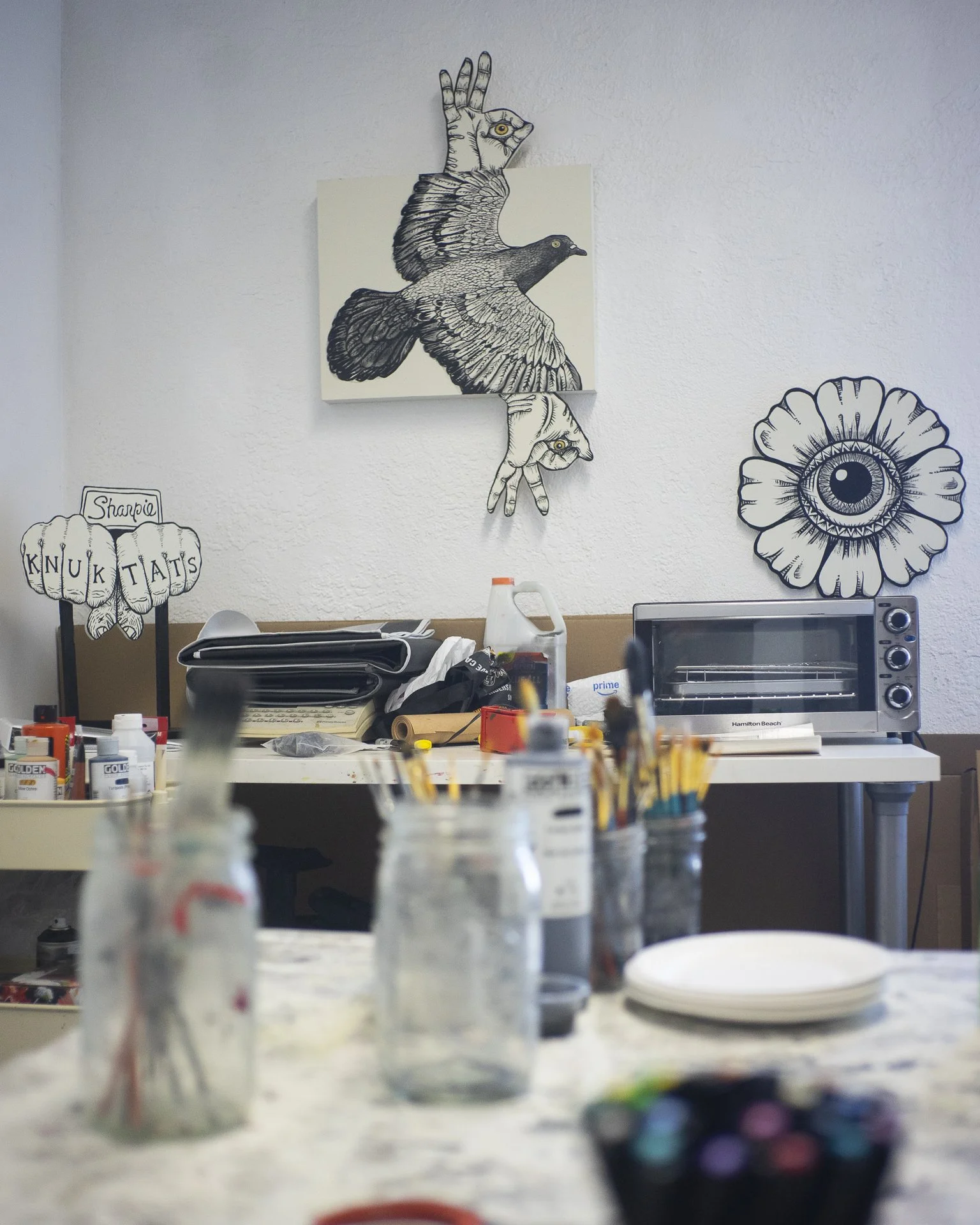
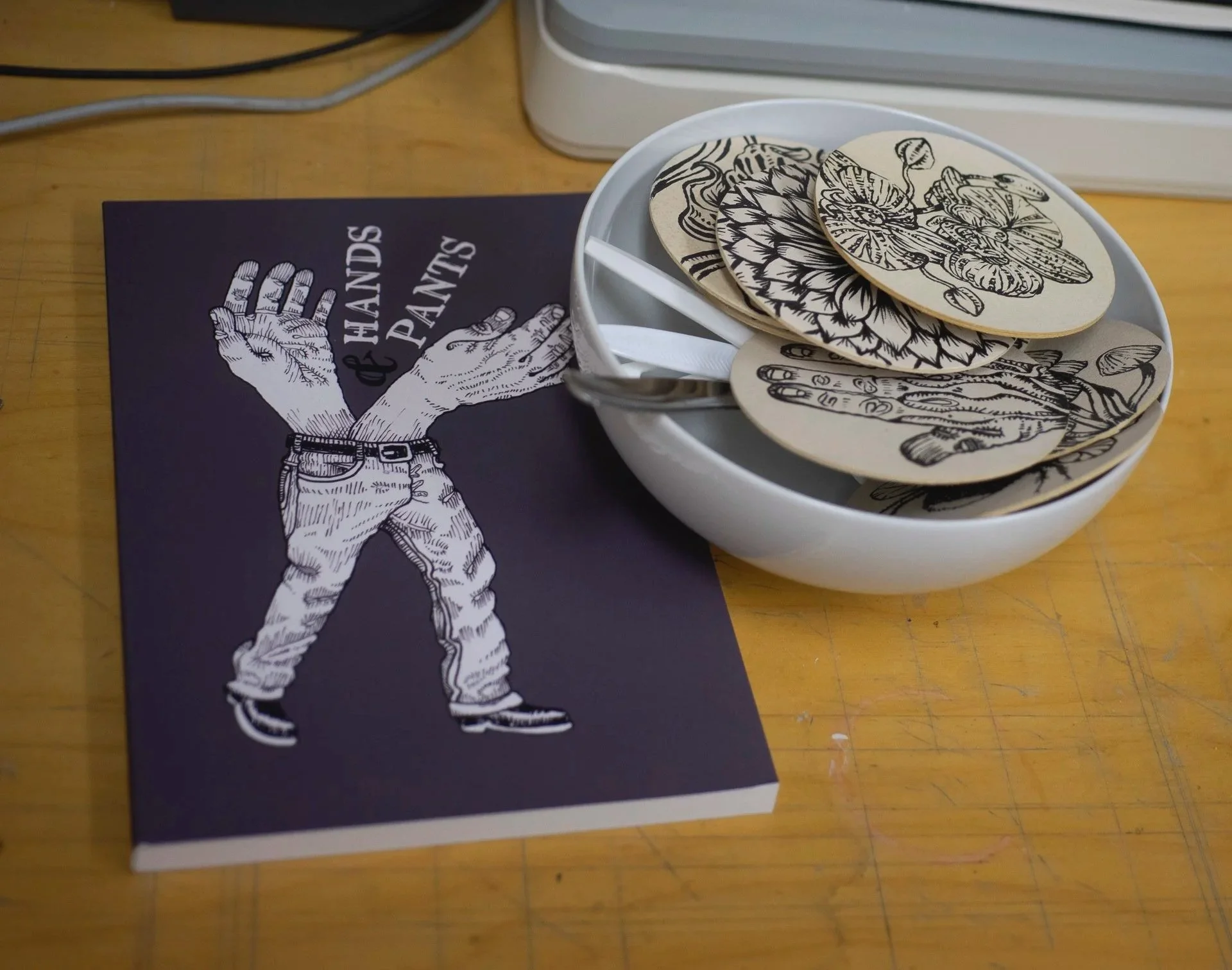
Sharpie knuckle tats are a goofy party trick that’s been around for a long time. Years ago my friends and I would write the most ridiculous 4-letter word combos on each other at gatherings. Painless and temporary, they allow you to try some completely absurd word play. Last year I was participating in a staff holiday art fair at the SFMOMA. Instead of selling the usual prints, patches, and pins, I decided to try something silly and performative. I made a Sharpie KNUK TATS sign for my table, along with a “flash book” where I wrote lists of combos in Sharpie to inspire folks. At the event I had a decent line of folks wanting to get “tattooed,” which was fun. People thought the combos in the flash book were hilarious, so I made a zine out of it.
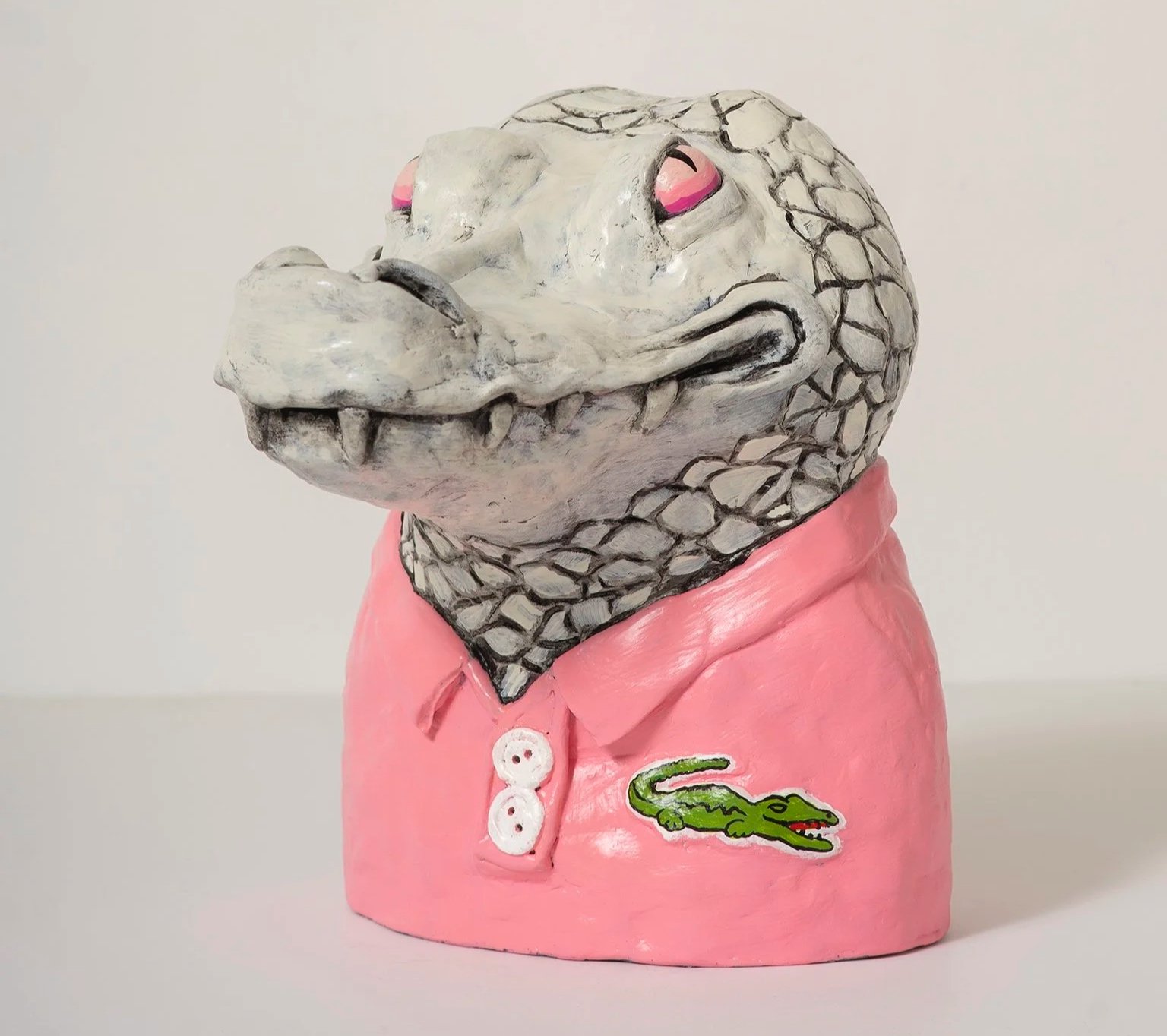
Your mediums fluctuate between illustration, painting and sculpture (and sometimes Knuk Tats), what do you like about the flexibility of shifting between these mediums?
I don’t get bored, that’s for sure. Usually I work pretty intuitively, and I let the subconscious ideas and my personal emotional prompts help choose the medium I use. It’s a way of problem-solving, deciding which format best conveys the idea I want to present.
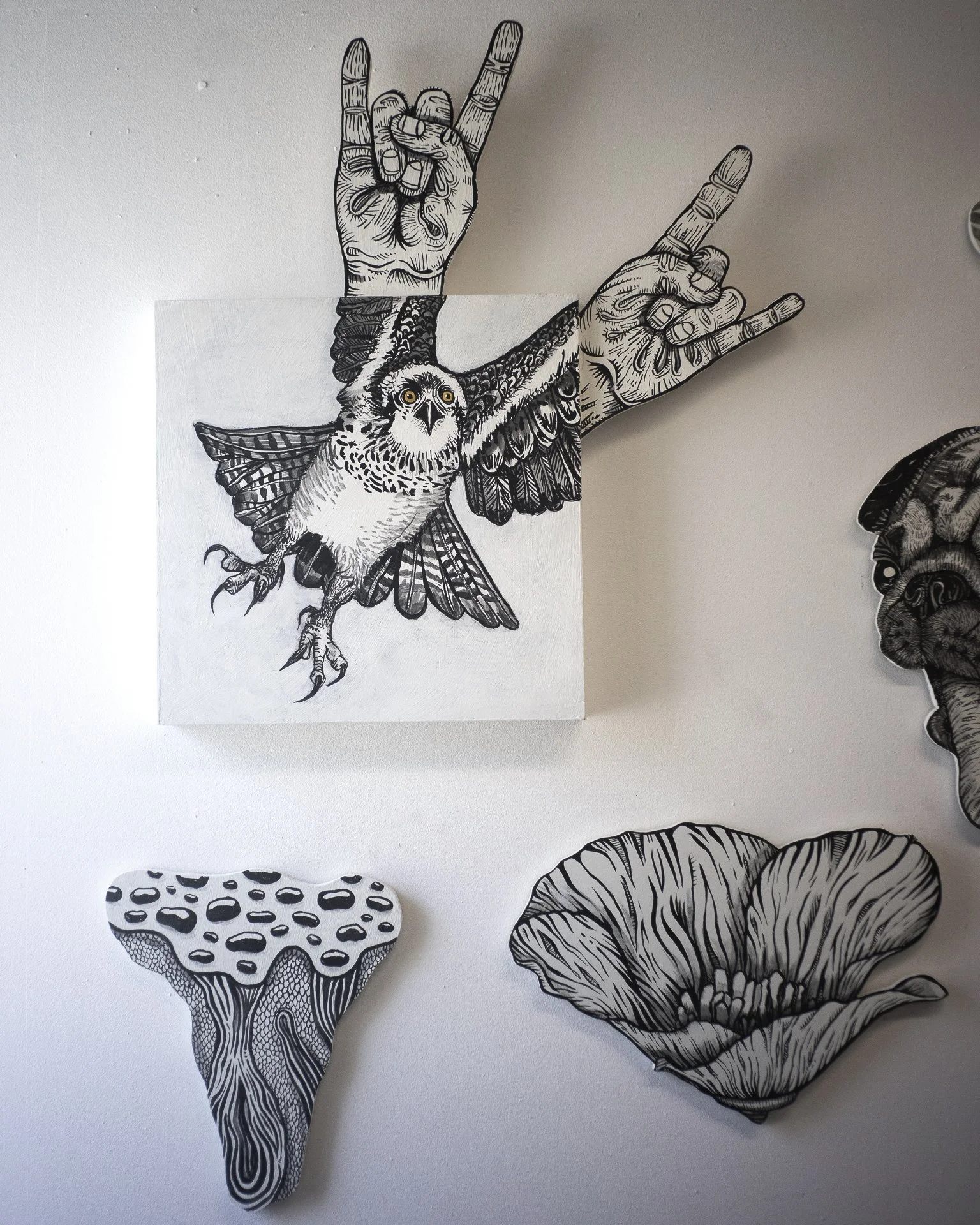
As an artist do you feel a social responsibility to speak about or document the culture and politics of our modern age?
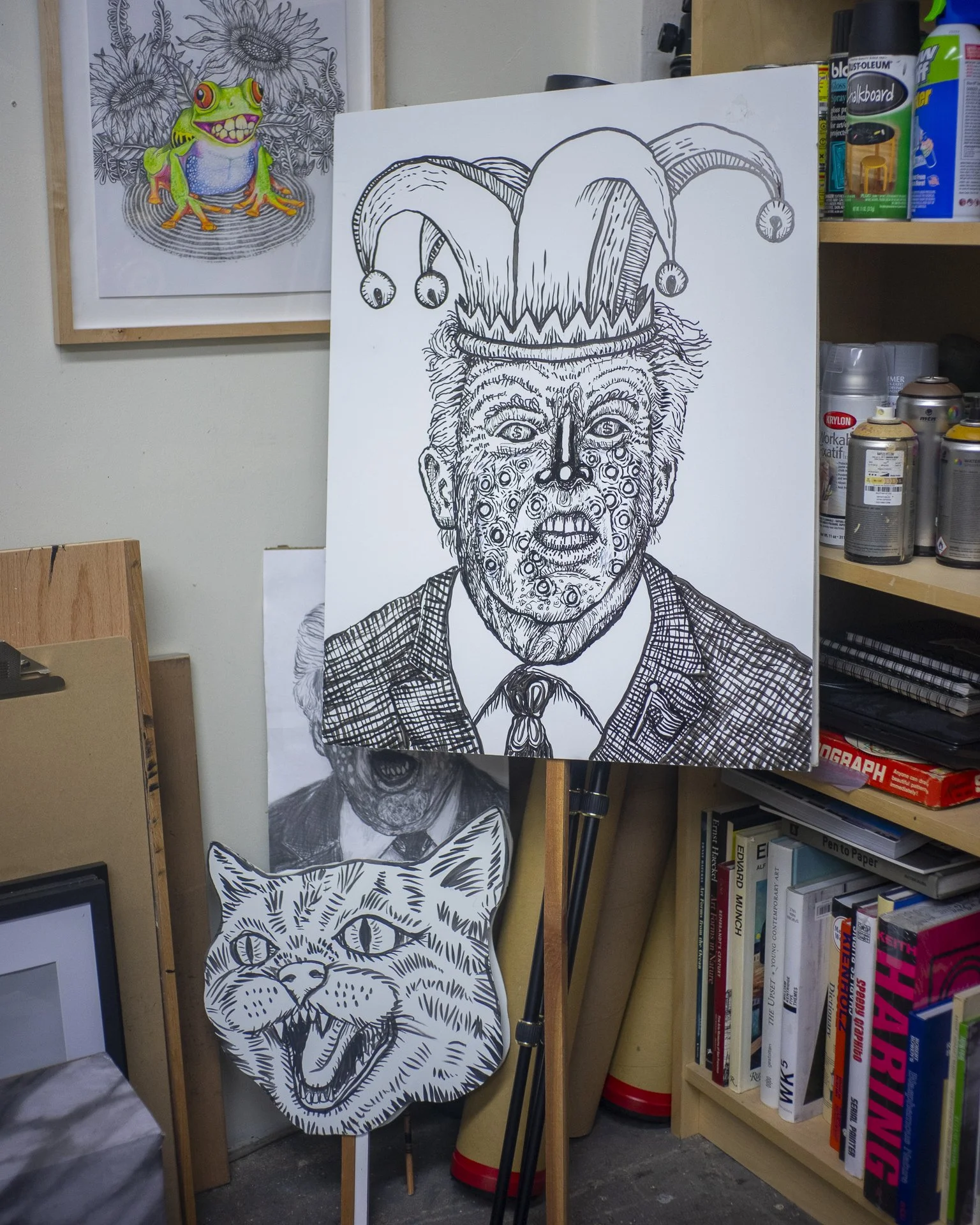
Somewhat. Like a number of artists, I’ve made some extremely unflattering drawings of Trump and some of his sycophants. A few of those artists were part of a recent traveling group exhibit in Germany titled “Wow, What a Shit Show.” Curated by artist Anne-Marie Stöhr, the exhibit emphasized American artists' response to Trumpism. For me, that’s some pretty blatant political art that is very cathartic to create. I’ve also made some “creative” protest signs for the No Kings protests. But I do wonder how effective obvious political messaging in art is for changing people’s viewpoints. Culturally most Americans are so siloed and rigid in their political belief systems. That said, I think posting political art and messaging on social media and attending protests are collective actions that can help sway undecided folks over to progressive viewpoints.
As the bounds of absurdity expand in the landscape of media, politics, technology and AI, how does that influence the art you create?
If dystopian sci-fi has taught us anything, AI will destroy us. Or at least make lots of people jobless. You think there are lots of artists in the Bay Area? Imagine all the people with all that free time on their hands becoming artists. Maybe that’s a good thing? I honestly don’t know. I currently don’t have any interest in using AI in my process. But I hope AI just becomes a possible tool artists can choose to use to support their handmade practice versus replacing it, just like Photoshop or other digital tools. And maybe the hunger for the handmade will grow as AI becomes more prevalent.
You mentioned “turning the wrong way to keep things interesting and growing creatively.” Can you expand on that idea and how you apply it to your studio practice?
Yes, when I’m drawing or painting I have found there’s an easy rhythm one can fall into and rely on by making predictable marks and strokes and gestures. Over the years I’ve made a conscious attempt to choose the wrong way to apply marks on surfaces. This “braking” forces me to move in all directions, sometimes unnaturally, and rotate the surface. This forced confusion adds energy to my drawing or painting and opens me up to making mistakes which can become discoveries. I refer to this process as maintaining the “play space,” where I can be very free. Ideally this method permeates all aspects of my creative process.
When you’re not making art, what do you do to unwind?
Hang with my awesome wife and my cats, watch sci-fi TV shows and movies, read, ride my bike, go to museums and other folks’ art shows.
What is your take on the DIY art community in The Bay Area?
It’s great! Hands down the Bay Area has some of the most interesting artists, art spaces, creative events, music, music spaces, etc. that I’ve experienced. I know there’s a lot of concern about art venues closing and lack of support for the arts in The Bay. I understand that. The pandemic derailed some of that energy, and we haven’t fully bounced back. And with the current political climate and economy, there’s reason to worry. But things are always changing and often move in cycles. I’m hoping we will come around to a more positive and supportive arts environment at some point. Societal duress can inspire new ideas and creativity, so I’m hoping folks are able to cope in the meantime.
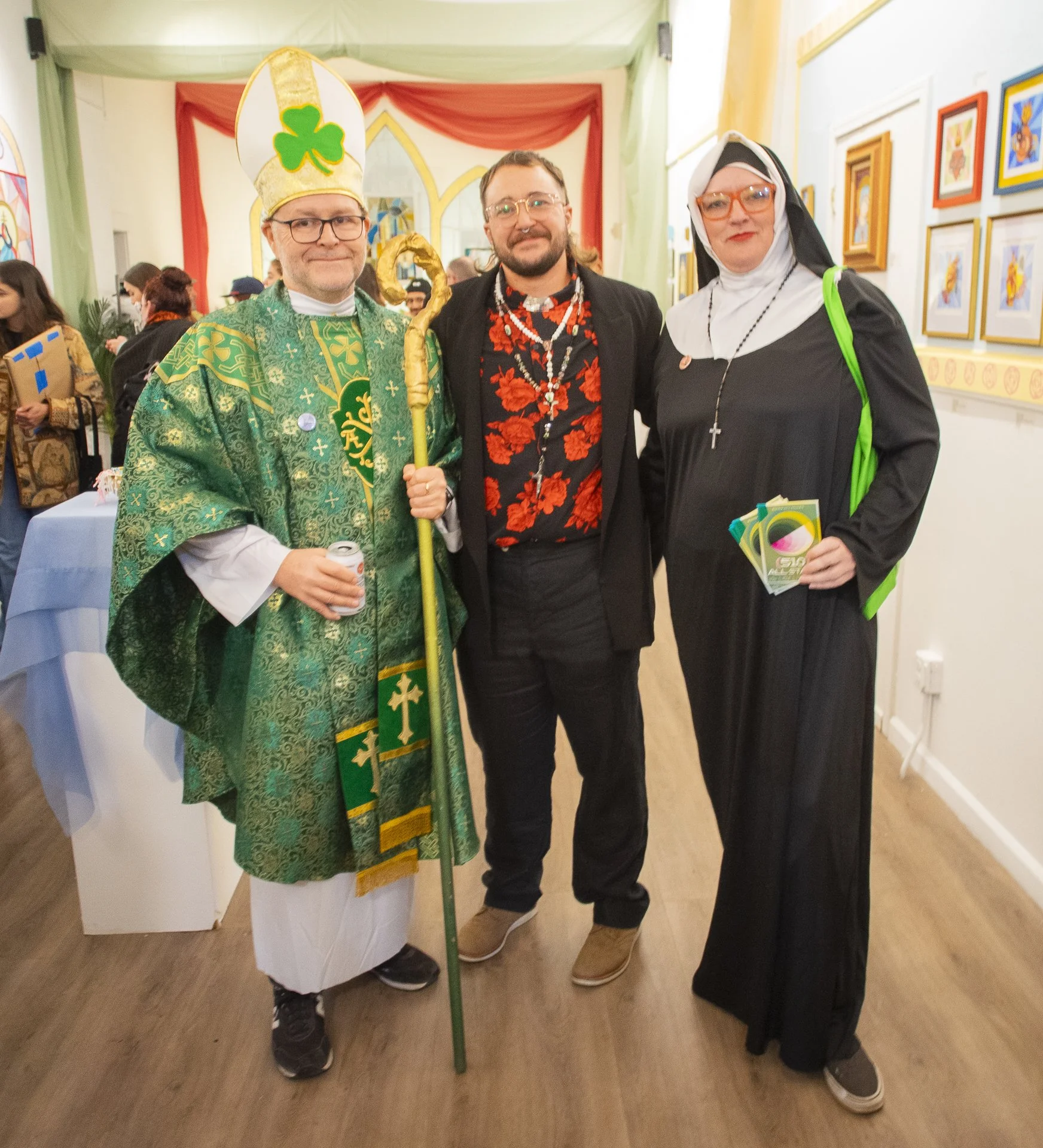
John Casey with Seibot and Stephanie Silk at Seibot’s opening reception for their solo show, “Be Not Afraid” at Moth Belly Gallery in December 2025.