Studio Visit & Interview With Karen Lopez
Interview and Photographs by Brandon Joseph Baker
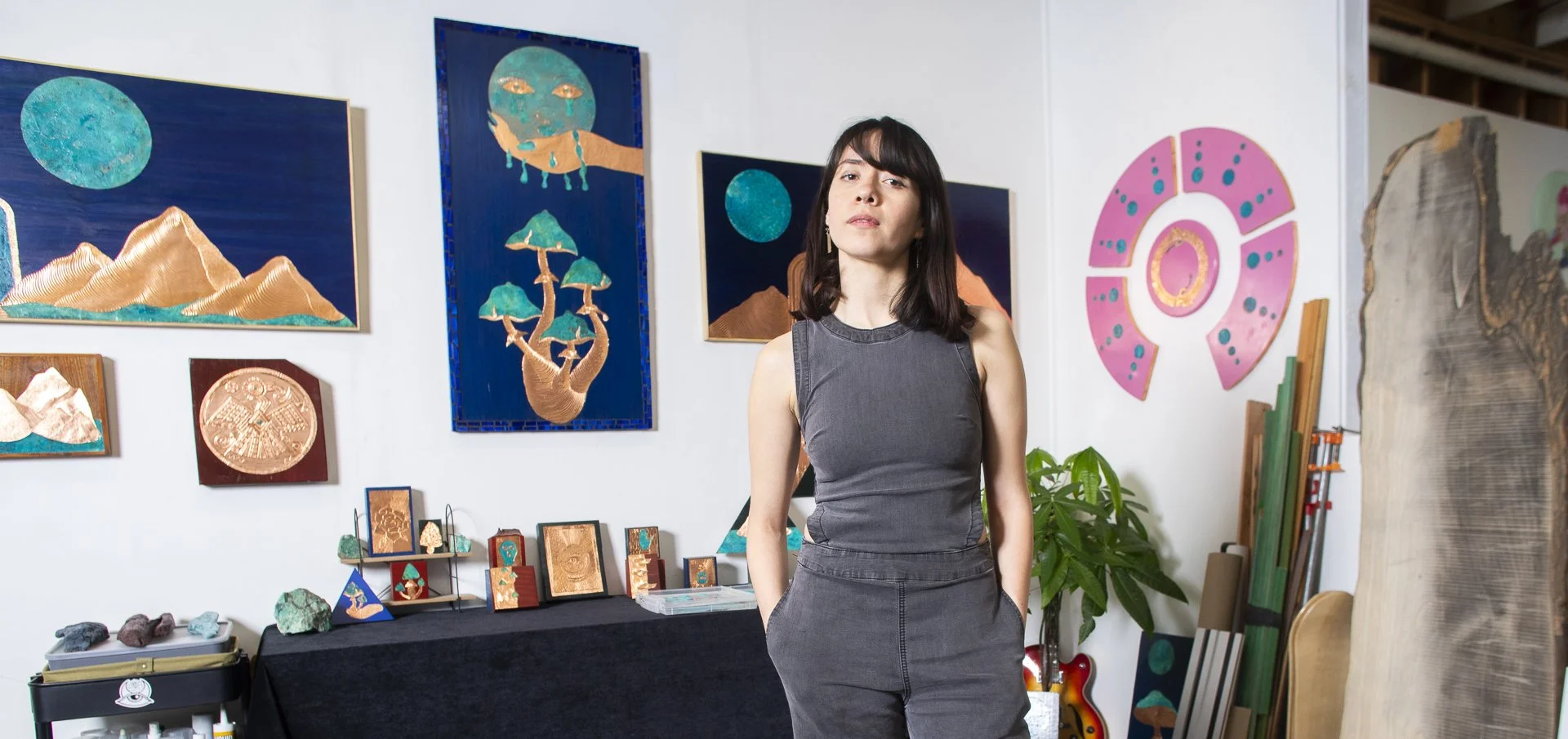
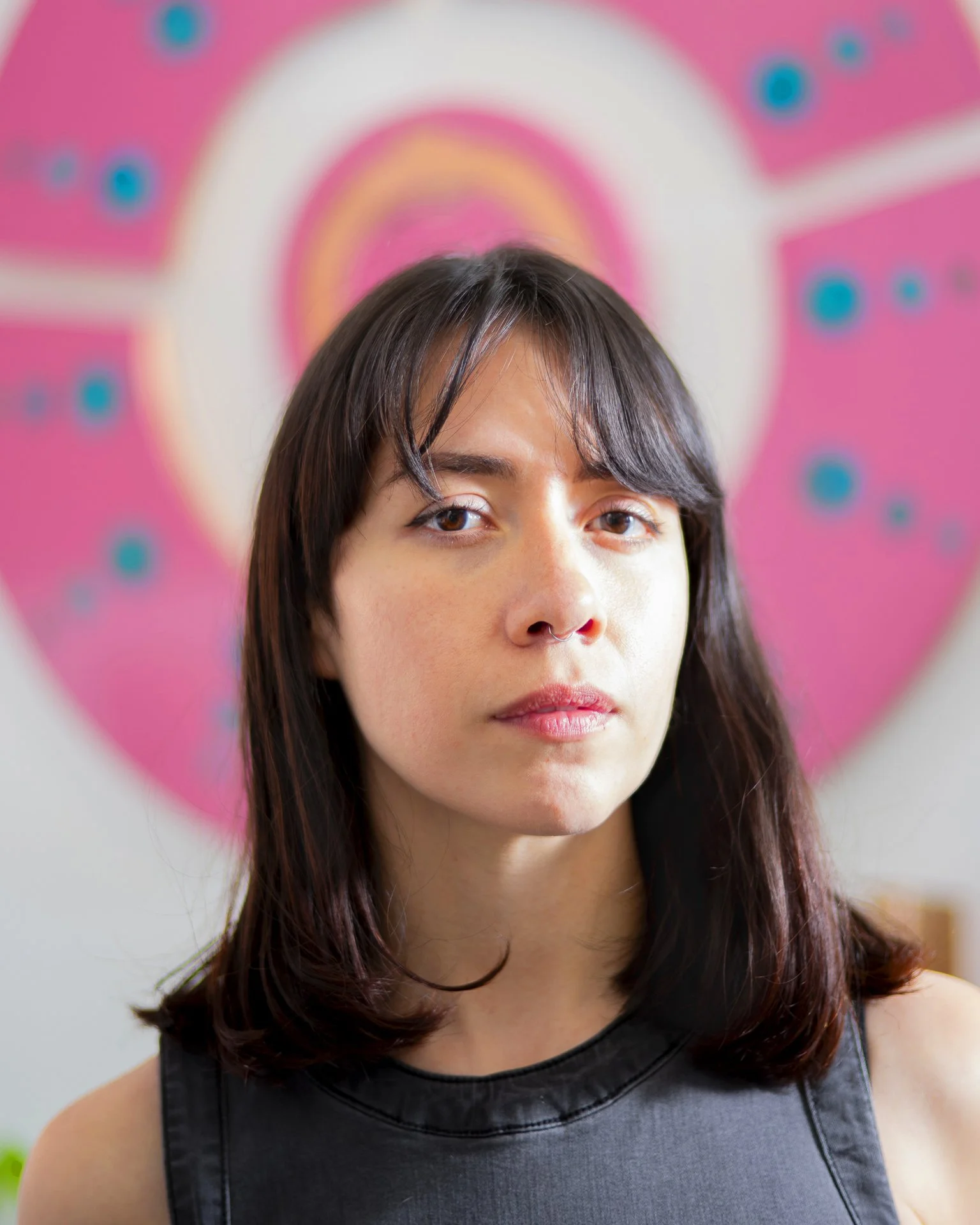
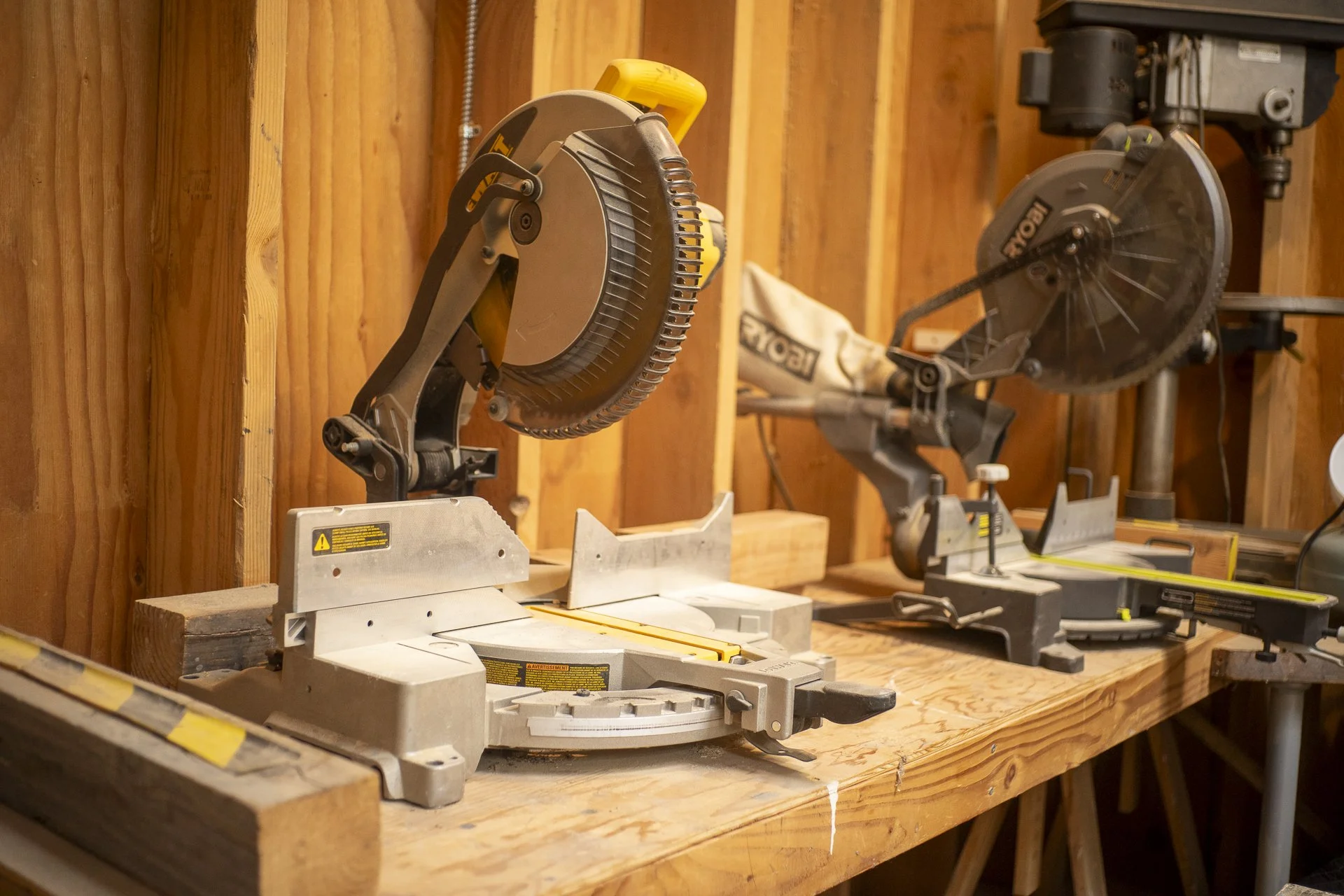
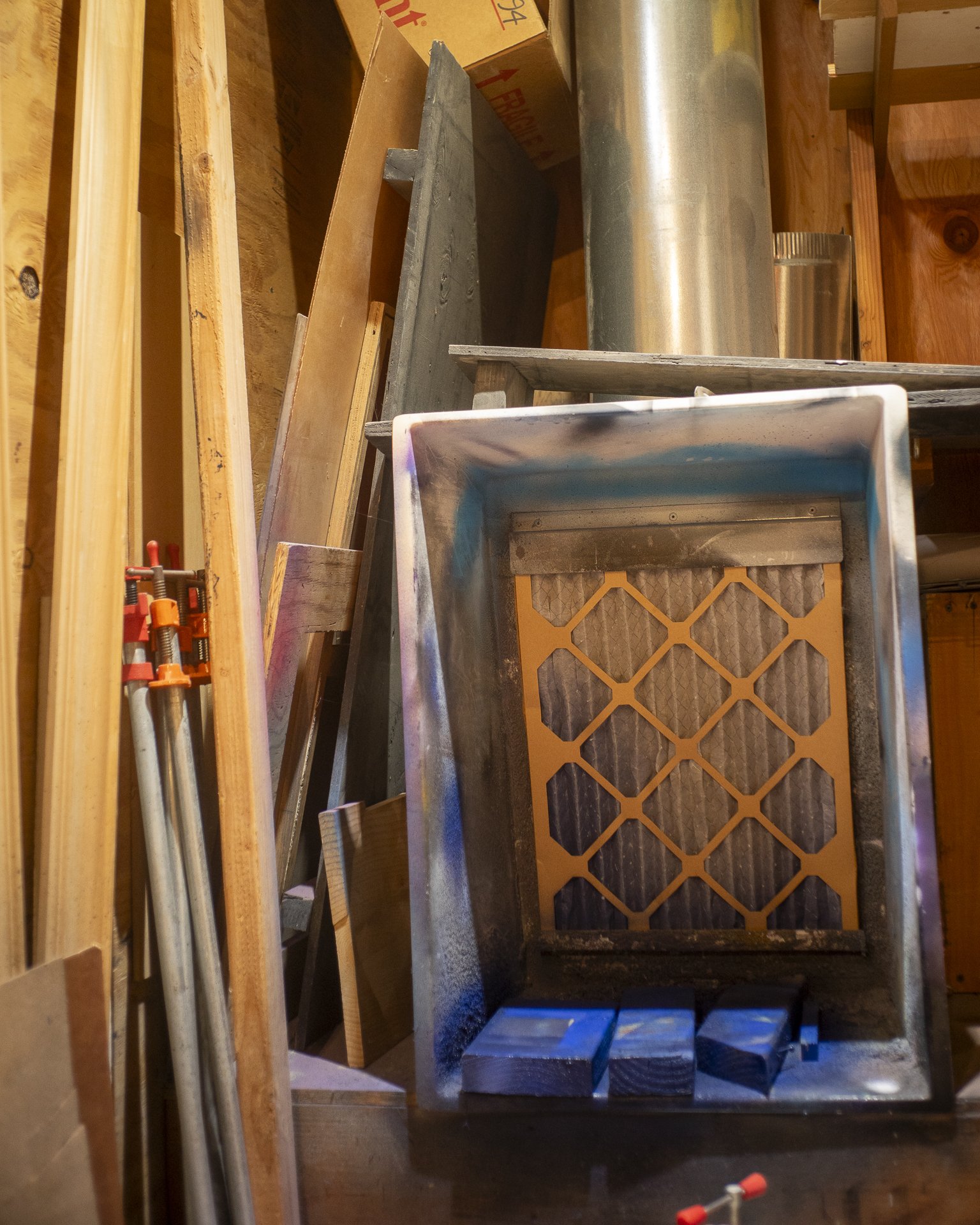
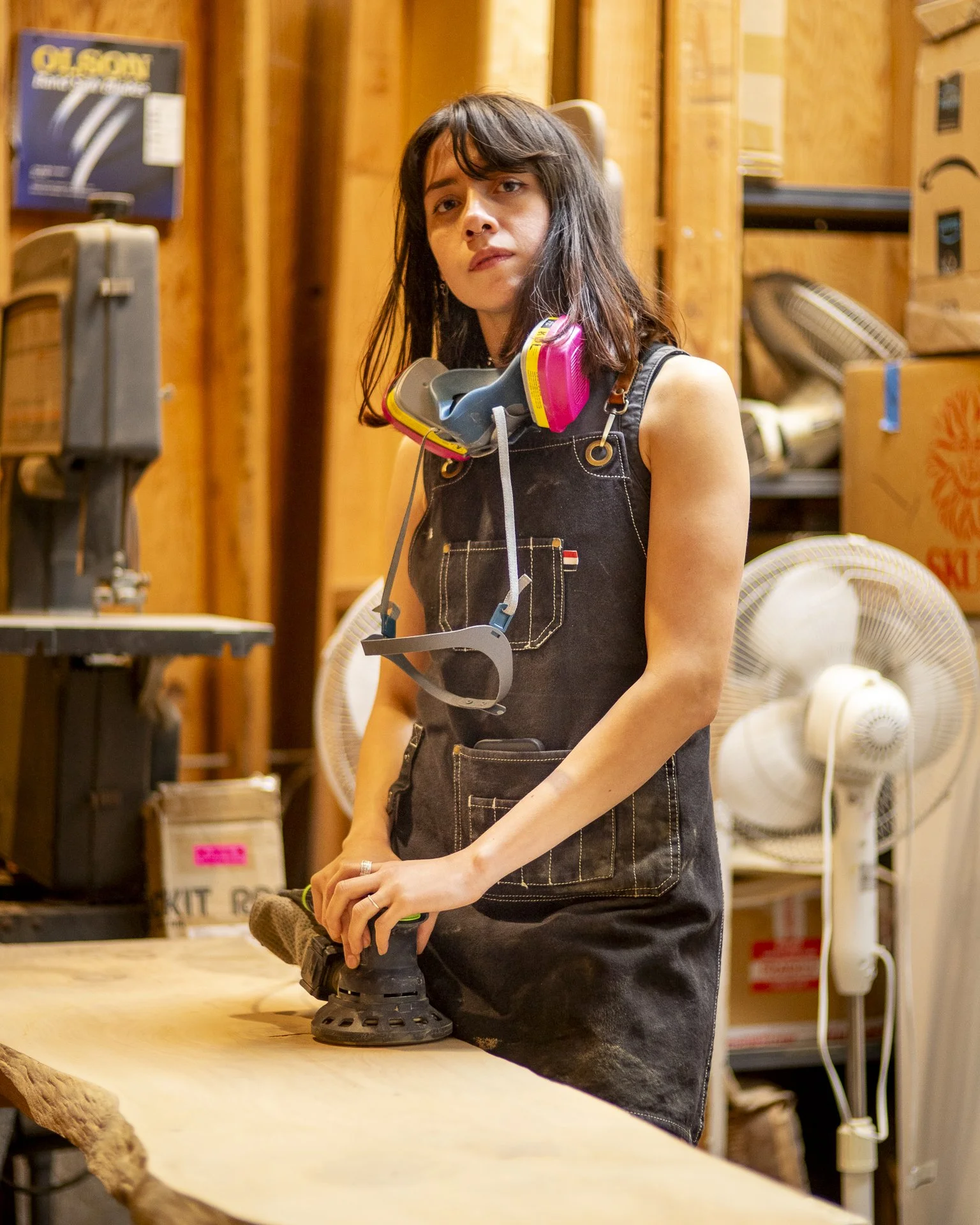
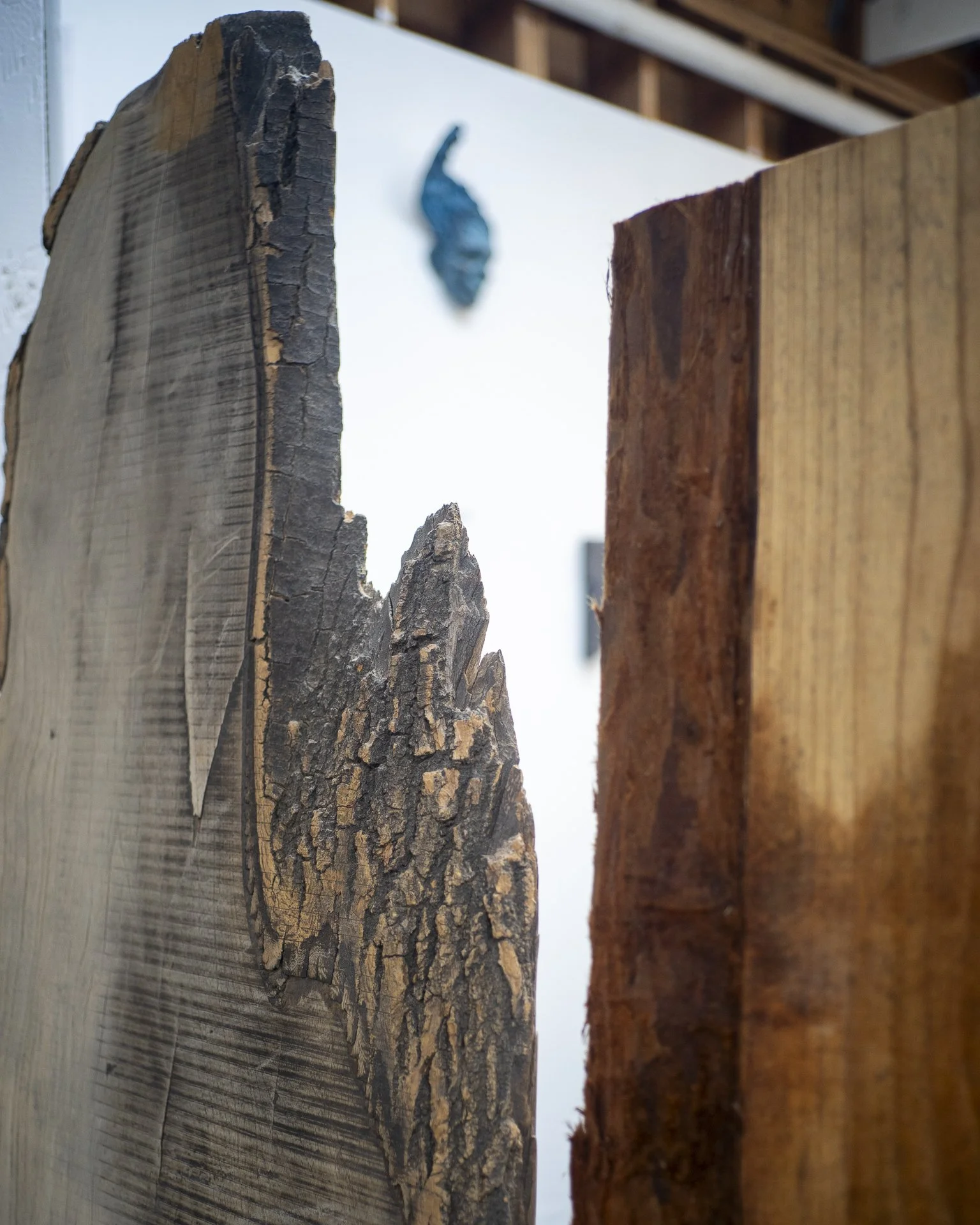
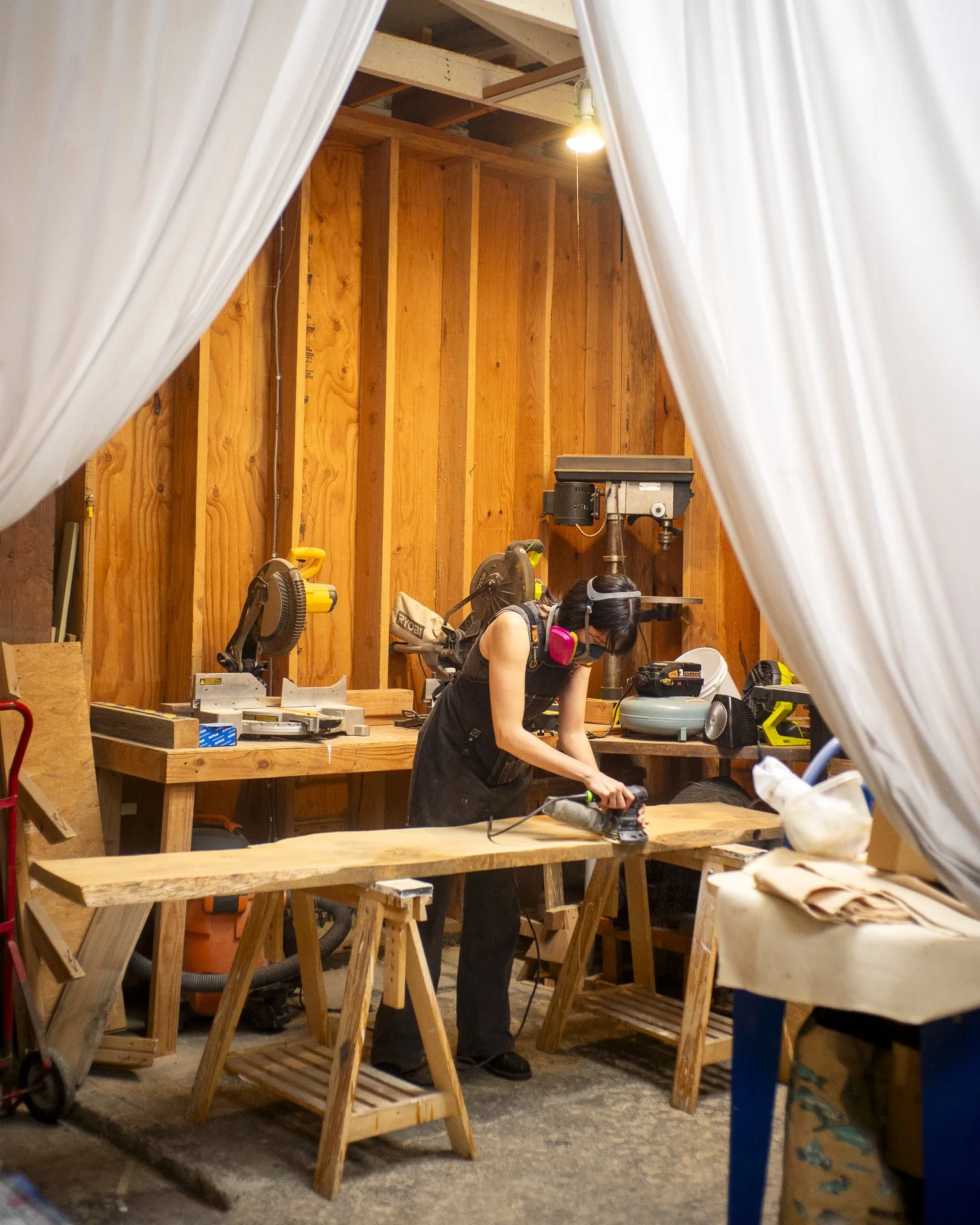
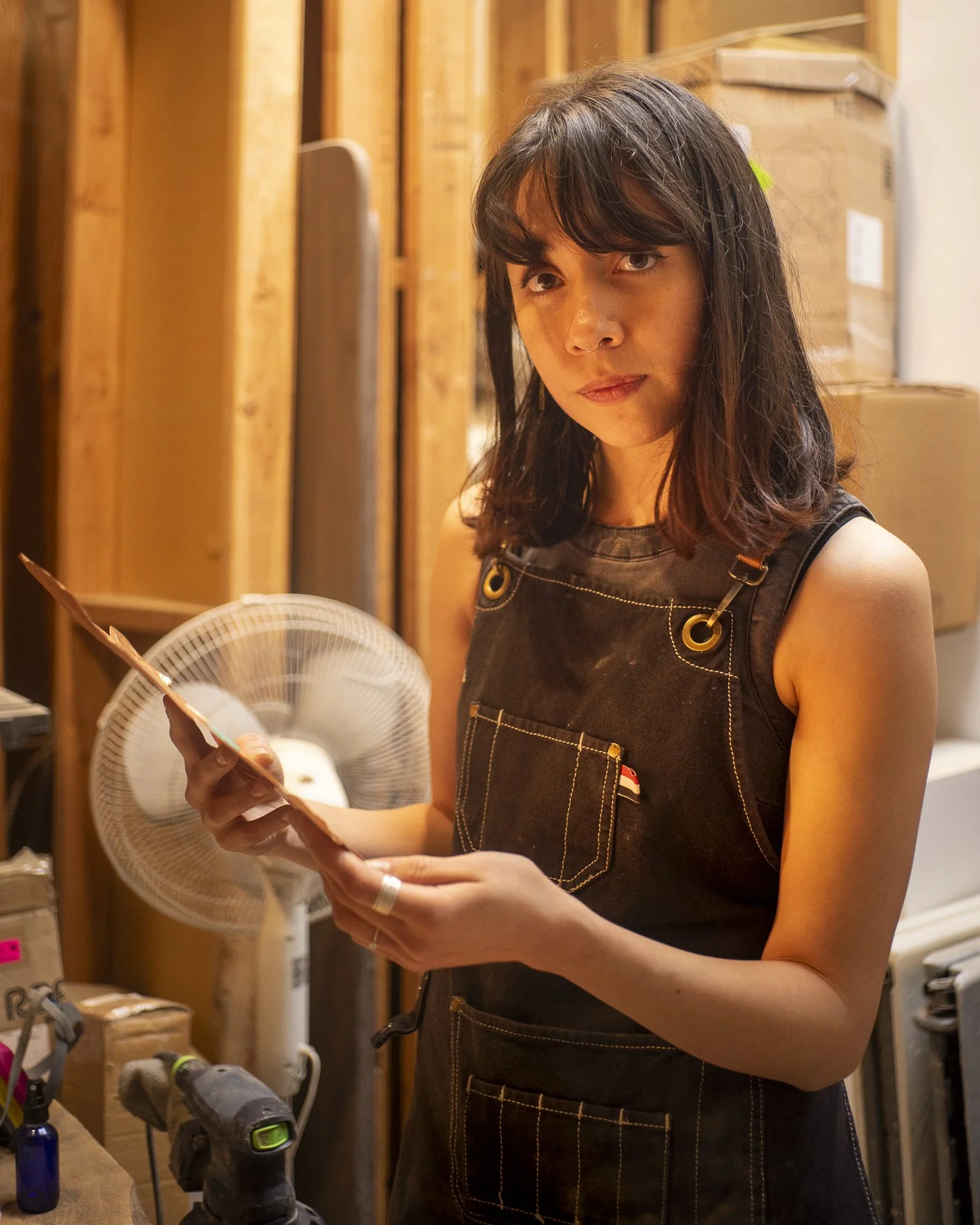
I met Karen Lopez at the front door of FM Oakland on 25th Street in Oakland. The building is quiet compared to my first visit during a rowdy Oakland First Friday when Karen was showing her work in the gallery facade of the ten artist working space. Karen leads me through the gallery, past the kilns and down a center aisle to her space. The space is clean and open, presenting as a show space, not the expected studio littered with scrap materials or works-in-progress. Karen informs me FM Oakland will be open to the public after the interview so she converted the studio to a space to sell and showcase her work. However, there is a wood shop in the back where Karen does a majority of her work. She has sawhorses out to start sanding a new piece while I’m there.
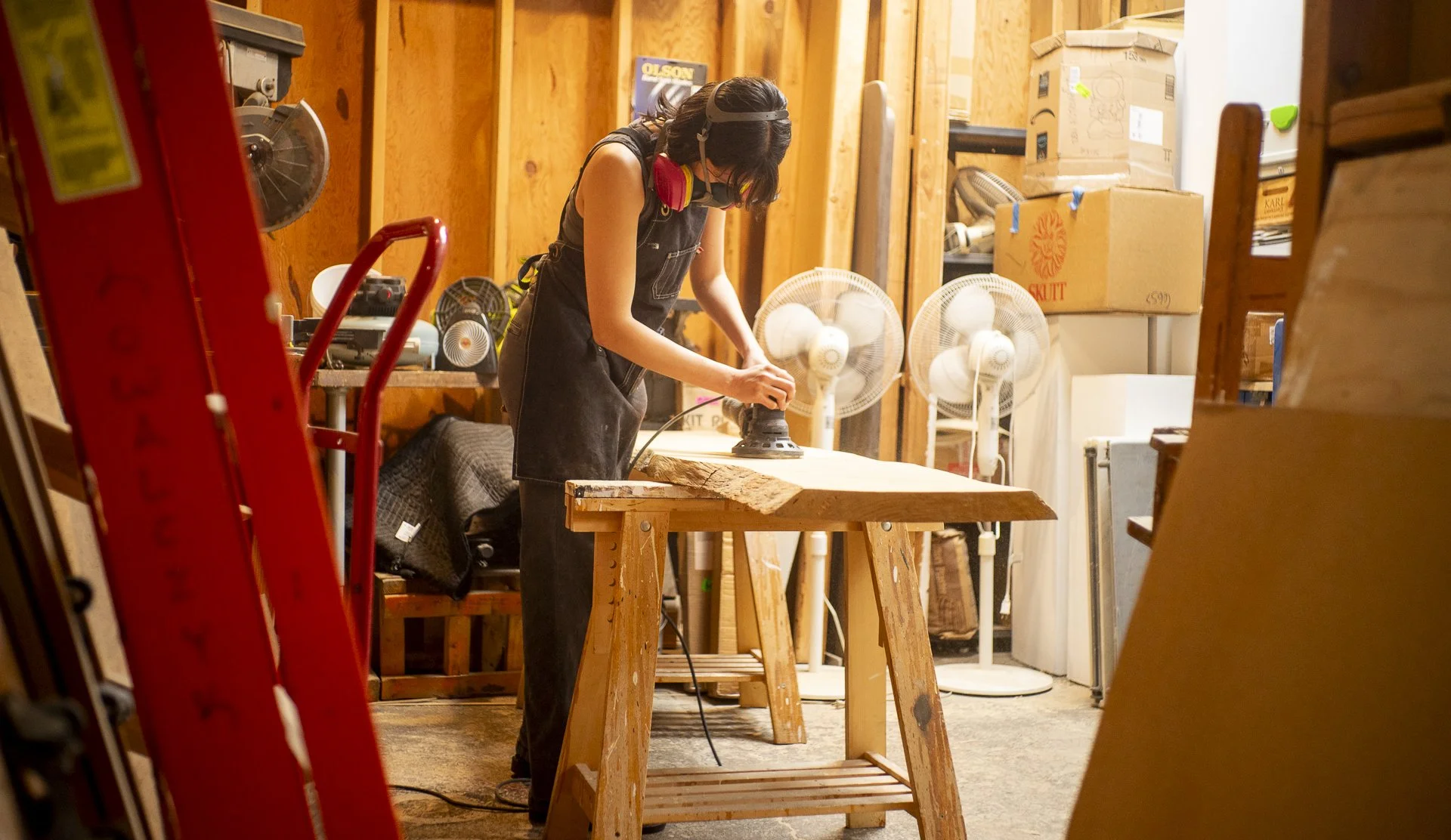
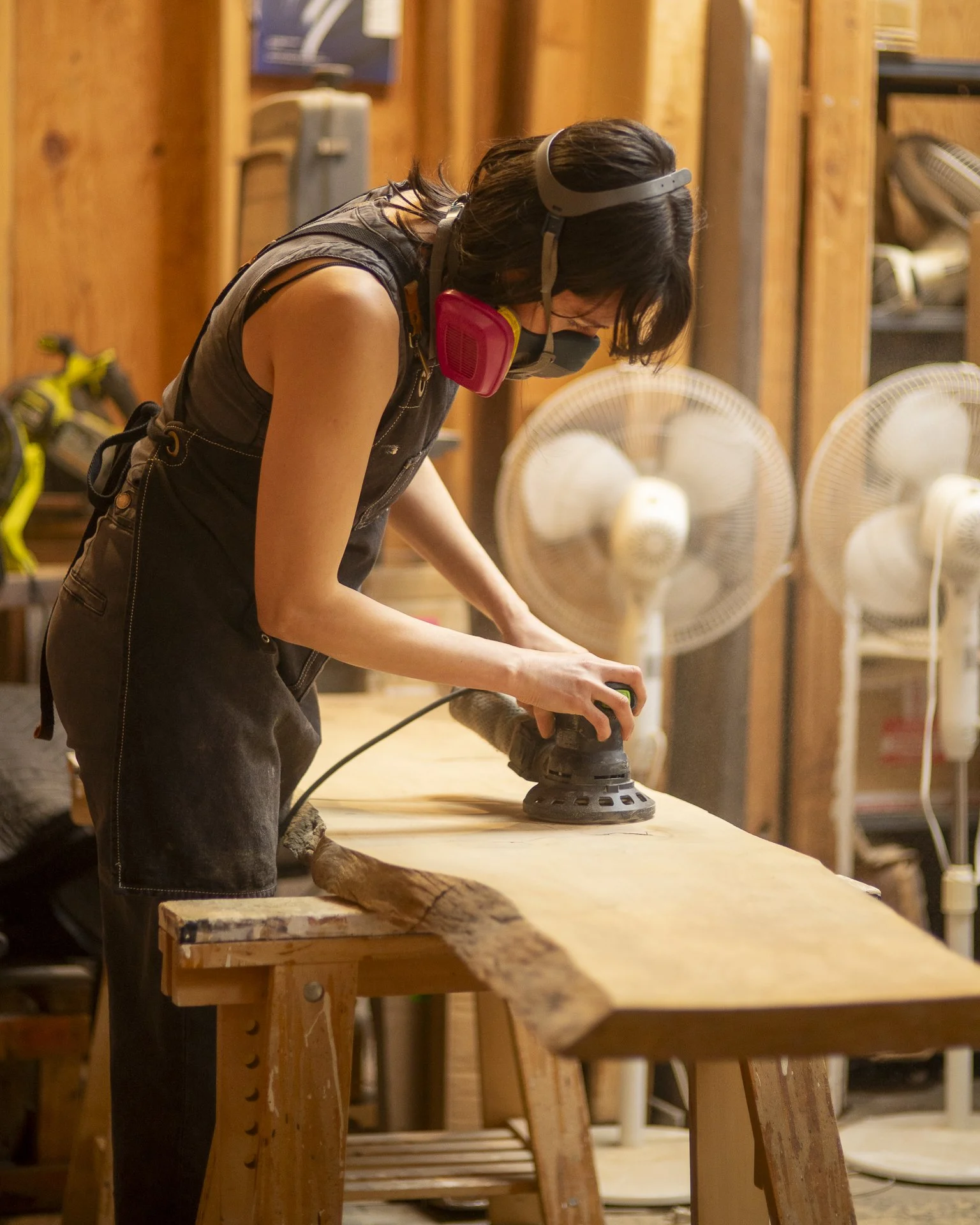
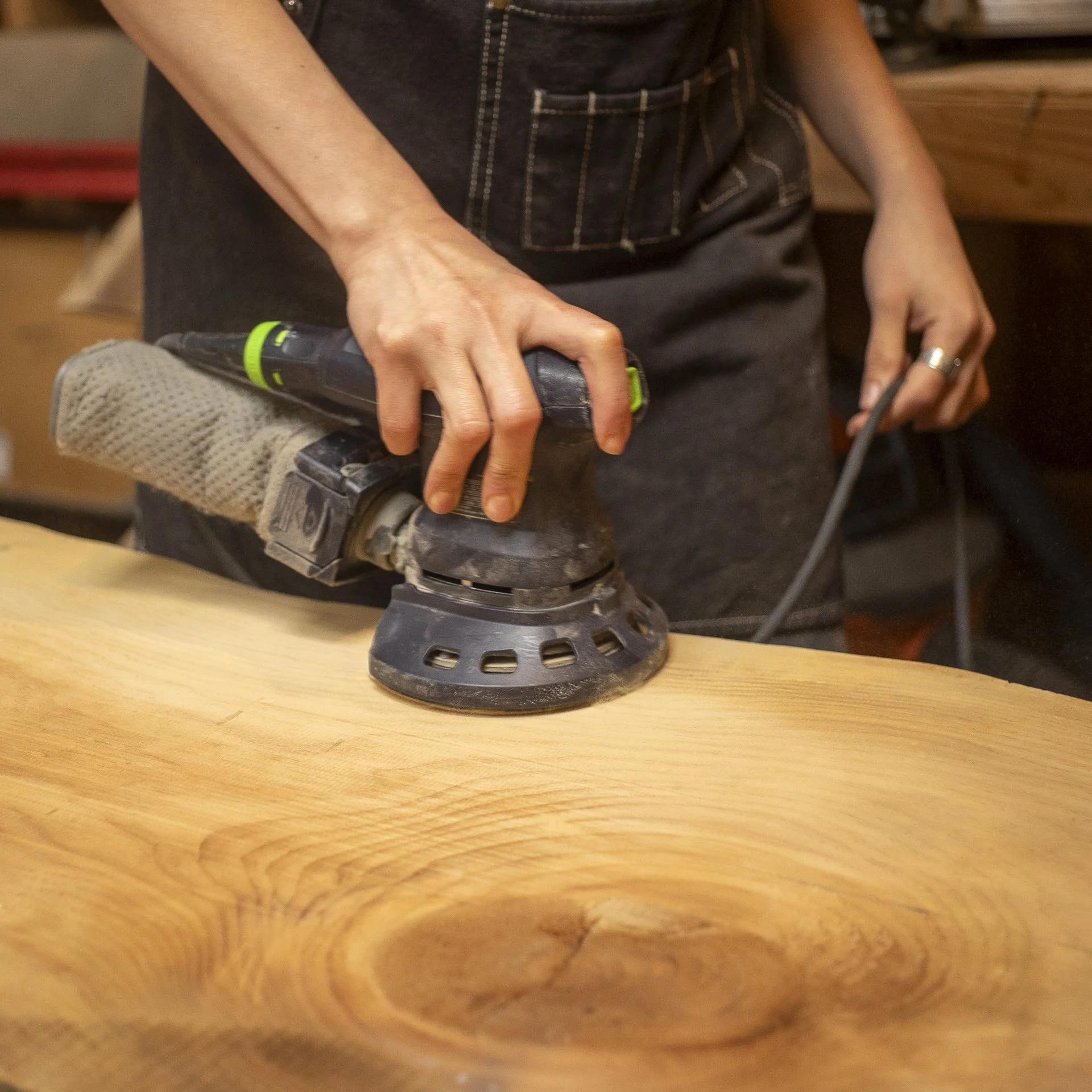
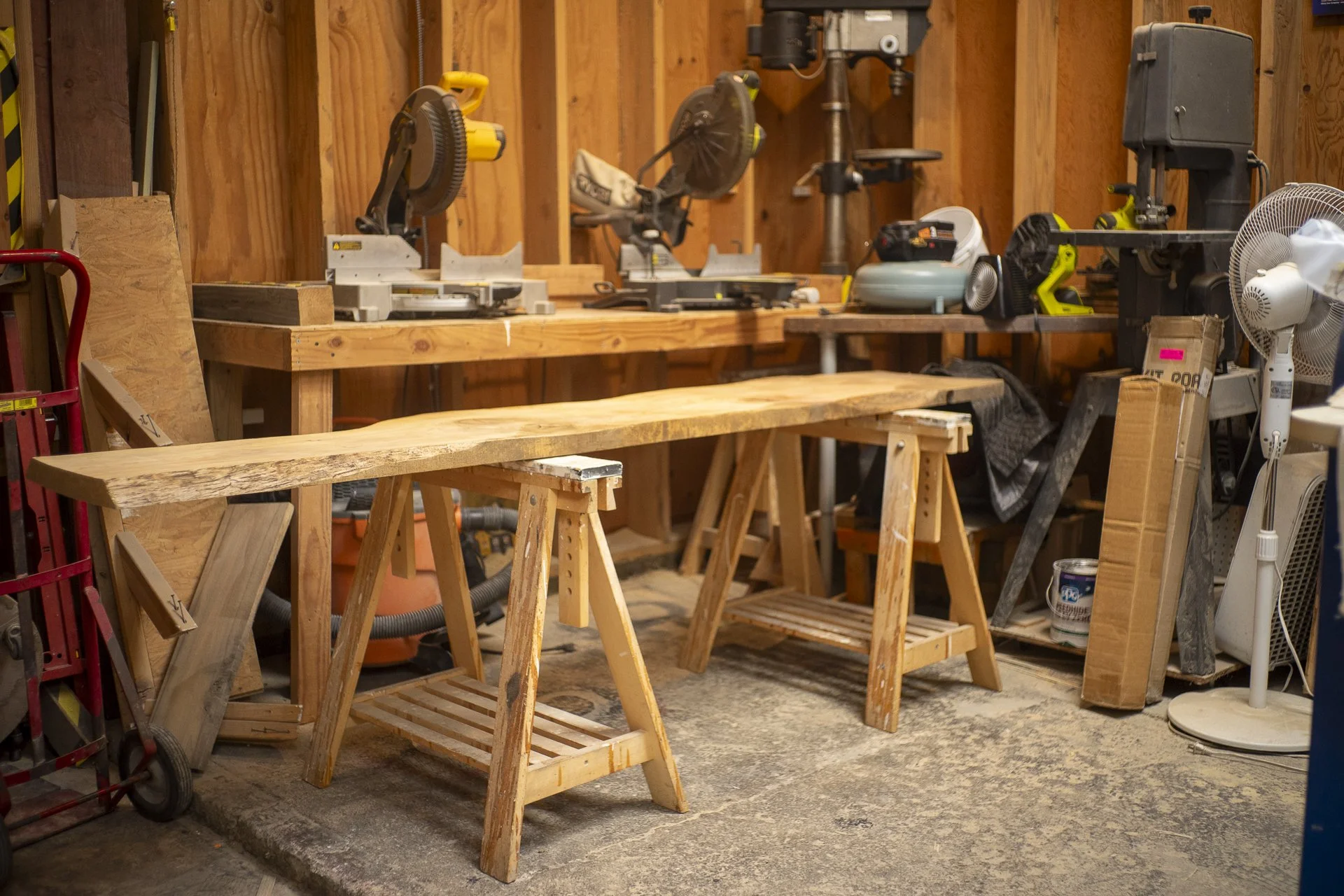
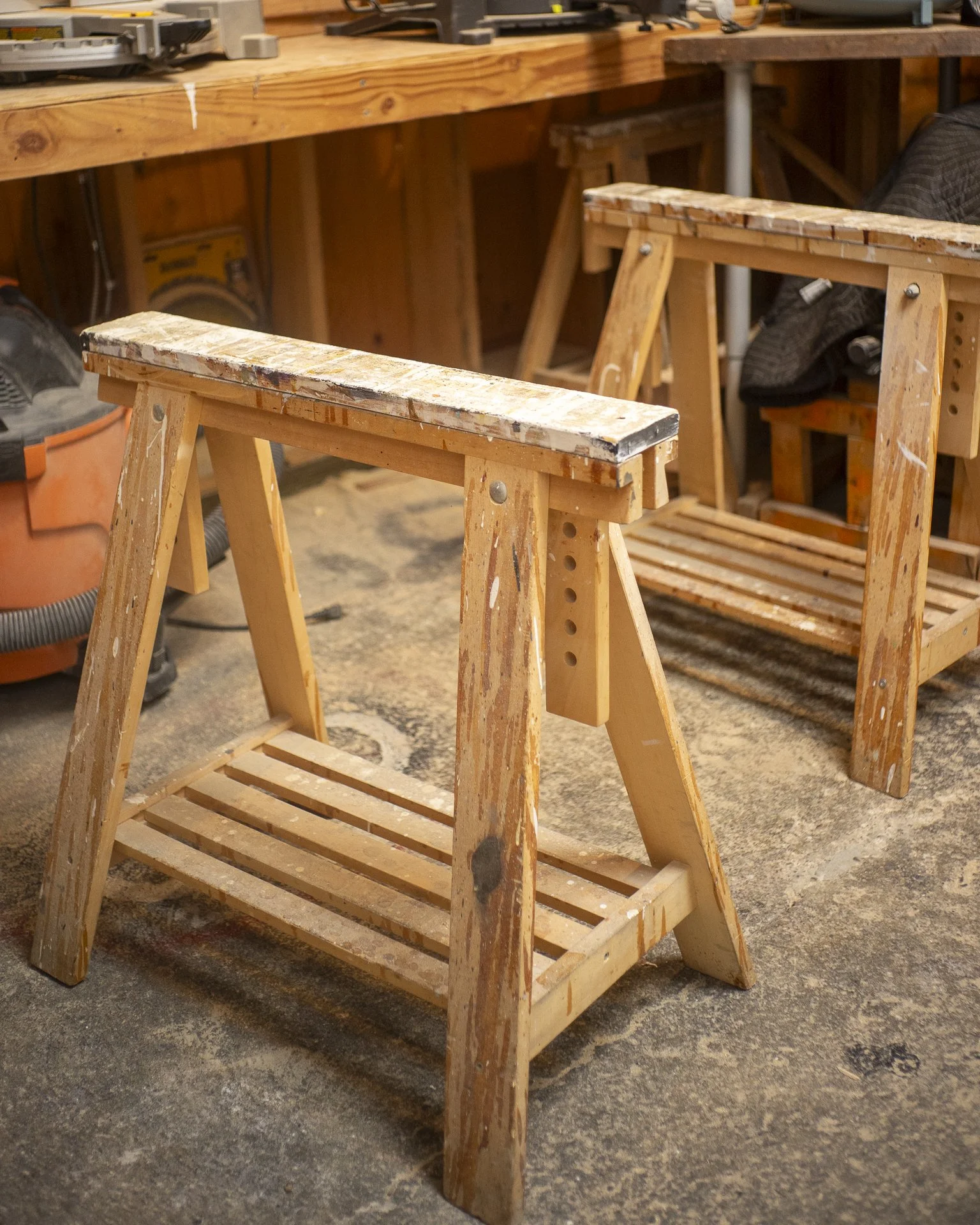
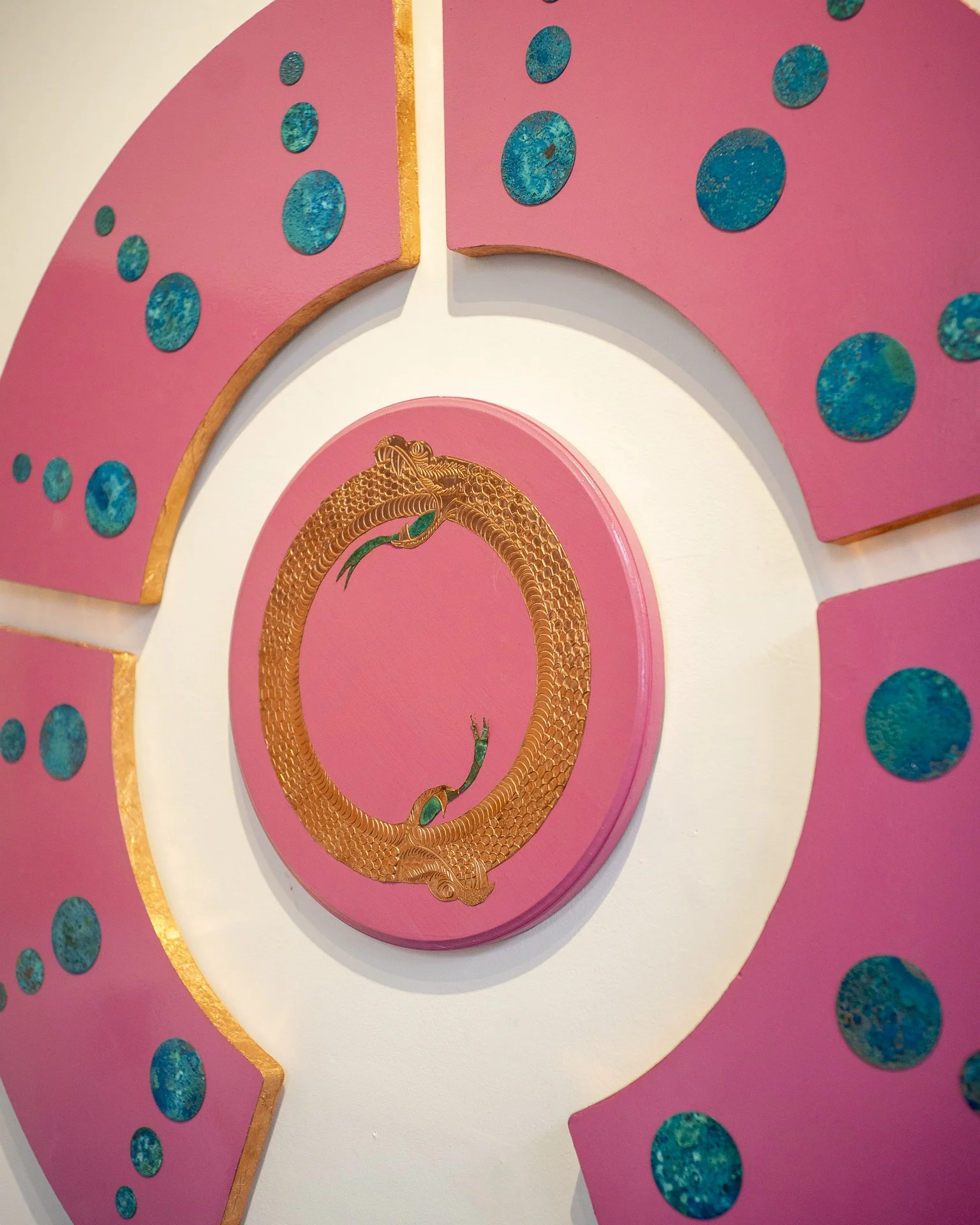
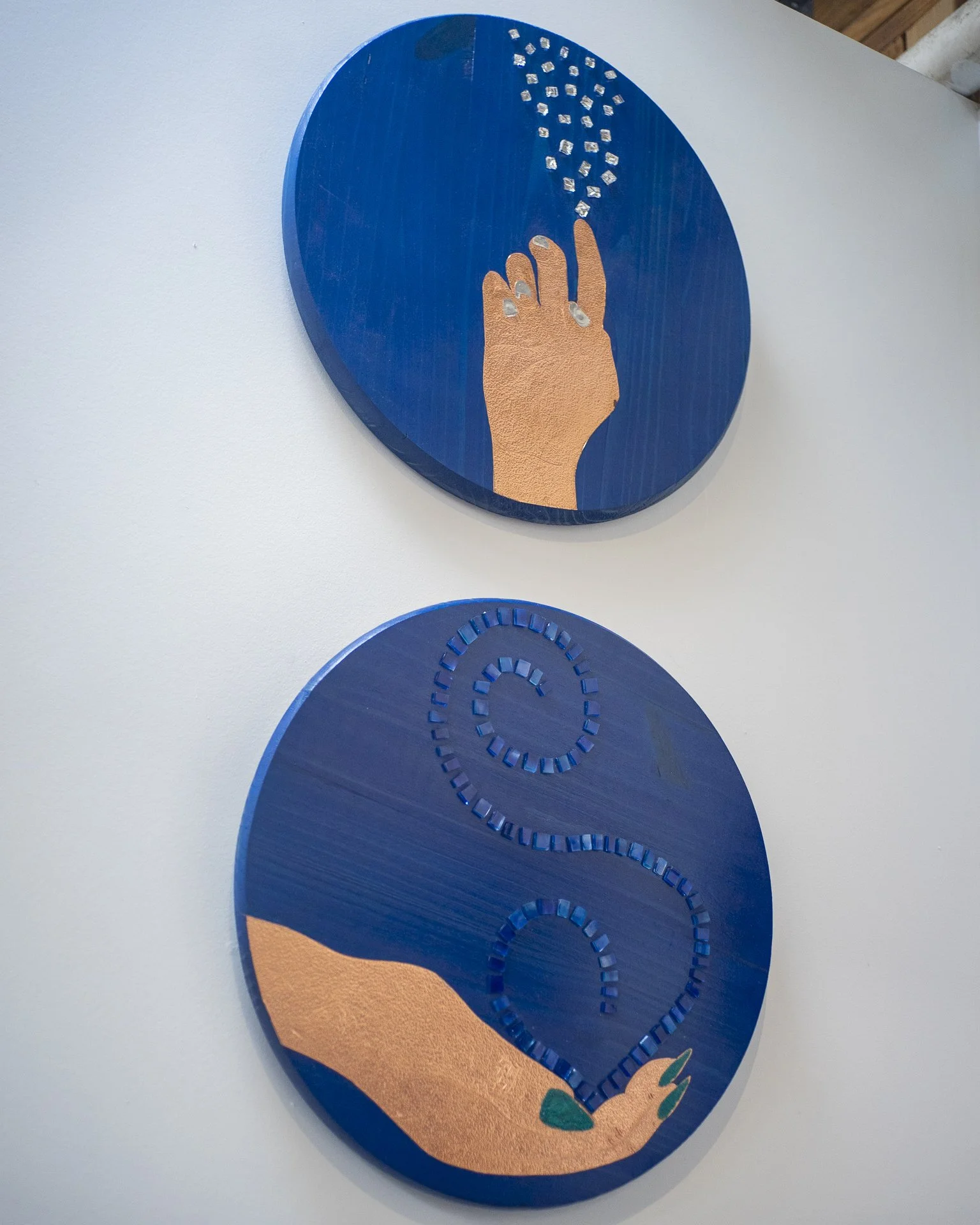
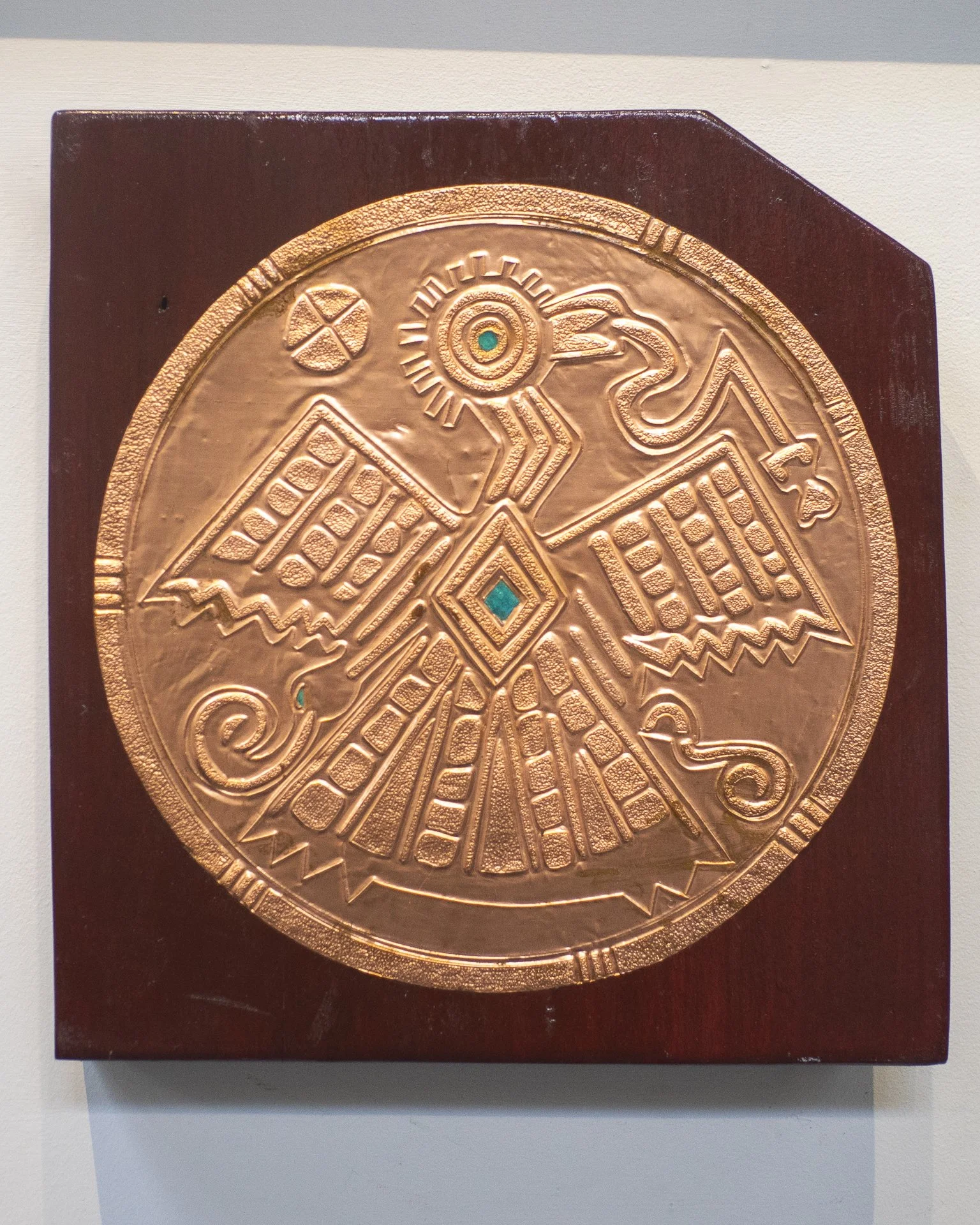
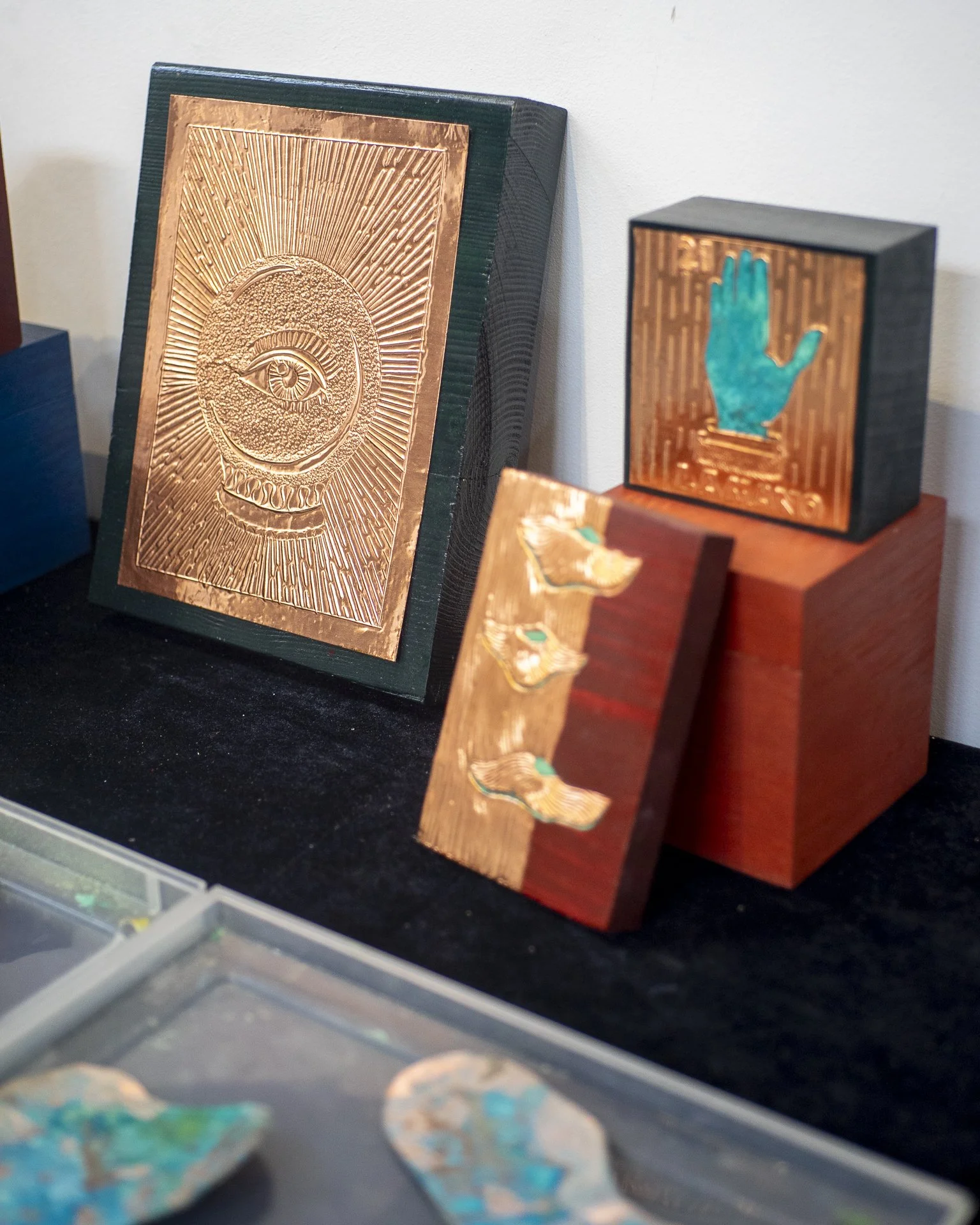
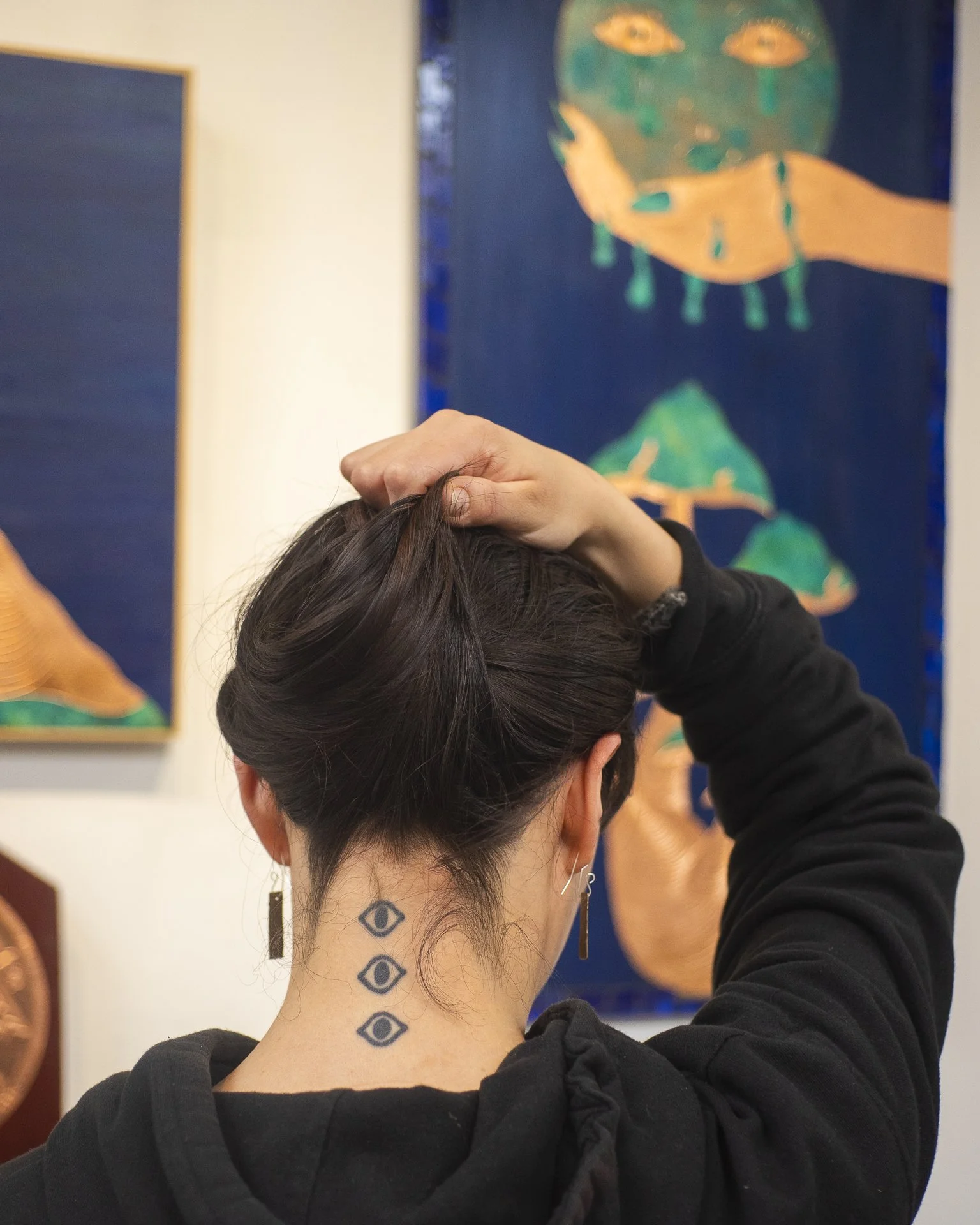
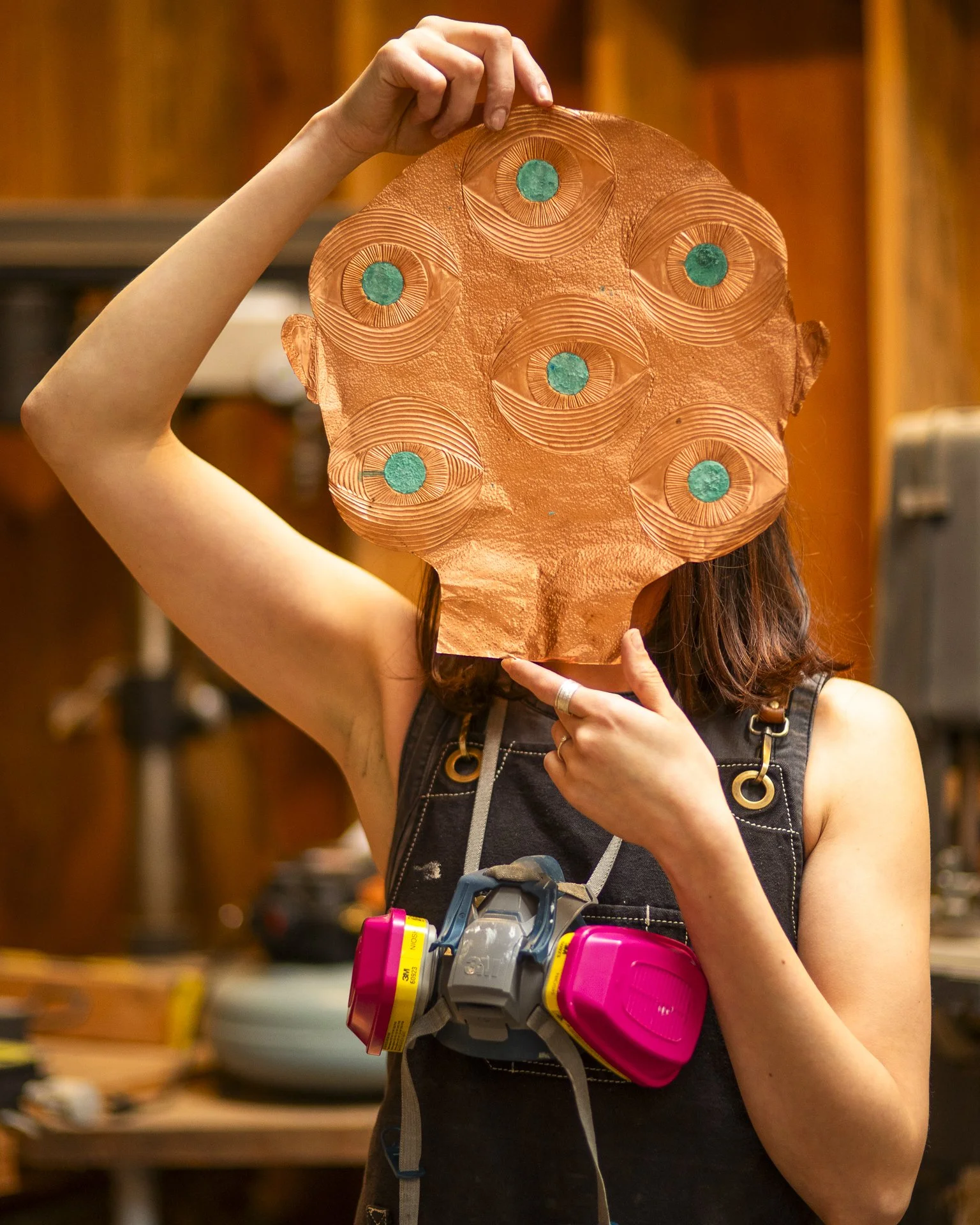
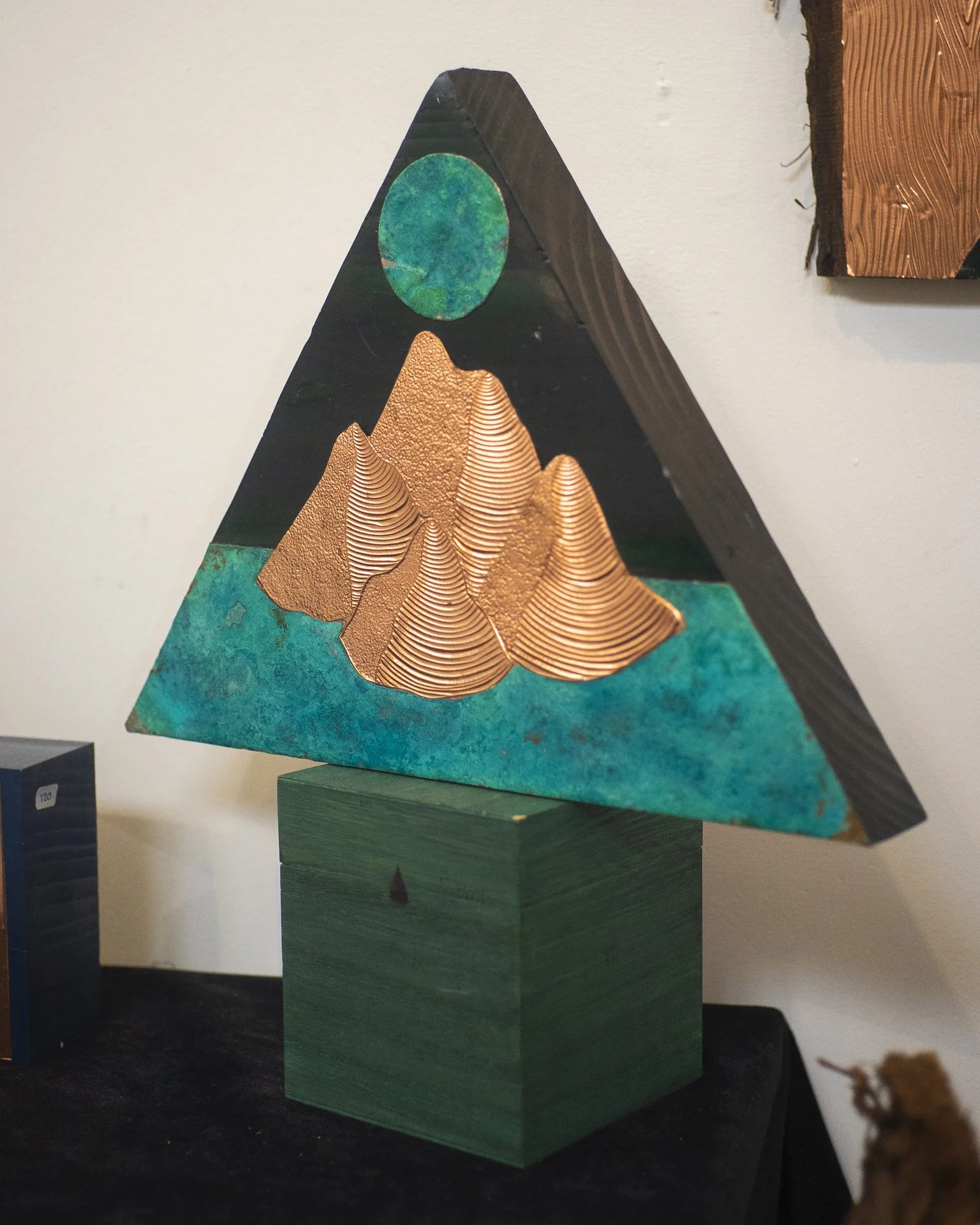
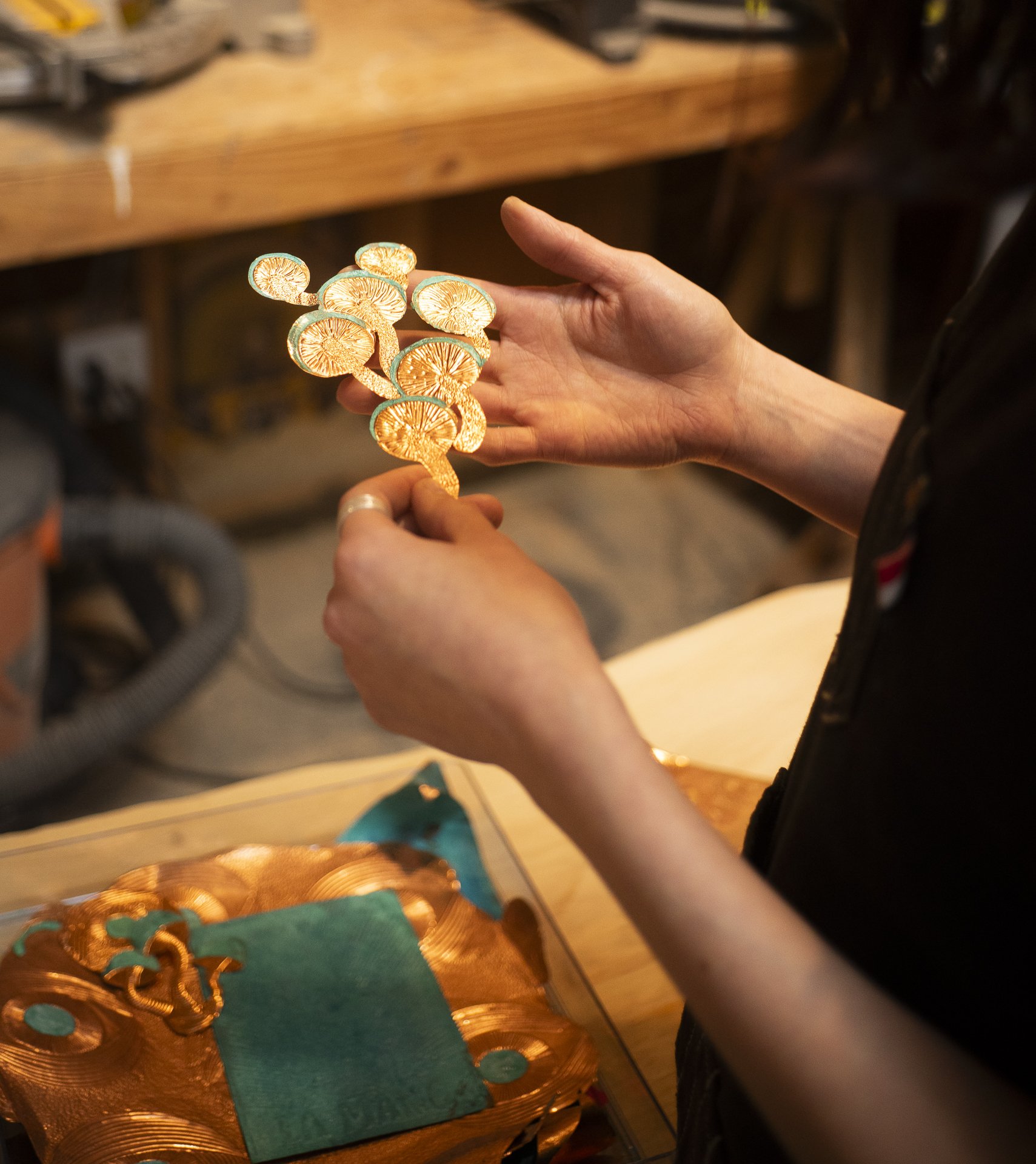
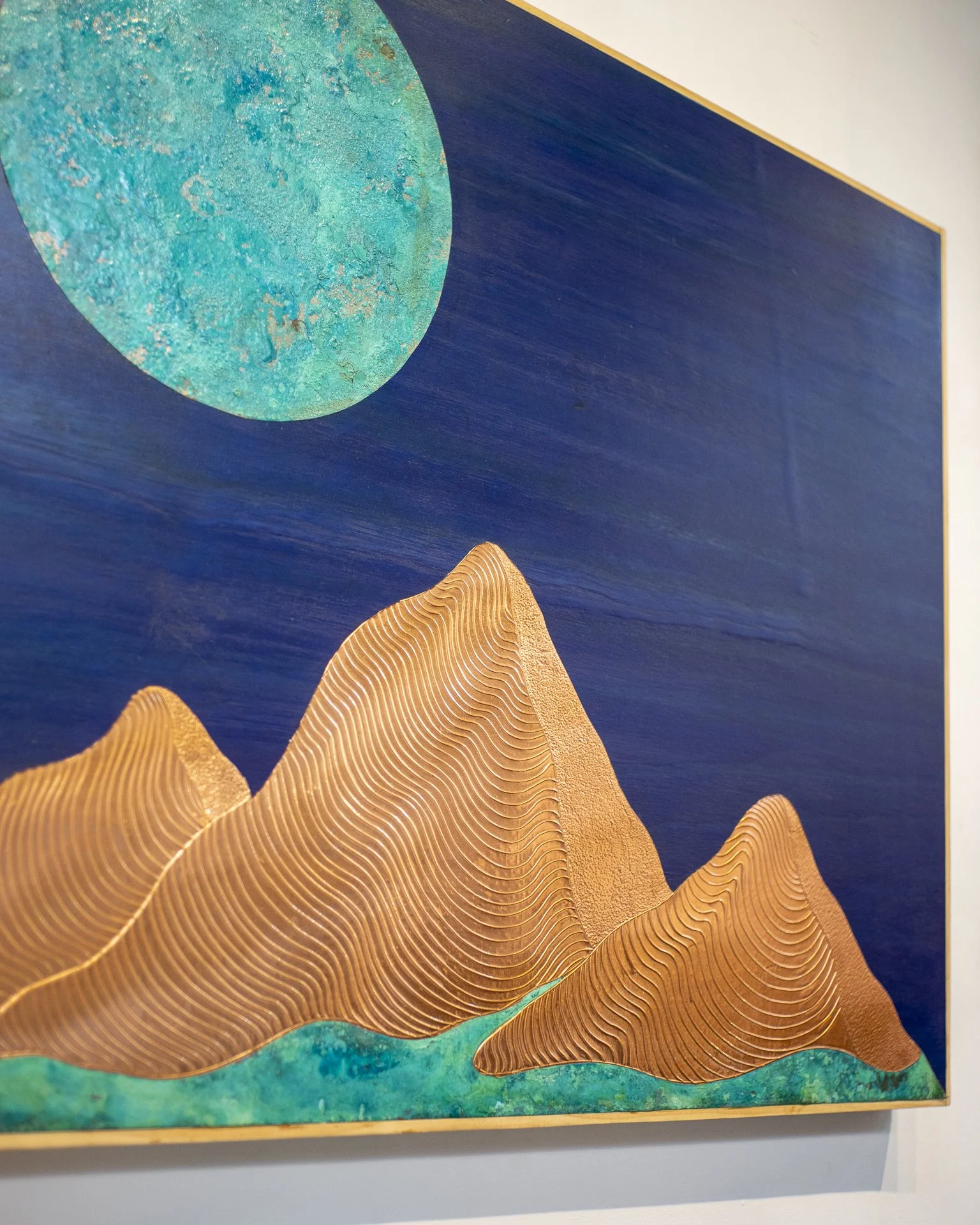
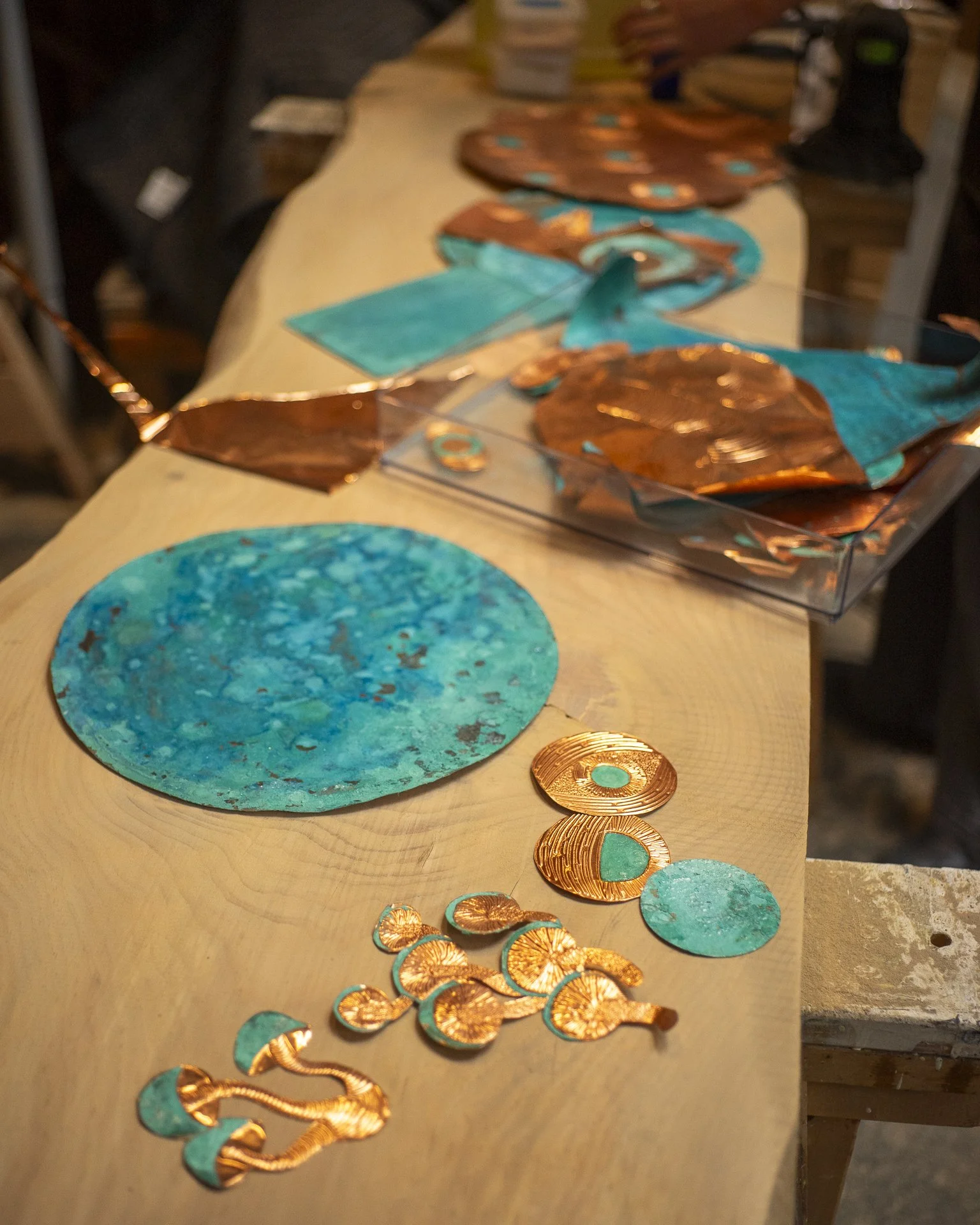
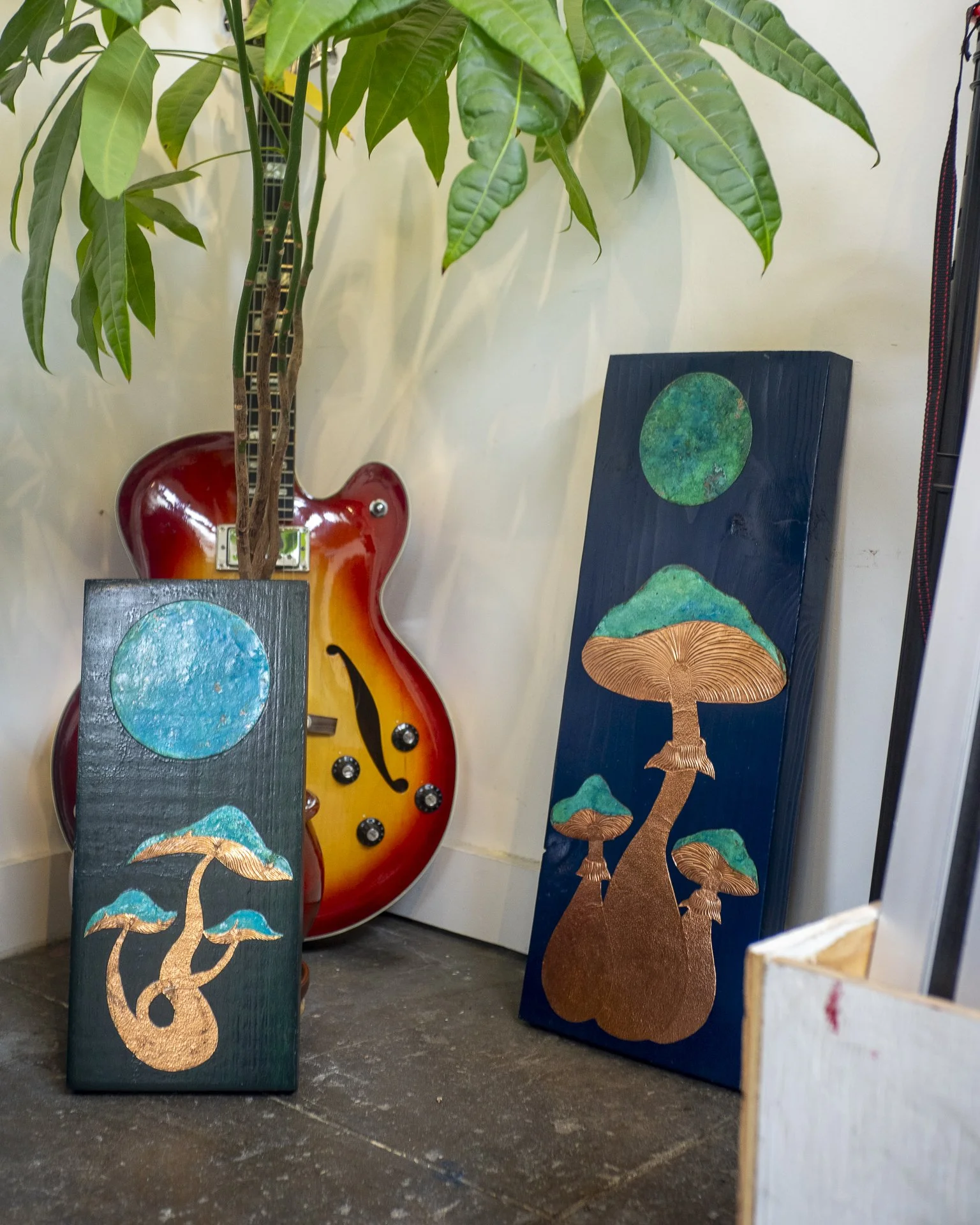
Karen effortlessly slings a heavy 7 foot slab of raw timber on the sawhorses. This juxtaposition of dense rugged material with ease in the execution carries through into her art. Karen’s art blends sculpture, woodworking and illustration. Her copper and wood art features iconography of hands, eyes, mushrooms, mountains, suns and moons in deep warm blues, vibrant pinks, glowing copper and oxidized greens. Her embossed line work on the copper is refined and exact, almost machine like. But she does every piece by hand. The edges where the wood and copper meet form a natural synthesis of materials and color.
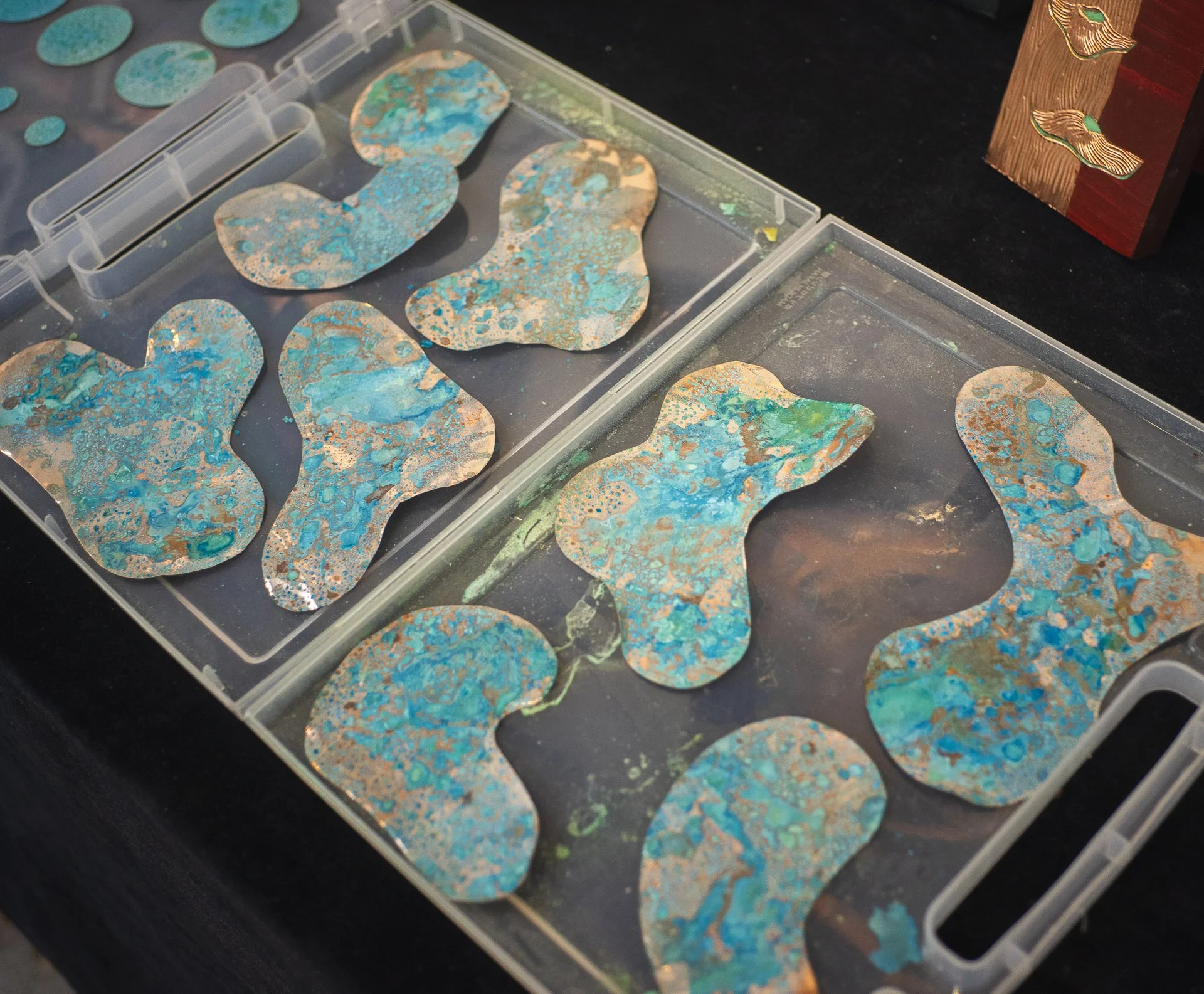
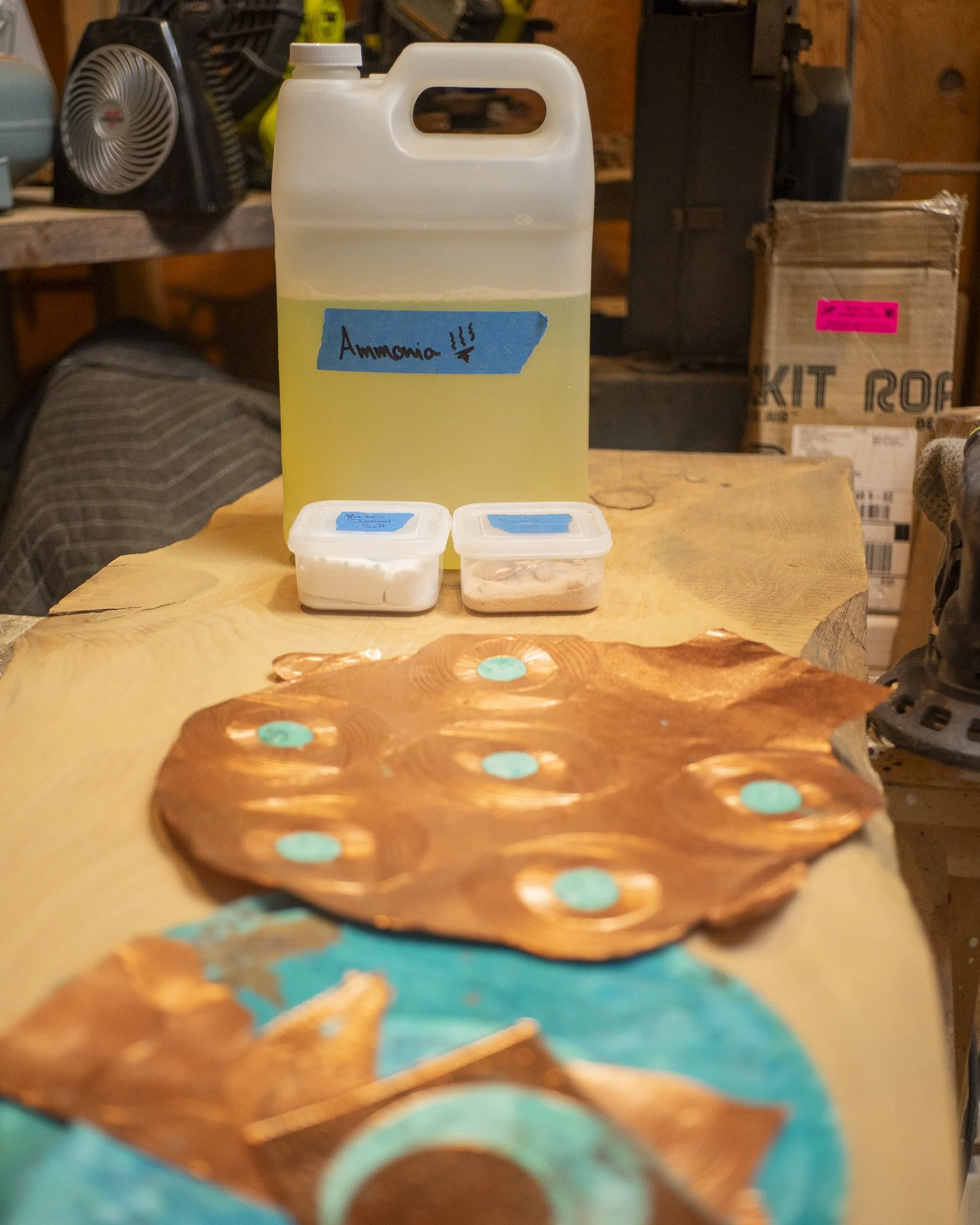
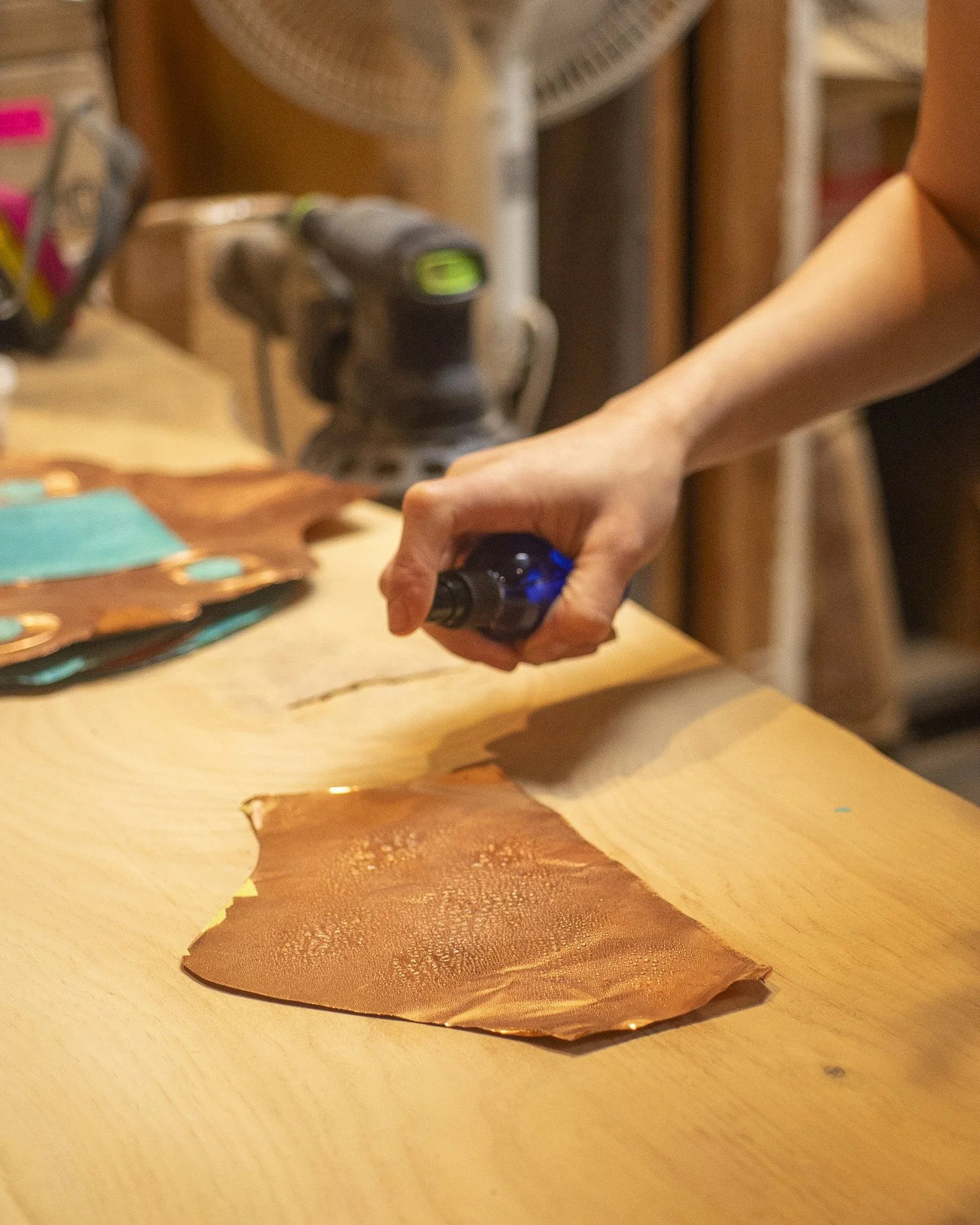
Before Karen begins sanding down the timber she shows me how she oxidizes copper with ammonia. This controlled chemical reaction brings the green hues to her art. Once again, I notice the juxtaposition of material and ease, this time with an olfactory spin. The ammonia is pungent but when combined with the glint of the copper in Karen's designs it creates a visual contrast that makes her art intriguing.
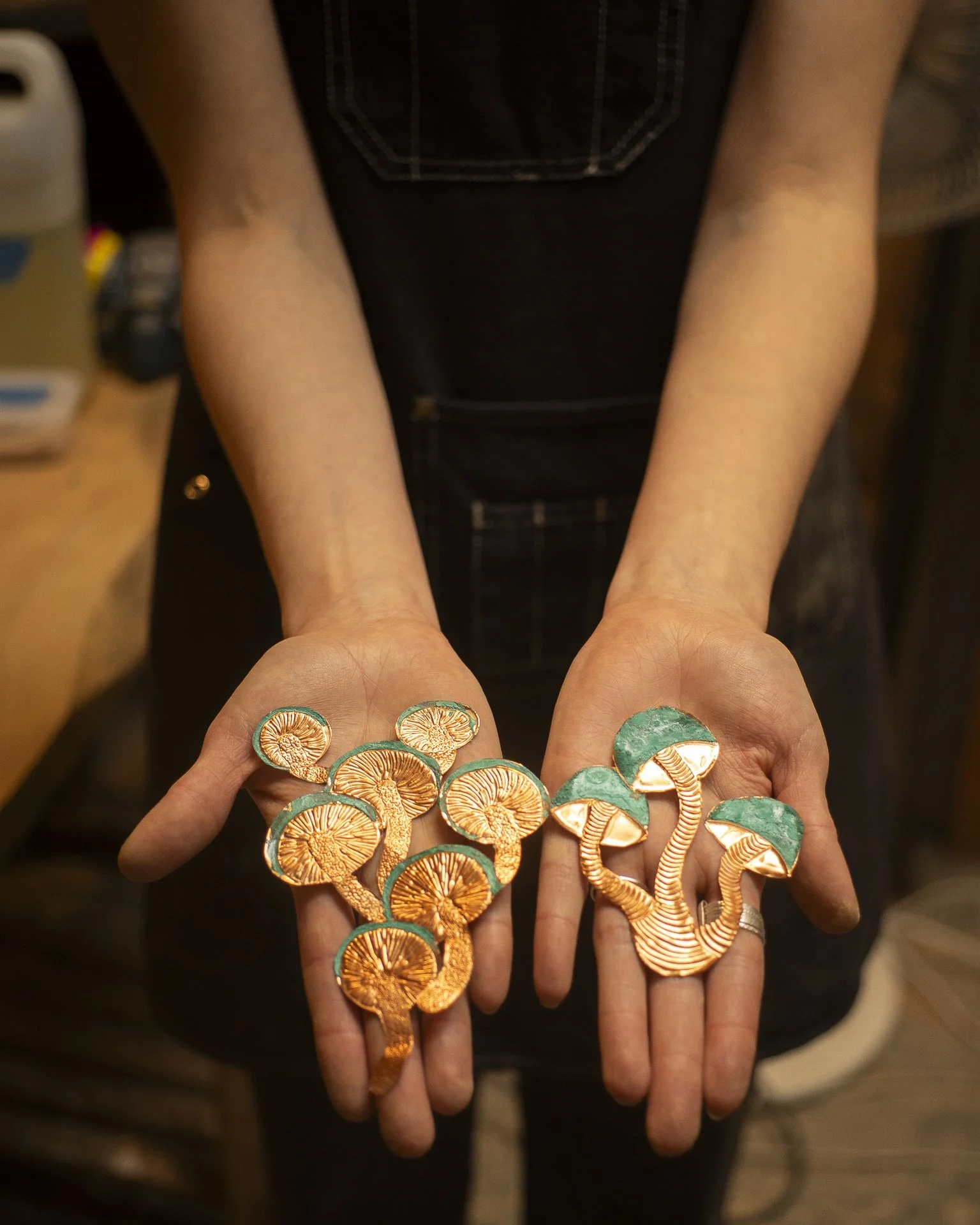
Before Karen begins sanding down the timber she shows me how she oxidizes copper with ammonia. This chemical reaction is what brings the green hues to her art. Again I notice how the juxtaposition of raw material and harshness of the chemical produce an allure when carefully combined with the glint of the metal.
Interview
What is the first thing you do when you get into the studio?
When I arrive at the studio, I take a few moments to settle in and acclimate to the space, especially since the temperature often fluctuates. Once I’m comfortable, I’m able to fully focus on my work, whether that involves woodworking or preparing copper. Taking this time helps me stay intentional and present throughout my process.
How would you describe your style of art?
I would describe my style of art as Industrial Symbolic Minimalism.
What motivates you to create or where do the ideas formulate that come to life in your studio work?
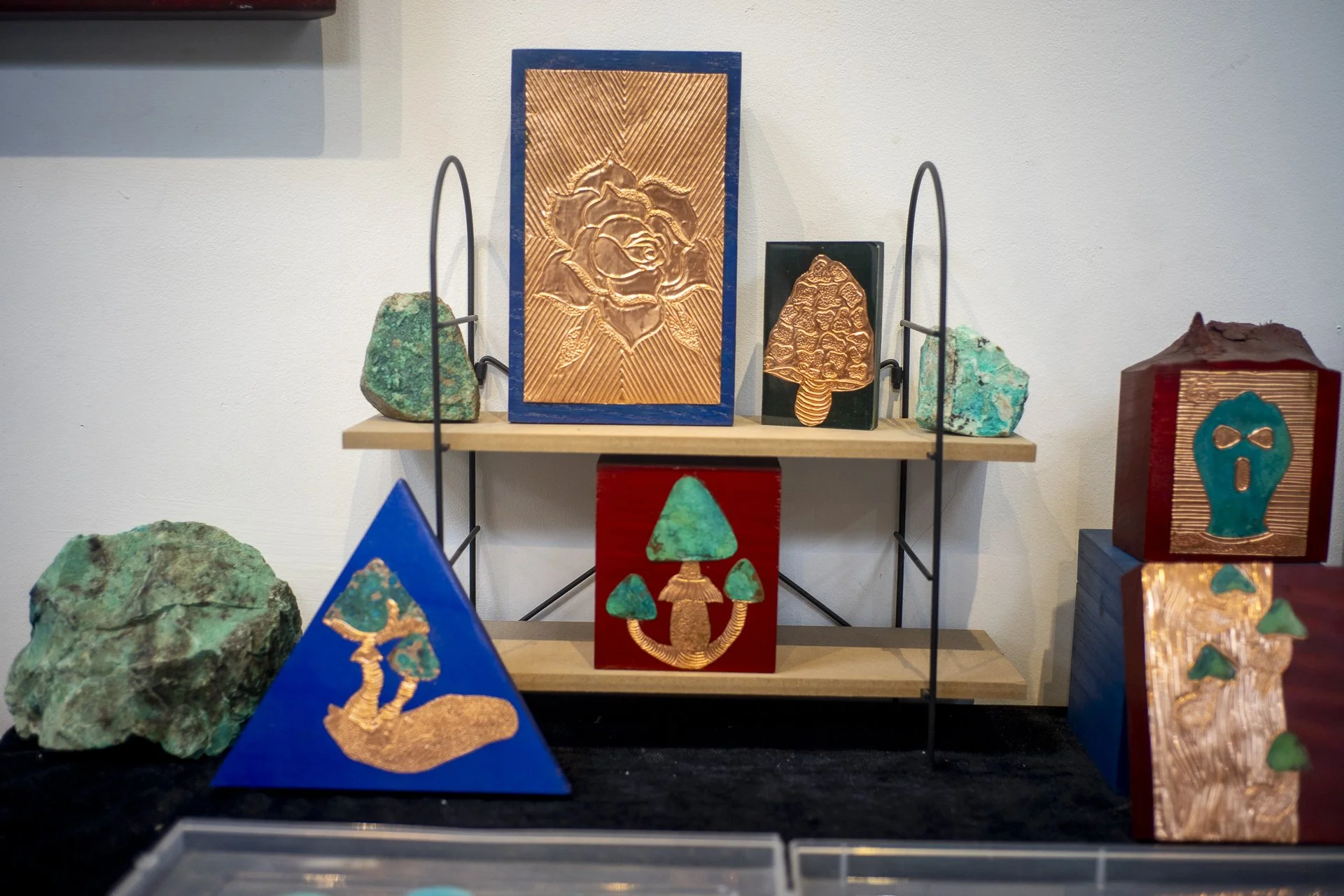
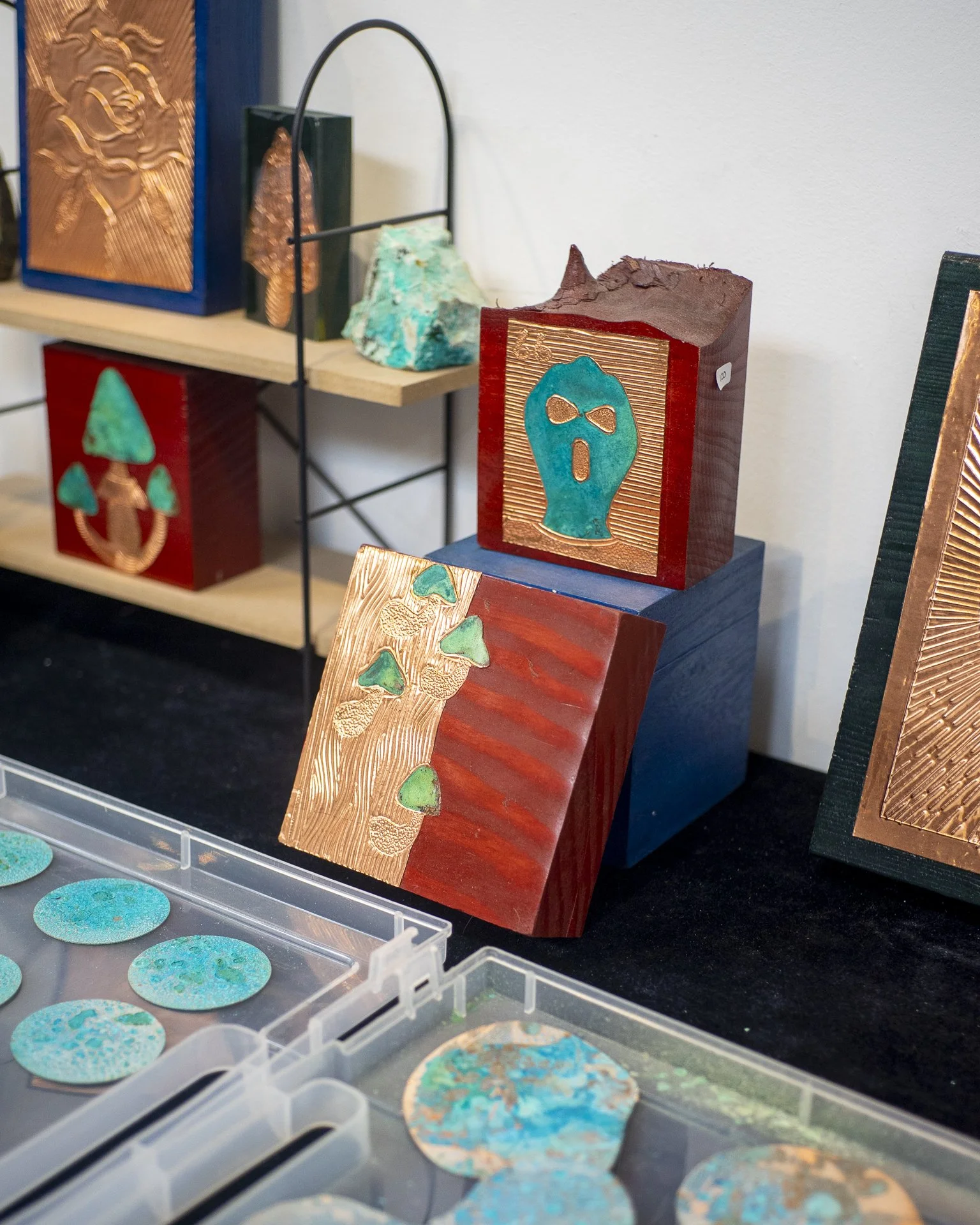
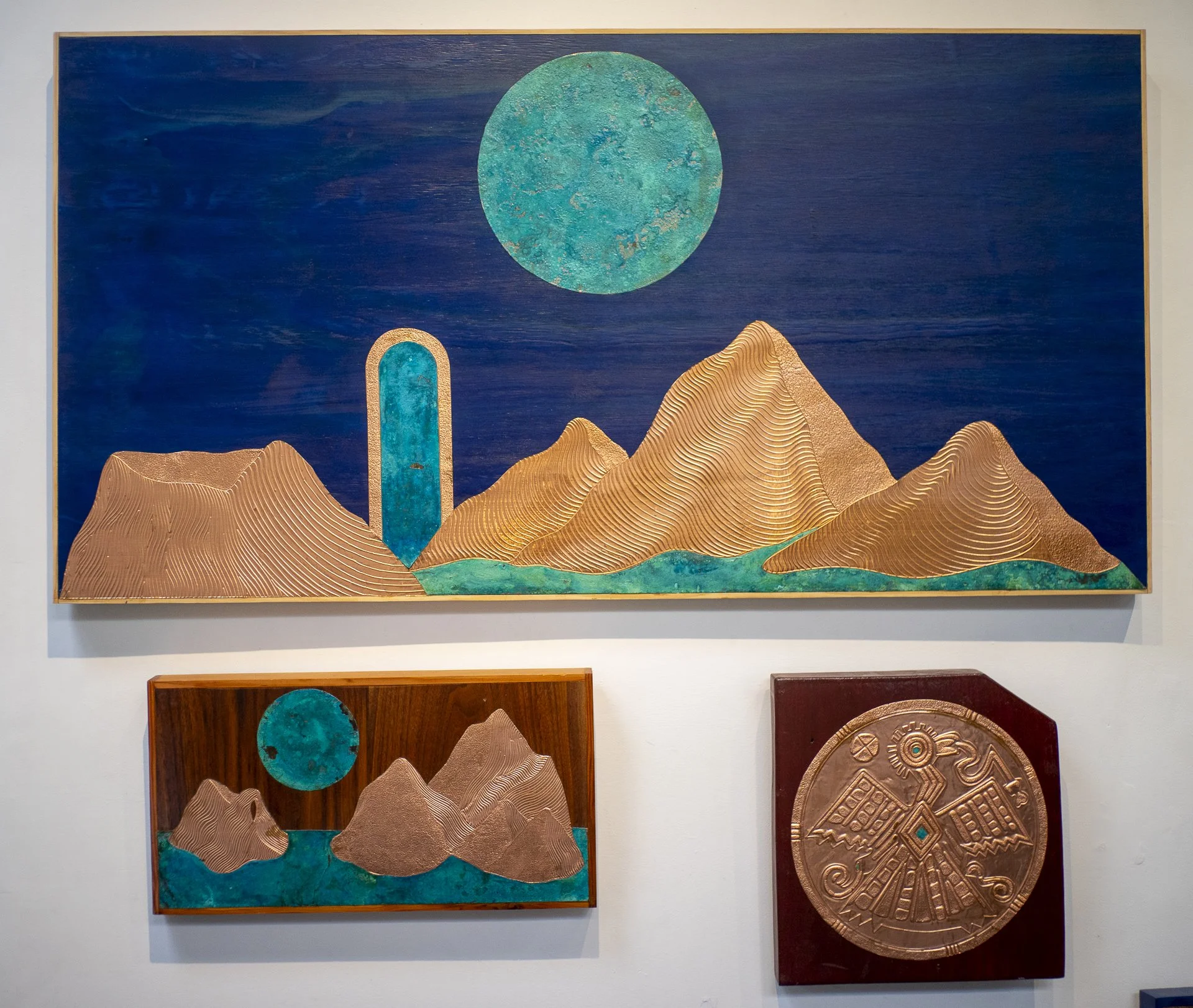
My ideas often begin to take shape by observing the wood around the studio. It’s size and form help me reconnect with past sketches or concepts that have been lingering in my mind. Once I’m in the space, I refine those ideas by engaging directly with the materials. Working hands on with wood or copper allows the concept to naturally evolve.
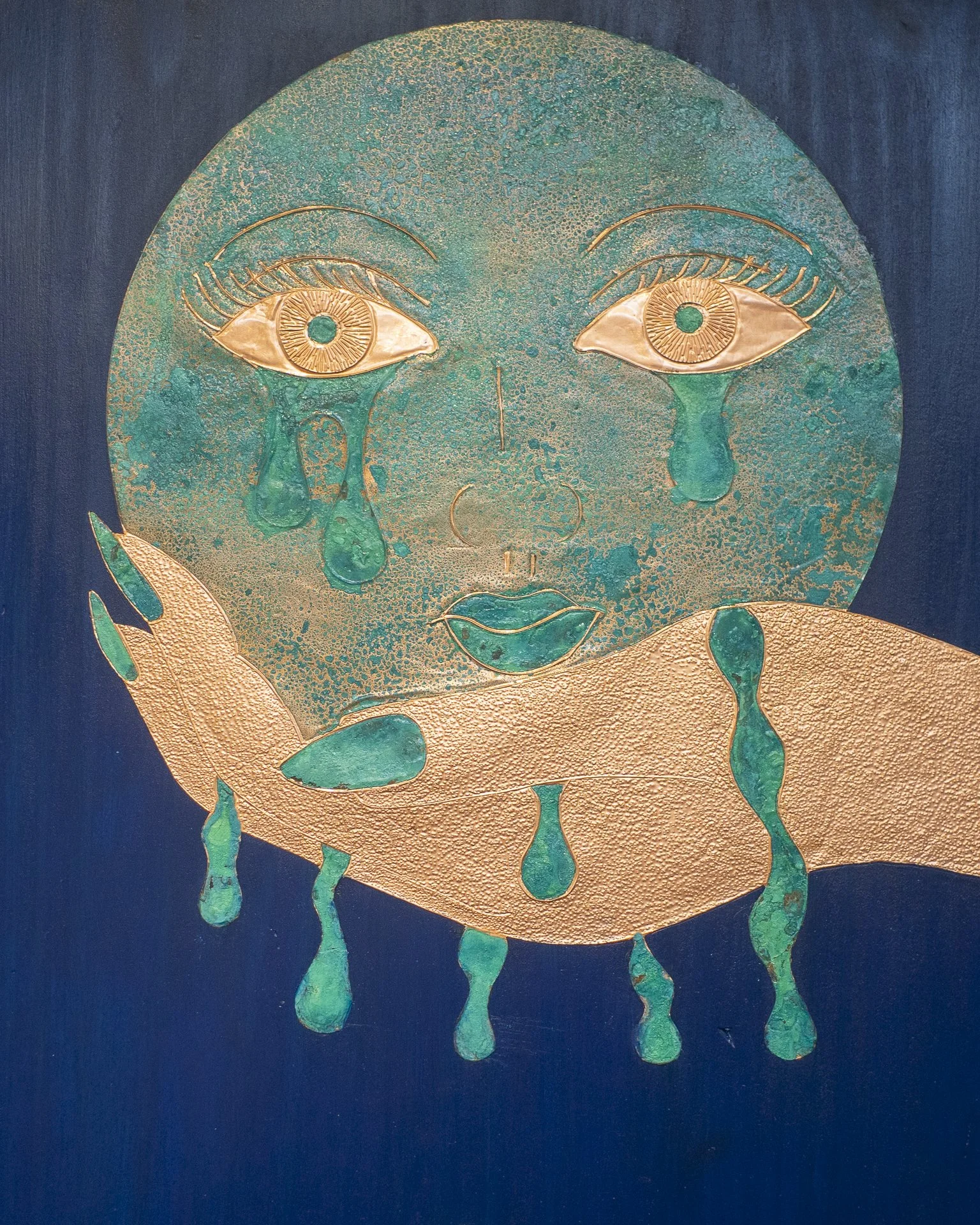
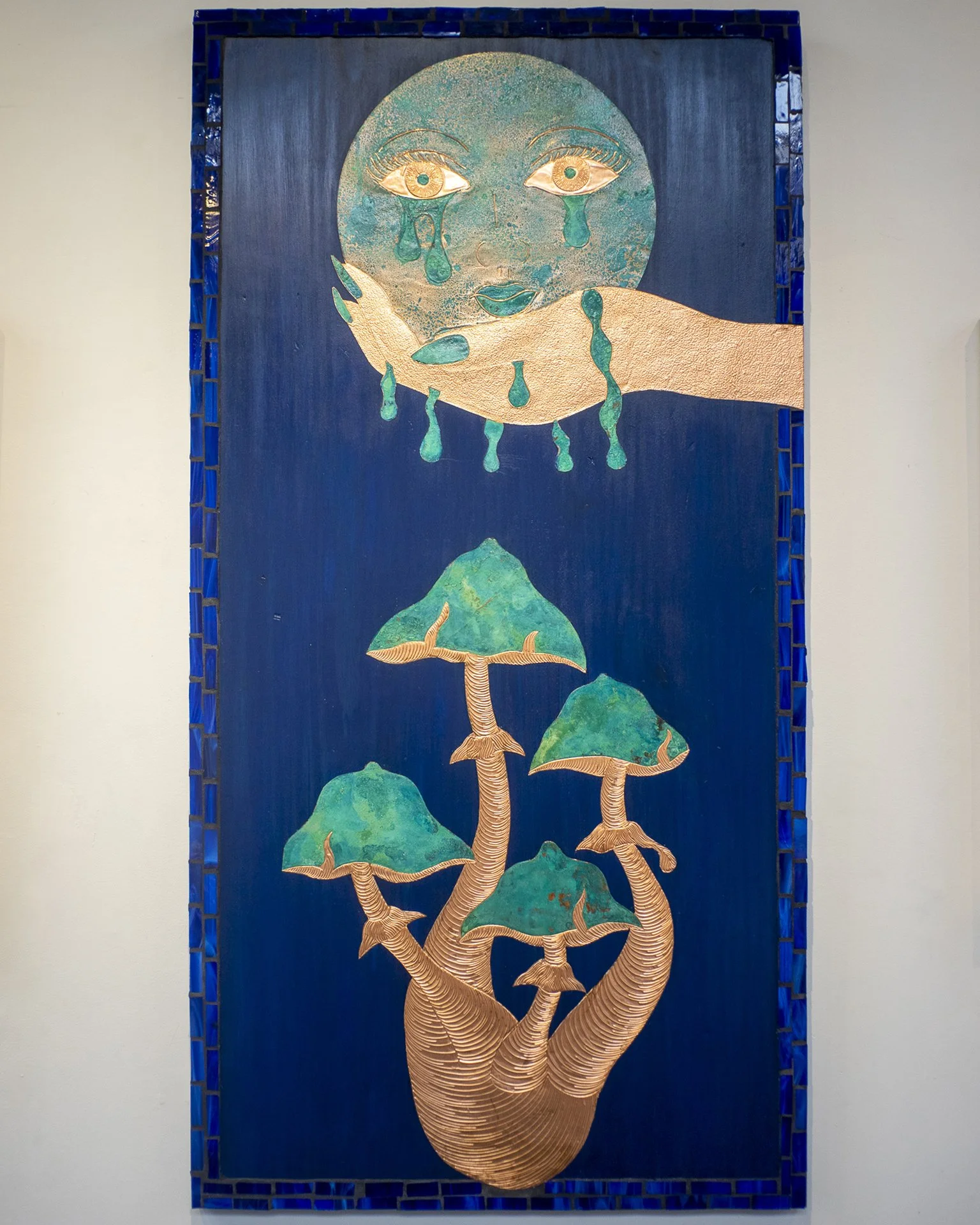
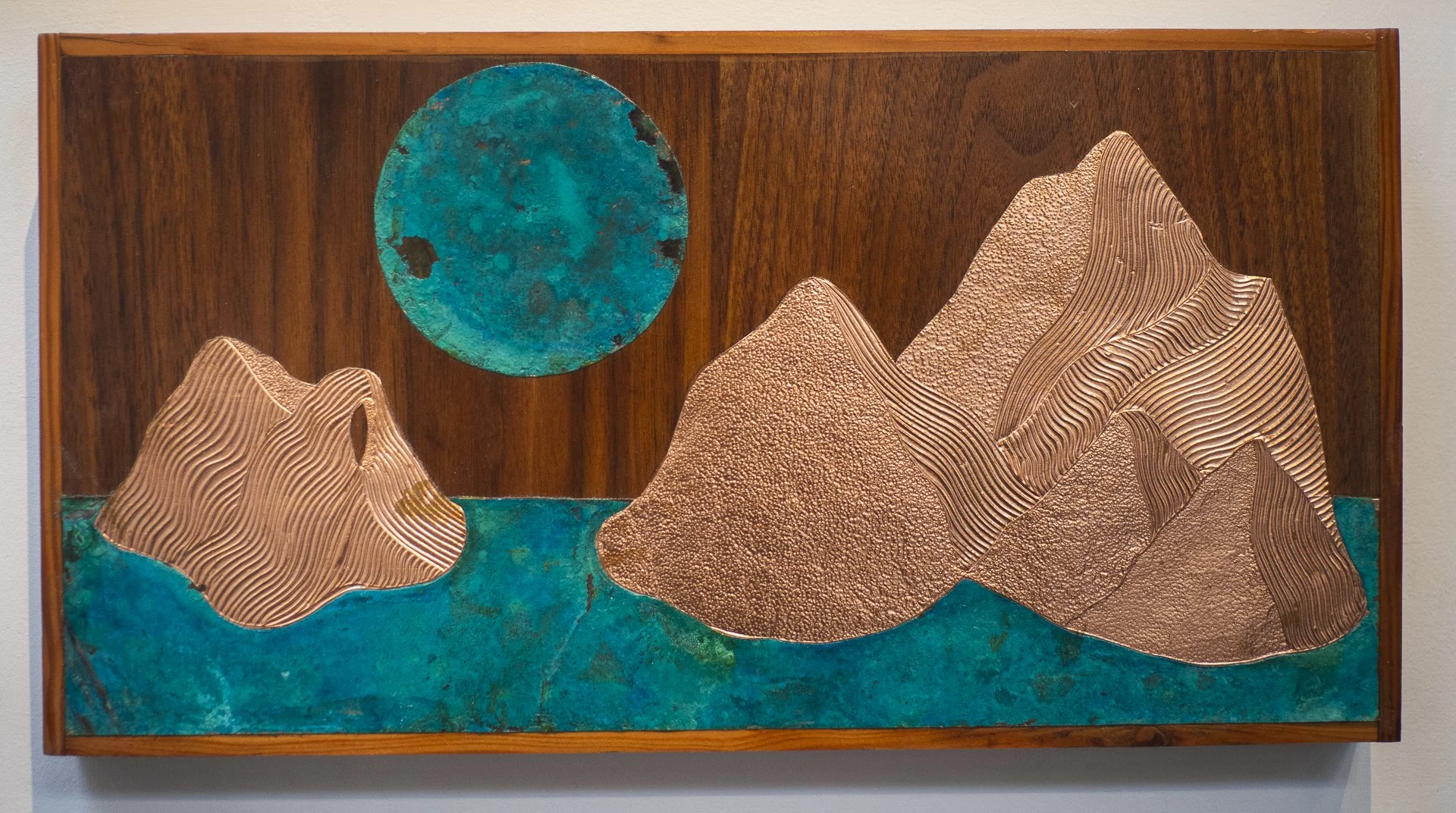
Embossing the copper seems like it would be a stressful practice since the margin for error is low without an eraser or a way to undo a slight of hand. How do you approach this process, specifically the risk and reward of the medium?
You’re right, embossing on copper can be stressful. When I worked on my first large pieces, it took a few days to mentally prepare. I’ve learned to approach the process through a meditative mindset, reconnecting my body and mind to maintain a steady hand. I usually begin on scrap copper, and once my lines feel confident and controlled, I move on to the main sheet.
Is there anything you do to keep your nerves calm to create such uniform and controlled lines in your work?
To keep my nerves steady, I eliminate outside distractions and play instrumental music through my AirPods. This helps me stay focused and fully immersed in the process.
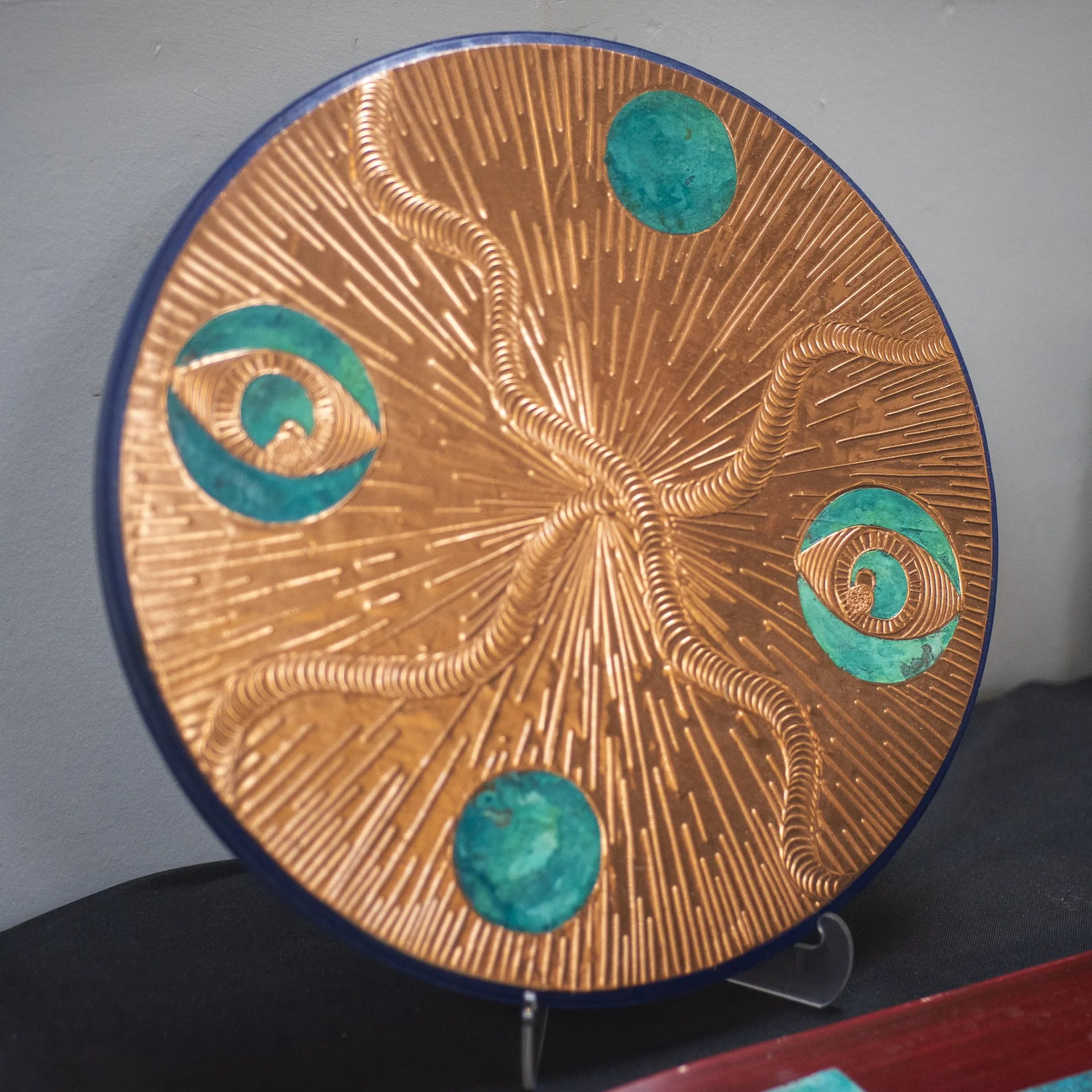
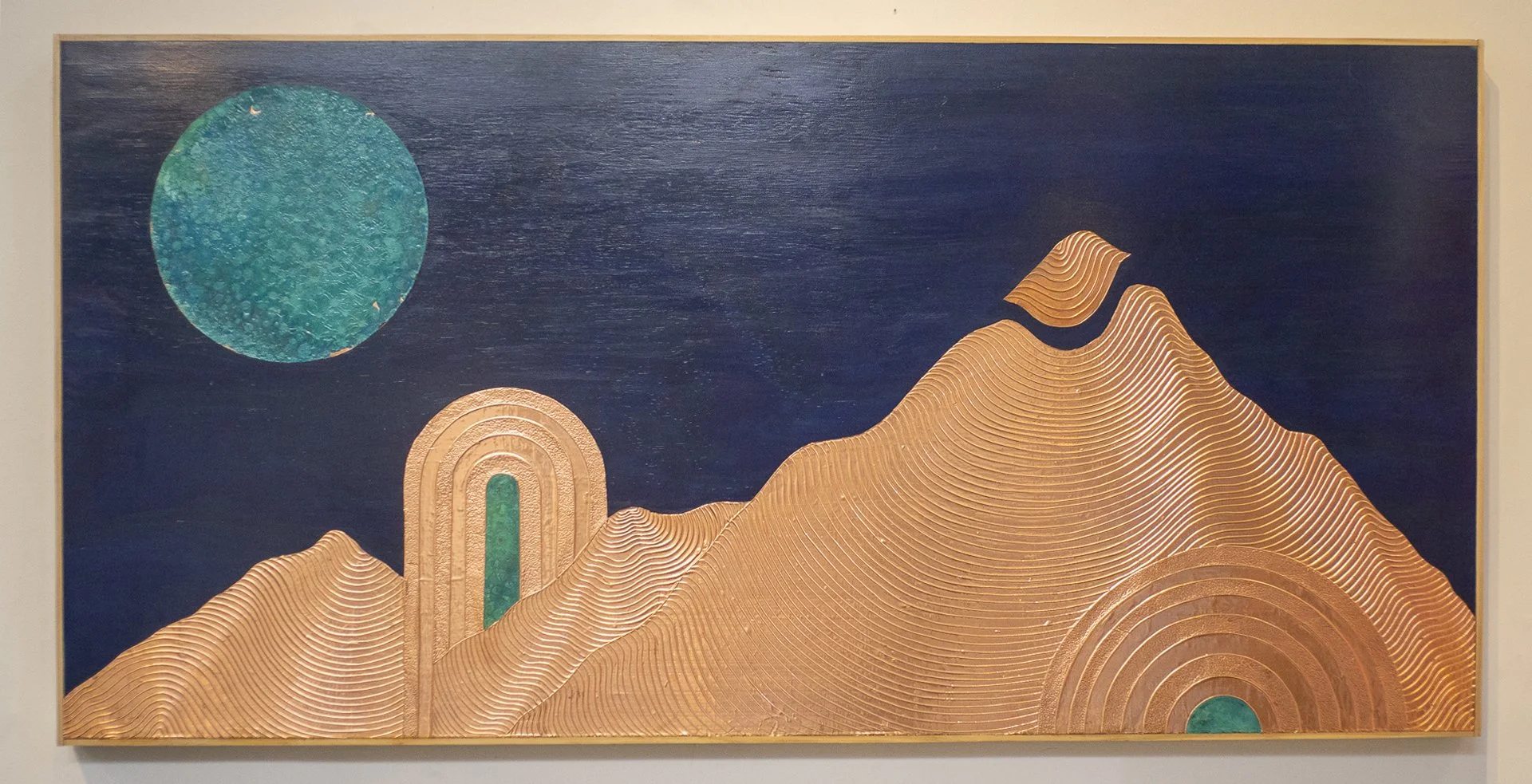
I sense a psychedelic influence, almost a mystical surrealism, from your work with the iconography of mountains, mushrooms, eyes and hands. Am I being obtuse in my connection to these influences? Why do you repeat these icons in your work?
I grew up influenced by early exposure to psychedelic imagery, shaped by growing up in a small town where many people sought to imagine alternative realities beyond their close environment with drugs and alcohol. I started creating psychedelic drawings for friends and myself, often embedding hidden imagery within intricate line work to encourage deeper observation. Over time, this became more of an intentional visual language that just fit living in the Bay Area.
Is there a personal connection you have with mushrooms and mountains?
My connection to mushrooms and mountains developed at different points in my life. As a child in Mexico, I foraged for mushrooms with my family and became fascinated by their small, delicate presence hidden beneath the leaves It felt almost magical. My connection to mountains came later, during my time in Montana as an adult, where their scale and presence left an impression on me. Most mountains in Montana don’t have trees that hide the curves and lines of the mountain so you see its raw beauty.
The materials you use aren’t sold at a traditional fine arts and or craft store. How do you go about sourcing the materials for your work?
I love going to art supply stores but unfortunately most of the things I use to create my art come from hardware stores. Ashby Lumber, Home Depot, or any local hardware store around Berkeley is where I sourced most of my materials.
How do you control the oxidation of the copper in your art?
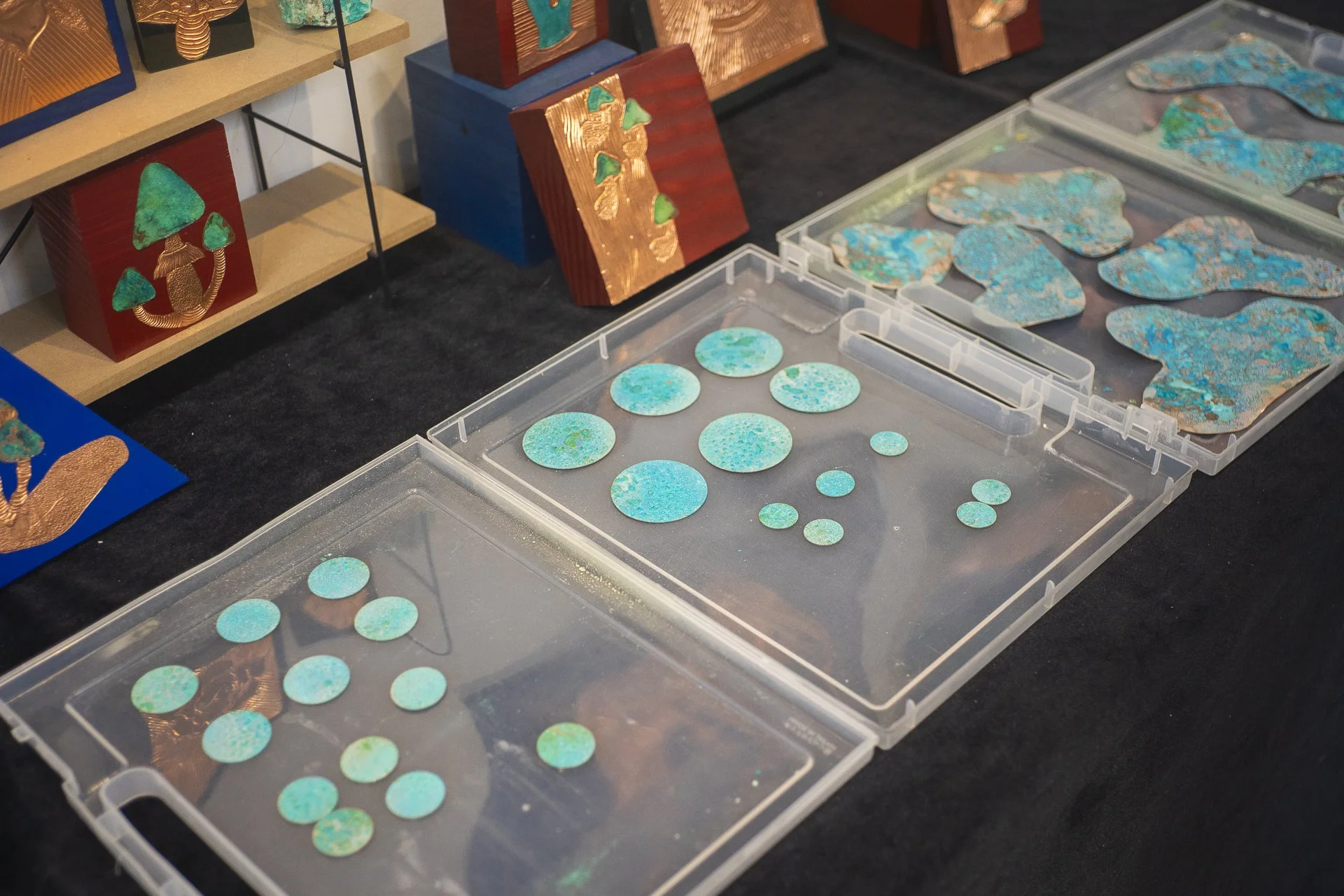
I control oxidation in my work by first fully embossing the copper piece. Once that’s complete, I seal the areas I want to preserve in their raw state. After sealing, I apply a mixture of ammonia and salt to the exposed surface and allow the copper to oxidize over time. Depending on the conditions, this process can take anywhere from a few days to longer.
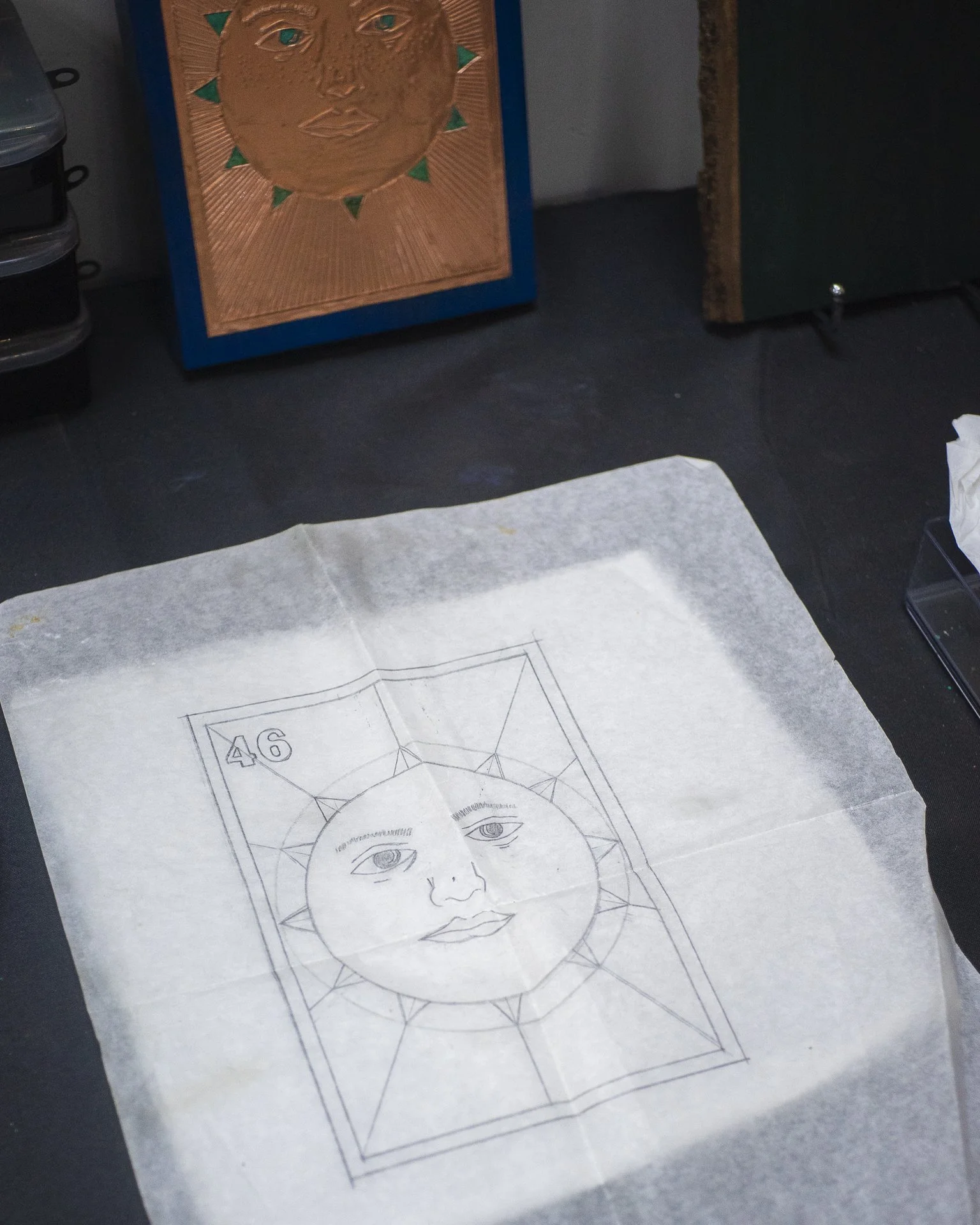
I enjoyed seeing and photographing the “sketches” you created for the Lotería series and how they translate to the final work. Can you tell our readers more about this process and if you plan on doing more Lotería pieces in the future?
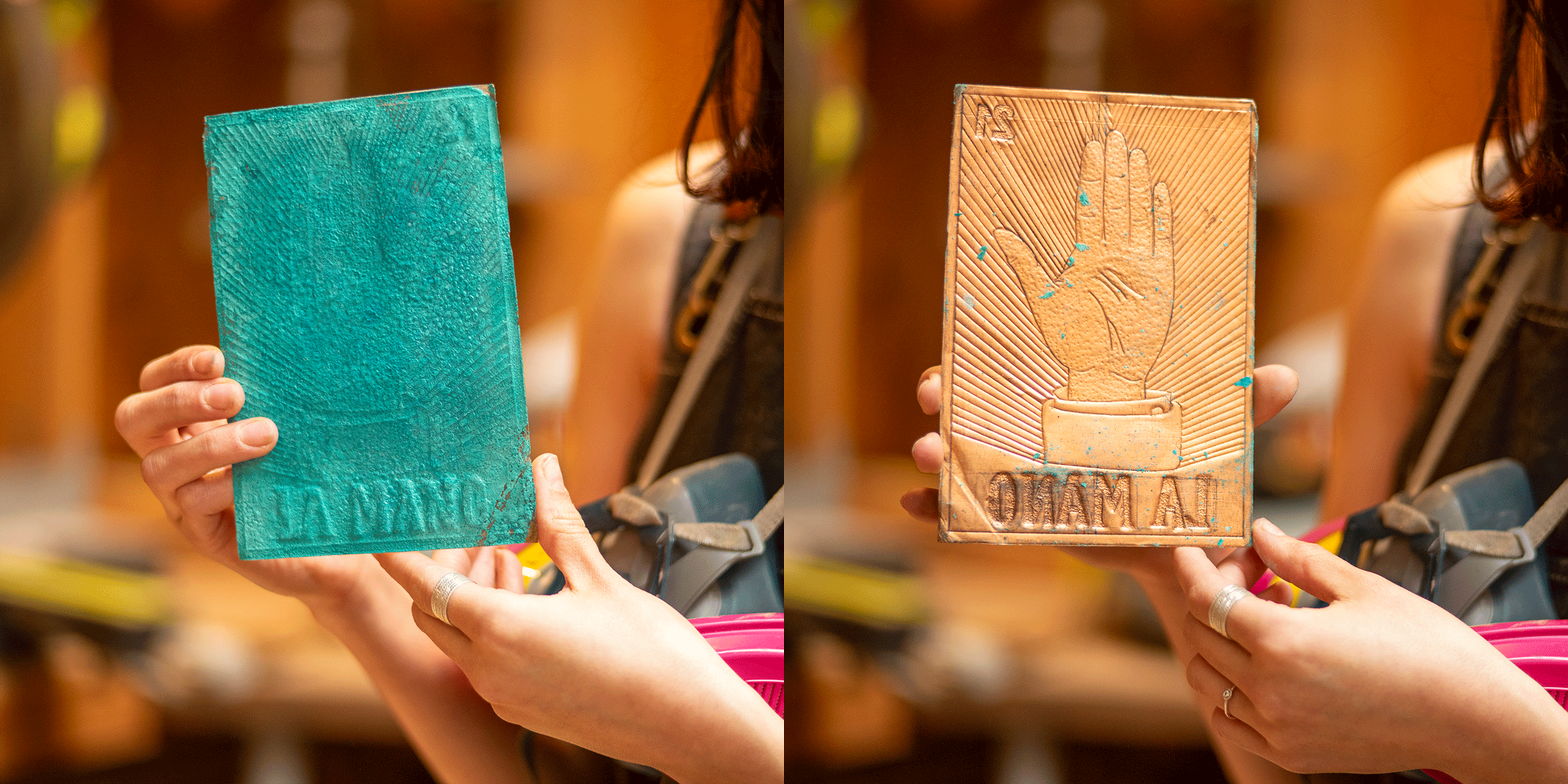
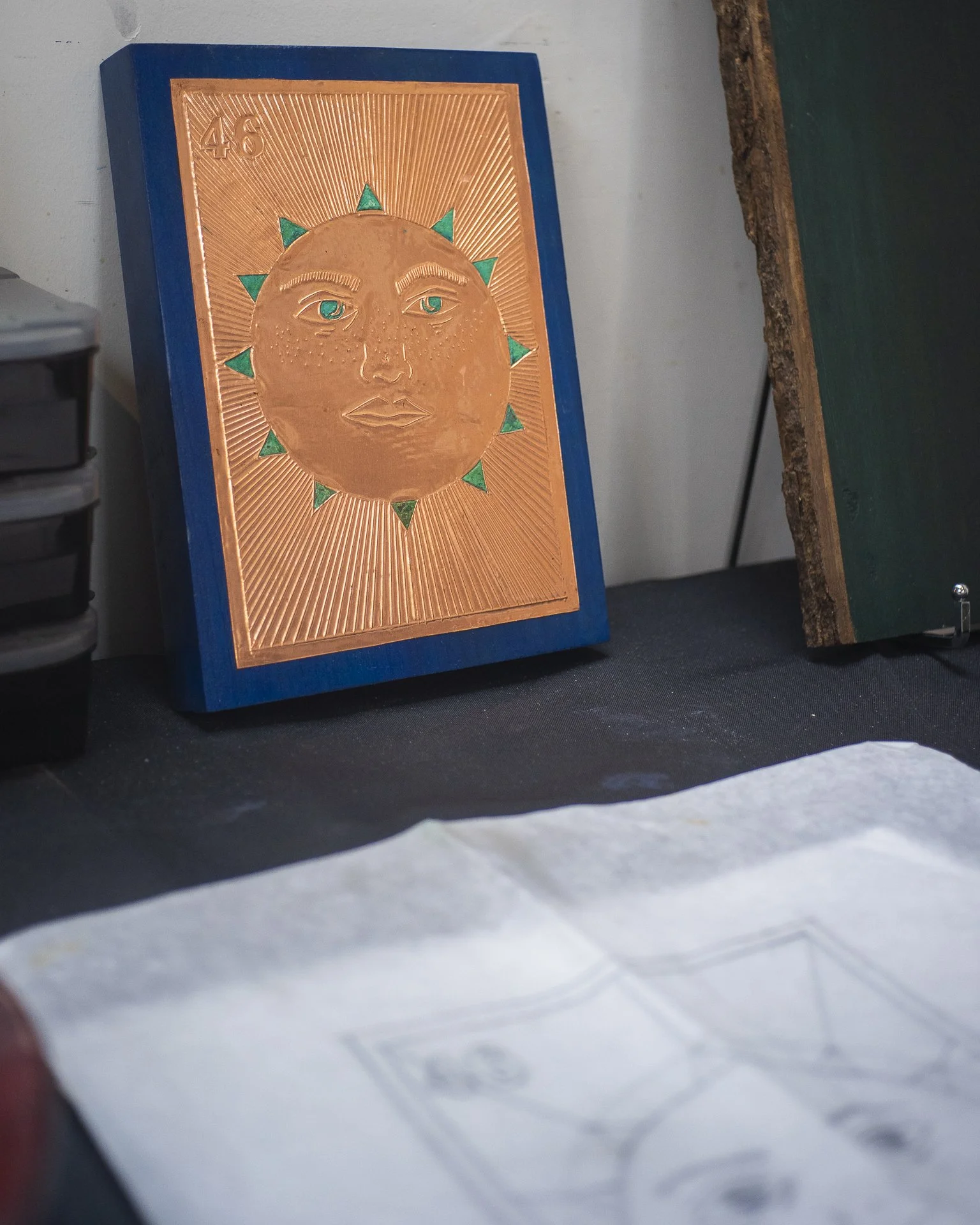
The Lotería series is a tribute to creating work that more directly reflects my culture, something I’ve wanted to express through my copper pieces. The process began with compiling a list of symbols that aren’t part of the traditional game but strongly represent Mexican culture, such as El Jalapeño and El Tequila. From there, I sketched simplified forms that remain instantly recognizable, like the distinct silhouette of a tequila bottle. Because traditional Lotería cards are vibrant and full of color, and my work is limited to a two tone palette, I focus on strong, clear imagery and bold shapes that allow the subject to be easily understood without relying on color. I’m definitely making more lotería pieces in the future. I have my list of imagery that’s not part of the real game that I would like to make.
When you’re not making art, what do you do to unwind?
When I’m not making art, what helps me unwind is staying active and that could mean doing yoga/pilates at home or exploring San Francisco. I also enjoy playing percussion with my fiancé Devon Carsen at home. Anything that helps me think less and be more present in the moment.
What is next for you?
What’s next? There’s a lot ahead, but right now I’m drawn to working on a larger scale. I’ve started a slab piece that I’m especially excited about, and it’s pushing me in new ways. I thrive on that kind of challenge creating something taller than me brings an energy and intensity that I constantly seek in my work.
Karen Lopez is showing April 26th in the Camp Fluff exhibition at Little Raven Gallery, 1015 Howard St. San Francisco, CA 94103