Studio Visit & Interview With Dylan Clendenin
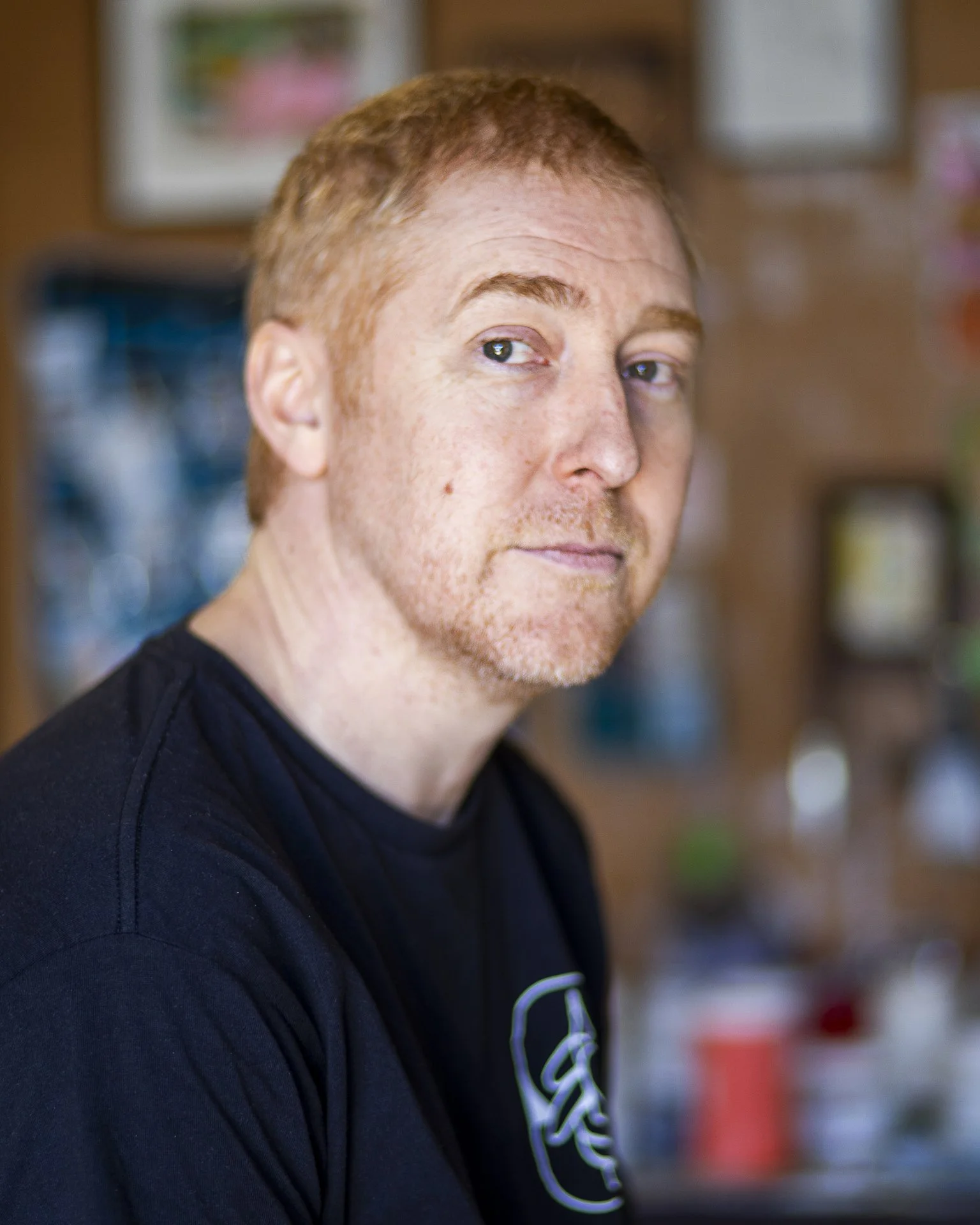
Interview and Photographs by Brandon Joseph Baker
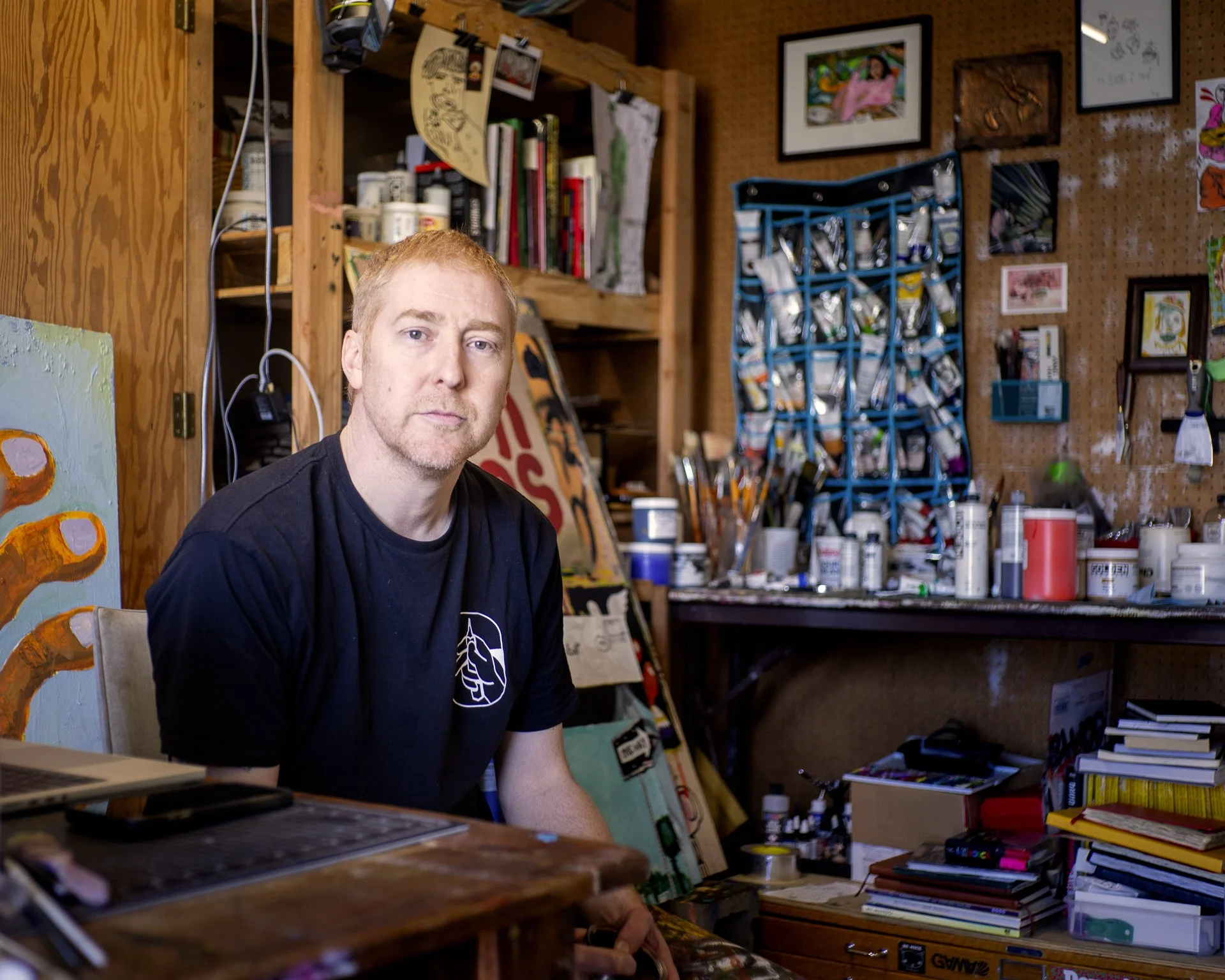
As I rode along Mission Street in the Crocker Amazon Neighborhood to Dylan Clendenin’s studio, I saw first hand the cityscapes Dylan depicts in his solo show “Probably A Bad Idea” at Moth Belly Gallery. Many of the street corners, business signs, stop lights and power lines looked as if they were lifted straight from his recent book “Just As It Is”. I didn’t need further navigation assistance from Google Maps, I could tell I was in Dylan’s neighborhood from what I know of his art work.
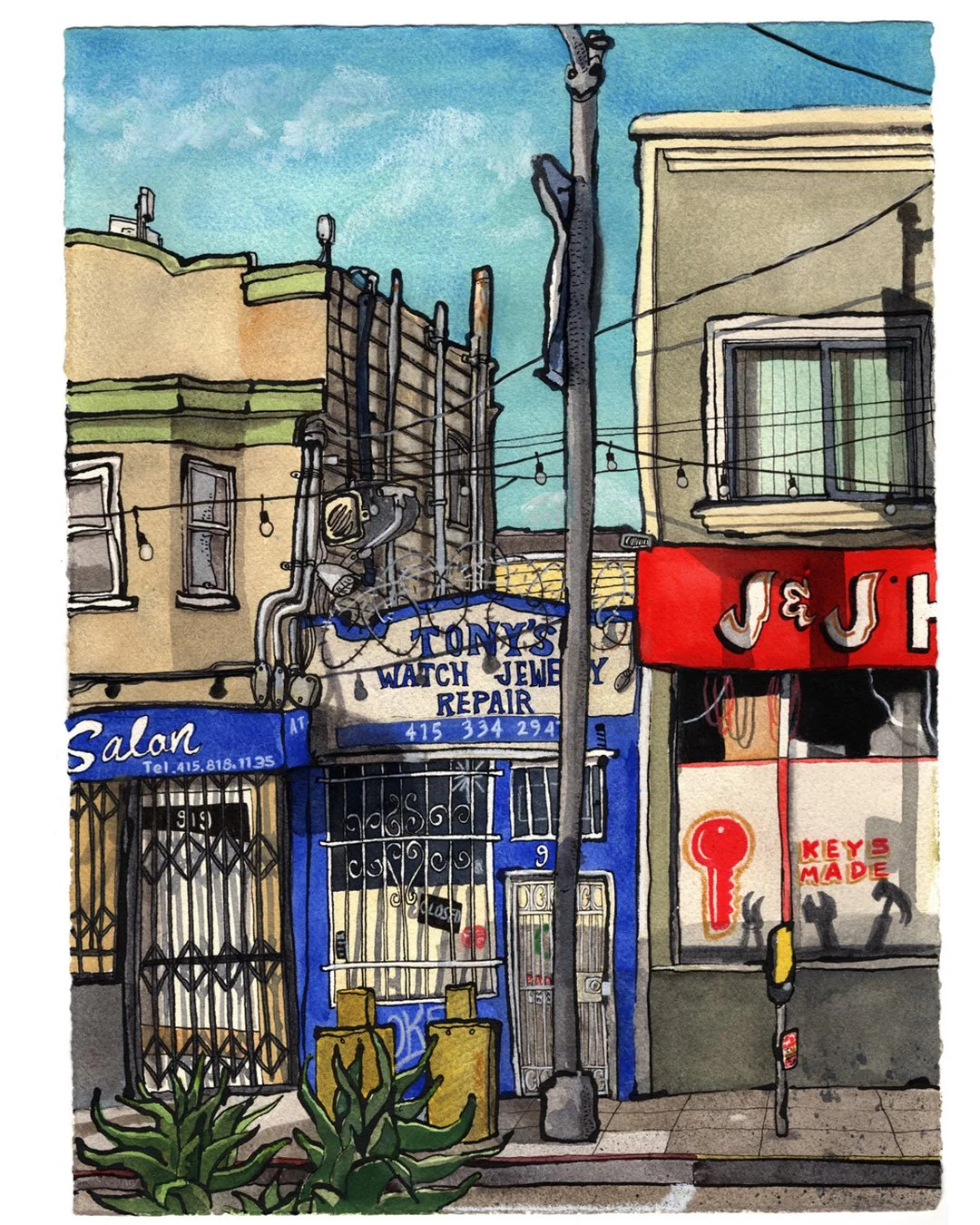
“Geneva Near Mission St” by Dylan Clendenin. Ink, watercolor, colored pencil on paper.
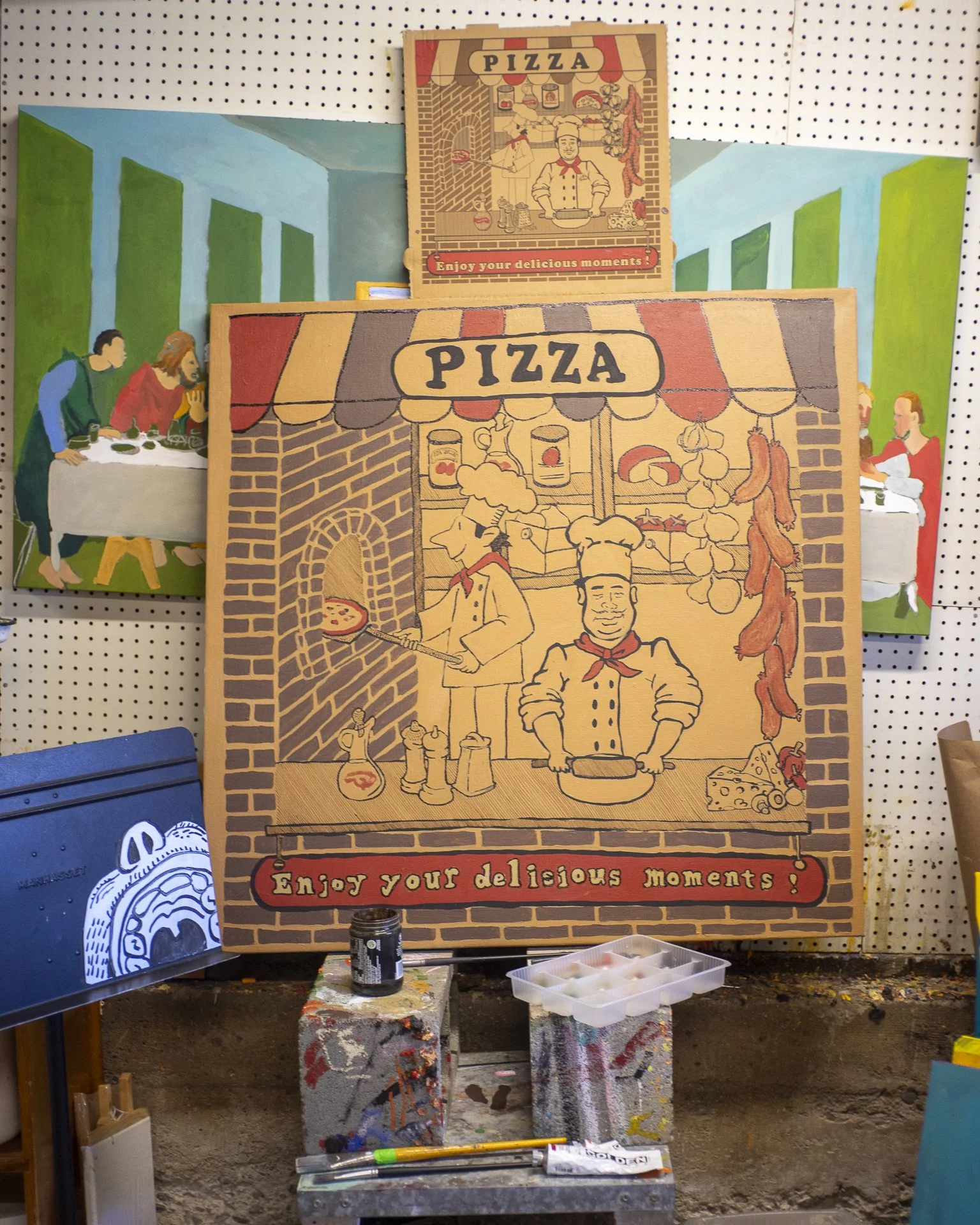
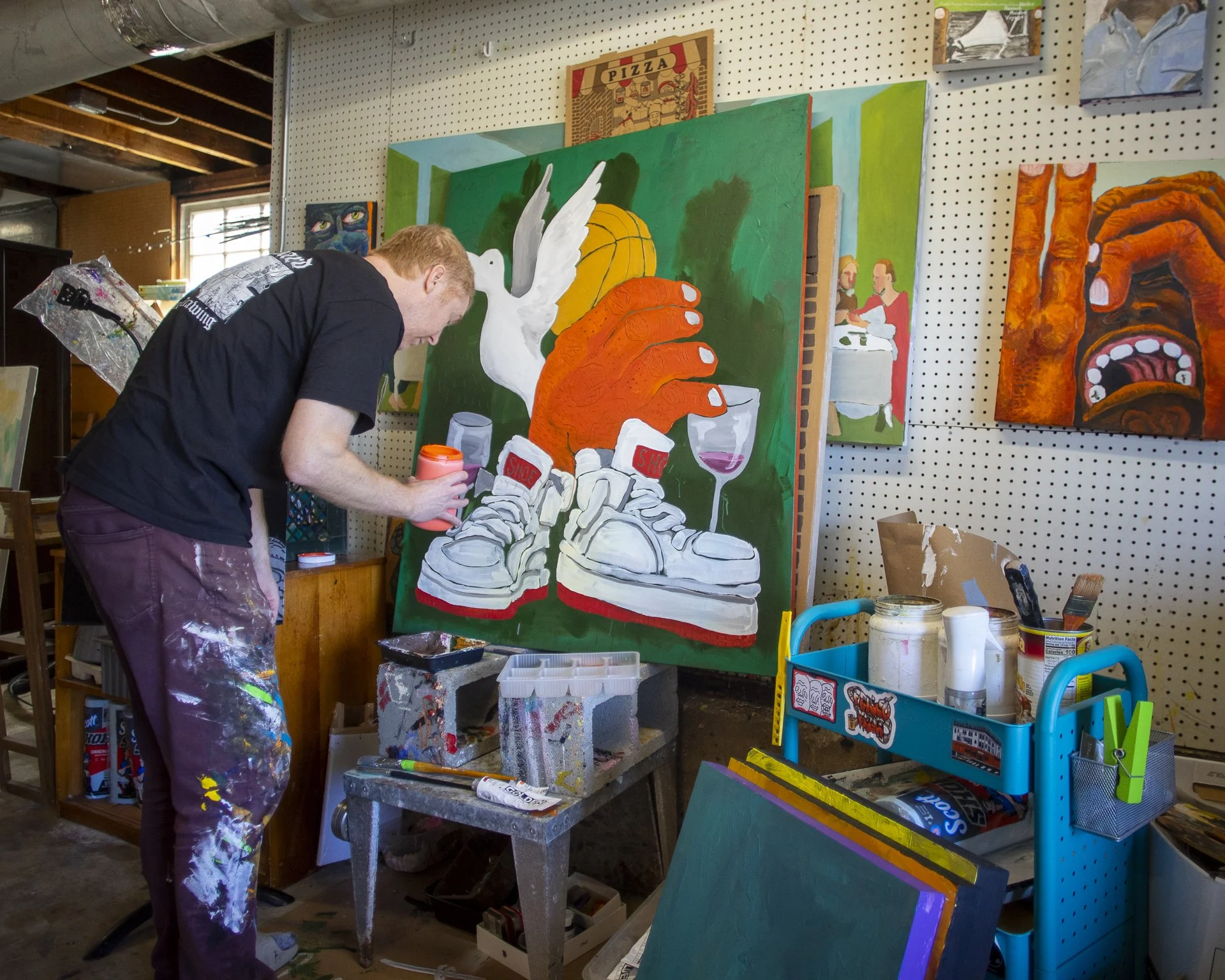
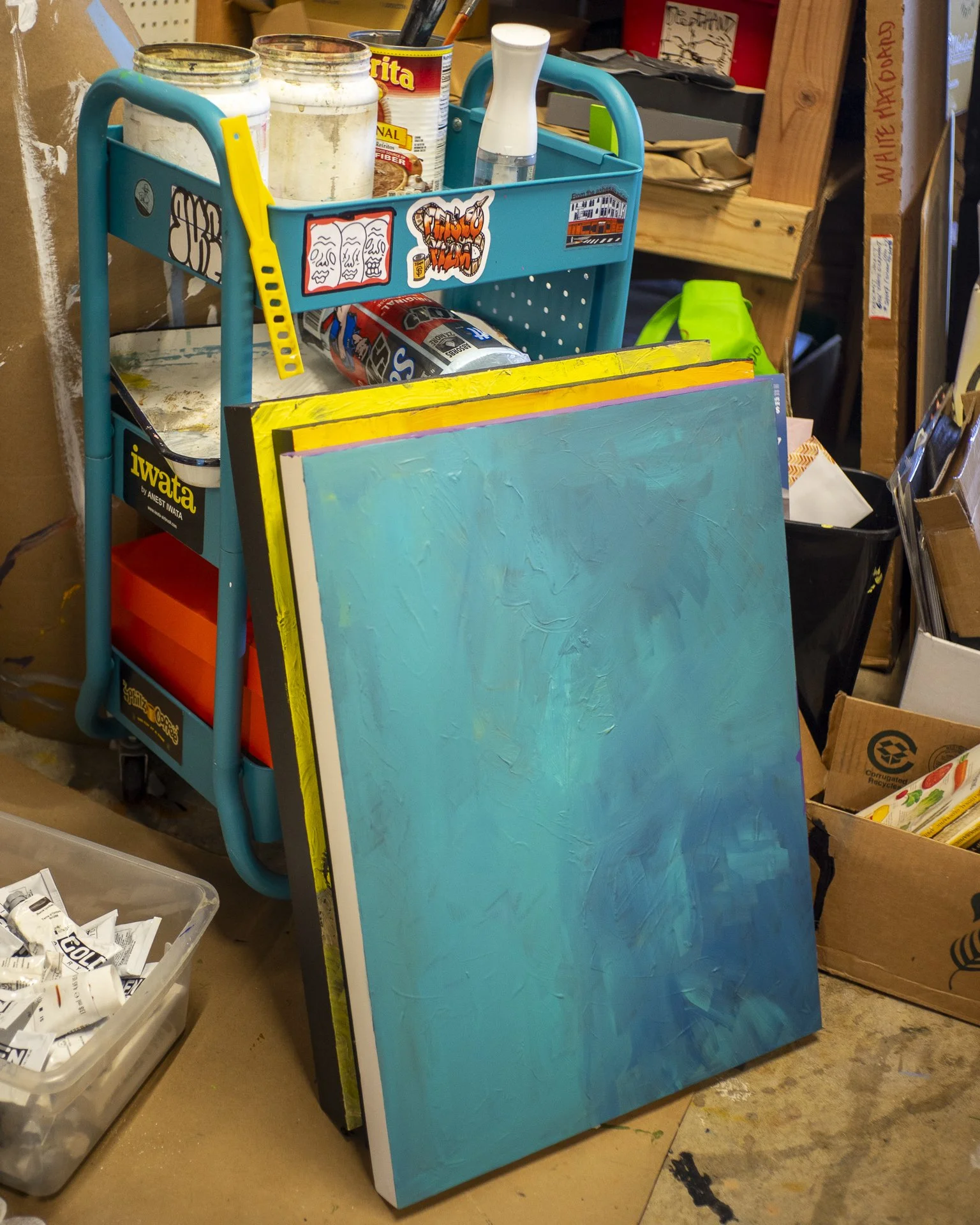
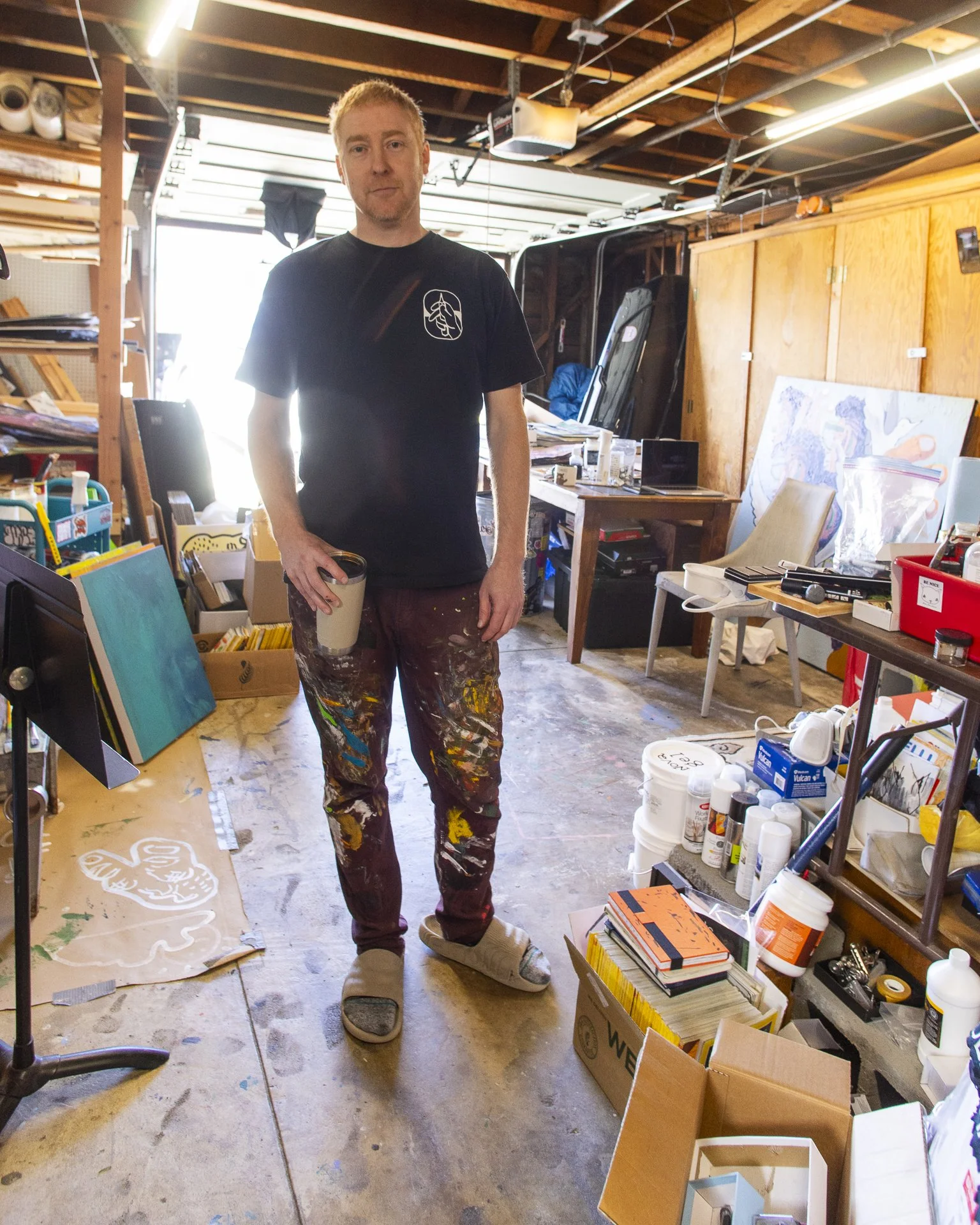
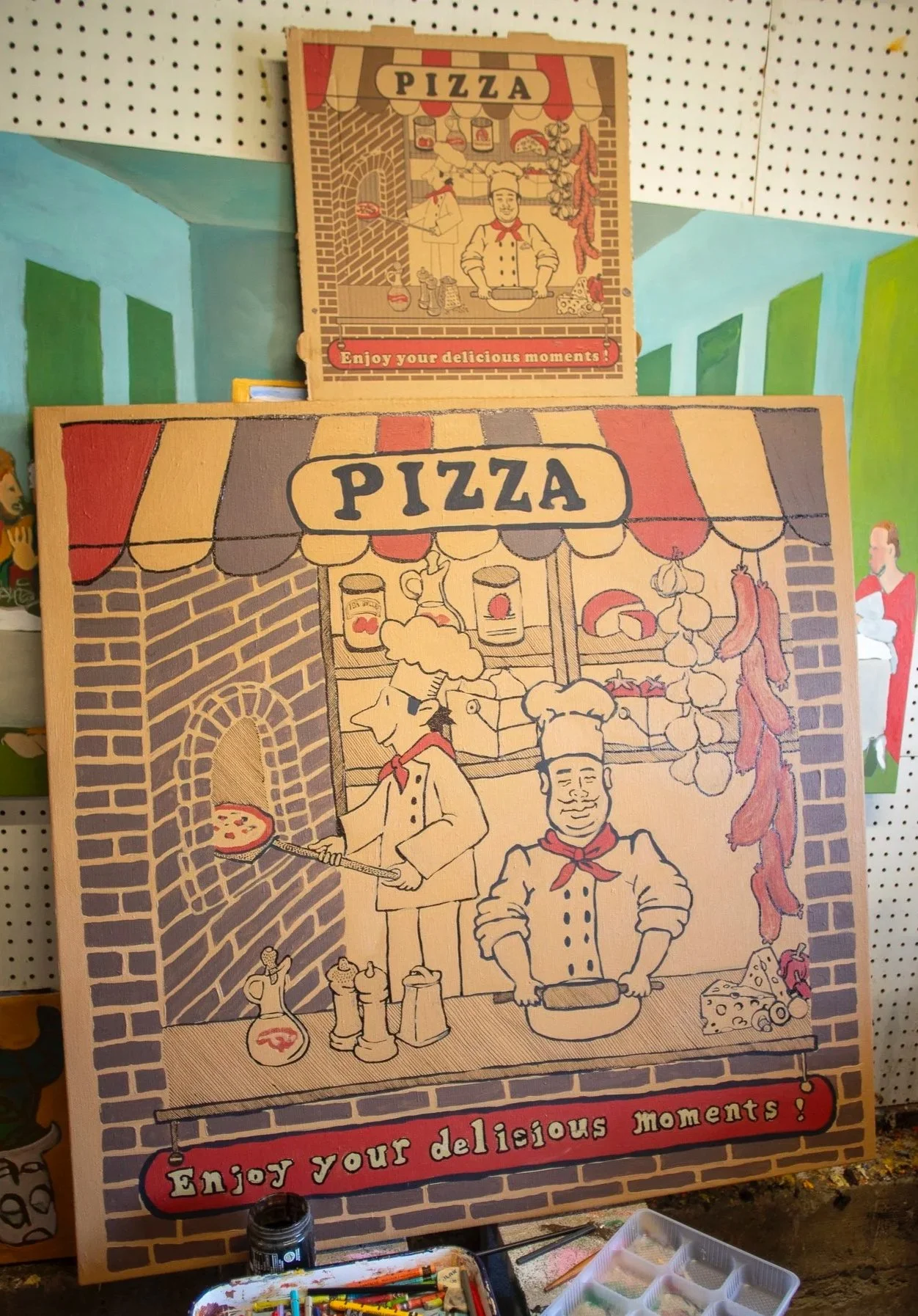
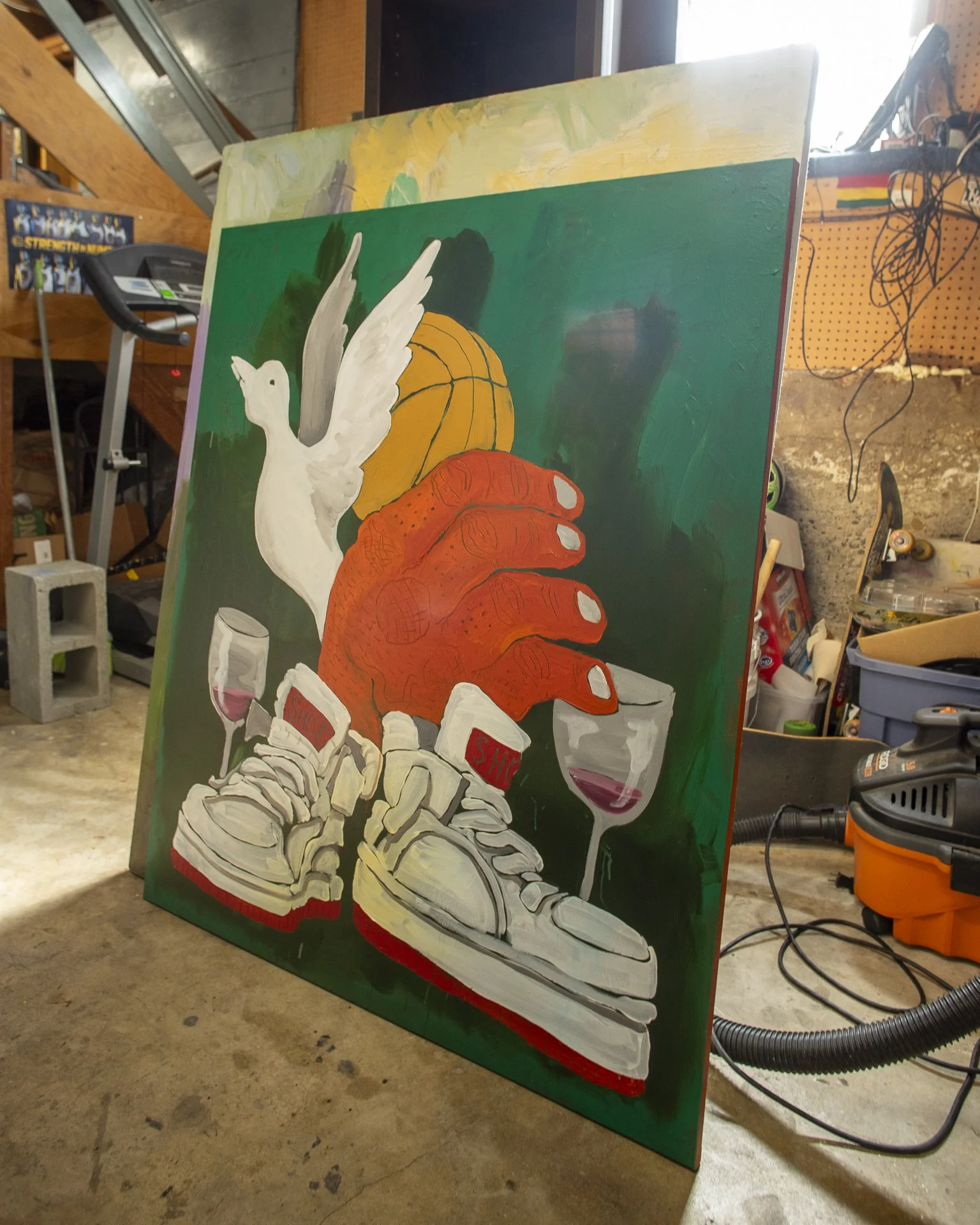
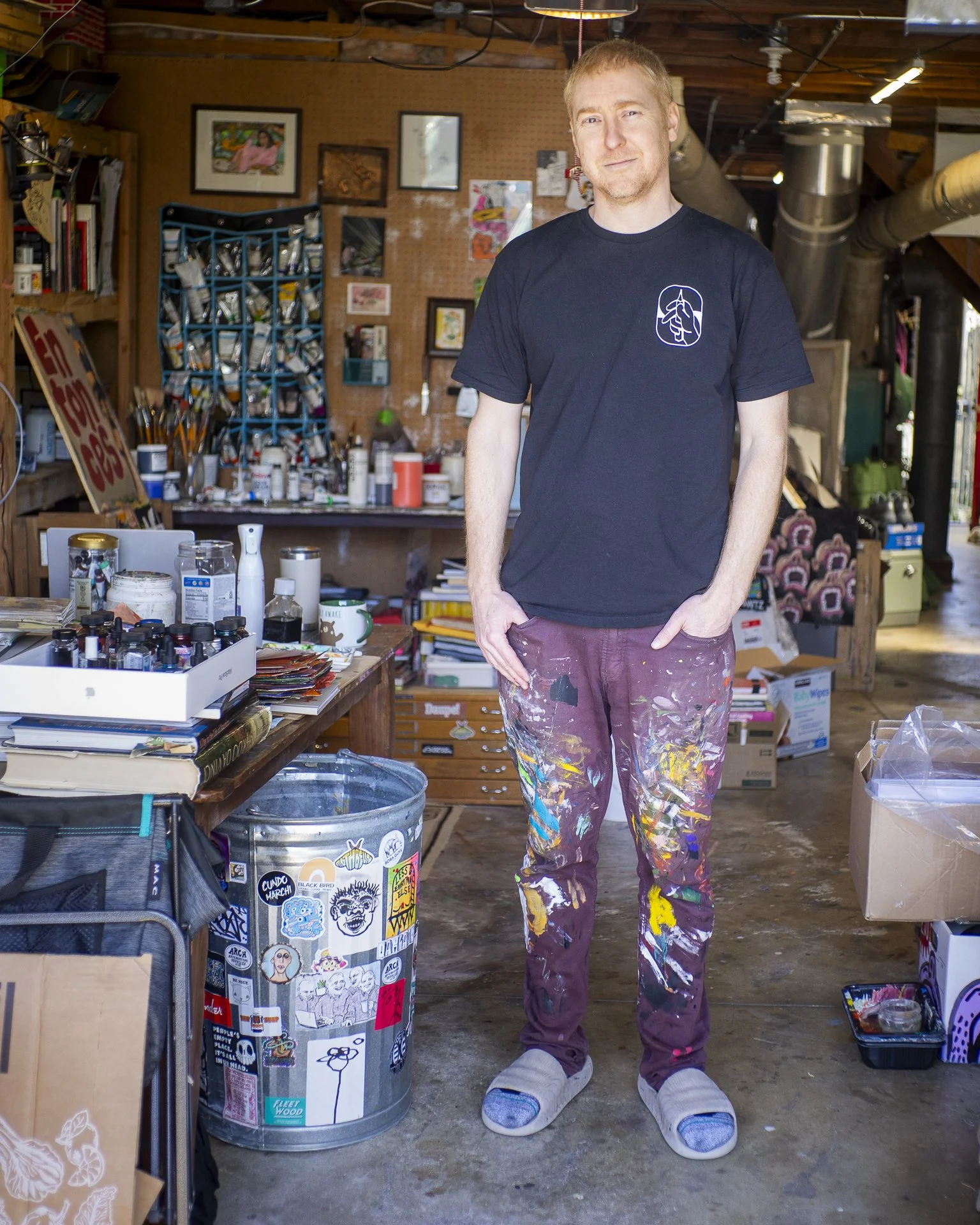
Dylan’s studio is in his home, in his garage specifically. That’s where I find him with the roll up door open, waiting for me. I notice a 4ft by 4ft painting in progress of a pizza box resting over Dylan’s homage to Leonardo Davinci’s The Last Supper. I find it humorous, whether intentional or not, that a larger than life recreation of a disposable modern food delivery totem rests over a study of a Renaissance painting depicting Jesus’ last meal. I make a mental note to discuss this juxtaposition with him later.
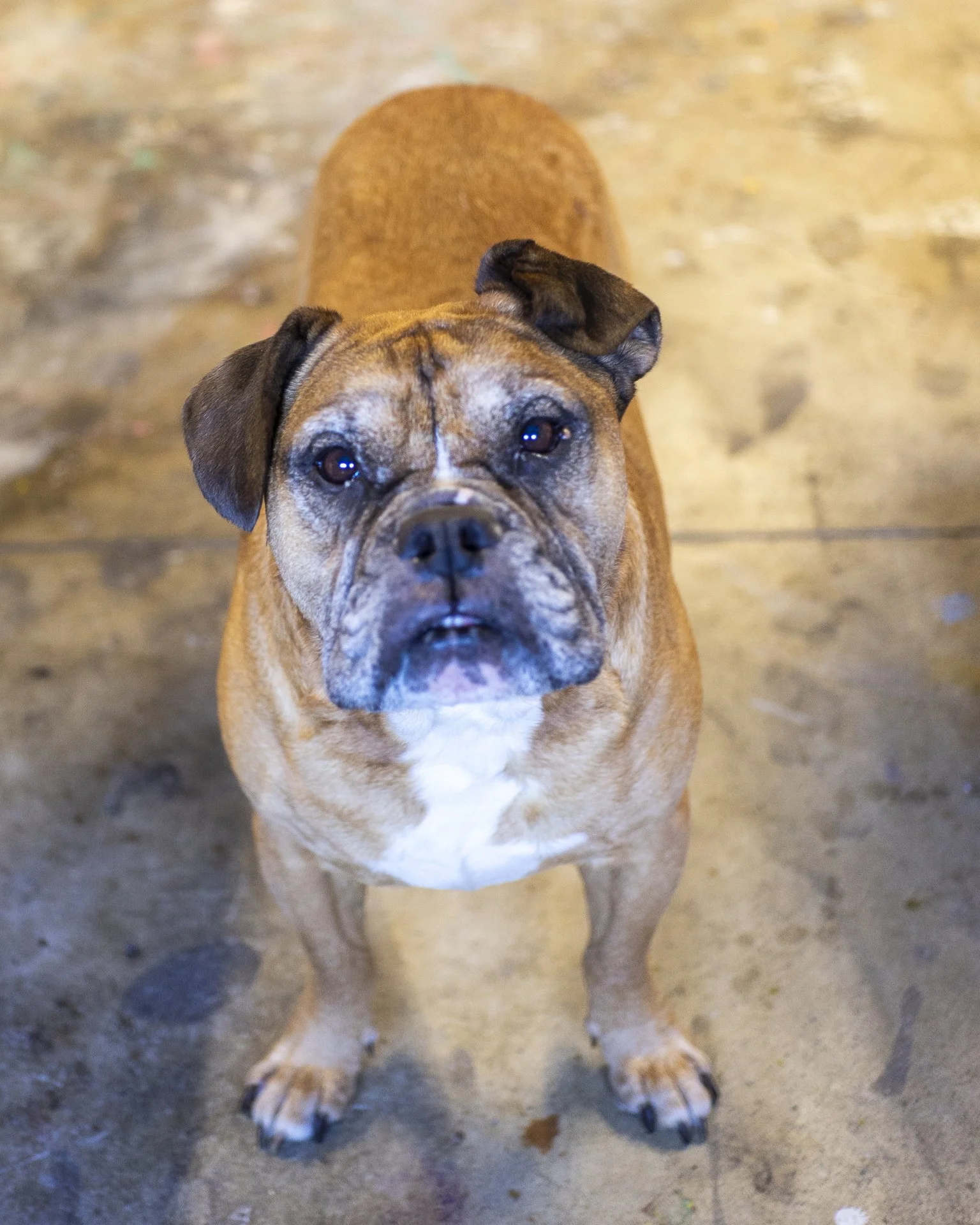
Dylan offers coffee from a pour over carafe he’s started in the kitchen. I meet his dog Wiggle Butt and ask permission to snoop his bookshelf in the dining room. I’m impressed with the medley of academic art history blended with pop culture and a healthy peppering of art magazines. Dylan tells me that he is a self taught artist. He’s taken a few classes here and there but those shelves hold the lion’s share of the knowledge he’s used to inform his practice as a full time artist.
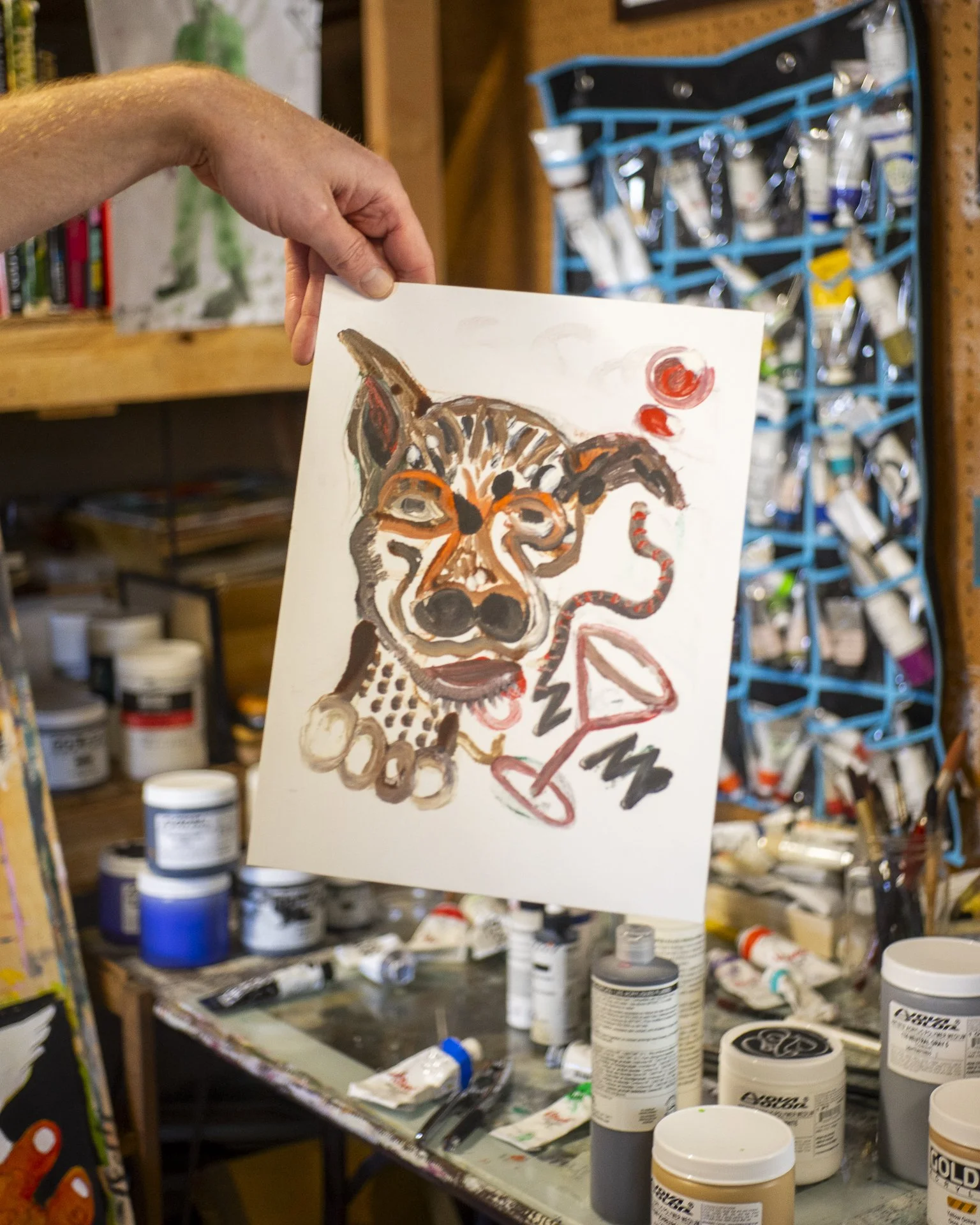
We return to the studio, strong coffee in hand, where Dylan and I discuss our shared interest in Image comic books from the 90’s, how he’s “medium agnostic” with his art, his practice of “sabotaging control” in his art and how that leads to a more zen-like state of painting. Dylan is teaching himself Spanish and phrases he’s integrating into his vernacular arise frequently. I find Dylan to be thoughtful when he speaks of his life as an artist, the challenges that life presents, the community he lives in, his routines and the family he has in California after moving from West Virginia in 1989.
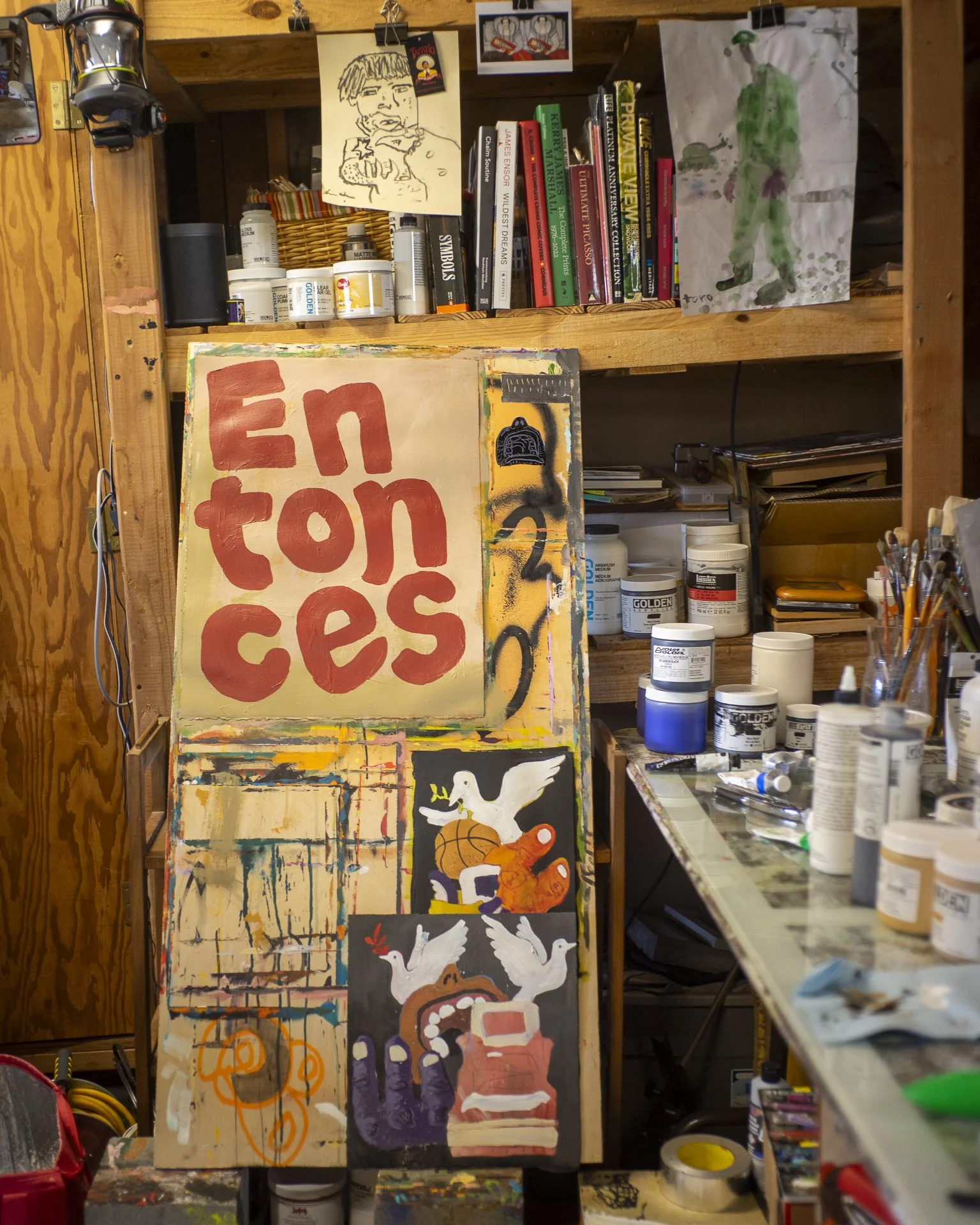
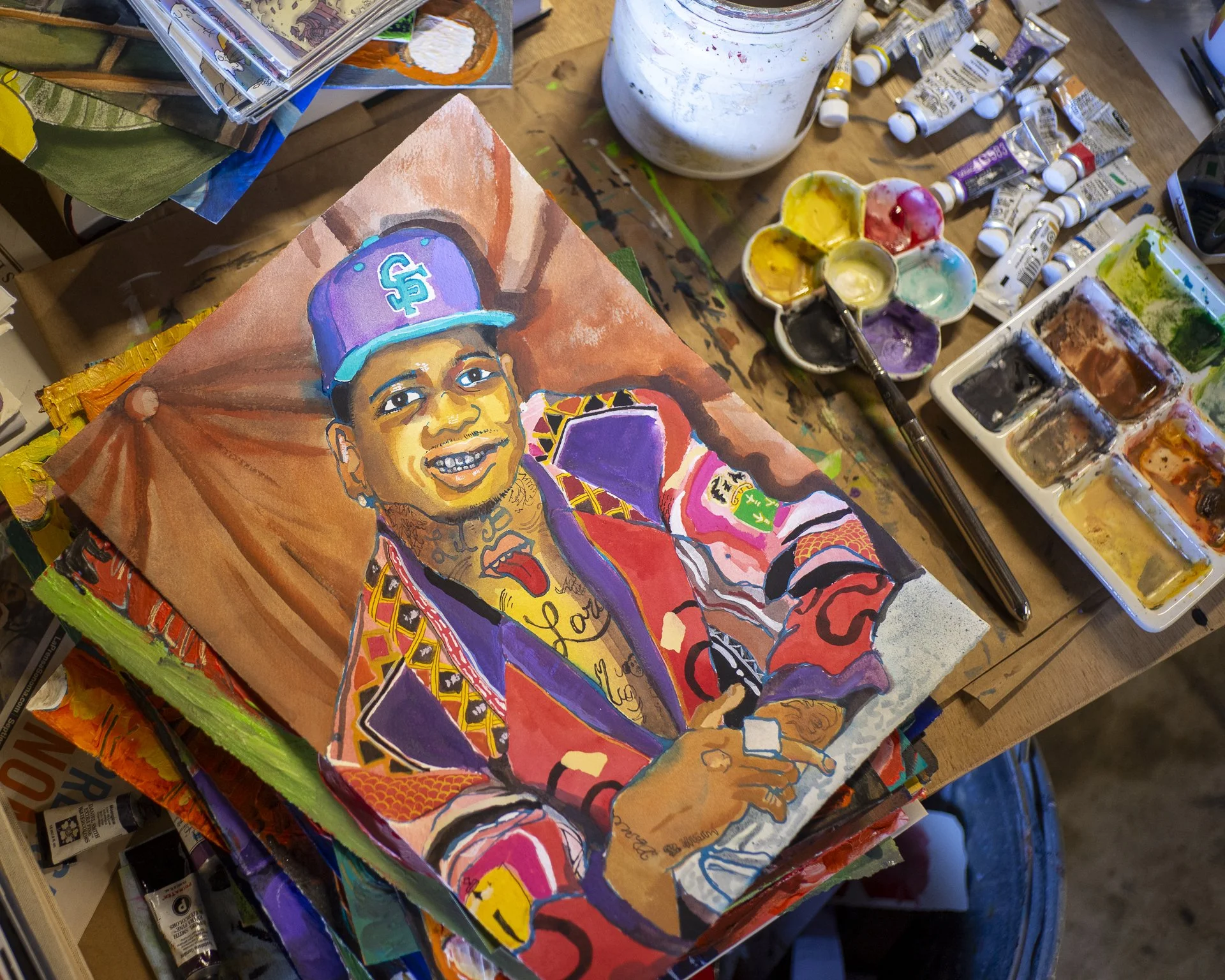
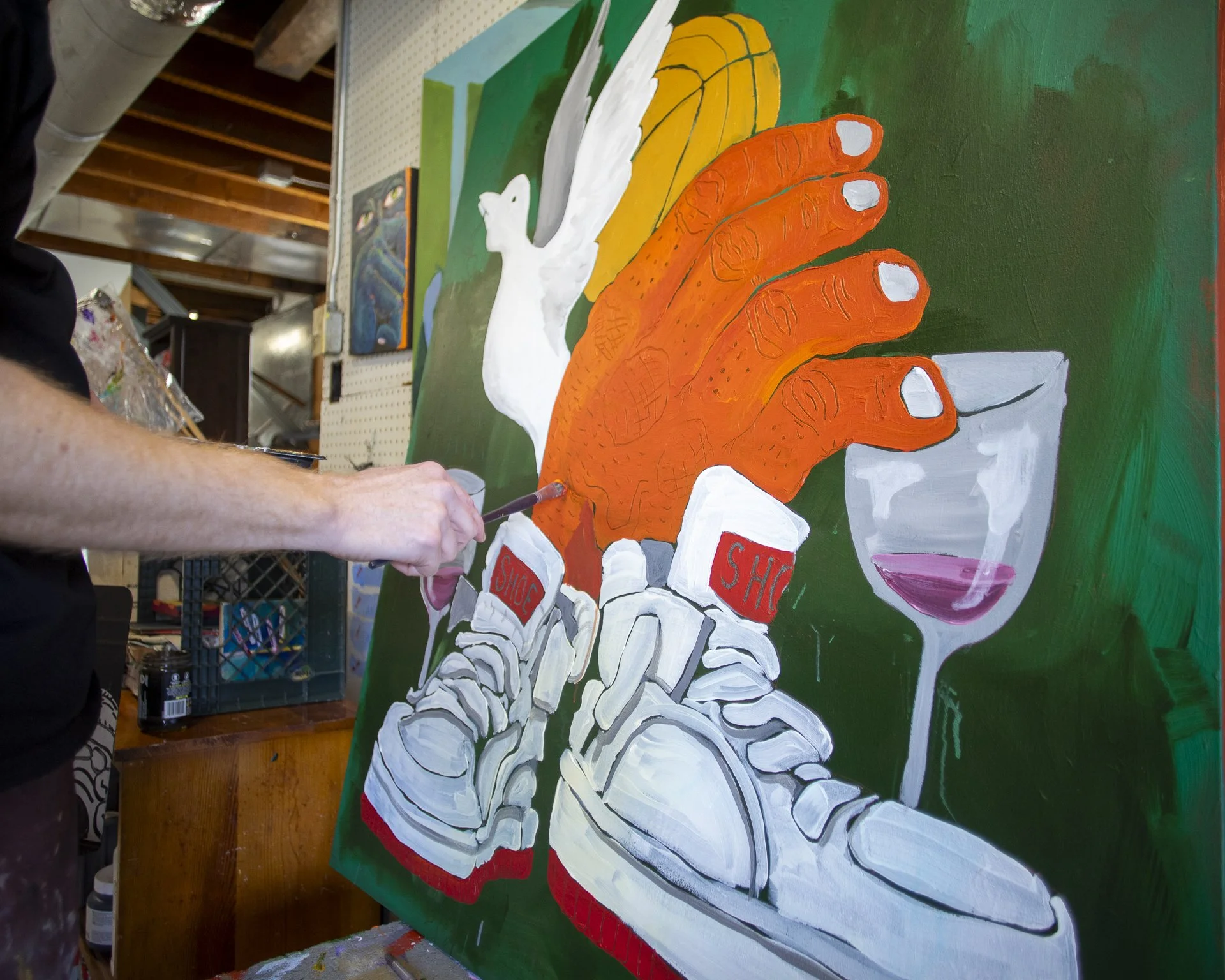
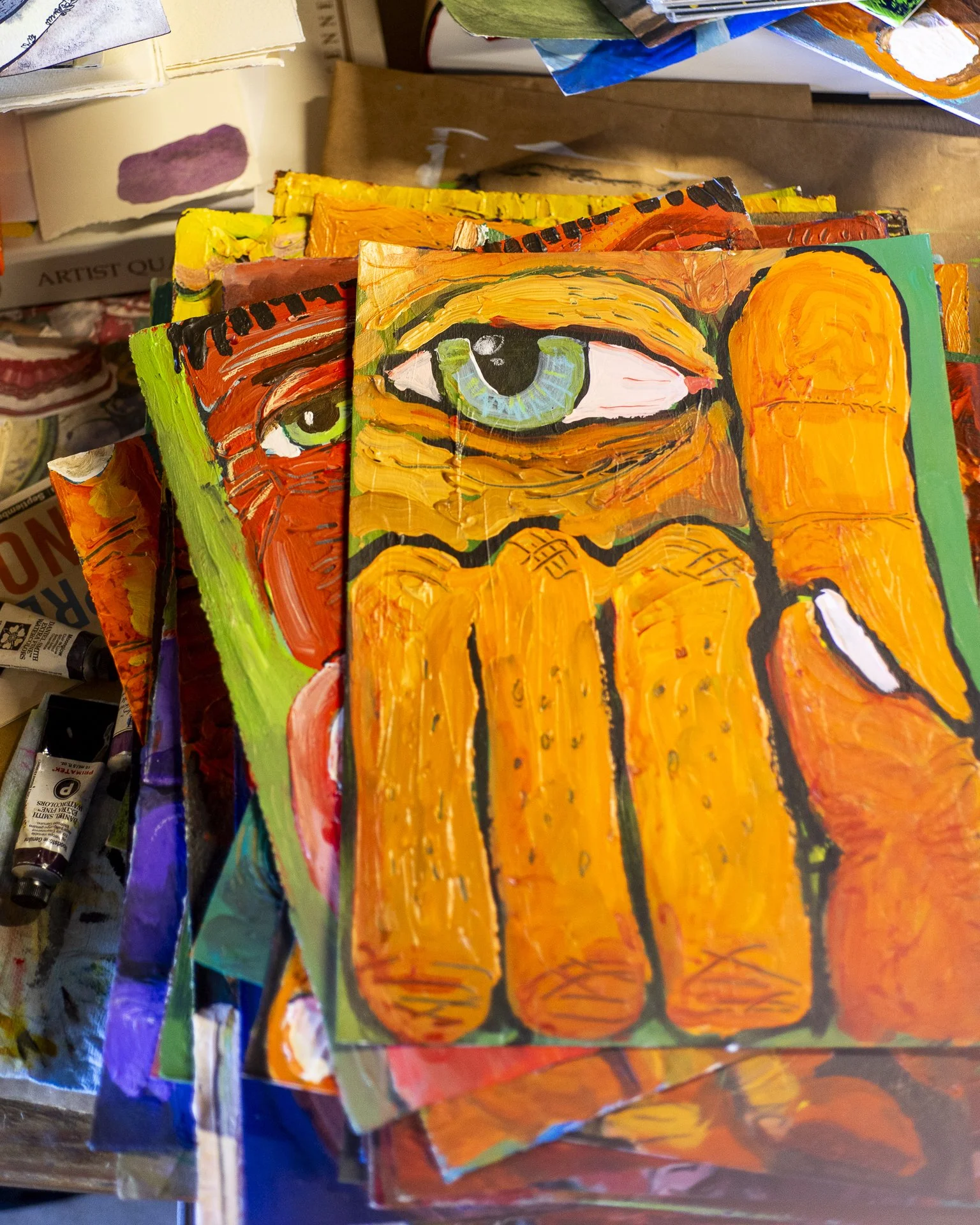
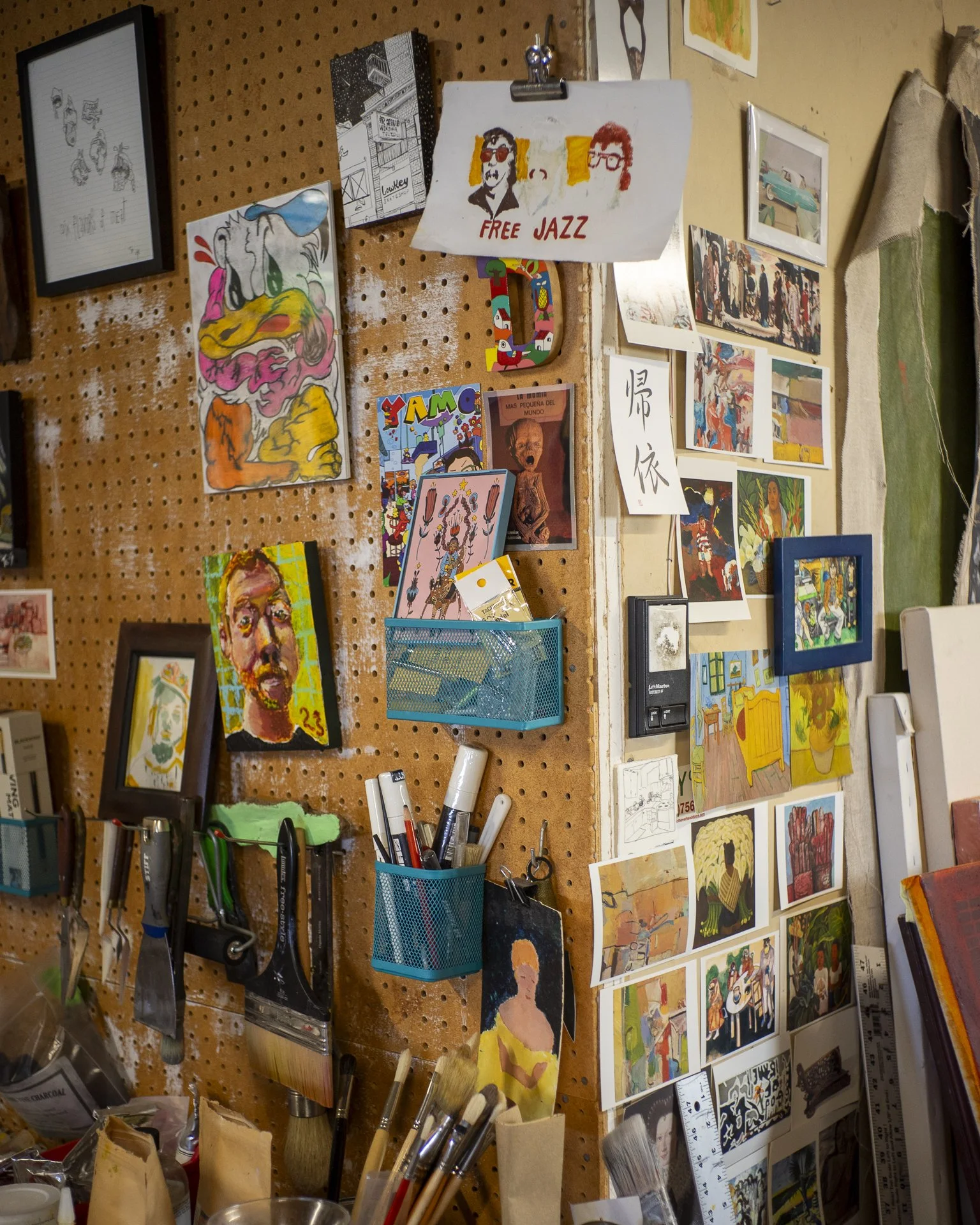
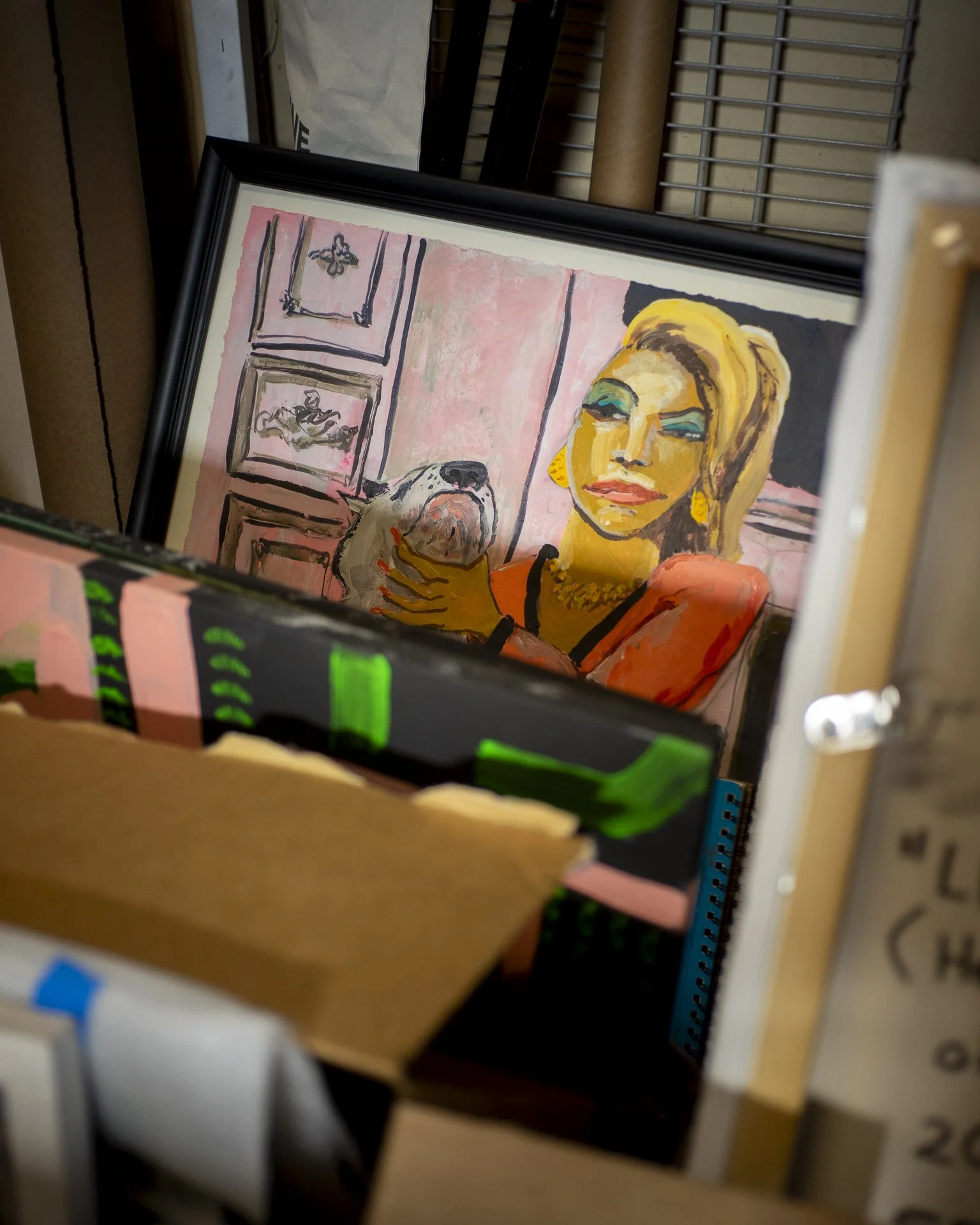
Dylan’s art is practiced raw expressiveness. His figurative and landscape works possess a contrarian balance of being simplified yet extremely complex. The depth and nuance of detail he pours in to his ink drawings, water colors and etchings offer something new to appreciate at every glance. Dylan blurs the lines between an artist who isn’t classically trained, an artist with pure talent and an artist that chooses to disregard rules to make art how he chooses. He takes chances with his work and from what I’ve observed on the walls of his studio or stacked on drying racks, his passion and drive for creating has paid off in prolific volume and fetching aesthetics.
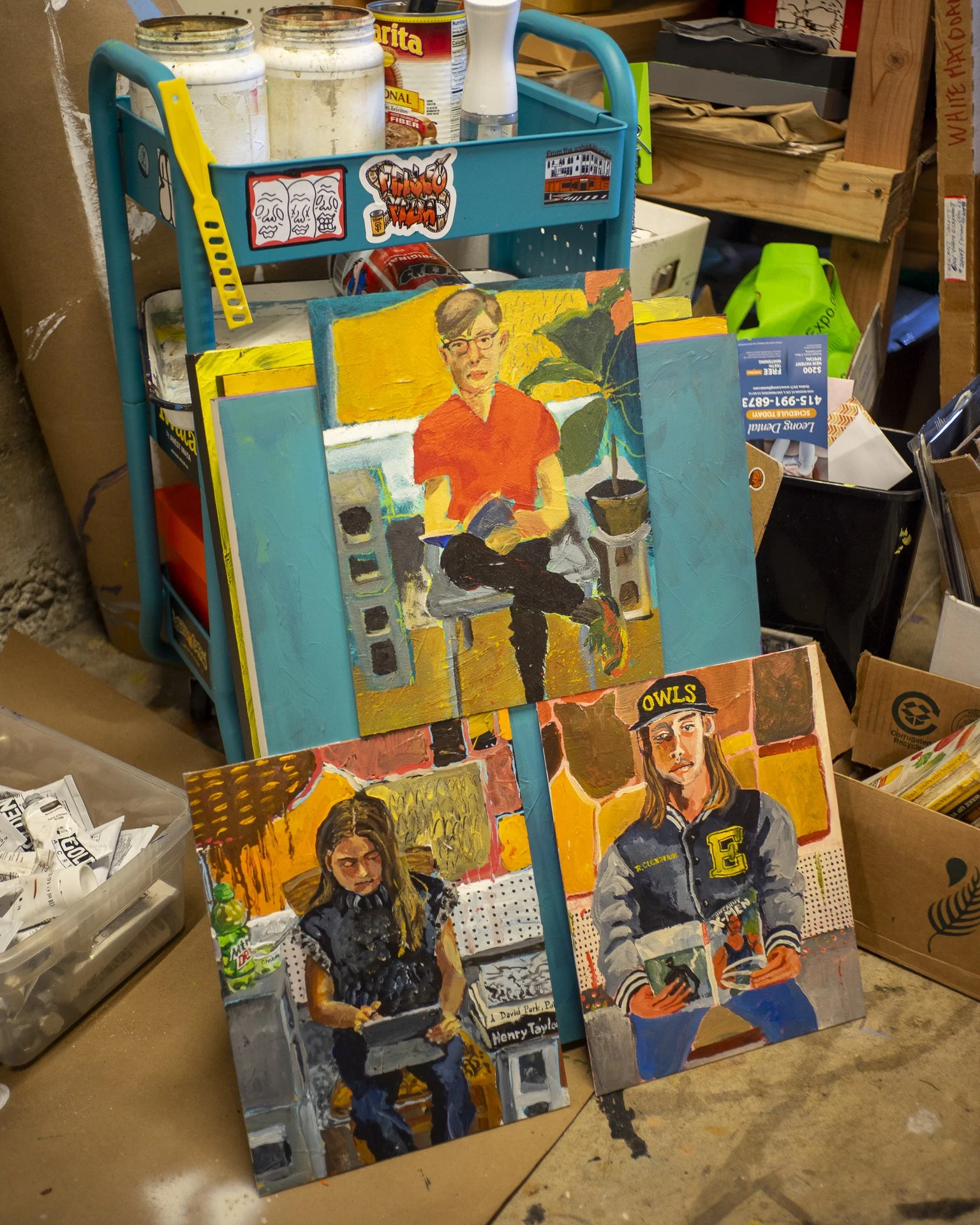
Dylan offers an anecdote about his tenacity and drive to make art, “Art is quite athletic for me, a Mamba Mentality sort of thing. Get the shots up. If you miss, forget about it and keep shooting. But not just shots, work on your whole game. Ball is life.”
Interview
What is the first thing you do when you get into the studio?
I put something on to listen to or watch in the background, music or basketball or a Spanish podcast on 0.7-0.9x speed depending on the speaker (it annoys the hell out of everyone I know, pero mi meta es hablar fluido). If I’m completely uninspired, I’ll clean the space a bit. Usually that will help me get the rust off creatively.
Was there an impetus or a moment that marks when you started doing your art full time?
I’m a Covid Pandemic painter. That was a period where I reevaluated the meaning of life and found a huge missing part of myself. It was like being zapped and realigned with a sense of life calling, like this is the thing I was always supposed to be doing. Not to be too mystical about it.
You paint your cityscapes from life and from photos you’ve taken. Is there a method you prefer and what do you like about that method?
I like both methods and mixing things up. Working on location is cool because it is an old school process. Setting up a big dorky easel in public takes some courage with all the people who feel the right to come right up to you and look over your shoulder, as if I were doing it for show. I kinda like oil painting on location because I need to finish something in maybe 2 hrs or so (light changes fast) and I can’t get crazy detailed. The photo reference work is cool because I can take a photo in the middle of the road where I couldn’t easily stand and paint. In photo mode I kind of go into another mode, I think of it like being a human version of a shitty xerox copy. The “shitty” part is actually important because if you try to copy too faithfully from a photo, things start looking really boring and dead to me. I stress this point a lot and I’ll come back to it.
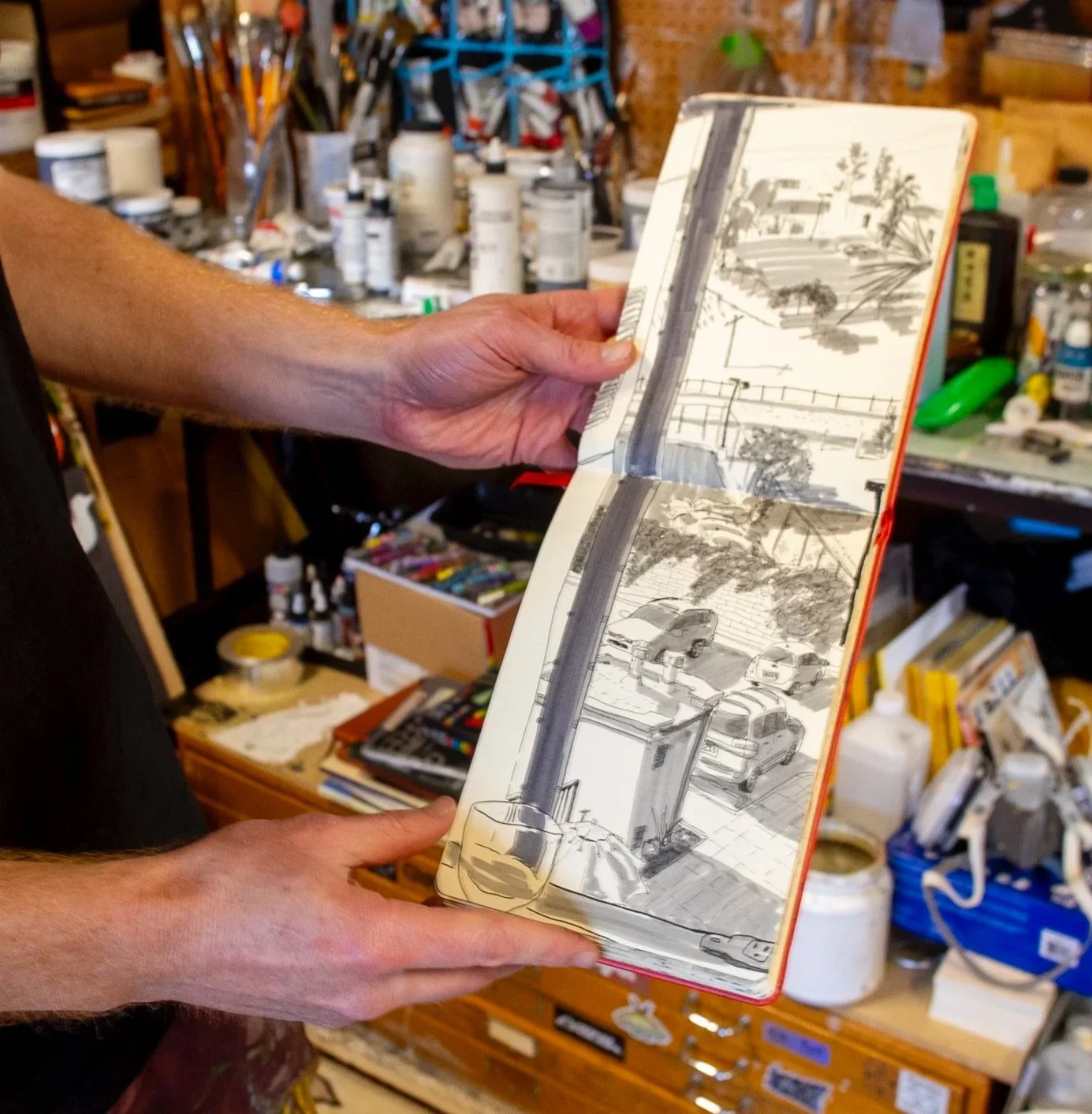
What is your guiding light on choosing a landscape for one of your city scapes?
I have been thinking about this more recently. In the past I’d just say “cuz I think it looks cool” but I think I’m drawn to scenes with a density of information that hits a viewer all at once and forces them to unpack it like a puzzle.
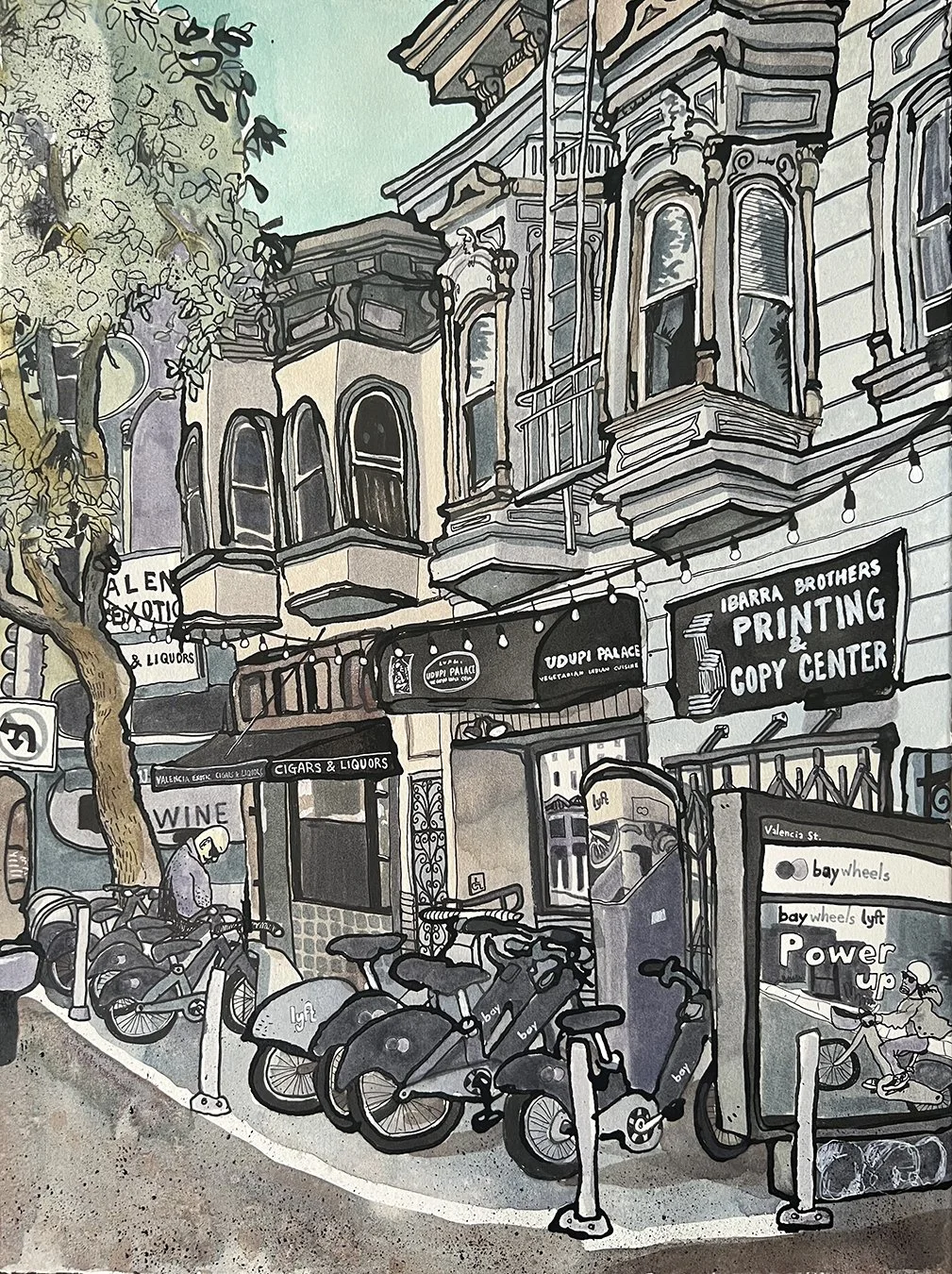
“Valencia & 21st” Ink and watercolor on paper by Dylan Clendenin.
How would you describe your style of art?
Before I started making art seriously again I probably couldn’t name many historic painters apart from a few big names like “the guy who cut his ear off.” Since I’ve gotten into art more I’ve backfilled that lacking awareness (books, YouTube, etc) but until recently my art has mainly been informed by comic books and cartoonists. In the 80’s I fondly remember Garbage Pail Kids and loved the more weird/stylistic comic art. So I guess that shines through my work. No matter how much Rembrandt I’m exposed to, there’s still some Ren & Stimpy in there.
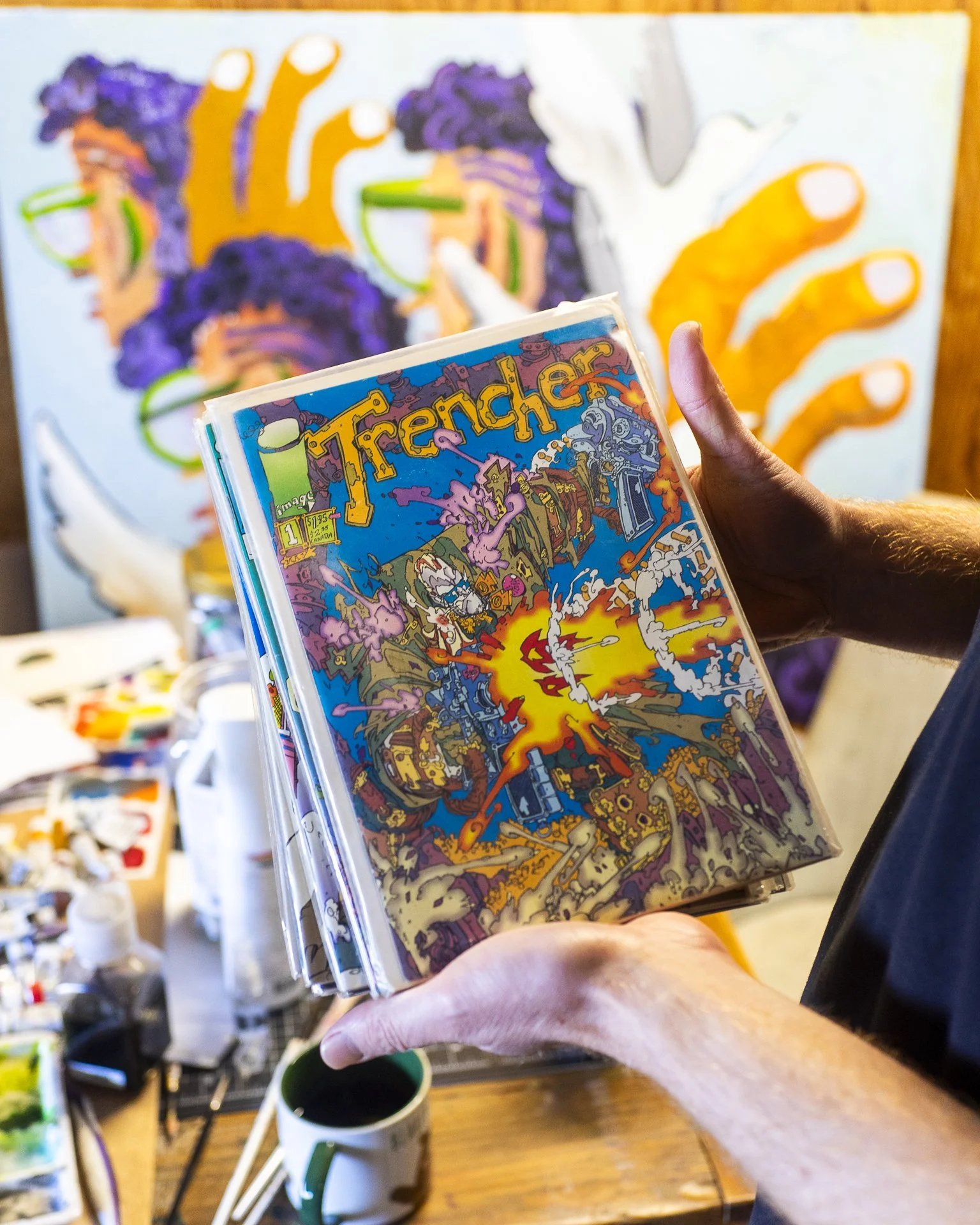
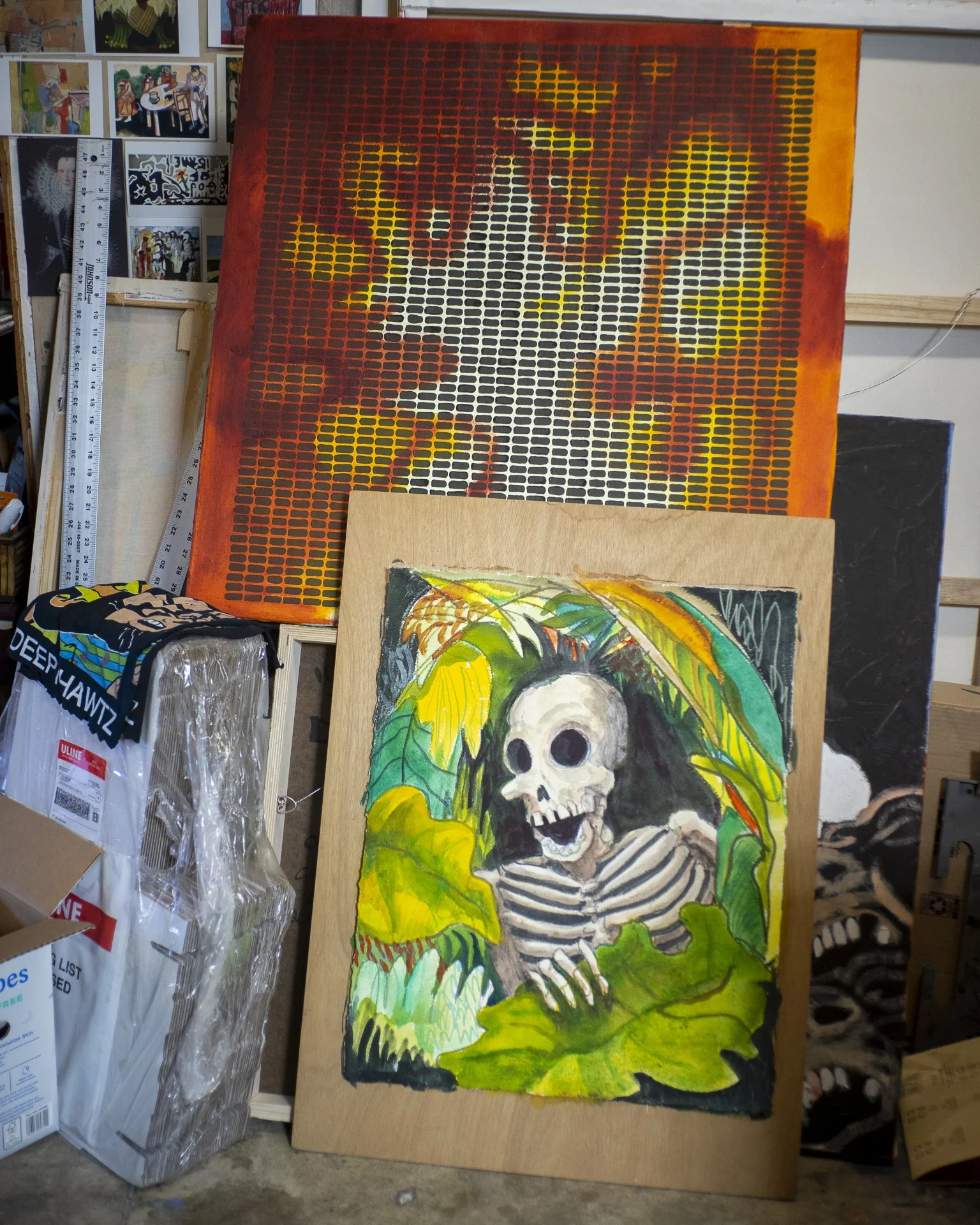
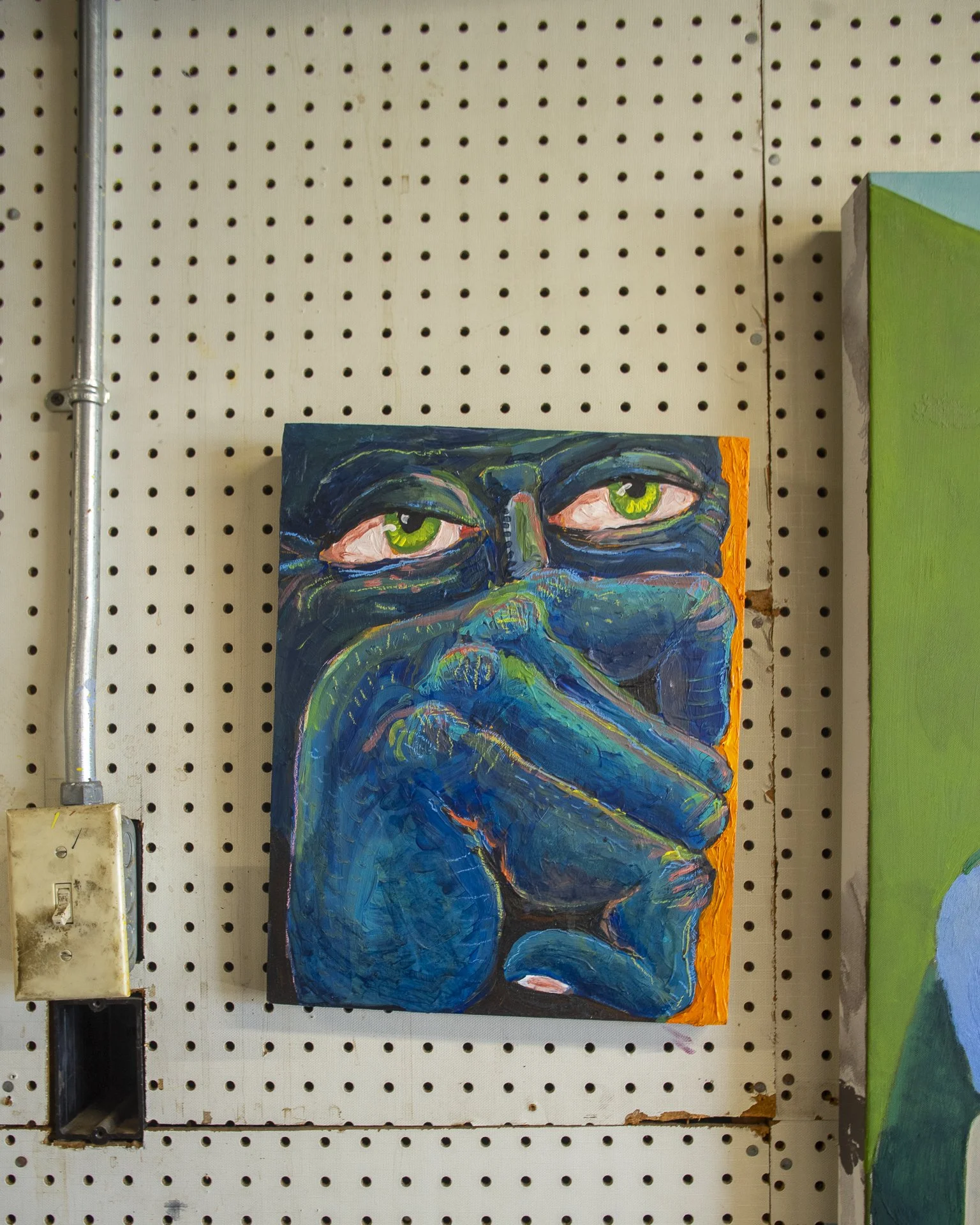
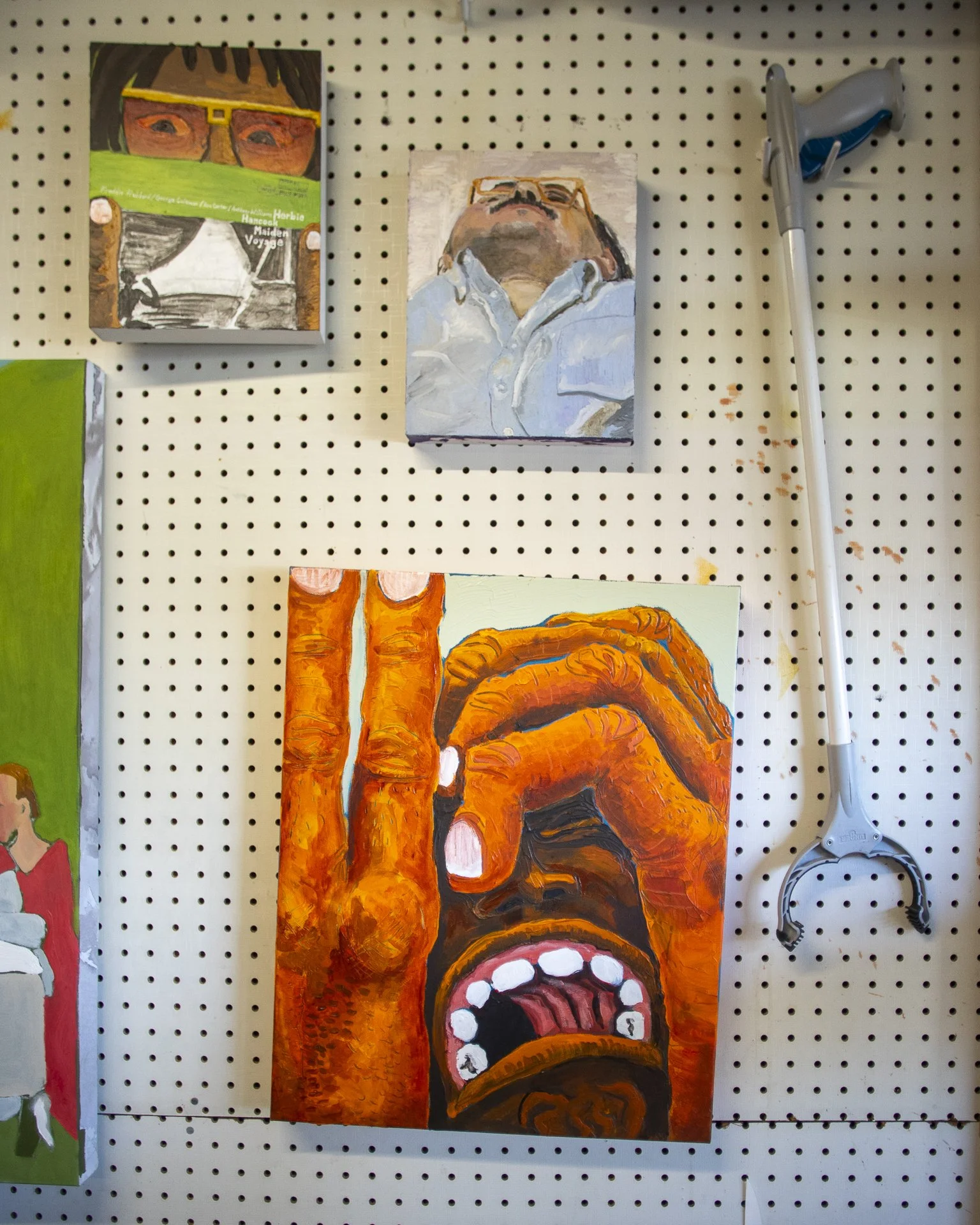
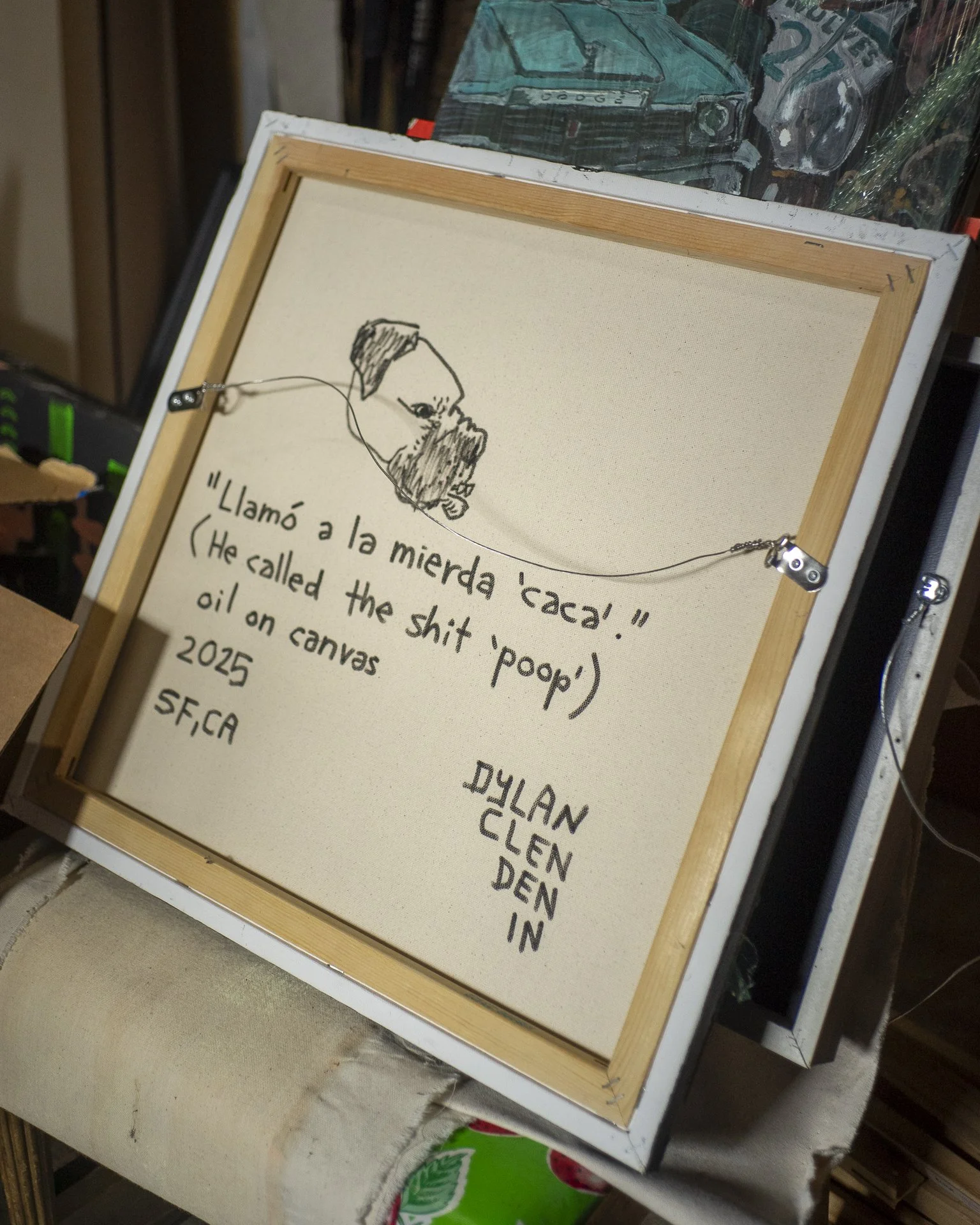
The work I’m seeing around your studio encompasses a variety of mediums. Do you have a medium you prefer?
Whatever medium I’m using at the moment is my favorite. Oil is my baby, acrylic is my baby, watercolor and gouache are my babies, casein is my baby, those little Caran d’ache neocolor pastels are my baby, colored pencils are my baby, graphite and charcoal are my baby, ink is my baby, copperplate etching is my baby, etc. It’s like someone who writes books should know different words, an artist should know different mediums. But I love how people go deep with one medium forever too, that’s cool too.
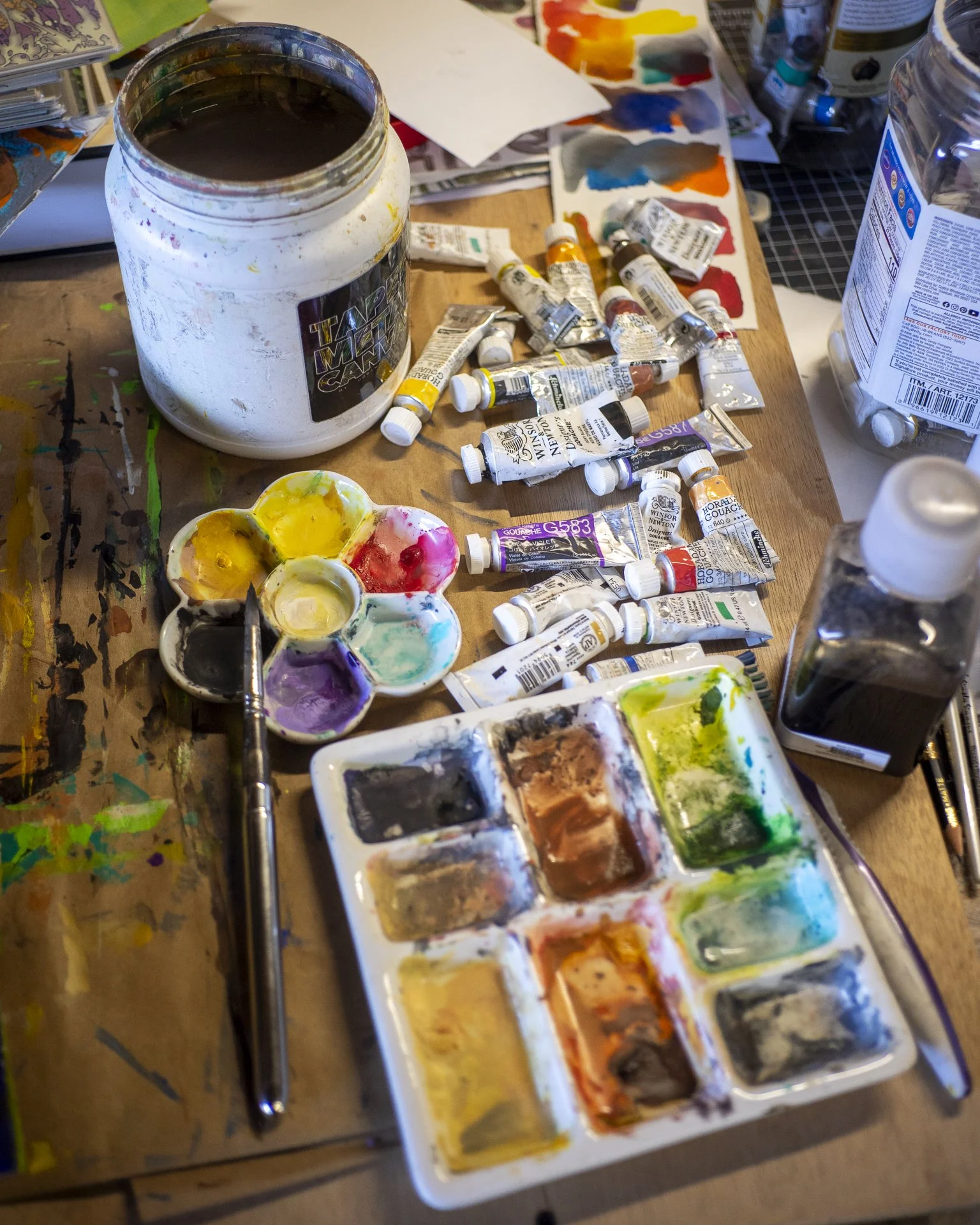
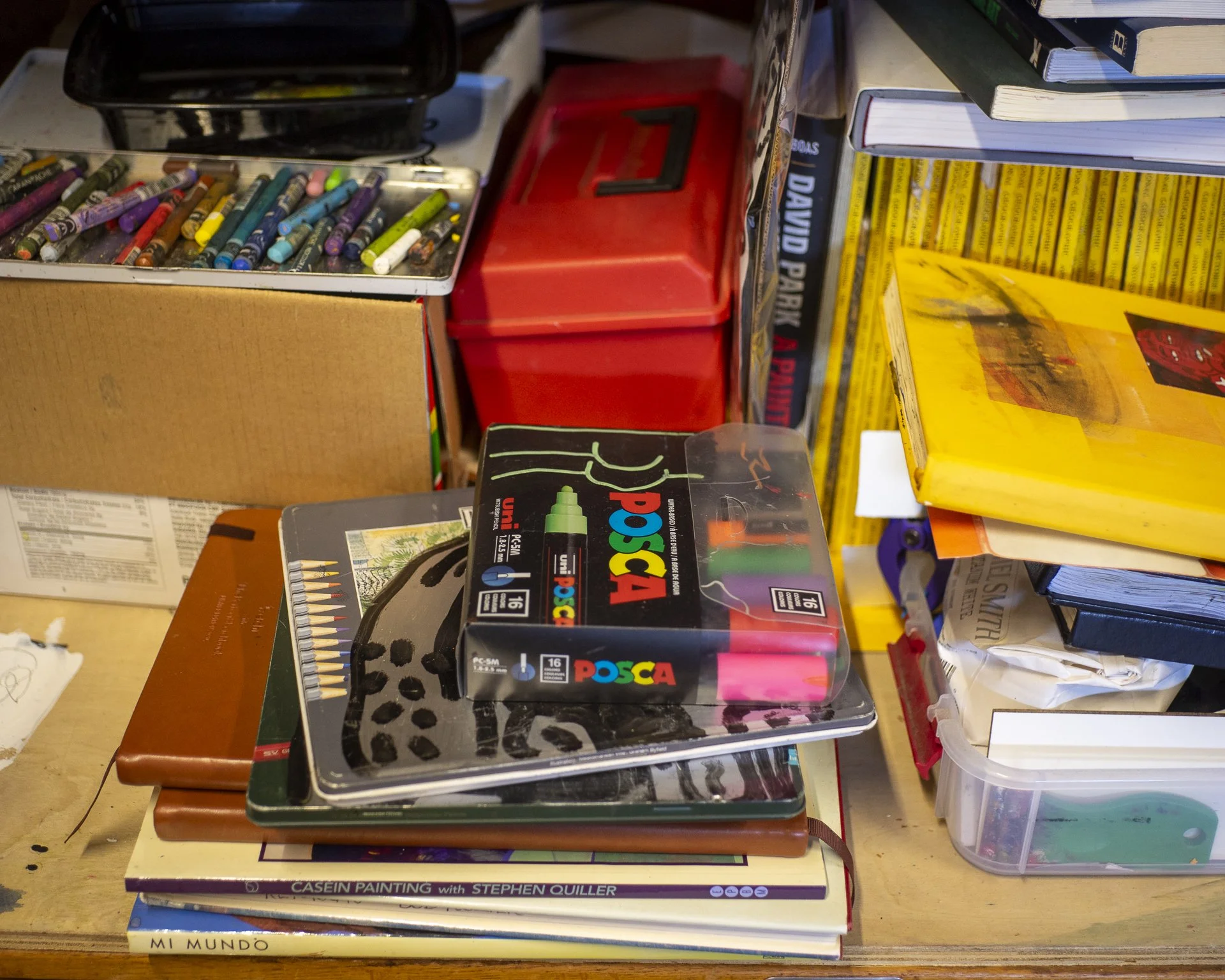
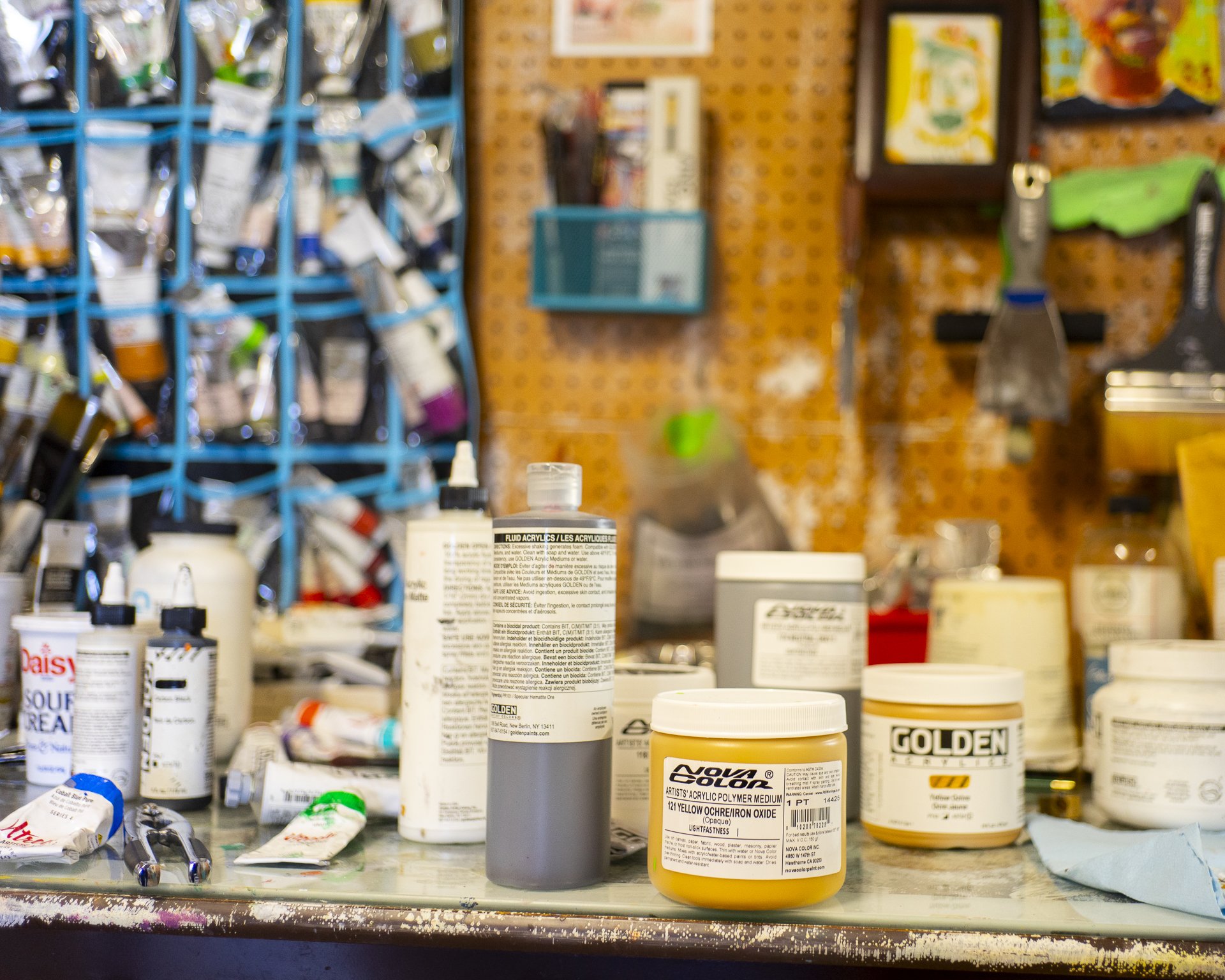
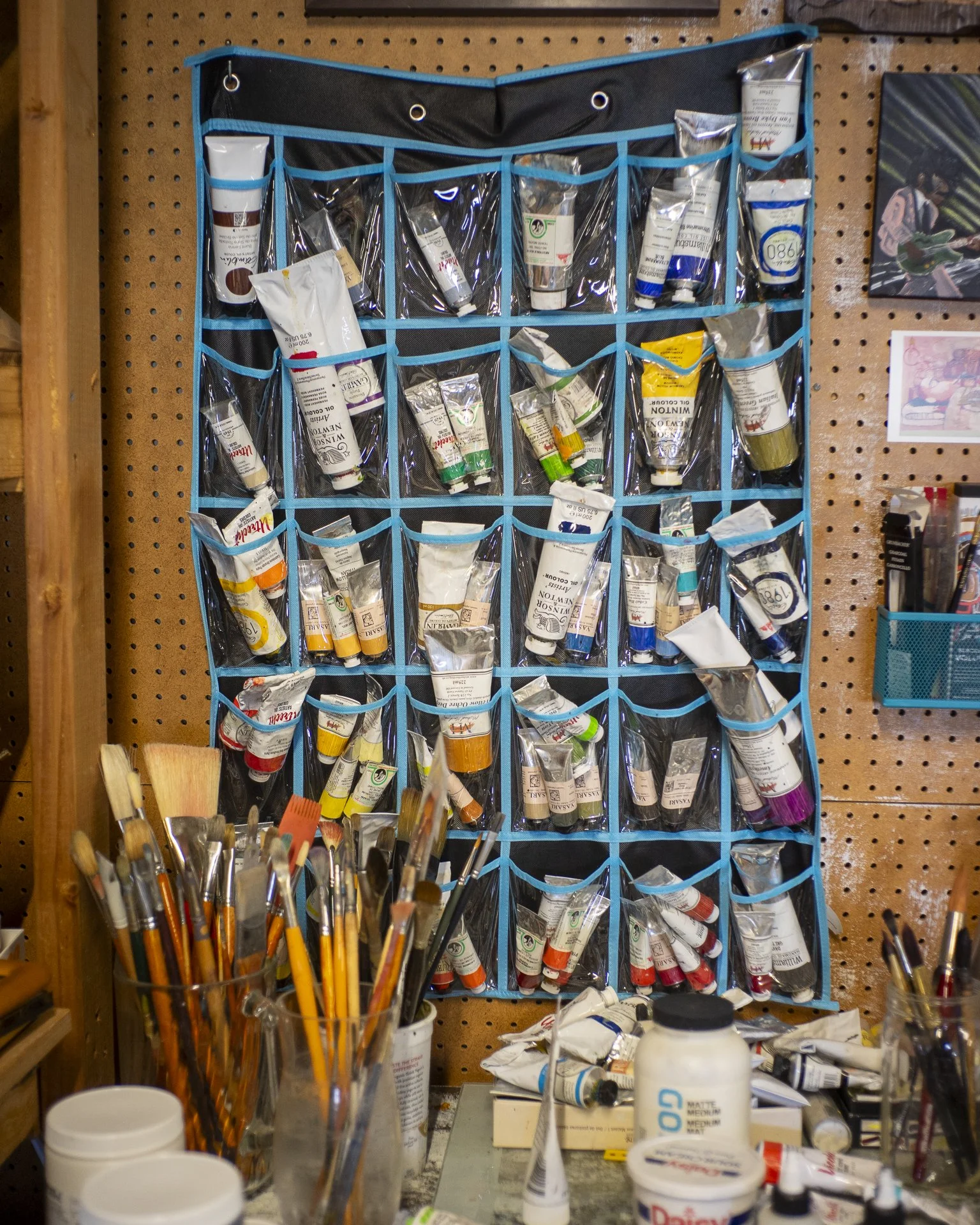
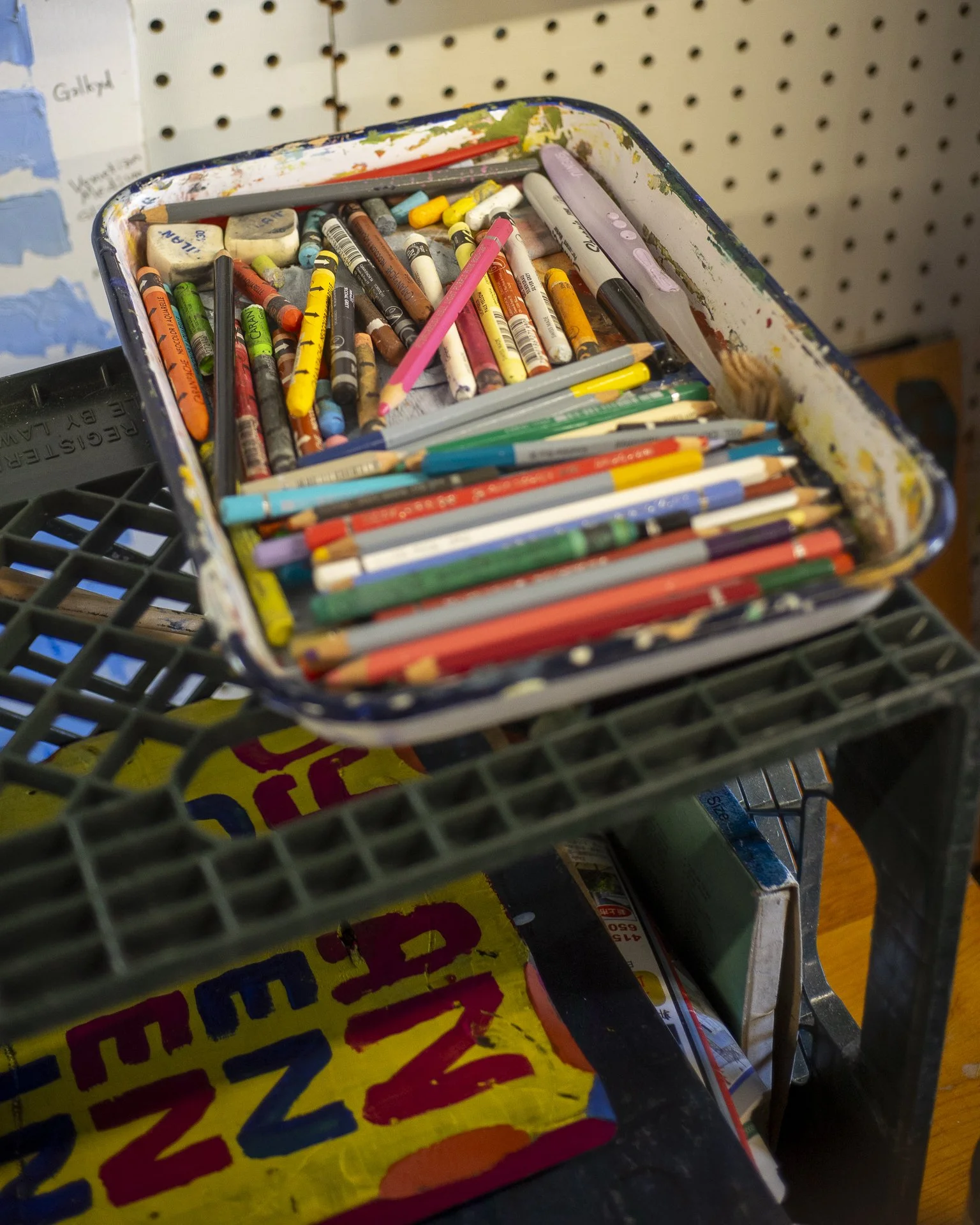
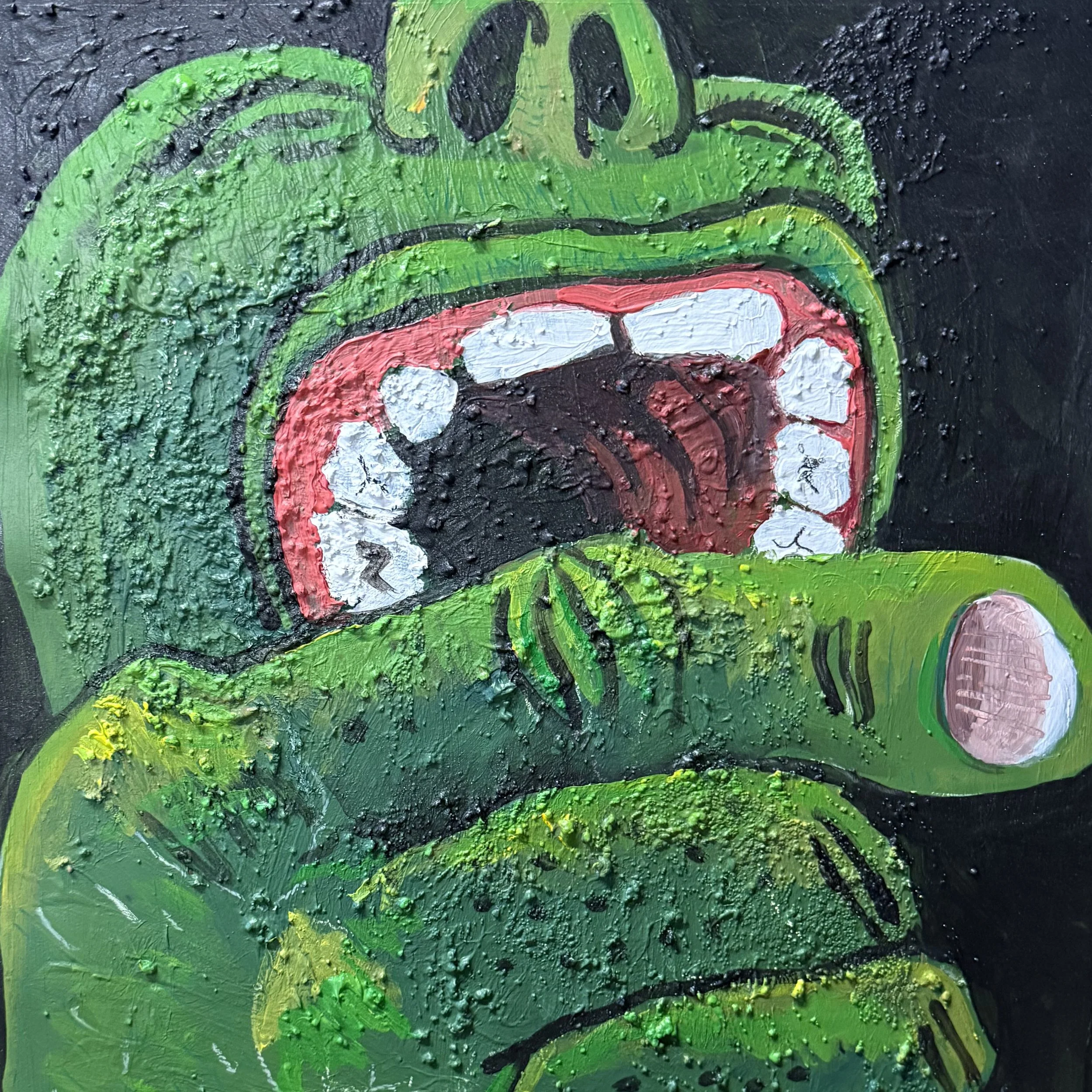
Detail “Goomba 23” by Dylan Clendenin.
Some of your paintings have quite a bit of texture, even your ink or watercolor works have a significant volume and depth to them. How do you add texture and depth to your work, either physically or visually?
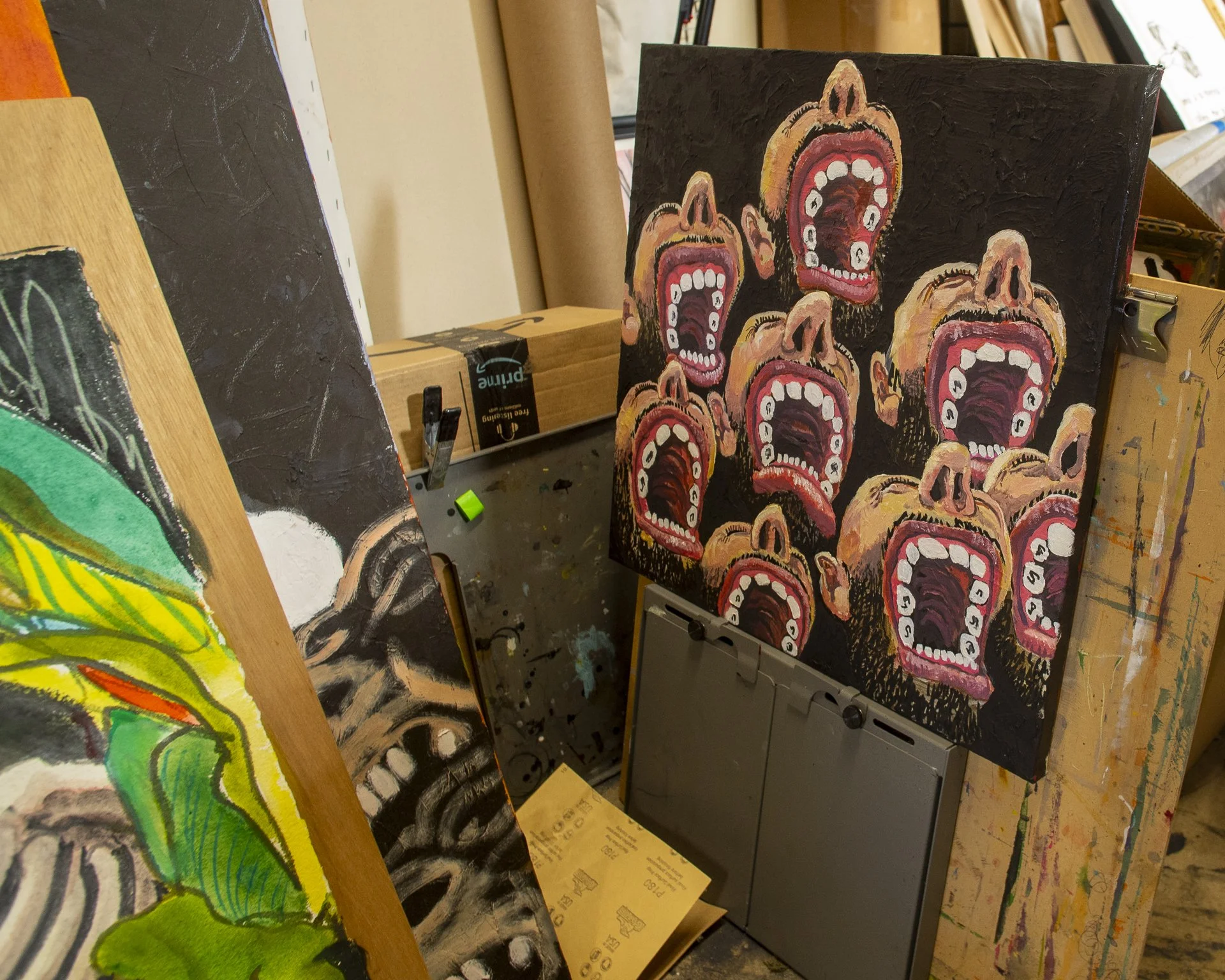
There’s not enough texture. I think. I’m being comparative here, but I’m a bit ashamed that my work isn’t as thicc [sic] as it could be. I want to get to the level where a single tooth of a person is a whole 150ml tube of paint and the damn thing actually is now in the category of sculpture. On the texture side I’ve added a lot of things to paint to “chunkify” it; marble dust, chalk, cold wax, pumice rocks, sand, those reflective glass beads used for traffic paint, modeling paste, etc.
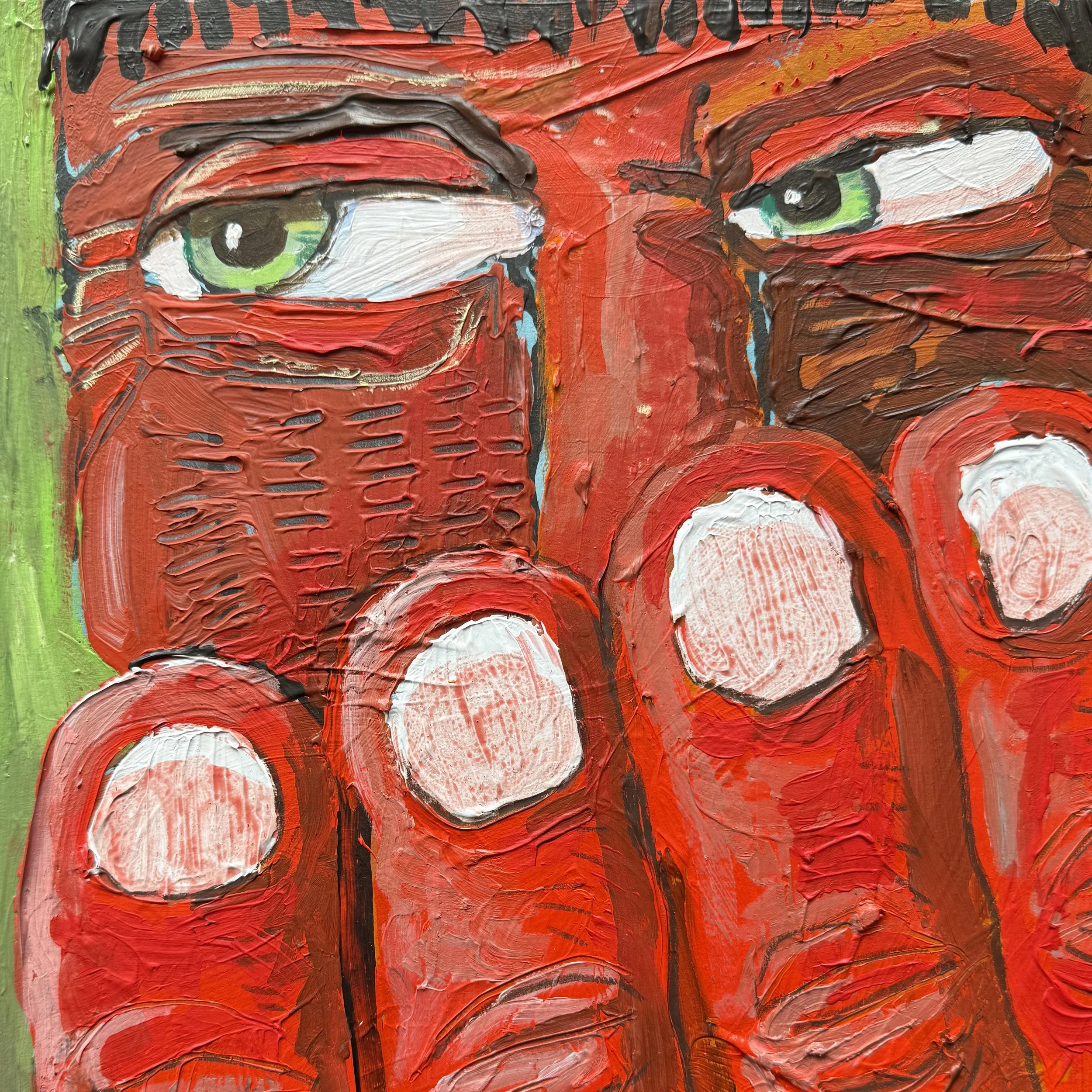
Detail “Goomba 20” by Dylan Clendenin.
You mentioned a practice you use in your work you called "sabotaging control”. Can you explain this technique to the readers and why you utilize it in your work?
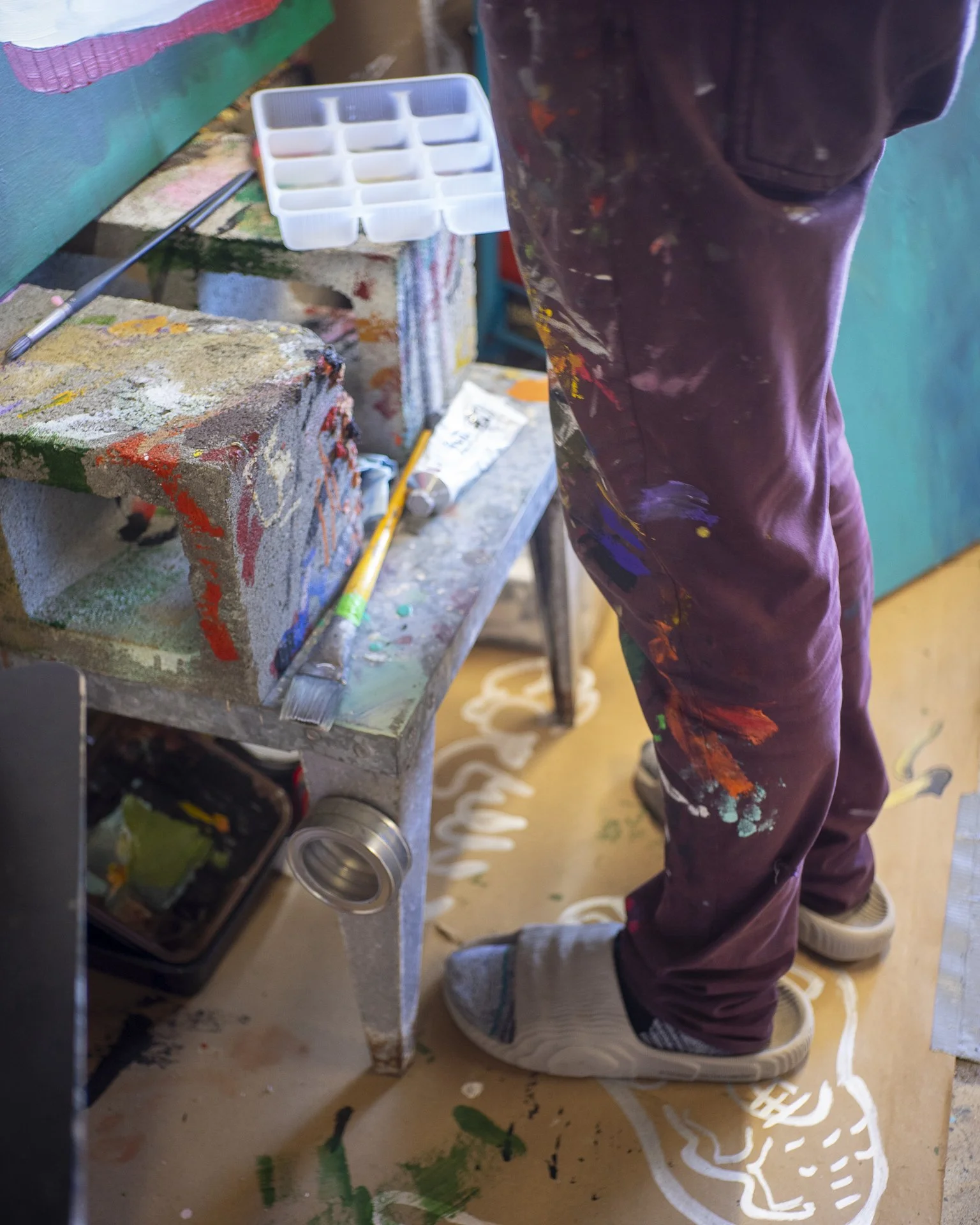
This comes back to what I was saying about working from photo reference. You’ve gotta funk it up somehow or you’re just gonna have a painting of a photo. Sabotaging control for me means using tools and techniques that force me to speed up faster than my critical thinking can catch up or handicap my ability to be super precise. Examples of that are drawing something upside down, try the opposite hand, draw with an ink dropper or eye dropper, holding the drawing tool far away from the tip, paint or draw with a brush taped to a long stick, go fast and don’t be so technical all the time.
Can you elaborate on your perspective on zen painting and how it comes to life for you?
I’m a bad-student-armchair-Zen-dabbler who goes in and out of meditation practice (mostly out though). The title of the show, “Probably A Bad Idea”, is a kind of Zen koan, a paradoxical seeming phrase intended to be chewed on to help transcend rational thinking. My book of San Francisco art is titled “Just As it Is” which is another Zen idea about experiencing the present reality as it is, rather than how we want it to be, without judgement.
What was the inspiration behind “Pizza Box Boys Came to Party”?
This generic pizza box design comes from restaurant supply stores and has fascinated me for years. I searched “generic pizza box art” and a bunch of internet posts came up related to this same image and it made me laugh super hard. I’ll leave it to others to dig into that lore.
When you’re not making art, what do you do to unwind?
I’ve played rec center/park basketball once or twice a week for the last 10 plus years. That regulates my emotions and keeps me connected in the community. It’s always funny to see people I’ve hooped with in the world, even years later, and we won’t even know each other’s real names but there’s a kinship. Everyone knows me as “Brian Scalabrine”.
What is your take on the DIY art community in San Francisco?
At the end of 2021 I had been painting every day for two years but hadn’t actually met another artist. My partner, Beth, is the one who encouraged me to get outside of the house with my art. One month we didn’t have enough to make rent and she signed me up to set up a table at a neighborhood art/craft fair at the old fire house on Brazil Street in Excelsior. I sold enough to make rent but more importantly I met local artists for the first time and that eventually led to me being a part of two different artist cooperatives. I think wherever an artist lives we need to find those birds of a feather for mutual encouragement. I also do figure drawing in the community regularly with Sketchboard and highly recommend it. We should invest in all these DIY, volunteer-run art communities. Art is actually one of the key pillars of society and culture. If that gets lost everything suffers. Expression of creativity is an inherent human need.
What is next for you?
Sleep, I hope. Coming off of an art fair, a book sale and this solo show - I want to forget about myself for a while.
Dylan Clendenin’s solo show “Probably A Bad Idea” opens April 4th, 2026 and runs through the end of May at Moth Belly Gallery, 912 Larkin Street in San Francisco, California.